2021 Volvo XC90 vs 2021 GMC Yukon
Overview | |
MSRP$51,000 | MSRP$49,000 |
Listings1453 | Listings323 |
Ratings & Reviews | |
User Reviews | User Reviews |
Expert reviews7.7 out of 10 | Expert reviews7.7 out of 10 |
Pros
Cons
| Pros
Cons
|
2021 GMC Yukon Reviews SummaryWith the redesigned 2021 GMC Yukon, several good things happen. First, GMC improves passenger space and cargo space by stretching the wheelbase and switching to an independent rear suspension design. Second, those same changes, coupled with a new adaptive air suspension option, enhance the full-size SUV’s ride and handling. Third, payload ratings rise by as much as 100 pounds. Fourth, the Yukon gets a significant technology upgrade. But at the same time, the new Yukon takes a couple of steps backward. Tow ratings can’t match the outgoing Yukon, and in some cases, fuel economy numbers worsen rather than improve. Still, all things considered, the new 2021 Yukon represents advancement. | |
2021 Volvo XC90 Reviews SummaryVolvo may be known for sensible station wagons, but the XC90 SUV is the Swedish automaker’s de facto flagship. The current generation debuted design features, technology, and powertrains that have since found their way into most other Volvo models. Several years into the current-generation model’s lifecycle, the XC90 is no longer a trendsetter, but remains Volvo’s contender in the competitive midsize luxury SUV segment, with the automaker’s typical emphasis on safety features. The current-generation XC90 launched for the 2016 model year, so most competitors—including the Audi Q7, Acura MDX, BMW X5, and Mercedes-Benz GLE-Class—have been updated or redesigned since then. The Cadillac XT6 and Lincoln Aviator didn’t even exist when this generation of XC90 launched. A redesigned version is expected to arrive soon, so changes to the 2021 XC90 are minimal. All 2021 Volvo models are now limited to 112 mph for safety reasons and get Care Key, which lets owners limit the top speed before loaning the car out to a friend or family member. The XC90 also gets a handful of newly standard tech features, and some small cosmetic changes. Volvo offers the XC90 in three trim levels—Momentum, R-Design, and Inscription—with three powertrain options: T5 and T6 gasoline engines, and the T8 plug-in hybrid. Our test car was a range-topping T8 Recharge Inscription, combining the top Inscription trim level with the plug-in hybrid powertrain, which has the highest output of the three. | |
No video found | No video found |
Popular Features & Specs | |
Engine5.3L 355 hp V8 | Engine2.0L 250 hp I4 |
Drive Train4X2 | Drive TrainFWD |
Seating Capacity9 | Seating Capacity7 |
Horsepower355 hp @ 5600 rpm | Horsepower250 hp @ 5500 rpm |
MPG City15 | MPG City21 |
MPG Highway20 | MPG Highway30 |
Engine | |
Engine Name5.3L 355 hp V8 | Engine Name2.0L 250 hp I4 |
Torque383 lb-ft @ 4100 rpm | Torque258 lb-ft @ 1500 rpm |
Horsepower355 hp @ 5600 rpm | Horsepower250 hp @ 5500 rpm |
Drivetrain4X2 | DrivetrainFWD |
Fuel Economy | |
MPG City15 | MPG City21 |
MPG Highway20 | MPG Highway30 |
Interior | |
Seating Capacity9 | Seating Capacity7 |
Key Features | |
Sunroof/Moonroof | Sunroof/MoonroofStandard |
Safety | |
Front Crash Overall4 | Front Crash Overall5 |
Side Crash Overall5 | Side Crash Overall5 |
Dimensions & Capacity | |
Cargo Space25.5 cu ft | Cargo Space10.7 cu ft |
Curb Weight5490 lbs | Curb Weight4374 lbs |
Height76.5 in | Height69.9 in |
Length210.0 in | Length195.0 in |
Width81.0 in | Width84.3 in |
Wheelbase120.9 in | Wheelbase117.5 in |
Maximum Payload1792 lbs | Maximum Payload1631 lbs |
Number of doors4 | Number of doors4 |
Maximum Towing Capacity8400 lbs | Maximum Towing Capacity4000 lbs |
Standard Towing Capacity7900 lbs | Standard Towing Capacity |
Overview | ||
MSRP | $51,000 | $49,000 |
Listings | ||
Ratings & Reviews | ||
User reviews | ||
Expert reviews | 7.7 out of 10Read full review | 7.7 out of 10Read full review |
Pros & cons | Pros
Cons
| Pros
Cons
|
Summary | With the redesigned 2021 GMC Yukon, several good things happen. First, GMC improves passenger space and cargo space by stretching the wheelbase and switching to an independent rear suspension design. Second, those same changes, coupled with a new adaptive air suspension option, enhance the full-size SUV’s ride and handling. Third, payload ratings rise by as much as 100 pounds. Fourth, the Yukon gets a significant technology upgrade. But at the same time, the new Yukon takes a couple of steps backward. Tow ratings can’t match the outgoing Yukon, and in some cases, fuel economy numbers worsen rather than improve. Still, all things considered, the new 2021 Yukon represents advancement. | Volvo may be known for sensible station wagons, but the XC90 SUV is the Swedish automaker’s de facto flagship. The current generation debuted design features, technology, and powertrains that have since found their way into most other Volvo models. Several years into the current-generation model’s lifecycle, the XC90 is no longer a trendsetter, but remains Volvo’s contender in the competitive midsize luxury SUV segment, with the automaker’s typical emphasis on safety features. The current-generation XC90 launched for the 2016 model year, so most competitors—including the Audi Q7, Acura MDX, BMW X5, and Mercedes-Benz GLE-Class—have been updated or redesigned since then. The Cadillac XT6 and Lincoln Aviator didn’t even exist when this generation of XC90 launched. A redesigned version is expected to arrive soon, so changes to the 2021 XC90 are minimal. All 2021 Volvo models are now limited to 112 mph for safety reasons and get Care Key, which lets owners limit the top speed before loaning the car out to a friend or family member. The XC90 also gets a handful of newly standard tech features, and some small cosmetic changes. Volvo offers the XC90 in three trim levels—Momentum, R-Design, and Inscription—with three powertrain options: T5 and T6 gasoline engines, and the T8 plug-in hybrid. Our test car was a range-topping T8 Recharge Inscription, combining the top Inscription trim level with the plug-in hybrid powertrain, which has the highest output of the three. |
Video | No video found | No video found |
Popular Features & Specs | ||
Engine | 5.3L 355 hp V8 | 2.0L 250 hp I4 |
Drive Train | 4X2 | FWD |
Seating Capacity | 9 | 7 |
Horsepower | 355 hp @ 5600 rpm | 250 hp @ 5500 rpm |
MPG City | 15 | 21 |
MPG Highway | 20 | 30 |
Engine | ||
Engine Name | 5.3L 355 hp V8 | 2.0L 250 hp I4 |
Torque | 383 lb-ft @ 4100 rpm | 258 lb-ft @ 1500 rpm |
Horsepower | 355 hp @ 5600 rpm | 250 hp @ 5500 rpm |
Drivetrain | 4X2 | FWD |
Fuel Economy | ||
MPG City | 15 | 21 |
MPG Highway | 20 | 30 |
Interior | ||
Seating Capacity | 9 | 7 |
Key Features | ||
Sunroof/Moonroof | Standard | |
Safety | ||
Front Crash Overall | 4 | 5 |
Side Crash Overall | 5 | 5 |
Dimensions & Capacity | ||
Cargo Space | 25.5 cu ft | 10.7 cu ft |
Curb Weight | 5490 lbs | 4374 lbs |
Height | 76.5 in | 69.9 in |
Length | 210.0 in | 195.0 in |
Width | 81.0 in | 84.3 in |
Wheelbase | 120.9 in | 117.5 in |
Maximum Payload | 1792 lbs | 1631 lbs |
Number of doors | 4 | 4 |
Maximum Towing Capacity | 8400 lbs | 4000 lbs |
Standard Towing Capacity | 7900 lbs | |
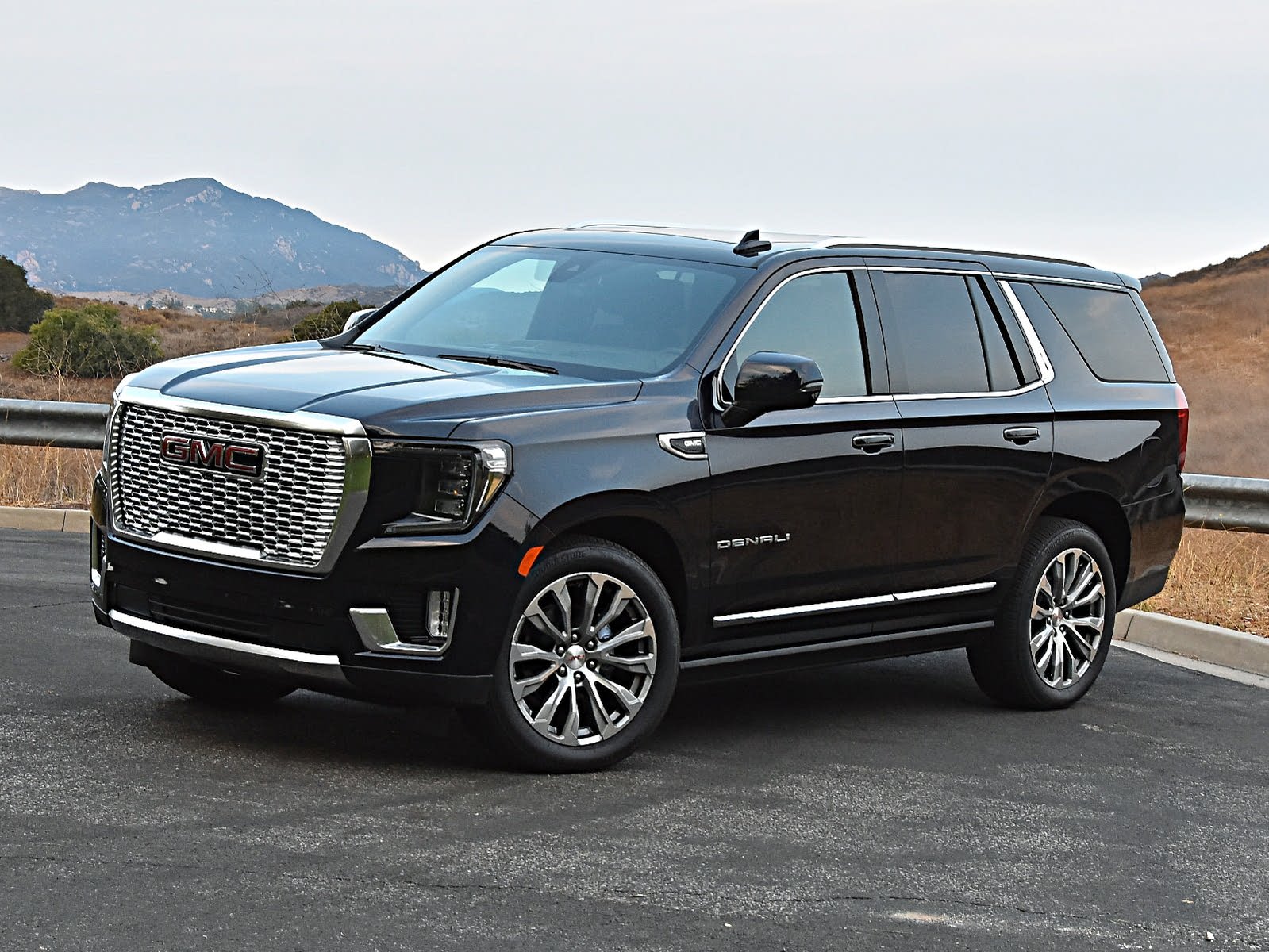
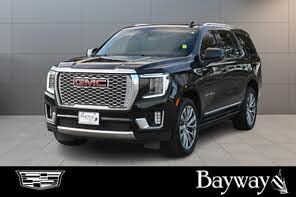
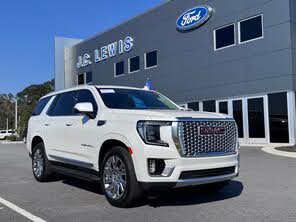
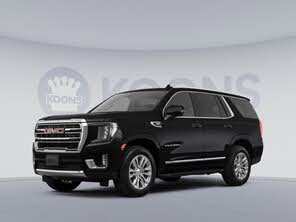
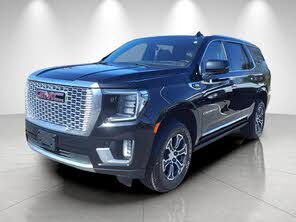
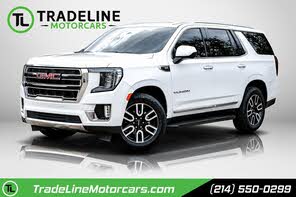
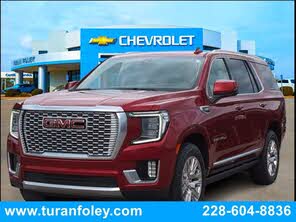
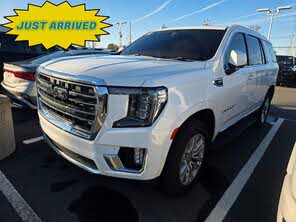
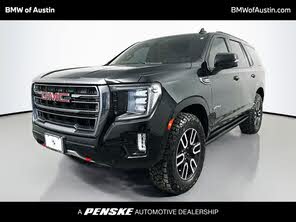
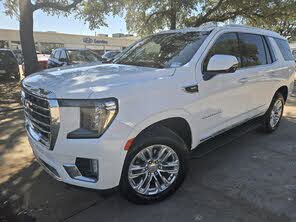
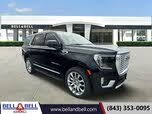
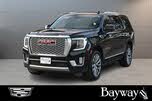
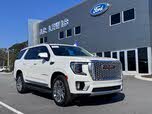
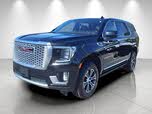
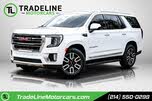
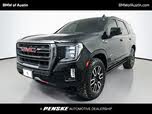
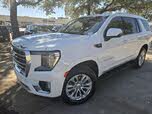
The 2021 GMC Yukon underwent a significant redesign, echoing GMC's blend of rugged refinement and premium grade, situated uniquely between the plush Buick and the prestigious Cadillac within the General Motors lineup. With options varying from the base SLE to the luxurious Denali, and the new off-road-ready AT4, the Yukon presented itself as a versatile family SUV. The Denali version, in particular, sported a distinctive look with its large, intricate grille and flashy 22-inch wheels, despite its high price. Its interior boasted unique enhancements like real wood trim and a sophisticated dashboard design that set it apart from its Chevrolet siblings and earlier Yukon models.
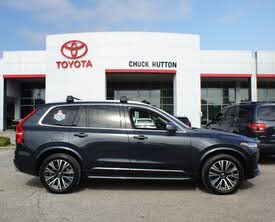
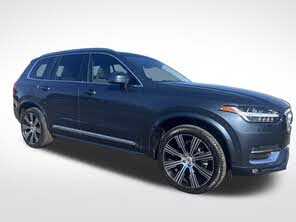
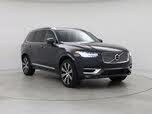
Conversely, the 2021 Volvo XC90 maintained its distinct Scandinavian design ethos with a minimalist but functional approach, distinctively balancing modernity with Volvo’s traditional boxy shape. The XC90 added softer lines and additional chrome to its exterior, enhancing its appeal without surrendering its iconic design. Inside, the XC90 reflected Swedish simplicity combined with luxury, highlighted by natural-looking wood trims and the option for unique wool upholstery, aspects less common in its segment. The vehicle’s interior, particularly with the optional air-suspension, upheld Volvo's commitment to comfort without compromising on elegance.


In the performance arena, the GMC Yukon came equipped with robust engine options. These included the base 355-horsepower 5.3-liter V8 and the more powerful 420-horsepower 6.2-liter V8 in the Denali. There was also an upcoming 3.0-liter turbo-diesel option. Our Denali test model featured the 6.2-liter engine, offering vigorous acceleration and the quintessential V8 rumble, although its fuel efficiency ratings lagged behind, especially when equipped with larger tires and the new independent suspension and air ride enhancements, which, while improving ride quality, also made the Yukon aware of road imperfections.
The Volvo XC90, on the other hand, offered a different philosophy with its trio of 2.0-liter four-cylinder powertrains, including the turbocharged T5, the turbo and supercharged T6, and the T8 plug-in hybrid with an impressive 400 horsepower combined output. The hybrid aimed for efficiency, although pure electric drive was limited in practicality, needing frequent assistance from the gasoline engine under normal driving conditions. Despite its smaller engine and the challenges of incorporating electric assist, the XC90 maintained commendable ride quality and control, particularly beneficial in the luxury SUV segment.
The GMC Yukon's 2021 redesign notably increased its interior space, thanks to the adoption of an independent rear suspension. The Denali model provided a plethora of luxury features, ample room across all three rows, and impressive cargo capacity, with up to 122.9 cubic feet of space, paralleling a minivan's utility. These changes addressed prior critiques regarding passenger comfort, particularly in the third row, and elevated the Yukon's family-friendly credentials.
Conversely, Volvo's XC90 offered configurable seating for six or seven with a variety of upscale amenities but maintained only average space for its class, particularly in the third row. The cargo space was notably less, at a maximum of 64.1 cubic feet, constrained further in the hybrid model. However, the XC90's cabin reflected a serene, minimalist design with advanced climate control options, enhancing overall passenger comfort despite its spatial limitations.
Technologically, both SUVs offered comprehensive infotainment and connectivity features. The Yukon Denali sported a 10.2-inch touchscreen with integration options like Apple CarPlay and Android Auto, and a premium Bose sound system, although some users reported usability issues with the system’s more advanced functions. GMC’s tech included multiple assistance features to aid maneuverability and improve the driving experience, particularly in congested situations.
Volvo's XC90 showcased the Sensus system, which prioritized ease of use with a straightforward interface reminiscent of a tablet, although it featured minimal physical controls which could be a drawback for some users. The overall minimalistic approach fit well with the interior design, maintaining functional elegance. The sound system and connectivity options, including various USB ports, rounded out a well-balanced technological suite.
Safety features in the GMC Yukon included a suite of driver assistance technologies like forward collision warning and automatic emergency braking, with additional systems like adaptive cruise control available in higher trims. The Yukon's comprehensive safety suite aimed to ensure passenger security.
The Volvo XC90 carried on the brand’s strong safety reputation, achieving high ratings from both the IIHS and NHTSA. It included more standard safety features than many of its competitors, such as Volvo's advanced Pilot Assist system, which benefited from smooth operation and quick responsiveness, though it had limitations in more complex driving scenarios.
CarGurus highlights

According to CarGurus experts, the overall rating for 2021 GMC Yukon is 7.7 out of 10, while the 2021 Volvo XC90 scores 7.7 out of 10. With identical scores, the choice largely depends on individual priorities. If towing capacity, cargo space, and rugged performance are key, the Yukon stands out. Conversely, if safety, environmental considerations, and a more car-like driving experience are paramount, the Volvo XC90 is the appropriate choice. Given the trade-offs in performance and utility versus environmental impact and technological integration, consumers must decide based on their specific needs and values.
Choose the 2021 Volvo XC90 if:
- Efficiency and a smaller environmental footprint are critical.
- You prefer a minimalist, luxurious interior with advanced safety features.
- Smoother, less truck-like driving dynamics are desired.





Choose the 2021 GMC Yukon if:
- You value robust performance with V8 engines.
- Interior space and cargo capacity are priorities.
- A more traditional SUV experience with advanced tech and safety features matters.

CarGurus highlights
According to CarGurus experts, the overall rating for 2021 GMC Yukon is 7.7 out of 10, while the 2021 Volvo XC90 scores 7.7 out of 10. With identical scores, the choice largely depends on individual priorities. If towing capacity, cargo space, and rugged performance are key, the Yukon stands out. Conversely, if safety, environmental considerations, and a more car-like driving experience are paramount, the Volvo XC90 is the appropriate choice. Given the trade-offs in performance and utility versus environmental impact and technological integration, consumers must decide based on their specific needs and values.
Choose the 2021 Volvo XC90 if:
Shop Now- Efficiency and a smaller environmental footprint are critical.
- You prefer a minimalist, luxurious interior with advanced safety features.
- Smoother, less truck-like driving dynamics are desired.








Choose the 2021 GMC Yukon if:
Shop Now- You value robust performance with V8 engines.
- Interior space and cargo capacity are priorities.
- A more traditional SUV experience with advanced tech and safety features matters.




By: CarGurus + AI
At CarGurus, our team of experienced automotive writers remain at the heart of our content operation, conducting hands-on car tests and writing insightful guides that are backed by years of industry experience. To complement this, we are harnessing AI to make our content offering more diverse and more helpful to shoppers than ever. To achieve this, our AI systems are based exclusively on CarGurus content, ratings and data, so that what we produce is both unique to CarGurus, and uniquely helpful to car shoppers.