2020 Toyota Sienna vs 2020 Hyundai Santa Fe
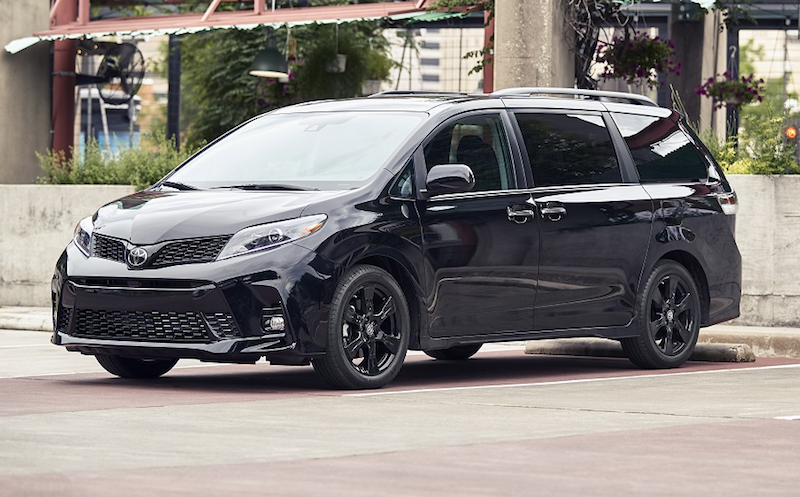
Overview | |
MSRP$29,715 | MSRP$26,275 |
Listings411 | Listings1154 |
Ratings & Reviews | |
User Reviews | User Reviews |
Expert reviews7.8 out of 10 | Expert reviews8.8 out of 10 |
Pros
Cons
| Pros
Cons
|
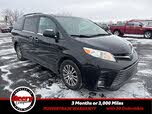
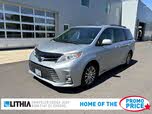
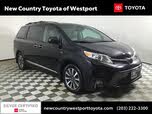
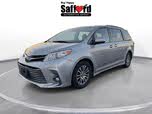
2020 Toyota Sienna Reviews SummarySince the second half of the 20th century, each decade has had a hot-topic family car, and, as we’ve noted in a number of reviews this year, the crossover is our current darling vehicle. Before the crossover, there were big, truck-based SUVs. Before that, there were station wagons. And for the past 35 years, there's always been the minivan. The Dodge Caravan has been widely considered the Patient Zero of the minivan segment. From there, seemingly everyone joined the party, including Toyota, Nissan, Ford, Chevy, GMC, Volkswagen, Oldsmobile, Ford, and more. Heck, even Mercury had a “Nautica Edition” version of the Villager. The minivan was king once, the crossover is king now, and some other type of vehicle will likely dominate in the near future. But in all this, the 7- and 8-passenger minivans will always represent the ultimate in versatility. The crossover is an image-forward fad with a dash of usability, but the minivan continues to prove itself as the pinnacle of practicality. The 2020 Toyota Sienna is neither the newest nor flashiest minivan out there, but when you absolutely need space for people and gear, there’s nothing better. Additionally, the Sienna is the only minivan to offer all-wheel drive (AWD), which is something specifically desired by many car buyers. | |
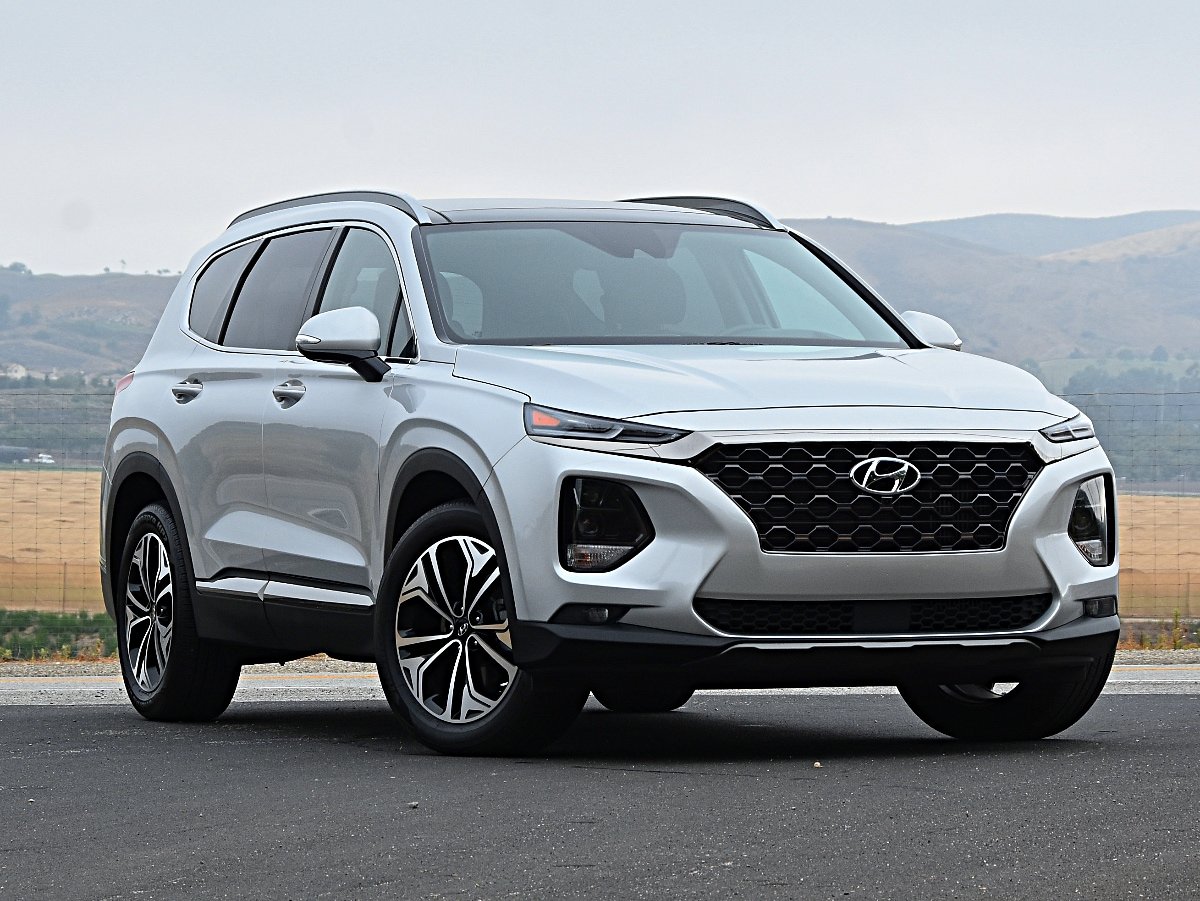
2020 Hyundai Santa Fe Reviews SummaryLast year, Hyundai changed its approach to the Santa Fe. The smaller five-passenger Santa Fe Sport got drop-kicked from the automaker’s lineup, replaced by this completely redesigned version of the SUV. The larger seven-passenger Santa Fe got a new name for one year (Santa Fe XL), and then the all-new 2020 Hyundai Palisade replaced that vehicle. With the Palisade’s arrival, there is just one Santa Fe for 2020, a five-passenger crossover that resides in a sweet spot between traditional compact and midsize models. It gets several updates, too, including a standard rear-seat reminder system, an available camera-based Blind-Spot View Monitor system, and new design accents to better distinguish the top trim level. | |
Popular Features & Specs | |
Engine3.5L 296 hp V6 | Engine2.4L 185 hp I4 |
Drive TrainFWD | Drive TrainFWD |
Seating Capacity2 | Seating Capacity5 |
Horsepower296 hp @ 6200 rpm | Horsepower185 hp @ 6000 rpm |
MPG City19 | MPG City22 |
MPG Highway26 | MPG Highway29 |
Engine | |
Engine Name3.5L 296 hp V6 | Engine Name2.4L 185 hp I4 |
Torque263 lb-ft @ 4700 rpm | Torque178 lb-ft @ 4000 rpm |
Horsepower296 hp @ 6200 rpm | Horsepower185 hp @ 6000 rpm |
DrivetrainFWD | DrivetrainFWD |
Fuel Economy | |
MPG City19 | MPG City22 |
MPG Highway26 | MPG Highway29 |
Interior | |
Seating Capacity2 | Seating Capacity5 |
Safety | |
Front Crash Overall4 | Front Crash Overall4 |
Side Crash Overall5 | Side Crash Overall5 |
Dimensions & Capacity | |
Cargo Space | Cargo Space35.9 cu ft |
Curb Weight4375 lbs | Curb Weight3591 lbs |
Height68.9 in | Height66.1 in |
Length200.2 in | Length187.8 in |
Width78.1 in | Width74.4 in |
Wheelbase119.3 in | Wheelbase108.9 in |
Maximum Payload | Maximum Payload1138 lbs |
Number of doors4 | Number of doors4 |
Maximum Towing Capacity | Maximum Towing Capacity2000 lbs |
Overview | ||
MSRP | $29,715 | $26,275 |
Listings | ||
Ratings & Reviews | ||
User reviews | ||
Expert reviews | 7.8 out of 10Read full review | 8.8 out of 10Read full review |
Pros & cons | Pros
Cons
| Pros
Cons
|
Summary | Since the second half of the 20th century, each decade has had a hot-topic family car, and, as we’ve noted in a number of reviews this year, the crossover is our current darling vehicle. Before the crossover, there were big, truck-based SUVs. Before that, there were station wagons. And for the past 35 years, there's always been the minivan. The Dodge Caravan has been widely considered the Patient Zero of the minivan segment. From there, seemingly everyone joined the party, including Toyota, Nissan, Ford, Chevy, GMC, Volkswagen, Oldsmobile, Ford, and more. Heck, even Mercury had a “Nautica Edition” version of the Villager. The minivan was king once, the crossover is king now, and some other type of vehicle will likely dominate in the near future. But in all this, the 7- and 8-passenger minivans will always represent the ultimate in versatility. The crossover is an image-forward fad with a dash of usability, but the minivan continues to prove itself as the pinnacle of practicality. The 2020 Toyota Sienna is neither the newest nor flashiest minivan out there, but when you absolutely need space for people and gear, there’s nothing better. Additionally, the Sienna is the only minivan to offer all-wheel drive (AWD), which is something specifically desired by many car buyers. | Last year, Hyundai changed its approach to the Santa Fe. The smaller five-passenger Santa Fe Sport got drop-kicked from the automaker’s lineup, replaced by this completely redesigned version of the SUV. The larger seven-passenger Santa Fe got a new name for one year (Santa Fe XL), and then the all-new 2020 Hyundai Palisade replaced that vehicle. With the Palisade’s arrival, there is just one Santa Fe for 2020, a five-passenger crossover that resides in a sweet spot between traditional compact and midsize models. It gets several updates, too, including a standard rear-seat reminder system, an available camera-based Blind-Spot View Monitor system, and new design accents to better distinguish the top trim level. |
Video | ||
Popular Features & Specs | ||
Engine | 3.5L 296 hp V6 | 2.4L 185 hp I4 |
Drive Train | FWD | FWD |
Seating Capacity | 2 | 5 |
Horsepower | 296 hp @ 6200 rpm | 185 hp @ 6000 rpm |
MPG City | 19 | 22 |
MPG Highway | 26 | 29 |
Engine | ||
Engine Name | 3.5L 296 hp V6 | 2.4L 185 hp I4 |
Torque | 263 lb-ft @ 4700 rpm | 178 lb-ft @ 4000 rpm |
Horsepower | 296 hp @ 6200 rpm | 185 hp @ 6000 rpm |
Drivetrain | FWD | FWD |
Fuel Economy | ||
MPG City | 19 | 22 |
MPG Highway | 26 | 29 |
Interior | ||
Seating Capacity | 2 | 5 |
Safety | ||
Front Crash Overall | 4 | 4 |
Side Crash Overall | 5 | 5 |
Dimensions & Capacity | ||
Cargo Space | 35.9 cu ft | |
Curb Weight | 4375 lbs | 3591 lbs |
Height | 68.9 in | 66.1 in |
Length | 200.2 in | 187.8 in |
Width | 78.1 in | 74.4 in |
Wheelbase | 119.3 in | 108.9 in |
Maximum Payload | 1138 lbs | |
Number of doors | 4 | 4 |
Maximum Towing Capacity | 2000 lbs | |
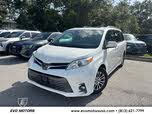
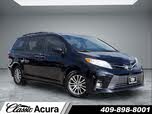
The 2020 Toyota Sienna, part of its third generation, had been around since the 2011 model year. Despite a 2018 update that introduced newer infotainment tech and minor changes, the 2020 version still felt dated. The front doors emitted a hollow "thud" when slammed, indicating a lack of attention to fit and finish. The instrument panel seemed to come from Toyota's 2010 parts bin, though its simplicity made the controls easy to use. The Sienna offered various trims, from the well-equipped base L to the luxurious Limited Premium, with features like leather seats, a JBL premium audio system, and a DVD entertainment system. The Nightshade Edition added dark accents and wheels for those prioritizing style.
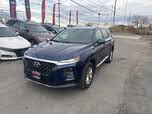
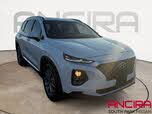
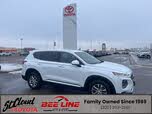
The 2020 Hyundai Santa Fe, available in SE, SEL, and Limited trims, offered a bold and experimental design that might not appeal to everyone. The interior featured a dramatic dual-cowl dashboard and diamond-textured speaker grilles, with high-contrast color schemes in gray or beige. While the materials quality didn't match the high-style design, the build quality was exceptional, and the controls operated with refinement. The Santa Fe's interior was characterized by thoughtful attention to detail, with creative storage spaces and stain-resistant fabric in cloth-seat versions. The Limited trim included luxurious features like heated and ventilated front seats, a heated steering wheel, and a massive panoramic sunroof.


The 2020 Toyota Sienna came equipped with a 3.5-liter V6 engine producing 296 horsepower and 263 pound-feet of torque, paired with an 8-speed automatic transmission. The Sienna offered stout acceleration in normal Drive mode, with a Sport mode for livelier throttle and shift response. It also had a manual mode, useful for its 3,500-pound towing capacity. The Sienna's front-wheel-drive (FWD) version returned 19 mpg city, 26 highway, and 21 combined, while the all-wheel-drive (AWD) version returned 18/24/20. The Sienna handled surprisingly well for a minivan, with a low center of gravity and broad base providing decent handling dynamics. However, its twitchy steering response at higher speeds required constant attention.
The 2020 Hyundai Santa Fe offered a standard 185-horsepower 2.4-liter four-cylinder engine, but the 2.0T trim with a turbocharged 2.0-liter four-cylinder engine was the preferred choice. The 2.0T engine produced 235 horsepower and 260 pound-feet of torque, available between 1,450 and 3,500 rpm. The Santa Fe's eight-speed automatic transmission funneled power to the front wheels, with optional AWD available. The Santa Fe 2.0T had a towing capacity of 3,500 pounds and returned 23 mpg in combined driving, with our test model achieving 22.1 mpg. The Santa Fe offered a smooth ride, decent handling, and light-effort steering, making it a good daily driver. The Limited trim provided a quiet highway ride with laminated windshield and front window glass.
The 2020 Toyota Sienna excelled in cargo space, offering 150 cubic feet, more than competitors like the Chrysler Pacifica and Honda Odyssey. However, accessing this space required removing the second-row seats, which could be cumbersome with the bench seat. The third row folded seamlessly into the floor, but getting into the backseat was challenging. Toyota also offered mobility access features, such as the Auto Access Seat, making the Sienna a practical choice for those needing mobility conversions.
The 2020 Hyundai Santa Fe provided thoughtful attention to detail, with creative storage spaces and stain-resistant fabric in cloth-seat versions. The Santa Fe's back seat was comfortable for adults, with air conditioning vents, rear side-window sunshades, and heated bottom cushions. However, the Santa Fe fell short in cargo space, offering 35.9 cubic feet behind the rear seat and a maximum of 71.3 cubic feet. The Santa Fe's hands-free "smart" liftgate was a convenient feature, sensing the key fob's proximity and opening automatically.
The 2020 Toyota Sienna's base L trim came with a 7-inch touchscreen infotainment system supporting Amazon Alexa and Apple CarPlay. Other standard tech features included Bluetooth connectivity, five USB ports, and a WiFi hotspot with a 6-month trial. Higher trims like the Limited added navigation and a JBL 10-speaker premium audio system. The Driver Easy Speak intercom system allowed the driver to communicate with rear passengers without straining their voice.
The 2020 Hyundai Santa Fe's infotainment system was a standout feature, with stereo control knobs, main menu shortcut buttons, and a programmable button. Every Santa Fe included Bluetooth connectivity, Apple CarPlay, and Android Auto. The SEL trim added SiriusXM satellite radio and Blue Link connected services with three free years of service. The Limited trim featured a larger 8-inch display, navigation, a surround-view camera, wireless smartphone charging, and a 12-speaker Infinity surround sound system. The head-up display provided valuable data within the driver's line of sight.
The 2020 Toyota Sienna came standard with the Toyota Safety Sense (TSS-P) suite, including lane-departure warning, lane-keep assist, forward-collision warning, dynamic cruise control, and automatic high beams. Blind-spot monitoring was optional on lower trims and standard on XLE and Limited trims. The Sienna earned five stars in NHTSA crash testing and a top rating of Good in many IIHS crash tests. Its standard driver-assistance features earned a Superior rating from the IIHS.
The 2020 Hyundai Santa Fe earned a five-star overall crash-test rating from the NHTSA and a Top Safety Pick rating from the IIHS. Standard safety features included adaptive cruise control, forward collision warning, automatic emergency braking, lane-departure warning, and lane-keeping assistance. The SEL trim added blind-spot warning, rear cross-traffic warning, and a safe exit assist system. The SEL Convenience Package included an ultrasonic occupant alert system, while the Limited trim featured a Blind-Spot View Monitor.
CarGurus highlights
According to CarGurus experts, the overall rating for the 2020 Toyota Sienna is 7.8 out of 10, while the 2020 Hyundai Santa Fe scores 8.8 out of 10. Based on these ratings, the 2020 Hyundai Santa Fe is the recommended choice, offering a better overall package with its advanced safety features, comfortable interior, and superior technology.
Choose the 2020 Toyota Sienna if:
- You need class-leading cargo space for family trips or large loads.
- You require mobility access features directly from the dealership.
- You prefer a minivan with a smooth ride and decent handling dynamics.




Choose the 2020 Hyundai Santa Fe if:
- You want a bold and experimental design with a high-quality build.
- You need a comfortable and feature-rich interior for long drives.
- You prioritize advanced safety features and a high safety rating.




CarGurus highlights
According to CarGurus experts, the overall rating for the 2020 Toyota Sienna is 7.8 out of 10, while the 2020 Hyundai Santa Fe scores 8.8 out of 10. Based on these ratings, the 2020 Hyundai Santa Fe is the recommended choice, offering a better overall package with its advanced safety features, comfortable interior, and superior technology.
Choose the 2020 Toyota Sienna if:
Shop Now- You need class-leading cargo space for family trips or large loads.
- You require mobility access features directly from the dealership.
- You prefer a minivan with a smooth ride and decent handling dynamics.




Choose the 2020 Hyundai Santa Fe if:
Shop Now- You want a bold and experimental design with a high-quality build.
- You need a comfortable and feature-rich interior for long drives.
- You prioritize advanced safety features and a high safety rating.





By: CarGurus + AI
At CarGurus, our team of experienced automotive writers remain at the heart of our content operation, conducting hands-on car tests and writing insightful guides that are backed by years of industry experience. To complement this, we are harnessing AI to make our content offering more diverse and more helpful to shoppers than ever. To achieve this, our AI systems are based exclusively on CarGurus content, ratings and data, so that what we produce is both unique to CarGurus, and uniquely helpful to car shoppers.