2021 Toyota Venza vs 2020 Toyota Highlander

Overview | |
MSRP$34,600 | MSRP$32,670 |
Listings704 | Listings454 |
Ratings & Reviews | |
User Reviews | User Reviews |
Expert reviews7.7 out of 10 | Expert reviews8.3 out of 10 |
Pros
Cons
| Pros
Cons
|
2020 Toyota Highlander Reviews SummaryMidsize three-row SUVs are all spacious and powerful, but only the Toyota Highlander reaches the premium threshold for passenger comfort. Redesigned for 2020, the Highlander's revised styling and technology are secondary to its silent operation, soft ride, and cosseting interior. The upper trims feel and drive just like a Lexus, without the upcharge. There is nothing exciting about a Highlander, and yet, there is no other SUV in the $35,000 to $50,000 range that feels so effortless and tranquil. | |
2021 Toyota Venza Reviews SummaryAt first glance, the 2021 Toyota Venza looks more like a Lexus than a typical Toyota, which is fitting, because the Venza is anything but typical. The new Venza blends a new approach to in-car technology with fresh exterior and interior design. Like the Nissan Murano, Honda Passport, Ford Edge, and Chevrolet Blazer, the Venza is a two-row SUV meant to be more sophisticated than the family-friendly Nissan Rogue, Honda CR-V, Chevrolet Equinox, and Toyota RAV4. There is no three-row Venza option. It also comes only with a hybrid powertrain—for better or worse—something that its competition is lacking. All-wheel drive is also standard. That's also offered by the competition, but only as a costly upgrade. The Venza’s $32,470 starting price is slightly higher than the Murano and Blazer, but it comes with the traditionally-more-expensive hybrid powertrain. Is the hybrid worth shelling out a little more for? | |
Popular Features & Specs | |
Engine3.5L 295 hp V6 | Engine2.5L 219 hp I4 Hybrid |
Drive TrainFWD | Drive TrainAWD |
Seating Capacity8 | Seating Capacity5 |
Horsepower295 hp @ 6600 rpm | Horsepower |
EV Battery Capacity | EV Battery Capacity0.93 kWh |
MPG City20 | MPG City40 |
MPG Highway28 | MPG Highway37 |
Engine | |
Engine Name3.5L 295 hp V6 | Engine Name2.5L 219 hp I4 Hybrid |
Torque263 lb-ft @ 4700 rpm | Torque |
Horsepower295 hp @ 6600 rpm | Horsepower |
DrivetrainFWD | DrivetrainAWD |
Fuel Economy | |
EV Battery Capacity | EV Battery Capacity0.93 kWh |
MPG City20 | MPG City40 |
MPG Highway28 | MPG Highway37 |
Interior | |
Seating Capacity8 | Seating Capacity5 |
Safety | |
Front Crash Overall4 | Front Crash Overall4 |
Side Crash Overall5 | Side Crash Overall5 |
Dimensions & Capacity | |
Cargo Space16.0 cu ft | Cargo Space28.8 cu ft |
Curb Weight4145 lbs | Curb Weight3847 lbs |
Height68.1 in | Height65.9 in |
Length194.9 in | Length186.6 in |
Width76.0 in | Width73.0 in |
Wheelbase112.2 in | Wheelbase105.9 in |
Maximum Payload1685 lbs | Maximum Payload900 lbs |
Number of doors4 | Number of doors4 |
Maximum Towing Capacity5000 lbs | Maximum Towing Capacity |
Overview | ||
MSRP | $34,600 | $32,670 |
Listings | ||
Ratings & Reviews | ||
User reviews | ||
Expert reviews | 7.7 out of 10Read full review | 8.3 out of 10Read full review |
Pros & cons | Pros
Cons
| Pros
Cons
|
Summary | Midsize three-row SUVs are all spacious and powerful, but only the Toyota Highlander reaches the premium threshold for passenger comfort. Redesigned for 2020, the Highlander's revised styling and technology are secondary to its silent operation, soft ride, and cosseting interior. The upper trims feel and drive just like a Lexus, without the upcharge. There is nothing exciting about a Highlander, and yet, there is no other SUV in the $35,000 to $50,000 range that feels so effortless and tranquil. | At first glance, the 2021 Toyota Venza looks more like a Lexus than a typical Toyota, which is fitting, because the Venza is anything but typical. The new Venza blends a new approach to in-car technology with fresh exterior and interior design. Like the Nissan Murano, Honda Passport, Ford Edge, and Chevrolet Blazer, the Venza is a two-row SUV meant to be more sophisticated than the family-friendly Nissan Rogue, Honda CR-V, Chevrolet Equinox, and Toyota RAV4. There is no three-row Venza option. It also comes only with a hybrid powertrain—for better or worse—something that its competition is lacking. All-wheel drive is also standard. That's also offered by the competition, but only as a costly upgrade. The Venza’s $32,470 starting price is slightly higher than the Murano and Blazer, but it comes with the traditionally-more-expensive hybrid powertrain. Is the hybrid worth shelling out a little more for? |
Video | ||
Popular Features & Specs | ||
Engine | 3.5L 295 hp V6 | 2.5L 219 hp I4 Hybrid |
Drive Train | FWD | AWD |
Seating Capacity | 8 | 5 |
Horsepower | 295 hp @ 6600 rpm | |
EV Battery Capacity | 0.93 kWh | |
MPG City | 20 | 40 |
MPG Highway | 28 | 37 |
Engine | ||
Engine Name | 3.5L 295 hp V6 | 2.5L 219 hp I4 Hybrid |
Torque | 263 lb-ft @ 4700 rpm | |
Horsepower | 295 hp @ 6600 rpm | |
Drivetrain | FWD | AWD |
Fuel Economy | ||
EV Battery Capacity | 0.93 kWh | |
MPG City | 20 | 40 |
MPG Highway | 28 | 37 |
Interior | ||
Seating Capacity | 8 | 5 |
Safety | ||
Front Crash Overall | 4 | 4 |
Side Crash Overall | 5 | 5 |
Dimensions & Capacity | ||
Cargo Space | 16.0 cu ft | 28.8 cu ft |
Curb Weight | 4145 lbs | 3847 lbs |
Height | 68.1 in | 65.9 in |
Length | 194.9 in | 186.6 in |
Width | 76.0 in | 73.0 in |
Wheelbase | 112.2 in | 105.9 in |
Maximum Payload | 1685 lbs | 900 lbs |
Number of doors | 4 | 4 |
Maximum Towing Capacity | 5000 lbs | |
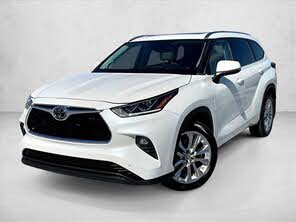
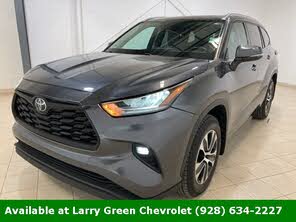
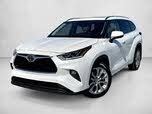
In 2020, Toyota introduced the Highlander with a stylish yet somewhat ordinary side profile. Compared to its previous models, the new Highlander featured a slanting tailgate glass and more pronounced creases on the body panels, creating wide arcs around the front and rear fenders. The trapezoidal theme was prevalent, shaping the tailgate's license plate cutout, the rear bumper (with an optional silver-painted section), the slimmer headlights, the grille, and the lower front bumper. Projector-beam LED headlights and fog lights adorned every trim except the base L, while the Limited and Platinum trims boasted prettier LED running lamps. Big 20-inch wheels were an exclusive addition to the top two trims. The color palette added some freshness, with standout shades like the Blueprint on the Limited test car. While the exterior might have been seen as boring by some, it wasn’t poorly executed.
Inside, the Highlander received significant attention, with quality fit and finish ruling the day. Silver-painted accents on the armrests, a three-spoke steering wheel, and a chunky gear selector highlighted the curves and angles. An 8-inch touchscreen and polished black plastic climate controls floated above the multi-layered dash. The color schemes were attractive, even in the L trim's fabric seats, while the Limited boasted a three-tone interior. The test vehicle featured brown on the upper dash, lower dash, and door panels; beige on the seats, center console, and middle dash; and black on the steering wheel and footwells. Padded surfaces and rich textures dominated, except for the middle portions of the door panels. The high level of interior detail set the Highlander apart from competitors, such as the Ford Explorer or Honda Pilot, only rivaled by the Kia Telluride.
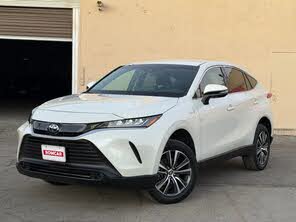
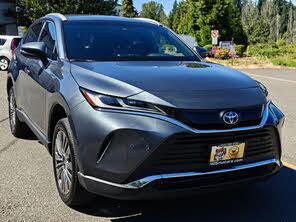
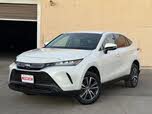
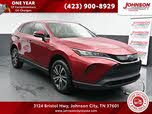
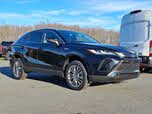
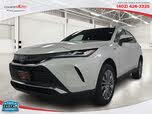
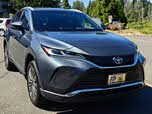
For 2021, the Toyota Venza offered a more refined and luxurious dynamic. Upon its reveal, critics noted its resemblance to a Lexus, particularly echoing the Lexus LF-1 Limitless concept. Its elongated profile and sleek grille blurred the lines between the Toyota and Lexus brands. The Venza came in three trims: LE, XLE, and Limited, with seven diverse paint colors, some exclusive to specific trims.
The Venza was packed with standard features, including a dual chrome-tipped exhaust, LED headlights and taillights, automatic high beams, puddle lights, and 18-inch alloy wheels. The base LE model came with a wireless charging pad, 4.2-inch driver’s information display, leather-trimmed steering wheel, Bluetooth, dual-zone automatic climate control, fabric-trimmed seats, eight-way power-adjustable driver’s seat, 60/40 split-folding second-row seat, leather-trimmed shifter, automatic up/down power windows, remote keyless entry, 8-inch infotainment touchscreen, four USB ports, Android Auto, Apple CarPlay, Amazon Alexa, and WiFi hotspot.
Upgrading to the Venza XLE added features like black bumper garnishes, silver roof rails, 19-inch alloy wheels, LED projector headlights, gloss black exterior elements, dual LED daytime running lights, a 7-inch driver information display, auto-dimming rearview mirror, a rearview camera with dynamic gridlines, SofTex bolsters, heated front seats, a soft-touch dashboard, and Smart Key. The top-tier Venza Limited included a digital rearview mirror with Homelink, illuminated footwells, a backup camera washer, and a 12.3-inch infotainment screen. The optional Star Gaze panoramic roof could be added to the Limited, featuring electrochromic glazing technology.


The 2020 Toyota Highlander featured a robust 3.5-liter V6 engine, offering 295 horsepower and 263 pound-feet of torque. Available in both front-wheel drive (FWD) and all-wheel drive (AWD) configurations, the Highlander provided brisk acceleration without struggle, thanks to its large V6 that also powered the Lexus RX. The eight-speed automatic transmission leveraged the engine's power efficiently, though it required a heavy foot for kickdowns. Despite the engine's lazy nature, it hustled when prompted, although its loose steering and soft suspension detracted from the driving experience. The Highlander floated at speed, a characteristic more akin to older Buick models, making its size and weight constantly apparent.
While the torque vectoring on AWD models and selectable driving modes were beneficial, they were not groundbreaking. The Highlander’s fuel economy was commendable for its size, rated by the EPA at 21 mpg city, 29 mpg highway, and 24 mpg combined for FWD models. AWD variants achieved 20/27/23 mpg. The hybrid version, not covered here, offered up to 36 mpg combined. The customizable auto stop-start feature added to its efficiency, preventing engine shutdowns during light braking, which was a rare and beneficial feature.
In contrast, the 2021 Toyota Venza utilized a 2.5-liter four-cylinder gasoline engine paired with a lithium-ion battery pack and electric motors in a hybrid system, delivering a combined 219 horsepower and 163 pound-feet of torque. The electronically-controlled continuously-variable transmission (eCVT) with a sequential-shifting feature allowed for smoother regenerative braking, simulating downshifts seen in conventional transmissions.
While the Venza’s acceleration was noisier due to its eCVT and engine sounds, it smoothed out at higher speeds. However, road noise from the eco-conscious tires was noticeable. Despite its less rapid acceleration, the Venza delivered sufficient power, especially for passing maneuvers. Its handling was solid, providing a typical, predictable Toyota driving experience without surprises.
Where the Venza shined was in fuel efficiency, with EPA estimates of 40 mpg highway, 37 mpg city, and 39 mpg combined, outperforming rivals like the Murano, Passport, and Blazer. Toyota’s backing of its hybrid powertrain with extensive warranties further added to its appeal.
The 2020 Toyota Highlander provided seating for eight or seven with the second-row captain's chairs, standard on Limited and Platinum trims and an option on the XLE. Each configuration offered versatile second-row seats, with ample legroom and easy access to the third row. The rear doors opened wide, enhancing ingress and egress. The Highlander’s ergonomics were appreciated, especially for those with mobility issues.
Three-zone climate control was standard, with upper trims featuring additional perks like a rear 120-volt outlet, side window shades, and heated second-row seats. The Platinum trim added a panoramic moonroof. Cargo space was generous, with 16 cubic feet behind the third row, 48 cubic feet behind the second row, and 84 cubic feet with both rows folded. Practical touches included six tie-down hooks and an additional 120-volt outlet in the hybrid model.
The interior boasted eight cupholders, four bottle holders, and innovative features like dash-integrated shelves for large phones. However, the wireless charging pad in some models blocked the center armrest cubby, causing inconvenience.
In contrast, the 2021 Toyota Venza emphasized practicality without luxury car frills. The cabin offered a unique appearance, diverging from typical Toyota and Lexus designs. Premium touches were found in the center stack, featuring shapely upholstered elements with silver accents and piano black capacitive buttons for climate and infotainment control. The console included cupholders, a traditional stick shifter, drive mode buttons, electronic parking brake, USB and AUX ports, wireless charging pad, and heated/ventilated seat buttons.
The Venza’s seating comfortably accommodated both front and rear passengers, with supportive seats even during extended drives. Despite elegant appointments, the Venza was not as rugged as the RAV4, highlighting its upscale nature. It offered nearly equal passenger volume to the RAV4 but had slightly less legroom up front while providing more headroom.
The Venza’s cargo space, at 55.1 cubic feet with the second-row folded, was less than the RAV4’s but sufficient for daily use and better than some competitors like the Nissan Kicks. Quick-flip releases on the 60/40 split-folding rear seatbacks facilitated easy cargo arrangement.
Despite being a new model, the 2020 Highlander retained an outdated infotainment system that lacked detailed maps, onboard apps, and featured low-resolution screens and cameras. Even the 12.3-inch touchscreen on upper trims did not utilize its full area efficiently. Standard features included Apple CarPlay, Android Auto, and Amazon Alexa. The display quality was redeemed somewhat by the crisp 10-inch head-up display and 7-inch instrument cluster display. Safety and driver assistance technologies like adaptive cruise control, road sign detection, and automatic high beams were appreciated. The optional JBL audio system, though decent, was not exceptional.
In contrast, the 2021 Venza LE and XLE came with an 8-inch infotainment system, while the Limited featured a 12.3-inch touchscreen. Though running the same Entune system, the Venza's interface, similar to the Highlander, was not the easiest to navigate, requiring too many menu trips for simple functions. Standard technologies included Apple CarPlay, Android Auto, Amazon Alexa, AM/FM/HD Radio, Bluetooth, and a six-speaker audio system. All trims also had a Wi-Fi hotspot with a 2-gigabyte/three-month trial period.
Higher trims offered a nine-speaker JBL premium audio system, dynamic navigation using cloud-based technology for route guidance, and a suite of Toyota connected services like Safety Connect, Remote Connect, and Service Connect with varying trial periods. While Entune’s upgrades were notable, the system still lagged behind competitors in user-friendliness.
The 2020 Highlander came equipped with Toyota Safety Sense 2.0 as standard, offering automatic emergency braking with pedestrian and cyclist detection, lane-keeping assist, adaptive cruise control, and automatic high beams. Optional features included blind-spot monitoring, parking sensors, and rear emergency braking. The model also featured a driver’s knee airbag and a special cushion airbag for the front passenger. The Highlander was awarded a 2020 Top Safety Pick by the IIHS for its top-rated crash tests and effective emergency braking systems.
Similarly, every Venza trim level was equipped with Toyota Safety Sense 2.0, including eight airbags, a rearview camera, hill start assist, parking distance sensors, tire pressure monitoring, and adjustable front seatbelt anchors. The suite added pre-collision warning with pedestrian detection and automatic emergency braking, lane-departure alert with steering assist, lane-tracing assist, automatic high beams, adaptive cruise control, and road sign assist. Standard blind-spot monitoring with rear cross-traffic alert could be upgraded to include automatic braking in higher trims. The Venza’s safety features performed reliably without being intrusive.
CarGurus highlights

According to CarGurus experts, the overall rating for the 2020 Toyota Highlander is 7.7 out of 10, while the 2021 Toyota Venza scores 8.3 out of 10. Despite the Highlander’s strengths in passenger capacity and cargo space, the Venza offers superior fuel efficiency, advanced safety features, and a more refined interior. Thus, CarGurus recommends the 2021 Toyota Venza for its overall higher rating and better value proposition for those seeking a modern, efficient SUV.
Choose the 2021 Toyota Venza if:
- You prioritize fuel economy, with the Venza's hybrid system achieving exceptional mileage of up to 39 mpg combined.
- You want a refined, upscale interior that stands out from typical Toyota and Lexus designs.
- You value a comprehensive suite of modern safety features across all trim levels.




Choose the 2020 Toyota Highlander if:
- You need versatile seating for larger families or groups, with options for seven or eight passengers.
- You seek impressive cargo capacity for family road trips, with up to 84 cubic feet available.
- You appreciate a high level of interior detail and quality, comparable to luxury models.




CarGurus highlights
According to CarGurus experts, the overall rating for the 2020 Toyota Highlander is 7.7 out of 10, while the 2021 Toyota Venza scores 8.3 out of 10. Despite the Highlander’s strengths in passenger capacity and cargo space, the Venza offers superior fuel efficiency, advanced safety features, and a more refined interior. Thus, CarGurus recommends the 2021 Toyota Venza for its overall higher rating and better value proposition for those seeking a modern, efficient SUV.
Choose the 2021 Toyota Venza if:
Shop Now- You prioritize fuel economy, with the Venza's hybrid system achieving exceptional mileage of up to 39 mpg combined.
- You want a refined, upscale interior that stands out from typical Toyota and Lexus designs.
- You value a comprehensive suite of modern safety features across all trim levels.





Choose the 2020 Toyota Highlander if:
Shop Now- You need versatile seating for larger families or groups, with options for seven or eight passengers.
- You seek impressive cargo capacity for family road trips, with up to 84 cubic feet available.
- You appreciate a high level of interior detail and quality, comparable to luxury models.





By: CarGurus + AI
At CarGurus, our team of experienced automotive writers remain at the heart of our content operation, conducting hands-on car tests and writing insightful guides that are backed by years of industry experience. To complement this, we are harnessing AI to make our content offering more diverse and more helpful to shoppers than ever. To achieve this, our AI systems are based exclusively on CarGurus content, ratings and data, so that what we produce is both unique to CarGurus, and uniquely helpful to car shoppers.