2020 Toyota Camry vs 2020 Nissan Sentra
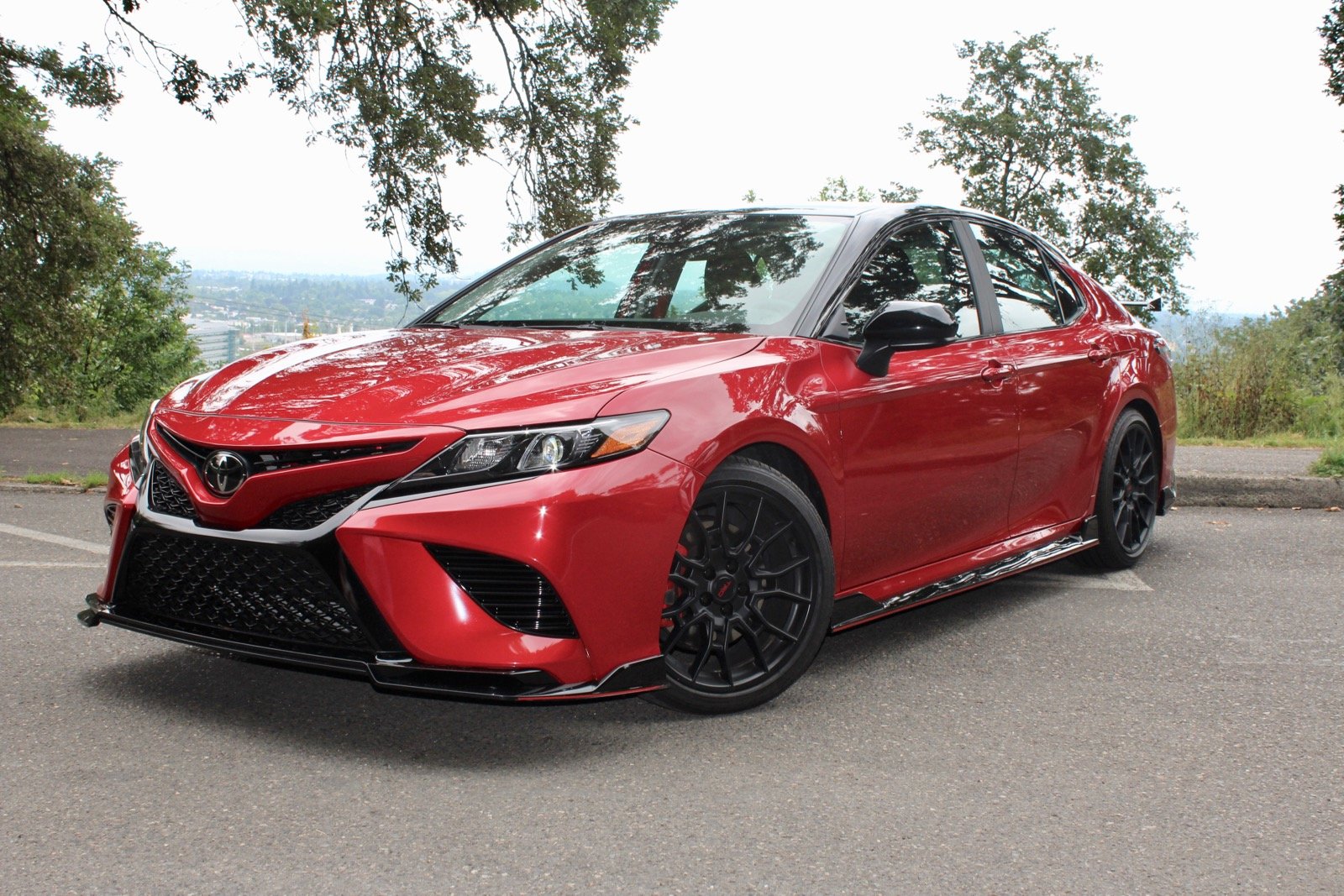
Overview | |
MSRP$24,425 | MSRP$19,310 |
Listings1360 | Listings547 |
Ratings & Reviews | |
User Reviews | User Reviews |
Expert reviews7.5 out of 10 | Expert reviews7.7 out of 10 |
Pros
Cons
| Pros
Cons
|
2020 Toyota Camry Reviews SummaryIf you can't beat them, join them. That seems to be Toyota's philosophy in updating the eighth generation of the Camry for the 2020 model year. This latest version of the perennial best seller debuted in 2017 as a 2018 model—and promptly lost its sales crown to Toyota's own RAV4 crossover SUV. As buyers continue to defect from cars, Toyota hopes to entice more shoppers to stick with its midsize sedan by offering all-wheel drive on the Camry for the first time since 1991. Also new for 2020 is the Camry TRD, a sportier version with a 301-horsepower V6 engine that makes its case to a buyer who might never have considered a Camry. | |
2020 Nissan Sentra Reviews SummaryFor 38 years, Nissan has peddled the Sentra as its definitive starter car. It’s a household name like Civic, Corolla, and Jetta—all of which are brand-new or have been refreshed in the last couple of years. The eighth-generation Sentra has the look of a larger, more luxurious car. It reflects major upgrades in style, technology, and driving dynamics. Compact sedans have a high bar to clear, even at $20,000. The 2020 Sentra delivers in every respect. | |
No video found | |
Popular Features & Specs | |
Engine2.5L 203 hp I4 | Engine2.0L 149 hp I4 |
Drive TrainFWD | Drive TrainFWD |
Seating Capacity5 | Seating Capacity5 |
Horsepower | Horsepower149 hp @ 6400 rpm |
MPG City29 | MPG City29 |
MPG Highway41 | MPG Highway39 |
Engine | |
Engine Name2.5L 203 hp I4 | Engine Name2.0L 149 hp I4 |
Torque | Torque146 lb-ft @ 4400 rpm |
Horsepower | Horsepower149 hp @ 6400 rpm |
DrivetrainFWD | DrivetrainFWD |
Fuel Economy | |
MPG City29 | MPG City29 |
MPG Highway41 | MPG Highway39 |
Interior | |
Seating Capacity5 | Seating Capacity5 |
Safety | |
Front Crash Overall5 | Front Crash Overall4 |
Side Crash Overall5 | Side Crash Overall5 |
Dimensions & Capacity | |
Cargo Space14.1 cu ft | Cargo Space14.3 cu ft |
Curb Weight3241 lbs | Curb Weight3047 lbs |
Height56.9 in | Height56.9 in |
Length192.1 in | Length182.7 in |
Width72.4 in | Width71.5 in |
Wheelbase111.2 in | Wheelbase106.8 in |
Maximum Payload925 lbs | Maximum Payload910 lbs |
Number of doors4 | Number of doors4 |
Overview | ||
MSRP | $24,425 | $19,310 |
Listings | ||
Ratings & Reviews | ||
User reviews | ||
Expert reviews | 7.5 out of 10Read full review | 7.7 out of 10Read full review |
Pros & cons | Pros
Cons
| Pros
Cons
|
Summary | If you can't beat them, join them. That seems to be Toyota's philosophy in updating the eighth generation of the Camry for the 2020 model year. This latest version of the perennial best seller debuted in 2017 as a 2018 model—and promptly lost its sales crown to Toyota's own RAV4 crossover SUV. As buyers continue to defect from cars, Toyota hopes to entice more shoppers to stick with its midsize sedan by offering all-wheel drive on the Camry for the first time since 1991. Also new for 2020 is the Camry TRD, a sportier version with a 301-horsepower V6 engine that makes its case to a buyer who might never have considered a Camry. | For 38 years, Nissan has peddled the Sentra as its definitive starter car. It’s a household name like Civic, Corolla, and Jetta—all of which are brand-new or have been refreshed in the last couple of years. The eighth-generation Sentra has the look of a larger, more luxurious car. It reflects major upgrades in style, technology, and driving dynamics. Compact sedans have a high bar to clear, even at $20,000. The 2020 Sentra delivers in every respect. |
Video | No video found | |
Popular Features & Specs | ||
Engine | 2.5L 203 hp I4 | 2.0L 149 hp I4 |
Drive Train | FWD | FWD |
Seating Capacity | 5 | 5 |
Horsepower | 149 hp @ 6400 rpm | |
MPG City | 29 | 29 |
MPG Highway | 41 | 39 |
Engine | ||
Engine Name | 2.5L 203 hp I4 | 2.0L 149 hp I4 |
Torque | 146 lb-ft @ 4400 rpm | |
Horsepower | 149 hp @ 6400 rpm | |
Drivetrain | FWD | FWD |
Fuel Economy | ||
MPG City | 29 | 29 |
MPG Highway | 41 | 39 |
Interior | ||
Seating Capacity | 5 | 5 |
Safety | ||
Front Crash Overall | 5 | 4 |
Side Crash Overall | 5 | 5 |
Dimensions & Capacity | ||
Cargo Space | 14.1 cu ft | 14.3 cu ft |
Curb Weight | 3241 lbs | 3047 lbs |
Height | 56.9 in | 56.9 in |
Length | 192.1 in | 182.7 in |
Width | 72.4 in | 71.5 in |
Wheelbase | 111.2 in | 106.8 in |
Maximum Payload | 925 lbs | 910 lbs |
Number of doors | 4 | 4 |
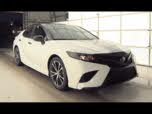
The 2020 Toyota Camry had a renewed focus on quality and appeal, aiming to reclaim its reputation for reliability and value. Its styling was more expressive than ever, with bold front fascia and taut lines that gave it a sporty look. The interior featured uniformly nice materials and a driver-focused dashboard, making even the base trims feel upscale. The TRD model added red trim accents, including bright red seatbelts, enhancing its sporty appeal. Despite these improvements, the Camry remained a mainstream sedan with a starting price of $25,380, not quite reaching the luxury or sport sedan status.
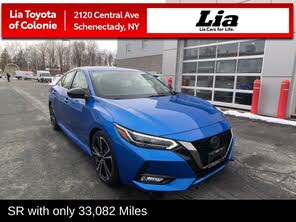
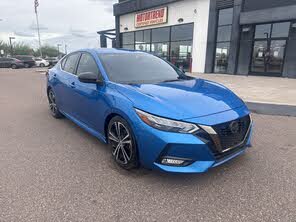
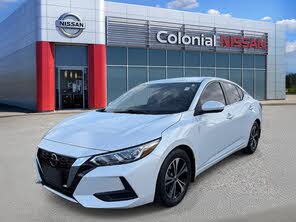
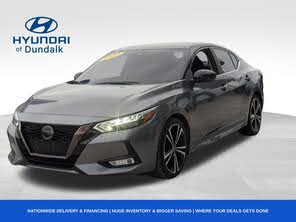
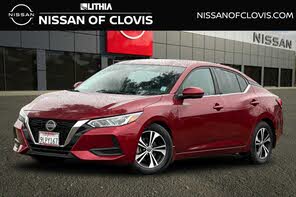
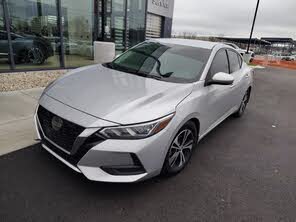
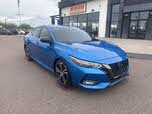
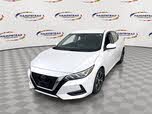
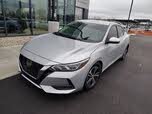
The 2020 Nissan Sentra, on the other hand, transformed its previously dowdy image into something more appealing. The new design, inspired by the Altima, made the Sentra feel larger and more refined. The lowered body profile and detailed sheet metal creases gave it an expensive look. The interior also saw significant upgrades, with a flat-bottom leather steering wheel and white-stitched leatherette dash that felt premium. The SV Premium Package offered quilted tan leather seats and Infiniti-grade materials, making the Sentra's interior close to that of luxury compacts like the Mercedes-Benz CLA.


The 2020 Toyota Camry offered four distinct powertrains: a 2.5-liter four-cylinder with FWD, the same engine with AWD, a FWD 3.5-liter V6, and a hybrid powertrain. The 3.5-liter V6 produced 301 horsepower and was paired with an eight-speed automatic transmission, providing a smooth and powerful driving experience. The 2.5-liter four-cylinder engine, making 203 hp (206 in XSE trim), was lighter and offered a more engaging drive, especially in the sporty XSE trim. The AWD system, similar to that in the RAV4, could send up to half of the engine's 184 pound-feet of torque to the rear wheels, enhancing traction in slippery conditions. Fuel economy for the front-drive Camry was rated at 31 mpg combined, dropping to 28 mpg with AWD and 26 mpg for the V6 models.
The 2020 Nissan Sentra, however, simplified its powertrain options with a single 2.0-liter inline 4-cylinder engine producing 149 horsepower and 146 pound-feet of torque, paired with a CVT. The CVT mimicked gear changes of a conventional automatic, providing smooth and responsive performance. The Sentra's independent rear suspension improved handling and ride quality, making it feel controlled and supportive. Fuel economy was impressive, with an EPA rating of 29 mpg city, 39 highway, and 33 combined. The Sentra's steering response and handling were also high points, offering a quick and confident driving experience.
The 2020 Toyota Camry was easy to get into and drive, with most controls falling easily to hand. The front seats offered increased legroom and hip room compared to the previous generation. However, the rear seat had reduced legroom and overall passenger volume, making it tighter than competitors like the Honda Accord. The trunk space was also smaller, at 15.1 cubic feet, equivalent to that of the Honda Civic. The addition of AWD did not compromise the trunk or passenger space, thanks to modifications in the floor structure and fuel tank.
The 2020 Nissan Sentra's backseat was surprisingly spacious, accommodating taller passengers comfortably. The front seats featured Nissan's Zero Gravity cushioning, reducing fatigue on long drives. The lowered body profile improved side visibility, although the rear window's rake limited the rear view. The trunk space measured 14.3 cubic feet, slightly smaller than the outgoing model but still large for a compact car. The seatbacks folded to expand cargo space, making the Sentra practical for everyday use.
The 2020 Toyota Camry added Android Auto to its standard features, joining Apple CarPlay, Amazon Alexa compatibility, and a three-month trial of SiriusXM satellite radio. The standard infotainment system, while functional and quick to respond, felt dated with low-resolution graphics. The base models came with a 7-inch screen, with an optional 8-inch upgrade available. A three-month trial of WiFi Connect and a one-year trial of Remote Connect were also included. Higher trims featured a 7-inch multi-information display and an optional 10-inch head-up display.
The 2020 Nissan Sentra did not offer ProPilot, navigation, or wireless charging, but it included Apple CarPlay, Android Auto, Amazon Alexa, and WiFi as standard on the mid-level SV. The SV also added two more USB ports, including USB-C, and larger screens. The SV Premium Package and SR trim offered additional features like LED headlights, Bose stereo, sunroof, heated front seats, and 360-degree cameras. The SV came with dual-zone climate control, proximity-entry key, adaptive cruise control, and remote engine start, making it well-equipped for its price.
The 2020 Toyota Camry came with Toyota's Safety Sense suite, including a pre-collision system with emergency braking, dynamic radar adaptive cruise control, lane-departure warning with steering assist, and automatic high beams. A one-year trial of Safety Connect was also included. Blind-spot monitoring with rear cross-traffic alert was optional. The Camry earned a five-star rating from NHTSA and a Top Safety Pick+ from IIHS. There was one NHTSA recall for leaking engine coolant, affecting up to 44,191 cars with 2.5-liter engines.
The 2020 Nissan Sentra had not been crash-tested by NHTSA or IIHS, but it was expected to receive top ratings. It included rear side airbags, knee airbags for the driver and front passenger, forward and reverse emergency braking, pedestrian detection, blind-spot monitoring, rear cross-traffic alert, lane-departure warning, and auto high beams as standard. A driver attention monitor was also included, making the Sentra well-equipped for safety.
CarGurus highlights

According to CarGurus experts, the overall rating for the 2020 Toyota Camry is 7.5 out of 10, while the 2020 Nissan Sentra scores 7.7 out of 10. Based on these ratings, the 2020 Nissan Sentra is the better choice, offering a more refined design, better fuel economy, and a well-equipped interior at a competitive price.
Choose the 2020 Toyota Camry if:
- You want multiple powertrain options, including a powerful V6 and AWD.
- You prioritize a well-appointed interior with high-quality materials.
- You value a comprehensive suite of safety features and top safety ratings.


Choose the 2020 Nissan Sentra if:
- You seek a stylish and refined compact sedan with a premium feel.
- You want excellent fuel economy and a smooth, responsive CVT.
- You need a spacious backseat and practical trunk space for everyday use.


CarGurus highlights
According to CarGurus experts, the overall rating for the 2020 Toyota Camry is 7.5 out of 10, while the 2020 Nissan Sentra scores 7.7 out of 10. Based on these ratings, the 2020 Nissan Sentra is the better choice, offering a more refined design, better fuel economy, and a well-equipped interior at a competitive price.
Choose the 2020 Toyota Camry if:
Shop Now- You want multiple powertrain options, including a powerful V6 and AWD.
- You prioritize a well-appointed interior with high-quality materials.
- You value a comprehensive suite of safety features and top safety ratings.





Choose the 2020 Nissan Sentra if:
Shop Now- You seek a stylish and refined compact sedan with a premium feel.
- You want excellent fuel economy and a smooth, responsive CVT.
- You need a spacious backseat and practical trunk space for everyday use.






By: CarGurus + AI
At CarGurus, our team of experienced automotive writers remain at the heart of our content operation, conducting hands-on car tests and writing insightful guides that are backed by years of industry experience. To complement this, we are harnessing AI to make our content offering more diverse and more helpful to shoppers than ever. To achieve this, our AI systems are based exclusively on CarGurus content, ratings and data, so that what we produce is both unique to CarGurus, and uniquely helpful to car shoppers.