2020 Ford Escape vs 2020 Lincoln Aviator

Overview | |
MSRP$51,100 | MSRP$24,885 |
Listings589 | Listings1818 |
Ratings & Reviews | |
User Reviews | User Reviews |
Expert reviews8.2 out of 10 | Expert reviews8.0 out of 10 |
Pros
Cons
| Pros
Cons
|
2020 Lincoln Aviator Reviews SummaryThe heyday for Lincoln was more than a half-century ago. Those postwar years of prosperity and optimism were the perfect time for cars like the Continental and others. They delivered comfort and luxury, wrapped in midcentury modern styling. Even as recently as the 1990s, Lincoln was still a popular brand, riding the SUV craze with its Navigator. But after the turn of the century, Lincoln lost its ability to create new designs and looked inward and backward. Sure, retro-themed cars like the redesigned Mustang, PT Cruiser, and Chevy HHR had turned some heads, but none of those came from luxury brands. The BMWs and Mercedes of the world were all looking forward and pushing the envelope for contemporary automotive design. Meanwhile, Lincoln offered the MKX, which was based on the Ford Edge and featured ’66 Continental styling. Neat in a vacuum, but off-base compared to the modern luxury market. This experimental phase with various retro looks coincided with the move to the MK-# alphabet-soup naming convention and big improvements in the Ford lineup, where top-end trims of the Fusion overlapped with an entry-level trim of the MKZ. The combination left Lincoln a confusing, anonymous afterthought in the modern luxury game. But Lincoln is finally ready to change all that. It has a new cohesive design language, its focus is once again on luxury, and the three-letter naming convention that never meant anything to anyone other than Lincoln marketers is gone. The brand led with the 2017 Continental and 2018 Navigator, which are each impressive in their own right. But the company's lineup is growing and now includes the all-new 2020 Lincoln Aviator. Named after a luxury variant of the 2002-2005 Ford Explorer, this new Aviator is also based on the contemporary Explorer platform, but it's a luxury vehicle in its own right. Much of the success of the Lincoln brand may hinge on this midsize, 3-row luxury SUV, so you need to consider its competition, such as the Audi Q7, Infiniti QX60, and all-new Cadillac XT6. Read on to learn if Lincoln’s take on luxury will stand out in a crowded competitive field. | |
2020 Ford Escape Reviews SummaryIn case you didn’t hear, Ford came out with an electric crossover, calling it the Mustang Mach-E. Ford could have called it something else, but the marketing department decided to leverage the famous Mustang name to capture headlines and, hopefully, shoppers. What should not be overlooked is the fact Ford chose to make its first-ever standalone electric vehicle a crossover. This choice is a testament to how far the sport utility vehicle has come. Paired with Ford's decision to phase out sedans and hatchbacks, it's clear the company is putting all of its eggs into its trucks, SUVs, and crossovers. Suffice it to say, there is just a bit of pressure on the redesigned 2020 Ford Escape. While the Escape has been around since 2000, it came into its own in 2013 when the “One Ford” philosophy was adopted, meaning that vehicles would be sold in multiple markets around the globe. As a result, the U.S. got Europe’s Ford Kuga, rebranded as the Escape—a high-tech, handsome, and surprisingly athletic small SUV. So, with all this mind, the new Escape needs to not only be an improvement over the previous generation to compete against the rest of the compact crossover segment, it also needs to win over would-be sedan and hatchback customers. Can the 2020 Escape rise to the occasion? | |
Popular Features & Specs | |
Engine3.0L 400 hp V6 | Engine1.5L 181 hp I3 |
Drive TrainRWD | Drive TrainFWD |
Seating Capacity7 | Seating Capacity5 |
MPG City18 | MPG City27 |
MPG Highway26 | MPG Highway33 |
Engine | |
Engine Name3.0L 400 hp V6 | Engine Name1.5L 181 hp I3 |
DrivetrainRWD | DrivetrainFWD |
Fuel Economy | |
MPG City18 | MPG City27 |
MPG Highway26 | MPG Highway33 |
Interior | |
Seating Capacity7 | Seating Capacity5 |
Safety | |
Front Crash Overall5 | Front Crash Overall5 |
Side Crash Overall5 | Side Crash Overall5 |
Dimensions & Capacity | |
Cargo Space18.3 cu ft | Cargo Space37.5 cu ft |
Curb Weight4764 lbs | Curb Weight3299 lbs |
Height69.8 in | Height66.1 in |
Length199.3 in | Length180.5 in |
Width89.9 in | Width85.6 in |
Wheelbase119.1 in | Wheelbase106.7 in |
Number of doors4 | Number of doors4 |
Overview | ||
MSRP | $51,100 | $24,885 |
Listings | ||
Ratings & Reviews | ||
User reviews | ||
Expert reviews | 8.2 out of 10Read full review | 8.0 out of 10Read full review |
Pros & cons | Pros
Cons
| Pros
Cons
|
Summary | The heyday for Lincoln was more than a half-century ago. Those postwar years of prosperity and optimism were the perfect time for cars like the Continental and others. They delivered comfort and luxury, wrapped in midcentury modern styling. Even as recently as the 1990s, Lincoln was still a popular brand, riding the SUV craze with its Navigator. But after the turn of the century, Lincoln lost its ability to create new designs and looked inward and backward. Sure, retro-themed cars like the redesigned Mustang, PT Cruiser, and Chevy HHR had turned some heads, but none of those came from luxury brands. The BMWs and Mercedes of the world were all looking forward and pushing the envelope for contemporary automotive design. Meanwhile, Lincoln offered the MKX, which was based on the Ford Edge and featured ’66 Continental styling. Neat in a vacuum, but off-base compared to the modern luxury market. This experimental phase with various retro looks coincided with the move to the MK-# alphabet-soup naming convention and big improvements in the Ford lineup, where top-end trims of the Fusion overlapped with an entry-level trim of the MKZ. The combination left Lincoln a confusing, anonymous afterthought in the modern luxury game. But Lincoln is finally ready to change all that. It has a new cohesive design language, its focus is once again on luxury, and the three-letter naming convention that never meant anything to anyone other than Lincoln marketers is gone. The brand led with the 2017 Continental and 2018 Navigator, which are each impressive in their own right. But the company's lineup is growing and now includes the all-new 2020 Lincoln Aviator. Named after a luxury variant of the 2002-2005 Ford Explorer, this new Aviator is also based on the contemporary Explorer platform, but it's a luxury vehicle in its own right. Much of the success of the Lincoln brand may hinge on this midsize, 3-row luxury SUV, so you need to consider its competition, such as the Audi Q7, Infiniti QX60, and all-new Cadillac XT6. Read on to learn if Lincoln’s take on luxury will stand out in a crowded competitive field. | In case you didn’t hear, Ford came out with an electric crossover, calling it the Mustang Mach-E. Ford could have called it something else, but the marketing department decided to leverage the famous Mustang name to capture headlines and, hopefully, shoppers. What should not be overlooked is the fact Ford chose to make its first-ever standalone electric vehicle a crossover. This choice is a testament to how far the sport utility vehicle has come. Paired with Ford's decision to phase out sedans and hatchbacks, it's clear the company is putting all of its eggs into its trucks, SUVs, and crossovers. Suffice it to say, there is just a bit of pressure on the redesigned 2020 Ford Escape. While the Escape has been around since 2000, it came into its own in 2013 when the “One Ford” philosophy was adopted, meaning that vehicles would be sold in multiple markets around the globe. As a result, the U.S. got Europe’s Ford Kuga, rebranded as the Escape—a high-tech, handsome, and surprisingly athletic small SUV. So, with all this mind, the new Escape needs to not only be an improvement over the previous generation to compete against the rest of the compact crossover segment, it also needs to win over would-be sedan and hatchback customers. Can the 2020 Escape rise to the occasion? |
Video | ||
Popular Features & Specs | ||
Engine | 3.0L 400 hp V6 | 1.5L 181 hp I3 |
Drive Train | RWD | FWD |
Seating Capacity | 7 | 5 |
MPG City | 18 | 27 |
MPG Highway | 26 | 33 |
Engine | ||
Engine Name | 3.0L 400 hp V6 | 1.5L 181 hp I3 |
Drivetrain | RWD | FWD |
Fuel Economy | ||
MPG City | 18 | 27 |
MPG Highway | 26 | 33 |
Interior | ||
Seating Capacity | 7 | 5 |
Safety | ||
Front Crash Overall | 5 | 5 |
Side Crash Overall | 5 | 5 |
Dimensions & Capacity | ||
Cargo Space | 18.3 cu ft | 37.5 cu ft |
Curb Weight | 4764 lbs | 3299 lbs |
Height | 69.8 in | 66.1 in |
Length | 199.3 in | 180.5 in |
Width | 89.9 in | 85.6 in |
Wheelbase | 119.1 in | 106.7 in |
Number of doors | 4 | 4 |
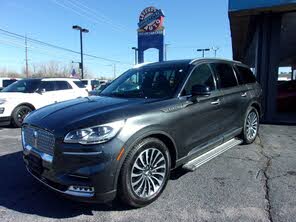
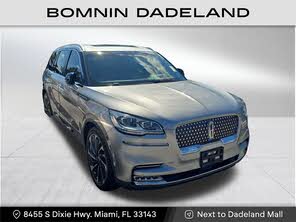
The 2020 Lincoln Aviator slotted below the Navigator and above the compact MKC and its replacement, the Lincoln Corsair, in the Lincoln lineup. The Aviator featured a unified design across Lincoln's sedans, crossovers, and SUVs, with handsome headlights and an upright chrome grille. Its roofline tapered, giving it an elongated look, and its low, wide beltline provided a boat-like appearance. Inside, the Aviator's cabin boasted a flowing design, soft-touch materials, and selective use of brightwork. The seats were both elegant and sturdy, with shifter buttons resembling piano keys. The Aviator's interior was luxurious, with soft-touch materials throughout, including plush leather on the dash, door panels, and center console sides. Notable features included a massive panoramic moonroof and unique warning jingles recorded by the Detroit Symphony Orchestra.
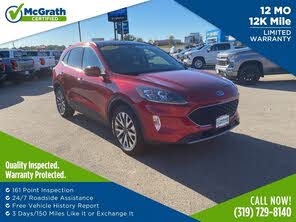
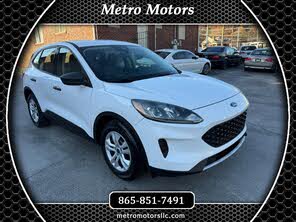
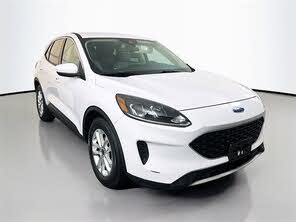
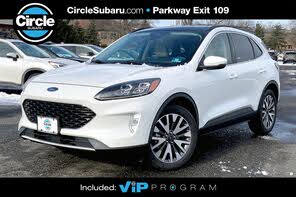
The 2020 Ford Escape was a very attractive compact crossover, sharing its large grille with the outgoing Fiesta and Focus hatchbacks, and its headlights were inspired by the Ford GT supercar. The new Escape had a more curvaceous design compared to its predecessor, which came at the cost of some cargo space. Inside, the Escape featured a modern cabin with a fully digital instrument panel, floating infotainment screen, and a smooth, forward-looking design. The Escape was available in multiple trims, with the base S trim offering basic features and the SE trim adding more advanced features like an 8-inch Sync 3 infotainment system with Apple CarPlay and Android Auto. The SE Sport trim added sporty touches and a hybrid drivetrain, while the SEL and Titanium trims offered additional luxury features.


The 2020 Lincoln Aviator came standard with a twin-turbocharged 3.0-liter V6 engine, producing 400 horsepower and 415 pound-feet of torque. The Grand Touring trim combined this engine with a 100-hp electric motor, resulting in a net 494 hp and 630 lb-ft of torque. Both powertrains used a 10-speed automatic transmission, with the base V6 available in rear-wheel drive (RWD) or all-wheel drive (AWD), while the plug-in hybrid (PHEV) was AWD only. The Aviator's fuel economy for the RWD model was 18 mpg city, 26 highway, and 21 combined, while the AWD model achieved 17 mpg city, 24 highway, and 20 combined. The PHEV had a combined fuel economy of 23 mpg, with a 21-mile electric-only range and a rating of 56 miles-per-gallon equivalent combined.
The 2020 Ford Escape offered four engine options, including a new 3-cylinder engine making 180 horsepower and 177 pound-feet of torque, standard in the S, SE, and SEL trims. The 2.0-liter turbocharged 4-cylinder engine, available on the SEL and standard on the Titanium trim, produced 250 horsepower and 275 pound-feet of torque. The 2.5-liter 4-cylinder engine was part of the hybrid drivetrain, making 198 horsepower, and was standard on the SE Sport and available on the Titanium. The plug-in hybrid variant was optional on the SE, SEL, and Titanium trims. The conventional engines used an 8-speed automatic transmission, while the hybrids used a continuously variable transmission (CVT). The most efficient version of the Escape was the non-Sport hybrid, with a fuel economy of 44 mpg city, 37 highway, and 41 combined. The 1.5-liter turbo engine returned 27/33/30 combined, while the 2.0-liter turbo with AWD returned 23/31/26.
The 2020 Lincoln Aviator, with its three rows, competed with vehicles like the Audi Q7, Infiniti QX60, and Mercedes-Benz GLE. The optional second-row captain’s chairs were fantastic, while the power-closing third row was adequate for adults but best suited for kids on longer trips. Dropping the second and third rows provided 77 cubic feet of cargo space. The Aviator's interior featured some confusing controls, such as the door handles and seat controls, which required navigating a touchscreen menu for full functionality. The door-release function was also unconventional, with a button instead of a traditional handle, which could be confusing for passengers.
The 2020 Ford Escape had a sleeker design than its predecessor, resulting in reduced cargo space. Behind the second row, the Escape offered 37.5 cubic feet of cargo space, which dropped to 34.4 cubic feet in hybrid models. Folding the backseat down provided 65.4 cubic feet of cargo space, or 60.8 cubic feet in upper-level trims. Despite the reduced cargo space, the Escape emphasized passenger space, with plenty of headroom and legroom for second-row passengers. The front seats provided a commanding seating position with good visibility. The Escape also offered numerous storage solutions, including deep water-bottle holders and multiple trays and compartments.
The 2020 Lincoln Aviator came standard with the Sync 3 infotainment system, operated via a 10.1-inch touchscreen. The screen used a landscape layout, providing a better interface for Apple CarPlay and Android Auto. The Aviator also featured a fully digital instrument panel and a massive head-up display, which presented information in a minimalist and unobtrusive manner.
The 2020 Ford Escape's base trim came with a small 4.2-inch audio control screen, which stood out as an eyesore due to the floating screen design. The SE trim upgraded to an 8-inch Sync 3 screen, which included Apple CarPlay and Android Auto. The Titanium trim featured a head-up display (HUD) with a small flip-up screen, which was less effective for taller drivers. The latest version of Sync allowed for multi-tasking, enabling the use of different apps on the phone while projecting on the car's display.
The 2020 Lincoln Aviator came standard with a full array of front and side-impact airbags, traction control, and a tire pressure monitoring system. It also included Lincoln Co-Pilot360, a suite of driver-assistance systems such as forward-collision avoidance, lane-departure warning, adaptive cruise control, and automatic high beams. Other safety features included blind-spot monitoring and a head-up display.
The 2020 Ford Escape also came with a full array of front and side-impact airbags, a reversing camera, traction control, and a tire pressure monitoring system. It earned the best overall score of Good from the Insurance Institute of Highway Safety (IIHS) in all phases of testing. The Escape came standard with Ford Co-Pilot360, which included forward-collision warning, lane-keeping assist, adaptive cruise control, and automatic high beams. It also featured blind-spot monitoring, rear cross-traffic alert, and a driver drowsiness monitor.
CarGurus highlights
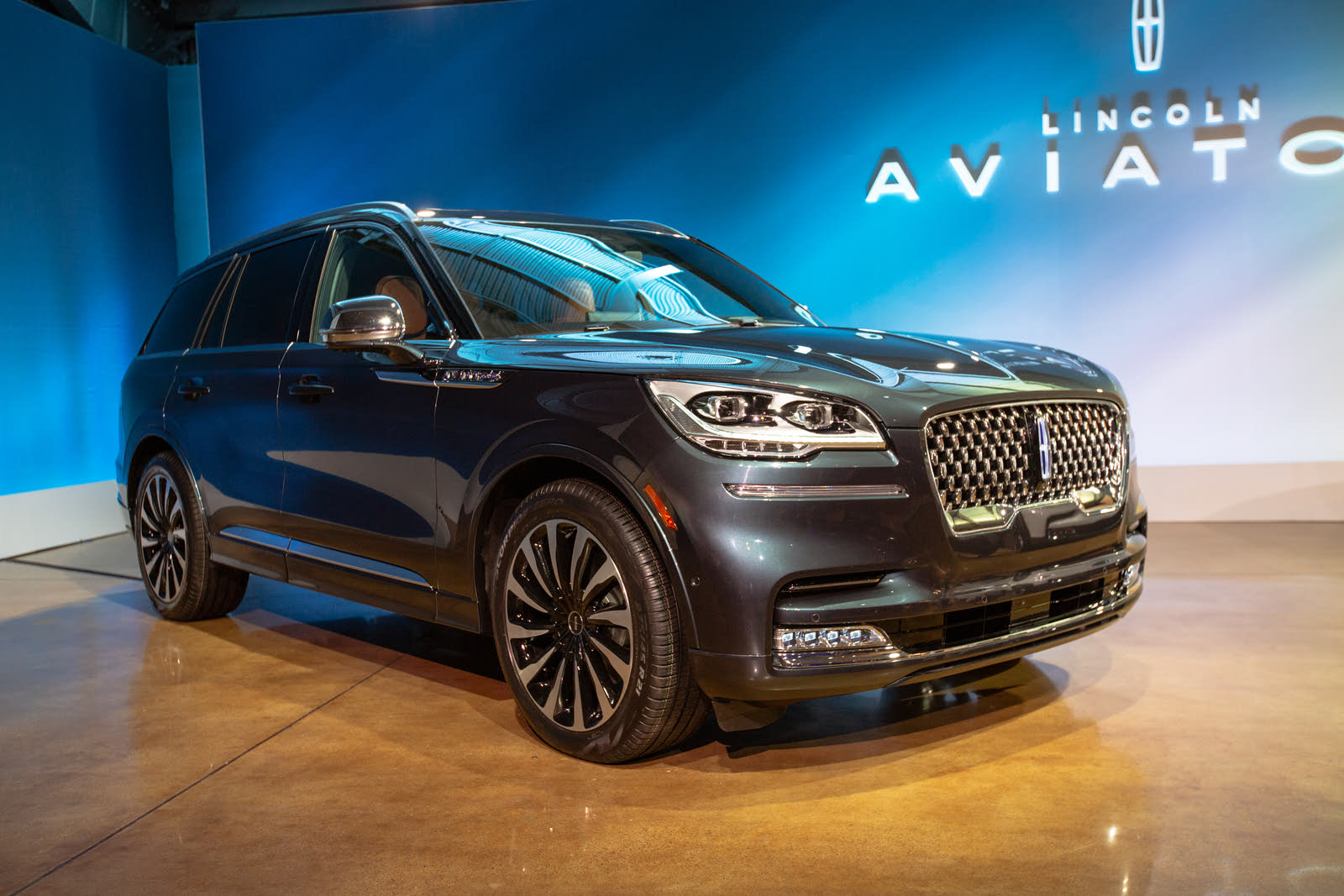
According to CarGurus experts, the overall rating for the 2020 Lincoln Aviator is 8.2 out of 10, while the 2020 Ford Escape scores 8.0 out of 10. Based on these ratings, the Lincoln Aviator is the recommended choice for its superior luxury, performance, and advanced features.
Choose the 2020 Ford Escape if:
- You prefer a compact crossover with multiple engine options, including hybrids.
- You value modern technology and infotainment features at an affordable price.
- You need a vehicle with excellent fuel economy, especially in hybrid models.



Choose the 2020 Lincoln Aviator if:
- You prioritize a luxurious interior with high-quality materials and unique features.
- You need a powerful engine with impressive horsepower and torque.
- You want advanced driver-assistance systems and a comprehensive safety suite.




CarGurus highlights
According to CarGurus experts, the overall rating for the 2020 Lincoln Aviator is 8.2 out of 10, while the 2020 Ford Escape scores 8.0 out of 10. Based on these ratings, the Lincoln Aviator is the recommended choice for its superior luxury, performance, and advanced features.
Choose the 2020 Ford Escape if:
Shop Now- You prefer a compact crossover with multiple engine options, including hybrids.
- You value modern technology and infotainment features at an affordable price.
- You need a vehicle with excellent fuel economy, especially in hybrid models.









Choose the 2020 Lincoln Aviator if:
Shop Now- You prioritize a luxurious interior with high-quality materials and unique features.
- You need a powerful engine with impressive horsepower and torque.
- You want advanced driver-assistance systems and a comprehensive safety suite.








By: CarGurus + AI
At CarGurus, our team of experienced automotive writers remain at the heart of our content operation, conducting hands-on car tests and writing insightful guides that are backed by years of industry experience. To complement this, we are harnessing AI to make our content offering more diverse and more helpful to shoppers than ever. To achieve this, our AI systems are based exclusively on CarGurus content, ratings and data, so that what we produce is both unique to CarGurus, and uniquely helpful to car shoppers.