2020 Land Rover Range Rover Sport vs 2021 Volvo XC40

Overview | |
MSRP$68,650 | MSRP$33,700 |
Listings4 | Listings1 |
Ratings & Reviews | |
User Reviews | User Reviews |
Expert reviews6.7 out of 10 | Expert reviews8.0 out of 10 |
Pros
Cons
| Pros
Cons
|
2020 Land Rover Range Rover Sport Reviews SummaryWhen you think of a plug-in hybrid electric vehicle (PHEV), the image of a dorky little hatchback car probably pops into your mind. The new 2020 Land Rover Range Rover Sport PHEV, however, is an entirely different kind of electrified vehicle. Land Rover says it retains all of its traditional land-roving capabilities while delivering greater efficiency. Based on our week-long test in this SUV’s natural habitat (the swanky suburbs of a big city), it does get remarkably good fuel economy. | |
2021 Volvo XC40 Reviews SummaryIntroduced for the 2019 model year, the Volvo XC40 enters 2021 with one major change—the addition of an all-electric powertrain option. The 2021 Volvo XC40 Recharge is the Swedish automaker’s first mass-market electric vehicle, in fact. The Recharge will be sold alongside gasoline versions of the XC40, which carry over largely unchanged, and compete against small luxury crossovers like the Audi Q3, BMW X1, Mercedes-Benz GLA-Class, and Lexus UX. With its electric powertrain, the Recharge is a de facto Tesla Model Y competitor. It’s also priced similar to high-end versions of the Ford Mustang Mach-E, although the two electric crossovers have somewhat different philosophies. In addition to that zero-emission powertrain, the Recharge gets an Android-based operating system, over-the-air (OTA) software update capability for all vehicle systems, and some updates to driver-assist tech. These changes don’t apply to gasoline 2021 XC40 models, but Volvo does plan to add the Android operating system to more vehicles in the future. Since the Recharge is the main new thing for the 2021 XC40, that’s what we focused on for this review. While the gasoline XC40 is available in three trim levels—Momentum, R-Design, and Inscription—with front-wheel drive (FWD) or all-wheel drive (AWD), the Recharge is only offered in a single trim level, with standard AWD. | |
No video found | |
Popular Features & Specs | |
Engine3.0L 355 hp I6 | Engine2.0L 187 hp I4 |
Drive TrainAWD | Drive TrainFWD |
Seating Capacity7 | Seating Capacity5 |
Horsepower355 hp @ 5500 rpm | Horsepower187 hp @ 4700 rpm |
EV Battery Capacity0.2 kWh | EV Battery Capacity |
MPG City19 | MPG City23 |
MPG Highway24 | MPG Highway32 |
Engine | |
Engine Name3.0L 355 hp I6 | Engine Name2.0L 187 hp I4 |
Torque365 lb-ft @ 2000 rpm | Torque221 lb-ft @ 1400 rpm |
Horsepower355 hp @ 5500 rpm | Horsepower187 hp @ 4700 rpm |
DrivetrainAWD | DrivetrainFWD |
Fuel Economy | |
EV Battery Capacity0.2 kWh | EV Battery Capacity |
MPG City19 | MPG City23 |
MPG Highway24 | MPG Highway32 |
Interior | |
Leather SeatsStandard | Leather SeatsStandard |
Seating Capacity7 | Seating Capacity5 |
Key Features | |
Navigation SystemStandard | Navigation System |
Safety | |
Front Crash Overall | Front Crash Overall5 |
Side Crash Overall | Side Crash Overall5 |
Dimensions & Capacity | |
Cargo Space27.5 cu ft | Cargo Space20.7 cu ft |
Curb Weight4870 lbs | Curb Weight3627 lbs |
Height71.0 in | Height65.3 in |
Length192.1 in | Length174.2 in |
Width87.4 in | Width80.1 in |
Wheelbase115.1 in | Wheelbase106.4 in |
Maximum Payload1850 lbs | Maximum Payload1133 lbs |
Number of doors4 | Number of doors4 |
Maximum Towing Capacity7716 lbs | Maximum Towing Capacity3500 lbs |
Overview | ||
MSRP | $68,650 | $33,700 |
Listings | ||
Ratings & Reviews | ||
User reviews | ||
Expert reviews | 6.7 out of 10Read full review | 8.0 out of 10Read full review |
Pros & cons | Pros
Cons
| Pros
Cons
|
Summary | When you think of a plug-in hybrid electric vehicle (PHEV), the image of a dorky little hatchback car probably pops into your mind. The new 2020 Land Rover Range Rover Sport PHEV, however, is an entirely different kind of electrified vehicle. Land Rover says it retains all of its traditional land-roving capabilities while delivering greater efficiency. Based on our week-long test in this SUV’s natural habitat (the swanky suburbs of a big city), it does get remarkably good fuel economy. | Introduced for the 2019 model year, the Volvo XC40 enters 2021 with one major change—the addition of an all-electric powertrain option. The 2021 Volvo XC40 Recharge is the Swedish automaker’s first mass-market electric vehicle, in fact. The Recharge will be sold alongside gasoline versions of the XC40, which carry over largely unchanged, and compete against small luxury crossovers like the Audi Q3, BMW X1, Mercedes-Benz GLA-Class, and Lexus UX. With its electric powertrain, the Recharge is a de facto Tesla Model Y competitor. It’s also priced similar to high-end versions of the Ford Mustang Mach-E, although the two electric crossovers have somewhat different philosophies. In addition to that zero-emission powertrain, the Recharge gets an Android-based operating system, over-the-air (OTA) software update capability for all vehicle systems, and some updates to driver-assist tech. These changes don’t apply to gasoline 2021 XC40 models, but Volvo does plan to add the Android operating system to more vehicles in the future. Since the Recharge is the main new thing for the 2021 XC40, that’s what we focused on for this review. While the gasoline XC40 is available in three trim levels—Momentum, R-Design, and Inscription—with front-wheel drive (FWD) or all-wheel drive (AWD), the Recharge is only offered in a single trim level, with standard AWD. |
Video | No video found | |
Popular Features & Specs | ||
Engine | 3.0L 355 hp I6 | 2.0L 187 hp I4 |
Drive Train | AWD | FWD |
Seating Capacity | 7 | 5 |
Horsepower | 355 hp @ 5500 rpm | 187 hp @ 4700 rpm |
EV Battery Capacity | 0.2 kWh | |
MPG City | 19 | 23 |
MPG Highway | 24 | 32 |
Engine | ||
Engine Name | 3.0L 355 hp I6 | 2.0L 187 hp I4 |
Torque | 365 lb-ft @ 2000 rpm | 221 lb-ft @ 1400 rpm |
Horsepower | 355 hp @ 5500 rpm | 187 hp @ 4700 rpm |
Drivetrain | AWD | FWD |
Fuel Economy | ||
EV Battery Capacity | 0.2 kWh | |
MPG City | 19 | 23 |
MPG Highway | 24 | 32 |
Interior | ||
Leather Seats | Standard | Standard |
Seating Capacity | 7 | 5 |
Key Features | ||
Navigation System | Standard | |
Safety | ||
Front Crash Overall | 5 | |
Side Crash Overall | 5 | |
Dimensions & Capacity | ||
Cargo Space | 27.5 cu ft | 20.7 cu ft |
Curb Weight | 4870 lbs | 3627 lbs |
Height | 71.0 in | 65.3 in |
Length | 192.1 in | 174.2 in |
Width | 87.4 in | 80.1 in |
Wheelbase | 115.1 in | 106.4 in |
Maximum Payload | 1850 lbs | 1133 lbs |
Number of doors | 4 | 4 |
Maximum Towing Capacity | 7716 lbs | 3500 lbs |
The 2020 Land Rover Range Rover Sport PHEV maintained a subtle exterior, with only a small “P400e” badge distinguishing it from other models. The charging port was cleverly integrated into the grille, making it nearly invisible. This design choice was appreciated, as it kept the vehicle's aesthetic clean and appealing, despite the added cost of the hybrid powertrain. The test vehicle, priced at $93,200 with options, featured striking Firenze Red paint, a black roof, and 21-inch aluminum wheels, enhancing its already impressive looks. Inside, the cabin was filled with high-quality materials, reflecting the vehicle's premium price tag.
In contrast, the 2021 Volvo XC40 had a more traditional SUV design, with a tall, flat roof and upright rear hatch. It shared familial styling cues with other Volvo models, such as “Thor’s Hammer” LED headlights and a simple oval grille. The XC40 Recharge, the electric variant, featured a blanked-off grille, unique alloy wheels, and a model-exclusive Sage Green Metallic color. The interior was minimalist yet premium, with real metal trim and a combination of Nappa leather and Nubuck textile upholstery. The design was coherent and pleasing, with every element blending seamlessly.


The 2020 Land Rover Range Rover Sport PHEV combined a turbocharged 2.0-liter 4-cylinder gasoline engine with a 141-hp electric motor and a 13-kWh battery, producing a total of 398 horsepower and 472 pound-feet of torque. Despite Land Rover's claim of a 31-mile all-electric range, the test vehicle struggled to stay in EV mode, achieving only 28.4 miles before the gas engine kicked in. The SUV averaged 25.5 mpg over a 60-mile loop, which was an improvement over previous models but still left room for efficiency gains. The Range Rover Sport PHEV offered quick acceleration and a comfortable ride, thanks to its adaptive air suspension and various driving modes. However, the regenerative brakes were grabby, making smooth stops difficult. Off-road capability remained strong, with multiple traction settings and the ability to ford 33.4 inches of water.
The 2021 Volvo XC40 offered a three-tiered powertrain lineup. The base FWD T4 had a 2.0-liter turbo four-cylinder engine with 187 horsepower and 221 pound-feet of torque, while the AWD T5 had 248 hp and 258 lb-ft. The electric Recharge model shared its powertrain with the Polestar 2, featuring dual electric motors for a combined 402 hp and 486 lb-ft, powered by a 78-kWh battery pack. The Recharge accelerated from 0 to 60 mph in 4.7 seconds, making it quicker than some competitors. The XC40 emphasized comfort and quietness over performance, with excellent ride quality even on rough roads. The Recharge also offered one-pedal driving and a towing capacity of 2,000 pounds.
The 2020 Land Rover Range Rover Sport PHEV had a higher price tag and less cargo space due to the battery placement under the raised cargo floor, reducing the space to 27.5 cubic feet. The interior comfortably seated five, with excellent front-seat comfort and a tall riding position for rear-seat passengers. The optional refrigerated center console bin limited practical storage, but the dual-glove-box design helped. The panoramic glass roof and 4-zone automatic climate control added to the comfort and appeal.
The 2021 Volvo XC40 Recharge had no difference in passenger or cargo space compared to gasoline models, but it was less spacious than competitors like the Tesla Model Y and Ford Mustang Mach-E. Clever storage solutions, such as a removable trash bin in the center console and a bag hook in the glovebox door, helped make up for the lack of space. The Harman Kardon audio system's speakers were moved to the dashboard, allowing for larger door bins. The storage cubby ahead of the shifter was well-designed to hold a phone, with an optional wireless charging pad and a standard USB-C port. However, second-row occupants lacked phone-charging options.
The 2020 Land Rover Range Rover Sport featured the InControl Touch Pro Duo infotainment system, which could be frustrating to use despite its advanced capabilities. Setting up the system required time and patience, and it sometimes behaved unpredictably. The lack of haptic feedback from the touchscreen added to the challenge. While the system provided easy access to primary functions and maintained a clean interior aesthetic, it could be overwhelming for technophobes.
The 2021 Volvo XC40 Recharge introduced the Android Automotive OS infotainment system, featuring Google apps like Google Assistant and Google Maps. The system included Apple CarPlay, Android Auto, and Bluetooth connectivity, with a 9-inch touchscreen and a 12.3-inch digital instrument cluster. The Recharge also offered OTA update capability, allowing for software updates without visiting a dealership. The lack of a start button and the potential for a Digital Key feature added to the modern, tech-forward experience.
The 2020 Land Rover Range Rover Sport came with numerous advanced driver-assistance systems (ADAS), but the technology could be distracting. The new steering-assist system and lane-keeping assist were too aggressive, leading to head-toss and discomfort. Crash-test ratings were unavailable, but the vehicle's nearly 5,500-pound weight provided a sense of security in collisions.
The 2021 Volvo XC40 received top safety ratings, including the IIHS “Top Safety Pick+” and a five-star overall rating from the NHTSA. The XC40 Recharge was expected to perform well in crash tests due to its safety cage and redesigned front crash structure. Standard safety features included lane-keep assist, blind-spot monitoring, automatic emergency braking, and more. The Recharge also featured Volvo's latest sensor suite, scalable for future driver aids.
CarGurus highlights
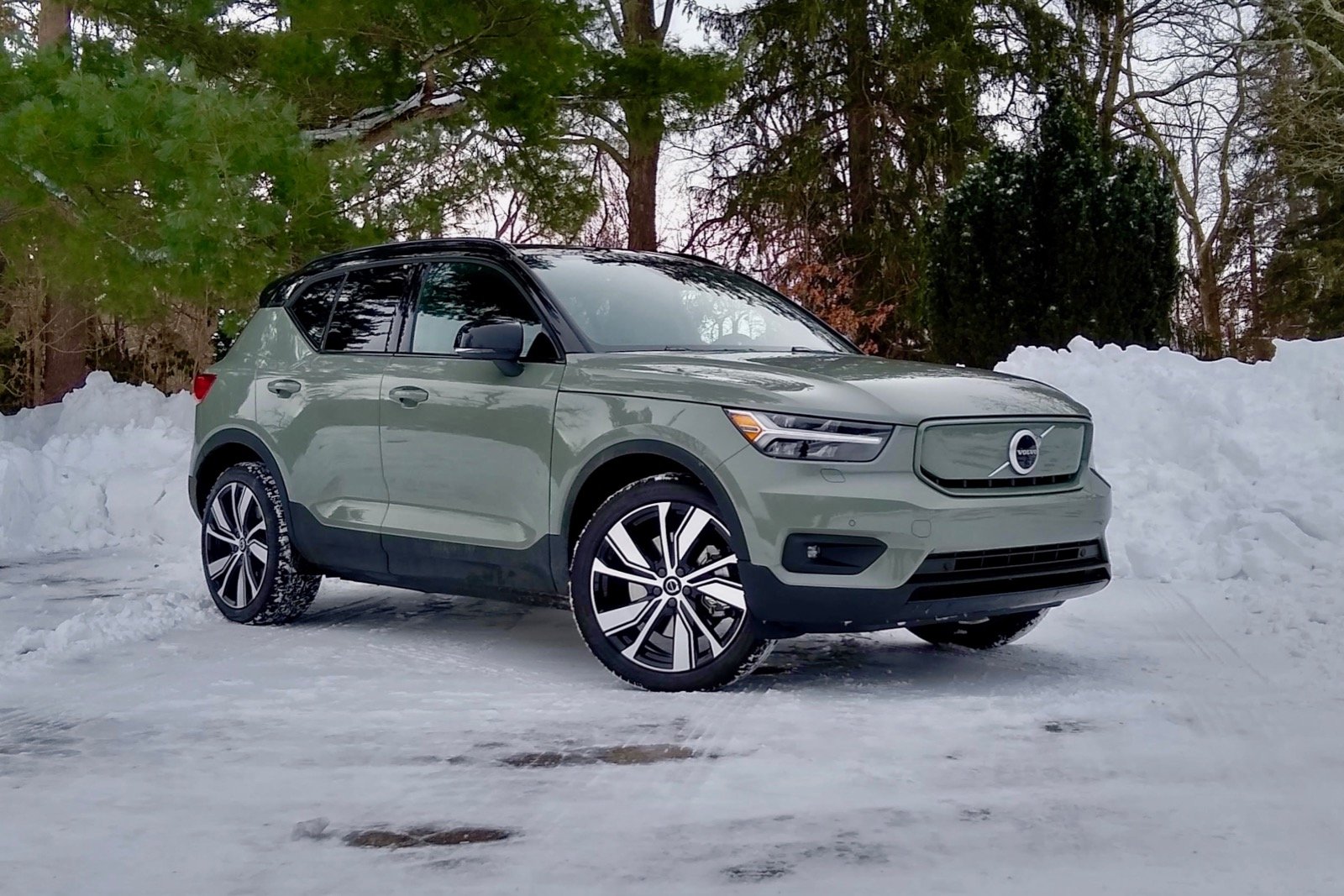
According to CarGurus experts, the overall rating for the 2020 Land Rover Range Rover Sport is 6.7 out of 10, while the 2021 Volvo XC40 scores 8.0 out of 10. Based on these ratings, the 2021 Volvo XC40 is the better choice, offering superior technology, safety, and overall value.
Choose the 2020 Land Rover Range Rover Sport if:
- You prioritize off-road capability and luxury.
- You prefer a vehicle with a traditional, understated design.
- You value a high-quality interior with premium materials.


Choose the 2021 Volvo XC40 if:
- You want a tech-forward vehicle with Google integration.
- You prioritize safety and top crash-test ratings.
- You prefer a comfortable, quiet ride with clever storage solutions.

CarGurus highlights
According to CarGurus experts, the overall rating for the 2020 Land Rover Range Rover Sport is 6.7 out of 10, while the 2021 Volvo XC40 scores 8.0 out of 10. Based on these ratings, the 2021 Volvo XC40 is the better choice, offering superior technology, safety, and overall value.
Choose the 2020 Land Rover Range Rover Sport if:
Shop Now- You prioritize off-road capability and luxury.
- You prefer a vehicle with a traditional, understated design.
- You value a high-quality interior with premium materials.


Choose the 2021 Volvo XC40 if:
Shop Now- You want a tech-forward vehicle with Google integration.
- You prioritize safety and top crash-test ratings.
- You prefer a comfortable, quiet ride with clever storage solutions.


By: CarGurus + AI
At CarGurus, our team of experienced automotive writers remain at the heart of our content operation, conducting hands-on car tests and writing insightful guides that are backed by years of industry experience. To complement this, we are harnessing AI to make our content offering more diverse and more helpful to shoppers than ever. To achieve this, our AI systems are based exclusively on CarGurus content, ratings and data, so that what we produce is both unique to CarGurus, and uniquely helpful to car shoppers.

