2021 Hyundai Kona vs 2020 Hyundai Venue

Overview | |
MSRP$17,350 | MSRP$20,500 |
Listings107 | Listings487 |
Ratings & Reviews | |
User Reviews | User Reviews |
Expert reviews7.3 out of 10 | Expert reviews7.2 out of 10 |
Pros
Cons
| Pros
Cons
|
2020 Hyundai Venue Reviews SummaryThe 2020 Hyundai Venue you see here is classified as a subcompact crossover. But without the roof rails and extra plastic fender cladding, you might just as well call it a hatchback. If you were to describe a front-wheel-drive (FWD) car with a bit more space than a small sedan and with an emphasis on economy and efficiency, I would figure you are talking about a compact hatchback. But here we are, calling the Venue a crossover. Small crossovers and SUVs have been among the most popular and fastest-growing group of vehicles sold in the past decade. This is partly because of their utilitarian image, but it’s also because automakers are choosing to offer would-be hatchbacks as crossovers, thanks to the popularity of the segment. All we know is automakers have an easier time marketing a vehicle as a small sport utility vehicle, even if it doesn’t offer much sport or utility. But forget the labels. Let’s look at the 2020 Venue for what it is: an affordable, economical hatchback with a decent amount of cabin space (for a vehicle its size) and the latest infotainment and safety technology. | |
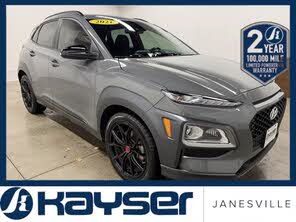
2021 Hyundai Kona Reviews SummaryAfter three years on the market, the Hyundai Kona continues to wow with great features, strong styling, and decent specs. The 2021 model year brings subtle changes to the Kona lineup, including new colors, a new Night Edition with Rays semi-gloss black 18-inch wheels, and gloss black exterior and interior accents. Hyundai offers the Kona in several trims: SE, SEL, SEL Plus, Night Edition, Limited, and Ultimate. A Hyundai Kona Electric model is available as well, but we'll cover that in a separate overview. A high-performance Kona N will be available for the 2022 model year. The Hyundai Kona competes with subcompact SUVs that include the Kia Soul, Volkswagen Taos, Mazda CX-30, Subaru Crosstrek, Nissan Kicks, Hyundai Venue, and Toyota C-HR. Given its size and price, buyers may also cross-shop the larger Hyundai Tucson. New car buyers have many other choices, then, but the Kona still stands out as a value-forward crossover with a long warranty and plenty of standard features. | |
No video found | |
Popular Features & Specs | |
Engine1.6L 121 hp I4 | Engine2.0L 147 hp I4 |
Drive TrainFWD | Drive TrainFWD |
Seating Capacity5 | Seating Capacity5 |
Horsepower121 hp @ 6300 rpm | Horsepower147 hp @ 6200 rpm |
MPG City27 | MPG City27 |
MPG Highway35 | MPG Highway33 |
Engine | |
Engine Name1.6L 121 hp I4 | Engine Name2.0L 147 hp I4 |
Torque113 lb-ft @ 4500 rpm | Torque132 lb-ft @ 4500 rpm |
Horsepower121 hp @ 6300 rpm | Horsepower147 hp @ 6200 rpm |
DrivetrainFWD | DrivetrainFWD |
Fuel Economy | |
MPG City27 | MPG City27 |
MPG Highway35 | MPG Highway33 |
Interior | |
Seating Capacity5 | Seating Capacity5 |
Safety | |
Front Crash Overall4 | Front Crash Overall5 |
Side Crash Overall5 | Side Crash Overall5 |
Dimensions & Capacity | |
Cargo Space18.7 cu ft | Cargo Space19.2 cu ft |
Curb Weight2557 lbs | Curb Weight2890 lbs |
Height61.6 in | Height61.0 in |
Length159.0 in | Length164.0 in |
Width69.7 in | Width70.9 in |
Wheelbase99.2 in | Wheelbase102.4 in |
Maximum Payload1081 lbs | Maximum Payload1089 lbs |
Number of doors4 | Number of doors4 |
Overview | ||
MSRP | $17,350 | $20,500 |
Listings | ||
Ratings & Reviews | ||
User reviews | ||
Expert reviews | 7.3 out of 10Read full review | 7.2 out of 10Read full review |
Pros & cons | Pros
Cons
| Pros
Cons
|
Summary | The 2020 Hyundai Venue you see here is classified as a subcompact crossover. But without the roof rails and extra plastic fender cladding, you might just as well call it a hatchback. If you were to describe a front-wheel-drive (FWD) car with a bit more space than a small sedan and with an emphasis on economy and efficiency, I would figure you are talking about a compact hatchback. But here we are, calling the Venue a crossover. Small crossovers and SUVs have been among the most popular and fastest-growing group of vehicles sold in the past decade. This is partly because of their utilitarian image, but it’s also because automakers are choosing to offer would-be hatchbacks as crossovers, thanks to the popularity of the segment. All we know is automakers have an easier time marketing a vehicle as a small sport utility vehicle, even if it doesn’t offer much sport or utility. But forget the labels. Let’s look at the 2020 Venue for what it is: an affordable, economical hatchback with a decent amount of cabin space (for a vehicle its size) and the latest infotainment and safety technology. | After three years on the market, the Hyundai Kona continues to wow with great features, strong styling, and decent specs. The 2021 model year brings subtle changes to the Kona lineup, including new colors, a new Night Edition with Rays semi-gloss black 18-inch wheels, and gloss black exterior and interior accents. Hyundai offers the Kona in several trims: SE, SEL, SEL Plus, Night Edition, Limited, and Ultimate. A Hyundai Kona Electric model is available as well, but we'll cover that in a separate overview. A high-performance Kona N will be available for the 2022 model year. The Hyundai Kona competes with subcompact SUVs that include the Kia Soul, Volkswagen Taos, Mazda CX-30, Subaru Crosstrek, Nissan Kicks, Hyundai Venue, and Toyota C-HR. Given its size and price, buyers may also cross-shop the larger Hyundai Tucson. New car buyers have many other choices, then, but the Kona still stands out as a value-forward crossover with a long warranty and plenty of standard features. |
Video | No video found | |
Popular Features & Specs | ||
Engine | 1.6L 121 hp I4 | 2.0L 147 hp I4 |
Drive Train | FWD | FWD |
Seating Capacity | 5 | 5 |
Horsepower | 121 hp @ 6300 rpm | 147 hp @ 6200 rpm |
MPG City | 27 | 27 |
MPG Highway | 35 | 33 |
Engine | ||
Engine Name | 1.6L 121 hp I4 | 2.0L 147 hp I4 |
Torque | 113 lb-ft @ 4500 rpm | 132 lb-ft @ 4500 rpm |
Horsepower | 121 hp @ 6300 rpm | 147 hp @ 6200 rpm |
Drivetrain | FWD | FWD |
Fuel Economy | ||
MPG City | 27 | 27 |
MPG Highway | 35 | 33 |
Interior | ||
Seating Capacity | 5 | 5 |
Safety | ||
Front Crash Overall | 4 | 5 |
Side Crash Overall | 5 | 5 |
Dimensions & Capacity | ||
Cargo Space | 18.7 cu ft | 19.2 cu ft |
Curb Weight | 2557 lbs | 2890 lbs |
Height | 61.6 in | 61.0 in |
Length | 159.0 in | 164.0 in |
Width | 69.7 in | 70.9 in |
Wheelbase | 99.2 in | 102.4 in |
Maximum Payload | 1081 lbs | 1089 lbs |
Number of doors | 4 | 4 |
The 2020 Hyundai Venue filled a long-standing gap in Hyundai's lineup by entering the subcompact SUV segment. Despite the introduction of the Kona in 2018, the Venue distinguished itself with a more affordable and practical design. It featured a unique aesthetic with a large chrome grille reminiscent of the Hyundai Palisade and a contrasting white roof on the Denim trim. Inside, the Venue offered a modern and spacious cabin with excellent visibility, thanks to its upright layout and large windows. The Venue's trims, SE, SEL, and Denim, provided a range of features, with the Denim trim offering denim upholstery as a premium alternative to leather.
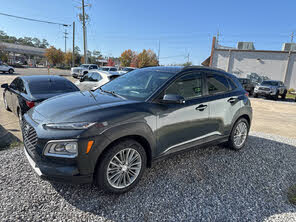
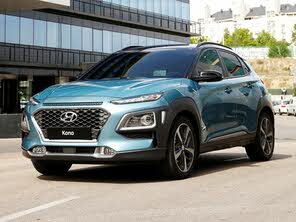
In contrast, the 2021 Hyundai Kona presented a more playful and youthful design, appealing to a younger audience. Its exterior featured a busy front with multiple lighting elements, while the rear maintained a more conventional crossover look. Inside, the Kona's interior matched its exterior's fun vibe with neat patterns and a well-organized layout. The infotainment system was positioned high on the dash, complemented by physical climate controls, creating an intuitive and user-friendly environment. The Kona's interior was designed to balance style and functionality, making it an attractive option for those seeking a compact SUV with personality.


The 2020 Hyundai Venue was powered by a single 1.6-liter 4-cylinder engine, producing 121 horsepower and 113 pound-feet of torque. This engine was paired with a manual transmission on the base trim, while most trims featured a continuously variable automatic transmission (IVT). The Venue was front-wheel drive only, lacking an all-wheel-drive option. Despite its SUV appearance, the Venue's performance was more akin to a compact hatchback, with modest acceleration and a somewhat noisy engine. It offered drive modes like Normal, Snow, and Sport, but its lack of power was evident in tight spots and highway merging. Fuel economy was respectable, with the CVT achieving 30 mpg city, 34 highway, and 32 combined.
The 2021 Hyundai Kona offered two powertrain options. The base model featured a 2.0-liter four-cylinder engine with 147 horsepower and 132 pound-feet of torque, paired with a six-speed automatic transmission. The optional turbocharged 1.6-liter engine delivered 195 horsepower and 195 pound-feet of torque, mated to a seven-speed dual-clutch automatic transmission. The Kona provided front-wheel drive as standard, with all-wheel drive available for an additional cost. While neither engine was exceptionally powerful, they offered sufficient performance for city and highway driving. The Kona's handling was agile and engaging, with a comfortable ride on curvy roads. Fuel economy varied depending on the engine and drivetrain, with the base engine achieving up to 30 mpg combined.
The 2020 Hyundai Venue, while not particularly sporty or utilitarian, offered a practical interior layout. It provided ample head- and legroom in the front seats, even accommodating taller drivers. The Venue's control layout was intuitive, with traditional buttons and dials for essential functions. However, its cargo space was limited, with only 31.9 cubic feet available when the rear seats were folded, compared to the Kona's 45.8 cubic feet. Despite this, the Venue's design demonstrated Hyundai's attention to real-world usability.
The 2021 Hyundai Kona provided decent front-seat headroom and legroom, with controls and displays easily accessible to both front passengers. The front seats were comfortable but lacked sufficient support for spirited driving. Rear-seat passengers enjoyed good headroom, but legroom was limited. The Kona's cargo space was also limited, ranking near the bottom of its segment. However, it offered generous small-item storage spaces, including large door pockets and a spacious center console area.
The 2020 Hyundai Venue came equipped with an 8-inch touchscreen infotainment system across all trims. It featured Bluetooth, USB ports, Apple CarPlay, and Android Auto. Hyundai's logical touchscreen layout minimized distracted driving, with large icons and redundant hard buttons for major functions. The screen placement was well-designed, allowing users to brace their hands while using the touchscreen.
The 2021 Hyundai Kona offered a comprehensive list of tech features, including an eight-inch infotainment system touchscreen, Bluetooth, six speakers, wireless Apple CarPlay and Android Auto, and USB inputs. Available tech options included SiriusXM radio, navigation, wireless device charging, a Harman Kardon audio system, and a 10.25-inch touchscreen system. The infotainment software was simple, colorful, and responsive, providing easy navigation and access to features.
The 2020 Hyundai Venue included standard safety features such as a reversing camera, traction control, a tire-pressure monitoring system, and a full array of airbags. It also offered driver-assistance technology like forward-collision avoidance with pedestrian detection, lane-keeping assist, and a driver-attention warning. The SEL trim with the Convenience Package added blind-spot monitoring and rear cross-traffic alert, standard on the Denim trim.
The 2021 Hyundai Kona earned a Top Safety Pick from the IIHS and a five-star overall rating from the NHTSA. It came standard with forward-collision warning, pedestrian detection, lane-keeping assist, lane-following assist, automatic emergency braking, adaptive cruise control, a driver attention warning system, and rear occupant alert. Optional safety features included blind-spot monitoring, rear cross-traffic alert, a head-up display, and parking sensors.
CarGurus highlights

According to CarGurus experts, the overall rating for the 2020 Hyundai Venue is 7.3 out of 10, while the 2021 Hyundai Kona scores 7.2 out of 10. Based on these ratings, the 2020 Hyundai Venue is the recommended choice for those seeking a practical and affordable subcompact SUV with a modern interior and intuitive controls.
Choose the 2021 Hyundai Kona if:
- You seek a playful and youthful design with engaging driving dynamics.
- You desire a comprehensive list of tech features, including wireless Apple CarPlay and Android Auto.
- You prioritize safety with top ratings from IIHS and NHTSA.






Choose the 2020 Hyundai Venue if:
- You prioritize affordability and practicality in a subcompact SUV.
- You appreciate a modern and spacious interior with excellent visibility.
- You value intuitive control layouts with traditional buttons and dials.









CarGurus highlights
According to CarGurus experts, the overall rating for the 2020 Hyundai Venue is 7.3 out of 10, while the 2021 Hyundai Kona scores 7.2 out of 10. Based on these ratings, the 2020 Hyundai Venue is the recommended choice for those seeking a practical and affordable subcompact SUV with a modern interior and intuitive controls.
Choose the 2021 Hyundai Kona if:
Shop Now- You seek a playful and youthful design with engaging driving dynamics.
- You desire a comprehensive list of tech features, including wireless Apple CarPlay and Android Auto.
- You prioritize safety with top ratings from IIHS and NHTSA.









Choose the 2020 Hyundai Venue if:
Shop Now- You prioritize affordability and practicality in a subcompact SUV.
- You appreciate a modern and spacious interior with excellent visibility.
- You value intuitive control layouts with traditional buttons and dials.











By: CarGurus + AI
At CarGurus, our team of experienced automotive writers remain at the heart of our content operation, conducting hands-on car tests and writing insightful guides that are backed by years of industry experience. To complement this, we are harnessing AI to make our content offering more diverse and more helpful to shoppers than ever. To achieve this, our AI systems are based exclusively on CarGurus content, ratings and data, so that what we produce is both unique to CarGurus, and uniquely helpful to car shoppers.