2020 Hyundai Santa Fe vs 2021 Toyota RAV4

Overview | |
MSRP$26,275 | MSRP$26,350 |
Listings1163 | Listings2057 |
Ratings & Reviews | |
User Reviews | User Reviews |
Expert reviews8.8 out of 10 | Expert reviews7.3 out of 10 |
Pros
Cons
| Pros
Cons
|
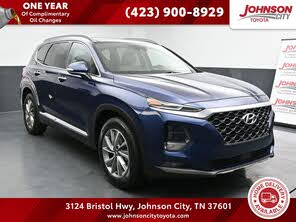
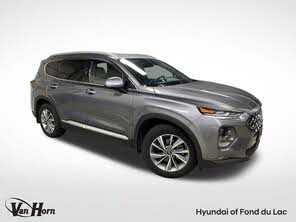
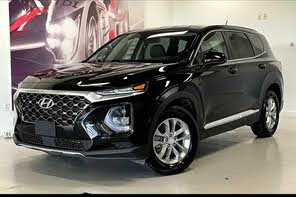
2020 Hyundai Santa Fe Reviews SummaryLast year, Hyundai changed its approach to the Santa Fe. The smaller five-passenger Santa Fe Sport got drop-kicked from the automaker’s lineup, replaced by this completely redesigned version of the SUV. The larger seven-passenger Santa Fe got a new name for one year (Santa Fe XL), and then the all-new 2020 Hyundai Palisade replaced that vehicle. With the Palisade’s arrival, there is just one Santa Fe for 2020, a five-passenger crossover that resides in a sweet spot between traditional compact and midsize models. It gets several updates, too, including a standard rear-seat reminder system, an available camera-based Blind-Spot View Monitor system, and new design accents to better distinguish the top trim level. | |
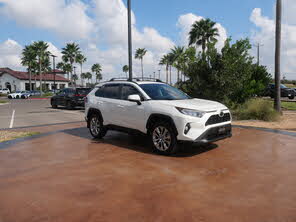
2021 Toyota RAV4 Reviews SummarySince its launch in 1997, the Toyota RAV4 has ridden a wave of crossover SUV popularity to become one of Toyota’s bestselling models. Introduced for the 2019 model year, the current-generation RAV4 tries to offer the rugged style of a traditional SUV, but underneath it’s still a car-based crossover pitched against the likes of the Ford Escape, Honda CR-V, Hyundai Tucson, Kia Sportage, Nissan Rogue, Subaru Forester, and Volkswagen Tiguan. Because it’s only in its third model year, this fifth-generation RAV4 doesn’t get many updates for 2021. The biggest news is the addition of the RAV4 Prime plug-in hybrid to the lineup, but that model actually went on sale last year. The only other changes are a new XLE Premium trim level for the RAV4 Hybrid, and a new front stainless steel front skid plate for the gasoline RAV4 TRD Off-Road model. Toyota offers compact SUV buyers more choices than most competitors. The RAV4 LE, XLE, XLE Premium, and Limited trim levels are available with hybrid and non-hybrid powertrains. Toyota also offers the gasoline-only RAV4 Adventure and TRD Off-Road trim levels, plus the RAV4 Hybrid XSE. The RAV4 Prime is also available in two trim levels—SE and XSE. We’ve covered the RAV4 Hybrid and RAV4 Prime in separate reviews, so this review will focus on the gasoline RAV4. Our test car was a RAV4 TRD Off-Road, which joined the lineup for the 2020 model year and is the first RAV4 model tuned by Toyota Racing Development, the automaker’s North American performance division. | |
No video found | |
Popular Features & Specs | |
Engine2.4L 185 hp I4 | Engine2.5L 203 hp I4 |
Drive TrainFWD | Drive TrainFWD |
Seating Capacity5 | Seating Capacity5 |
Horsepower185 hp @ 6000 rpm | Horsepower |
MPG City22 | MPG City28 |
MPG Highway29 | MPG Highway35 |
Engine | |
Engine Name2.4L 185 hp I4 | Engine Name2.5L 203 hp I4 |
Torque178 lb-ft @ 4000 rpm | Torque |
Horsepower185 hp @ 6000 rpm | Horsepower |
DrivetrainFWD | DrivetrainFWD |
Fuel Economy | |
MPG City22 | MPG City28 |
MPG Highway29 | MPG Highway35 |
Interior | |
Seating Capacity5 | Seating Capacity5 |
Safety | |
Front Crash Overall4 | Front Crash Overall4 |
Side Crash Overall5 | Side Crash Overall5 |
Dimensions & Capacity | |
Cargo Space35.9 cu ft | Cargo Space37.6 cu ft |
Curb Weight3591 lbs | Curb Weight3370 lbs |
Height66.1 in | Height67.0 in |
Length187.8 in | Length180.9 in |
Width74.4 in | Width73.0 in |
Wheelbase108.9 in | Wheelbase105.9 in |
Maximum Payload1138 lbs | Maximum Payload1240 lbs |
Number of doors4 | Number of doors4 |
Maximum Towing Capacity2000 lbs | Maximum Towing Capacity1500 lbs |
Overview | ||
MSRP | $26,275 | $26,350 |
Listings | ||
Ratings & Reviews | ||
User reviews | ||
Expert reviews | 8.8 out of 10Read full review | 7.3 out of 10Read full review |
Pros & cons | Pros
Cons
| Pros
Cons
|
Summary | Last year, Hyundai changed its approach to the Santa Fe. The smaller five-passenger Santa Fe Sport got drop-kicked from the automaker’s lineup, replaced by this completely redesigned version of the SUV. The larger seven-passenger Santa Fe got a new name for one year (Santa Fe XL), and then the all-new 2020 Hyundai Palisade replaced that vehicle. With the Palisade’s arrival, there is just one Santa Fe for 2020, a five-passenger crossover that resides in a sweet spot between traditional compact and midsize models. It gets several updates, too, including a standard rear-seat reminder system, an available camera-based Blind-Spot View Monitor system, and new design accents to better distinguish the top trim level. | Since its launch in 1997, the Toyota RAV4 has ridden a wave of crossover SUV popularity to become one of Toyota’s bestselling models. Introduced for the 2019 model year, the current-generation RAV4 tries to offer the rugged style of a traditional SUV, but underneath it’s still a car-based crossover pitched against the likes of the Ford Escape, Honda CR-V, Hyundai Tucson, Kia Sportage, Nissan Rogue, Subaru Forester, and Volkswagen Tiguan. Because it’s only in its third model year, this fifth-generation RAV4 doesn’t get many updates for 2021. The biggest news is the addition of the RAV4 Prime plug-in hybrid to the lineup, but that model actually went on sale last year. The only other changes are a new XLE Premium trim level for the RAV4 Hybrid, and a new front stainless steel front skid plate for the gasoline RAV4 TRD Off-Road model. Toyota offers compact SUV buyers more choices than most competitors. The RAV4 LE, XLE, XLE Premium, and Limited trim levels are available with hybrid and non-hybrid powertrains. Toyota also offers the gasoline-only RAV4 Adventure and TRD Off-Road trim levels, plus the RAV4 Hybrid XSE. The RAV4 Prime is also available in two trim levels—SE and XSE. We’ve covered the RAV4 Hybrid and RAV4 Prime in separate reviews, so this review will focus on the gasoline RAV4. Our test car was a RAV4 TRD Off-Road, which joined the lineup for the 2020 model year and is the first RAV4 model tuned by Toyota Racing Development, the automaker’s North American performance division. |
Video | No video found | |
Popular Features & Specs | ||
Engine | 2.4L 185 hp I4 | 2.5L 203 hp I4 |
Drive Train | FWD | FWD |
Seating Capacity | 5 | 5 |
Horsepower | 185 hp @ 6000 rpm | |
MPG City | 22 | 28 |
MPG Highway | 29 | 35 |
Engine | ||
Engine Name | 2.4L 185 hp I4 | 2.5L 203 hp I4 |
Torque | 178 lb-ft @ 4000 rpm | |
Horsepower | 185 hp @ 6000 rpm | |
Drivetrain | FWD | FWD |
Fuel Economy | ||
MPG City | 22 | 28 |
MPG Highway | 29 | 35 |
Interior | ||
Seating Capacity | 5 | 5 |
Safety | ||
Front Crash Overall | 4 | 4 |
Side Crash Overall | 5 | 5 |
Dimensions & Capacity | ||
Cargo Space | 35.9 cu ft | 37.6 cu ft |
Curb Weight | 3591 lbs | 3370 lbs |
Height | 66.1 in | 67.0 in |
Length | 187.8 in | 180.9 in |
Width | 74.4 in | 73.0 in |
Wheelbase | 108.9 in | 105.9 in |
Maximum Payload | 1138 lbs | 1240 lbs |
Number of doors | 4 | 4 |
Maximum Towing Capacity | 2000 lbs | 1500 lbs |
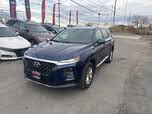
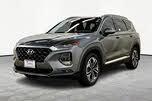
The 2020 Hyundai Santa Fe's design stood out as a bold experiment. Hyundai offered the SUV in SE, SEL, and Limited trim levels, with the "2.0T" designation indicating a turbocharged engine for enhanced power and performance. Buyers had the option to add AWD, which shifted power from the front wheels to the rear as needed.
Styling was daring, with controversial elements such as a uniquely-shaped grille, stacked front lighting, asymmetrical fender stampings, and an oversized rear skid plate trim. These features made the Santa Fe a vehicle that you either loved or didn't. The interior continued the drama with a dual-cowl dashboard design, diamond-textured speaker grilles, and high-contrast interior color options. Glossy lower plastics and stiff leather seats detracted somewhat from the overall aesthetics, but build quality and control refinement were high points.
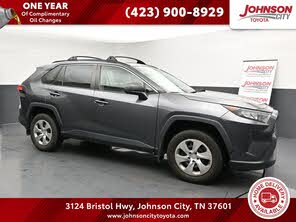
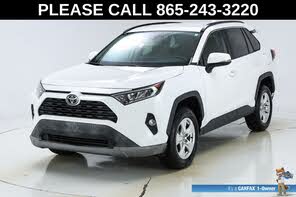
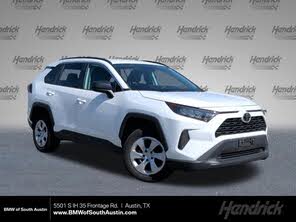
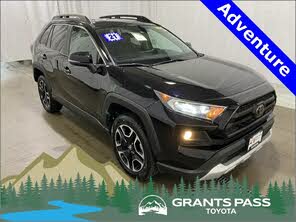
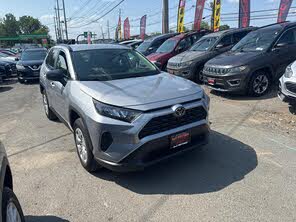
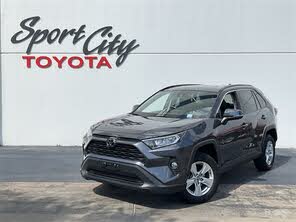
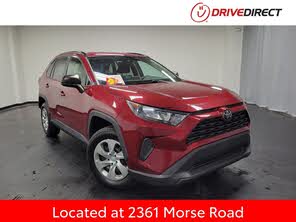
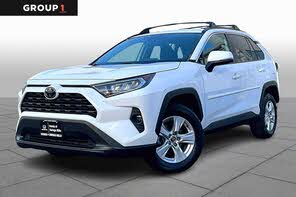
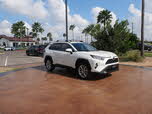
In contrast, the 2021 Toyota RAV4 offered an SUV with rugged styling reminiscent of traditional SUVs. Features like boxy fender flares, chiseled taillights, and an aggressive front end created a perception of capability beyond that of a typical compact crossover. However, beneath the rugged exterior lay a more conventional vehicle, built on the Toyota New Global Architecture (TNGA) platform shared with sedans and minivans.
The RAV4's Adventure and TRD Off-Road trims included stylish touches like a retro-inspired Ice Edge roof, orange or red interior accents, and matte black 18-inch wheels. Inside, large rubberized knobs and door handles continued the rugged theme, offering functionality and uniqueness. Material quality was good but did not rise to premium levels in higher trims. Notably, the RAV4 never offered real leather upholstery, even on the top-tier Limited trim.


The 2020 Hyundai Santa Fe offered two engine choices. The standard 185-hp 2.4-liter four-cylinder lacked the power to impress. The better option was the 2.0T turbocharged four-cylinder, which delivered 235 hp and 260 lb-ft of torque from 1,450 rpm to 3,500 rpm. This powertrain proved more responsive, especially at higher altitudes. Paired with an eight-speed automatic transmission, the Santa Fe’s FWD configuration sometimes suffered from torque steer, but opting for AWD mitigated this issue.
Fuel economy for the 2.0T engine reached an EPA-estimated 23 mpg in combined driving, though our testing showed 22.1 mpg. Both power and efficiency made the Santa Fe viable for everyday use and long journeys. Driving dynamics were smooth and comfortable, with responsive handling and quiet cruising thanks to laminated glass. The SUV also demonstrated unexpected off-road prowess in moderate conditions, although it leaned more towards functionality than driver engagement.
The 2021 Toyota RAV4 was powered by a 203-hp 2.5-liter four-cylinder engine with 184 lb-ft of torque. The engine was efficient, achieving 40% thermal efficiency, similar to racing engines. However, the powertrain sometimes seemed at odds with the RAV4’s performance. The eight-speed automatic transmission hesitated, and steering, while responsive, lacked feel. The Sport mode added steering heft but didn’t enhance the driving experience much.
On highways, the RAV4 excelled with low noise levels and a suspension that handled road imperfections well. Toyota emphasized off-road capabilities with adventure and TRD Off-Road trims, which included torque-vectoring AWD, all-terrain tires, and higher ground clearance, boosting the RAV4’s ability on rough terrains. Towing capacity reached up to 3,500 pounds for these models, owing to its off-road focus.
The 2020 Hyundai Santa Fe catered well to families with its thoughtful interior design. Our test vehicle featured comfortable eight-way power-adjustable and ventilated front seats, a heated steering wheel, and the driver’s seat with lumbar support and thigh extensions. A dual-zone automatic climate control system with an ionizer maintained comfort even with a panoramic sunroof in place.
In terms of seating, the back row provided ample legroom and adequate thigh support, complete with air vents and sunshades in the Limited trim. However, cargo capacity was a slight letdown, with 35.9 cubic feet behind the rear seats and a maximum of 71.3 cubic feet when folded. On the plus side, the Santa Fe had useful under-floor storage compartments and a smart liftgate that opened without needing a foot swipe.
The 2021 Toyota RAV4 offered a tall, upright roof ensuring good headroom and visibility. While front seats in the TRD Off-Road model provided comfort with form-fitting shapes, the rear seats lacked plushness, rendering long journeys less appealing. The absence of a sliding rear seat, unlike some competitors, also restricted flexibility.
Cargo capacity in the RAV4 stood at 37.6 cubic feet with rear seats up, competitive but behind the Honda CR-V. Loading was easy with a wide aperture, though the cargo area had a higher lip than some rivals. Storage solutions included useful knobs and a center-console bin, albeit with limited space on the console itself.
The 2020 Hyundai Santa Fe excelled in its infotainment setup. The touchscreen system was intuitive, perched atop the dashboard for easy access, featuring control knobs, shortcut buttons, and programmable functions. Standard Bluetooth, Apple CarPlay, and Android Auto enhanced connectivity, supported by an optional SiriusXM subscription and Blue Link connected services in the SEL trim.
The Limited trim further enhanced tech offerings with an 8-inch display, navigation, surround-view camera, wireless charging, and a 12-speaker Infinity sound system. A head-up display provided essential data within the driver's view. The voice recognition system was also notably sophisticated and user-friendly.
Comparatively, the 2021 Toyota RAV4 came with standard Apple CarPlay, Android Auto, Amazon Alexa, and SiriusXM, with most trims featuring a 7-inch touchscreen, while higher trims offered 8 and 9-inch screens. Up to five USB ports were available, and a JBL premium audio system was optional. While the interface was functional with clear graphics and shortcut buttons, it lacked the advanced features and flashiness of some competitors.
The 2020 Hyundai Santa Fe earned top safety accolades, including a five-star overall rating from NHTSA and a Top Safety Pick from IIHS. Standard safety features included adaptive cruise control, forward-collision warning, automatic emergency braking, lane-keeping assistance, and a rear-seat reminder system. The SEL trim added blind-spot monitoring and rear cross-traffic alert and an ultrasonic occupant alert system tied to the Blue Link app. Limited trim boasted a Blind-Spot View Monitor for an extra layer of safety.
The 2021 Toyota RAV4 also received high marks, earning a "Top Safety Pick" from IIHS and a five-star overall rating from NHTSA. All models came equipped with Toyota Safety Sense 2.0, which offered forward-collision warning, adaptive cruise control, lane-departure warning, automatic high beams, road-sign recognition, and lane centering. Higher trims added blind-spot monitoring, rear cross-traffic alert, and a 360-degree camera system, ensuring comprehensive protection.
CarGurus highlights
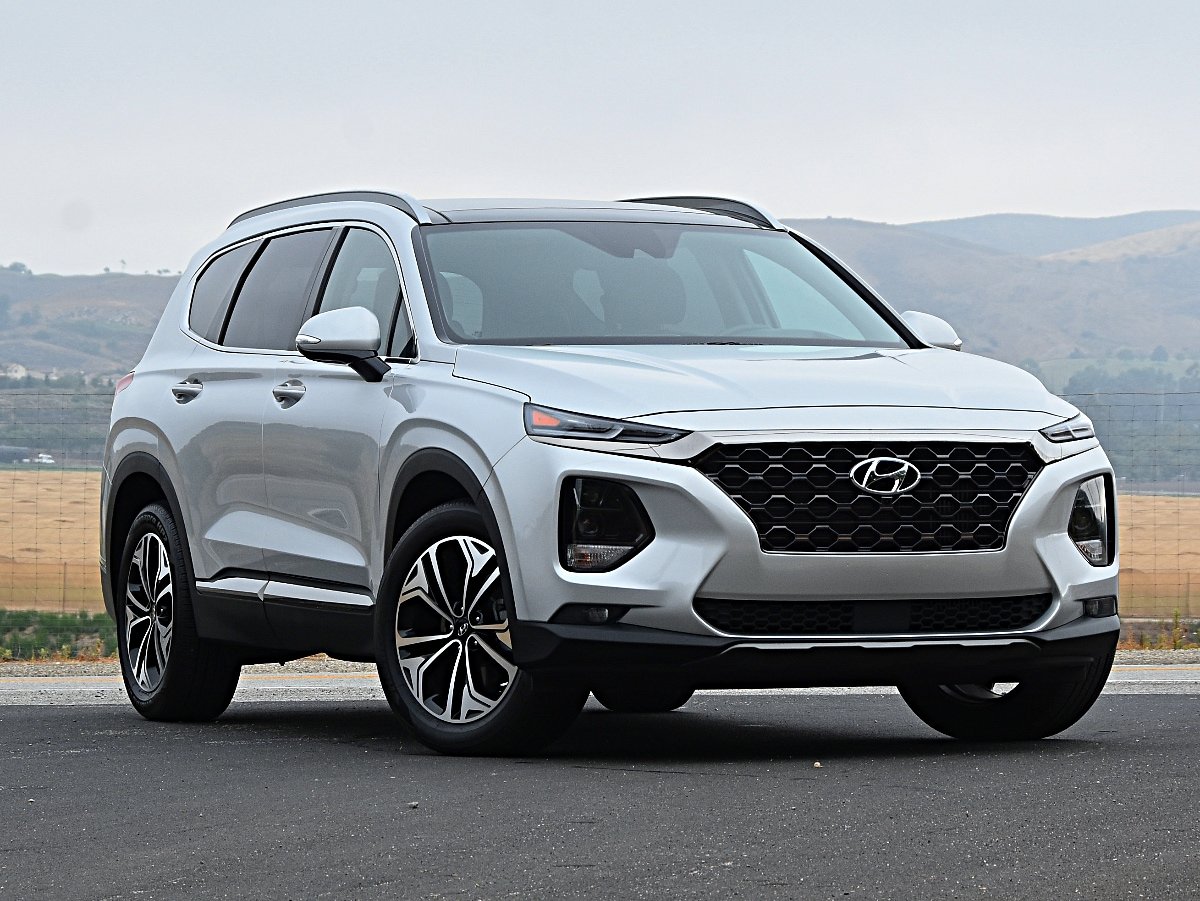
According to CarGurus experts, the overall rating for the 2020 Hyundai Santa Fe is 8.8 out of 10, while the 2021 Toyota RAV4 scores 7.3 out of 10. The Santa Fe triumphs with its outstanding technological enhancements, comfortable and thoughtful interior, and remarkable safety features. While the RAV4 offers rugged appeal and solid off-road capabilities, the Hyundai Santa Fe stands as the better all-around choice in this comparison.
Choose the 2020 Hyundai Santa Fe if:
- You appreciate bold and daring design, both inside and out.
- You want advanced safety technologies like the Blind-Spot View Monitor and ultrasonic occupant alert system.
- You need a comfortable and smart interior optimized for long drives and family comfort.




Choose the 2021 Toyota RAV4 if:
- You are drawn to rugged, SUV-like styling with a functional and spacious interior.
- You need off-road capabilities with models like the Adventure and TRD Off-Road.
- You value a comprehensive suite of standard safety features and impressive crash-test ratings.

CarGurus highlights
According to CarGurus experts, the overall rating for the 2020 Hyundai Santa Fe is 8.8 out of 10, while the 2021 Toyota RAV4 scores 7.3 out of 10. The Santa Fe triumphs with its outstanding technological enhancements, comfortable and thoughtful interior, and remarkable safety features. While the RAV4 offers rugged appeal and solid off-road capabilities, the Hyundai Santa Fe stands as the better all-around choice in this comparison.
Choose the 2020 Hyundai Santa Fe if:
Shop Now- You appreciate bold and daring design, both inside and out.
- You want advanced safety technologies like the Blind-Spot View Monitor and ultrasonic occupant alert system.
- You need a comfortable and smart interior optimized for long drives and family comfort.






Choose the 2021 Toyota RAV4 if:
Shop Now- You are drawn to rugged, SUV-like styling with a functional and spacious interior.
- You need off-road capabilities with models like the Adventure and TRD Off-Road.
- You value a comprehensive suite of standard safety features and impressive crash-test ratings.






By: CarGurus + AI
At CarGurus, our team of experienced automotive writers remain at the heart of our content operation, conducting hands-on car tests and writing insightful guides that are backed by years of industry experience. To complement this, we are harnessing AI to make our content offering more diverse and more helpful to shoppers than ever. To achieve this, our AI systems are based exclusively on CarGurus content, ratings and data, so that what we produce is both unique to CarGurus, and uniquely helpful to car shoppers.