2021 Volkswagen Tiguan vs 2020 Hyundai Palisade
Overview | |
MSRP$31,975 | MSRP$25,245 |
Listings1161 | Listings1315 |
Ratings & Reviews | |
User Reviews | User Reviews |
Expert reviews8.2 out of 10 | Expert reviews7.3 out of 10 |
Pros
Cons
| Pros
Cons
|
2020 Hyundai Palisade Reviews SummaryWhen your job is to test drive cars, you start to see trends happening before your eyes. You mention something once, then again, and before you know it, it's unavoidable. The downside is I end up sounding like a broken record to a lot of shoppers. Car reviewers started seeing huge improvements from Kia and its parent company, Hyundai, years ago. Now, these Korean automakers are so good, they're genuine contenders in nearly every segment. We saw this earlier this year with the 2020 Kia Telluride, which Cliff Atiyeh reviewed. Now we’re seeing it again with the all-new 2020 Hyundai Palisade. This is a spacious, comfortable, and versatile 3-row SUV, and one you should seriously consider against cornerstones of the family SUV market, like the Toyota Highlander and Honda Pilot. The Palisade has been a long time coming for Hyundai, which has been without a true contender in the segment. From 2008 to 2012, Hyundai offered the 3-row Veracruz, but that was more of a glorified 2-row SUV that had extra-small seats in the back for kids. More recently, Hyundai has offered the Santa Fe XL with three rows, but that was a stopgap car. This is a similar situation to Subaru, which offered the Tribeca for a number of years but didn't become a serious contender in the space until it debuted the Ascent. There are no half-measures in the family-hauler market. This little history lesson serves to indicate the lengths to which automakers will go to stand out in the 3-row family SUV segment. The Palisade is already making headlines, but will it move the needle for Hyundai? Read on to find out, and to learn which trim of the Palisade CarGurus recommends. | |
2021 Volkswagen Tiguan Reviews SummaryYou may have noticed that crossover SUVs are popular. Among them, compact models dominate, having essentially replaced the traditional midsize sedan in American driveways. Offering room for five people, available all-wheel drive (AWD), and more cargo than any family car, they are the preferred method of transportation for a broad cross section of new vehicle buyers. But that’s not the only explanation for the runaway success of the 2021 Volkswagen Tiguan. | |
No video found | |
Popular Features & Specs | |
Engine3.8L 291 hp V6 | Engine2.0L 184 hp I4 |
Drive TrainFWD | Drive TrainFWD |
Seating Capacity8 | Seating Capacity7 |
Horsepower291 hp @ 6000 rpm | Horsepower184 hp @ 4400 rpm |
MPG City19 | MPG City23 |
MPG Highway26 | MPG Highway29 |
Engine | |
Engine Name3.8L 291 hp V6 | Engine Name2.0L 184 hp I4 |
Torque262 lb-ft @ 5000 rpm | Torque221 lb-ft @ 1600 rpm |
Horsepower291 hp @ 6000 rpm | Horsepower184 hp @ 4400 rpm |
DrivetrainFWD | DrivetrainFWD |
Fuel Economy | |
MPG City19 | MPG City23 |
MPG Highway26 | MPG Highway29 |
Interior | |
Seating Capacity8 | Seating Capacity7 |
Safety | |
Front Crash Overall5 | Front Crash Overall4 |
Side Crash Overall5 | Side Crash Overall5 |
Dimensions & Capacity | |
Cargo Space18.0 cu ft | Cargo Space12.0 cu ft |
Curb Weight4127 lbs | Curb Weight3735 lbs |
Height68.9 in | Height66.3 in |
Length196.1 in | Length185.1 in |
Width77.8 in | Width72.4 in |
Wheelbase114.2 in | Wheelbase109.8 in |
Maximum Payload1605 lbs | Maximum Payload1146 lbs |
Number of doors4 | Number of doors4 |
Maximum Towing Capacity5000 lbs | Maximum Towing Capacity1500 lbs |
Overview | ||
MSRP | $31,975 | $25,245 |
Listings | ||
Ratings & Reviews | ||
User reviews | ||
Expert reviews | 8.2 out of 10Read full review | 7.3 out of 10Read full review |
Pros & cons | Pros
Cons
| Pros
Cons
|
Summary | When your job is to test drive cars, you start to see trends happening before your eyes. You mention something once, then again, and before you know it, it's unavoidable. The downside is I end up sounding like a broken record to a lot of shoppers. Car reviewers started seeing huge improvements from Kia and its parent company, Hyundai, years ago. Now, these Korean automakers are so good, they're genuine contenders in nearly every segment. We saw this earlier this year with the 2020 Kia Telluride, which Cliff Atiyeh reviewed. Now we’re seeing it again with the all-new 2020 Hyundai Palisade. This is a spacious, comfortable, and versatile 3-row SUV, and one you should seriously consider against cornerstones of the family SUV market, like the Toyota Highlander and Honda Pilot. The Palisade has been a long time coming for Hyundai, which has been without a true contender in the segment. From 2008 to 2012, Hyundai offered the 3-row Veracruz, but that was more of a glorified 2-row SUV that had extra-small seats in the back for kids. More recently, Hyundai has offered the Santa Fe XL with three rows, but that was a stopgap car. This is a similar situation to Subaru, which offered the Tribeca for a number of years but didn't become a serious contender in the space until it debuted the Ascent. There are no half-measures in the family-hauler market. This little history lesson serves to indicate the lengths to which automakers will go to stand out in the 3-row family SUV segment. The Palisade is already making headlines, but will it move the needle for Hyundai? Read on to find out, and to learn which trim of the Palisade CarGurus recommends. | You may have noticed that crossover SUVs are popular. Among them, compact models dominate, having essentially replaced the traditional midsize sedan in American driveways. Offering room for five people, available all-wheel drive (AWD), and more cargo than any family car, they are the preferred method of transportation for a broad cross section of new vehicle buyers. But that’s not the only explanation for the runaway success of the 2021 Volkswagen Tiguan. |
Video | No video found | |
Popular Features & Specs | ||
Engine | 3.8L 291 hp V6 | 2.0L 184 hp I4 |
Drive Train | FWD | FWD |
Seating Capacity | 8 | 7 |
Horsepower | 291 hp @ 6000 rpm | 184 hp @ 4400 rpm |
MPG City | 19 | 23 |
MPG Highway | 26 | 29 |
Engine | ||
Engine Name | 3.8L 291 hp V6 | 2.0L 184 hp I4 |
Torque | 262 lb-ft @ 5000 rpm | 221 lb-ft @ 1600 rpm |
Horsepower | 291 hp @ 6000 rpm | 184 hp @ 4400 rpm |
Drivetrain | FWD | FWD |
Fuel Economy | ||
MPG City | 19 | 23 |
MPG Highway | 26 | 29 |
Interior | ||
Seating Capacity | 8 | 7 |
Safety | ||
Front Crash Overall | 5 | 4 |
Side Crash Overall | 5 | 5 |
Dimensions & Capacity | ||
Cargo Space | 18.0 cu ft | 12.0 cu ft |
Curb Weight | 4127 lbs | 3735 lbs |
Height | 68.9 in | 66.3 in |
Length | 196.1 in | 185.1 in |
Width | 77.8 in | 72.4 in |
Wheelbase | 114.2 in | 109.8 in |
Maximum Payload | 1605 lbs | 1146 lbs |
Number of doors | 4 | 4 |
Maximum Towing Capacity | 5000 lbs | 1500 lbs |
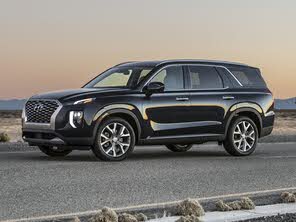
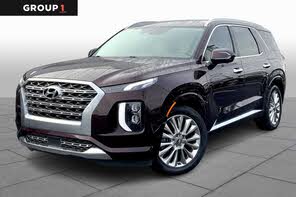
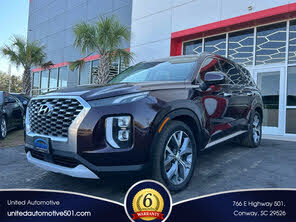
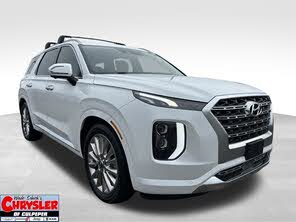
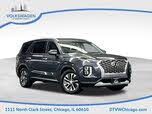
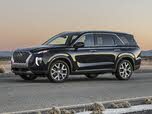
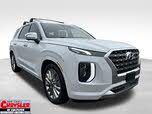
The 2020 Hyundai Palisade showcased a head-turning design that could have easily donned a Cadillac badge without any hesitation from shoppers. The striking aesthetics made it stand out even more than Cadillac's own XT6 3-row luxury SUV. Hyundai's design for the Palisade included a massive grille and thin, rakish headlights that added boldness. The headlight assembly had an interesting dual-component setup with the upper part and larger fog lights making up the full headlight system. When the lights were on, a character line of LEDs extended from the upper headlights down through the mid-level assembly, providing a unique and attention-grabbing look.
Hyundai continued its trend of creative chrome applications with the Palisade. A large chrome strip began at the base of the A-pillar, extended over the side door windows, and terminated just after the rear door, visually breaking up what could have been a lengthy design. This design decision left the Palisade looking a bit busy, but undeniably handsome and eye-catching. The interior of the Palisade resonated with upscale elegance and simplicity. Its digital instrument panel, large touchscreen integrated into the dash, and center console filled with controls provided a luxury feel. The top-of-the-line Limited model featured a personalized ambient lighting system, adding a touch of sophistication.
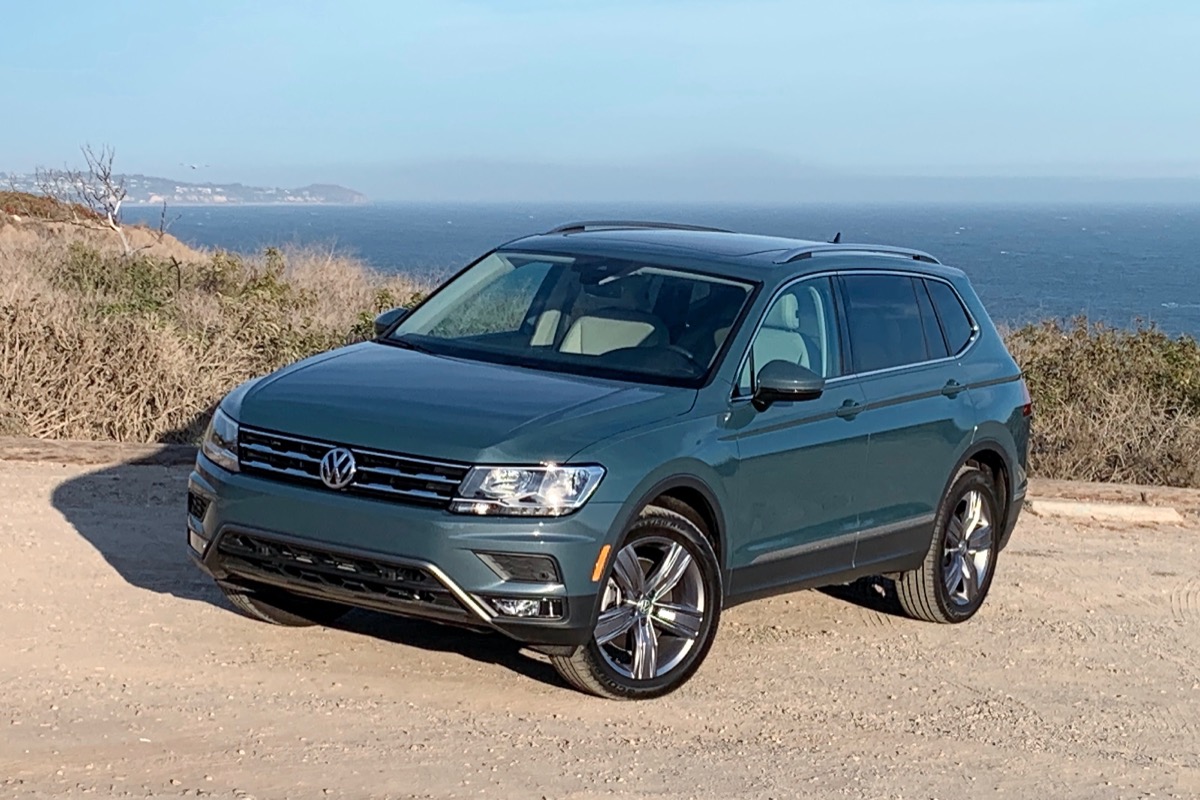
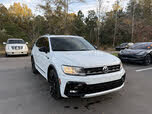
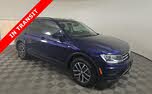
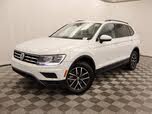
In contrast, the 2021 Volkswagen Tiguan embraced clean lines and balanced proportions that exuded a conservative, upscale, and timeless aesthetic. While some might have termed the design as boring, the simplicity and elegance ensured it would age gracefully. The Tiguan was larger for its class, addressing the issues of its first generation by providing more space similar to the Hyundai Santa Fe or Kia Sorento.
The interior of the Tiguan featured a roomy and accommodating space with ample room for four people, a potential for five, and an optional small third-row seat expanding capacity to seven (ideally for children). Volkswagen's modern geometric interior forms and a straightforward control layout, with the exception of the engine start button's odd placement, created a user-friendly and functional environment. However, compared to true luxury brands, the Tiguan's cabin had more hard plastics and less refined materials, making it feel less premium despite its good looks.


The 2020 Hyundai Palisade boasted a robust 3.8-liter V6 engine, delivering 291 horsepower and 262 pound-feet of torque. This engine was paired with an 8-speed automatic transmission controlled via a push-button shifter. The transmission effectively managed the power, and the engine provided solid acceleration. The Palisade offered various driving modes including Sport, Comfort, Eco, Snow, and a unique Smart mode that dynamically adjusted based on driving conditions. Sport mode delivered quicker responses and enhanced cornering with the Limited trim benefiting from a self-leveling rear suspension for superior handling. Fuel economy for the Palisade was rated at 19 mpg city, 26 highway, and 22 combined for FWD, slightly lower with AWD.
On the other hand, the 2021 Volkswagen Tiguan featured a turbocharged 2.0-liter four-cylinder engine producing 184 horsepower and 221 pound-feet of torque. This engine was coupled with an 8-speed automatic transmission, with 4Motion AWD available as an option. Although adequate, the powertrain suffered from noticeable turbo lag, creating a delay in acceleration. The Tiguan's nearly 4,000-pound curb weight also contributed to its perceived lethargy. Fuel economy was rated at 25 mpg combined with FWD and 24 with AWD, though real-world testing showed an average of 22.6 mpg.
The Tiguan's driving experience was pleasant with light, responsive steering, and a compliant ride. However, it exhibited limitations such as early tire grip loss in corners and significant body motion during dynamic driving, discouraging enthusiastic driving. The Palisade outshined the Tiguan in terms of dynamic performance and overall handling.
The Hyundai Palisade excelled in versatility, ideal for family use. It provided 45.8 cubic feet of cargo space behind the third row and an impressive 86.4 cubic feet with all rear seats folded, outperforming the Toyota Highlander and Honda Pilot. The Palisade's power-folding third-row seats, though slow, added convenience. The third row was relatively comfortable even for adults on longer trips. The second-row captain's chairs offered generous space, multiple cup holders, and ample storage, making it a practical choice for family needs.
In comparison, the Volkswagen Tiguan prioritized comfort with easy access through large doors and a tall seating position. The front seats provided excellent support, visibility, and were upholstered in quality V-Tex leatherette. The back seat offered generous legroom, foot space, and air conditioning vents, making it suitable for taller passengers and accommodating rear-facing child seats.
However, storage in the Tiguan was limited aside from the glovebox and door panel bins. The 40/20/40-split folding rear seat allowed flexibility in cargo and passenger arrangements. Cargo volume varied with the third-row seat option, ranging from 33 to 37.6 cubic feet behind the second row, and a maximum of 65.7 to 73.5 cubic feet, which was less than the Palisade but still practical for daily use.
The Hyundai Palisade came equipped with standard tech features including an 8-inch touchscreen infotainment system with Apple CarPlay and Android Auto. The system was user-friendly with tactile buttons and dials. The SEL trim offered an optional Driver Guidance package featuring a larger 10.25-inch screen with navigation, satellite radio, and an in-car intercom. The Limited trim included a Harman Kardon premium audio system with 12 speakers and Clari-Fi music restoration, a surround-view monitor, and a head-up display.
Volkswagen updated the Tiguan with its MIB3 infotainment system starting from the SE trim. MIB3 offered an 8-inch touchscreen, faster processing, and features like wireless Apple CarPlay and Android Auto, WiFi connectivity, and Amazon Alexa compatibility. The system supported comprehensive Car-Net connected services including remote start and family safety features. However, the voice recognition system had limitations, and the standard six-speaker sound system lacked quality. The SEL Premium R-Line enhanced the experience with a digital cockpit and a nine-speaker Fender premium audio system, although it was not available for lower trims.
The 2020 Hyundai Palisade earned the Top Safety Pick+ award from the IIHS, the highest accolade. It came with standard safety features including forward-collision avoidance, pedestrian detection, lane-keeping assist, driver-attention warning, and parking sensors. The fully digital instrument panel added convenience, displaying parking sensor warnings and a unique blind-spot camera system projecting live images on the panel.
Volkswagen's 2021 Tiguan included IQ Drive advanced driving assistance systems across all trims. This package featured forward-collision warning, pedestrian detection, automatic emergency braking, blind-spot monitoring, and rear cross-traffic alert. Higher trims added adaptive cruise control, lane-keeping assist, automatic high beams, and parking sensors. The Tiguan's adaptive cruise control and lane-keep assist performed well, but other safety features like parking sensors and automatic braking had some inconsistencies. The IIHS rated the Tiguan as a Top Safety Pick for the SEL and SEL Premium R-Line trims, while the NHTSA had not provided full crash-test results.
CarGurus highlights

According to CarGurus experts, the overall rating for the 2020 Hyundai Palisade is 8.2 out of 10, while the 2021 Volkswagen Tiguan scores 7.3 out of 10. Given these ratings, the Hyundai Palisade stands out with its impressive performance, versatility, safety, and advanced technology. Therefore, the Hyundai Palisade comes out as the better choice in this comparison.
Choose the 2021 Volkswagen Tiguan if:
- A conservative, clean, and timeless exterior design appeals to you.
- You desire a comfortable driving experience with excellent front and rear-seat accommodations.
- Access to modern infotainment features and connected services like wireless Apple CarPlay and Car-Net is important to you.




Choose the 2020 Hyundai Palisade if:
- You need a versatile SUV with expansive cargo space and comfortable third-row seating.
- You prefer robust performance and responsive handling with multiple driving modes.
- Advanced safety features and superior driver assistance technologies are a priority for you.





CarGurus highlights
According to CarGurus experts, the overall rating for the 2020 Hyundai Palisade is 8.2 out of 10, while the 2021 Volkswagen Tiguan scores 7.3 out of 10. Given these ratings, the Hyundai Palisade stands out with its impressive performance, versatility, safety, and advanced technology. Therefore, the Hyundai Palisade comes out as the better choice in this comparison.
Choose the 2021 Volkswagen Tiguan if:
Shop Now- A conservative, clean, and timeless exterior design appeals to you.
- You desire a comfortable driving experience with excellent front and rear-seat accommodations.
- Access to modern infotainment features and connected services like wireless Apple CarPlay and Car-Net is important to you.





Choose the 2020 Hyundai Palisade if:
Shop Now- You need a versatile SUV with expansive cargo space and comfortable third-row seating.
- You prefer robust performance and responsive handling with multiple driving modes.
- Advanced safety features and superior driver assistance technologies are a priority for you.




By: CarGurus + AI
At CarGurus, our team of experienced automotive writers remain at the heart of our content operation, conducting hands-on car tests and writing insightful guides that are backed by years of industry experience. To complement this, we are harnessing AI to make our content offering more diverse and more helpful to shoppers than ever. To achieve this, our AI systems are based exclusively on CarGurus content, ratings and data, so that what we produce is both unique to CarGurus, and uniquely helpful to car shoppers.