2020 Ford Escape vs 2020 Hyundai Santa Fe

Overview | |
MSRP$24,885 | MSRP$26,275 |
Listings1818 | Listings1155 |
Ratings & Reviews | |
User Reviews | User Reviews |
Expert reviews8.0 out of 10 | Expert reviews8.8 out of 10 |
Pros
Cons
| Pros
Cons
|
2020 Ford Escape Reviews SummaryIn case you didn’t hear, Ford came out with an electric crossover, calling it the Mustang Mach-E. Ford could have called it something else, but the marketing department decided to leverage the famous Mustang name to capture headlines and, hopefully, shoppers. What should not be overlooked is the fact Ford chose to make its first-ever standalone electric vehicle a crossover. This choice is a testament to how far the sport utility vehicle has come. Paired with Ford's decision to phase out sedans and hatchbacks, it's clear the company is putting all of its eggs into its trucks, SUVs, and crossovers. Suffice it to say, there is just a bit of pressure on the redesigned 2020 Ford Escape. While the Escape has been around since 2000, it came into its own in 2013 when the “One Ford” philosophy was adopted, meaning that vehicles would be sold in multiple markets around the globe. As a result, the U.S. got Europe’s Ford Kuga, rebranded as the Escape—a high-tech, handsome, and surprisingly athletic small SUV. So, with all this mind, the new Escape needs to not only be an improvement over the previous generation to compete against the rest of the compact crossover segment, it also needs to win over would-be sedan and hatchback customers. Can the 2020 Escape rise to the occasion? | |
2020 Hyundai Santa Fe Reviews SummaryLast year, Hyundai changed its approach to the Santa Fe. The smaller five-passenger Santa Fe Sport got drop-kicked from the automaker’s lineup, replaced by this completely redesigned version of the SUV. The larger seven-passenger Santa Fe got a new name for one year (Santa Fe XL), and then the all-new 2020 Hyundai Palisade replaced that vehicle. With the Palisade’s arrival, there is just one Santa Fe for 2020, a five-passenger crossover that resides in a sweet spot between traditional compact and midsize models. It gets several updates, too, including a standard rear-seat reminder system, an available camera-based Blind-Spot View Monitor system, and new design accents to better distinguish the top trim level. | |
Popular Features & Specs | |
Engine1.5L 181 hp I3 | Engine2.4L 185 hp I4 |
Drive TrainFWD | Drive TrainFWD |
Seating Capacity5 | Seating Capacity5 |
Horsepower | Horsepower185 hp @ 6000 rpm |
MPG City27 | MPG City22 |
MPG Highway33 | MPG Highway29 |
Engine | |
Engine Name1.5L 181 hp I3 | Engine Name2.4L 185 hp I4 |
Torque | Torque178 lb-ft @ 4000 rpm |
Horsepower | Horsepower185 hp @ 6000 rpm |
DrivetrainFWD | DrivetrainFWD |
Fuel Economy | |
MPG City27 | MPG City22 |
MPG Highway33 | MPG Highway29 |
Interior | |
Seating Capacity5 | Seating Capacity5 |
Safety | |
Front Crash Overall5 | Front Crash Overall4 |
Side Crash Overall5 | Side Crash Overall5 |
Dimensions & Capacity | |
Cargo Space37.5 cu ft | Cargo Space35.9 cu ft |
Curb Weight3299 lbs | Curb Weight3591 lbs |
Height66.1 in | Height66.1 in |
Length180.5 in | Length187.8 in |
Width85.6 in | Width74.4 in |
Wheelbase106.7 in | Wheelbase108.9 in |
Maximum Payload | Maximum Payload1138 lbs |
Number of doors4 | Number of doors4 |
Maximum Towing Capacity | Maximum Towing Capacity2000 lbs |
Overview | ||
MSRP | $24,885 | $26,275 |
Listings | ||
Ratings & Reviews | ||
User reviews | ||
Expert reviews | 8.0 out of 10Read full review | 8.8 out of 10Read full review |
Pros & cons | Pros
Cons
| Pros
Cons
|
Summary | In case you didn’t hear, Ford came out with an electric crossover, calling it the Mustang Mach-E. Ford could have called it something else, but the marketing department decided to leverage the famous Mustang name to capture headlines and, hopefully, shoppers. What should not be overlooked is the fact Ford chose to make its first-ever standalone electric vehicle a crossover. This choice is a testament to how far the sport utility vehicle has come. Paired with Ford's decision to phase out sedans and hatchbacks, it's clear the company is putting all of its eggs into its trucks, SUVs, and crossovers. Suffice it to say, there is just a bit of pressure on the redesigned 2020 Ford Escape. While the Escape has been around since 2000, it came into its own in 2013 when the “One Ford” philosophy was adopted, meaning that vehicles would be sold in multiple markets around the globe. As a result, the U.S. got Europe’s Ford Kuga, rebranded as the Escape—a high-tech, handsome, and surprisingly athletic small SUV. So, with all this mind, the new Escape needs to not only be an improvement over the previous generation to compete against the rest of the compact crossover segment, it also needs to win over would-be sedan and hatchback customers. Can the 2020 Escape rise to the occasion? | Last year, Hyundai changed its approach to the Santa Fe. The smaller five-passenger Santa Fe Sport got drop-kicked from the automaker’s lineup, replaced by this completely redesigned version of the SUV. The larger seven-passenger Santa Fe got a new name for one year (Santa Fe XL), and then the all-new 2020 Hyundai Palisade replaced that vehicle. With the Palisade’s arrival, there is just one Santa Fe for 2020, a five-passenger crossover that resides in a sweet spot between traditional compact and midsize models. It gets several updates, too, including a standard rear-seat reminder system, an available camera-based Blind-Spot View Monitor system, and new design accents to better distinguish the top trim level. |
Video | ||
Popular Features & Specs | ||
Engine | 1.5L 181 hp I3 | 2.4L 185 hp I4 |
Drive Train | FWD | FWD |
Seating Capacity | 5 | 5 |
Horsepower | 185 hp @ 6000 rpm | |
MPG City | 27 | 22 |
MPG Highway | 33 | 29 |
Engine | ||
Engine Name | 1.5L 181 hp I3 | 2.4L 185 hp I4 |
Torque | 178 lb-ft @ 4000 rpm | |
Horsepower | 185 hp @ 6000 rpm | |
Drivetrain | FWD | FWD |
Fuel Economy | ||
MPG City | 27 | 22 |
MPG Highway | 33 | 29 |
Interior | ||
Seating Capacity | 5 | 5 |
Safety | ||
Front Crash Overall | 5 | 4 |
Side Crash Overall | 5 | 5 |
Dimensions & Capacity | ||
Cargo Space | 37.5 cu ft | 35.9 cu ft |
Curb Weight | 3299 lbs | 3591 lbs |
Height | 66.1 in | 66.1 in |
Length | 180.5 in | 187.8 in |
Width | 85.6 in | 74.4 in |
Wheelbase | 106.7 in | 108.9 in |
Maximum Payload | 1138 lbs | |
Number of doors | 4 | 4 |
Maximum Towing Capacity | 2000 lbs | |
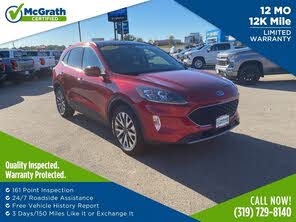
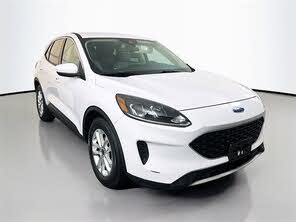
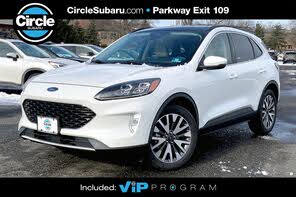
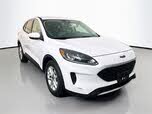
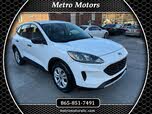
The 2020 Ford Escape was a striking compact crossover with an alluring appearance that blended elements from other Ford models. It featured a large grille reminiscent of the outgoing Fiesta and Focus hatchbacks, along with headlights inspired by the Ford GT supercar. The overall design was more curvaceous than its predecessor, which although stylish, sacrificed some rear-end uniformity. Despite this design trade-off, the Escape still ranked high among the best-looking small SUVs, trailing only vehicles like the Mazda CX-5 and Jeep Cherokee.
Inside the Escape, the cabin exuded a modern yet practical vibe. The forward-looking design did not compromise the placement of basic controls. Our test model was equipped with a fully digital instrument panel, a floating infotainment screen, and an overall smooth, modern look. The Escape was available in multiple trims—S, SE, SE Sport, SEL, and Titanium—each adding progressive enhancements in features.
The base S trim offered practical inclusions such as 17-inch steel wheels, a 4.2-inch instrument-panel screen, and Sync infotainment with a 4.2-inch screen. Remarkably, even the base trim included advanced driver-assistance features and FordPass Connect with WiFi.
Stepping up to the SE trim added aesthetic touches like 17-inch painted aluminum wheels and a chrome grille surround. Interior upgrades included automatic climate control, an 8-inch Sync 3 infotainment screen, and heated front seats—a recommendation from CarGurus for its value.
The SE Sport trim took on a sportier look with black-painted wheels and hybrid drivetrain. The SEL trim added sophistication with 18-inch machined aluminum wheels and refined interior touches. Our test Titanium model boasted premium features including unique 19-inch wheels, LED fog lamps, and an impressive dual-panel moonroof, combining premium wood paneling and a high-end B&O audio system.
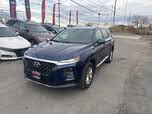
The 2020 Hyundai Santa Fe, on the other hand, was bold in its approach. Available in SE, SEL, and Limited trims, with optional all-wheel drive and turbocharged engines, it allowed for considerable customization. Our test vehicle, a Limited 2.0T, came with dealer-installed floor mats and offered a unique aesthetic.
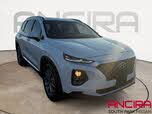
Externally, the Santa Fe featured a daring design with points of contention such as its grille shape and asymmetrical fender stampings. Some might have found the design polarizing, yet it held a certain dramatic charm.
Inside, the Santa Fe had a dual-cowl dashboard design with diamond-textured speaker grilles. Materials varied, with the lower half of the interior featuring glossy plastic and somewhat stiff leather upholstery. Still, the build quality was excellent, and interior controls operated with refinement.


The 2020 Ford Escape was notable for offering four distinct engine choices, which was an anomaly among its competitors. It started with a 3-cylinder engine producing 180 horsepower and 177 pound-feet of torque, standard on the S, SE, and SEL trims. The 2.0-liter turbocharged 4-cylinder engine was featured on the SEL and standard on the Titanium, providing a robust 250 horsepower and 275 pound-feet of torque.
Additionally, there were hybrid options: a 2.5-liter 4-cylinder engine combined with electric power to make 198 horsepower, and a plug-in hybrid variant available on several trims. The non-hybrid engines utilized an 8-speed automatic transmission, whereas the hybrids employed a continuously variable transmission (CVT).
The Escape offered impressive fuel economy figures, particularly with the hybrid models which returned up to 44 mpg in the city and 37 mpg on the highway. The sporty personality and strong performance, particularly from our Titanium test model, set it apart with taut steering and responsive brakes.
The 2020 Hyundai Santa Fe, meanwhile, offered a choice between a lackluster base 185-horsepower 2.4-liter engine and a preferable 2.0-liter turbocharged 4-cylinder engine. The latter made a strong 235 horsepower and 260 pound-feet of torque, delivering improved performance and better responsiveness, especially in high-altitude regions.
This power was managed by an eight-speed automatic transmission with either front-wheel or optional all-wheel drive. Our FWD test model exhibited torque steer under hard acceleration, which AWD could mitigate. The Santa Fe had a towing capacity of 3,500 pounds and performed adequately in terms of fuel efficiency, achieving around 22.1 mpg in real-world driving conditions.
Driving the Santa Fe was generally a pleasant experience, with a smooth and quiet ride complemented by light-effort steering and robust brakes. The Limited trim's laminated glass further isolated highway noise, and its off-road capability, while not exceptional, was sufficient for moderate adventures.
The 2020 Ford Escape prioritized passenger space over cargo capacity, a noteworthy departure from its predecessor. It provided 37.5 cubic feet of cargo space behind the second row, which reduced to 34.4 cubic feet in hybrid models. Maximum cargo space reached 65.4 cubic feet (60.8 in upper trims), which, although less than competitors like the Honda CR-V and Subaru Forester, was tailored for a blend of style and practicality.
Passenger comfort was evident with ample second-row headroom and legroom. The front seats offered commanding views and instilled confidence through good visibility. Various storage options, from deep door pockets to multiple trays, enhanced the Escape's real-world utility.
Conversely, the 2020 Hyundai Santa Fe excelled at addressing family needs with its thoughtful interior layout and comfort features. Our Limited 2.0T test model featured eight-way power-adjustable, heated, and ventilated front seats, a heated steering wheel, and extensive driver-adjustable options. The back seat provided ample comfort, with air conditioning vents, sunshades, and reclining seats for added convenience.
However, cargo space in the Santa Fe was slightly less impressive than some competitors, offering 35.9 cubic feet behind the rear seat and up to 71.3 cubic feet with the seats down. The innovative hands-free liftgate and under-floor storage compartments, however, provided useful solutions.
Tech-wise, the 2020 Ford Escape offered a mixed bag. The base model came with a small 4.2-inch audio control screen—a stark contrast in today’s tech-centric era. The SE trim, recommended by CarGurus, upgraded to an 8-inch Sync 3 touchscreen with Android Auto and Apple CarPlay, enhancing its usability. Higher trims like the Titanium added a head-up display, albeit a flip-up one, which could be less than ideal for taller drivers.
The 2020 Hyundai Santa Fe boasted a more user-friendly infotainment system. Positioned high on the dashboard, it combined touchscreen ease with practical control knobs and shortcut buttons. All trims included Bluetooth, Apple CarPlay, and Android Auto. SEL trim added SiriusXM and Blue Link connected services with three years of free service, while the Limited trim expanded capabilities with a larger display, navigation, surround-view cameras, and wireless smartphone charging.
For safety, the 2020 Ford Escape featured a full array of airbags, a reversing camera, traction control, and a tire-pressure monitoring system. While it hadn’t been evaluated by the NHTSA, it earned top marks from the IIHS. Its Ford Co-Pilot360 suite provided advanced safety features like forward-collision warning, lane-keeping assist, adaptive cruise control, and more, including often-optional features like blind-spot monitoring and rear cross-traffic alert.
The 2020 Hyundai Santa Fe was similarly well-equipped, earning five-star ratings from the NHTSA and being named a Top Safety Pick by the IIHS. Standard features mirrored those found in leading competitors, including adaptive cruise control, forward collision warning, and a rear-seat reminder system. The SEL trim added blind-spot and rear cross-traffic warnings. An innovative ultrasonic occupant alert system, part of the SEL Convenience Package, further enhanced safety with reminders for forgotten children or pets.
CarGurus highlights
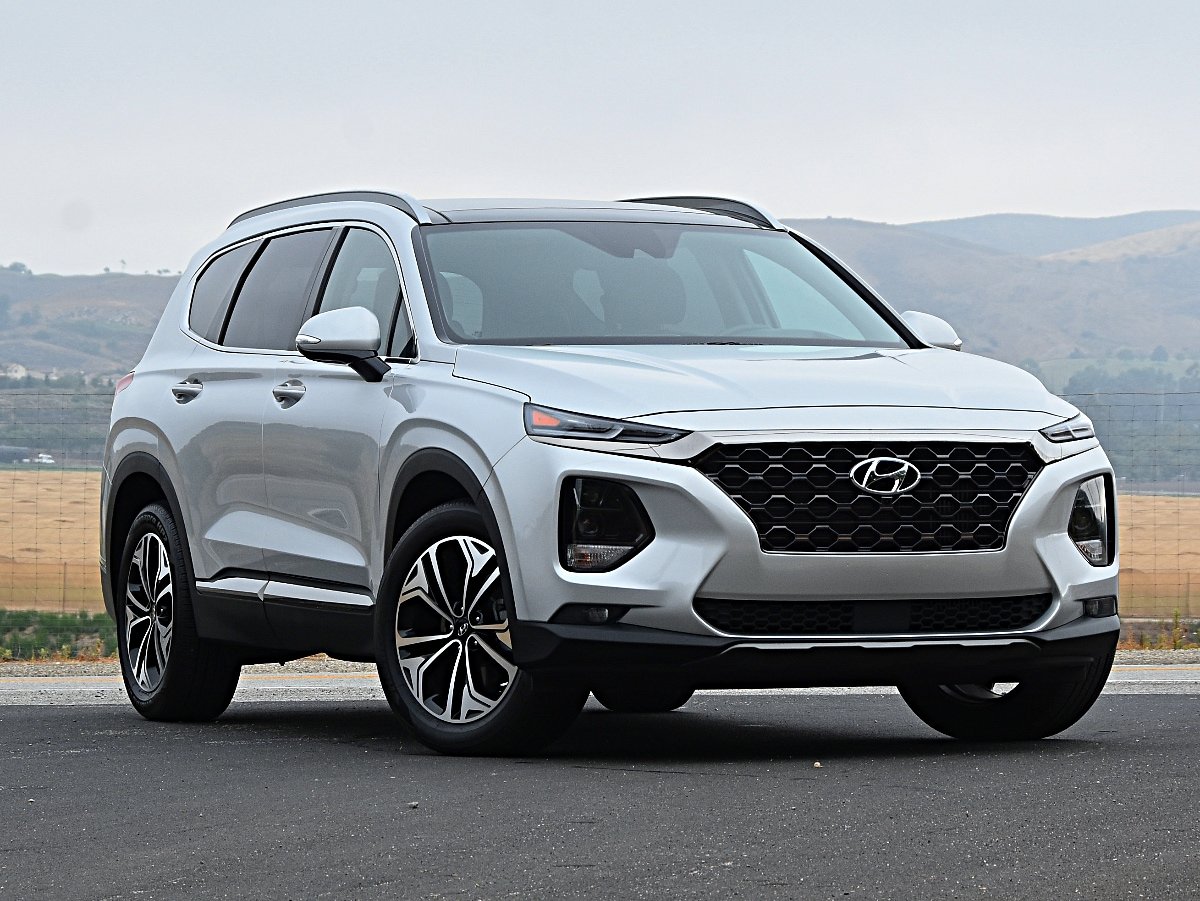
According to CarGurus experts, the overall rating for the 2020 Ford Escape is 8.0 out of 10, while the 2020 Hyundai Santa Fe scores 8.8 out of 10. With higher ratings for design, comfort, and safety, the 2020 Hyundai Santa Fe emerges as the better choice for most consumers. Its comprehensive combination of family-friendly features, cutting-edge technology, and innovative safety systems ensures it meets and exceeds the needs of a wide range of buyers. The Ford Escape also offers excellent performance and advanced features, but the Santa Fe's higher overall rating makes it the recommended pick.
Choose the 2020 Ford Escape if:
- You prioritize multiple engine options, including a high-performance turbo and efficient hybrids.
- You value advanced standard safety tech like blind-spot monitoring and rear cross-traffic alert.
- You enjoy a sporty driving experience with responsive handling and brakes.



Choose the 2020 Hyundai Santa Fe if:
- You prefer thoughtful interior features like heated and ventilated seats, and a user-friendly infotainment system.
- You need a safe family SUV with top ratings and advanced safety features.
- You appreciate bold design and innovative conveniences like the smart liftgate and extensive Blue Link services.


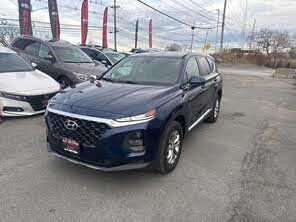


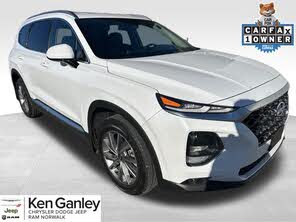


CarGurus highlights
According to CarGurus experts, the overall rating for the 2020 Ford Escape is 8.0 out of 10, while the 2020 Hyundai Santa Fe scores 8.8 out of 10. With higher ratings for design, comfort, and safety, the 2020 Hyundai Santa Fe emerges as the better choice for most consumers. Its comprehensive combination of family-friendly features, cutting-edge technology, and innovative safety systems ensures it meets and exceeds the needs of a wide range of buyers. The Ford Escape also offers excellent performance and advanced features, but the Santa Fe's higher overall rating makes it the recommended pick.
Choose the 2020 Ford Escape if:
Shop Now- You prioritize multiple engine options, including a high-performance turbo and efficient hybrids.
- You value advanced standard safety tech like blind-spot monitoring and rear cross-traffic alert.
- You enjoy a sporty driving experience with responsive handling and brakes.



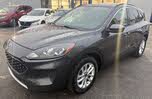



Choose the 2020 Hyundai Santa Fe if:
Shop Now- You prefer thoughtful interior features like heated and ventilated seats, and a user-friendly infotainment system.
- You need a safe family SUV with top ratings and advanced safety features.
- You appreciate bold design and innovative conveniences like the smart liftgate and extensive Blue Link services.






By: CarGurus + AI
At CarGurus, our team of experienced automotive writers remain at the heart of our content operation, conducting hands-on car tests and writing insightful guides that are backed by years of industry experience. To complement this, we are harnessing AI to make our content offering more diverse and more helpful to shoppers than ever. To achieve this, our AI systems are based exclusively on CarGurus content, ratings and data, so that what we produce is both unique to CarGurus, and uniquely helpful to car shoppers.