2020 Ford Explorer vs 2019 Toyota 4Runner
Overview | |
MSRP$35,310 | MSRP$32,765 |
Listings194 | Listings529 |
Ratings & Reviews | |
User Reviews | User Reviews |
Expert reviews7.2 out of 10 | Expert reviews7.2 out of 10 |
Pros
Cons
| Pros
Cons
|
2019 Toyota 4Runner Reviews SummaryIf you’re in the market for a modern SUV capable of getting off the beaten path, you have only a handful of options. These include the 2- and 4-door Jeep Wranglers, the Jeep Cherokee Trailhawk, the Jeep Grand Cherokee Trailhawk, the Land Rover Range Rover, and the Toyota 4Runner. Of those, only the Jeep Wrangler Unlimited and the 4Runner are 4-door SUVs that put off-road grit above all else. While the Jeep Wrangler is only one year removed from a complete redesign that brought in many new technologies, the 2019 Toyota 4Runner is based on a design first introduced in 2009. For those keeping score at home, that means the DNA underpinning the 4Runner is a decade old. Yet picking which vehicle I’d choose as a daily drivable, off-road-capable SUV is a surprisingly difficult decision. So where does an old goat like the 2019 Toyota 4Runner fit in the modern SUV market? Interestingly, the 4Runner's advanced age actually helps it in some respects. | |
2020 Ford Explorer Reviews SummaryFor nearly 30 years, the Ford Explorer has settled into the American lexicon like Cheerios. We've gobbled up millions of them, from the rock-crawling Eddie Bauers of the 1990s to the brand-new ST that can take down sports cars. The 2020 Explorer brings an all-new chassis, cranks up the technology, and introduces hybrid and high-performance powertrains in a space the size of a small living room. The Explorer's also getting very expensive while other automakers catch on to Ford's winning formula—for a lot less money. | |
Popular Features & Specs | |
Engine4.0L 270 hp V6 | Engine2.3L 300 hp I4 |
Drive Train4X2 | Drive TrainRWD |
Seating Capacity7 | Seating Capacity7 |
Horsepower270 hp @ 5600 rpm | Horsepower |
MPG City17 | MPG City21 |
MPG Highway21 | MPG Highway28 |
Engine | |
Engine Name4.0L 270 hp V6 | Engine Name2.3L 300 hp I4 |
Torque278 lb-ft @ 4400 rpm | Torque |
Horsepower270 hp @ 5600 rpm | Horsepower |
Drivetrain4X2 | DrivetrainRWD |
Fuel Economy | |
MPG City17 | MPG City21 |
MPG Highway21 | MPG Highway28 |
Interior | |
Seating Capacity7 | Seating Capacity7 |
Safety | |
Front Crash Overall4 | Front Crash Overall5 |
Side Crash Overall5 | Side Crash Overall5 |
Dimensions & Capacity | |
Cargo Space47.2 cu ft | Cargo Space18.2 cu ft |
Curb Weight4400 lbs | Curb Weight4345 lbs |
Height71.5 in | Height69.9 in |
Length190.2 in | Length198.8 in |
Width75.8 in | Width89.3 in |
Wheelbase109.8 in | Wheelbase119.1 in |
Maximum Payload1700 lbs | Maximum Payload1425 lbs |
Number of doors4 | Number of doors4 |
Maximum Towing Capacity5000 lbs | Maximum Towing Capacity5300 lbs |
Standard Towing Capacity5000 lbs | Standard Towing Capacity |
Overview | ||
MSRP | $35,310 | $32,765 |
Listings | ||
Ratings & Reviews | ||
User reviews | ||
Expert reviews | 7.2 out of 10Read full review | 7.2 out of 10Read full review |
Pros & cons | Pros
Cons
| Pros
Cons
|
Summary | If you’re in the market for a modern SUV capable of getting off the beaten path, you have only a handful of options. These include the 2- and 4-door Jeep Wranglers, the Jeep Cherokee Trailhawk, the Jeep Grand Cherokee Trailhawk, the Land Rover Range Rover, and the Toyota 4Runner. Of those, only the Jeep Wrangler Unlimited and the 4Runner are 4-door SUVs that put off-road grit above all else. While the Jeep Wrangler is only one year removed from a complete redesign that brought in many new technologies, the 2019 Toyota 4Runner is based on a design first introduced in 2009. For those keeping score at home, that means the DNA underpinning the 4Runner is a decade old. Yet picking which vehicle I’d choose as a daily drivable, off-road-capable SUV is a surprisingly difficult decision. So where does an old goat like the 2019 Toyota 4Runner fit in the modern SUV market? Interestingly, the 4Runner's advanced age actually helps it in some respects. | For nearly 30 years, the Ford Explorer has settled into the American lexicon like Cheerios. We've gobbled up millions of them, from the rock-crawling Eddie Bauers of the 1990s to the brand-new ST that can take down sports cars. The 2020 Explorer brings an all-new chassis, cranks up the technology, and introduces hybrid and high-performance powertrains in a space the size of a small living room. The Explorer's also getting very expensive while other automakers catch on to Ford's winning formula—for a lot less money. |
Video | ||
Popular Features & Specs | ||
Engine | 4.0L 270 hp V6 | 2.3L 300 hp I4 |
Drive Train | 4X2 | RWD |
Seating Capacity | 7 | 7 |
Horsepower | 270 hp @ 5600 rpm | |
MPG City | 17 | 21 |
MPG Highway | 21 | 28 |
Engine | ||
Engine Name | 4.0L 270 hp V6 | 2.3L 300 hp I4 |
Torque | 278 lb-ft @ 4400 rpm | |
Horsepower | 270 hp @ 5600 rpm | |
Drivetrain | 4X2 | RWD |
Fuel Economy | ||
MPG City | 17 | 21 |
MPG Highway | 21 | 28 |
Interior | ||
Seating Capacity | 7 | 7 |
Safety | ||
Front Crash Overall | 4 | 5 |
Side Crash Overall | 5 | 5 |
Dimensions & Capacity | ||
Cargo Space | 47.2 cu ft | 18.2 cu ft |
Curb Weight | 4400 lbs | 4345 lbs |
Height | 71.5 in | 69.9 in |
Length | 190.2 in | 198.8 in |
Width | 75.8 in | 89.3 in |
Wheelbase | 109.8 in | 119.1 in |
Maximum Payload | 1700 lbs | 1425 lbs |
Number of doors | 4 | 4 |
Maximum Towing Capacity | 5000 lbs | 5300 lbs |
Standard Towing Capacity | 5000 lbs | |
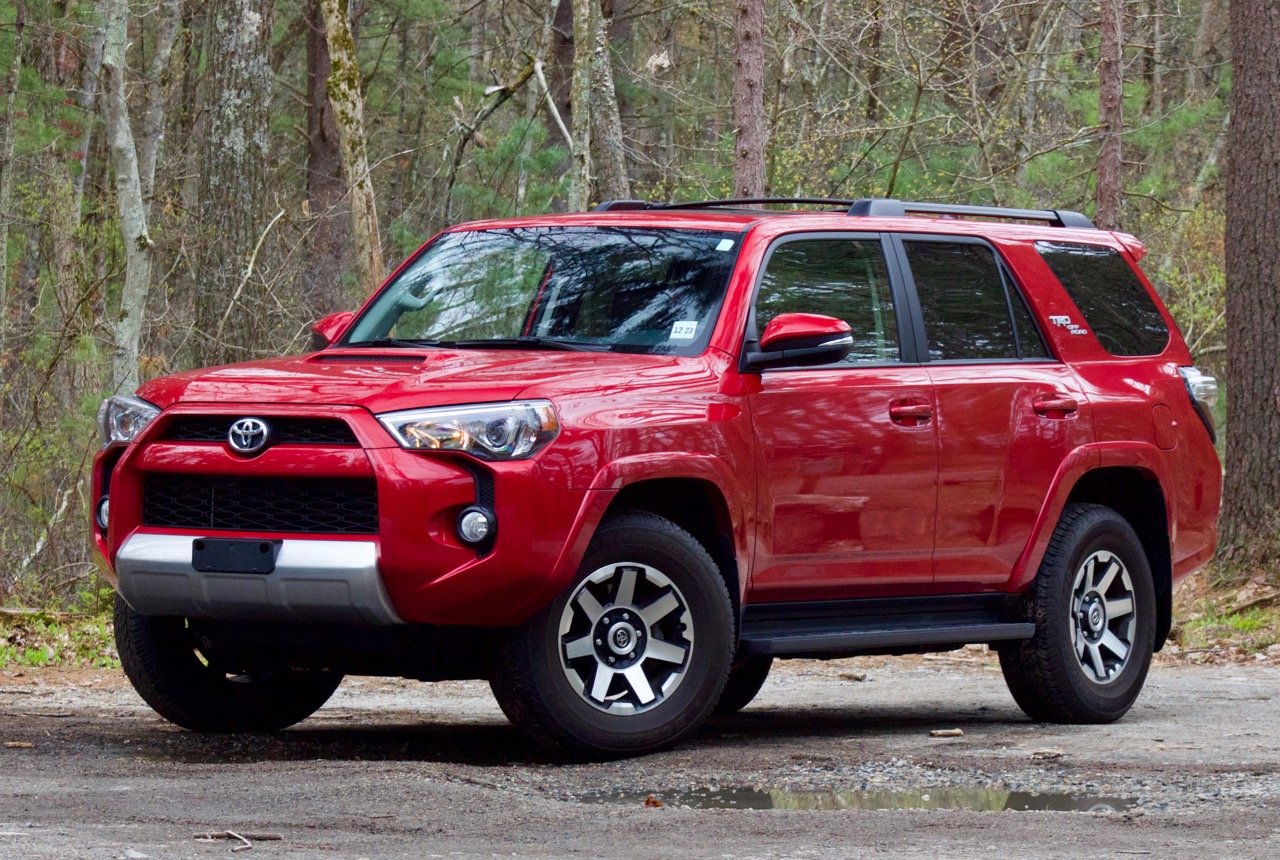
The 2019 Toyota 4Runner had an aesthetic that expressed its rugged roots. It received a refresh in 2015 that gave it a more aggressive front end, and its design was a product of necessity rather than artifice. The stubby front and rear ends granted steep approach and departure angles, ensuring it didn't get stuck on challenging trails. Large tires and flared fenders added to its off-road capability, making its looks more than just bravado.
The 4Runner came in several trims: SR5, SR5 Premium, TRD Off-Road, TRD Off-Road Premium, Limited, and the top-tier TRD Pro, all available with either rear-wheel drive (RWD) or four-wheel drive (4WD). Even the base SR5 had practical features like 17-inch alloy wheels, smoked taillights, under-body skid plates, and a power up/down rear window reminiscent of the 1980s 4Runner. The TRD trims added off-road essentials, while the Limited and Limited Nightshade editions catered to those seeking a bit more sophistication and curb appeal. The top-tier TRD Pro trim went all out with a black grille, TRD roof rack, fog lights, and off-road enhancements such as upgraded shocks and TRD-tuned front springs.
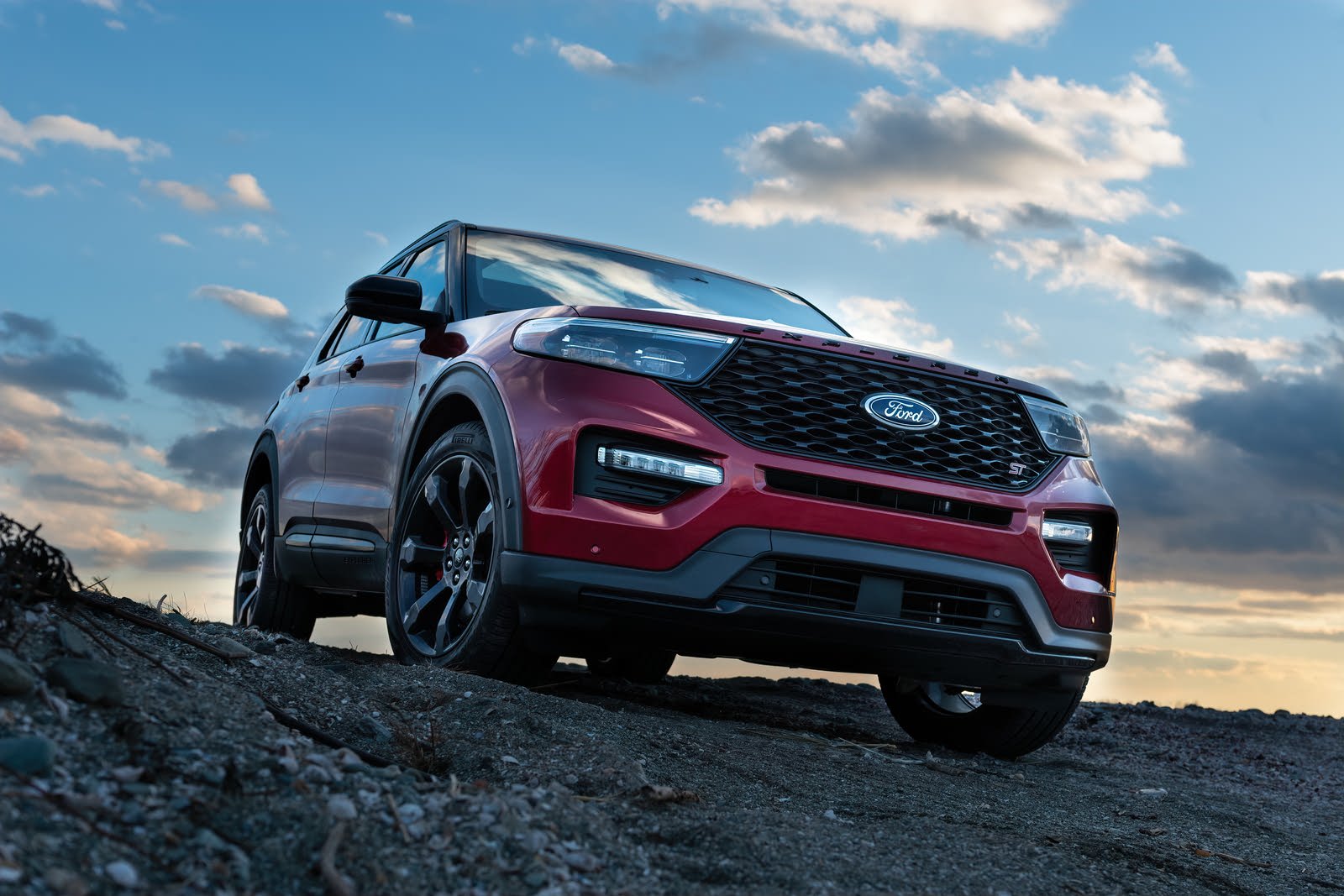
In contrast, the 2020 Ford Explorer embraced a sleek and modern aesthetic, refining its upscale, utilitarian design. By removing excess bulk, it presented a lower and more athletic profile. The widened headlights, extra-large grille, and "Explorer" lettering on the hood gave it a prominent, recognizable face. Trims like the ST with blacked-out trim, red brake calipers, and quad exhaust pipes exuded a sporty yet aggressive look.
Inside, however, the Explorer's interior struggled to meet the expectations set by its exterior. On models approaching $60,000, the materials felt subpar, with low-grade vinyl and coarse plastics marring the potential for a luxurious feel. Nonetheless, it boasted aluminum speaker covers, white stitching, and a generally solid switchgear that added some flair to its all-black interior. Despite the shortcomings in material quality, the Explorer’s looks and functional design set it apart from the competition.


The 2019 Toyota 4Runner had a single engine option: a durable 4.0-liter V6 that produced 270 horsepower and 278 pound-feet of torque, paired with a 5-speed automatic transmission. This powertrain, dating back to 2002, offered reliability and a truck-like feel that appealed to enthusiasts. The TRD Off-Road and Premium trims came with advanced off-road gear including a locking rear differential, Multi-Terrain Select system, and crawl control, enhancing its capability on rugged terrain. Unfortunately, the outdated powertrain also meant poor fuel efficiency, with the 4WD model averaging just 17 mpg city and 20 highway.
The 2020 Ford Explorer, on the other hand, offered multiple engine choices. The highlight was the ST's 3.0-liter twin-turbo V6 that churned out 400 horsepower and 415 pound-feet of torque, paired with a 10-speed automatic transmission and optional all-wheel drive (AWD). This powertrain delivered smooth, uninterrupted power and impressive agility. For those looking for something less potent, the Explorer came standard with a 2.3-liter turbo inline-four that made 300 horsepower and 310 pound-feet of torque. A gas-electric hybrid variant was also available, combining a 3.3-liter V6 with an electric motor for a net 318 horsepower, although it didn’t offer substantial fuel savings.
The Explorer’s chassis, now based on a rear-wheel-drive (RWD) platform, allowed for better weight distribution and handling. The ST version showcased upgraded suspension and steering from Ford Performance, which translated to crisp, precise handling and nimble performance.
The 2019 Toyota 4Runner prioritized space and practicality. Its fully enclosed cabin and spacious interior were notable, offering generous head- and legroom even for taller passengers. While its dashboard and infotainment system were outdated, their simplicity made them easy to use. The 4Runner boasted nearly 90 cubic feet of cargo space with the rear seats folded, making it one of the most spacious SUVs in its class.
In contrast, the 2020 Ford Explorer offered a more modern and refined interior. With ample space for passengers and cargo, it made long road trips comfortable. The second-row passengers enjoyed the luxury of air vents, USB ports, and a panoramic moonroof that enhanced the sense of roominess. The third row, while suitable for adults on short trips, sacrificed some cargo space behind it. The Explorer offered 18 cubic feet behind the third row, expanding to 48 cubic feet with the third row folded, and a maximum of 88 cubic feet with all seats down—up from the previous model’s 44 and 82 cubic feet.
The technology in the 2019 Toyota 4Runner was basic, lacking Apple CarPlay and Android Auto—features that were becoming standard in new vehicles. The upgraded Entune system in the SR5 Premium provided navigation and Siri Eyes Free, but otherwise, the infotainment setup was straightforward and somewhat dated.
In comparison, the 2020 Ford Explorer came well-equipped with tech features. An 8-inch touchscreen with Sync 3, Apple CarPlay, Android Auto, and 4G WiFi was standard. Higher trims could be outfitted with a 10-inch vertical touchscreen and a 12-inch digital instrument cluster. The interface was user-friendly, though some features, like full-screen map displays, felt unfinished. Ford's Co-Pilot360 suite added advanced driver-assistance technologies, although it lacked the polish of competitors’ systems.
The 2019 Toyota 4Runner's safety features reflected its age. It came standard with airbags, traction control, and a reversing camera—basic by modern standards. Notably absent were advanced driver-assistance features, which are now standard on many newer vehicles. It earned 4 stars overall in NHTSA crash tests, but only 3 stars in rollover tests, underscoring its dated safety profile.
The 2020 Ford Explorer fared better in terms of safety. The CoPilot360 suite included forward emergency braking, blind-spot monitoring, auto high beams, and lane-keep assist. The optional CoPilot360 Assist+ added features like adaptive cruise control and reverse braking. Although it scored "Acceptable" in the driver's side small overlap test by IIHS, it offered a more comprehensive array of safety features than the 4Runner.
CarGurus highlights
According to CarGurus experts, the overall rating for the 2019 Toyota 4Runner was 7.2 out of 10, while the 2020 Ford Explorer also scored 7.2 out of 10. Both vehicles offered specific strengths and appealed to different consumer needs. For those needing a rugged, reliable off-road SUV, the 2019 Toyota 4Runner was the go-to choice. It emphasized durability, cargo space, and off-road capability. On the other hand, for families or individuals seeking a modern, comfortable, and tech-savvy SUV with multiple engine options, the 2020 Ford Explorer received the nod. The final recommendation leaned towards the 2020 Ford Explorer for its more balanced offering, especially in technology and safety, making it the better overall choice.
Choose the 2020 Ford Explorer if:
- You want a versatile family SUV with a spacious and tech-laden interior.
- You prioritize advanced technology and driver-assist features.
- You seek strong performance with multiple engine options and superior handling.


Choose the 2019 Toyota 4Runner if:
- You need a reliable and capable off-road vehicle with proven components.
- You value cargo space and don’t need the latest technology or advanced safety features.
- You prefer a traditional SUV feel with a high driving position and a rugged aesthetic.


CarGurus highlights
According to CarGurus experts, the overall rating for the 2019 Toyota 4Runner was 7.2 out of 10, while the 2020 Ford Explorer also scored 7.2 out of 10. Both vehicles offered specific strengths and appealed to different consumer needs. For those needing a rugged, reliable off-road SUV, the 2019 Toyota 4Runner was the go-to choice. It emphasized durability, cargo space, and off-road capability. On the other hand, for families or individuals seeking a modern, comfortable, and tech-savvy SUV with multiple engine options, the 2020 Ford Explorer received the nod. The final recommendation leaned towards the 2020 Ford Explorer for its more balanced offering, especially in technology and safety, making it the better overall choice.
Choose the 2020 Ford Explorer if:
Shop Now- You want a versatile family SUV with a spacious and tech-laden interior.
- You prioritize advanced technology and driver-assist features.
- You seek strong performance with multiple engine options and superior handling.
Choose the 2019 Toyota 4Runner if:
Shop Now- You need a reliable and capable off-road vehicle with proven components.
- You value cargo space and don’t need the latest technology or advanced safety features.
- You prefer a traditional SUV feel with a high driving position and a rugged aesthetic.

By: CarGurus + AI
At CarGurus, our team of experienced automotive writers remain at the heart of our content operation, conducting hands-on car tests and writing insightful guides that are backed by years of industry experience. To complement this, we are harnessing AI to make our content offering more diverse and more helpful to shoppers than ever. To achieve this, our AI systems are based exclusively on CarGurus content, ratings and data, so that what we produce is both unique to CarGurus, and uniquely helpful to car shoppers.

