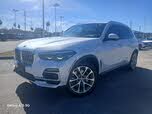
2020 Nissan Rogue vs 2019 BMW X5
Overview | |
MSRP$60,700 | MSRP$25,490 |
Listings806 | Listings1154 |
Ratings & Reviews | |
User Reviews | User Reviews |
Expert reviews7.8 out of 10 | Expert reviews6.0 out of 10 |
Pros
Cons
| |
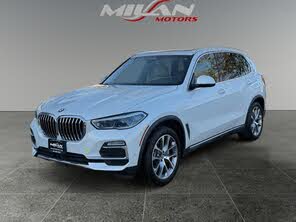
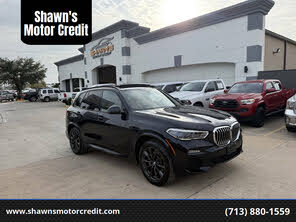
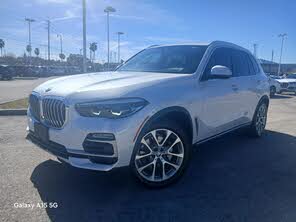
2019 BMW X5 Reviews SummaryThe BMW X5 redefined SUVs 20 years ago, leaning into the idea that you could have truck form and car function all in one package. In fact, BMW branded the original X5 as an SAV—a Sport Activity Vehicle—to help emphasize the fact that it drove as well as the company's famous sport sedans. And while that claim was a bit of an overreach, the original X5 did outperform its SUV competitors on the road. Now in its fourth generation, BMW’s midsize crossover continues to deliver on that two-decade-old promise: The X5 delivers car-like handling in an SUV form. And while the 2019 X5 stretches 1 inch longer, 3 inches wider, and 1 inch taller than last year's model, you’d have to look closely to notice the differences. Most obvious is a new and bigger kidney grille with active shutters. It has already received flak for being “comically large,” though in my opinion, it seems proportional to the rest of the vehicle—enough to make me wonder if the grilles on previous iterations of the X5 were too small. Inside, you’ll find a redesigned interior with an updated version of the iDrive system, and a suite of Level 2 autonomous technology that unfortunately leaves a lot to be desired. But that shouldn’t dissuade you from BMW’s revolutionary recreational vehicle, because there’s still a lot to love. | |
2020 Nissan Rogue Reviews SummaryNissan hasn’t redesigned the Rogue since 2014, but an all-new version of this SUV is coming for the 2021 model year. In the meantime, dealers will be eager to sell remaining stocks of the outgoing 2020 Nissan Rogue, and the deals on these new cars ought to be mighty juicy. Should you bite? Should you wait? Or should you shop for something else? The answers to these questions depend on who you are and what you value in a compact crossover SUV. | |
No video found | |
Popular Features & Specs | |
Engine3.0L 335 hp I6 | Engine2.5L 170 hp I4 |
Drive TrainAWD | Drive TrainFWD |
Seating Capacity7 | Seating Capacity5 |
Horsepower335 hp @ 5500 rpm | Horsepower170 hp @ 6000 rpm |
MPG City20 | MPG City26 |
MPG Highway26 | MPG Highway33 |
Engine | |
Engine Name3.0L 335 hp I6 | Engine Name2.5L 170 hp I4 |
Torque330 lb-ft @ 1500 rpm | Torque175 lb-ft @ 4400 rpm |
Horsepower335 hp @ 5500 rpm | Horsepower170 hp @ 6000 rpm |
DrivetrainAWD | DrivetrainFWD |
Fuel Economy | |
MPG City20 | MPG City26 |
MPG Highway26 | MPG Highway33 |
Interior | |
Seating Capacity7 | Seating Capacity5 |
Key Features | |
Navigation SystemStandard | Navigation System |
Sunroof/MoonroofStandard | Sunroof/Moonroof |
Safety | |
Front Crash Overall4 | Front Crash Overall4 |
Side Crash Overall5 | Side Crash Overall5 |
Dimensions & Capacity | |
Cargo Space33.9 cu ft | Cargo Space39.3 cu ft |
Curb Weight4813 lbs | Curb Weight3463 lbs |
Height69.0 in | Height66.3 in |
Length194.3 in | Length184.5 in |
Width87.3 in | Width72.4 in |
Wheelbase117.1 in | Wheelbase106.5 in |
Maximum Payload849 lbs | Maximum Payload1127 lbs |
Number of doors4 | Number of doors4 |
Maximum Towing Capacity7209 lbs | Maximum Towing Capacity |
Standard Towing Capacity6603 lbs | Standard Towing Capacity |
Overview | ||
MSRP | $60,700 | $25,490 |
Listings | ||
Ratings & Reviews | ||
User reviews | ||
Expert reviews | 7.8 out of 10Read full review | 6.0 out of 10Read full review |
Pros & cons | Pros
Cons
| |
Summary | The BMW X5 redefined SUVs 20 years ago, leaning into the idea that you could have truck form and car function all in one package. In fact, BMW branded the original X5 as an SAV—a Sport Activity Vehicle—to help emphasize the fact that it drove as well as the company's famous sport sedans. And while that claim was a bit of an overreach, the original X5 did outperform its SUV competitors on the road. Now in its fourth generation, BMW’s midsize crossover continues to deliver on that two-decade-old promise: The X5 delivers car-like handling in an SUV form. And while the 2019 X5 stretches 1 inch longer, 3 inches wider, and 1 inch taller than last year's model, you’d have to look closely to notice the differences. Most obvious is a new and bigger kidney grille with active shutters. It has already received flak for being “comically large,” though in my opinion, it seems proportional to the rest of the vehicle—enough to make me wonder if the grilles on previous iterations of the X5 were too small. Inside, you’ll find a redesigned interior with an updated version of the iDrive system, and a suite of Level 2 autonomous technology that unfortunately leaves a lot to be desired. But that shouldn’t dissuade you from BMW’s revolutionary recreational vehicle, because there’s still a lot to love. | Nissan hasn’t redesigned the Rogue since 2014, but an all-new version of this SUV is coming for the 2021 model year. In the meantime, dealers will be eager to sell remaining stocks of the outgoing 2020 Nissan Rogue, and the deals on these new cars ought to be mighty juicy. Should you bite? Should you wait? Or should you shop for something else? The answers to these questions depend on who you are and what you value in a compact crossover SUV. |
Video | No video found | |
Popular Features & Specs | ||
Engine | 3.0L 335 hp I6 | 2.5L 170 hp I4 |
Drive Train | AWD | FWD |
Seating Capacity | 7 | 5 |
Horsepower | 335 hp @ 5500 rpm | 170 hp @ 6000 rpm |
MPG City | 20 | 26 |
MPG Highway | 26 | 33 |
Engine | ||
Engine Name | 3.0L 335 hp I6 | 2.5L 170 hp I4 |
Torque | 330 lb-ft @ 1500 rpm | 175 lb-ft @ 4400 rpm |
Horsepower | 335 hp @ 5500 rpm | 170 hp @ 6000 rpm |
Drivetrain | AWD | FWD |
Fuel Economy | ||
MPG City | 20 | 26 |
MPG Highway | 26 | 33 |
Interior | ||
Seating Capacity | 7 | 5 |
Key Features | ||
Navigation System | Standard | |
Sunroof/Moonroof | Standard | |
Safety | ||
Front Crash Overall | 4 | 4 |
Side Crash Overall | 5 | 5 |
Dimensions & Capacity | ||
Cargo Space | 33.9 cu ft | 39.3 cu ft |
Curb Weight | 4813 lbs | 3463 lbs |
Height | 69.0 in | 66.3 in |
Length | 194.3 in | 184.5 in |
Width | 87.3 in | 72.4 in |
Wheelbase | 117.1 in | 106.5 in |
Maximum Payload | 849 lbs | 1127 lbs |
Number of doors | 4 | 4 |
Maximum Towing Capacity | 7209 lbs | |
Standard Towing Capacity | 6603 lbs | |
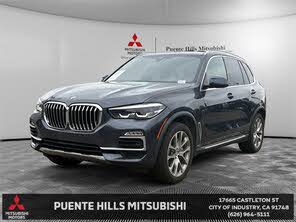
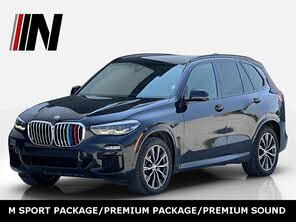
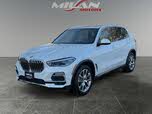
The 2019 BMW X5 was designed to offer a driving experience closer to a sedan, despite its 5,000-pound weight and tall stature. BMW focused on providing a smooth ride on pavement rather than off-road capabilities, which was evident in its design and performance. The X5 featured a five-passenger layout, expandable to seven, though the third row was cramped. It came with two turbocharged engine options: a 3.0-liter inline 6-cylinder for the xDrive40i and a 4.4-liter V8 for the xDrive50i, both paired with a ZF 8-speed automatic transmission. The base xDrive40i started at $60,700 and included a suite of features like adaptive LED headlights, a panoramic sunroof, and a digital gauge cluster. Various packages allowed for further customization, adding features like keyless entry, satellite radio, and advanced safety systems.
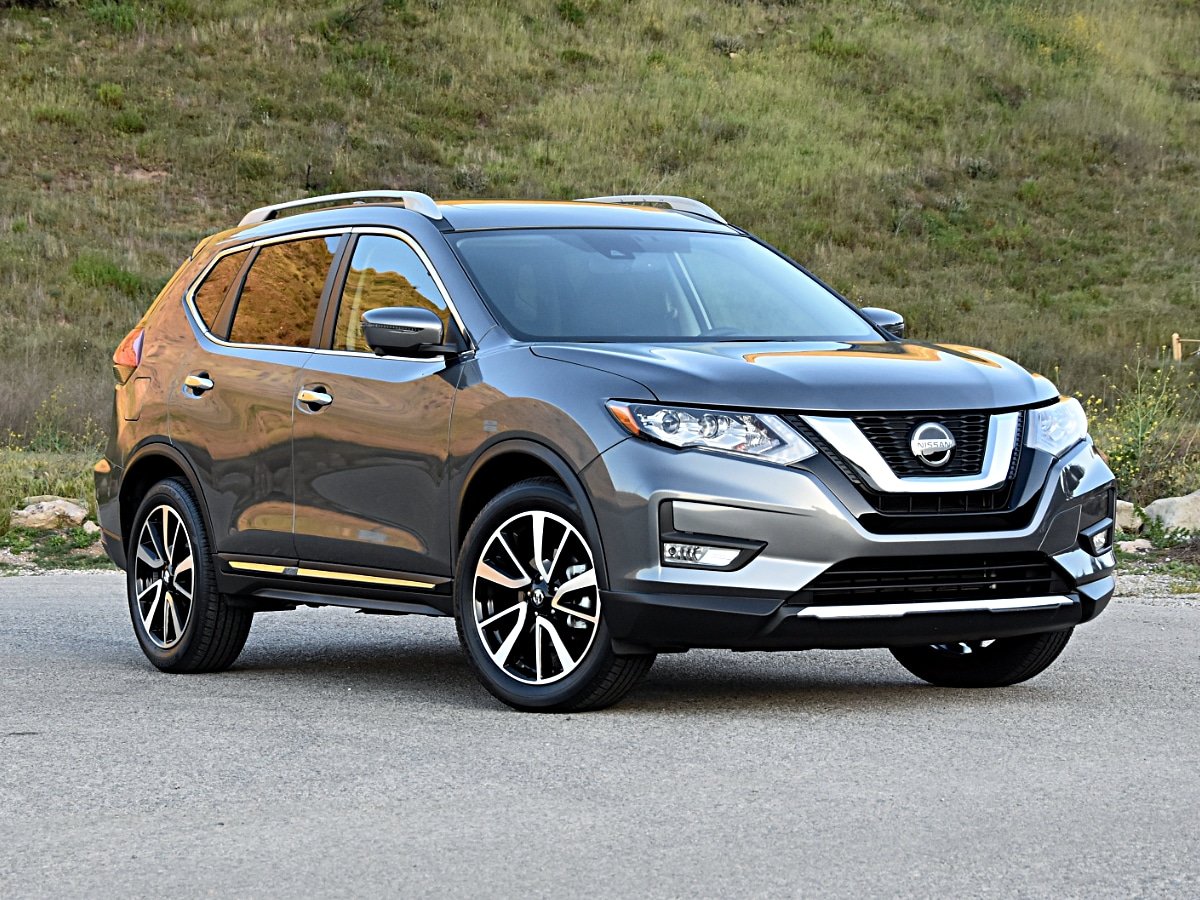
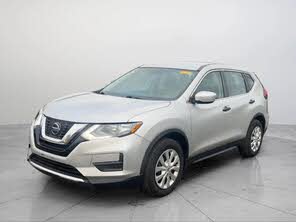
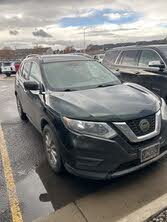
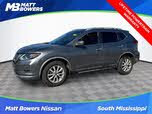
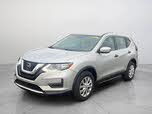
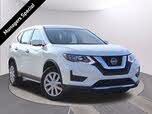
In contrast, the 2020 Nissan Rogue was available in S, SV, and SL trims, with a single engine and transmission combination and a choice between FWD and AWD. The test car, an SL trim with front-drive, included the SL Premium Package and other options, totaling $34,870. The Rogue's design remained attractive despite its age, featuring a bold V-Motion grille and 19-inch aluminum wheels. However, the interior showed its age with older styling themes and unimpressive plastic surfaces. The Rogue SL's center console sides were padded for comfort, but overall, the interior felt dated compared to newer models.


The 2019 BMW X5 excelled in performance, thanks to its turbocharged inline 6-cylinder engine in the xDrive40i, delivering 335 horsepower and 330 lb-ft of torque. The 8-speed ZF automatic transmission provided smooth and efficient gear changes, contributing to the X5's impressive EPA-estimated 20 mpg city, 26 highway, and 22 combined. The xDrive50i's turbocharged 4.4-liter V8 offered even more power, with 456 hp and 479 lb-ft, achieving 0-60 mph in around 4 seconds. The X5's ride quality was enhanced by its Cluster Architecture platform, combining steel, aluminum, and carbon fiber for strength and performance. The optional air suspension allowed for adjustable ride height and improved bump absorption, making the X5 a comfortable yet sporty ride.
The 2020 Nissan Rogue, on the other hand, was equipped with a 170-horsepower 2.5-liter four-cylinder engine paired with a CVT. While the CVT made the most of the engine's power, the Rogue struggled with acceleration, especially when merging onto highways or climbing grades. The EPA estimated 29 mpg combined for FWD versions, but real-world testing showed a disappointing 24.9 mpg. The Rogue's ride and handling were improved by brake-induced technologies like Intelligent Trace Control and Active Ride Control, but the overall driving experience was lackluster. The steering was lifeless, and the suspension lacked isolation, making the Rogue more of a chore to drive.
Inside the 2019 BMW X5, the design featured aggressive angles and dual 12.3-inch screens for the updated iDrive infotainment interface. However, without expensive options like upgraded trim or glass and ceramic buttons, the interior could feel cheap compared to competitors. The seats were not particularly comfortable, with limited lumbar support and no ventilation, making them hot during warmer months. Despite these issues, the X5 offered ample space, with 33.9 cubic feet of cargo space expandable to 72.3 cubic feet. The air suspension made loading cargo easier, and the X5 could tow up to 7,200 pounds when properly equipped.
The 2020 Nissan Rogue's interior was less accommodating for taller drivers, with limited seat height adjustment and legroom. The rear seats, however, were comfortable and provided excellent thigh support and a good view, thanks to the stadium-style seating and panoramic sunroof. Rear passengers also benefited from air conditioning vents and USB charging ports. The Rogue offered 39 cubic feet of cargo space behind the back seat, with underfloor storage compartments and a Divide-n-Hide cargo management system, making it more practical for carrying cargo.
The 2019 BMW X5's technology was a mixed bag. The gesture control and voice commands were often unresponsive, and the iDrive interface, while well-designed, was not as intuitive as competitors. The Driving Assistance Plus package, offering Level 2 autonomy, was disappointing at high speeds, with the car wandering in its lane and struggling with shadows. However, the Extended Traffic Jam Assistant worked well in stop-and-go traffic. Other options included Parking Assistant Plus, a night-vision system, and a rear-seat entertainment system. The Harman Kardon stereo provided excellent sound, with an optional Bowers & Wilkins system for audiophiles.
The 2020 Nissan Rogue's infotainment system included Bluetooth, Apple CarPlay, Android Auto, and a hands-free text messaging assistant. Upgrades included SiriusXM, navigation, a Bose premium sound system, and NissanConnect Services, offering features like Amazon Alexa, Google Assistant, and remote access. However, the 7-inch touchscreen was outdated, with slow response times and subpar voice recognition, making the technology less user-friendly.
The 2019 BMW X5 featured a new brake-by-wire setup, providing a nearly natural feel with some feedback during the final moments of braking. The X5 received a 4-star rating from the NHTSA, with 4-star ratings in frontal crash and rollover tests, and 5-star ratings in side crash tests. The IIHS named it a Top Safety Pick+, awarding it top scores in all tests.
The 2020 Nissan Rogue came with standard Safety Shield 360, including forward-collision warning, automatic emergency braking, blind-spot monitoring, rear cross-traffic alert, lane departure warning, and automatic high-beam headlights. Additional features included a Rear Door Alert and Tire Fill Alert system. Optional safety features included a surround-view camera and ProPilot Assist adaptive cruise control. The Rogue received a 4-star overall rating from the NHTSA, with a 3-star rating for driver protection in frontal impacts. The IIHS did not award it a Top Safety Pick due to issues with headlights and front-passenger protection.
CarGurus highlights

According to CarGurus experts, the overall rating for the 2019 BMW X5 is 7.8 out of 10, while the 2020 Nissan Rogue scores 6.0 out of 10. Based on these ratings, the 2019 BMW X5 is the clear winner, offering superior performance, advanced safety features, and a more luxurious driving experience. If you can afford the higher price, the X5 is the better choice for a premium SUV.
Choose the 2020 Nissan Rogue if:
- You want a more affordable SUV with a lower starting price.
- You need a practical vehicle with ample rear passenger comfort and cargo space.
- You prefer a comprehensive suite of standard safety features.





Choose the 2019 BMW X5 if:
- You prioritize performance and a smooth, sporty ride.
- You need ample cargo space and towing capacity.
- You value advanced safety features and high safety ratings.





CarGurus highlights
According to CarGurus experts, the overall rating for the 2019 BMW X5 is 7.8 out of 10, while the 2020 Nissan Rogue scores 6.0 out of 10. Based on these ratings, the 2019 BMW X5 is the clear winner, offering superior performance, advanced safety features, and a more luxurious driving experience. If you can afford the higher price, the X5 is the better choice for a premium SUV.
Choose the 2020 Nissan Rogue if:
Shop Now- You want a more affordable SUV with a lower starting price.
- You need a practical vehicle with ample rear passenger comfort and cargo space.
- You prefer a comprehensive suite of standard safety features.






Choose the 2019 BMW X5 if:
Shop Now- You prioritize performance and a smooth, sporty ride.
- You need ample cargo space and towing capacity.
- You value advanced safety features and high safety ratings.









By: CarGurus + AI
At CarGurus, our team of experienced automotive writers remain at the heart of our content operation, conducting hands-on car tests and writing insightful guides that are backed by years of industry experience. To complement this, we are harnessing AI to make our content offering more diverse and more helpful to shoppers than ever. To achieve this, our AI systems are based exclusively on CarGurus content, ratings and data, so that what we produce is both unique to CarGurus, and uniquely helpful to car shoppers.