Finding a vehicle that can haul the whole family and all their gear without guzzling gas used to be a tall order. For years, drivers who needed a third row of seats had to accept frequent and expensive trips to the pump as a necessary trade-off. Thankfully, the automotive landscape has changed. Today, a growing number of three-row SUVs are designed with fuel efficiency as a top priority, meaning you no longer have to choose between space and savings.
This shift is thanks to advancements in powertrain technology. Automakers are now offering everything from traditional hybrids and plug-in hybrids (PHEVs) to efficient diesel engines and even fully electric alternatives. These vehicles provide the passenger and cargo room that busy families require, but with the added benefit of lower fuel costs and a reduced environmental footprint. Whether you're navigating daily school runs, commuting to work, or embarking on a cross-country road trip, a fuel-efficient three-row SUV offers a practical solution that balances capability with economy.
What Makes CarGurus Best Cars Guides Different
The Best 3-Row SUVs with Great Gas Mileage in 2026
FAQs
Shopping Tools
Related Topics
1. Toyota Grand Highlander
CarGurus expert rating: 8 out of 10
CarGurus user rating: 5 out of 5
Percentage of Good and Great Deals available on CarGurus: 32.2%
Overall CarGurus rating: 5 out of 5
| Pros |
Cons |
| Plenty of cargo space |
Poor handling |
| Standard advanced safety features |
Too many subscription-dependent tech features |
| Multiple powertrain options |
|
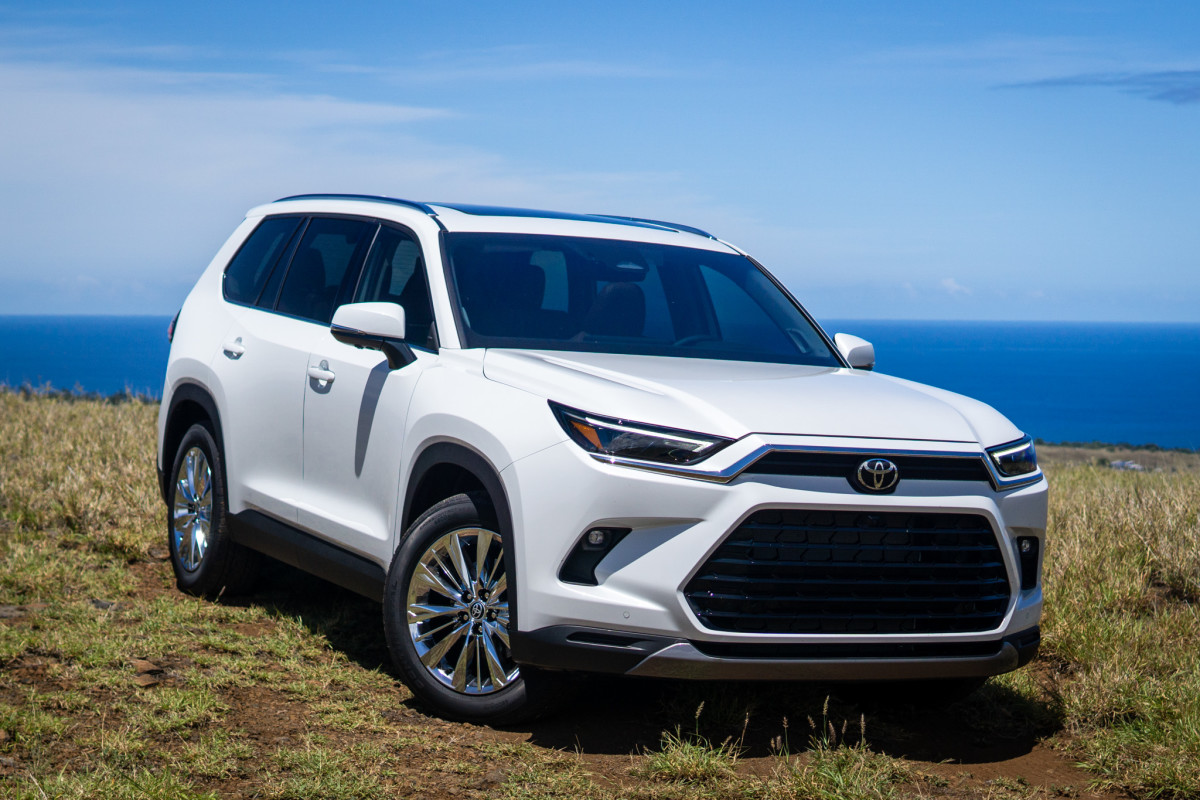
If you need a three-row SUV that prioritizes fuel savings without giving up day-to-day space, the Toyota Grand Highlander fits the mission, especially if you’ve been cross-shopping family favorites that can be hard to find on dealer lots. With multiple powertrain options—including more efficient electrified choices—it’s the kind of SUV that can make long commutes and road trips less painful at the pump while still keeping the three-row format families want.
The Grand Highlander also leans into practical ownership benefits: plenty of cargo space for strollers, sports gear, and airport runs, plus standard advanced safety features that help take stress out of busy traffic. Just know it’s tuned more for comfort than corner-carving (handling is not a highlight), and some of the tech experience can be frustrating if you’d rather not manage subscription-dependent features over time.
The CarGurus Verdict: "Can’t find a Kia Telluride? The Toyota Grand Highlander is a bigger and more fuel-efficient option." - Matt Smith
Read our most recent 2024 Toyota Grand Highlander review
Search for Toyota Grand Highlander
See all
2. Acura MDX
CarGurus expert rating: 7.7 out of 10
CarGurus user rating: 4.6 out of 5
Percentage of Good and Great Deals available on CarGurus: 32.2%
Overall CarGurus rating: 4.6 out of 5
| Pros |
Cons |
| Stylish design |
Cramped third row |
| Comfortable |
Poor fuel economy |
| Easy-to-use technology |
No hybrid option |
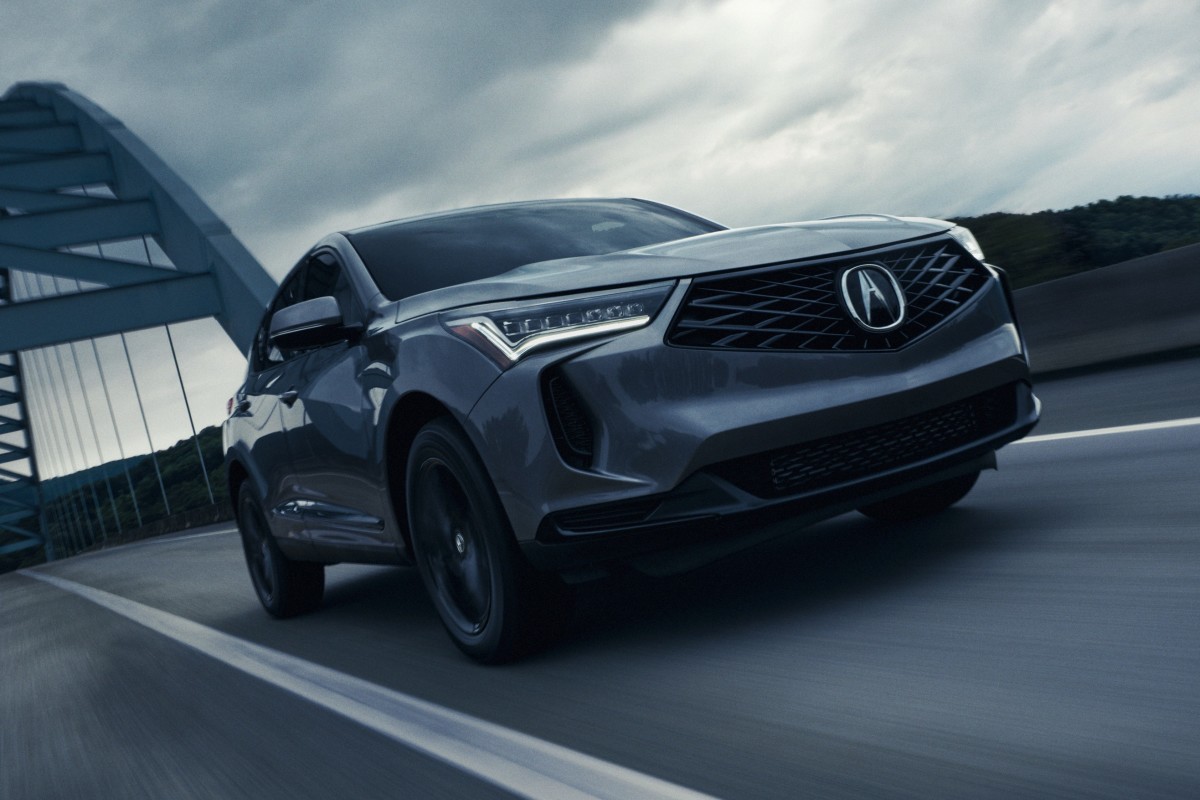
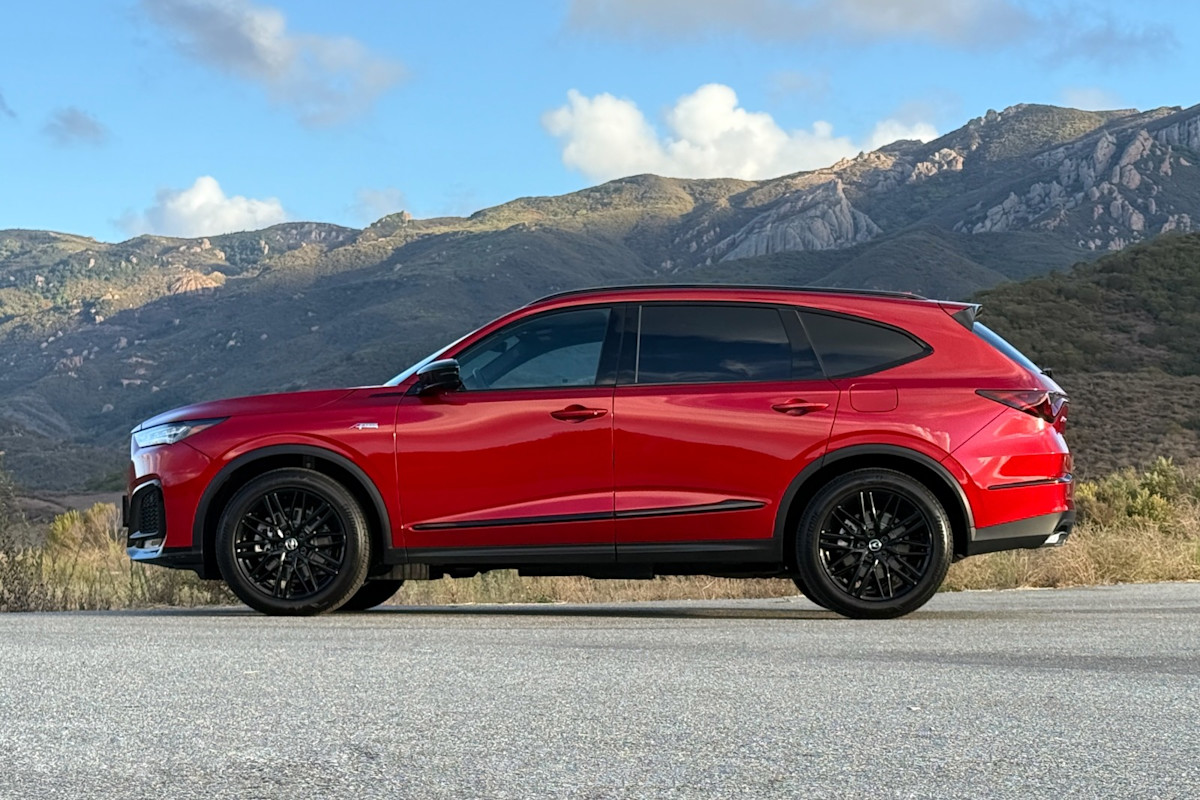
If your top priority is great gas mileage in a three-row SUV, the Acura MDX may feel like a compromise. Most versions use a 3.5-liter V6 making 290 hp and 267 lb-ft of torque, and while it’s smooth and responsive around town and relaxed on the highway, efficiency is the sticking point: EPA-estimated fuel economy is 21 mpg combined, and we observed as low as 17.9 mpg on our evaluation loop. The bigger issue for mileage-minded shoppers is the lack of a hybrid option, which puts the MDX at a disadvantage versus three-row alternatives that can deliver better real-world fuel economy.
Still, for families who want a comfortable, premium three-row that’s easy to live with day to day, the MDX has a lot going for it. It’s quiet, solid-feeling, and packed with intuitive tech, including a 12.3-inch touchscreen with Google built-in plus wireless Apple CarPlay and Android Auto, and it can be equipped with a strong suite of AcuraWatch safety aids. Utility is also a plus: cargo space measures 16.3 cubic feet behind the third row, 39.1 cubic feet with the third row folded, and 71.4 cubic feet with the second row down—handy when you’re balancing people-hauling with road-trip gear, even if the third row itself is best reserved for kids.
The CarGurus Verdict: "Refreshingly, the 2026 Acura MDX embraces its crossover SUV status, emphasizing the paved-road ride and handling qualities that made crossovers popular in the first place. Comfortable, quiet, and decent to drive, it exudes quality, offers accessible technology, and provides good utility. All that’s missing is a hybrid option." - Christian Wardlaw
Read our most recent Acura MDX review
3. Chevrolet Suburban
CarGurus expert rating: 8.2 out of 10
CarGurus user rating: 4.5 out of 5
Percentage of Good and Great Deals available on CarGurus: 31.5%
Overall CarGurus rating: 4.6 out of 5
| Pros |
Cons |
| Excellent performance from the diesel engine |
Ungainly size |
| Impressive technology |
Expensive in every trim level |
| Massively useful cargo space |
Skip the 24-inch wheels |
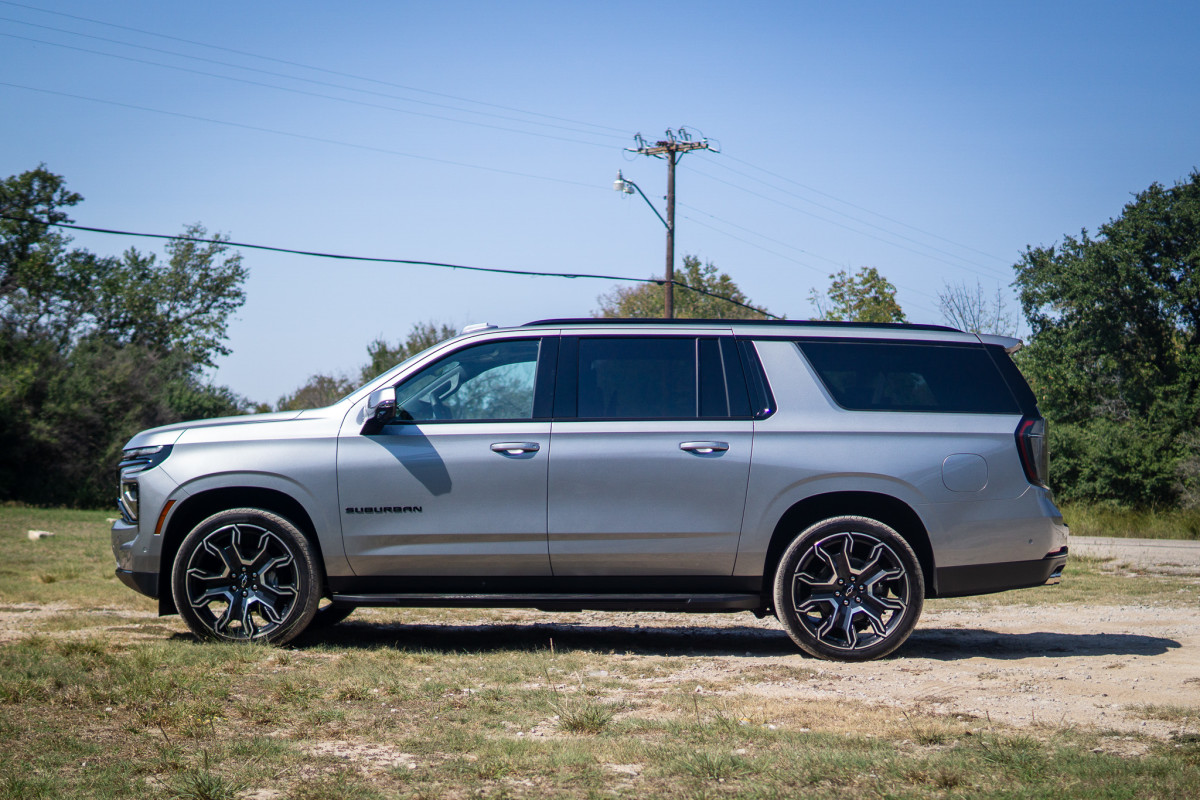
You might be surprised to find the Chevrolet Suburban on this list-until you consider the available 3.0-liter Duramax turbodiesel. With 305 hp and 495 lb-ft of torque, it’s smooth and impressively quiet for a diesel, and it’s the configuration most likely to deliver great gas mileage in real life. Chevy even pairs the Suburban with a big 28-gallon fuel tank, and the diesel’s EPA estimate of 21 mpg city, 27 highway, and 23 combined points to 700+ miles of highway range between fill-ups—an advantage for road-tripping families who don’t want frequent fuel stops.
Efficiency isn’t the only reason the Suburban works well for family duty, since it backs up its size with genuinely useful space: 41.5 cu ft behind the third row, 93.8 cu ft with the third row folded, and up to 144.7 cu ft with all seats down. Inside, the biggest update is the tech makeover, led by a standard 17.7-inch touchscreen plus an 11-inch driver display, with wireless Apple CarPlay and Android Auto and Google Built-in. It’s worth noting this SUV is expensive across the lineup, and its sheer footprint can be a hassle in tight parking lots, but for shoppers who need three rows, big-cargo flexibility, and long-range highway efficiency, the diesel Suburban is the one to focus on.
The CarGurus Verdict: "Z71 shoppers will love the newly available 3.0-liter diesel, but the majority of shoppers are going to want a new 2025 Suburban because of its impressive 17.7-inch touchscreen display." - Matt Smith
Read our most recent Chevrolet Suburban review
Search for Chevrolet Suburban
See all
4. Volvo XC90
CarGurus expert rating: 8.3 out of 10
CarGurus user rating: 4.7 out of 5
Percentage of Good and Great Deals available on CarGurus: 34.7%
Overall CarGurus rating: 4.6 out of 5
| Pros |
Cons |
| Stylish design |
Semi-autonomous driving not available |
| Great safety ratings |
Top-tier sound system costs extra even on top trim |
| User-friendly technology |
|
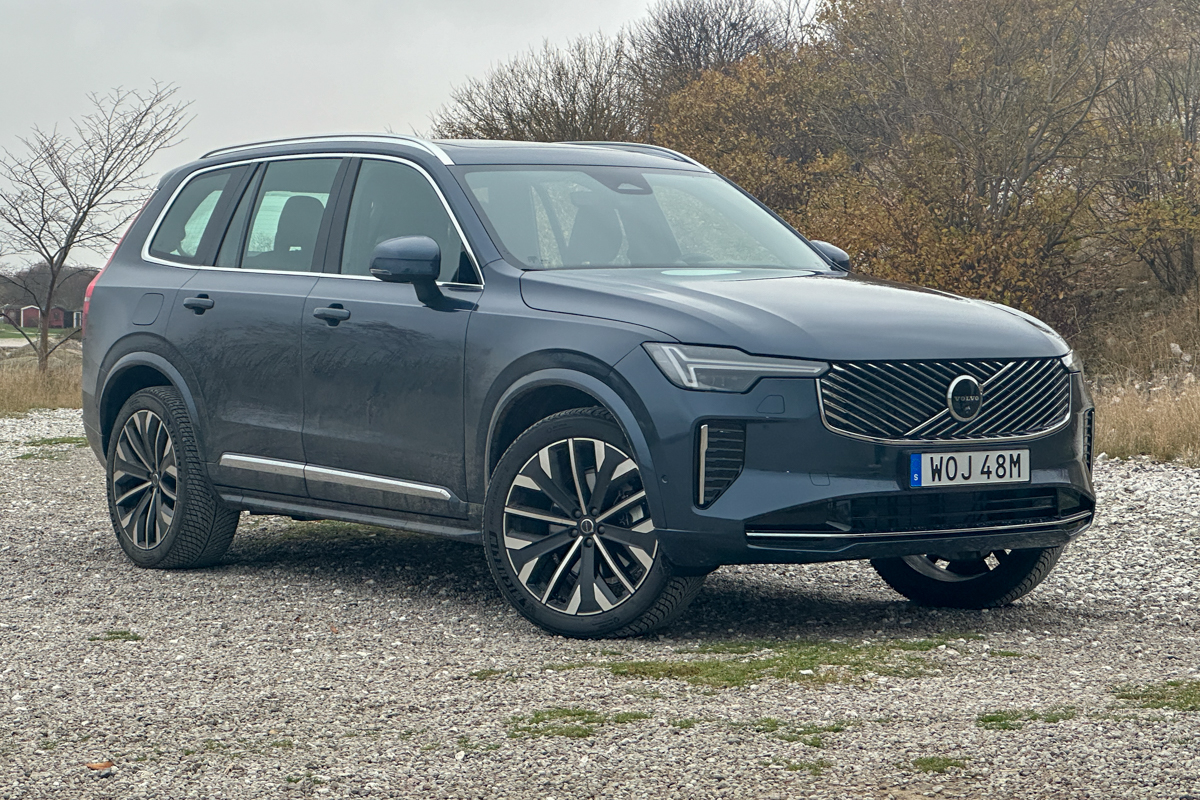
The Volvo XC90’s powertrain menu offers a variety of fuel-efficient options. B5 mild-hybrid is the effective starting point, pairing a turbocharged four-cylinder with hybrid assist for smoother responses and better efficiency than the older gas-only setup, and it makes 247 hp and 266 lb-ft of torque. For max fuel savings, the XC90 T8 plug-in hybrid adds an 18.8-kWh battery and an electric motor for 455 hp and 523 lb-ft of torque, plus up to 33 miles of electric-only driving; keep it charged and it can meaningfully reduce gas stops on daily commuting while still being ready for long road trips.
For family duty, the refreshed cabin makes day-to-day use easier, with a relocated wireless charging pad that frees up space around the cupholders and improves small-item storage. Tech also gets a usability boost with a larger, sharper portrait touchscreen running Volvo’s newer “fewer taps” interface, plus standard Apple CarPlay and Google built-in features that can keep navigation in the driver display while your passenger handles audio. Safety remains a Volvo calling card with smooth-operating standard driver assists, though shoppers who prioritize hands-free highway driving should note it’s not offered here.
The CarGurus Verdict: "The Volvo XC90 was already quite a good vehicle. It’s earned its position as Volvo’s flagship SUV with oft-praised style and substance. For 2025, it has been made even better." - Natalie Harrington
Read our most recent Volvo XC90 review
5. Volkswagen Tiguan
CarGurus expert rating: 6.8 out of 10
CarGurus user rating: 4.5 out of 5
Percentage of Good and Great Deals available on CarGurus: 34.3%
Overall CarGurus rating: 4.5 out of 5
| Pros |
Cons |
| Top trim provides affordable luxury |
Not much cargo space |
| Powerful engine |
No hybrid option |
| Quiet cabin |
Some drivers may find suspension too stiff |
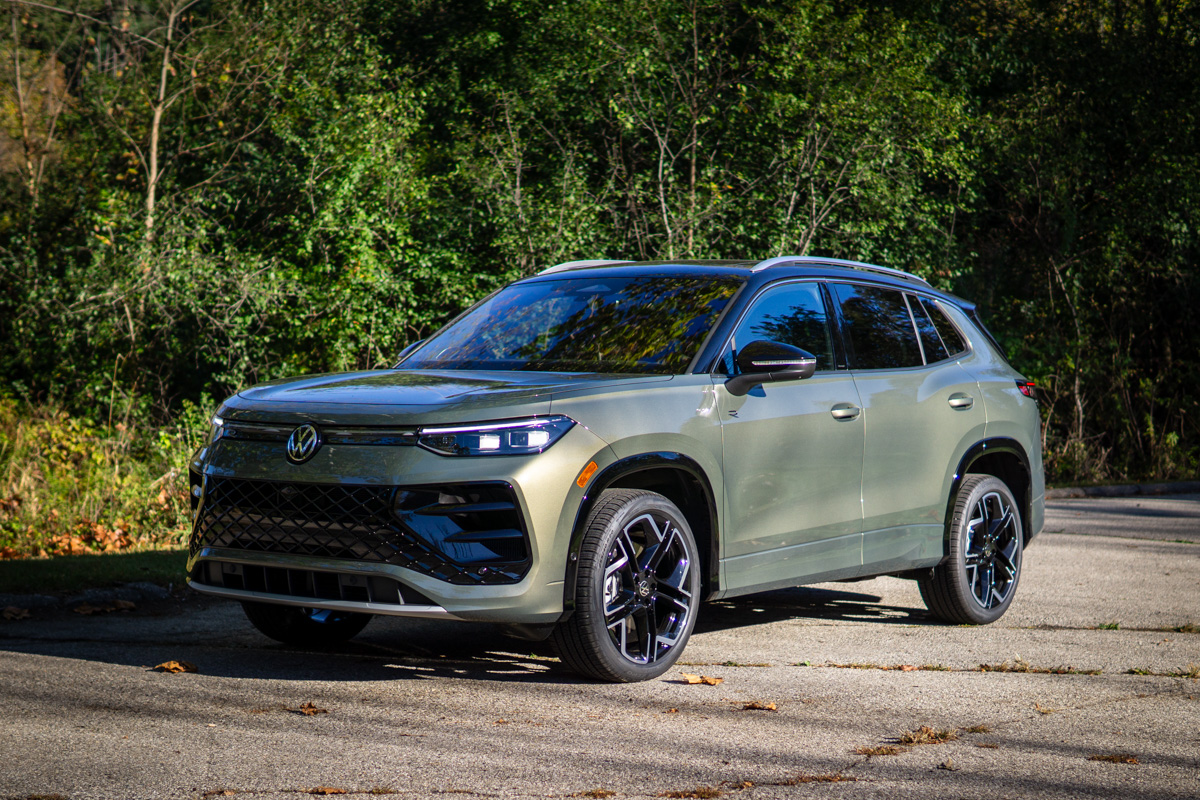
The 2026 Volkswagen Tiguan is the kind of smaller SUV that can make sense when a full-size three-row feels like too much vehicle for your daily routine. This latest Tiguan leans into a more premium feel—especially in the top trim—with a quiet cabin and an “affordable luxury” vibe that can make road-trip time more relaxing while still keeping the footprint manageable for city parking and school drop-offs.
The tradeoffs are worth weighing if you’re trying to balance people space with efficiency-minded shopping. Cargo room is a known weak point, and there’s no hybrid option for shoppers who want maximum mpg, so it’s best for buyers who prioritize a refined, comfortable commute and occasional family travel over maximum versatility. Also note that some drivers may find the suspension tuning on the firm side, but the upside is a more controlled feel that matches the Tiguan’s more powerful, upscale positioning.
The CarGurus Verdict: "A more powerful, top-shelf Tiguan puts Volkswagen on the heels of luxury automakers." - Matt Smith
Read our most recent Volkswagen Tiguan review
Search for Volkswagen Tiguan
See all
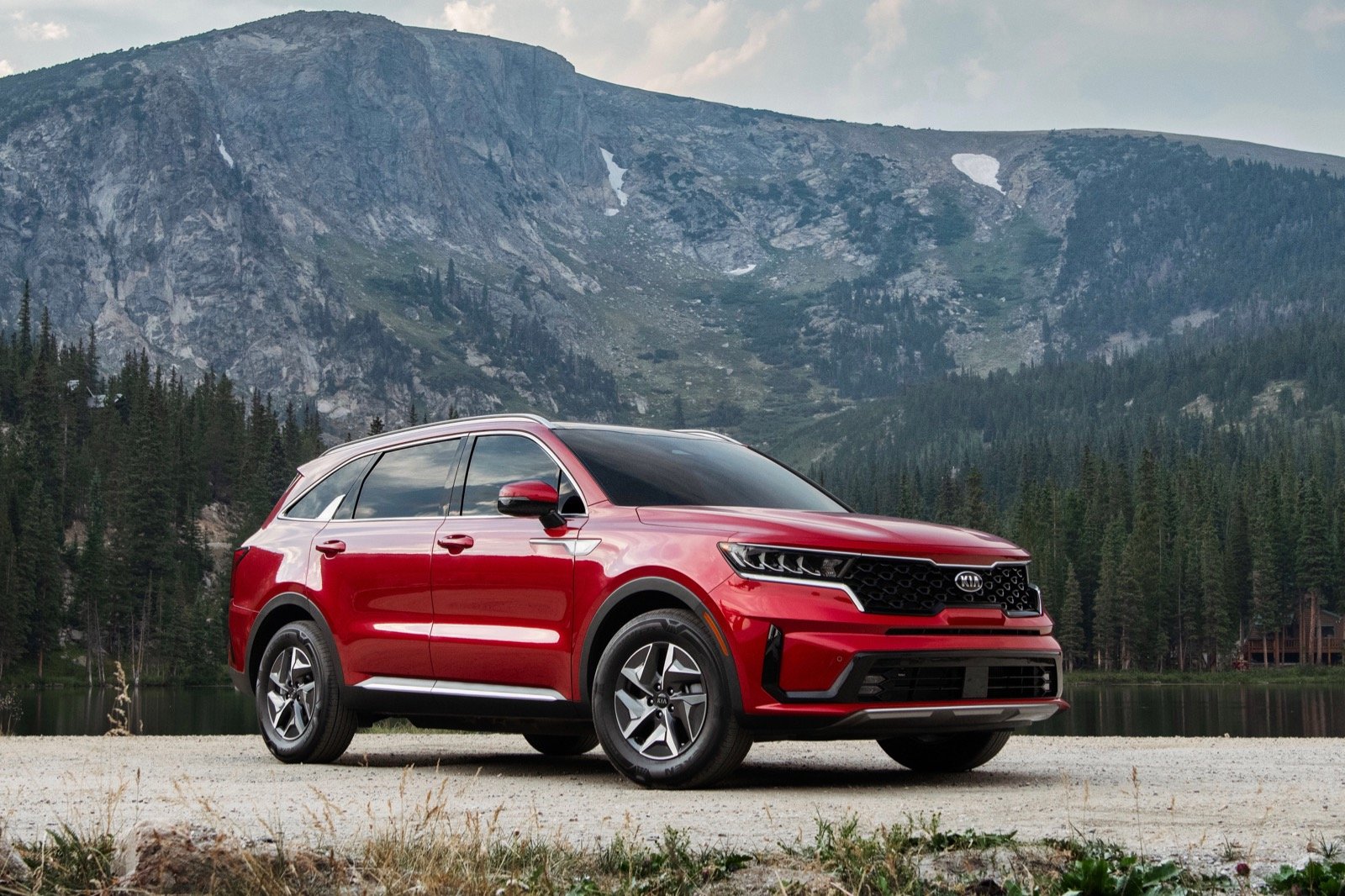
6. Kia Sorento Hybrid
CarGurus expert rating: 7.8 out of 10
CarGurus user rating: 5 out of 5
Percentage of Good and Great Deals available on CarGurus: 33.1%
Overall CarGurus rating: 4.4 out of 5
| Pros |
Cons |
| Fuel-efficient |
All-wheel drive not available |
| Stylish design |
Noisy |
| Impressive technology |
Cramped third row |
The Kia Sorento Hybrid's turbocharged 1.6-liter four-cylinder hybrid powertrain (177 hp and 195 lb-ft of torque) is tuned more for mileage than quick acceleration, and the payoff is excellent EPA fuel economy for the class: 39 mpg city, 35 mpg highway, and 37 mpg combined. One key trade-off for some families is that this hybrid is front-wheel-drive (FWD) only, so it’s best suited to drivers who prioritize commuting, road trips, and everyday errands over snow-belt traction.
Inside, the Sorento Hybrid leans into practicality with easy-to-use controls, a thoughtful dash layout, and standard tech like wireless Apple CarPlay and Android Auto on an 8-inch touchscreen. Second-row captain’s chairs make kid-duty and carpooling easier, but the third row is tighter for adults, and cargo room is fine for grocery runs with the rear seats up (you’ll want to fold seats for bigger hauls). Safety tech is generous overall, though higher trims add more advanced features, and Insurance Institute for Highway Safety (IIHS) recognition for the closely related non-hybrid Sorento helps provide some confidence for family buyers shopping this efficient three-row.
The CarGurus Verdict: "Being fuel-efficient and stylish are just two of the Kia Sorento Hybrid’s positive attributes. The fresh three-row offering from Kia has something its three-row Telluride doesn’t: a hybrid option. The Sorento Hybrid is more capable than before, but some design decisions have left us questioning if it’s better to just go with the tried and true Toyota Highlander Hybrid instead." - Eileen Falkenberg-Hull
Read our most recent Kia Sorento Hybrid review
Search for Kia Sorento Hybrid
See all

7. Mazda CX-90
CarGurus expert rating: 6.2 out of 10
CarGurus user rating: 4.5 out of 5
Percentage of Good and Great Deals available on CarGurus: 34.0%
Overall CarGurus rating: 4.4 out of 5
| Pros |
Cons |
| Stylish design |
Underwhelming base engine |
| Premium interior materials |
Noisy |
| Great safety ratings |
Unintuitive technology |
If you want a three-row SUV that targets efficiency without defaulting to a basic four-cylinder setup, the Mazda CX-90 takes an unusual approach. The turbocharged 3.3-liter inline-six is EPA-rated at 25 mpg combined in both 3.3 Turbo and 3.3 Turbo S form, and there’s also a plug-in hybrid option rated for 25 miles of electric driving, with a 25 mpg combined rating once the battery is depleted. Just note that in real-world, mountainous driving, we observed 21.3 mpg, so shoppers who spend a lot of time climbing grades should keep expectations realistic.
Beyond fuel economy, the CX-90 mixes near-luxury cabin design with family-hauler priorities—sometimes at odds. Mazda’s platform packaging pushes the cabin rearward, which helps give it a long-hood, premium look, but it also trims passenger and cargo room versus key rivals; behind the third row, cargo space measures 14.9 cubic feet, expanding to 40 cubic feet with the third row folded and 74.2 cubic feet max. Safety is a major plus, with strong IIHS and National Highway Traffic Safety Administration (NHTSA) results and a comprehensive suite of standard driver aids, though the infotainment experience can feel dated due to the lack of touchscreen operation for native Mazda Connect while driving.
The CarGurus Verdict: "Can the CX-90’s elegant design, premium interior, unusual powertrains, enjoyable driving dynamics, and impressive safety ratings ensure competitiveness in a family-size SUV segment where the Ford Explorer, Honda Pilot, and Kia Telluride dominate? With more attention to detail and better technology, this Mazda SUV could lead instead of follow." - Christian Wardlaw
Read our most recent Mazda CX-90 review
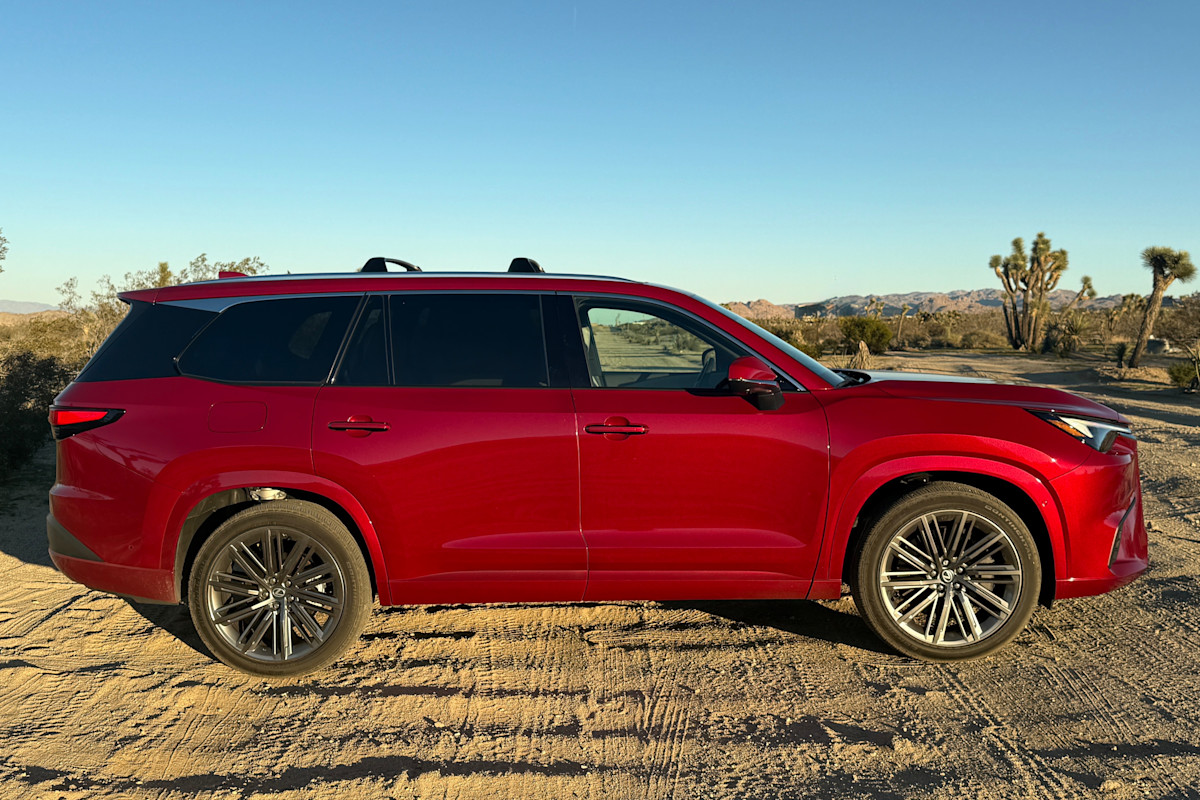
8. Lexus TX Hybrid
CarGurus expert rating: 7 out of 10
CarGurus user rating: 5 out of 5
Percentage of Good and Great Deals available on CarGurus: 35.4%
Overall CarGurus rating: 4.3 out of 5
| Pros |
Cons |
| Multiple powertrain options |
Unintuitive technology |
| Plenty of cargo space |
Interior materials feel cheap |
| Spacious third row |
|
The Lexus TX 550h+ is the premium three-row in plug-in-hybrid form. Lexus quotes 33 miles of all-electric range, and our testing got closer to 40 miles, which can cover a lot of daily school runs and errands without burning gas. When the battery is depleted, the TX returns an EPA-estimated 29 mpg combined, and its total range (gas plus battery) is about 450 miles, making it a practical choice for families who want efficiency without giving up the flexibility of a conventional fuel tank.
The TX’s family-first packaging also helps it fit the brief, with a genuinely usable third row (including cupholders and USB-C ports) and big cargo numbers for road trips: 20.2 cubic feet behind the third row, 57.4 cubic feet with the third row folded, and 97 cubic feet with the second row folded. It’s quiet and comfortable on rough roads, and the plug-in hybrid system offers useful modes—including EV-only driving and a charge mode that uses the gas engine to replenish the battery while you drive. Just be prepared for some tech frustrations, since some key controls and infotainment functions can be unintuitive, even though safety gear like Lexus Safety System+ 3.0 comes standard.
The CarGurus Verdict: "The 2026 Lexus TX 550h+ is a great option for large families who need a spacious third row, but some of the technology comes with a steep learning curve." - Emme Hall
Read our most recent Lexus TX review
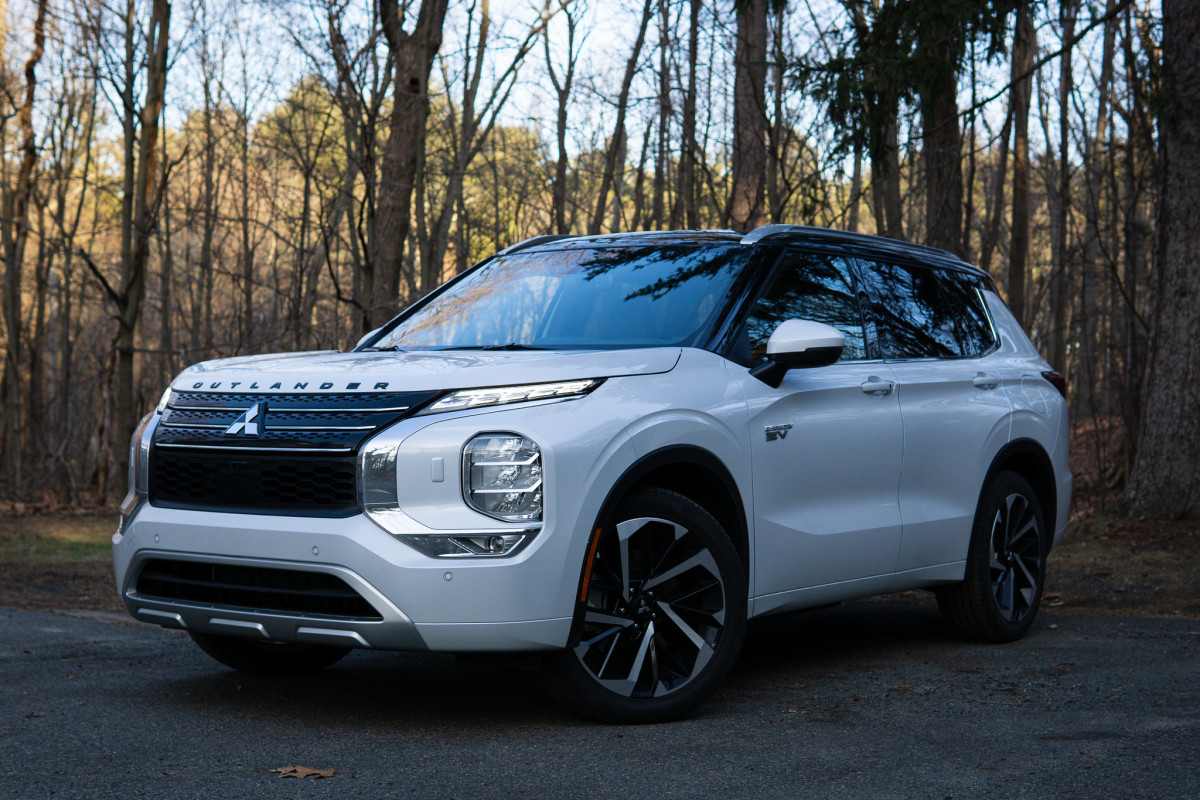
9. Mitsubishi Outlander PHEV
CarGurus expert rating: 6.8 out of 10
CarGurus user rating: 4.7 out of 5
Percentage of Good and Great Deals available on CarGurus: 31.3%
Overall CarGurus rating: 4.2 out of 5
| Pros |
Cons |
| 38 miles of all-electric range |
Nearly unusable third row |
| Standard all-wheel drive |
Loud electric powertrain |
| Public fast-charging capability |
Fast charging requires uncommon ChaDeMo plug |
The Outlander PHEV is a value-focused plug-in hybrid. Its 20-kWh battery is good for an EPA-estimated 38 miles of all-electric range, and with a full charge it’s rated at 64 MPGe combined; once the battery is depleted, it returns 26 mpg combined (25 city/27 highway) on gas. Power comes from a 2.4-liter four-cylinder plus dual electric motors for a total 248 hp and 332 lb-ft of torque, and every Outlander PHEV includes Super All-Wheel Control AWD for all-weather confidence—useful for families prioritizing efficiency without giving up traction.
The cabin and feature set feel modern for the money, borrowing a lot of its interface vibe from Nissan, including available MI-Pilot driver assistance and a strong roster of standard safety tech like automatic emergency braking with pedestrian detection, blind-spot warning, and rear cross-traffic alert. Practicality is a mixed bag: the first two rows are roomy, but the third row is best treated as an occasional, last-resort space; in return, you get up to 30.8 cubic feet of cargo room behind the second row and 66.2 cubic feet with the second row folded (without the sunroof). Charging is straightforward at home—about 6.5 hours on 240 volts—and it even offers DC fast charging, though it uses the less-common ChaDeMo plug and needs about 38 minutes to reach 80 percent.
The CarGurus Verdict: "Now in its second generation, the Mitsubishi Outlander PHEV is a compelling package. It offers good tech and safety features courtesy of its corporate parent Nissan, and its pricing is in line with the brand’s value-driven mandate. If you’re in the market for a three-row crossover SUV and want to explore your plug-in hybrid options, we can’t fault you for looking closely at the Outlander. After testing an Outlander PHEV in SEL trim, we loved its all-electric driving range but were unimpressed by the roly-poly driving experience, and we would reserve third-row vacancies for only our worst enemies." - Matt Smith
Read our most recent Mitsubishi Outlander PHEV review
Search for Mitsubishi Outlander Hybrid Plug-in
See all
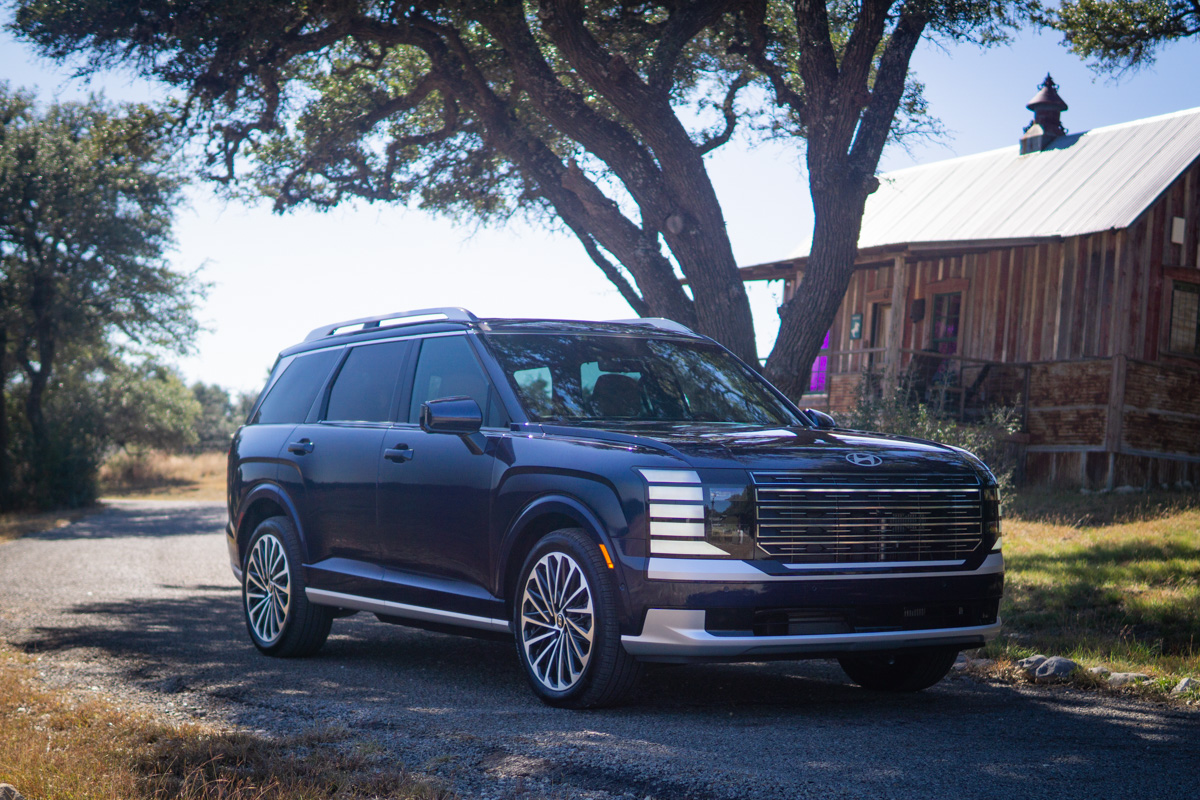
10. Hyundai Palisade Hybrid
CarGurus expert rating: 8.3 out of 10
CarGurus user rating: insufficient data
Percentage of Good and Great Deals available on CarGurus: 34.4%
Overall CarGurus rating: 3.8 out of 5
| Pros |
Cons |
| Excellent fuel economy |
Not as spacious as segment leaders |
| Powerful engine |
Engine sounds unrefined at times |
| Comfortable interior |
|
Hyundai expanded the popular Palisade's lineup for 2026 with the introudction of the Palisade Hybrid. Its setup pairs a 2.5-liter turbocharged four-cylinder with two electric motors for a combined 329 hp and 339 lb-ft of torque, so it has the passing power families appreciate even with a full load. In FWD SEL and SEL Premium trims, fuel economy is rated at 33 mpg city, 35 mpg highway, and 34 mpg combined, and Hyundai says the Palisade Hybrid can cover more than 600 miles on a single tank—great for long road trips where fewer stops matter.
This Palisade also focuses on everyday comfort and convenience: three-zone climate control and second-row controls are standard, and you get six 100-watt USB-C outlets (two per row) to keep everyone powered up. Cargo capacity measures 86.7 cubic feet, which is competitive even if some rivals offer more, and seating is standard for seven with second-row captain’s chairs (an available bench on SEL/SEL Premium bumps capacity to eight). Tech is strong across the lineup with a 12.3-inch touchscreen plus a 12.3-inch digital gauge cluster, wireless Apple CarPlay and Android Auto, and available features like a built-in dashcam; safety tech is comprehensive, with a wide suite of standard driver-assistance features and available blind-view monitor on SEL Premium and above.
The CarGurus Verdict: "Simply put, Hyundai currently sells the best mass-market three-row crossover SUV in the United States. The 2026 Hyundai Palisade looks good, drives well, and feels special–and it will keep you away from the gas station, too." - Matt Smith
Read our most recent Hyundai Palisade Hybrid review
FAQs
Which 3-row SUV has the best gas mileage?
Of the vehicles on this list, the Kia Sorento Hybrid offers the best fuel economy, with an EPA-estimated 37 mpg combined. It's followed closely by the 2026 Hyundai Palisade Hybrid at 34 mpg combined.
Are there any full-size SUVs with good gas mileage?
Yes. If you need maximum passenger and cargo space, the 2025 Chevrolet Suburban with the available 3.0-liter Duramax diesel engine is a strong option. It achieves an EPA-estimated 23 mpg combined, which is impressive for a large, body-on-frame SUV and gives it a potential highway range of over 700 miles.
What is the difference between a hybrid and a plug-in hybrid (PHEV)?
A traditional hybrid, like the Kia Sorento Hybrid, uses its electric motor to assist the gasoline engine, primarily to improve fuel economy. It charges its own small battery through braking and engine power. A plug-in hybrid (PHEV), like the Mitsubishi Outlander PHEV or Volvo XC90 T8, has a larger battery that you can charge by plugging it into an outlet. This allows it to travel a significant distance (e.g., 30-40 miles) on electricity alone before the gas engine kicks in, which can dramatically reduce fuel use for daily driving.
Do I have to give up all-wheel drive (AWD) for better fuel economy?
Not at all. Many fuel-efficient SUVs on this list come with standard AWD, including the Hyundai Santa Fe Hybrid, Mitsubishi Outlander PHEV, and Subaru Outback. This allows you to have the benefit of better traction in poor weather without a major sacrifice in gas mileage.
What Makes CarGurus Best Cars Guides Different?
Most car-shopping websites publish lists of the best cars across a variety of categories, with recommendations generally driven by editorial expertise. Here's what makes ours different: In addition to the insights and verdicts of our team of car-testing experts, our best cars guides take into account other factors that we know matter to buyers-real owner experiences and current market value.
Our expert reviewers are among this country's most trusted automotive journalists, also writing for publications including US News and World Report, Edmunds, Digital Trends, J.D. Power, and Car & Driver. They put each car through real-world testing and create detailed reviews of performance in a range of categories, from practicality and driving manners to cost-effectiveness and safety.
We also analyze hundreds of thousands of used car listings on CarGurus.com to track which models consistently offer the highest percentage of best deals relative to how many are listed for sale. Then we factor in reviews from owners-people who actually live with these cars every day. Our proprietary Best Cars algorithm then creates a final Overall CarGurus rating combining expert scores, user reviews, and the percentage of listings that have earned the Good or Great Deal rating. This multi-pronged approach reveals not just which cars excel on paper, but which ones deliver satisfaction and value when you're ready to buy.
The CarGurus market data used in this guide was last updated in August 2026. Values were accurate at time of publication and should be used as a guide only.
Shopping Tools
Related Topics