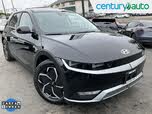
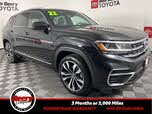
Hyundai Ioniq 5 vs Volkswagen Atlas Cross Sport
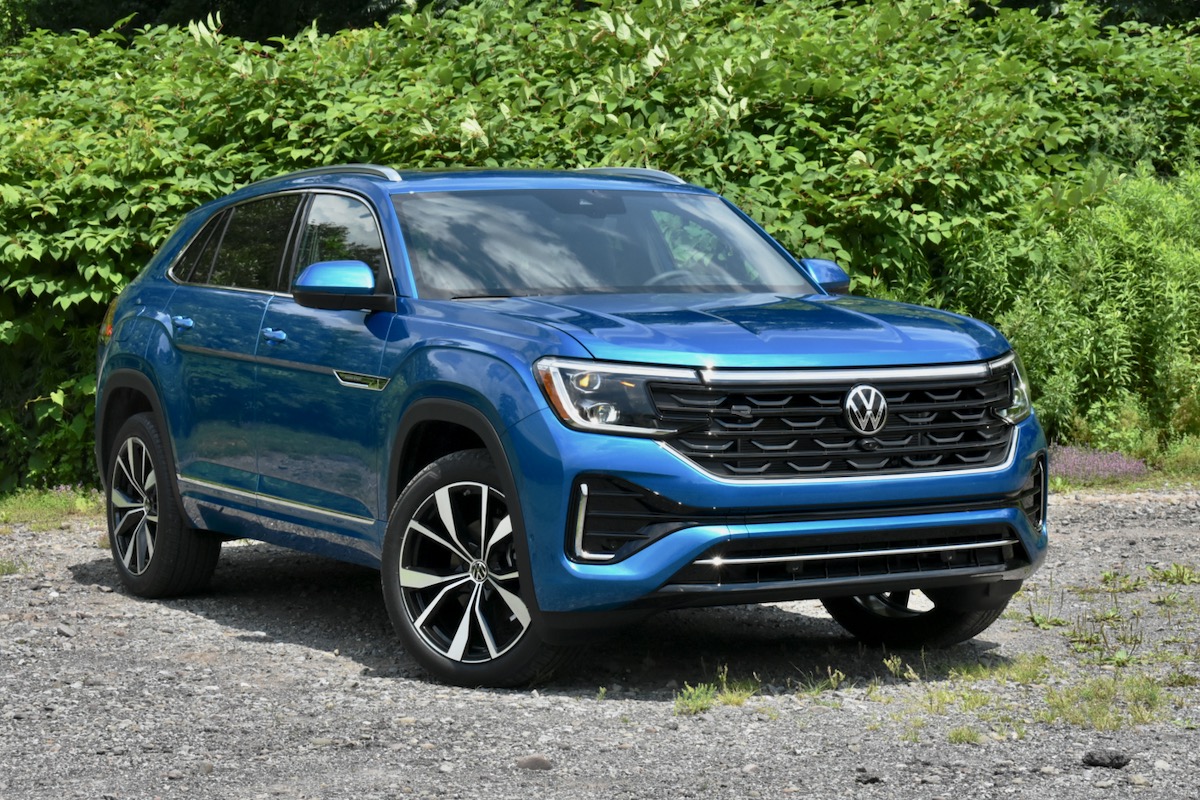

Overview | |
Years produced2020-Present | Years produced2022-Present |
MSRP$36,985 | MSRP$42,600 |
Listings9727 | Listings8777 |
Ratings & Reviews | |
User Reviews | User Reviews |
Expert reviews7.0 out of 10 | Expert reviews8.7 out of 10 |
Pros
Cons
| Pros
Cons
|
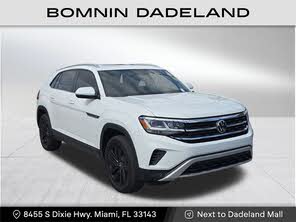
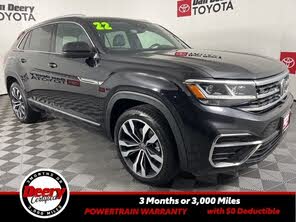
Reviews SummaryVolkswagen's efforts to grow its appeal in the United States have developed over a long process of trial and error, but VW showed it finally understood American tastes when it launched the Atlas three-row crossover SUV. And because not everyone needs three rows, VW followed up the standard Atlas with the two-row Cross Sport for the 2020 model year. Both versions get a significant refresh for 2024. The 2024 Volkswagen Atlas Cross Sport gets most of the same updates as its three-row sibling, including different styling, more standard features, and the discontinuation of its six-cylinder engine option in favor of a more powerful turbocharged four-cylinder engine. These changes are aimed at making the Cross Sport more competitive against other midsize crossovers like the Chevrolet Blazer and Honda Pilot, the aged Ford Edge and Nissan Murano, and the more truck-like Jeep Grand Cherokee. The 2024 Atlas Cross Sport lineup includes SE, SE with Technology, SEL, SEL R-Line, and SEL Premium R-Line trim levels. We drove the range-topping SEL Premium R-Line for this review. | |
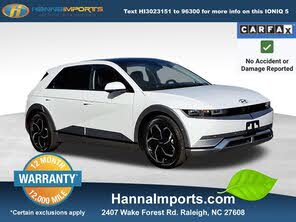
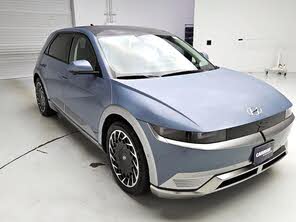
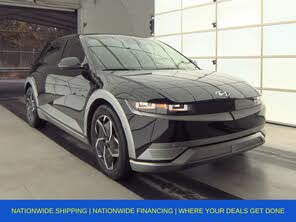
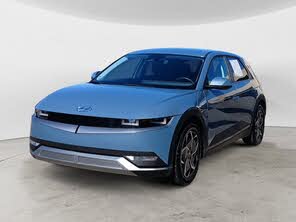
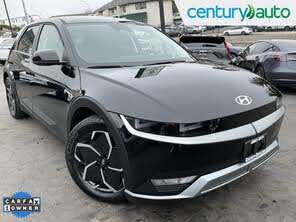
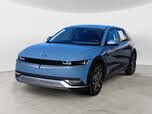
Reviews SummaryIt would appear to be the calendar, not the competition, that has the Ioniq 5 due for a mid-cycle refresh. We liked it when it burst onto the scene as an angular oddball in a sea of soft-lined sameness, and it has only improved over the last few years. Verdict: Hyundai makes minor but welcome changes and avoids tweaking the many things that were working well, successfully making a good thing better. | |
No video found | No video found |
Popular Features & Specs | |
Engine2.0L 269 hp I4 | Engine168 hp Electric |
Drive TrainFWD | Drive TrainRWD |
Seating Capacity5 | Seating Capacity5 |
EV Battery Capacity | EV Battery Capacity63 kWh |
MPG City20 | MPG City131 |
MPG Highway27 | MPG Highway100 |
Battery Charge Time (120V) | Battery Charge Time (120V)54 hours |
Battery Charge Time (240V) | Battery Charge Time (240V)5.7 hours |
Engine | |
Engine Name2.0L 269 hp I4 | Engine Name168 hp Electric |
Battery Charge Time (120V) | Battery Charge Time (120V)54 hours |
Battery Charge Time (240V) | Battery Charge Time (240V)5.7 hours |
DrivetrainFWD | DrivetrainRWD |
Fuel Economy | |
EV Battery Capacity | EV Battery Capacity63 kWh |
MPG City20 | MPG City131 |
MPG Highway27 | MPG Highway100 |
Interior | |
Seating Capacity5 | Seating Capacity5 |
Key Features | |
Navigation System | Navigation SystemStandard |
Safety | |
Front Crash Overall4 | Front Crash Overall |
Side Crash Overall5 | Side Crash Overall |
Dimensions & Capacity | |
Cargo Space40.3 cu ft | Cargo Space26.3 cu ft |
Curb Weight4173 lbs | Curb Weight4144 lbs |
Height68.1 in | Height63.0 in |
Length195.6 in | Length183.3 in |
Width88.5 in | Width74.4 in |
Wheelbase117.3 in | Wheelbase118.1 in |
Maximum Payload1091 lbs | Maximum Payload1081 lbs |
Number of doors4 | Number of doors4 |
Maximum Towing Capacity2000 lbs | Maximum Towing Capacity |
Overview | ||
Years produced | 2020-Present | 2022-Present |
MSRP | $36,985 | $42,600 |
Listings | ||
Ratings & Reviews | ||
User reviews | ||
Expert reviews | 7.0 out of 10Read full review | 8.7 out of 10Read full review |
Pros & cons | Pros
Cons
| Pros
Cons
|
Summary | Volkswagen's efforts to grow its appeal in the United States have developed over a long process of trial and error, but VW showed it finally understood American tastes when it launched the Atlas three-row crossover SUV. And because not everyone needs three rows, VW followed up the standard Atlas with the two-row Cross Sport for the 2020 model year. Both versions get a significant refresh for 2024. The 2024 Volkswagen Atlas Cross Sport gets most of the same updates as its three-row sibling, including different styling, more standard features, and the discontinuation of its six-cylinder engine option in favor of a more powerful turbocharged four-cylinder engine. These changes are aimed at making the Cross Sport more competitive against other midsize crossovers like the Chevrolet Blazer and Honda Pilot, the aged Ford Edge and Nissan Murano, and the more truck-like Jeep Grand Cherokee. The 2024 Atlas Cross Sport lineup includes SE, SE with Technology, SEL, SEL R-Line, and SEL Premium R-Line trim levels. We drove the range-topping SEL Premium R-Line for this review. | It would appear to be the calendar, not the competition, that has the Ioniq 5 due for a mid-cycle refresh. We liked it when it burst onto the scene as an angular oddball in a sea of soft-lined sameness, and it has only improved over the last few years. Verdict: Hyundai makes minor but welcome changes and avoids tweaking the many things that were working well, successfully making a good thing better. |
Video | No video found | No video found |
Popular Features & Specs | ||
Engine | 2.0L 269 hp I4 | 168 hp Electric |
Drive Train | FWD | RWD |
Seating Capacity | 5 | 5 |
EV Battery Capacity | 63 kWh | |
MPG City | 20 | 131 |
MPG Highway | 27 | 100 |
Battery Charge Time (120V) | 54 hours | |
Battery Charge Time (240V) | 5.7 hours | |
Engine | ||
Engine Name | 2.0L 269 hp I4 | 168 hp Electric |
Battery Charge Time (120V) | 54 hours | |
Battery Charge Time (240V) | 5.7 hours | |
Drivetrain | FWD | RWD |
Fuel Economy | ||
EV Battery Capacity | 63 kWh | |
MPG City | 20 | 131 |
MPG Highway | 27 | 100 |
Interior | ||
Seating Capacity | 5 | 5 |
Key Features | ||
Navigation System | Standard | |
Safety | ||
Front Crash Overall | 4 | |
Side Crash Overall | 5 | |
Dimensions & Capacity | ||
Cargo Space | 40.3 cu ft | 26.3 cu ft |
Curb Weight | 4173 lbs | 4144 lbs |
Height | 68.1 in | 63.0 in |
Length | 195.6 in | 183.3 in |
Width | 88.5 in | 74.4 in |
Wheelbase | 117.3 in | 118.1 in |
Maximum Payload | 1091 lbs | 1081 lbs |
Number of doors | 4 | 4 |
Maximum Towing Capacity | 2000 lbs | |



















By: CarGurus + AI
At CarGurus, our team of experienced automotive writers remain at the heart of our content operation, conducting hands-on car tests and writing insightful guides that are backed by years of industry experience. To complement this, we are harnessing AI to make our content offering more diverse and more helpful to shoppers than ever. To achieve this, our AI systems are based exclusively on CarGurus content, ratings and data, so that what we produce is both unique to CarGurus, and uniquely helpful to car shoppers.