Hyundai Kona vs Toyota bZ
Overview | |
MSRP$25,500 | MSRP$34,900 |
Listings474 | Listings16 |
Ratings & Reviews | |
User Reviews | User Reviews |
Expert reviews7.8 out of 10 | Expert reviews6.5 out of 10 |
Pros
Cons
| Pros
Cons
|
Reviews SummaryAmong small crossovers, the 2026 Kona is one of the biggest in size, passenger room, and cargo volume. Turbocharging and all-wheel drive (AWD) are available, and for this class, the technology is impressive. This year, Hyundai simplified the lineup, shrinking it down to four trim levels with mostly cosmetic differences. More safety features are standard this year, too. Verdict: With the 2026 Kona, Hyundai offers a terrific small SUV. Putting the polarizing design and the unimpressive base powertrain aside, there are few reasons to skip it and a long list of reasons to choose it. | |
Reviews SummaryReaders are looking at the electric vehicle formerly known as the bZ4X. It wears a shorter name for 2026, but that’s not the big news. More power, over 300 miles of range, a standard NACS charging port (with a CCS adapter), and Plug & Charge capability are all major improvements. Toyota has also tidied-up the styling—inside and out—and added a larger infotainment screen. Verdict: With the refreshed 2026 bZ, Toyota has fixed the bZ4X’s most significant flaws, making this a genuinely competitive model at a comparatively affordable price. | |
No video found | No video found |
Popular Features & Specs | |
Engine2.0L 147 hp I4 | Engine168 hp Electric |
DrivetrainFWD | DrivetrainFWD |
Seating Capacity5 | Seating Capacity5 |
Horsepower147 hp @ 6200 rpm | Horsepower |
EV Battery Capacity | EV Battery Capacity57.7 kWh |
MPG City29 | MPG City143 |
MPG Highway34 | MPG Highway119 |
Battery Charge Time (240V) | Battery Charge Time (240V)6 hours |
Engine | |
Engine Name2.0L 147 hp I4 | Engine Name168 hp Electric |
Torque132 lb-ft @ 4500 rpm | Torque |
Horsepower147 hp @ 6200 rpm | Horsepower |
Battery Charge Time (240V) | Battery Charge Time (240V)6 hours |
DrivetrainFWD | DrivetrainFWD |
Fuel Economy | |
EV Battery Capacity | EV Battery Capacity57.7 kWh |
MPG City29 | MPG City143 |
MPG Highway34 | MPG Highway119 |
Interior | |
Seating Capacity5 | Seating Capacity5 |
Key Features | |
Navigation SystemStandard | Navigation SystemOptional |
Safety | |
Front Crash Overall4 | Front Crash Overall |
Side Crash Overall5 | Side Crash Overall |
Dimensions & Capacity | |
Cargo Space25.5 cu ft | Cargo Space27.7 cu ft |
Curb Weight3005 lbs | Curb Weight4057 lbs |
Height62.2 in | Height65.0 in |
Length171.3 in | Length184.6 in |
Width71.9 in | Width73.2 in |
Wheelbase104.7 in | Wheelbase112.2 in |
Maximum Payload1085 lbs | Maximum Payload1045 lbs |
Number of doors4 | Number of doors4 |
Overview | ||
MSRP | $25,500 | $34,900 |
Listings | ||
Ratings & Reviews | ||
User reviews | ||
Expert reviews | 7.8 out of 10Read full review | 6.5 out of 10Read full review |
Pros & cons | Pros
Cons
| Pros
Cons
|
Summary | Among small crossovers, the 2026 Kona is one of the biggest in size, passenger room, and cargo volume. Turbocharging and all-wheel drive (AWD) are available, and for this class, the technology is impressive. This year, Hyundai simplified the lineup, shrinking it down to four trim levels with mostly cosmetic differences. More safety features are standard this year, too. Verdict: With the 2026 Kona, Hyundai offers a terrific small SUV. Putting the polarizing design and the unimpressive base powertrain aside, there are few reasons to skip it and a long list of reasons to choose it. | Readers are looking at the electric vehicle formerly known as the bZ4X. It wears a shorter name for 2026, but that’s not the big news. More power, over 300 miles of range, a standard NACS charging port (with a CCS adapter), and Plug & Charge capability are all major improvements. Toyota has also tidied-up the styling—inside and out—and added a larger infotainment screen. Verdict: With the refreshed 2026 bZ, Toyota has fixed the bZ4X’s most significant flaws, making this a genuinely competitive model at a comparatively affordable price. |
Video | No video found | No video found |
Popular Features & Specs | ||
Engine | 2.0L 147 hp I4 | 168 hp Electric |
Drivetrain | FWD | FWD |
Seating Capacity | 5 | 5 |
Horsepower | 147 hp @ 6200 rpm | |
EV Battery Capacity | 57.7 kWh | |
MPG City | 29 | 143 |
MPG Highway | 34 | 119 |
Battery Charge Time (240V) | 6 hours | |
Engine | ||
Engine Name | 2.0L 147 hp I4 | 168 hp Electric |
Torque | 132 lb-ft @ 4500 rpm | |
Horsepower | 147 hp @ 6200 rpm | |
Battery Charge Time (240V) | 6 hours | |
Drivetrain | FWD | FWD |
Fuel Economy | ||
EV Battery Capacity | 57.7 kWh | |
MPG City | 29 | 143 |
MPG Highway | 34 | 119 |
Interior | ||
Seating Capacity | 5 | 5 |
Key Features | ||
Navigation System | Standard | Optional |
Safety | ||
Front Crash Overall | 4 | |
Side Crash Overall | 5 | |
Dimensions & Capacity | ||
Cargo Space | 25.5 cu ft | 27.7 cu ft |
Curb Weight | 3005 lbs | 4057 lbs |
Height | 62.2 in | 65.0 in |
Length | 171.3 in | 184.6 in |
Width | 71.9 in | 73.2 in |
Wheelbase | 104.7 in | 112.2 in |
Maximum Payload | 1085 lbs | 1045 lbs |
Number of doors | 4 | 4 |
The 2026 Toyota bZ was available in XLE and Limited trims, offering both single-motor front-wheel drive (FWD) and dual-motor all-wheel drive (AWD) configurations, with two battery size options. The larger battery, which was standard on the Limited trim, provided enhanced power, performance, and range, albeit at a higher cost. Prices ranged from $36,495 to $46,895, including the destination charge. The XLE test vehicle featured FWD and the optional larger battery, transforming it into the XLE Plus for an additional $3,000. The total MSRP, including options like Heavy Metal paint and various mats, was $40,468. The 2026 bZ's design improvements, particularly the body-color trim, were a welcome change from the previous model's black overfender trim. Inside, the dashboard and center console were redesigned for a cleaner look, with a 14-inch center touchscreen and integrated climate controls. However, the digital driver display's placement and size remained a concern.
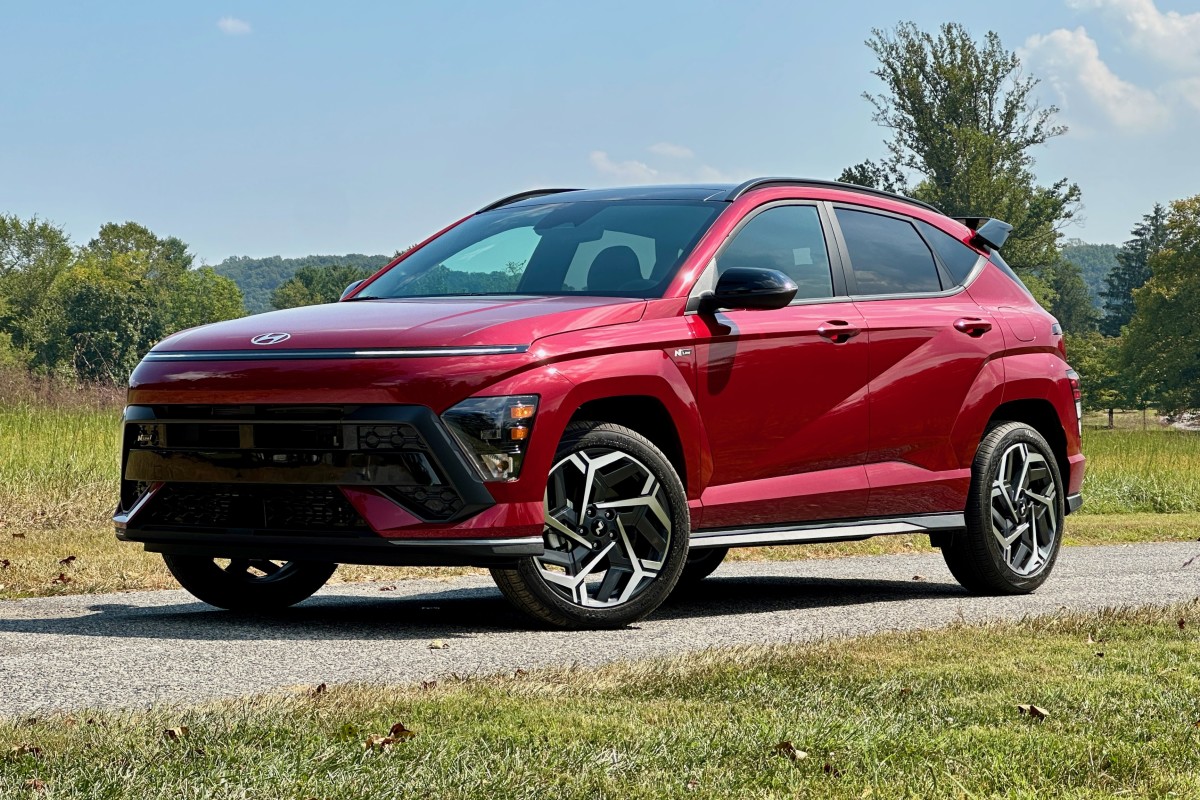
The 2026 Hyundai Kona was offered in four trim levels: SE, SEL Sport, SEL Premium, and Limited, with prices ranging from $27,100 to $34,135, including the destination charge. The Kona's design was polarizing, especially with the Limited trim's Neoteric Yellow paint. The test vehicle's MSRP, with AWD and additional features, was $36,375. Despite its divisive appearance, the Kona impressed with its quality and attention to detail, particularly the H-Tex artificial leather interior. The spacious interior comfortably accommodated four adults, with a choice of Black or Grey interiors. The Kona's technology, including widescreen digital instrumentation and traditional analog controls, was user-friendly. However, the white control labels on a metallic background posed visibility issues during the day.

The 2026 Toyota bZ offered a range of power and efficiency options. The XLE with FWD and a 57.7-kWh battery delivered 165 horsepower and 198 pound-feet of torque, with an EPA-estimated range of 236 miles and an efficiency rating of 26 kWh/100 miles. Upgrading to the 74.7-kWh battery increased power to 224 hp and extended the range to 314 miles, maintaining the same efficiency. Dual-motor models, available only with the larger battery, produced 338 hp and offered varying ranges and efficiency ratings depending on the trim. The bZ's charging capabilities included compatibility with Tesla Superchargers and a CCS adapter, with fast charging taking about 30 minutes to reach 80% capacity. The bZ's driving experience was generally agreeable, though it lacked one-pedal driving capability and exhibited some handling issues on winding roads.
The 2026 Hyundai Kona offered two engine options. The SEL Premium and Limited trims featured a turbocharged 1.6-liter four-cylinder engine with 190 horsepower and 195 pound-feet of torque, paired with an eight-speed automatic transmission. The base SE and SEL Sport trims had a less powerful 2.0-liter engine with 147 hp and 132 lb-ft, mated to a CVT. The turbocharged engine provided satisfying acceleration, while the AWD option improved ride quality with a multi-link rear suspension. Fuel economy for the turbo ranged from 26 to 28 mpg, with AWD producing the lower figure. The Kona's ride and handling were mixed, with a firm ride over sharp road irregularities and a softer feel at higher speeds. The brakes showed signs of overheating during testing, but the turbocharged engine performed well on road trips.
The 2026 Toyota bZ, built on a skateboard-style EV platform, offered 8.1 inches of ground clearance, making it easy to enter and exit. Both front seats featured standard height adjustment, with eight-way power adjustment available in XLE and Limited trims. The bZ lacked a traditional glove compartment but compensated with ample storage options, including a large bin under the center armrest and a tray beneath the center console. Rear-seat passengers enjoyed generous legroom, though foot space was limited. The bZ provided 27.7 cubic feet of cargo space, reduced to 25.8 cubic feet in the Limited trim due to a JBL subwoofer. Folding the rear seats expanded cargo capacity to 56.9 cubic feet (55 cubes in the Limited trim).
The 2026 Hyundai Kona was a practical small SUV with ample interior room and cargo space. The Limited trim featured interior upgrades like ambient lighting, H-Tex artificial leather, and heated and ventilated front seats. The front passenger seat was height-adjustable, enhancing comfort. The Kona's interior offered impressive storage options, including a dashboard tray and a roomy center console bin. Rear passengers had access to additional storage spaces. The Kona's "smart" hands-free power liftgate opened automatically when sensing the key fob, revealing 25.5 cubic feet of cargo space, expandable to 63.7 cubic feet with the rear seats folded.
The 2026 Toyota bZ came standard with a 7-inch digital driver display and a new 14-inch touchscreen infotainment display. The driver display's placement and size made it difficult to read, while the infotainment system lacked a home screen for simultaneous data display. The system supported wireless Apple CarPlay and Android Auto, along with SiriusXM satellite radio and various connected service plans. The Drive Connect feature powered the native navigation system and the Intelligent Assistant voice assistant, which performed well during testing.
The 2026 Hyundai Kona featured a widescreen configurable digital display, with the Limited trim offering two 12.3-inch screens. The infotainment system supported wireless Apple CarPlay and Android Auto, SiriusXM satellite radio, and a lifetime complimentary subscription to Bluelink+ connected services. The Kona's digital key technology and Hyundai Pay system added convenience. The infotainment system was intuitive, with a responsive digital voice assistant. The Kona also included a Leading Vehicle Departure Alert system and additional tech features like a surround-view camera system and Remote Smart Parking Assist.
The 2026 Toyota bZ came equipped with Toyota Safety Sense 3.0, which included features like high-beam assist, forward-collision warning, and adaptive cruise control. Proactive Driving Assist provided subtle braking and steering inputs for added safety. The Limited trim offered additional features like Traffic Jam Assist and Advanced Park Assist. However, the adaptive cruise control's response was inconsistent, and the driver monitoring system was overly sensitive. The IIHS rated the bZ's front-crash avoidance tech as Good, but the headlights received a Poor rating, and frontal-impact crash tests earned Acceptable ratings.
The 2026 Hyundai Kona boasted an impressive array of standard driver assistance systems, including adaptive cruise control, forward collision warning, and lane-keeping assist. The Kona also featured a rear occupant warning system and a safe exit warning system. The Limited trim added a Blind-Spot View Monitor and Highway Driving Assist. The IIHS awarded the Kona its highest "Top Safety Pick+" rating, while the NHTSA gave it a four-star overall rating due to frontal-impact collision scores.
CarGurus highlights
According to CarGurus experts, the overall rating for the 2026 Toyota bZ is 6.5 out of 10, while the 2026 Hyundai Kona scores 7.8 out of 10. Based on these ratings, the 2026 Hyundai Kona is the recommended choice, offering a better balance of performance, practicality, and technology features.
Choose the 2026 Toyota bZ if:
- You prioritize a comfortable and spacious interior with ample storage options.
- You value the convenience of a large touchscreen infotainment system with voice assistant capabilities.
- You prefer an electric vehicle with compatibility for Tesla Superchargers and a CCS adapter.


Choose the 2026 Hyundai Kona if:
- You seek a small SUV with a turbocharged engine for satisfying acceleration and performance.
- You appreciate a practical interior with generous cargo space and convenient storage solutions.
- You want a vehicle with a comprehensive suite of standard safety features and advanced technology options.


CarGurus highlights
According to CarGurus experts, the overall rating for the 2026 Toyota bZ is 6.5 out of 10, while the 2026 Hyundai Kona scores 7.8 out of 10. Based on these ratings, the 2026 Hyundai Kona is the recommended choice, offering a better balance of performance, practicality, and technology features.
Choose the 2026 Toyota bZ if:
Shop Now- You prioritize a comfortable and spacious interior with ample storage options.
- You value the convenience of a large touchscreen infotainment system with voice assistant capabilities.
- You prefer an electric vehicle with compatibility for Tesla Superchargers and a CCS adapter.
Choose the 2026 Hyundai Kona if:
Shop Now- You seek a small SUV with a turbocharged engine for satisfying acceleration and performance.
- You appreciate a practical interior with generous cargo space and convenient storage solutions.
- You want a vehicle with a comprehensive suite of standard safety features and advanced technology options.

By: CarGurus + AI
At CarGurus, our team of experienced automotive writers remain at the heart of our content operation, conducting hands-on car tests and writing insightful guides that are backed by years of industry experience. To complement this, we are harnessing AI to make our content offering more diverse and more helpful to shoppers than ever. To achieve this, our AI systems are based exclusively on CarGurus content, ratings and data, so that what we produce is both unique to CarGurus, and uniquely helpful to car shoppers.

