Porsche Cayenne vs Hyundai Kona
Overview | |
MSRP$84,700 | MSRP$25,500 |
Listings4457 | Listings9713 |
Ratings & Reviews | |
User Reviews | User Reviews |
Expert reviews8.0 out of 10 | Expert reviews7.8 out of 10 |
Pros
Cons
| Pros
Cons
|
Reviews SummaryVerdict: Even the base model Cayenne delivers an agile driving experience, but those willing to dig deep into their bank account for one of Porsche’s more expensive Cayenne models are rewarded with a spirited drive like no other. The competition here is stiff, in the form of other German SUVs like the Audi Q8, BMW X5, and Mercedes-Benz GLE, and their performance variants. However, the Cayenne is not here to lose. | |
Reviews SummaryAmong small crossovers, the 2026 Kona is one of the biggest in size, passenger room, and cargo volume. Turbocharging and all-wheel drive (AWD) are available, and for this class, the technology is impressive. This year, Hyundai simplified the lineup, shrinking it down to four trim levels with mostly cosmetic differences. More safety features are standard this year, too. Verdict: With the 2026 Kona, Hyundai offers a terrific small SUV. Putting the polarizing design and the unimpressive base powertrain aside, there are few reasons to skip it and a long list of reasons to choose it. | |
No video found | No video found |
Popular Features & Specs | |
Engine3.0L 348 hp V6 | Engine2.0L 147 hp I4 |
DrivetrainAWD | DrivetrainFWD |
Seating Capacity5 | Seating Capacity5 |
Horsepower348 hp @ 5400 rpm | Horsepower147 hp @ 6200 rpm |
MPG City17 | MPG City29 |
MPG Highway23 | MPG Highway34 |
Engine | |
Engine Name3.0L 348 hp V6 | Engine Name2.0L 147 hp I4 |
Torque368 lb-ft @ 1450 rpm | Torque132 lb-ft @ 4500 rpm |
Horsepower348 hp @ 5400 rpm | Horsepower147 hp @ 6200 rpm |
DrivetrainAWD | DrivetrainFWD |
Fuel Economy | |
MPG City17 | MPG City29 |
MPG Highway23 | MPG Highway34 |
Interior | |
Seating Capacity5 | Seating Capacity5 |
Key Features | |
Navigation SystemStandard | Navigation SystemStandard |
Safety | |
Front Crash Overall | Front Crash Overall4 |
Side Crash Overall | Side Crash Overall5 |
Dimensions & Capacity | |
Cargo Space27.2 cu ft | Cargo Space25.5 cu ft |
Curb Weight4678 lbs | Curb Weight3005 lbs |
Height66.9 in | Height62.2 in |
Length194.1 in | Length171.3 in |
Width86.4 in | Width71.9 in |
Wheelbase114.0 in | Wheelbase104.7 in |
Maximum Payload1572 lbs | Maximum Payload1085 lbs |
Number of doors4 | Number of doors4 |
Maximum Towing Capacity7716 lbs | Maximum Towing Capacity |
Overview | ||
MSRP | $84,700 | $25,500 |
Listings | ||
Ratings & Reviews | ||
User reviews | ||
Expert reviews | 8.0 out of 10Read full review | 7.8 out of 10Read full review |
Pros & cons | Pros
Cons
| Pros
Cons
|
Summary | Verdict: Even the base model Cayenne delivers an agile driving experience, but those willing to dig deep into their bank account for one of Porsche’s more expensive Cayenne models are rewarded with a spirited drive like no other. The competition here is stiff, in the form of other German SUVs like the Audi Q8, BMW X5, and Mercedes-Benz GLE, and their performance variants. However, the Cayenne is not here to lose. | Among small crossovers, the 2026 Kona is one of the biggest in size, passenger room, and cargo volume. Turbocharging and all-wheel drive (AWD) are available, and for this class, the technology is impressive. This year, Hyundai simplified the lineup, shrinking it down to four trim levels with mostly cosmetic differences. More safety features are standard this year, too. Verdict: With the 2026 Kona, Hyundai offers a terrific small SUV. Putting the polarizing design and the unimpressive base powertrain aside, there are few reasons to skip it and a long list of reasons to choose it. |
Video | No video found | No video found |
Popular Features & Specs | ||
Engine | 3.0L 348 hp V6 | 2.0L 147 hp I4 |
Drivetrain | AWD | FWD |
Seating Capacity | 5 | 5 |
Horsepower | 348 hp @ 5400 rpm | 147 hp @ 6200 rpm |
MPG City | 17 | 29 |
MPG Highway | 23 | 34 |
Engine | ||
Engine Name | 3.0L 348 hp V6 | 2.0L 147 hp I4 |
Torque | 368 lb-ft @ 1450 rpm | 132 lb-ft @ 4500 rpm |
Horsepower | 348 hp @ 5400 rpm | 147 hp @ 6200 rpm |
Drivetrain | AWD | FWD |
Fuel Economy | ||
MPG City | 17 | 29 |
MPG Highway | 23 | 34 |
Interior | ||
Seating Capacity | 5 | 5 |
Key Features | ||
Navigation System | Standard | Standard |
Safety | ||
Front Crash Overall | 4 | |
Side Crash Overall | 5 | |
Dimensions & Capacity | ||
Cargo Space | 27.2 cu ft | 25.5 cu ft |
Curb Weight | 4678 lbs | 3005 lbs |
Height | 66.9 in | 62.2 in |
Length | 194.1 in | 171.3 in |
Width | 86.4 in | 71.9 in |
Wheelbase | 114.0 in | 104.7 in |
Maximum Payload | 1572 lbs | 1085 lbs |
Number of doors | 4 | 4 |
Maximum Towing Capacity | 7716 lbs | |
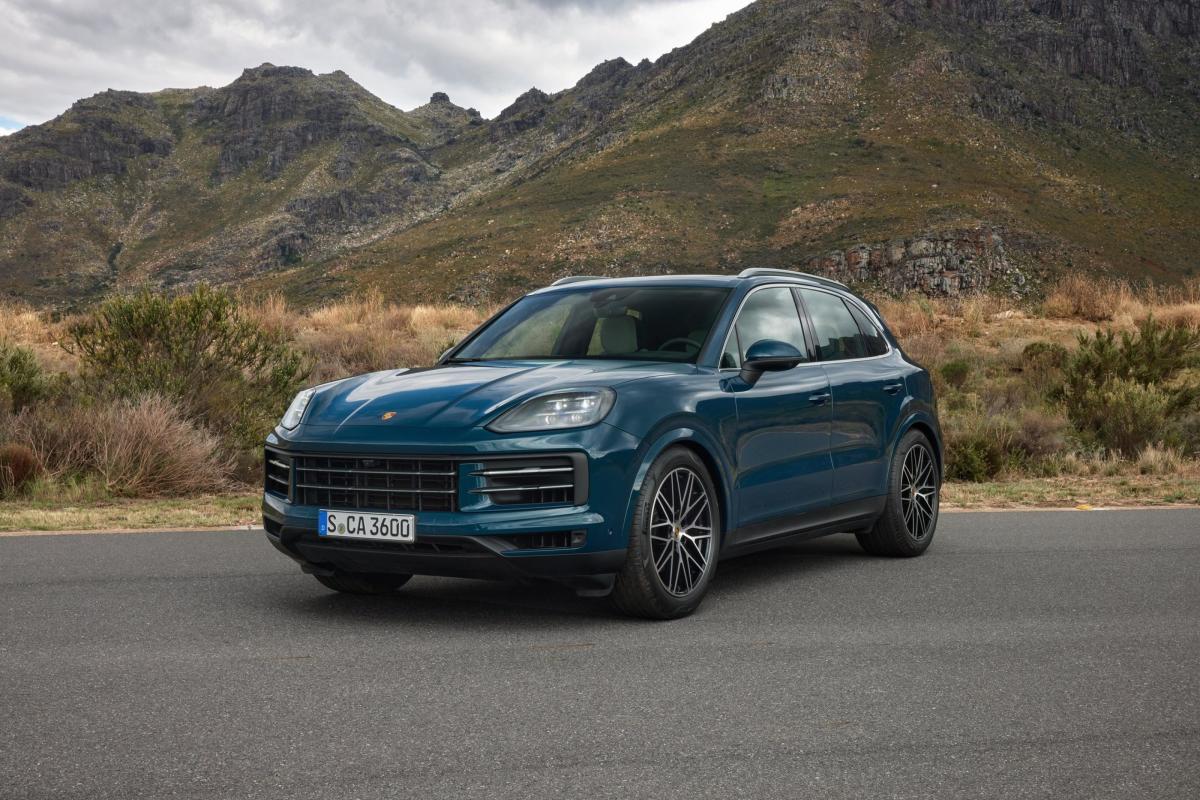
The 2025 Porsche Cayenne was available in two distinct styles: the standard SUV with a squared-off rear end and the sporty Cayenne Coupe. The GTS trim level, which was the focus of this review, featured high gloss black trim and bronze exhaust tips, along with a unique front fascia with larger air intakes and tinted headlights. The GTS also boasted red brake calipers visible through 21-inch anthracite gray wheels. Inside, the Cayenne offered extensive customization options, from color choices like Carmine Red to various trim and seat belt options. Despite the high price tag for customizations, the Cayenne's interior was well-organized, with mechanical controls for essential features and a dashboard-mounted shifter toggle for added storage space.
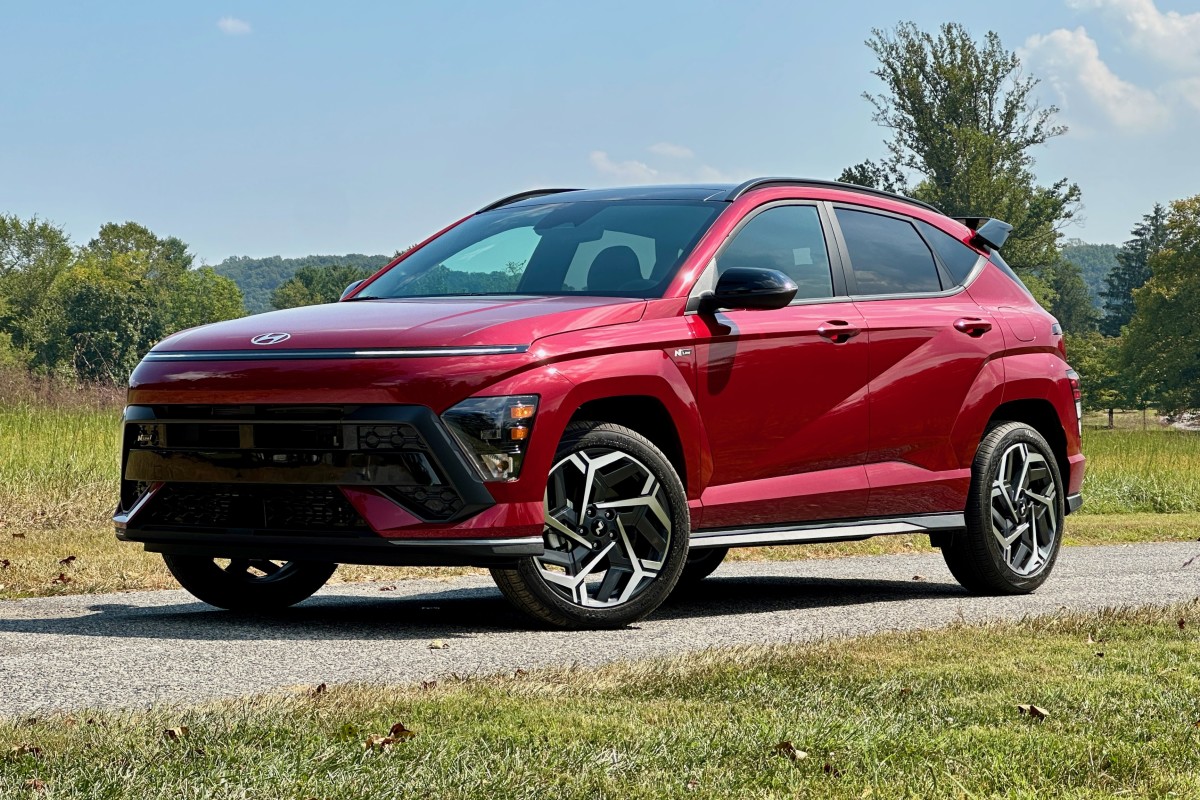
The 2026 Hyundai Kona, on the other hand, was available in four trim levels, each distinguishable by wheel size and design. The Limited trim, with its Neoteric Yellow paint, stood out as particularly polarizing. Despite its bold appearance, the Kona exuded quality and refinement, with features like H-Tex artificial leather and a spacious interior that comfortably accommodated four adults. The Kona's widescreen digital instrumentation and touchscreen infotainment system highlighted its technological sophistication, while traditional analog controls ensured ease of use. However, the use of white control labels on a metallic background posed visibility issues during the day.

The 2025 Porsche Cayenne offered a range of engines, starting with a 3.0-liter V6 producing 348 horsepower and 368 pound-feet of torque. For those seeking more power, the Cayenne S featured a V8 with 468 hp, while the Turbo GT boasted 650 hp, though only available as a coupe. The GTS trim, with its twin-turbo 4.0-liter V8, delivered 493 hp and 486 lb-ft of torque, paired with an eight-speed transmission and all-wheel drive. The GTS could accelerate to 60 mph in 4.2 seconds, with a top speed of 171 mph. The Cayenne GTS struck a balance between sporty and comfortable, with precise steering and an agile suspension system. Optional carbon ceramic brakes provided ample stopping power, while the Off-Road package and lightweight package offered additional versatility.
The 2026 Hyundai Kona's performance varied significantly between trims. The SEL Premium and Limited trims featured a turbocharged 1.6-liter four-cylinder engine with 190 horsepower and 195 pound-feet of torque, paired with an eight-speed automatic transmission. In contrast, the base SE and SEL Sport trims had a 2.0-liter four-cylinder engine with 147 hp and 132 lb-ft, coupled with a CVT. The Kona's AWD option improved ride quality with a multi-link rear suspension. Fuel economy for the turbocharged engine ranged from 26 to 28 mpg, while the base engine achieved 27 to 31 mpg. The Kona's ride and handling were less refined, with suspension isolation issues and brake performance concerns during testing.
The 2025 Porsche Cayenne offered limited standard features, with eight-way power-adjustable seats and two-zone climate control. The GTS trim added a GT Sport steering wheel and Race-Tex headliner, while higher trims included stainless steel pedal pads and illuminated carbon fiber door-sill guards. The Cayenne's options list was extensive, allowing for customization of nearly every aspect of the interior. However, the Cayenne only accommodated five passengers, with limited cargo space compared to competitors. The standard Cayenne had 27.3 cubic feet of cargo space, expanding to 60 cubic feet with the rear seats folded, while the coupe version offered less space.
The 2026 Hyundai Kona excelled in practicality, with ample interior room and cargo space. The Limited trim featured ambient lighting, H-Tex artificial leather, and heated and ventilated front seats. The Kona's interior was user-friendly, with a commanding driving position and easy access for passengers. Front storage space was impressive, though the center console bin was not enclosed. The Kona's "smart" hands-free power liftgate provided convenience, though it could open unintentionally. Cargo space measured 25.5 cubic feet behind the rear seats, expanding to 63.7 cubic feet with the seats folded.
The 2025 Porsche Cayenne featured a 12.6-inch digital gauge cluster and a 12.3-inch touchscreen display with wireless Apple CarPlay and Android Auto. An optional 10.9-inch passenger screen allowed for navigation and media control. The Cayenne's infotainment system was user-friendly, with voice control options and a head-up display. Four high-speed USB-C charging ports and a cooled wireless charging area were standard.
The 2026 Hyundai Kona's Limited trim boasted two 12.3-inch screens, with wireless Apple CarPlay and Android Auto, SiriusXM satellite radio, and Bluelink+ connected services. The Kona's infotainment system was intuitive, with digital key technology and Hyundai Pay for convenient transactions. The Kona also featured a Leading Vehicle Departure Alert system and a surround-view camera system for added convenience.
The 2025 Porsche Cayenne offered standard parking sensors, forward collision warning, and blind-spot monitoring, but adaptive cruise control and lane-keeping assist were optional. The Cayenne lacked hands-off driving assist features, and neither the NHTSA nor the IIHS had rated its safety.
The 2026 Hyundai Kona excelled in safety, with standard adaptive cruise control, forward collision warning, lane-keeping assist, and more. The Kona also featured a rear occupant warning system and a safe exit warning system. The IIHS awarded the Kona a "Top Safety Pick+" rating, while the NHTSA gave it a four-star overall rating.
CarGurus highlights
According to CarGurus experts, the overall rating for the 2025 Porsche Cayenne is 8.0 out of 10, while the 2026 Hyundai Kona scores 7.8 out of 10. Based on these ratings, the 2025 Porsche Cayenne is the recommended choice for those seeking a high-performance luxury SUV with extensive customization options and agile handling.
Choose the 2025 Porsche Cayenne if:
- You prioritize high-performance driving with a range of powerful engine options.
- You value extensive customization options for a personalized luxury experience.
- You seek a sporty SUV with agile handling and precise steering.


Choose the 2026 Hyundai Kona if:
- You want a practical small SUV with ample interior space and cargo capacity.
- You prioritize advanced safety features and driver assistance systems.
- You seek a technologically sophisticated vehicle with intuitive infotainment.


CarGurus highlights
According to CarGurus experts, the overall rating for the 2025 Porsche Cayenne is 8.0 out of 10, while the 2026 Hyundai Kona scores 7.8 out of 10. Based on these ratings, the 2025 Porsche Cayenne is the recommended choice for those seeking a high-performance luxury SUV with extensive customization options and agile handling.
Choose the 2025 Porsche Cayenne if:
Shop Now- You prioritize high-performance driving with a range of powerful engine options.
- You value extensive customization options for a personalized luxury experience.
- You seek a sporty SUV with agile handling and precise steering.
Choose the 2026 Hyundai Kona if:
Shop Now- You want a practical small SUV with ample interior space and cargo capacity.
- You prioritize advanced safety features and driver assistance systems.
- You seek a technologically sophisticated vehicle with intuitive infotainment.

By: CarGurus + AI
At CarGurus, our team of experienced automotive writers remain at the heart of our content operation, conducting hands-on car tests and writing insightful guides that are backed by years of industry experience. To complement this, we are harnessing AI to make our content offering more diverse and more helpful to shoppers than ever. To achieve this, our AI systems are based exclusively on CarGurus content, ratings and data, so that what we produce is both unique to CarGurus, and uniquely helpful to car shoppers.

