Honda Civic vs Hyundai Veloster
Overview | |
MSRP$20,000 | MSRP$18,500 |
Listings270 | Listings71 |
Ratings & Reviews | |
User Reviews | User Reviews |
Expert reviews8.2 out of 10 | Expert reviews8.0 out of 10 |
Pros
Cons
| |
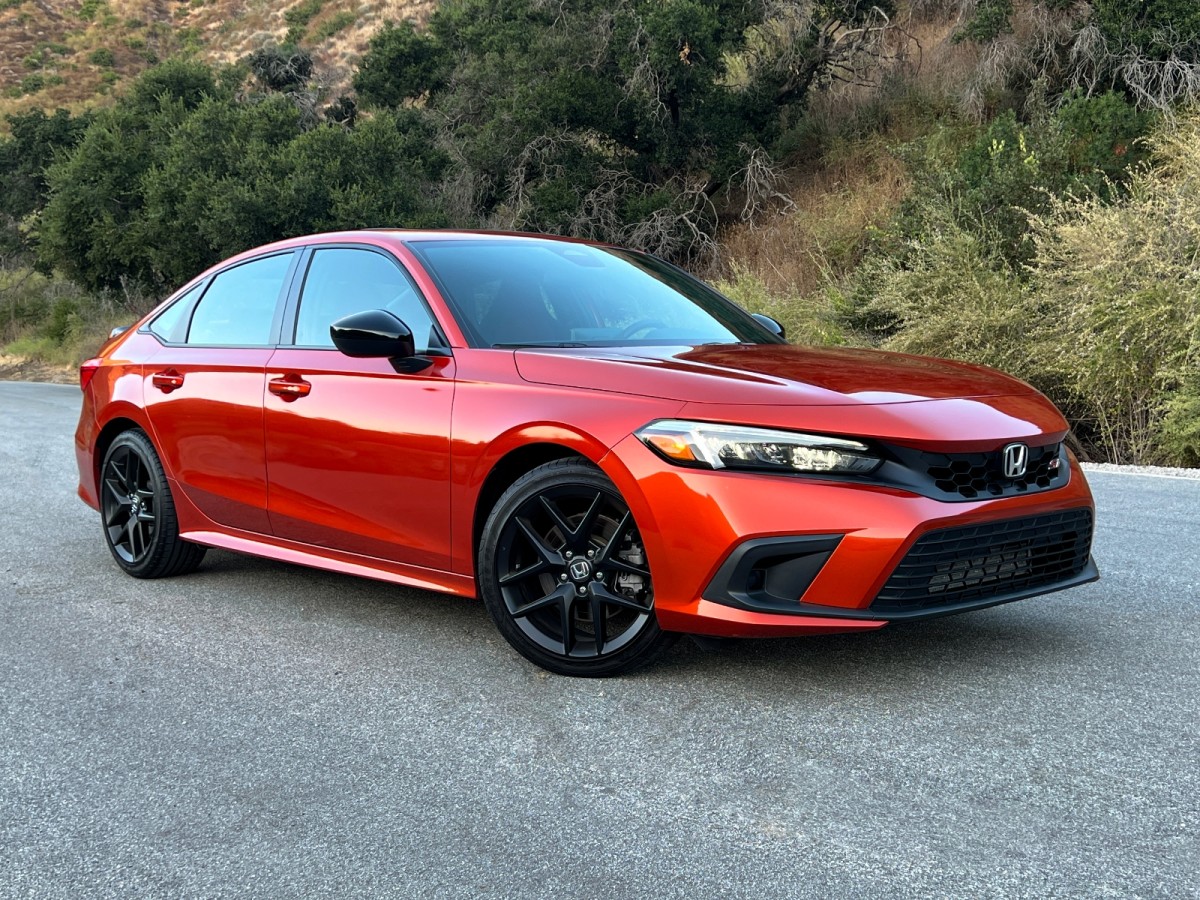
Reviews SummaryMinor design tweaks, more standard safety and convenience features, and more manual transmissions arrive as the standout changes for the Civic's 2020 model year. Last redesigned for the 2016 model year, the Civic keeps outperforming its small-car peers by offering the performance and quality of more expensive cars, while retaining the value and longevity expected of a Honda. Plus, I had a really fun week with the turbocharged Civic Si. | |
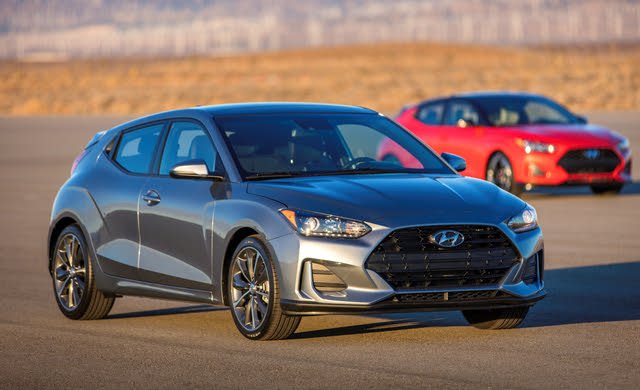
Reviews SummaryConsider Hyundai and its growth in popularity over the last decade. The brand built its relevance with practical, sensible vehicles, like the Sonata, and SUVs like the Santa Fe and Tucson. But “fortune favors the bold,” or so the saying goes. There is something to be said for taking an unlikely risk. In the 2011 model year, Hyundai released the Veloster, going in a completely different direction than the rest of its typically safe product lineup. Hyundai already had a hatchback, the Accent (and later the Elantra GT). But the Veloster was something completely different. It featured a unique hatchback-meets-coupe shape and an even more unique 3-door layout. The result was a sporty daily driver that’s both fun and functional, and it has been completely redesigned for the 2019 model year. | |
No video found | |
Popular Features & Specs | |
Engine2.0L 158 hp I4 | Engine2.0L 147 hp I4 |
Drive TrainFWD | Drive TrainFWD |
Seating Capacity5 | Seating Capacity4 |
Horsepower158 hp @ 6500 rpm | Horsepower147 hp @ 6200 rpm |
MPG City25 | MPG City27 |
MPG Highway36 | MPG Highway34 |
Engine | |
Engine Name2.0L 158 hp I4 | Engine Name2.0L 147 hp I4 |
Torque138 lb-ft @ 4200 rpm | Torque132 lb-ft @ 4500 rpm |
Horsepower158 hp @ 6500 rpm | Horsepower147 hp @ 6200 rpm |
DrivetrainFWD | DrivetrainFWD |
Fuel Economy | |
MPG City25 | MPG City27 |
MPG Highway36 | MPG Highway34 |
Interior | |
Seating Capacity5 | Seating Capacity4 |
Safety | |
Front Crash Overall5 | Front Crash Overall |
Side Crash Overall5 | Side Crash Overall |
Dimensions & Capacity | |
Cargo Space15.1 cu ft | Cargo Space19.9 cu ft |
Curb Weight2771 lbs | Curb Weight2822 lbs |
Height55.7 in | Height55.1 in |
Length182.7 in | Length167.0 in |
Width70.8 in | Width71.0 in |
Wheelbase106.3 in | Wheelbase104.3 in |
Maximum Payload998 lbs | Maximum Payload |
Number of doors4 | Number of doors3 |
Overview | ||
MSRP | $20,000 | $18,500 |
Listings | ||
Ratings & Reviews | ||
User reviews | ||
Expert reviews | 8.2 out of 10Read full review | 8.0 out of 10Read full review |
Pros & cons | Pros
Cons
| |
Summary | Minor design tweaks, more standard safety and convenience features, and more manual transmissions arrive as the standout changes for the Civic's 2020 model year. Last redesigned for the 2016 model year, the Civic keeps outperforming its small-car peers by offering the performance and quality of more expensive cars, while retaining the value and longevity expected of a Honda. Plus, I had a really fun week with the turbocharged Civic Si. | Consider Hyundai and its growth in popularity over the last decade. The brand built its relevance with practical, sensible vehicles, like the Sonata, and SUVs like the Santa Fe and Tucson. But “fortune favors the bold,” or so the saying goes. There is something to be said for taking an unlikely risk. In the 2011 model year, Hyundai released the Veloster, going in a completely different direction than the rest of its typically safe product lineup. Hyundai already had a hatchback, the Accent (and later the Elantra GT). But the Veloster was something completely different. It featured a unique hatchback-meets-coupe shape and an even more unique 3-door layout. The result was a sporty daily driver that’s both fun and functional, and it has been completely redesigned for the 2019 model year. |
Video | No video found | |
Popular Features & Specs | ||
Engine | 2.0L 158 hp I4 | 2.0L 147 hp I4 |
Drive Train | FWD | FWD |
Seating Capacity | 5 | 4 |
Horsepower | 158 hp @ 6500 rpm | 147 hp @ 6200 rpm |
MPG City | 25 | 27 |
MPG Highway | 36 | 34 |
Engine | ||
Engine Name | 2.0L 158 hp I4 | 2.0L 147 hp I4 |
Torque | 138 lb-ft @ 4200 rpm | 132 lb-ft @ 4500 rpm |
Horsepower | 158 hp @ 6500 rpm | 147 hp @ 6200 rpm |
Drivetrain | FWD | FWD |
Fuel Economy | ||
MPG City | 25 | 27 |
MPG Highway | 36 | 34 |
Interior | ||
Seating Capacity | 5 | 4 |
Safety | ||
Front Crash Overall | 5 | |
Side Crash Overall | 5 | |
Dimensions & Capacity | ||
Cargo Space | 15.1 cu ft | 19.9 cu ft |
Curb Weight | 2771 lbs | 2822 lbs |
Height | 55.7 in | 55.1 in |
Length | 182.7 in | 167.0 in |
Width | 70.8 in | 71.0 in |
Wheelbase | 106.3 in | 104.3 in |
Maximum Payload | 998 lbs | |
Number of doors | 4 | 3 |


By: CarGurus + AI
At CarGurus, our team of experienced automotive writers remain at the heart of our content operation, conducting hands-on car tests and writing insightful guides that are backed by years of industry experience. To complement this, we are harnessing AI to make our content offering more diverse and more helpful to shoppers than ever. To achieve this, our AI systems are based exclusively on CarGurus content, ratings and data, so that what we produce is both unique to CarGurus, and uniquely helpful to car shoppers.

