2024 Volvo XC90 vs 2024 Hyundai Santa Fe
Overview | |
MSRP$56,600 | MSRP$33,950 |
Listings1130 | Listings1063 |
Ratings & Reviews | |
User Reviews | User Reviews |
Expert reviews7.2 out of 10 | Expert reviews8.2 out of 10 |
Pros
Cons
| Pros
Cons
|
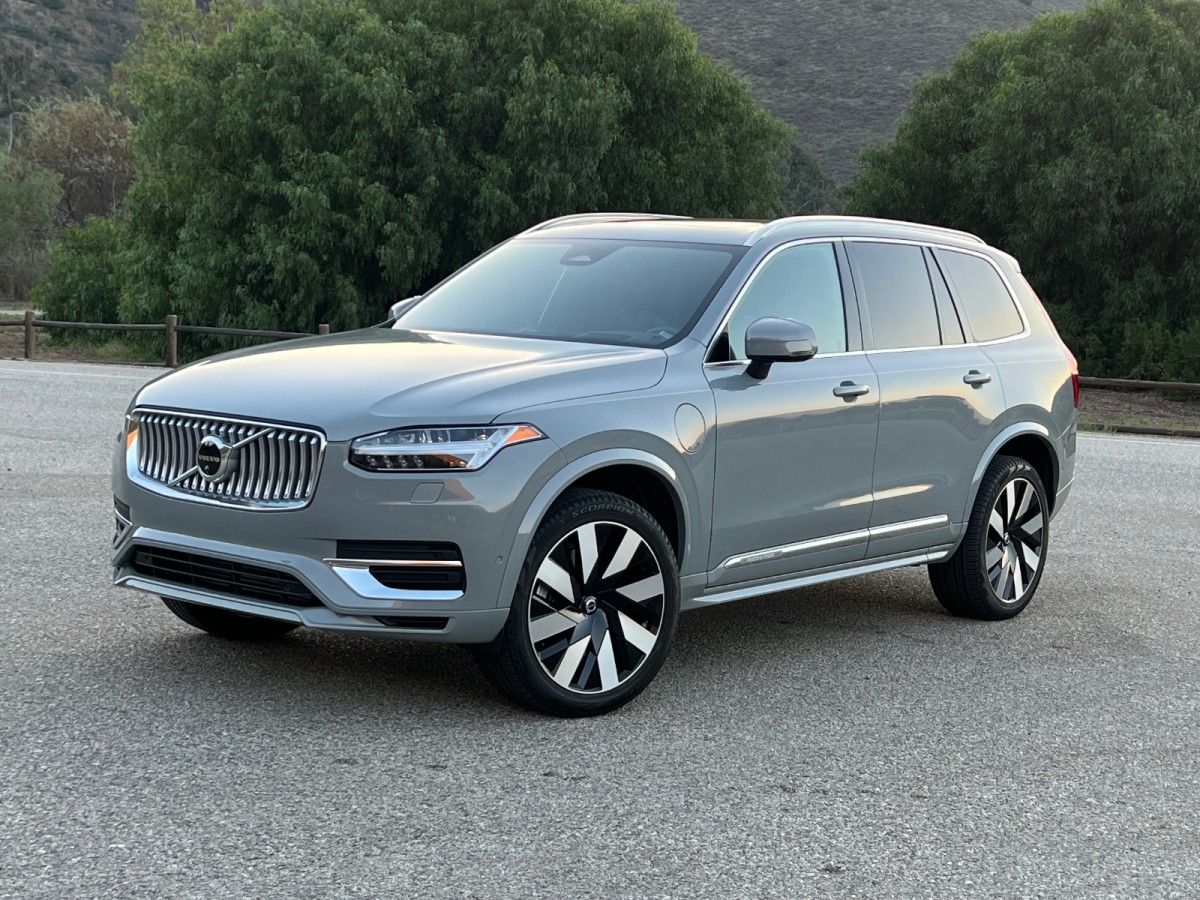
2024 Volvo XC90 Reviews SummaryWhen the current-generation XC90 went on sale nearly a decade ago, it marked the Swedish automaker’s pivot from its boxy and boring past to a future defined by design, quality, and technology. Volvo used the XC90’s blueprint throughout its lineup of cars, SUVs, and wagons, building a bridge to its electrified future. Has it overstayed its welcome? Perhaps, and it carries over this year without changes. But having spent a week driving the 2024 XC90 Recharge T8 plug-in hybrid, it remains an appealing choice in the luxury SUV segment. Verdict: Beautifully styled, inside and out, and offering a range of powertrains that includes a plug-in hybrid variant, the 2024 Volvo XC90 stands out in its field. However, it commands a steep price tag, and its safety tech isn’t as innovative as what you’ll find in some rival SUVs. | |
2024 Hyundai Santa Fe Reviews SummaryThe Hyundai Santa Fe is fully redesigned for 2024. It marks a significant departure for the brand in terms of styling, with a bold and blocky profile and stance reminiscent of, dare we say it, a certain British brand known for its off-road prowess. The Santa Fe’s redesign has as much substance as style, with a longer wheelbase, standard third-row seats, and new premium amenities, including a “terrace” approach to designing passenger and cargo space. Verdict: According to Hyundai, compact SUVs make up 15% of the brand’s sales, and the company expects the Santa Fe to grow that number. Overall, based on our exploration and time behind the wheel, the 2024 Santa Fe’s redesign is successful, as long as it doesn’t overshadow the rest of Hyundai’s lineup. | |
No video found | |
Popular Features & Specs | |
Engine2.0L 247 hp I4 | Engine2.5L 277 hp I4 |
Drive TrainAWD | Drive TrainFWD |
Seating Capacity7 | Seating Capacity7 |
Horsepower247 hp @ 5500 rpm | Horsepower277 hp @ 5800 rpm |
MPG City22 | MPG City20 |
MPG Highway27 | MPG Highway29 |
Engine | |
Engine Name2.0L 247 hp I4 | Engine Name2.5L 277 hp I4 |
Torque258 lb-ft @ 1500 rpm | Torque311 lb-ft @ 4000 rpm |
Horsepower247 hp @ 5500 rpm | Horsepower277 hp @ 5800 rpm |
DrivetrainAWD | DrivetrainFWD |
Fuel Economy | |
MPG City22 | MPG City20 |
MPG Highway27 | MPG Highway29 |
Interior | |
Seating Capacity7 | Seating Capacity7 |
Key Features | |
Navigation SystemStandard | Navigation SystemStandard |
Sunroof/MoonroofStandard | Sunroof/Moonroof |
Safety | |
Front Crash Overall5 | Front Crash Overall4 |
Side Crash Overall5 | Side Crash Overall5 |
Dimensions & Capacity | |
Cargo Space10.7 cu ft | Cargo Space14.6 cu ft |
Curb Weight4589 lbs | Curb Weight4343 lbs |
Height69.9 in | Height67.7 in |
Length195.0 in | Length190.2 in |
Width84.3 in | Width74.8 in |
Wheelbase117.5 in | Wheelbase110.8 in |
Maximum Payload1210 lbs | Maximum Payload1191 lbs |
Number of doors4 | Number of doors4 |
Maximum Towing Capacity5000 lbs | Maximum Towing Capacity3500 lbs |
Overview | ||
MSRP | $56,600 | $33,950 |
Listings | ||
Ratings & Reviews | ||
User reviews | ||
Expert reviews | 7.2 out of 10Read full review | 8.2 out of 10Read full review |
Pros & cons | Pros
Cons
| Pros
Cons
|
Summary | When the current-generation XC90 went on sale nearly a decade ago, it marked the Swedish automaker’s pivot from its boxy and boring past to a future defined by design, quality, and technology. Volvo used the XC90’s blueprint throughout its lineup of cars, SUVs, and wagons, building a bridge to its electrified future. Has it overstayed its welcome? Perhaps, and it carries over this year without changes. But having spent a week driving the 2024 XC90 Recharge T8 plug-in hybrid, it remains an appealing choice in the luxury SUV segment. Verdict: Beautifully styled, inside and out, and offering a range of powertrains that includes a plug-in hybrid variant, the 2024 Volvo XC90 stands out in its field. However, it commands a steep price tag, and its safety tech isn’t as innovative as what you’ll find in some rival SUVs. | The Hyundai Santa Fe is fully redesigned for 2024. It marks a significant departure for the brand in terms of styling, with a bold and blocky profile and stance reminiscent of, dare we say it, a certain British brand known for its off-road prowess. The Santa Fe’s redesign has as much substance as style, with a longer wheelbase, standard third-row seats, and new premium amenities, including a “terrace” approach to designing passenger and cargo space. Verdict: According to Hyundai, compact SUVs make up 15% of the brand’s sales, and the company expects the Santa Fe to grow that number. Overall, based on our exploration and time behind the wheel, the 2024 Santa Fe’s redesign is successful, as long as it doesn’t overshadow the rest of Hyundai’s lineup. |
Video | No video found | |
Popular Features & Specs | ||
Engine | 2.0L 247 hp I4 | 2.5L 277 hp I4 |
Drive Train | AWD | FWD |
Seating Capacity | 7 | 7 |
Horsepower | 247 hp @ 5500 rpm | 277 hp @ 5800 rpm |
MPG City | 22 | 20 |
MPG Highway | 27 | 29 |
Engine | ||
Engine Name | 2.0L 247 hp I4 | 2.5L 277 hp I4 |
Torque | 258 lb-ft @ 1500 rpm | 311 lb-ft @ 4000 rpm |
Horsepower | 247 hp @ 5500 rpm | 277 hp @ 5800 rpm |
Drivetrain | AWD | FWD |
Fuel Economy | ||
MPG City | 22 | 20 |
MPG Highway | 27 | 29 |
Interior | ||
Seating Capacity | 7 | 7 |
Key Features | ||
Navigation System | Standard | Standard |
Sunroof/Moonroof | Standard | |
Safety | ||
Front Crash Overall | 5 | 4 |
Side Crash Overall | 5 | 5 |
Dimensions & Capacity | ||
Cargo Space | 10.7 cu ft | 14.6 cu ft |
Curb Weight | 4589 lbs | 4343 lbs |
Height | 69.9 in | 67.7 in |
Length | 195.0 in | 190.2 in |
Width | 84.3 in | 74.8 in |
Wheelbase | 117.5 in | 110.8 in |
Maximum Payload | 1210 lbs | 1191 lbs |
Number of doors | 4 | 4 |
Maximum Towing Capacity | 5000 lbs | 3500 lbs |
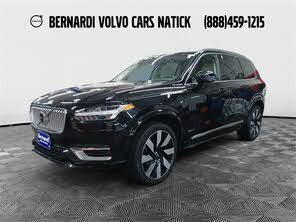
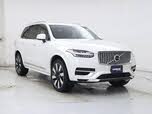
The Volvo XC90, available in B5, B6, and Recharge T8 model series, presented an undeniably luxurious and refined look. The B5 variant came equipped with a turbocharged mild-hybrid four-cylinder engine, while the B6 added a supercharger for enhanced performance. The Recharge T8, a plug-in hybrid, packed the most power, offered the best efficiency, and provided an estimated 32 miles of electric-only range. All models featured standard all-wheel drive (AWD).
Volvo offered the XC90 in Core, Plus, and Ultimate trim levels with prices starting at $56,000 and climbing to $79,600, excluding the $1,195 destination charge. Our test vehicle, a Recharge T8 in Ultimate trim, featured seven-passenger seating, the Lounge Package with massaging front seats, premium headliner, active air suspension, a top-tier Bowers & Wilkins audio system, and a trailer hitch enabling a towing capacity of 5,000 pounds. The manufacturer's suggested retail price (MSRP) was $89,145, including the destination charge.
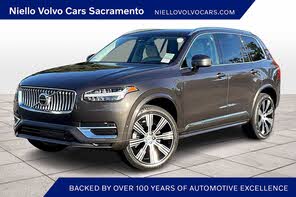
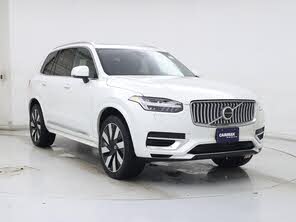
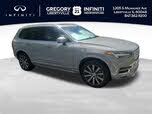
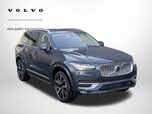
Volvo's mastery of color and materials was evident. The exterior paint palette was earthy and subdued, aligning perfectly with a luxury SUV positioned towards practicality, safety, and sustainability. Buyers had a choice of various wheel designs, up to 21 inches, most in a Bright theme contrasting with the played-out blacked-out trends. Inside, the aged design didn’t diminish the fact that rich materials were used, especially in the Ultimate trim. With options like wool-blend upholstery or ventilated Nappa leather, an Orrefors crystal shift knob, and natural wood trim, the cabin offered a classy yet customizable feel.
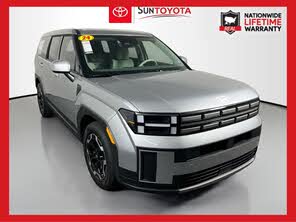
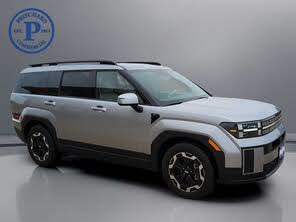
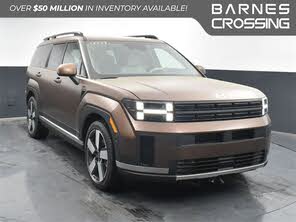
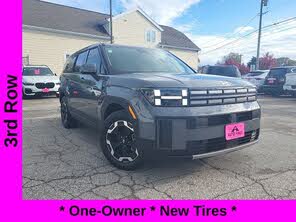
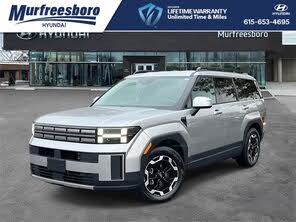
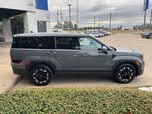
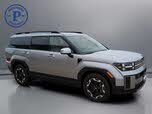
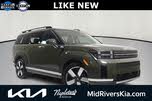
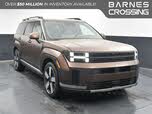
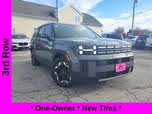
The 2024 Hyundai Santa Fe adopted a distinctly different, boxier aesthetic compared to its predecessors and siblings in Hyundai's lineup, such as the Palisade, Ioniq 5, and Ioniq 6. This design, driven by Hyundai's chief designer SangYup Lee’s philosophy that “a box is an optimal shape for storage capacity,” aimed for elegance and premium appeal. The Santa Fe’s new shape was more aerodynamic than it appeared and caught the eye of many, including a diverse range of onlookers during a rural Tennessee test drive.
With a palette of sophisticated exterior colors, including matte options, and the anodized-finish badging recently introduced on the Ioniq 6, the Santa Fe exuded elegance. Most trims came standard with 18-inch alloy wheels, while the Limited and Hybrid Calligraphy trims featured 20-inch wheels and the gas-only Calligraphy flaunted 21-inch wheels.
Inside, the Santa Fe provided a premium experience. Test drives of the all-terrain XRT and loaded Calligraphy trims revealed a refined interior, though some out-of-the-way surfaces featured harder materials. These were balanced with plenty of softly-padded surfaces, creating a soothing, cocoon-like environment. The headliner fabric, which felt like it could double as a winter scarf, added to the comfort and upscale feel of the Santa Fe.


The 2024 Volvo XC90 Recharge T8 combined an 18.8-kilowatt-hour battery and a 107-kilowatt electric motor with the B6 model’s supercharged and turbocharged 2.0-liter four-cylinder engine, achieving a robust 455 horsepower and 523 lb-ft of torque. This power was delivered through an eight-speed automatic transmission to all four wheels.
The battery and electric motor provided an estimated 32 miles of electric-only driving in Pure mode before the gasoline engine took over, delivering an average of 27 mpg in hybrid mode. The XC90 Recharge T8 could accelerate from 0 to 60 mph in about five seconds when in Power mode. Recharging the battery was simple, taking about 12 hours using a standard household outlet, or less than half that time with a 240-volt, 16-amp outlet. The SUV also offered various driving modes including Hybrid, Constant AWD, and Off-Road, with up to 9.9 inches of ground clearance with the optional air suspension.
During testing in Southern California’s mid-90s temperatures, the XC90 Recharge T8's electric-only range reached only 28 miles, and its fuel economy fell short at 24.5 mpg compared to the EPA's prediction of 27 mpg. However, in everyday suburban use, the XC90 managed near-to-home trips mostly on electric power, barely denting the gasoline fuel range.
The SUV’s electric performance wavered as the battery charge approached its minimum, necessitating gentle accelerator usage. Still, when the gas engine engaged, performance was lively with substantial power. However, it was not all joy; handling in the Santa Monica Mountains revealed limitations. The suspension allowed more roll, pitch, and dive, and the brakes faded with prolonged use. The ride quality was firm on irregular pavement, and the cabin was noisier than ideal for its price range. The steering was also imprecise, requiring mid-corner corrections.
The 2024 Santa Fe’s primary engine was a 2.5-liter turbocharged four-cylinder paired with an eight-speed dual-clutch automatic transmission, producing 277 horsepower and 311 lb-ft of torque. Front-wheel drive (FWD) was standard, with AWD optional—except on the XRT trim, which had AWD standard and added off-road modes.
The Santa Fe would later offer a 1.6-liter turbocharged four-cylinder hybrid engine, delivering an estimated 231 hp and 271 lb-ft of torque with a six-speed automatic transmission.
In terms of fuel economy, the FWD base Santa Fe achieved 20 mpg city, 29 mpg highway, and 24 mpg combined. These numbers slightly dipped for AWD and the XRT model, with the latter at 19/26/22 due to its higher ground clearance and more robust tires. Notably, most Santa Fe models had a towing capacity of 3,500 pounds, but the XRT could tow up to 4,500 pounds due to its additional cooling features.
Our road test of the Santa Fe Calligraphy revealed classic Hyundai driving dynamics: smooth, stable, with limited faults in acceleration, throttle response, and shifting. The notable body roll through turns was its main performance downside. Off-road, the Santa Fe XRT performed comparably to competitors like the Kia Telluride X-Pro and Subaru Wilderness trims, with sufficient ground clearance and tire robustness for remote campsite visits.
Inside the 2024 XC90 Recharge T8, even the base Core trim was well-equipped with power-adjustable heated front seats, leather upholstery, wood trim, and four-zone climate control with PM2.5 air purification. A panoramic glass roof added natural light, and a one-touch sunshade control made it easy to adjust.
Moving up the trims added features like a heated steering wheel, heated rear seats, ventilated and massaging front seats, integrated booster child seat, and rear door sunshades. Front seats had adjustable lower leg support bolsters, though their winged shape could catch on clothing. Once inside, the seats provided exceptional comfort, and the high driving position offered good visibility.
The XC90 offered seating for seven or six with available second-row captain’s chairs. Interior storage was adequate, and its cargo capacity with all seats in use was minimal. Folding the third-row seats expanded cargo space to 65.5 cubic feet, and dropping the second-row increased it to an impressive 85.7 cubic feet.
The 2024 Santa Fe featured a wheelbase about two inches longer than its predecessor, and its body was also two inches longer and taller. Hyundai designed most of this space increase for the cargo area, inspired by the concept of “chabak,” which emphasizes car camping and tailgating.
Although the third row was snug, the first and second rows were spacious and comfortable. Hyundai positioned the Santa Fe to complement the larger Palisade, suggesting that those who needed a fully functional third row consider the latter. The available captain’s chairs in the second row provided exceptional comfort, reclining fully.
The Santa Fe’s cargo area boasted 14.6 cubic feet behind the third row, expanding to 40.5 cubic feet with the third row folded, and 79.6 cubic feet with the second row down. Roof rails supported 220 pounds, with new grab handles aiding in loading cargo. Higher trims like the Limited and Calligraphy offered extra features like a UV sanitization compartment in the glovebox.
The 2024 Volvo XC90 featured a 9-inch touchscreen infotainment system with Google Built-in technology, including Google Maps, Google Play, and Google Assistant, free for the first four years. Apple CarPlay and SiriusXM satellite radio were also standard, with the latter complimentary for three months.
Available audio systems ranged from a 14-speaker Harman Kardon premium setup to a 19-speaker Bowers & Wilkins system. Despite the small size, the touchscreen’s proximity made it user-friendly, and the physical volume knob and radio tuning buttons added convenience.
The XC90 also included a 12-inch digital instrumentation panel, though its controls were not always intuitive. Options included a head-up display and surround-view camera to complement standard front and rear parking sensors.
The 2024 Hyundai Santa Fe’s cabin centerpiece was a curved panoramic display on the higher trims, providing a modern, elegant touch. This digital real estate included easy-to-navigate menus and crisp graphics. Wireless Apple CarPlay and Android Auto were standard across all trims.
The XRT, Limited, and Calligraphy trims housed a 12-speaker Bose stereo, dynamic voice recognition, and a Wi-Fi hotspot. Lower trims received a simpler 12.3-inch touchscreen infotainment system. Wireless charging was available from the SEL trim upwards, with the Calligraphy offering double wireless chargers.
Hyundai’s BlueLink system provided vehicle access and information, substituting for a physical key fob in higher trims. The SEL and above trims also incorporated Hyundai Pay and a biometric fingerprint scanner for added convenience and security.
Volvo’s reputation for safety was evident in the XC90, which earned high marks in crash-test ratings. The NHTSA awarded it five stars in all assessments except rollover resistance, where it received four stars. The IIHS named it a Top Safety Pick+ for 2023.
The XC90’s advanced driving assistance systems (ADAS) included typical features alongside a large-animal detection system and traffic movement notification. However, it lacked innovative ADAS offerings and did not support hands-free driving. Pilot Assist, combining adaptive cruise control and lane-centering, generally worked well but had issues with rural roads and exiting highways.
The 2024 Hyundai Santa Fe had not been crash-tested by the IIHS or NHTSA at the time of review, though Hyundai’s vehicles typically performed well. Standard safety and driver-assistance features included adaptive cruise control, forward collision-avoidance assist, blind-spot monitoring, rear cross-traffic alert, lane-keep assist, and more.
Higher trims added features like an upgraded rear-occupant reminder system, side-view mirrors with turn signals, and Hyundai’s highway limited hands-free driving system. The Limited trim provided a 360-degree camera system, remote automatic parking, and a UV sanitization compartment in the glovebox. The Calligraphy trim included a widescreen HUD and enhanced collision avoidance systems. Hyundai introduced its first driver monitoring system in the Santa Fe, capable of detecting driver alertness and taking action if necessary.
CarGurus highlights

According to CarGurus experts, the overall rating for the 2024 Volvo XC90 is 7.2 out of 10, while the 2024 Hyundai Santa Fe scores 8.2 out of 10. Therefore, based on these ratings and a thorough comparison, the 2024 Hyundai Santa Fe stands out as the better choice for most consumers, offering a harmonious blend of advanced technology, superior cargo capacity, and comprehensive safety features.
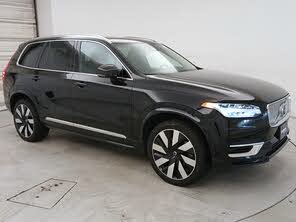
Choose the 2024 Volvo XC90 if:
- You need a luxurious and comfortable SUV with advanced materials and customization options.
- A plug-in hybrid powertrain with significant electric-only range and high overall performance is a priority.
- You value Volvo's exceptional safety legacy and ratings.


Choose the 2024 Hyundai Santa Fe if:
- You prefer a modern, sophisticated interior with intuitive technology and seamless connectivity.
- You need extensive and versatile cargo space suitable for car camping or tailgating.
- Advanced safety and driver-assistance features across all trims are important to you.




CarGurus highlights
According to CarGurus experts, the overall rating for the 2024 Volvo XC90 is 7.2 out of 10, while the 2024 Hyundai Santa Fe scores 8.2 out of 10. Therefore, based on these ratings and a thorough comparison, the 2024 Hyundai Santa Fe stands out as the better choice for most consumers, offering a harmonious blend of advanced technology, superior cargo capacity, and comprehensive safety features.
Choose the 2024 Volvo XC90 if:
Shop Now- You need a luxurious and comfortable SUV with advanced materials and customization options.
- A plug-in hybrid powertrain with significant electric-only range and high overall performance is a priority.
- You value Volvo's exceptional safety legacy and ratings.





Choose the 2024 Hyundai Santa Fe if:
Shop Now- You prefer a modern, sophisticated interior with intuitive technology and seamless connectivity.
- You need extensive and versatile cargo space suitable for car camping or tailgating.
- Advanced safety and driver-assistance features across all trims are important to you.



By: CarGurus + AI
At CarGurus, our team of experienced automotive writers remain at the heart of our content operation, conducting hands-on car tests and writing insightful guides that are backed by years of industry experience. To complement this, we are harnessing AI to make our content offering more diverse and more helpful to shoppers than ever. To achieve this, our AI systems are based exclusively on CarGurus content, ratings and data, so that what we produce is both unique to CarGurus, and uniquely helpful to car shoppers.