2024 Volkswagen Atlas vs 2024 Genesis GV70
Overview | |
MSRP$37,995 | MSRP$45,150 |
Listings245 | Listings92 |
Ratings & Reviews | |
User Reviews | User Reviews |
Expert reviews7.3 out of 10 | Expert reviews8.3 out of 10 |
Pros
Cons
| Pros
Cons
|
2024 Volkswagen Atlas Reviews SummaryLaunched for the 2018 model year, the Volkswagen Atlas is engineered specifically for the United States market. It's a three-row midsize crossover SUV, big for a VW, but targeting a popular market segment that already includes the Chevrolet Traverse, Ford Explorer, Hyundai Palisade, Kia Telluride, Nissan Pathfinder, Subaru Ascent, and Toyota Highlander. To keep up in such a competitive segment, the Atlas gets a major refresh for the 2024 model year. The 2024 Volkswagen Atlas is essentially the same vehicle as before, but it gets key updates like different styling and more standard features. It also loses its six-cylinder engine option, but the remaining turbocharged four-cylinder engine gets more horsepower and torque. The 2024 Atlas lineup includes SE, SE with Technology, SEL, and SEL Premium R-Line trim levels, plus a new-for-2024 Peak Edition treatment available on the SE with Technology and SEL trim levels. For this review, we tested an Atlas SEL Premium R-Line, representing the top of the range. | |
2024 Genesis GV70 Reviews SummaryVerdict: The GV70 offers style, impressive tech, and a well-executed electric variant. Launched as a 2022 model and thus still very fresh, the Genesis GV70 is the Korean luxury brand’s answer to the BMW X3, Mercedes-Benz GLC-Class, Lexus NX, Volvo XC60, and other small luxury crossover SUVs. The GV70 checks most of the boxes needed to compete in this segment while offering something the competition doesn’t: an all-electric powertrain option. | |
No video found | |
Popular Features & Specs | |
Engine2.0L 269 hp I4 | Engine2.5L 300 hp I4 |
Drive TrainFWD | Drive TrainAWD |
Seating Capacity7 | Seating Capacity5 |
MPG City20 | MPG City22 |
MPG Highway27 | MPG Highway28 |
Engine | |
Engine Name2.0L 269 hp I4 | Engine Name2.5L 300 hp I4 |
DrivetrainFWD | DrivetrainAWD |
Fuel Economy | |
MPG City20 | MPG City22 |
MPG Highway27 | MPG Highway28 |
Interior | |
Seating Capacity7 | Seating Capacity5 |
Key Features | |
Navigation System | Navigation SystemStandard |
Safety | |
Front Crash Overall4 | Front Crash Overall4 |
Side Crash Overall5 | Side Crash Overall5 |
Dimensions & Capacity | |
Cargo Space20.6 cu ft | Cargo Space28.9 cu ft |
Curb Weight4343 lbs | Curb Weight4167 lbs |
Height70.4 in | Height64.2 in |
Length200.7 in | Length185.6 in |
Width88.5 in | Width75.2 in |
Wheelbase117.3 in | Wheelbase113.2 in |
Maximum Payload1091 lbs | Maximum Payload1334 lbs |
Number of doors4 | Number of doors4 |
Maximum Towing Capacity2000 lbs | Maximum Towing Capacity3500 lbs |
Overview | ||
MSRP | $37,995 | $45,150 |
Listings | ||
Ratings & Reviews | ||
User reviews | ||
Expert reviews | 7.3 out of 10Read full review | 8.3 out of 10Read full review |
Pros & cons | Pros
Cons
| Pros
Cons
|
Summary | Launched for the 2018 model year, the Volkswagen Atlas is engineered specifically for the United States market. It's a three-row midsize crossover SUV, big for a VW, but targeting a popular market segment that already includes the Chevrolet Traverse, Ford Explorer, Hyundai Palisade, Kia Telluride, Nissan Pathfinder, Subaru Ascent, and Toyota Highlander. To keep up in such a competitive segment, the Atlas gets a major refresh for the 2024 model year. The 2024 Volkswagen Atlas is essentially the same vehicle as before, but it gets key updates like different styling and more standard features. It also loses its six-cylinder engine option, but the remaining turbocharged four-cylinder engine gets more horsepower and torque. The 2024 Atlas lineup includes SE, SE with Technology, SEL, and SEL Premium R-Line trim levels, plus a new-for-2024 Peak Edition treatment available on the SE with Technology and SEL trim levels. For this review, we tested an Atlas SEL Premium R-Line, representing the top of the range. | Verdict: The GV70 offers style, impressive tech, and a well-executed electric variant. Launched as a 2022 model and thus still very fresh, the Genesis GV70 is the Korean luxury brand’s answer to the BMW X3, Mercedes-Benz GLC-Class, Lexus NX, Volvo XC60, and other small luxury crossover SUVs. The GV70 checks most of the boxes needed to compete in this segment while offering something the competition doesn’t: an all-electric powertrain option. |
Video | No video found | |
Popular Features & Specs | ||
Engine | 2.0L 269 hp I4 | 2.5L 300 hp I4 |
Drive Train | FWD | AWD |
Seating Capacity | 7 | 5 |
MPG City | 20 | 22 |
MPG Highway | 27 | 28 |
Engine | ||
Engine Name | 2.0L 269 hp I4 | 2.5L 300 hp I4 |
Drivetrain | FWD | AWD |
Fuel Economy | ||
MPG City | 20 | 22 |
MPG Highway | 27 | 28 |
Interior | ||
Seating Capacity | 7 | 5 |
Key Features | ||
Navigation System | Standard | |
Safety | ||
Front Crash Overall | 4 | 4 |
Side Crash Overall | 5 | 5 |
Dimensions & Capacity | ||
Cargo Space | 20.6 cu ft | 28.9 cu ft |
Curb Weight | 4343 lbs | 4167 lbs |
Height | 70.4 in | 64.2 in |
Length | 200.7 in | 185.6 in |
Width | 88.5 in | 75.2 in |
Wheelbase | 117.3 in | 113.2 in |
Maximum Payload | 1091 lbs | 1334 lbs |
Number of doors | 4 | 4 |
Maximum Towing Capacity | 2000 lbs | 3500 lbs |
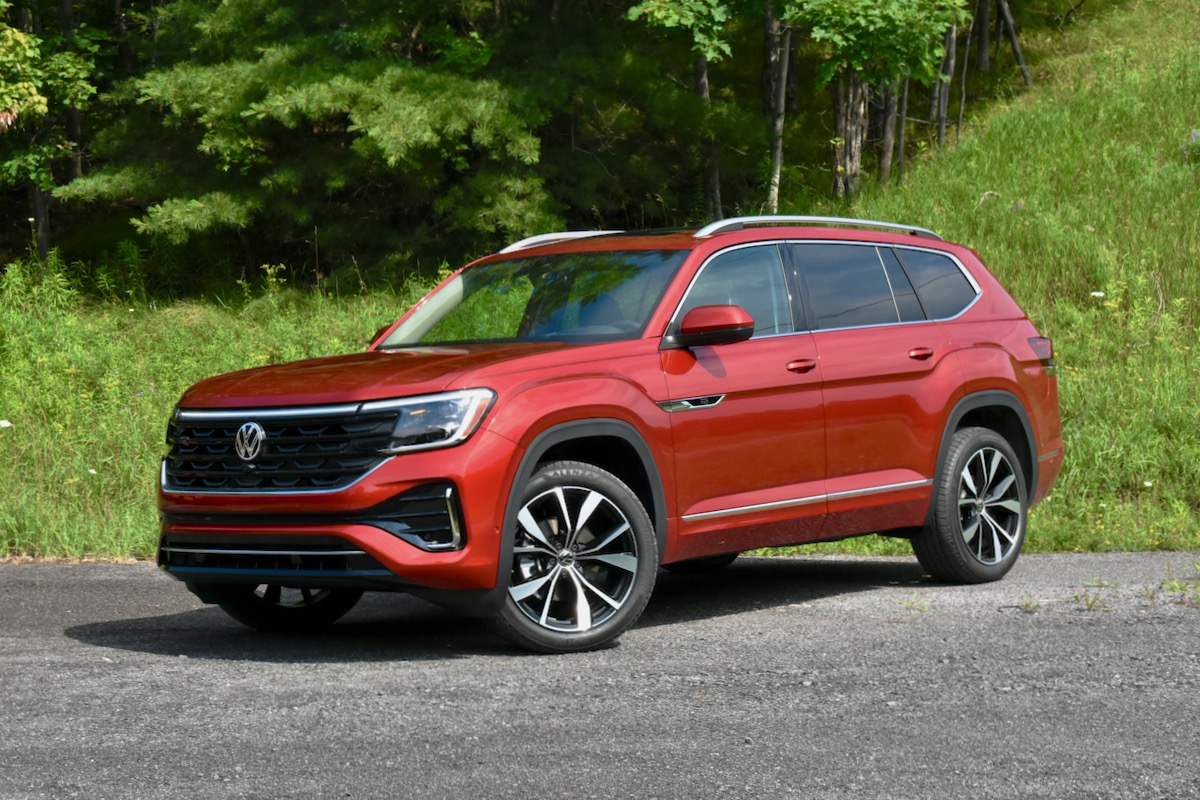
The 2024 Volkswagen Atlas received a notable styling refresh, which began with design cues dating back to the Volkswagen CrossBlue concept unveiled in 2013. In this refresh, new lighting elements made the most impact, especially with the introduction of light-up VW logos resembling those in the updated ID.4 electric crossover. The front logo illuminated white, while the rear one glowed red, contributing to the Atlas' new aesthetic.
Significant changes included a front light bar seamlessly merging with the daytime running lights, which were components of the new LED headlights – however, these bore a striking resemblance to those on a Ford Expedition. Despite these subtle adjustments, the Atlas adopted a distinctively American swagger, masking its European influences. The rear taillights refigured to blend into a full-width light bar that housed the glowing VW logo.
For 2024, each trim level of the Atlas sported new wheel designs. The base SE model came with 18-inch alloy wheels, whereas higher trims like the SEL Premium R-Line boasted 21-inch wheels and a sportier look. Adding to the lineup, the Atlas Peak Edition introduced a more rugged aesthetic with black 18-inch wheels, all-terrain tires, and unique color options like Avocado Green and Pure Gray, making it appealing to adventure enthusiasts.
Inside, the Atlas' cabin also saw upgrades. The infotainment touchscreen moved to a free-standing position, and the shifter was reduced to a compact toggle, freeing up space. These changes provided a mix of functionality and upscale attempts, including more textured fake wood trim and weaved plastic meant to simulate carbon fiber. Leatherette seats came standard, with leather upholstery available on higher trims. However, despite these attempts, some elements like the center console's stitching appeared less premium.
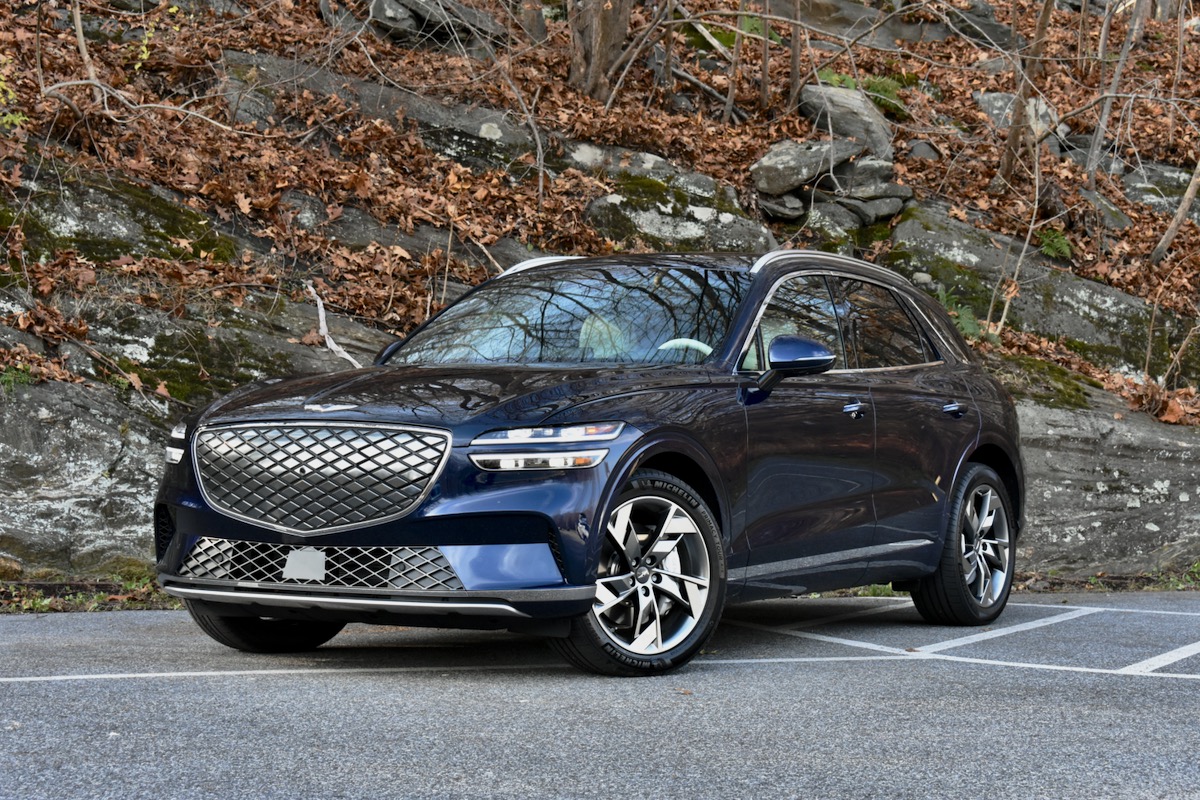
Conversely, the 2024 Genesis GV70 stood out in its lineup, balancing the brand’s trademark features and unique styling. It retained split headlights and a prominent shield-like grille for brand recognition. Despite its smaller footprint compared to the GV80, the GV70's sleek design eliminated the quirky aesthetics of the GV60. It featured an almost hatchback-like rear window profile and large, round exhaust outlets on the gasoline-powered Sport Prestige variant, paired with distinct wheel designs.
The GV70 struck a balance between an SUV's dimension and luxury-car elegance, outperforming competitors like the Audi Q5, BMW X3, Porsche Macan, and Mercedes-Benz GLC-Class in its design narrative. Even the Electrified GV70 mirrored the gasoline model, ensuring a cohesive aesthetic with the charge port cleverly housed within the shiny grille for convenience.
Inside, the GV70’s interior was among the most distinctive, merging luxury elements like quilted Nappa leather and a panoramic sunroof with unique details. The cabin featured an elliptical pod for climate controls, a rotary controller that mirrored an alien artifact from Star Trek, and a rounded dashboard resembling an airplane wing, showcasing Genesis' effort to differentiate its interior ambiance.


The 2024 Volkswagen Atlas streamlined its powertrain to a single engine option, eliminating the VR6. The remaining 2.0-liter turbocharged inline four-cylinder, an evolution of VW's versatile EA888 engine, generated 269 horsepower and 273 pound-feet of torque on regular fuel. This powerplant, coupled with an eight-speed automatic transmission, offered standard front-wheel drive (FWD) and optional all-wheel drive (AWD).
The new turbo-four outperformed the previous VR6 due to its higher torque peaking at a lower rpm, with VW estimating 0-60 mph times of 8 seconds for FWD models and 8.3 seconds for AWD models. Despite the improved performance figures, the Atlas remained centered on comfort rather than sportiness, and while the turbocharged engine provided adequate power, it was noisier under strain.
With a maximum towing capacity of 5,000 pounds, more models could now pull this weight except for the base SE variant, rated at 2,000 pounds. Models like the Nissan Pathfinder still surpassed the Atlas with a towing capacity of up to 6,000 pounds.
Conversely, the 2024 Genesis GV70 retained its broad selection of powertrains. It featured a standard 2.0-liter turbocharged four-cylinder engine with 300 horsepower and 311 pound-feet of torque, alongside an optional 3.5-liter twin-turbo V6 producing 375 hp and 391 lb-ft. All versions included an eight-speed automatic transmission and standard AWD.
The Electrified GV70 added an electric variant with front and rear motors delivering a combined 429 hp and 516 lb-ft of torque, utilizing a 77.4-kilowatt-hour battery pack. With "Boost Mode," it surged to 483 hp momentarily, catering to those seeking brisk acceleration.
Despite its competent performance, the GV70 didn't excel at either sporty or plush rides, unlike some rivals. While its chassis wasn't as nimble as the Acura RDX, BMW X3, or Porsche Macan, it provided considerable straight-line acceleration. However, its suspension occasionally reacted harshly to road imperfections, not offering the cushy ride expected in some luxury SUVs. The Electrified GV70 mirrored many traits of its gasoline counterpart, with handy features like adjustable regenerative braking and a comfortable ride, provided drivers could manage its 236-mile range.
For 2024, the Volkswagen Atlas incorporated more standard features across trims, including heated and ventilated front seats in the base SE trim and a power liftgate in the SE with Technology trim. The SEL trim now standardly included leather upholstery and heated second-row seats.
The Atlas accommodated seven occupants with its standard three-seat second-row bench that could tilt, slide, and recline, offering flexibility and the ability to hold three child seats side by side. Captain's chairs were an option on higher trims, reducing capacity to six.
While the Atlas’ passenger dimensions were competitive, it excelled in third-row legroom. However, second-row passengers found slightly less room compared to rivals. The trade-off between passenger and cargo space resulted in the Atlas offering 20.6 cubic feet with all seats in use, 55.5 cubic feet with the third row stowed, and an overall cargo volume of 96.6 cubic feet with both rear seats folded, surpassing nearly all competitors except the Chevy Traverse.
In contrast, the Genesis GV70 had competitive interior space, with slight variations compared to German rivals. While headroom was marginally less, the GV70 offered a streamlined roofline, adding to its visual appeal. Front-seat legroom was comparable with slightly better room compared to the X3 and slightly less than the Q5 and GLC. The same applied to the second-row legroom, where the Genesis had a tad more space than the X3.
Cargo space in the GV70 reached 28.9 cubic feet with rear seats in place, outperforming the Mercedes GLC but slightly trailing behind the Audi Q5 and BMW X3. With the rear seats folded, it offered 56.9 cubic feet, which was less than its German counterparts.
The Electrified GV70 preserved most of this space, with minor reductions to accommodate the battery pack. Stylish but somewhat cramped interior design elements influenced available storage space, although it included practical features like a dedicated phone storage nook and rear-seat climate controls.
The Volkswagen Atlas gained more tech features for 2024. Its base model now included a 12-inch touchscreen and a 10.25-inch digital instrument cluster, alongside wireless phone charging and wireless Apple CarPlay and Android Auto. Higher trims added features like an available head-up display and a premium Harman Kardon audio system, replacing the previous Fender system.
The infotainment system in the Atlas was user-friendly, with clear graphics and essential functions like map view. Although the reliance on haptic touchpads for controls detracted slightly from usability, it lent a sophisticated touch to the cabin.
Meanwhile, the Genesis GV70’s infotainment system incorporated components from Hyundai, resulting in a less elaborate but straightforward interface. All GV70 models came with a 14.5-inch touchscreen and wired Apple CarPlay and Android Auto. Higher trims received a sophisticated 12.3-inch digital instrument cluster with a nostalgic 3D effect.
Additional features included a 12-inch head-up display and a 16-speaker Lexicon audio system. The layout was intuitive, and users could navigate the setup via a rotary controller with a superior tactile feel compared to BMW's and Mercedes' systems. Genesis also offered a fingerprint scanner for driver profiles and a digital key function, allowing use of a phone instead of the key fob.
In terms of safety, the 2024 Volkswagen Atlas received a five-star overall safety rating from the National Highway Traffic Safety Administration (NHTSA), with top marks in side crash tests and four stars in frontal and rollover tests. While the Insurance Institute for Highway Safety (IIHS) hadn’t released ratings for the 2024 model yet, the 2023 model scored high marks except for the "Marginal" rating in the updated moderate overlap front test.
For 2024, the Atlas included more driver-assist features as standard, incorporating VW's IQ.Drive package across all trims. Standard features now included forward collision warning, automatic emergency braking, blind-spot monitoring, rear cross-traffic alert, lane-keep assist, and adaptive cruise control. The higher trims offered enhanced features like predictive adaptive cruise control and park assist.
The 2024 Genesis GV70 also shined in safety, earning the IIHS Top Safety Pick+ award for both gasoline and Electrified models. While it hadn’t been fully rated by the NHTSA for 2024, its gasoline version retained four-star frontal and rollover crash-test ratings, with the 2023 model achieving a five-star overall safety rating.
The GV70 included numerous standard safety features such as lane-keep assist, forward-collision warning, automatic emergency braking, rear cross-traffic alert, a driver-attention monitor, and parking assist sensors. Higher trims could add more sophisticated systems like Highway Driving Assist 2, which managed adaptive cruise control and lane changes. In addition, Genesis provided unique features like a safe exit assist and a rear occupant alert system for enhanced safety.
CarGurus highlights
According to CarGurus experts, the overall rating for the 2024 Volkswagen Atlas is 7.3 out of 10, while the 2024 Genesis GV70 scores 8.3 out of 10. Given these ratings, the Genesis GV70 emerges as the superior choice. Its balance of luxury, technology, and performance, combined with high safety ratings and thoughtful design elements, make it a more compelling option for consumers seeking a premium SUV experience.
Choose the 2024 Volkswagen Atlas if:
- Cargo Capacity: You need substantial cargo space for family outings or transporting large items.
- Standard Features: You value more standard features like heated and ventilated front seats and leather upholstery at lower trim levels.
- Cost-Effective Towing: You require reliable towing capacity up to 5,000 pounds across multiple models.


Choose the 2024 Genesis GV70 if:
- Luxury Aesthetics: You prioritize a stylish, distinctive interior with luxury touches like quilted Nappa leather and high-end materials.
- Advanced Tech Features: You appreciate high-tech features like a 14.5-inch touchscreen, a 12.3-inch digital instrument cluster, and a digital key function.
- Strong Performance Options: You want powerful engine choices, including a twin-turbo V6 or an electrified option with impressive torque.


CarGurus highlights
According to CarGurus experts, the overall rating for the 2024 Volkswagen Atlas is 7.3 out of 10, while the 2024 Genesis GV70 scores 8.3 out of 10. Given these ratings, the Genesis GV70 emerges as the superior choice. Its balance of luxury, technology, and performance, combined with high safety ratings and thoughtful design elements, make it a more compelling option for consumers seeking a premium SUV experience.
Choose the 2024 Volkswagen Atlas if:
Shop Now- Cargo Capacity: You need substantial cargo space for family outings or transporting large items.
- Standard Features: You value more standard features like heated and ventilated front seats and leather upholstery at lower trim levels.
- Cost-Effective Towing: You require reliable towing capacity up to 5,000 pounds across multiple models.
Choose the 2024 Genesis GV70 if:
Shop Now- Luxury Aesthetics: You prioritize a stylish, distinctive interior with luxury touches like quilted Nappa leather and high-end materials.
- Advanced Tech Features: You appreciate high-tech features like a 14.5-inch touchscreen, a 12.3-inch digital instrument cluster, and a digital key function.
- Strong Performance Options: You want powerful engine choices, including a twin-turbo V6 or an electrified option with impressive torque.

By: CarGurus + AI
At CarGurus, our team of experienced automotive writers remain at the heart of our content operation, conducting hands-on car tests and writing insightful guides that are backed by years of industry experience. To complement this, we are harnessing AI to make our content offering more diverse and more helpful to shoppers than ever. To achieve this, our AI systems are based exclusively on CarGurus content, ratings and data, so that what we produce is both unique to CarGurus, and uniquely helpful to car shoppers.

