2024 Toyota 4Runner vs 2024 Toyota Sienna
Overview | |
MSRP$37,685 | MSRP$40,705 |
Listings884 | Listings2278 |
Ratings & Reviews | |
User Reviews | User Reviews |
Expert reviews7.5 out of 10 | Expert reviews4.5 out of 10 |
Pros
Cons
| Pros
Cons
|
2024 Toyota Sienna Reviews SummaryNow in its fourth generation, the latest family hauler is offered only as a fuel-sipping hybrid model with three rows of seating and power sliding doors. Plus the Sienna comes standard with plenty of safety features and it’s comfy to boot. Why even both with an SUV? Verdict: The 2024 Toyota Sienna delivers impressive fuel efficiency, thanks to its standard hybrid engine. Toyota also offers optional all-wheel drive, and many shoppers may appreciate the Sienna's dramatic exterior styling. Performance, while efficient, isn't thrilling, and the Sienna's tech is looking a bit outdated. Otherwise, this minivan delivers great value. | |
2024 Toyota 4Runner Reviews SummaryVerdict: The Toyota 4Runner remains an accomplished off-road-capable vehicle with a strong reputation for reliability and durability. A new 4Runner is expected, and the current model's aging platform is in desperate need of a full redesign. It trails newer rivals when it comes to technology, safety features, fuel efficiency, and power. The 2024 Toyota 4Runner would be easier to recommend it if the price were significantly reduced. | |
No video found | |
Popular Features & Specs | |
Engine2.5L 245 hp I4 Hybrid | Engine4.0L 270 hp V6 |
Drive TrainFWD | Drive Train4X2 |
Seating Capacity8 | Seating Capacity7 |
Horsepower | Horsepower270 hp @ 5600 rpm |
EV Battery Capacity1.9 kWh | EV Battery Capacity |
MPG City36 | MPG City16 |
MPG Highway36 | MPG Highway19 |
Engine | |
Engine Name2.5L 245 hp I4 Hybrid | Engine Name4.0L 270 hp V6 |
Torque | Torque278 lb-ft @ 4400 rpm |
Horsepower | Horsepower270 hp @ 5600 rpm |
DrivetrainFWD | Drivetrain4X2 |
Fuel Economy | |
EV Battery Capacity1.9 kWh | EV Battery Capacity |
MPG City36 | MPG City16 |
MPG Highway36 | MPG Highway19 |
Interior | |
Seating Capacity8 | Seating Capacity7 |
Safety | |
Front Crash Overall4 | Front Crash Overall4 |
Side Crash Overall5 | Side Crash Overall5 |
Dimensions & Capacity | |
Cargo Space33.5 cu ft | Cargo Space47.2 cu ft |
Curb Weight4610 lbs | Curb Weight4400 lbs |
Height68.5 in | Height71.5 in |
Length203.7 in | Length190.2 in |
Width78.5 in | Width75.8 in |
Wheelbase120.5 in | Wheelbase109.8 in |
Maximum Payload1560 lbs | Maximum Payload1700 lbs |
Number of doors4 | Number of doors4 |
Maximum Towing Capacity3500 lbs | Maximum Towing Capacity5000 lbs |
Standard Towing Capacity | Standard Towing Capacity5000 lbs |
Overview | ||
MSRP | $37,685 | $40,705 |
Listings | ||
Ratings & Reviews | ||
User reviews | ||
Expert reviews | 7.5 out of 10Read full review | 4.5 out of 10Read full review |
Pros & cons | Pros
Cons
| Pros
Cons
|
Summary | Now in its fourth generation, the latest family hauler is offered only as a fuel-sipping hybrid model with three rows of seating and power sliding doors. Plus the Sienna comes standard with plenty of safety features and it’s comfy to boot. Why even both with an SUV? Verdict: The 2024 Toyota Sienna delivers impressive fuel efficiency, thanks to its standard hybrid engine. Toyota also offers optional all-wheel drive, and many shoppers may appreciate the Sienna's dramatic exterior styling. Performance, while efficient, isn't thrilling, and the Sienna's tech is looking a bit outdated. Otherwise, this minivan delivers great value. | Verdict: The Toyota 4Runner remains an accomplished off-road-capable vehicle with a strong reputation for reliability and durability. A new 4Runner is expected, and the current model's aging platform is in desperate need of a full redesign. It trails newer rivals when it comes to technology, safety features, fuel efficiency, and power. The 2024 Toyota 4Runner would be easier to recommend it if the price were significantly reduced. |
Video | No video found | |
Popular Features & Specs | ||
Engine | 2.5L 245 hp I4 Hybrid | 4.0L 270 hp V6 |
Drive Train | FWD | 4X2 |
Seating Capacity | 8 | 7 |
Horsepower | 270 hp @ 5600 rpm | |
EV Battery Capacity | 1.9 kWh | |
MPG City | 36 | 16 |
MPG Highway | 36 | 19 |
Engine | ||
Engine Name | 2.5L 245 hp I4 Hybrid | 4.0L 270 hp V6 |
Torque | 278 lb-ft @ 4400 rpm | |
Horsepower | 270 hp @ 5600 rpm | |
Drivetrain | FWD | 4X2 |
Fuel Economy | ||
EV Battery Capacity | 1.9 kWh | |
MPG City | 36 | 16 |
MPG Highway | 36 | 19 |
Interior | ||
Seating Capacity | 8 | 7 |
Safety | ||
Front Crash Overall | 4 | 4 |
Side Crash Overall | 5 | 5 |
Dimensions & Capacity | ||
Cargo Space | 33.5 cu ft | 47.2 cu ft |
Curb Weight | 4610 lbs | 4400 lbs |
Height | 68.5 in | 71.5 in |
Length | 203.7 in | 190.2 in |
Width | 78.5 in | 75.8 in |
Wheelbase | 120.5 in | 109.8 in |
Maximum Payload | 1560 lbs | 1700 lbs |
Number of doors | 4 | 4 |
Maximum Towing Capacity | 3500 lbs | 5000 lbs |
Standard Towing Capacity | 5000 lbs | |
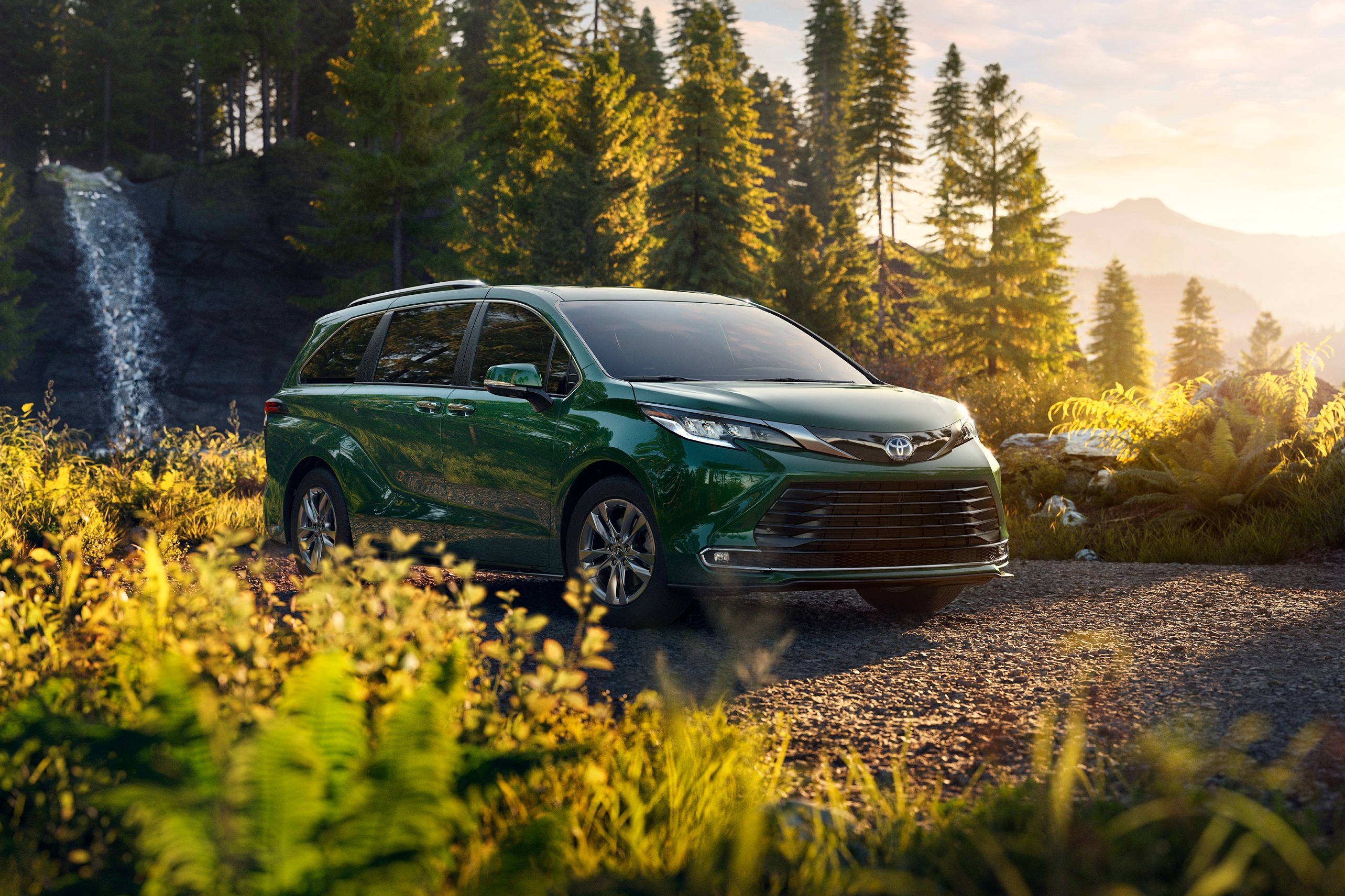
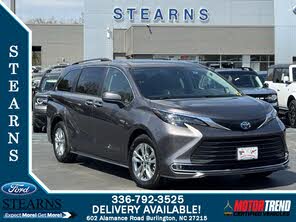
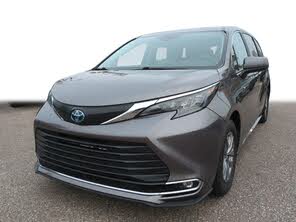
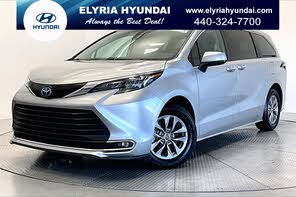
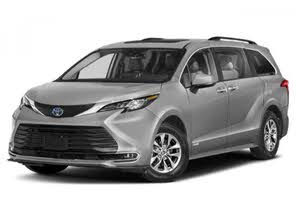
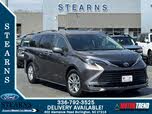
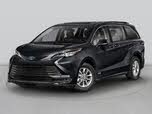
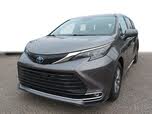
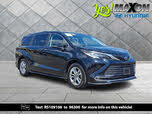
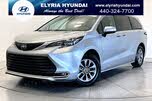
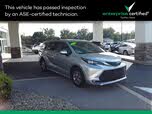
The 2024 Toyota Sienna had a distinct style that no one could overlook. Toyota had stopped promoting the "swagger wagon" persona, but the vibe remained evident in its sleek front and rear fascias. The Sienna was available in several vibrant colors, including deep blue, red, and green, which further accentuated its stylish appeal. The standard LED lighting across all trims improved overall visibility, while upper trims were equipped with Bi-LED projector headlamps that provided exceptional illumination at night.
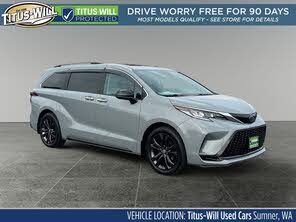
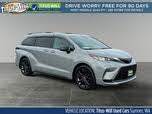
The XSE trim, touted as the “sporty” version, featured a black metallic mesh front grille, black heated side mirrors, and 20-inch dark wheels, which collectively enhanced its aesthetic appeal. The Woodland Edition was available in Cement or Midnight Black Metallic and designed to be slightly off-road ready, boasting roof rails with crossbars, a tow hitch, and an additional half-inch of ground clearance.
Inside, the Sienna offered cloth seats as standard, along with three-zone climate control and seating for eight passengers. The XSE trim, with its optional Premium package, replaced the second-row bench seat with captain’s chairs, and the leather-trimmed front seats were both heated and cooled. The leather-trimmed power steering wheel featured Advanced Driver Assistance System (ADAS) controls, adding convenience for the driver.
The horizontal design lines throughout the interior created a sense of spaciousness. The fixed center console was adorned with satin accents, and the strategically placed cup holders and shifter ensured easy reach and usability. Though it wasn’t overly luxurious, the Sienna's interior was practical and comfortable. High trims even offered a built-in vacuum cleaner, a handy feature for a family vehicle.
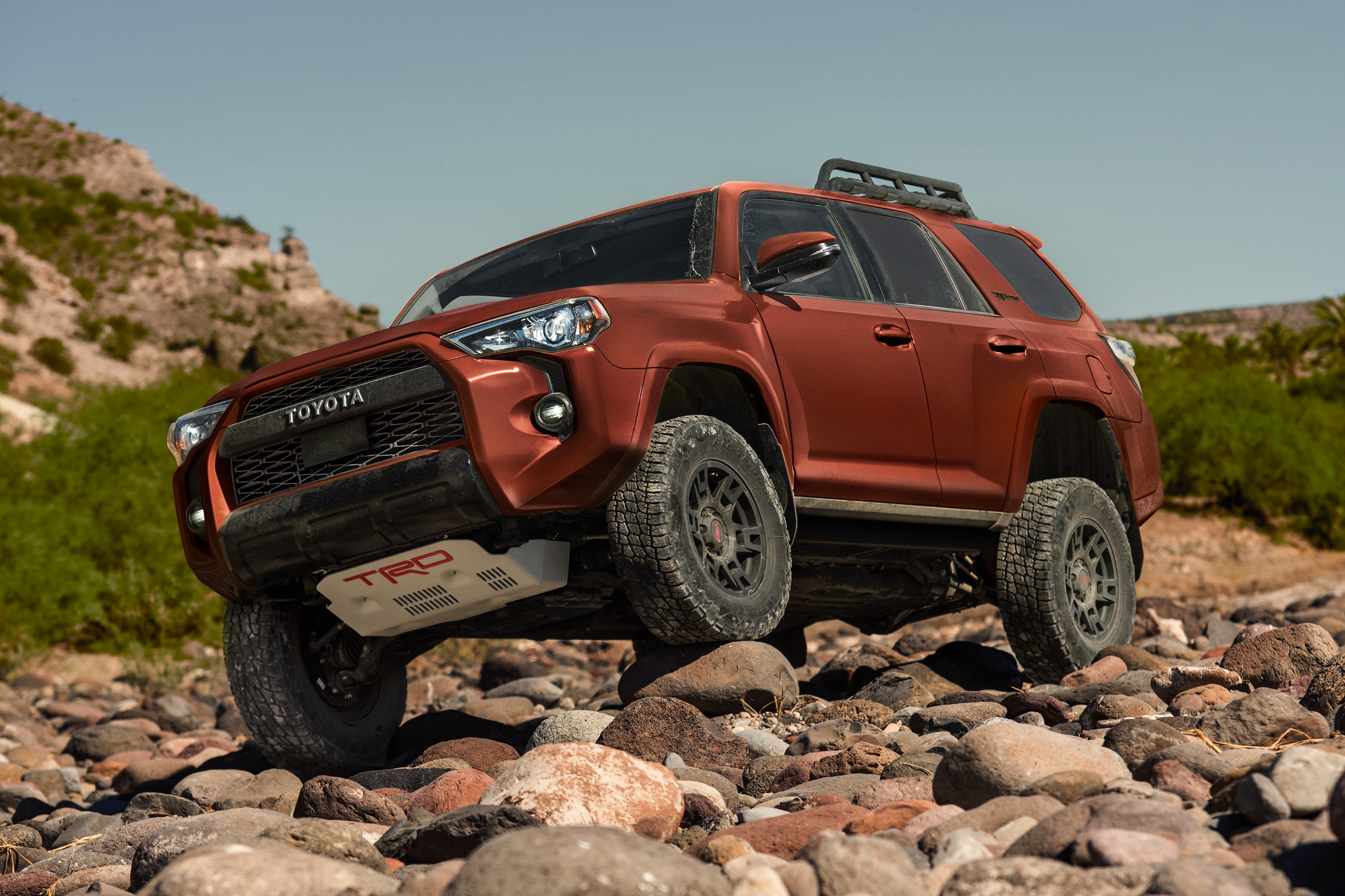
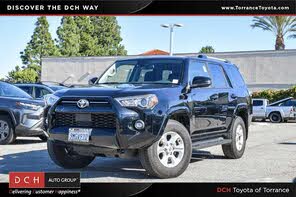
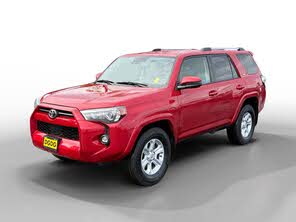
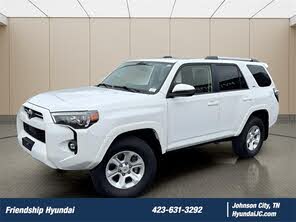
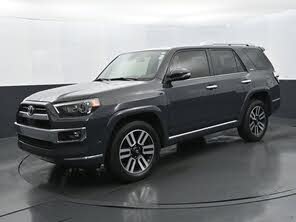
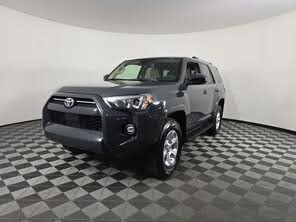
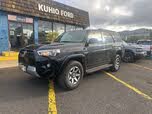
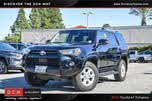
The 2024 Toyota 4Runner, in contrast, maintained its rugged and boxy exterior, a throwback to days gone by. Last redesigned in 2010, its aesthetic remained largely unchanged, giving it a classic yet somewhat outdated appearance. Despite its age, the 4Runner's flared fenders conveyed a sense of stability that was essential for off-road adventures. The chunky grille, liftgate designs, and underbody skid plates on the TRD Pro trim further emphasized its ruggedness. The tubular roof rack added a practical touch, suggesting readiness for any adventure.
Inside, the 4Runner showed its age with an analog instrument panel and an eight-inch infotainment touchscreen that paled in comparison to modern equivalents. Although it had a nostalgic appeal, the abundance of hard plastic and the simplistic design highlighted its dated nature. Nevertheless, the 4Runner ensured driver and passenger comfort with cushioned panels in frequently touched areas.
The steering wheel's limited telescopic adjustment might have posed challenges for taller drivers, but second-row passengers enjoyed ample legroom and a stadium-like seating experience. However, the headroom was somewhat restrained in the second row. On selected trims, a third row was optional, though the space was less accommodating for adult passengers.

The 2024 Toyota Sienna embraced hybrid technology across all its trims, utilizing a 2.5-liter four-cylinder engine paired with two electric motors to power the front wheels, yielding a total of 245 horsepower. AWD models featured an additional electric motor for the rear wheels. Despite the sport-tuned suspension and the presence of a Sport mode button on the XSE trim, the Sienna's overall performance was not particularly exhilarating. The minivan struggled with sluggish acceleration, especially when merging onto highways or climbing steep terrains, and its continuously variable transmission (CVT) did little to enhance its performance.
Around town, the Sienna provided a smooth yet unremarkable driving experience. Normal, Eco, and EV modes were available, with the latter being suitable for slow-speed zones such as parking lots or school drop-off lines. The brakes were slightly grabby, but the steering was light and accurate, and visibility was excellent. However, other options in the segment, like the Honda Odyssey, Kia Carnival, or Chrysler Pacifica, offered more powerful V6 engines, making them more enjoyable to drive.
Under the hood of the 2024 Toyota 4Runner lay a 4.0-liter V6 engine producing 270 horsepower and 278 lb-ft of torque. While comparable to competitors like the Ford Bronco and Jeep Wrangler, the 4Runner's five-speed automatic transmission was a notable drawback, falling short of the more responsive and efficient transmissions in those rivals. The TRD Pro model featured standard 4WD and a two-speed transfer case, but other trims typically came with RWD, with 4WD available as an option.
The 4Runner's power deficiency was less noticeable off-road, where its soft suspension tuning proved beneficial. However, on paved roads, acceleration was slow, and the rear-end squat during acceleration gave a horse-rearing sensation. The engine sounded strained under heavy load, and the TRD Pro’s loud exhaust added to the overall noise. Handling was also compromised, with significant body roll during cornering and a somewhat floaty feeling over undulating roads, especially when the vehicle was unladen.
The Sienna excelled in terms of functionality, though mastering some seating features required a bit of practice. Starting with the front, there was a convenient storage pass-through for bulkier items, along with four cupholders and additional holders in the front doors. A shelf above the glovebox served well for smaller items and housed the available wireless charging pad.
The second-row captain’s chairs in higher trims offered up to 40 inches of legroom and even featured an ottoman for ultimate relaxation. However, the slide function of these seats was somewhat complex, and the inability to remove them significantly reduced maximum cargo space. The third row was accessible and comfortable, especially with the second row pushed forward to provide a class-leading 39 inches of legroom.
The cargo capacity was a strong point, with 33.5 cubic feet behind the third row, expanding to 75 cubic feet with the third row stowed, and 101 cubic feet when the second row was folded.
The 4Runner, although rugged, showcased its age in the interior layout. The controls were straightforward to use, with large dials and sturdy handles ensuring passengers wouldn't be tossed about during off-road explorations. Outward visibility was excellent, with well-placed roof pillars enhancing the view.
Space for front passengers was generous, though the steering wheel's limited adjustment could be an issue for taller drivers. Second-row passengers enjoyed plenty of legroom but might find headroom lacking. The cargo area could hold up to 47.2 cubic feet of storage behind the rear seats, increasing to 89.7 cubic feet with the rear seats stowed. The sliding rear cargo deck, though optional, could be very useful but did consume some cargo space. The load floor became almost flat when seats were stowed, making it practical for sleeping or transporting large items. However, the lack of power-operated liftgate was a drawback, though the sliding rear window added unique convenience.
The Sienna lagged behind competitors with its older infotainment system featuring a nine-inch touchscreen and wired Apple CarPlay and Android Auto. The system included physical buttons for audio, navigation, phone, and home page functions. The backup camera's grainy resolution was a significant drawback for a 2024 model. Although the digital cluster display was useful, those who preferred more advanced tech might find it lacking.
On the upside, the Sienna came with a standard Wi-Fi hotspot, SiriusXM satellite radio, and an optional 12-speaker JBL stereo system. The rear camera mirror was available but its resolution was unproven. Additional features included numerous USB ports throughout the cabin and a 1500-watt inverter with 120-volt outlets. However, these outlets required manual activation from a button near the driver’s seat, a detail easy to overlook.
The 4Runner's technology was practical but basic. While Apple CarPlay and Android Auto were standard, the small eight-inch touchscreen was challenging to use on the road and lacked specialized off-road apps found in rivals. The TRD Pro's 15-speaker JBL audio system offered high-quality sound, but road and engine noise often overshadowed its benefits.
Above the headliner, additional terrain controls allowed adjustments for Crawl Control and Multi-Terrain Select systems, critical for off-roading. These controls, however, were marked with pictograms instead of descriptions, necessitating a thorough read of the owner’s manual to fully utilize the vehicle's capabilities.
The Toyota Safety Sense suite provided comprehensive safety features in the Sienna, including lane departure alert, automatic emergency braking, road sign recognition, adaptive cruise control, and automatic high beams. Blind-spot monitoring and rear cross-traffic alert were also standard. Adaptive cruise control operated smoothly, especially in stop-and-go traffic. Lane-keeping assist experienced some side-to-side drift but was easy to activate or deactivate from the steering wheel.
The Sienna included side curtain airbags for all three rows, with seatbelt reminders and a helpful alert to check the rear seats when exiting. The NHTSA rated the 2024 Sienna with four stars for frontal crash and rollover protection and five stars for side crash protection. The IIHS provided a “Good” rating for crashworthiness but rated the front crash prevention as “Average.”
The safety ratings for the 4Runner were mixed. The NHTSA granted it four stars for overall and frontal crash protection, five stars for side impacts, and three stars for rollover evaluations. The IIHS gave it “Good” ratings for moderate frontal overlap and side protection but noted “Marginal” and “Poor” results in the small overlap frontal test.
Standard safety gear included adaptive cruise control, forward collision warning, automatic emergency braking, lane-departure warning, and blind-spot monitoring with rear cross-traffic alert. The TRD Pro and Limited trims added a surround-view camera system, though front and rear parking sensors were exclusive to the Limited trim. Some alerts could be overly sensitive but adjustments were possible.
CarGurus highlights
According to CarGurus experts, the overall rating for the 2024 Toyota Sienna is 7.5 out of 10, while the 2024 Toyota 4Runner scores 4.5 out of 10. Based on these ratings, the Sienna emerges as the clear winner. It offers a more refined and comfortable driving experience, extensive cargo and passenger space, and better overall safety features, making it the preferred choice for most consumers, especially families. If off-road prowess and rugged durability dominate your needs, the 4Runner remains the ideal choice, but for most buyers, the Sienna provides superior value and versatility.
Choose the 2024 Toyota 4Runner if:
- Off-roading is a significant component of your driving experience.
- You appreciate a rugged, classic SUV feel with practical control layout.
- Cargo flexibility is crucial, especially with options like a sliding rear cargo deck.



Choose the 2024 Toyota Sienna if:
- You need extensive legroom and cargo space for family trips.
- Advanced safety features are a priority for you and your passengers.
- Practical interior solutions like a built-in vacuum cleaner and multiple climate zones are essential.





CarGurus highlights
According to CarGurus experts, the overall rating for the 2024 Toyota Sienna is 7.5 out of 10, while the 2024 Toyota 4Runner scores 4.5 out of 10. Based on these ratings, the Sienna emerges as the clear winner. It offers a more refined and comfortable driving experience, extensive cargo and passenger space, and better overall safety features, making it the preferred choice for most consumers, especially families. If off-road prowess and rugged durability dominate your needs, the 4Runner remains the ideal choice, but for most buyers, the Sienna provides superior value and versatility.
Choose the 2024 Toyota 4Runner if:
Shop Now- Off-roading is a significant component of your driving experience.
- You appreciate a rugged, classic SUV feel with practical control layout.
- Cargo flexibility is crucial, especially with options like a sliding rear cargo deck.

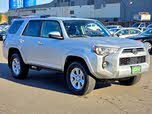
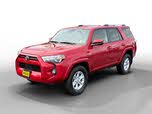

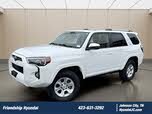

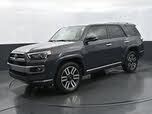

Choose the 2024 Toyota Sienna if:
Shop Now- You need extensive legroom and cargo space for family trips.
- Advanced safety features are a priority for you and your passengers.
- Practical interior solutions like a built-in vacuum cleaner and multiple climate zones are essential.



By: CarGurus + AI
At CarGurus, our team of experienced automotive writers remain at the heart of our content operation, conducting hands-on car tests and writing insightful guides that are backed by years of industry experience. To complement this, we are harnessing AI to make our content offering more diverse and more helpful to shoppers than ever. To achieve this, our AI systems are based exclusively on CarGurus content, ratings and data, so that what we produce is both unique to CarGurus, and uniquely helpful to car shoppers.