2024 Hyundai Kona vs 2024 Nissan Rogue

Overview | |
MSRP$24,250 | MSRP$28,850 |
Listings1102 | Listings3311 |
Ratings & Reviews | |
User Reviews | User Reviews |
Expert reviews8.3 out of 10 | Expert reviews7.3 out of 10 |
Pros
Cons
| Pros
Cons
|
2024 Hyundai Kona Reviews SummaryThe previous-generation Hyundai Kona debuted for 2018 and got an electric counterpart when the Kona EV hit the market the following year. Hyundai's subcompact SUV got a refresh for 2022, which also saw the addition of the hot-hatch Kona N to the stable. Now, the Kona kicks off a whole new generation, with a new look, new tech, and, naturally, a new price tag to match. In a crowded segment, do the new features match—or perhaps even exceed—the added cost? | |
2024 Nissan Rogue Reviews SummaryThe Rogue is Nissan’s entry into a crowded compact crossover SUV segment that includes well-known models like the Ford Escape, Honda CR-V, Subaru Forester, and Toyota RAV4, to name a few. The 2024 Nissan Rogue debuts refreshed styling and gets a tech overhaul highlighted by Google built-in apps, marking their first appearance in a Nissan. Verdict: New tech features may be the headline, but an impressive powertrain and interior are what really make the 2024 Nissan Rogue stand out. | |
Popular Features & Specs | |
Engine2.0L 147 hp I4 | Engine1.5L 201 hp I3 |
Drive TrainFWD | Drive TrainFWD |
Seating Capacity5 | Seating Capacity5 |
Horsepower147 hp @ 6200 rpm | Horsepower201 hp @ 5600 rpm |
MPG City29 | MPG City30 |
MPG Highway34 | MPG Highway37 |
Engine | |
Engine Name2.0L 147 hp I4 | Engine Name1.5L 201 hp I3 |
Torque132 lb-ft @ 4500 rpm | Torque225 lb-ft @ 4000 rpm |
Horsepower147 hp @ 6200 rpm | Horsepower201 hp @ 5600 rpm |
DrivetrainFWD | DrivetrainFWD |
Fuel Economy | |
MPG City29 | MPG City30 |
MPG Highway34 | MPG Highway37 |
Interior | |
Seating Capacity5 | Seating Capacity5 |
Key Features | |
Navigation SystemStandard | Navigation System |
Safety | |
Front Crash Overall4 | Front Crash Overall4 |
Side Crash Overall5 | Side Crash Overall5 |
Dimensions & Capacity | |
Cargo Space25.5 cu ft | Cargo Space31.6 cu ft |
Curb Weight3005 lbs | Curb Weight3452 lbs |
Height62.2 in | Height66.5 in |
Length171.3 in | Length183.0 in |
Width71.9 in | Width72.4 in |
Wheelbase104.7 in | Wheelbase106.5 in |
Maximum Payload1085 lbs | Maximum Payload1112 lbs |
Number of doors4 | Number of doors4 |
Maximum Towing Capacity | Maximum Towing Capacity1500 lbs |
Overview | ||
MSRP | $24,250 | $28,850 |
Listings | ||
Ratings & Reviews | ||
User reviews | ||
Expert reviews | 8.3 out of 10Read full review | 7.3 out of 10Read full review |
Pros & cons | Pros
Cons
| Pros
Cons
|
Summary | The previous-generation Hyundai Kona debuted for 2018 and got an electric counterpart when the Kona EV hit the market the following year. Hyundai's subcompact SUV got a refresh for 2022, which also saw the addition of the hot-hatch Kona N to the stable. Now, the Kona kicks off a whole new generation, with a new look, new tech, and, naturally, a new price tag to match. In a crowded segment, do the new features match—or perhaps even exceed—the added cost? | The Rogue is Nissan’s entry into a crowded compact crossover SUV segment that includes well-known models like the Ford Escape, Honda CR-V, Subaru Forester, and Toyota RAV4, to name a few. The 2024 Nissan Rogue debuts refreshed styling and gets a tech overhaul highlighted by Google built-in apps, marking their first appearance in a Nissan. Verdict: New tech features may be the headline, but an impressive powertrain and interior are what really make the 2024 Nissan Rogue stand out. |
Video | ||
Popular Features & Specs | ||
Engine | 2.0L 147 hp I4 | 1.5L 201 hp I3 |
Drive Train | FWD | FWD |
Seating Capacity | 5 | 5 |
Horsepower | 147 hp @ 6200 rpm | 201 hp @ 5600 rpm |
MPG City | 29 | 30 |
MPG Highway | 34 | 37 |
Engine | ||
Engine Name | 2.0L 147 hp I4 | 1.5L 201 hp I3 |
Torque | 132 lb-ft @ 4500 rpm | 225 lb-ft @ 4000 rpm |
Horsepower | 147 hp @ 6200 rpm | 201 hp @ 5600 rpm |
Drivetrain | FWD | FWD |
Fuel Economy | ||
MPG City | 29 | 30 |
MPG Highway | 34 | 37 |
Interior | ||
Seating Capacity | 5 | 5 |
Key Features | ||
Navigation System | Standard | |
Safety | ||
Front Crash Overall | 4 | 4 |
Side Crash Overall | 5 | 5 |
Dimensions & Capacity | ||
Cargo Space | 25.5 cu ft | 31.6 cu ft |
Curb Weight | 3005 lbs | 3452 lbs |
Height | 62.2 in | 66.5 in |
Length | 171.3 in | 183.0 in |
Width | 71.9 in | 72.4 in |
Wheelbase | 104.7 in | 106.5 in |
Maximum Payload | 1085 lbs | 1112 lbs |
Number of doors | 4 | 4 |
Maximum Towing Capacity | 1500 lbs | |
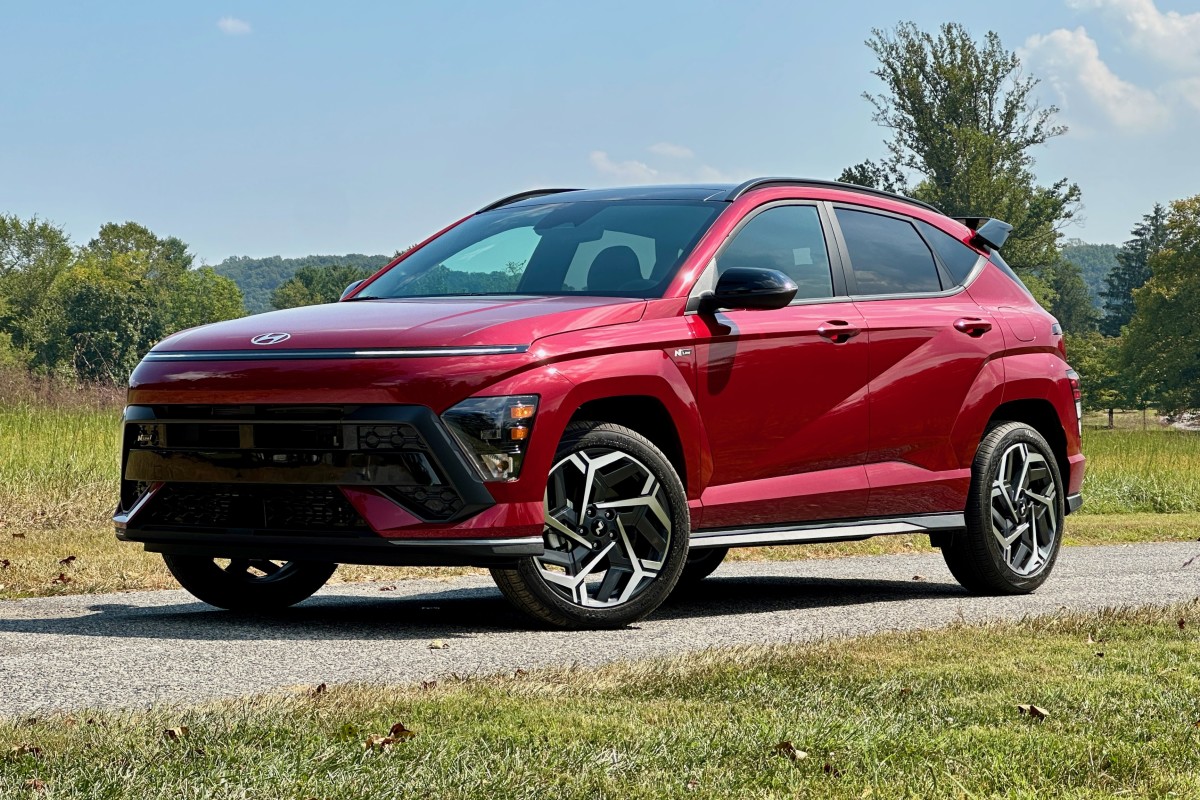
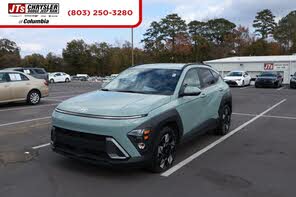
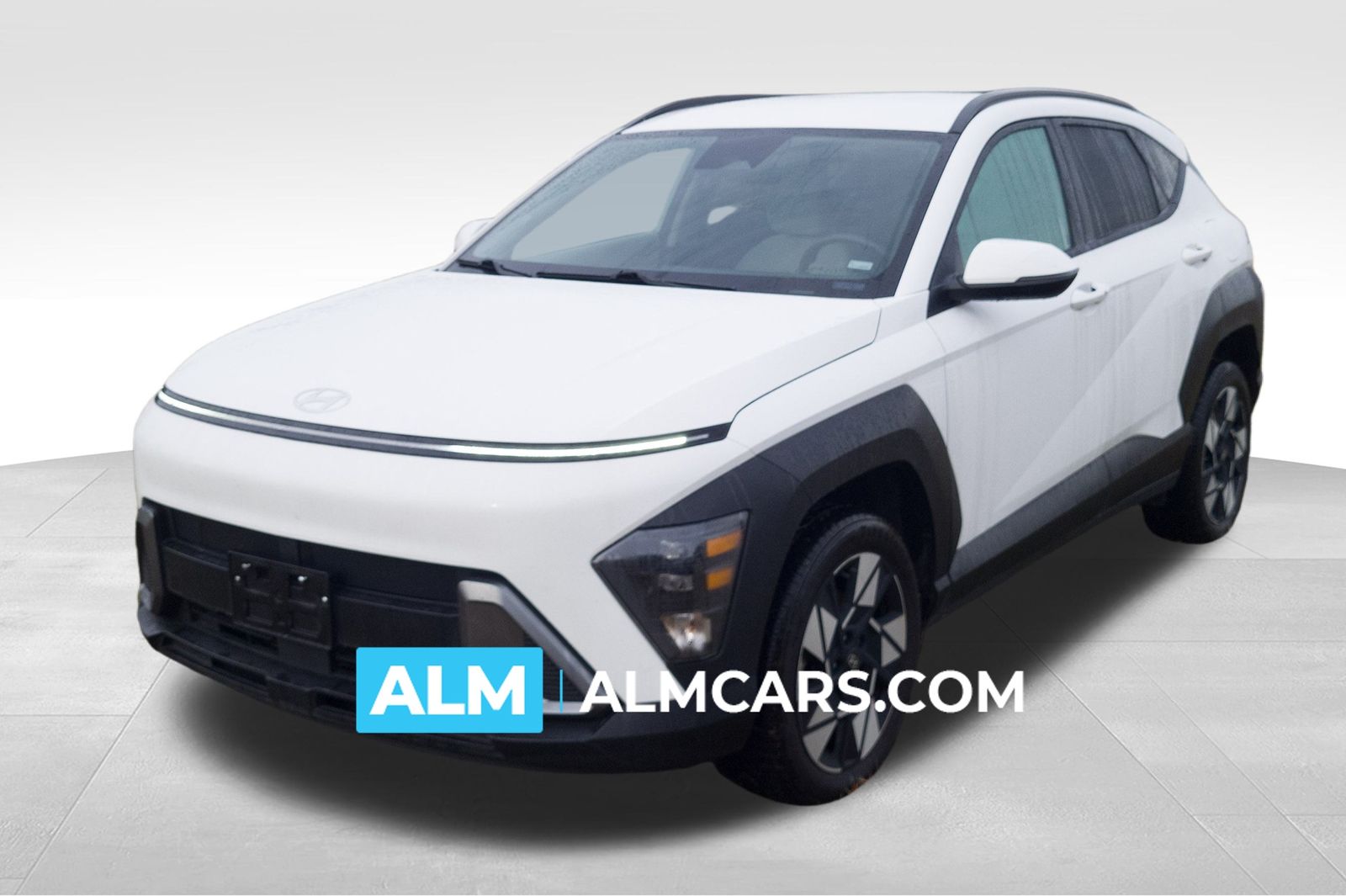
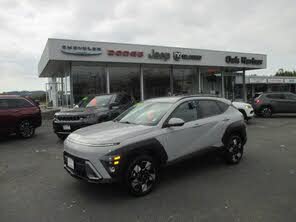
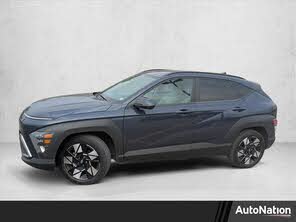
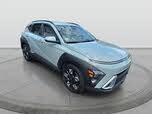
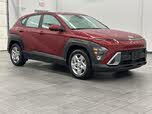
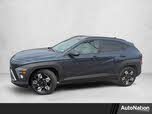
The 2024 Hyundai Kona was an evocative redesign that focused on modern aesthetics and increased functionality. Hyundai’s intention to prioritize an electric vehicle (EV) presence first was evident in its grille, which closely resembled that of the Ioniq 5, highlighting the EV lineage with a single-piece facade that had become synonymous with electric powertrains. The “seamless horizon” styling seen in models like the new Sonata was incorporated, with a distinct skinny LED headlight strip dominating the front end, giving the Kona a futuristic look.
Hyundai managed to expand the Kona’s size by nearly six inches over its predecessor without losing the recognizable silhouette. More significant visual changes were found in the details, such as the introduction of the creased “parametric surface” on the doors. The base SE, SEL, and top Limited trims featured more substantial and angular black body cladding, whereas the sporty N-Line trim came with body-colored wheel arches. Standard features like LED headlights, taillights, and daytime running lights enriched the Kona’s appearance, emphasized by a singular horizontal taillight at the rear that wrapped around the vehicle's sides. Wheel options varied across trims, starting with 17-inch wheels for the base model, 18-inch for the SEL, and 19-inch for the N-Line and Limited trims.
Inside, Hyundai revamped the Kona’s cabin extensively. The interior boasted a driver-oriented center stack, with the gear shift relocated to a steering-column stalk, freeing up space between the driver and passenger. A new curved display housed both driver information and infotainment screens, and significant refinement touched the vents, climate controls, and dashboard layouts, achieving a sophisticated and luxurious vibe.
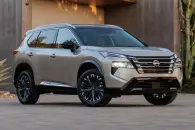
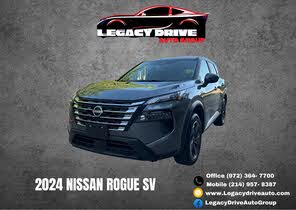
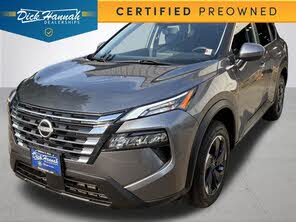
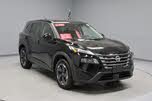
The 2024 Nissan Rogue, meanwhile, underwent its first major styling overhaul since 2021. The Rogue continually emphasized its distinguishing stack headlights and daytime running lights but introduced a larger grille for a more commanding appearance. Changes at the rear included redesigned inner taillight elements and satin-finish exterior badging. The SV trim presented a new 18-inch wheel design, the base S remained with 17 inches, and the Platinum featured new 19-inch machined-finish wheels and additional black exterior trim, alongside an optional black roof for a striking contrast.
Nissan also updated the Rogue’s dashboard to make space for a new 12.3-inch infotainment touchscreen. These enhancements created a more premium feel, complemented by new trims and materials across the interior for the SV. The upscale interior design of the Platinum trim featured the likes of quilted stitching and new Chestnut brown leather seats, providing robust comfort in a setting fit for a high-end SUV experience without the tacky feel of lower-quality materials.



The 2024 Hyundai Kona retained its previous lineup of engines, starting with a naturally aspirated 2.0-liter four-cylinder in the SE and SEL trims, producing 147 horsepower and 132 lb-ft of torque, paired with a continuously variable transmission (CVT). The N-Line and Limited trims housed a more robust turbocharged 1.6-liter four-cylinder engine, generating 190 horsepower and 195 lb-ft of torque. Notably, the old seven-speed dual-clutch transmission was replaced with a new eight-speed automatic transmission. The Kona N-Line and Limited trims featured paddle shifters, enhancing the driving experience, which were also available in the SEL trim with the Convenience Package.
Despite some minor complaints about the turbo engine’s slow pickup, the Kona impressed with intuitive steering and nimble handling, especially in city environments. Front-wheel drive (FWD) came standard across the lineup, with an optional all-wheel drive (AWD) available for an additional $1,500. EPA fuel economy estimates for FWD models stood at 26 city, 32 highway, and 28 mpg combined, while AWD models slightly decreased to 24 city, 29 highway, and 26 mpg combined.
Conversely, the 2024 Nissan Rogue came equipped with a unique 1.5-liter turbocharged three-cylinder engine featuring Nissan’s innovative VC-Turbo technology, which allowed variability in compression ratios to balance power and fuel economy. The engine produced an impressive 201 horsepower and 225 lb-ft of torque, outperforming many rivals with larger engines. However, paired with a CVT, the powertrain failed to deliver optimal performance, often feeling sluggish and slow in transferring power to the wheels.
Rogue provided standard FWD with an option for AWD. Despite its remarkable engine output, the Rogue failed to excel as a driver’s car. The Platinum trim’s suspension was firmer than competitors, compromising ride quality without enhancing handling. However, the Rogue did ensure a quiet cabin experience and the engine, although powerful, produced a rather droning exhaust note.
The 2024 Hyundai Kona leveraged its extended body dimensions to offer improved interior spacing, benefiting rear-seat passengers who enjoyed 38.2 inches of legroom, which was a significant three-inch increase over the previous model. Hyundai’s focus on comfort was evident in the narrower, molded front seats that vastly improved rear passenger comfort. Cargo capacity saw an impactful enhancement, jumping from 19.2 to 25.5 cubic feet with the seats up and reaching 63.7 cubic feet when folded down, a notable increase that offered substantial storage capacity. The Limited trim featured a power hands-free liftgate for convenient access.
Storage options within the Kona’s cabin were thoughtfully executed, including a passenger-side shelf and a guardrail on the wireless charging pad to secure items. Although the center console space was limited, it offered enough room for essentials. Trim-specific interior materials included cloth seats in the SE and SEL trims, a leather/suede combo for the N-Line, and Hyundai's H-Tex leatherette for the Limited. Ventilated front seats and a heated steering wheel became standard for the Limited trim, showcasing Hyundai’s commitment to comfort and luxury.
The 2024 Nissan Rogue offered competitive passenger space across both rows, comparable to its primary rivals. However, the SUV excelled in legroom, providing ample front-row comfort. The cargo area, with a maximum of 36.5 cubic feet with the rear seats up and 74.1 cubic feet with folded seats, positioned the Rogue at an advantage over the Subaru Forester but fell short compared to the Honda CR-V and Hyundai Tucson.
With innovative features like the optional Divide-N-Hide system, Rogue owners could customize the cargo floor for additional hidden storage or increased cargo area height. The molded space in the cargo area catered to practicality for day-to-day needs, and SV and higher trims offered a power liftgate with motion activation available in the SL and Platinum. Up front, a pass-through center console added versatility, though the storage tray proved slightly challenging to access.
For 2024, the Hyundai Kona enhanced its tech offerings substantially. Standard was a 12.3-inch infotainment touchscreen across all trims, a significant upgrade from the base 8-inch and previously upper-trim 10.25-inch screens. Initially, wireless Apple CarPlay and Android Auto were limited to lower trims, but Hyundai promised an OTA update to extend this functionality to higher trims soon. Wireless device charging and a new Wi-Fi hotspot boosted connectivity, and Kona’s sound system now featured a Bose upgrade. Additionally, dual 12.3-inch screens provided a nuanced panoramic view in N-Line and Limited trims, along with Hyundai’s Bluelink connected services now included for the vehicle’s lifetime.
Nissan’s approach for the 2024 Rogue involved equipping lower trims with an 8-inch touchscreen and wired Apple CarPlay and Android Auto. Higher trims such as the SL and Platinum received larger, 12.3-inch touchscreens and dual 12.3-inch digital instrument clusters. Nissan broke new ground with the integration of Google built-in apps, providing enhanced functionality directly through the car’s system. With a five-year connectivity period for Google services, Rogue drivers enjoyed streamlined integration of Google Maps, Google Assistant, and the Google Play app store. The connectivity included multiple USB-C ports and wireless charging for SL and Platinum trims. Nissan Connect Services extended its free trial from six months to three years, adding value with features like remote lock/unlock, engine start/stop, vehicle health reports, and emergency calling.
Hyundai continued to prioritize advanced driver-assistance safety features in the 2024 Kona. Starting from 2023, the model included standard Safe Exit Warning, blind-spot collision avoidance, and rear cross-traffic collision avoidance. For 2024, Hyundai upgraded the Kona with standard high-beam assist, and adaptive cruise control on N-Line and Limited trims, with a Surround View Monitor and blind-spot view monitor exclusive to the Limited trim. Even the sophisticated Level 2 semi-autonomous driving features found in Hyundai’s Highway Driving Assist impressed with intuitive lane-keep assist and effective steering around highway curves.
The 2024 Nissan Rogue demonstrated solid safety credentials with good ratings from the IIHS in several crash tests and an overall five-star safety rating from the NHTSA. Standard on all trims were features like automatic emergency braking, blind-spot monitoring, rear cross traffic alert, lane departure warning, automatic high beams, and rear automatic emergency braking. Higher trims added adaptive cruise control and ProPilot Assist, providing lane-centering capabilities. Although Nissan's ProPilot Assist wasn’t as advanced as some competitors' systems, it nevertheless added a valuable layer of semi-autonomous driving assistance.
CarGurus highlights
According to CarGurus experts, the overall rating for the 2024 Hyundai Kona was 8.3 out of 10, while the 2024 Nissan Rogue scored 7.3 out of 10. Given these ratings, our final recommendation leans towards the 2024 Hyundai Kona. Its blend of advanced technologies, superior cargo space, and advanced safety features across trims makes it a standout choice in its segment.
Choose the 2024 Hyundai Kona if:
- You prioritize a modern, futuristic look with advanced lighting and design features.
- You want superior cargo space with almost 20 cubic feet more than its predecessor.
- You place high value on technology options, such as OTA updates for wireless connectivity and advanced safety tech standardized across trims.


Choose the 2024 Nissan Rogue if:
- You seek the performance of an innovative VC-Turbo engine with competitive power and torque outputs.
- You need versatile cargo management systems like Divide-N-Hide for maximizing storage space.
- You value built-in connectivity with Google Maps, Assistant, and Play Store, and extended complimentary access to connected services.




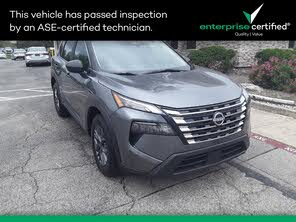


CarGurus highlights
According to CarGurus experts, the overall rating for the 2024 Hyundai Kona was 8.3 out of 10, while the 2024 Nissan Rogue scored 7.3 out of 10. Given these ratings, our final recommendation leans towards the 2024 Hyundai Kona. Its blend of advanced technologies, superior cargo space, and advanced safety features across trims makes it a standout choice in its segment.
Choose the 2024 Hyundai Kona if:
Shop Now- You prioritize a modern, futuristic look with advanced lighting and design features.
- You want superior cargo space with almost 20 cubic feet more than its predecessor.
- You place high value on technology options, such as OTA updates for wireless connectivity and advanced safety tech standardized across trims.
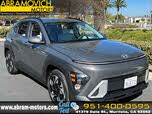
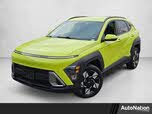
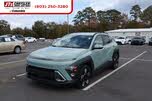


Choose the 2024 Nissan Rogue if:
Shop Now- You seek the performance of an innovative VC-Turbo engine with competitive power and torque outputs.
- You need versatile cargo management systems like Divide-N-Hide for maximizing storage space.
- You value built-in connectivity with Google Maps, Assistant, and Play Store, and extended complimentary access to connected services.










By: CarGurus + AI
At CarGurus, our team of experienced automotive writers remain at the heart of our content operation, conducting hands-on car tests and writing insightful guides that are backed by years of industry experience. To complement this, we are harnessing AI to make our content offering more diverse and more helpful to shoppers than ever. To achieve this, our AI systems are based exclusively on CarGurus content, ratings and data, so that what we produce is both unique to CarGurus, and uniquely helpful to car shoppers.