2023 Volkswagen ID.4 vs 2024 Hyundai Kona
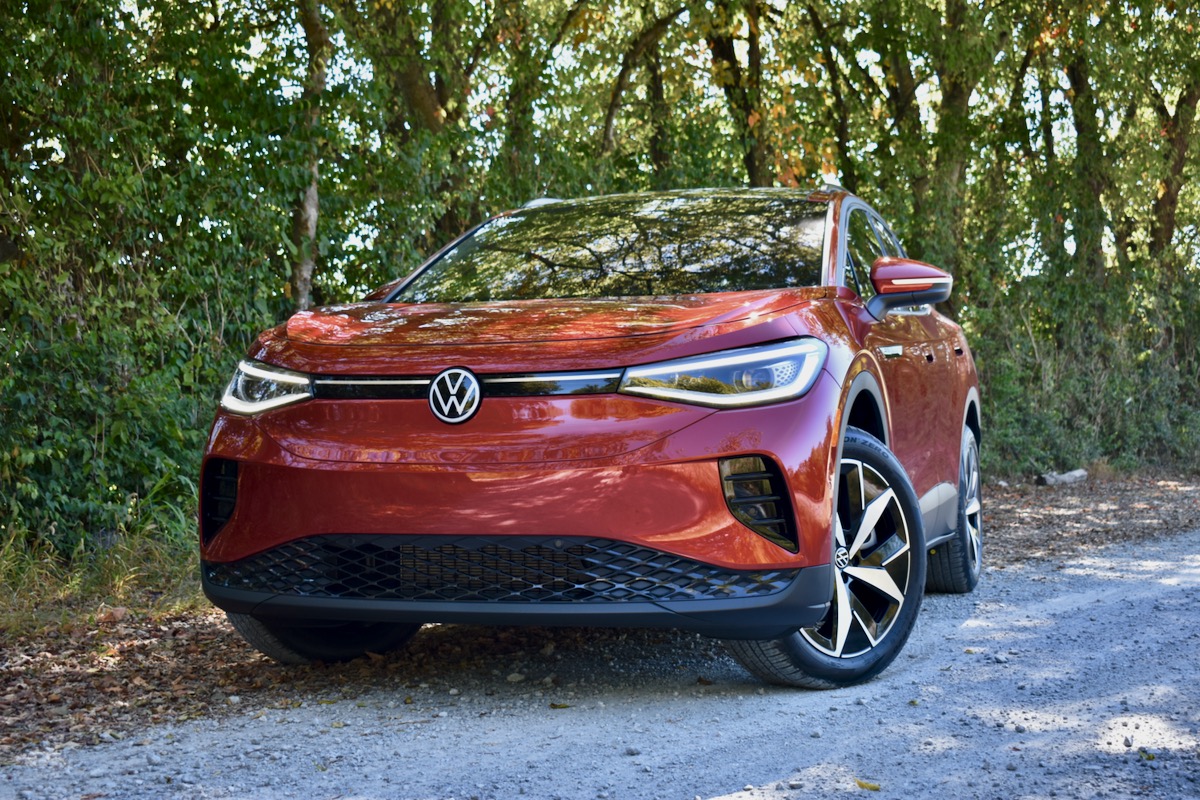
Overview | |
MSRP$38,995 | MSRP$24,250 |
Listings659 | Listings1102 |
Ratings & Reviews | |
User Reviews | User Reviews |
Expert reviews7.8 out of 10 | Expert reviews8.3 out of 10 |
Pros
Cons
| Pros
Cons
|
2023 Volkswagen ID.4 Reviews SummaryThe Volkswagen ID.4 is still relatively new to the marketplace (it debuted for the 2021 model year) but VW is already making some important updates to keep it competitive and fulfill goals set when this compact electric SUV first launched. The 2023 Volkswagen ID.4 adds a new base model and a smaller 62-kilowatt-hour battery pack alongside the carryover 82-kWh to increase affordability. VW will also begin sourcing cars for its United States dealerships from the same Chattanooga, Tennessee, factory that builds the gasoline-powered Atlas and Atlas Cross Sport. The automaker has been discussing this since the ID.4 was unveiled, but at first cars for the U.S. came from Zwickau, Germany. The 2023 ID.4 retains single-motor rear-wheel drive (RWD) and dual-motor all-wheel drive (AWD) powertrain options, but gets revised exterior and interior styling, some software changes, and a few more standard tech features and driver aids. The new-for-2023 base model is dubbed ID.4 Standard, slotting below the ID.4 S, ID.4 Pro, ID.4 Pro S, and ID.4 Pro S Plus trim levels (the Pro S Plus replaces the Gradient appearance package from previous model years). We recently spent a day driving a Pro S AWD model from Nashville to Chattanooga, along with a shorter drive in an ID.4 Standard model. | |
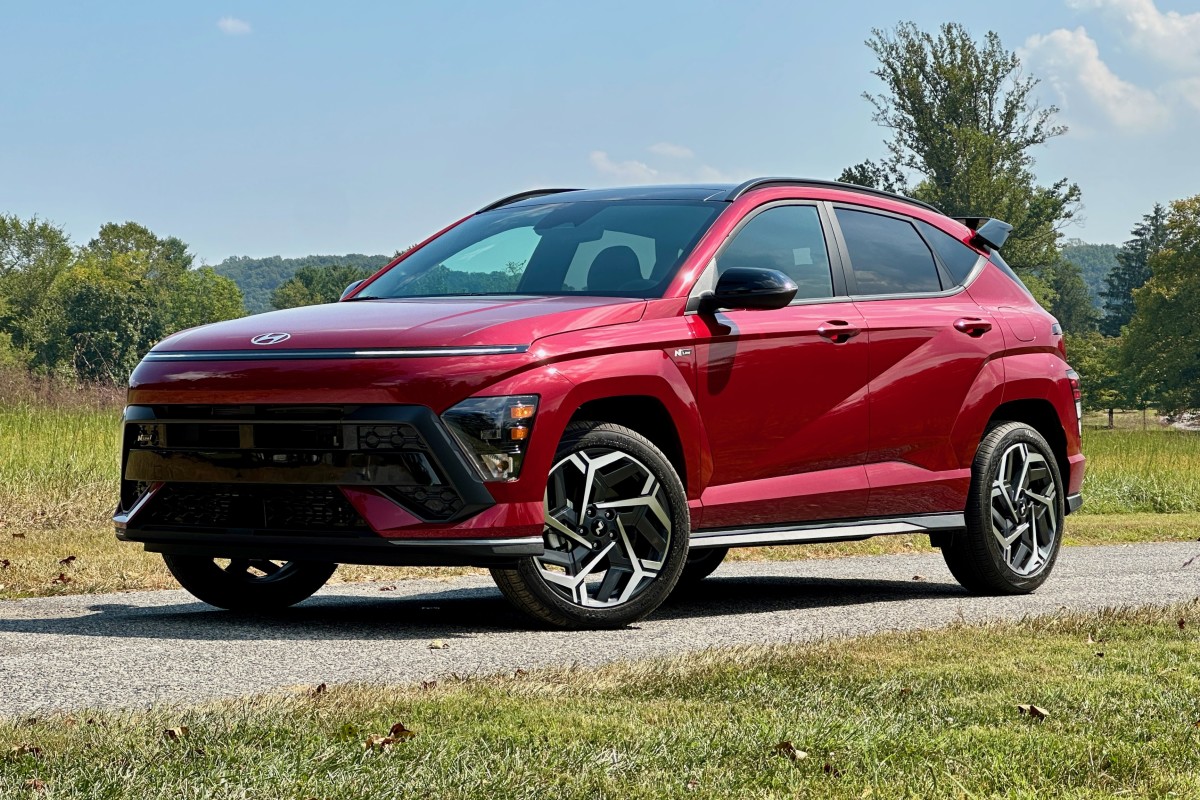
2024 Hyundai Kona Reviews SummaryThe previous-generation Hyundai Kona debuted for 2018 and got an electric counterpart when the Kona EV hit the market the following year. Hyundai's subcompact SUV got a refresh for 2022, which also saw the addition of the hot-hatch Kona N to the stable. Now, the Kona kicks off a whole new generation, with a new look, new tech, and, naturally, a new price tag to match. In a crowded segment, do the new features match—or perhaps even exceed—the added cost? | |
No video found | |
Popular Features & Specs | |
Engine201 hp Electric | Engine2.0L 147 hp I4 |
Drive TrainRWD | Drive TrainFWD |
Seating Capacity5 | Seating Capacity5 |
Horsepower | Horsepower147 hp @ 6200 rpm |
EV Battery Capacity62 kWh | EV Battery Capacity |
MPG City115 | MPG City29 |
MPG Highway99 | MPG Highway34 |
Engine | |
Engine Name201 hp Electric | Engine Name2.0L 147 hp I4 |
Torque | Torque132 lb-ft @ 4500 rpm |
Horsepower | Horsepower147 hp @ 6200 rpm |
DrivetrainRWD | DrivetrainFWD |
Fuel Economy | |
EV Battery Capacity62 kWh | EV Battery Capacity |
MPG City115 | MPG City29 |
MPG Highway99 | MPG Highway34 |
Interior | |
Seating Capacity5 | Seating Capacity5 |
Key Features | |
Navigation SystemStandard | Navigation SystemStandard |
Safety | |
Front Crash Overall5 | Front Crash Overall4 |
Side Crash Overall5 | Side Crash Overall5 |
Dimensions & Capacity | |
Cargo Space30.3 cu ft | Cargo Space25.5 cu ft |
Curb Weight4317 lbs | Curb Weight3005 lbs |
Height64.5 in | Height62.2 in |
Length180.5 in | Length171.3 in |
Width83.0 in | Width71.9 in |
Wheelbase108.9 in | Wheelbase104.7 in |
Maximum Payload959 lbs | Maximum Payload1085 lbs |
Number of doors4 | Number of doors4 |
Overview | ||
MSRP | $38,995 | $24,250 |
Listings | ||
Ratings & Reviews | ||
User reviews | ||
Expert reviews | 7.8 out of 10Read full review | 8.3 out of 10Read full review |
Pros & cons | Pros
Cons
| Pros
Cons
|
Summary | The Volkswagen ID.4 is still relatively new to the marketplace (it debuted for the 2021 model year) but VW is already making some important updates to keep it competitive and fulfill goals set when this compact electric SUV first launched. The 2023 Volkswagen ID.4 adds a new base model and a smaller 62-kilowatt-hour battery pack alongside the carryover 82-kWh to increase affordability. VW will also begin sourcing cars for its United States dealerships from the same Chattanooga, Tennessee, factory that builds the gasoline-powered Atlas and Atlas Cross Sport. The automaker has been discussing this since the ID.4 was unveiled, but at first cars for the U.S. came from Zwickau, Germany. The 2023 ID.4 retains single-motor rear-wheel drive (RWD) and dual-motor all-wheel drive (AWD) powertrain options, but gets revised exterior and interior styling, some software changes, and a few more standard tech features and driver aids. The new-for-2023 base model is dubbed ID.4 Standard, slotting below the ID.4 S, ID.4 Pro, ID.4 Pro S, and ID.4 Pro S Plus trim levels (the Pro S Plus replaces the Gradient appearance package from previous model years). We recently spent a day driving a Pro S AWD model from Nashville to Chattanooga, along with a shorter drive in an ID.4 Standard model. | The previous-generation Hyundai Kona debuted for 2018 and got an electric counterpart when the Kona EV hit the market the following year. Hyundai's subcompact SUV got a refresh for 2022, which also saw the addition of the hot-hatch Kona N to the stable. Now, the Kona kicks off a whole new generation, with a new look, new tech, and, naturally, a new price tag to match. In a crowded segment, do the new features match—or perhaps even exceed—the added cost? |
Video | No video found | |
Popular Features & Specs | ||
Engine | 201 hp Electric | 2.0L 147 hp I4 |
Drive Train | RWD | FWD |
Seating Capacity | 5 | 5 |
Horsepower | 147 hp @ 6200 rpm | |
EV Battery Capacity | 62 kWh | |
MPG City | 115 | 29 |
MPG Highway | 99 | 34 |
Engine | ||
Engine Name | 201 hp Electric | 2.0L 147 hp I4 |
Torque | 132 lb-ft @ 4500 rpm | |
Horsepower | 147 hp @ 6200 rpm | |
Drivetrain | RWD | FWD |
Fuel Economy | ||
EV Battery Capacity | 62 kWh | |
MPG City | 115 | 29 |
MPG Highway | 99 | 34 |
Interior | ||
Seating Capacity | 5 | 5 |
Key Features | ||
Navigation System | Standard | Standard |
Safety | ||
Front Crash Overall | 5 | 4 |
Side Crash Overall | 5 | 5 |
Dimensions & Capacity | ||
Cargo Space | 30.3 cu ft | 25.5 cu ft |
Curb Weight | 4317 lbs | 3005 lbs |
Height | 64.5 in | 62.2 in |
Length | 180.5 in | 171.3 in |
Width | 83.0 in | 71.9 in |
Wheelbase | 108.9 in | 104.7 in |
Maximum Payload | 959 lbs | 1085 lbs |
Number of doors | 4 | 4 |
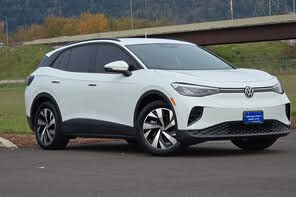
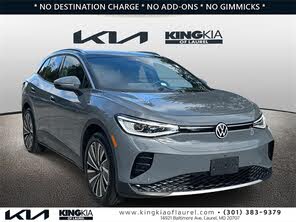
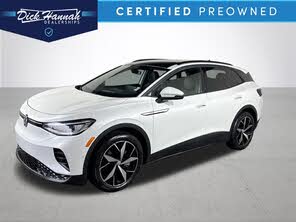
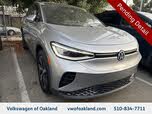
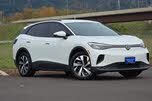
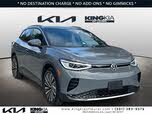
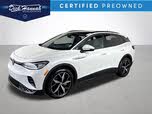
Volkswagen made some subtle yet noteworthy styling adjustments for the 2023 ID.4. The front bumper featured new gloss black trim, and the rear bumper had a more squared-off design aimed at improving aerodynamics, according to Volkswagen. New wheel designs and colors were introduced, and the rear VW logo now illuminated, adding a touch of modernity.
The ID.4's design clearly set it apart from VW's gasoline models, but it didn't embody the traditional SUV look, missing the upright profile and increased ground clearance typical of the segment. This design choice might have been a drawback given the popularity of these features among new car buyers. However, this was not exclusive to VW; electric vehicles like the Chevrolet Bolt EUV also blurred the lines between hatchback and SUV.
The ID.4 leveraged VW’s MEB platform, crafted specifically for EVs, offering modularity to support various models. This platform was envisioned as the EV counterpart to the MQB platform used by a range of VW's gasoline vehicles. The interior of the ID.4 carried forward the minimalist, quality-focused design from VW’s other vehicles. Even the base model, ID.4 Standard, offered decent interior quality with leatherette upholstery featuring recycled fibers, although a manual driver’s seat was a minor setback.
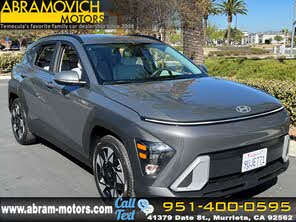
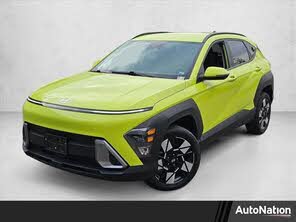
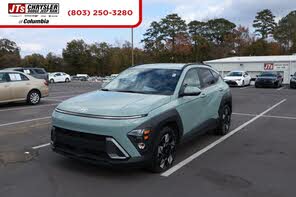
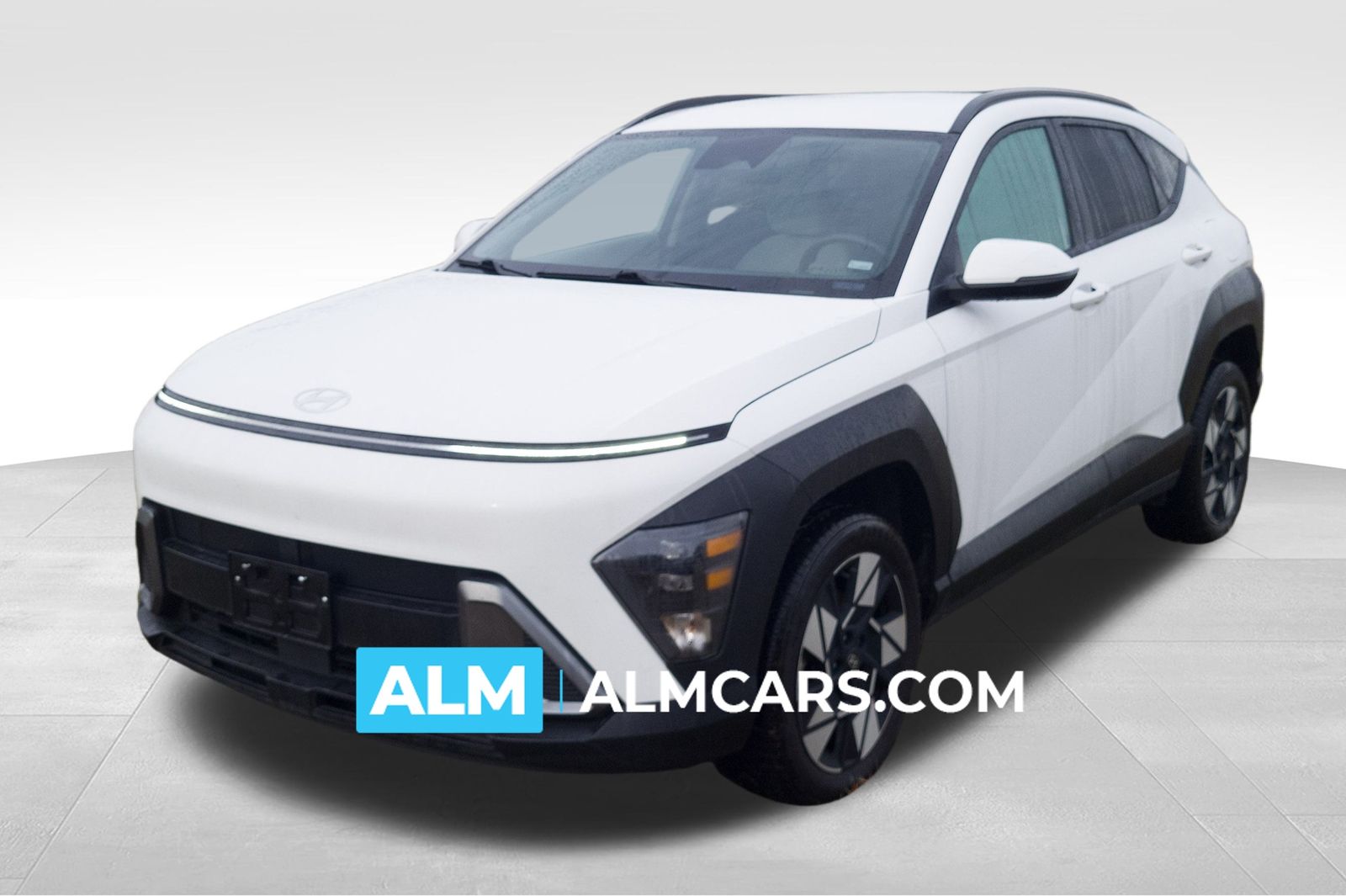
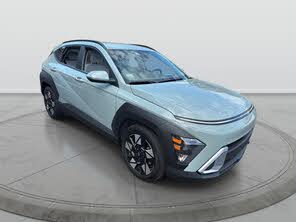
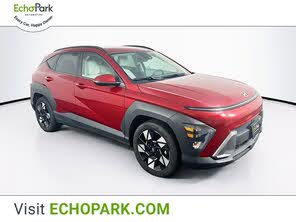
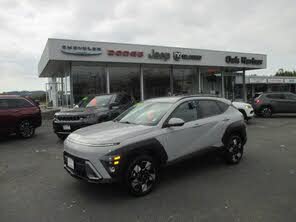
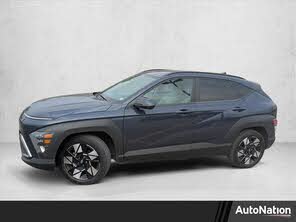
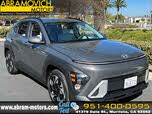
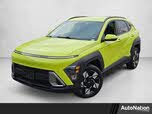
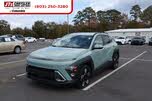
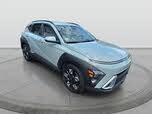
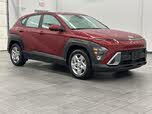
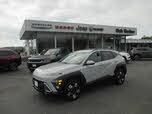
In contrast, Hyundai crafted the new Kona as an EV-first design, visibly influenced by the Ioniq 5. The front grille sported a seamless horizon styling, with a prominent LED headlight stretching across the front. Despite being nearly six inches longer than its predecessor, the 2024 Kona maintained a recognizable silhouette. Visual changes included new creased “parametric surface” doors and substantial, angular body cladding on various trims. LED lighting was standard, and different trims offered varying wheel sizes, ranging from 17 to 19 inches.
Inside, the Kona showcased a driver-oriented center stack with a gear shift on the steering column, freeing up storage space. The interior update prominently featured a curved display for both driver information and infotainment. Hyundai refined the vents, climate controls, and dash, ensuring a modern and user-friendly cabin experience.


The 2023 Volkswagen ID.4 introduced a new 62-kWh battery pack available for the base Standard and S models with RWD. The Pro, Pro S, and Pro S Plus continued with the larger 82-kWh battery, offering both RWD and AWD options. Single-motor RWD models delivered 201 horsepower and 229 pound-feet of torque, while the dual-motor AWD models offered 295 horsepower and 339 pound-feet of torque, achieving a 0 to 60 mph time of 5.7 seconds.
VW claimed that the smaller battery pack reduced the curb weight by 240 pounds, potentially enhancing acceleration and handling. During a brief drive, the 62-kWh ID.4 Standard demonstrated sprightliness, although a longer test was necessary for a detailed comparison. The AWD version provided impressive acceleration but lacked the handling finesse of hot hatchbacks like the Golf GTI and Golf R, suffering from noticeable body roll on twisty roads. VW’s approach to regenerative braking focused on coasting rather than the more aggressive one-pedal driving, potentially less appealing to some EV enthusiasts.
In comparison, the 2024 Hyundai Kona retained its previous engine lineup, offering a 2.0-liter four-cylinder engine for SE and SEL trims, and a turbocharged 1.6-liter engine for N-Line and Limited trims. The base engine achieved 147 horsepower and 132 pound-feet of torque, paired with a continuously variable transmission (CVT). The turbo engine produced 190 horsepower and 195 pound-feet of torque, now coupled with an eight-speed automatic transmission instead of the former seven-speed DCT. Paddle shifters were available for N-Line and Limited trims, and the SEL Convenience Package.
Test drives of the Kona Limited and N-Line revealed a slightly sluggish pickup even with the turbo engine, but the steering and handling proved intuitive and agile, especially on narrow city streets. Front-wheel drive (FWD) was standard across the lineup with an optional AWD for an additional $1,500, slightly affecting fuel economy.
The 2023 Volkswagen ID.4 stood out in the SUV category with substantial interior space. It offered more front-seat and rear-seat legroom than competitors like the Chevrolet Bolt EV and Nissan Leaf, and more headroom compared to the 2023 Kia Niro EV. The ID.4’s cargo space was impressive, boasting 30.3 cubic feet with rear seats up and 64.2 cubic feet with seats folded, making it more practical than other entry-level EVs. Towing capacity was modest, with RWD models capable of towing 2,200 pounds and AWD models 2,700 pounds.
VW introduced minor interior tweaks for 2023, including a conventional lid for the center console and a more convenient phone slot between the cupholders and storage bin. Three-zone climate control with rear-seat controls and heated outboard rear seats was also available.
The 2024 Hyundai Kona, benefiting from its increased length, significantly improved rear-seat legroom to 38.2 inches, making it three inches longer than its predecessor and six inches longer than the 2023 Toyota Corolla Cross’s back seat. Both the front and rear headroom increased to 38.3 inches with the sunroof. The cargo capacity saw a significant boost, expanding from 19.2 to 25.5 cubic feet with the rear seats up, and 63.7 cubic feet with them folded, adding nearly 20 cubic feet over the previous model. The Limited trim now included a power hands-free liftgate for easier access.
Interior storage was enhanced with a dash shelf for small items, and a “guardrail” on the wireless charging pad kept phones in place. However, the small and shallow center console tray was a drawback. Seating materials varied by trim, with cloth on SE and SEL, leather/suede on N-Line, and H-Tex leatherette on Limited trims. Notable additions included standard ventilated front seats and a heated steering wheel on the Limited trim, with heated front seats standard from the N-Line trim upward.
For 2023, the Volkswagen ID.4 featured a now-standard 12.0-inch touchscreen across all models, replacing the previous 10.0-inch screen on lower trims. Software updates aimed to enhance responsiveness while maintaining standard wireless Apple CarPlay and Android Auto. The ID.Cockpit digital instrument cluster remained unchanged.
Despite software improvements, the user experience of the infotainment system was mixed, retaining sharp graphics and user-friendly features like natural-language voice recognition. However, the haptic touchpads on the dashboard and steering wheel still posed a distraction due to the lack of physical feedback, though voice recognition mitigated this issue. The ID.4’s ID.Light system, blending ambient lighting with an AI assistant, provided driving cues and visual alerts, though easily overlooked during routine driving.
The 2024 Hyundai Kona saw significant technological upgrades, including a standard 12.3-inch infotainment touchscreen across all trims, a step up from the 2023 Kona’s initially standard 8-inch and optional 10.25-inch screens. While wireless Apple CarPlay and Android Auto were initially restricted to lower trims, an over-the-air update promised to add these features to higher trims as well. Current N-Line and Limited trims included wired connections, wireless charging, and a new Wi-Fi hotspot. A six-speaker system was standard, with an upgraded Bose system on higher trims.
Dual 12.3-inch screens in a curved housing were optional with the SEL Convenience Package and standard on N-Line and Limited trims, creating a panoramic view for drivers. OTA update capability became standard across the lineup, and Hyundai’s Bluelink connected services now offered a lifetime subscription on all 2024 Konas.
The 2023 Volkswagen ID.4 received a five-star overall safety rating from the National Highway Traffic Safety Administration (NHTSA), with top scores in frontal and side crash tests, and four stars in rollover tests. While Insurance Institute for Highway Safety (IIHS) ratings for 2023 hadn’t been published, the 2022 model earned a “Top Safety Pick+” rating, indicating high safety standards.
Standard safety features on the ID.4 included forward collision warning, automatic emergency braking with pedestrian and cyclist detection, blind-spot monitoring, rear park distance control, automatic high beams, traffic-sign recognition, and VW’s Travel Assist 2.0 with adaptive cruise control and lane centering. Additionally, Emergency Assist 3.0 and Park Assist Plus (fully automated parking), an automated lane-change feature, and a 360-degree camera system were new for 2023.
Hyundai enhanced the Kona's safety features for 2024, building on its reputation for incorporating high-quality safety tech across its lineup. Advanced driver-assistance features like Safe Exit Warning, blind-spot collision avoidance, and rear cross-traffic collision avoidance were standard. The Kona saw additional improvements, including standard high-beam assist and adaptive cruise control (standard on N-Line and Limited trims), along with Surround View Monitor and blind-spot view monitor on the Limited trim.
Hyundai’s Highway Driving Assist suite demonstrated impressive functionality during our test drive, smoothly maneuvering curves without over-correction and accurately interpreting driver intentions. While there were minor quirks in cancellation on backroads, the overall performance of the driver-assistance features was commendable.
CarGurus highlights
According to CarGurus experts, the overall rating for the 2023 Volkswagen ID.4 was 7.8 out of 10, while the 2024 Hyundai Kona scored 8.3 out of 10. Given these ratings, the 2024 Hyundai Kona emerged as the preferred choice, offering a more compelling combination of modern design, enhanced technology, and generous safety features. Although the VW ID.4 provided commendable space and functionality, the Hyundai Kona's advancements in various aspects made it the better overall value for new car shoppers.
Choose the 2023 Volkswagen ID.4 if:
- You seek a spacious interior with excellent cargo capacity.
- You prefer a vehicle with notable towing capability within the entry-level EV segment.
- You value advanced safety features and a five-star NHTSA safety rating.





Choose the 2024 Hyundai Kona if:
- You want a smaller car with modern styling and a longer, more comfortable interior.
- You prioritize updated technology, including a larger infotainment screen and panoramic driver display.
- You appreciate comprehensive safety features deeply embedded across all trims, providing significant peace of mind.


CarGurus highlights
According to CarGurus experts, the overall rating for the 2023 Volkswagen ID.4 was 7.8 out of 10, while the 2024 Hyundai Kona scored 8.3 out of 10. Given these ratings, the 2024 Hyundai Kona emerged as the preferred choice, offering a more compelling combination of modern design, enhanced technology, and generous safety features. Although the VW ID.4 provided commendable space and functionality, the Hyundai Kona's advancements in various aspects made it the better overall value for new car shoppers.
Choose the 2023 Volkswagen ID.4 if:
Shop Now- You seek a spacious interior with excellent cargo capacity.
- You prefer a vehicle with notable towing capability within the entry-level EV segment.
- You value advanced safety features and a five-star NHTSA safety rating.



Choose the 2024 Hyundai Kona if:
Shop Now- You want a smaller car with modern styling and a longer, more comfortable interior.
- You prioritize updated technology, including a larger infotainment screen and panoramic driver display.
- You appreciate comprehensive safety features deeply embedded across all trims, providing significant peace of mind.



By: CarGurus + AI
At CarGurus, our team of experienced automotive writers remain at the heart of our content operation, conducting hands-on car tests and writing insightful guides that are backed by years of industry experience. To complement this, we are harnessing AI to make our content offering more diverse and more helpful to shoppers than ever. To achieve this, our AI systems are based exclusively on CarGurus content, ratings and data, so that what we produce is both unique to CarGurus, and uniquely helpful to car shoppers.