2021 Volvo XC40 vs 2021 Toyota RAV4

Overview | |
MSRP$33,700 | MSRP$26,350 |
Listings166 | Listings1875 |
Ratings & Reviews | |
User Reviews | User Reviews |
Expert reviews8.0 out of 10 | Expert reviews7.3 out of 10 |
Pros
Cons
| Pros
Cons
|
2021 Volvo XC40 Reviews SummaryIntroduced for the 2019 model year, the Volvo XC40 enters 2021 with one major change—the addition of an all-electric powertrain option. The 2021 Volvo XC40 Recharge is the Swedish automaker’s first mass-market electric vehicle, in fact. The Recharge will be sold alongside gasoline versions of the XC40, which carry over largely unchanged, and compete against small luxury crossovers like the Audi Q3, BMW X1, Mercedes-Benz GLA-Class, and Lexus UX. With its electric powertrain, the Recharge is a de facto Tesla Model Y competitor. It’s also priced similar to high-end versions of the Ford Mustang Mach-E, although the two electric crossovers have somewhat different philosophies. In addition to that zero-emission powertrain, the Recharge gets an Android-based operating system, over-the-air (OTA) software update capability for all vehicle systems, and some updates to driver-assist tech. These changes don’t apply to gasoline 2021 XC40 models, but Volvo does plan to add the Android operating system to more vehicles in the future. Since the Recharge is the main new thing for the 2021 XC40, that’s what we focused on for this review. While the gasoline XC40 is available in three trim levels—Momentum, R-Design, and Inscription—with front-wheel drive (FWD) or all-wheel drive (AWD), the Recharge is only offered in a single trim level, with standard AWD. | |
2021 Toyota RAV4 Reviews SummarySince its launch in 1997, the Toyota RAV4 has ridden a wave of crossover SUV popularity to become one of Toyota’s bestselling models. Introduced for the 2019 model year, the current-generation RAV4 tries to offer the rugged style of a traditional SUV, but underneath it’s still a car-based crossover pitched against the likes of the Ford Escape, Honda CR-V, Hyundai Tucson, Kia Sportage, Nissan Rogue, Subaru Forester, and Volkswagen Tiguan. Because it’s only in its third model year, this fifth-generation RAV4 doesn’t get many updates for 2021. The biggest news is the addition of the RAV4 Prime plug-in hybrid to the lineup, but that model actually went on sale last year. The only other changes are a new XLE Premium trim level for the RAV4 Hybrid, and a new front stainless steel front skid plate for the gasoline RAV4 TRD Off-Road model. Toyota offers compact SUV buyers more choices than most competitors. The RAV4 LE, XLE, XLE Premium, and Limited trim levels are available with hybrid and non-hybrid powertrains. Toyota also offers the gasoline-only RAV4 Adventure and TRD Off-Road trim levels, plus the RAV4 Hybrid XSE. The RAV4 Prime is also available in two trim levels—SE and XSE. We’ve covered the RAV4 Hybrid and RAV4 Prime in separate reviews, so this review will focus on the gasoline RAV4. Our test car was a RAV4 TRD Off-Road, which joined the lineup for the 2020 model year and is the first RAV4 model tuned by Toyota Racing Development, the automaker’s North American performance division. | |
No video found | No video found |
Popular Features & Specs | |
Engine2.0L 187 hp I4 | Engine2.5L 203 hp I4 |
Drive TrainFWD | Drive TrainFWD |
Seating Capacity5 | Seating Capacity5 |
Horsepower187 hp @ 4700 rpm | Horsepower |
MPG City23 | MPG City28 |
MPG Highway32 | MPG Highway35 |
Engine | |
Engine Name2.0L 187 hp I4 | Engine Name2.5L 203 hp I4 |
Torque221 lb-ft @ 1400 rpm | Torque |
Horsepower187 hp @ 4700 rpm | Horsepower |
DrivetrainFWD | DrivetrainFWD |
Fuel Economy | |
MPG City23 | MPG City28 |
MPG Highway32 | MPG Highway35 |
Interior | |
Leather SeatsStandard | Leather Seats |
Seating Capacity5 | Seating Capacity5 |
Safety | |
Front Crash Overall5 | Front Crash Overall4 |
Side Crash Overall5 | Side Crash Overall5 |
Dimensions & Capacity | |
Cargo Space20.7 cu ft | Cargo Space37.6 cu ft |
Curb Weight3627 lbs | Curb Weight3370 lbs |
Height65.3 in | Height67.0 in |
Length174.2 in | Length180.9 in |
Width80.1 in | Width73.0 in |
Wheelbase106.4 in | Wheelbase105.9 in |
Maximum Payload1133 lbs | Maximum Payload1240 lbs |
Number of doors4 | Number of doors4 |
Maximum Towing Capacity3500 lbs | Maximum Towing Capacity1500 lbs |
Overview | ||
MSRP | $33,700 | $26,350 |
Listings | ||
Ratings & Reviews | ||
User reviews | ||
Expert reviews | 8.0 out of 10Read full review | 7.3 out of 10Read full review |
Pros & cons | Pros
Cons
| Pros
Cons
|
Summary | Introduced for the 2019 model year, the Volvo XC40 enters 2021 with one major change—the addition of an all-electric powertrain option. The 2021 Volvo XC40 Recharge is the Swedish automaker’s first mass-market electric vehicle, in fact. The Recharge will be sold alongside gasoline versions of the XC40, which carry over largely unchanged, and compete against small luxury crossovers like the Audi Q3, BMW X1, Mercedes-Benz GLA-Class, and Lexus UX. With its electric powertrain, the Recharge is a de facto Tesla Model Y competitor. It’s also priced similar to high-end versions of the Ford Mustang Mach-E, although the two electric crossovers have somewhat different philosophies. In addition to that zero-emission powertrain, the Recharge gets an Android-based operating system, over-the-air (OTA) software update capability for all vehicle systems, and some updates to driver-assist tech. These changes don’t apply to gasoline 2021 XC40 models, but Volvo does plan to add the Android operating system to more vehicles in the future. Since the Recharge is the main new thing for the 2021 XC40, that’s what we focused on for this review. While the gasoline XC40 is available in three trim levels—Momentum, R-Design, and Inscription—with front-wheel drive (FWD) or all-wheel drive (AWD), the Recharge is only offered in a single trim level, with standard AWD. | Since its launch in 1997, the Toyota RAV4 has ridden a wave of crossover SUV popularity to become one of Toyota’s bestselling models. Introduced for the 2019 model year, the current-generation RAV4 tries to offer the rugged style of a traditional SUV, but underneath it’s still a car-based crossover pitched against the likes of the Ford Escape, Honda CR-V, Hyundai Tucson, Kia Sportage, Nissan Rogue, Subaru Forester, and Volkswagen Tiguan. Because it’s only in its third model year, this fifth-generation RAV4 doesn’t get many updates for 2021. The biggest news is the addition of the RAV4 Prime plug-in hybrid to the lineup, but that model actually went on sale last year. The only other changes are a new XLE Premium trim level for the RAV4 Hybrid, and a new front stainless steel front skid plate for the gasoline RAV4 TRD Off-Road model. Toyota offers compact SUV buyers more choices than most competitors. The RAV4 LE, XLE, XLE Premium, and Limited trim levels are available with hybrid and non-hybrid powertrains. Toyota also offers the gasoline-only RAV4 Adventure and TRD Off-Road trim levels, plus the RAV4 Hybrid XSE. The RAV4 Prime is also available in two trim levels—SE and XSE. We’ve covered the RAV4 Hybrid and RAV4 Prime in separate reviews, so this review will focus on the gasoline RAV4. Our test car was a RAV4 TRD Off-Road, which joined the lineup for the 2020 model year and is the first RAV4 model tuned by Toyota Racing Development, the automaker’s North American performance division. |
Video | No video found | No video found |
Popular Features & Specs | ||
Engine | 2.0L 187 hp I4 | 2.5L 203 hp I4 |
Drive Train | FWD | FWD |
Seating Capacity | 5 | 5 |
Horsepower | 187 hp @ 4700 rpm | |
MPG City | 23 | 28 |
MPG Highway | 32 | 35 |
Engine | ||
Engine Name | 2.0L 187 hp I4 | 2.5L 203 hp I4 |
Torque | 221 lb-ft @ 1400 rpm | |
Horsepower | 187 hp @ 4700 rpm | |
Drivetrain | FWD | FWD |
Fuel Economy | ||
MPG City | 23 | 28 |
MPG Highway | 32 | 35 |
Interior | ||
Leather Seats | Standard | |
Seating Capacity | 5 | 5 |
Safety | ||
Front Crash Overall | 5 | 4 |
Side Crash Overall | 5 | 5 |
Dimensions & Capacity | ||
Cargo Space | 20.7 cu ft | 37.6 cu ft |
Curb Weight | 3627 lbs | 3370 lbs |
Height | 65.3 in | 67.0 in |
Length | 174.2 in | 180.9 in |
Width | 80.1 in | 73.0 in |
Wheelbase | 106.4 in | 105.9 in |
Maximum Payload | 1133 lbs | 1240 lbs |
Number of doors | 4 | 4 |
Maximum Towing Capacity | 3500 lbs | 1500 lbs |
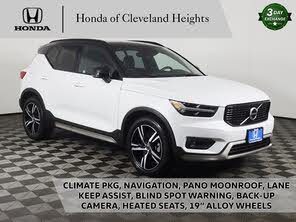
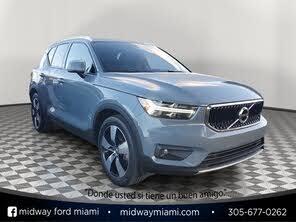
The 2021 Volvo XC40 had a more traditional SUV styling than many other small luxury crossovers, boasting a tall, flat roof and an upright rear hatch. Its design aligned well with the rest of the Volvo lineup, notably featuring the “Thor’s Hammer” LED headlights and a simple oval grille. Gasoline models of the XC40 also offered an optional white contrasting roof, lending it a slightly retro appearance.
The XC40 Recharge was distinct from its gasoline counterparts, sporting a blanked-off grille, subtle “Recharge” badging, and unique alloy wheels (standard 19-inch and optional 20-inch). Furthermore, it included a gloss black roof and mirror caps, a slightly modified rear bumper to accommodate the absence of exhaust tips, and a model-exclusive Sage Green Metallic color. The charging port was situated where the fuel filler was typically found. These understated differences made the XC40 Recharge an attractive option for electric-car drivers who preferred a subtler look.
Underneath, the XC40 was built on Volvo’s Compact Modular Architecture (CMA) platform, which also supported the Polestar 2 electric vehicle. From its inception, the CMA was designed to house both gasoline and electric powertrains, ensuring a seamless integration of the electric components into the vehicle.
Inside, the XC40 had a delightfully minimalist design, highlighted by high-quality materials that evoked a premium feel. Real metal trim adorned the dashboard, and the upholstery was a sophisticated blend of Nappa leather and Nubuck textile.
The interior design was remarkably coherent, with elements such as the portrait-oriented touchscreen and air vents melding beautifully into a pleasing whole. Unlike many automakers in this segment who compromise on interior quality to meet specific price points, Volvo maintained their high standard in the XC40.
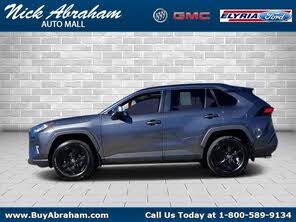
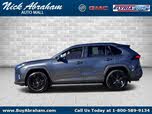
The 2021 Toyota RAV4, on the other hand, showcased the rugged exterior of a traditional SUV, designed to cater to buyers who valued style in a crossover. Its exterior featured boxy fender flares, chiseled taillights, and a scowling front end, which contrasted sharply with the more approachable look of its predecessors and many other compact crossovers. The aggressive styling of the RAV4 helped it stand out in the market and reinforced the perception that it was more than just an ordinary family vehicle.
However, beneath this rugged exterior, the RAV4 was built on the Toyota New Global Architecture (TNGA) platform, shared with many other Toyota models. While this made it a reliable and well-engineered vehicle, it meant that the RAV4’s mechanical underpinnings were more aligned with sedans and minivans than off-road SUVs.
Toyota offered various options to further enhance the gasoline RAV4’s appeal. The RAV4 Adventure model featured an Ice Edge (white) roof for a retro look along with orange interior accents, while the TRD Off-Road version included matte black 18-inch wheels, dark gray exterior trim, red interior accents, and LED fog lights. The TRD Off-Road also benefited from specific suspension tuning and Falken Wildpeak A/T Trail all-terrain tires, enhancing its off-road capabilities.
Inside, the RAV4 integrated some rugged styling touches, such as large rubberized knobs and door handles, which were both functional and helped distinguish its cabin from other Toyota models. Material quality was reasonably good on lower trim levels but didn’t scale up proportionately with the price of higher trims. Notably, the TRD Off-Road variant featured SofTex upholstery, lighter than leather and quite durable, but genuine leather wasn’t available on any model, even the top-tier RAV4 Limited.


Volvo equipped the 2021 XC40 with a robust three-tiered powertrain lineup, with the electric Recharge at the top. The two gasoline versions both utilized a 2.0-liter turbocharged four-cylinder engine paired with an eight-speed automatic transmission. The base FWD T4 offered 187 horsepower and 221 pound-feet of torque, while the AWD T5 delivered 248 hp and 258 lb-ft.
Sharing its powertrain with the Polestar 2, the XC40 Recharge featured an electric motor for each axle, enabling all-wheel drive and generating a combined 402 hp and 486 lb-ft of torque. The 78-kilowatt-hour battery pack, with 75 kWh of usable capacity, was divided into modules placed under the floor and in the space typically occupied by the transmission tunnel.
Acceleration was impressive across all models. Volvo claimed the Recharge could go from 0 to 60 mph in 4.7 seconds, the T5 in 6.1 seconds, and the T4 in 8.1 seconds. All models were electronically limited to 112 mph to enhance safety. However, in comparison, the Recharge was slightly faster than the Tesla Model Y Long Range and Ford Mustang Mach-E Premium but lagged behind performance-focused models like the Tesla Model Y Performance and Ford Mustang Mach-E GT.
An emphasis on traditional luxury set the XC40 Recharge apart, with superior ride quality even with the optional 20-inch wheels, and the capability for one-pedal driving using regenerative braking. Notably, the Recharge also had towing capabilities, with a capacity of 2,000 pounds when properly equipped.
Contrastingly, the 2021 RAV4 was available with only one gasoline engine—a 2.5-liter “Dynamic Force” four-cylinder producing 203 hp and 184 lb-ft of torque, paired with an eight-speed automatic transmission. Offering FWD as standard and optional AWD, the RAV4 lineup also included a 219-hp Hybrid and a 302-hp Prime plug-in hybrid.
Despite its impressive thermal efficiency and power for a naturally aspirated engine, the Dynamic Force engine struggled with the RAV4’s overall performance. The transmission often hesitated and lagged in gear changes, and the quick steering responses lacked the necessary feel, creating a disjointed driving experience. Although a “Sport” driving mode was available, its effectiveness was limited.
On the highway, the RAV4 provided a more serene experience, with lower cabin noise levels and a suspension that adeptly absorbed road imperfections. Off-road capabilities were enhanced in the Adventure and TRD Off-Road models, which included a torque-vectoring rear axle and ground clearance of 8.6 inches. The TRD Off-Road variant further benefitted from specific suspension tuning and all-terrain tires, offering a better handle on rugged terrains and a towing capacity of 3,500 pounds compared to 1,500 pounds for other models.
Volvo claimed that the 2021 XC40 offered the same passenger and cargo space in both gasoline and Recharge models. However, the XC40’s interior space lagged behind competitors like the Tesla Model Y and Ford Mustang Mach-E, offering less legroom, headroom, and cargo space. The Recharge’s frunk was notably small due to the powertrain hardware occupying much of the space under the hood.
While the gasoline XC40 compared more favorably against models like the Audi Q3 and BMW X1 in terms of interior space, this only highlighted the relatively low utility thresholds in this segment.
Nonetheless, Volvo incorporated clever storage solutions to compensate somewhat for the limited space. The center console featured a removable trash bin, a bag hook was integrated into the glovebox door, and relocating the Harman Kardon audio system’s speakers to the dashboard created large door bins. The storage cubby ahead of the shifter was designed to securely hold a phone, with an optional wireless charging pad available. However, second-row passengers didn’t have dedicated phone-charging options.
In contrast, the 2021 RAV4 boasted a tall, upright roof that provided ample headroom in both rows and good outward visibility. Legroom in both rows was less competitive, though, with the rear seats in particular suffering from flat, hard, bottom cushions. A road trip in those seats seemed less appealing.
The standard 60/40 split-folding rear seat didn’t slide fore and aft like those in the Ford Escape or Nissan Rogue. With 37.6 cubic feet of cargo space with the rear seats up, the RAV4 offered above-average space, although it trailed behind the Honda CR-V. The wide cargo aperture facilitated loading, but the cargo area lip was higher than in the Honda.
The RAV4’s interior controls, like oversized knobs and steering-wheel buttons, were easy to use even with gloves on. The center-console storage bin and the well-sized smartphone space ahead of the shifter (with optional wireless charging) were convenient, but larger cupholders and miscellaneous storage areas were lacking. In a nod to old-school SUVs, the RAV4 emphasized substantial vehicle controls and utility.
The 2021 Volvo XC40 Recharge featured the Android Automotive OS infotainment system, while gasoline models retained the previous system configuration. Android Automotive OS stood out for its use of Google apps, offering Google Assistant and Google Maps instead of generic alternatives. Android users could sync their personal Google accounts for added customization.
The system included Apple CarPlay, Android Auto, and Bluetooth hands-free phone connectivity, with built-in Google features. The hardware setup comprised a 9-inch touchscreen and a 12.3-inch digital instrument cluster, delivering top-notch graphics and intuitive menus. However, users unfamiliar with or disliking Google’s interface might have found the system less appealing.
OTA update capability debuted on the Recharge model, impacting not just the infotainment system but any software-controlled vehicle function, though Volvo’s plans for this feature's future were not detailed. Recharge models also lacked a start button, allowing drivers to simply get in and shift out of park. Volvo had yet to confirm the Digital Key feature available in the related Polestar 2 for the XC40.
The 2021 Toyota RAV4 came standard with Apple CarPlay, Android Auto, Amazon Alexa compatibility, and SiriusXM satellite radio (with a three-month free trial). Most trim levels had a 7-inch touchscreen, with the range-topping Limited model featuring an 8-inch screen and the Prime plug-in hybrid offering an optional 9-inch screen. Up to five USB ports were available, with three in the front row and two in the back, along with an optional JBL premium audio system.
Toyota’s infotainment system was easy to use, with a well-positioned touchscreen atop the dashboard, clear graphics, and shortcut buttons for essential functions. However, it wasn’t particularly flashy, and the gasoline RAV4 didn’t include the head-up display available in the Prime model. Overall, the system catered well to users seeking a straightforward, functional interface without extensive tech frills.
The gasoline 2021 Volvo XC40 received top safety ratings—a “Top Safety Pick+” from the Insurance Institute for Highway Safety (IIHS) and a five-star overall crash-test rating from the National Highway Traffic Safety Administration (NHTSA), with five stars in frontal and side-crash tests and four stars in rollover crash tests. These ratings didn’t apply to the electric XC40 Recharge, due to structural differences, though Volvo anticipated similar performance in crash tests, given its safety cage around the battery and redesigned front crash structure.
Standard safety features in the XC40 included lane-keep assist, blind-spot monitoring with rear cross-traffic alert, automatic emergency braking, rear parking sensors, hill-start assist, and hill-descent control. Optional features encompassed traffic-sign recognition, reverse automatic emergency braking, a driver-alertness monitor, run-off road mitigation, oncoming lane mitigation, and Volvo’s Pilot Assist system, which combined adaptive cruise control with automated lane centering. The Recharge also featured Volvo’s latest scalable sensor suite, potentially allowing for more advanced driver aids in the future.
The 2021 Toyota RAV4 secured a “Top Safety Pick” rating from the IIHS, with top “Good” scores in all crash tests and a “Superior” rating for front-crash prevention tech. However, mixed headlight ratings prevented it from achieving the “Top Safety Pick+” designation. The NHTSA awarded the RAV4 a five-star overall rating, with four-star ratings in frontal and rollover crash tests and five stars in side crash tests.
Toyota Safety Sense 2.0 came standard on all RAV4 models, including forward-collision warning with pedestrian detection, adaptive cruise control, lane-departure warning with steering assist, automatic high beams, road-sign recognition, and Lane Tracing Assist for automated lane centering. Higher trim levels added blind-spot monitoring, rear cross-traffic alert, reverse automatic emergency braking, and park assist, with a 360-degree camera system available as part of certain packages.
CarGurus highlights
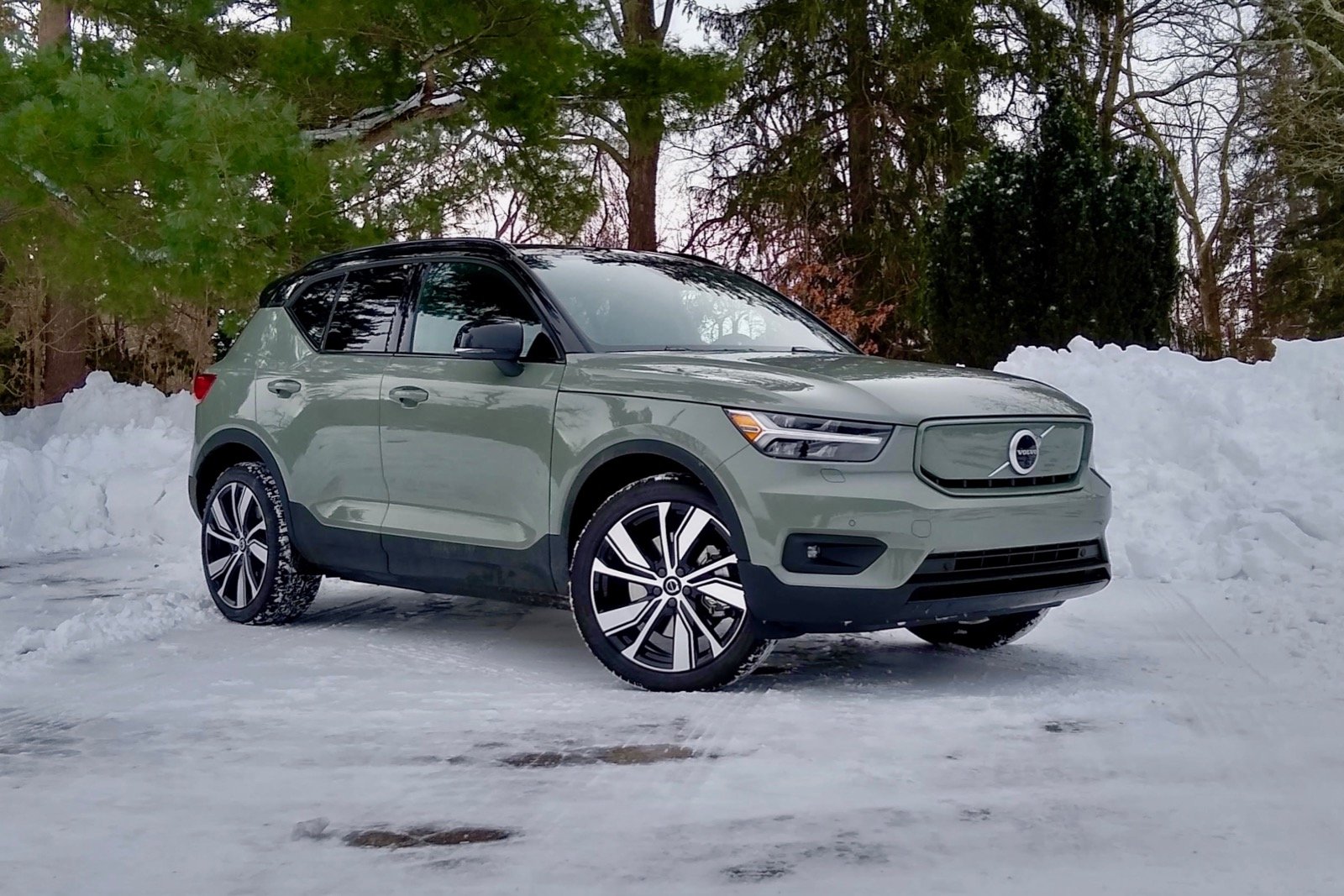
According to CarGurus experts, the overall rating for the 2021 Volvo XC40 is 8.0 out of 10, while the 2021 Toyota RAV4 scores 7.3 out of 10. Based on these ratings, the Volvo XC40 emerges as the better overall choice, especially for those seeking a premium interior, advanced infotainment options, and solid safety features. The RAV4, while competent and versatile, falls slightly short in terms of refinement and cutting-edge technology.
Choose the 2021 Volvo XC40 if:
- You seek a luxury crossover with a minimalist, premium interior.
- You prefer an electric vehicle with understated design differences.
- You value advanced Google-integrated infotainment and OTA update capabilities.




Choose the 2021 Toyota RAV4 if:
- You prioritize rugged, aggressive exterior styling with off-road capabilities.
- You need a family crossover with comprehensive safety features and a user-friendly infotainment system.
- You want a variety of powertrain options, including hybrid and plug-in hybrid models.


CarGurus highlights
According to CarGurus experts, the overall rating for the 2021 Volvo XC40 is 8.0 out of 10, while the 2021 Toyota RAV4 scores 7.3 out of 10. Based on these ratings, the Volvo XC40 emerges as the better overall choice, especially for those seeking a premium interior, advanced infotainment options, and solid safety features. The RAV4, while competent and versatile, falls slightly short in terms of refinement and cutting-edge technology.
Choose the 2021 Volvo XC40 if:
Shop Now- You seek a luxury crossover with a minimalist, premium interior.
- You prefer an electric vehicle with understated design differences.
- You value advanced Google-integrated infotainment and OTA update capabilities.









Choose the 2021 Toyota RAV4 if:
Shop Now- You prioritize rugged, aggressive exterior styling with off-road capabilities.
- You need a family crossover with comprehensive safety features and a user-friendly infotainment system.
- You want a variety of powertrain options, including hybrid and plug-in hybrid models.



By: CarGurus + AI
At CarGurus, our team of experienced automotive writers remain at the heart of our content operation, conducting hands-on car tests and writing insightful guides that are backed by years of industry experience. To complement this, we are harnessing AI to make our content offering more diverse and more helpful to shoppers than ever. To achieve this, our AI systems are based exclusively on CarGurus content, ratings and data, so that what we produce is both unique to CarGurus, and uniquely helpful to car shoppers.