2021 Toyota 4Runner vs 2021 Volkswagen Atlas
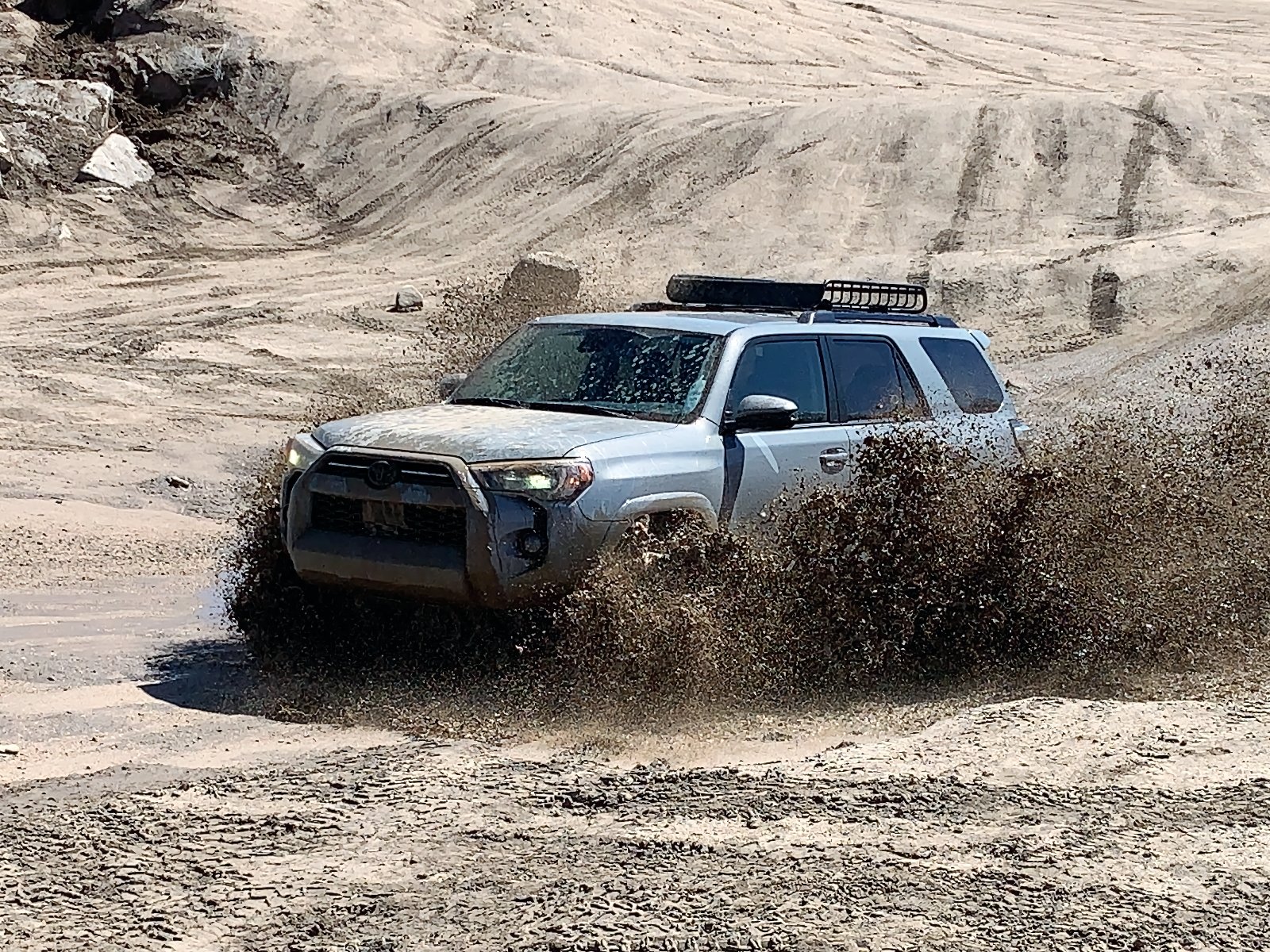
Overview | |
MSRP$31,545 | MSRP$36,765 |
Listings1044 | Listings1062 |
Ratings & Reviews | |
User Reviews | User Reviews |
Expert reviews6.5 out of 10 | Expert reviews6.2 out of 10 |
Pros
Cons
| Pros
Cons
|
2021 Volkswagen Atlas Reviews SummaryIntroduced for the 2018 model year, the Atlas is Volkswagen's latest attempt to win over American buyers. Built in Chattanooga, Tennessee, the VW Atlas competes in the three-row crossover SUV segment against well-established nameplates like the Ford Explorer, Honda Pilot, and Toyota Highlander. Changes for 2021 are limited to exterior styling tweaks and a reshuffled option list. VW also offers the two-row Atlas Cross Sport. | |
2021 Toyota 4Runner Reviews SummaryDespite its design age, poor fuel economy, rough ride, iffy handling, and marginal safety ratings, the current-generation Toyota 4Runner remains a popular choice in a midsize SUV. Why? Its reputation for reliability and resale value, coupled with its undeniable utility, rugged image, and go-anywhere and do-anything capability, are the selling points. And if that's why you want a 2021 Toyota 4Runner, it won't disappoint you as long as you accept its shortcomings. | |
No video found | |
Popular Features & Specs | |
Engine2.0L 235 hp I4 | Engine4.0L 270 hp V6 |
DrivetrainFWD | Drivetrain4X2 |
Seating Capacity7 | Seating Capacity7 |
Horsepower | Horsepower270 hp @ 5600 rpm |
MPG City21 | MPG City16 |
MPG Highway24 | MPG Highway19 |
Engine | |
Engine Name2.0L 235 hp I4 | Engine Name4.0L 270 hp V6 |
Torque | Torque278 lb-ft @ 4400 rpm |
Horsepower | Horsepower270 hp @ 5600 rpm |
DrivetrainFWD | Drivetrain4X2 |
Fuel Economy | |
MPG City21 | MPG City16 |
MPG Highway24 | MPG Highway19 |
Interior | |
Seating Capacity7 | Seating Capacity7 |
Safety | |
Front Crash Overall4 | Front Crash Overall4 |
Side Crash Overall5 | Side Crash Overall5 |
Dimensions & Capacity | |
Cargo Space20.6 cu ft | Cargo Space47.2 cu ft |
Curb Weight4248 lbs | Curb Weight4400 lbs |
Height70.1 in | Height71.5 in |
Length200.7 in | Length190.2 in |
Width78.4 in | Width75.8 in |
Wheelbase117.3 in | Wheelbase109.8 in |
Maximum Payload1080 lbs | Maximum Payload1700 lbs |
Number of doors4 | Number of doors4 |
Maximum Towing Capacity2000 lbs | Maximum Towing Capacity5000 lbs |
Standard Towing Capacity | Standard Towing Capacity5000 lbs |
Overview | ||
MSRP | $31,545 | $36,765 |
Listings | ||
Ratings & Reviews | ||
User reviews | ||
Expert reviews | 6.5 out of 10Read full review | 6.2 out of 10Read full review |
Pros & cons | Pros
Cons
| Pros
Cons
|
Summary | Introduced for the 2018 model year, the Atlas is Volkswagen's latest attempt to win over American buyers. Built in Chattanooga, Tennessee, the VW Atlas competes in the three-row crossover SUV segment against well-established nameplates like the Ford Explorer, Honda Pilot, and Toyota Highlander. Changes for 2021 are limited to exterior styling tweaks and a reshuffled option list. VW also offers the two-row Atlas Cross Sport. | Despite its design age, poor fuel economy, rough ride, iffy handling, and marginal safety ratings, the current-generation Toyota 4Runner remains a popular choice in a midsize SUV. Why? Its reputation for reliability and resale value, coupled with its undeniable utility, rugged image, and go-anywhere and do-anything capability, are the selling points. And if that's why you want a 2021 Toyota 4Runner, it won't disappoint you as long as you accept its shortcomings. |
Video | No video found | |
Popular Features & Specs | ||
Engine | 2.0L 235 hp I4 | 4.0L 270 hp V6 |
Drivetrain | FWD | 4X2 |
Seating Capacity | 7 | 7 |
Horsepower | 270 hp @ 5600 rpm | |
MPG City | 21 | 16 |
MPG Highway | 24 | 19 |
Engine | ||
Engine Name | 2.0L 235 hp I4 | 4.0L 270 hp V6 |
Torque | 278 lb-ft @ 4400 rpm | |
Horsepower | 270 hp @ 5600 rpm | |
Drivetrain | FWD | 4X2 |
Fuel Economy | ||
MPG City | 21 | 16 |
MPG Highway | 24 | 19 |
Interior | ||
Seating Capacity | 7 | 7 |
Safety | ||
Front Crash Overall | 4 | 4 |
Side Crash Overall | 5 | 5 |
Dimensions & Capacity | ||
Cargo Space | 20.6 cu ft | 47.2 cu ft |
Curb Weight | 4248 lbs | 4400 lbs |
Height | 70.1 in | 71.5 in |
Length | 200.7 in | 190.2 in |
Width | 78.4 in | 75.8 in |
Wheelbase | 117.3 in | 109.8 in |
Maximum Payload | 1080 lbs | 1700 lbs |
Number of doors | 4 | 4 |
Maximum Towing Capacity | 2000 lbs | 5000 lbs |
Standard Towing Capacity | 5000 lbs | |
The 2021 Volkswagen Atlas received a styling refresh that included new front and rear bumpers, standard LED headlights and taillights, and a new grille. These changes added 2.4 inches to its length, giving it a more extroverted look compared to the 2020 model. The R-Line trim package added sportier-looking front and rear bumpers and side skirts. Despite these updates, the Atlas still rode on the same MQB platform as before, which is used by most current VW models. The interior of the Atlas took a minimalist approach, with a standard seating configuration of seven seats across three rows. However, the material quality in the mid-level SE with Technology trim was below average, with cheap-feeling plastics and simulated wood and metal trim.
In contrast, the 2021 Toyota 4Runner had not seen a redesign in 12 years, but its two-box body with flared fenders and trapezoidal wheel arches maintained balanced proportions and timeless styling. The 4Runner was available in several trim levels, including SR5, TRD Off-Road, Limited, and TRD Pro, with special editions like the Trail Special Edition. Our test vehicle, the Trail Special Edition, was priced at $38,565 MSRP for the RWD model, with an additional $1,875 for 4WD. The interior featured black cloth upholstery with tan stitching, all-weather floor mats, and a custom-made 40-quart cooler. The dashboard was old-school, with big knobs and buttons, and the 4Runner required a traditional key to start. Despite its age, the 4Runner's simple and durable design endeared it to its owners.


The 2021 Volkswagen Atlas offered two engine options: a standard 2.0-liter turbocharged inline-four producing 235 horsepower and 258 pound-feet of torque, and a 3.6-liter VR6 engine rated at 276 hp and 266 lb-ft. Both engines were paired with an eight-speed automatic transmission, with standard front-wheel drive (FWD) or optional 4Motion all-wheel drive (AWD). The 4Motion system could send power to the rear wheels when needed. However, the driving experience with the base 2.0-liter engine and AWD was underwhelming, with rough shifts and poor ride quality. The Atlas had an Active Control feature with different drive modes, but it lacked a four-wheel drive (4WD) system with low range. The VR6 models could tow up to 5,000 pounds, while the four-cylinder models were limited to 2,000 pounds. Fuel economy for the four-cylinder models was 22 mpg combined with FWD and 21 mpg with AWD, while the VR6 models were rated at 19 mpg combined with FWD and 18 mpg with AWD.
The 2021 Toyota 4Runner, on the other hand, was equipped with a 4.0-liter V6 engine producing 270 horsepower and 278 pound-feet of torque, paired with a five-speed automatic transmission. The 4Runner's part-time 4WD drivetrain could be manually shifted into 4-Hi or 4-Lo. The maximum tow rating was 5,000 pounds. The 4Runner excelled off-road, with features like A-Trac, a locking rear differential, Multi-Terrain Select, and Crawl Control available on higher trims. However, on pavement, the 4Runner felt slow, heavy, and clunky, with poor ride and handling characteristics. Fuel economy was also poor, with an EPA rating of 17 mpg combined and 19 mpg on the highway. During our test, we averaged 16.8 mpg.
The 2021 Volkswagen Atlas offered average passenger and cargo space for its segment, with 96.8 cubic feet of cargo space behind the front seats and 20.6 cubic feet with all seats up. The Atlas provided more third-row legroom than most competitors, but at the expense of second-row legroom, which was the worst among its competitive set. The second-row bench seat was uncomfortable with thin, flat cushions. The Atlas featured a sliding second-row bench for easier third-row access and up to five USB ports across the first and second rows. It also had up to 17 cupholders and a tall driving position, but forward visibility was less than optimal. Ultrasonic parking sensors were standard, with low-speed automatic braking and active park assist available on higher trims.
The 2021 Toyota 4Runner sat high off the ground, which could be challenging for shorter individuals to climb aboard. However, once inside, the 4Runner offered comfortable front and rear seats with good support and generous legroom. The back seat had good visibility, air conditioning vents, and USB charging ports. A third-row seat was available, but our test vehicle came with a sliding cargo deck that could hold up to 440 pounds. Cargo space measured up to 47.2 cubic feet behind the back seat and 89.7 cubic feet with the rear seat folded down. The Trail Special Edition also featured a big roof rack for additional storage.
The 2021 Volkswagen Atlas came standard with Bluetooth and Apple CarPlay/Android Auto smartphone compatibility. The base S trim level had a 6.5-inch infotainment touchscreen, while other models had an 8-inch screen. Higher trim levels offered Volkswagen’s Digital Cockpit, a 10.3-inch reconfigurable digital display. The Atlas was set to receive VW’s new MIBIII infotainment system later in the 2021 model year, which would add multi-phone pairing capability, improved voice recognition, and a redesigned navigation system. Our SE with Technology test car had the 8-inch screen, which was easy to navigate but plain and text-heavy. The base six-speaker audio system was decent, with a 12-speaker Fender audio system available on higher trims. A built-in 4G LTE WiFi hotspot was new for 2021, supporting up to four devices.
The 2021 Toyota 4Runner Trail Special Edition did not come with much in the way of technology. It featured a windshield wiper de-icer system and a 120-volt AC power outlet in the cargo area. The 4Runner had a standard 8-inch touchscreen infotainment system with Bluetooth, Apple CarPlay, Android Auto, Amazon Alexa compatibility, SiriusXM satellite radio, and five USB ports. The premium audio upgrade added dynamic navigation, dynamic point-of-interest search, dynamic voice recognition, and a one-year subscription to Destination Assist concierge services. The infotainment system had physical shortcut buttons and volume and tuning knobs, making it easy to use even while wearing gloves.
The 2021 Volkswagen Atlas received the top “good” rating in all Insurance Institute for Highway Safety (IIHS) crash tests, but with a “marginal” rating for child-seat anchors and mixed headlight ratings. The National Highway Traffic Safety Administration (NHTSA) had not published ratings for the 2021 Atlas, but the similar 2020 model received a five-star overall rating. Standard safety features included automatic emergency braking and blind-spot monitoring, with adaptive cruise control and lane-keep assist available on higher trims. The Atlas was set to receive more sophisticated driver aids later in the model year, including Travel Assist and Emergency Assist.
The 2021 Toyota 4Runner came with Toyota Safety Sense P (TSS-P), which included adaptive cruise control, forward-collision warning, automatic forward emergency braking, lane departure warning, and automatic high-beam headlights. However, it did not include a blind-spot warning system with rear cross-traffic warning. The NHTSA gave the 4Runner a three-star rollover resistance rating and a three-star rating for front passenger protection in a frontal-impact crash. The IIHS rated the 4Runner's roof crush strength as "Good" but gave it a "Marginal" rating for driver protection in a small overlap frontal-impact collision.
CarGurus highlights

According to CarGurus experts, the overall rating for the 2021 Volkswagen Atlas is 6.5 out of 10, while the 2021 Toyota 4Runner scores 6.2 out of 10. Based on these ratings, the 2021 Volkswagen Atlas is the better choice for most consumers, offering a more modern design, better technology, and improved passenger comfort.
Choose the 2021 Toyota 4Runner if:
- You need a rugged and capable off-road vehicle with excellent off-road features.
- You value a simple, durable design that can withstand tough conditions.
- You require a vehicle with a high towing capacity and ample cargo space for outdoor adventures.


Choose the 2021 Volkswagen Atlas if:
- You prioritize a more modern and stylish design with updated features.
- You need a vehicle with better third-row legroom and easier third-row access.
- You prefer a vehicle with more advanced technology and infotainment options.


CarGurus highlights
According to CarGurus experts, the overall rating for the 2021 Volkswagen Atlas is 6.5 out of 10, while the 2021 Toyota 4Runner scores 6.2 out of 10. Based on these ratings, the 2021 Volkswagen Atlas is the better choice for most consumers, offering a more modern design, better technology, and improved passenger comfort.
Choose the 2021 Toyota 4Runner if:
Shop Now- You need a rugged and capable off-road vehicle with excellent off-road features.
- You value a simple, durable design that can withstand tough conditions.
- You require a vehicle with a high towing capacity and ample cargo space for outdoor adventures.
Choose the 2021 Volkswagen Atlas if:
Shop Now- You prioritize a more modern and stylish design with updated features.
- You need a vehicle with better third-row legroom and easier third-row access.
- You prefer a vehicle with more advanced technology and infotainment options.

By: CarGurus + AI
At CarGurus, our team of experienced automotive writers remain at the heart of our content operation, conducting hands-on car tests and writing insightful guides that are backed by years of industry experience. To complement this, we are harnessing AI to make our content offering more diverse and more helpful to shoppers than ever. To achieve this, our AI systems are based exclusively on CarGurus content, ratings and data, so that what we produce is both unique to CarGurus, and uniquely helpful to car shoppers.

