2021 Volkswagen Atlas vs 2022 Genesis GV70

Overview | |
MSRP$31,545 | MSRP$41,500 |
Listings164 | Listings73 |
Ratings & Reviews | |
User Reviews | User Reviews |
Expert reviews6.5 out of 10 | Expert reviews8.0 out of 10 |
Pros
Cons
| Pros
Cons
|
2021 Volkswagen Atlas Reviews SummaryIntroduced for the 2018 model year, the Atlas is Volkswagen's latest attempt to win over American buyers. Built in Chattanooga, Tennessee, the VW Atlas competes in the three-row crossover SUV segment against well-established nameplates like the Ford Explorer, Honda Pilot, and Toyota Highlander. Changes for 2021 are limited to exterior styling tweaks and a reshuffled option list. VW also offers the two-row Atlas Cross Sport. | |
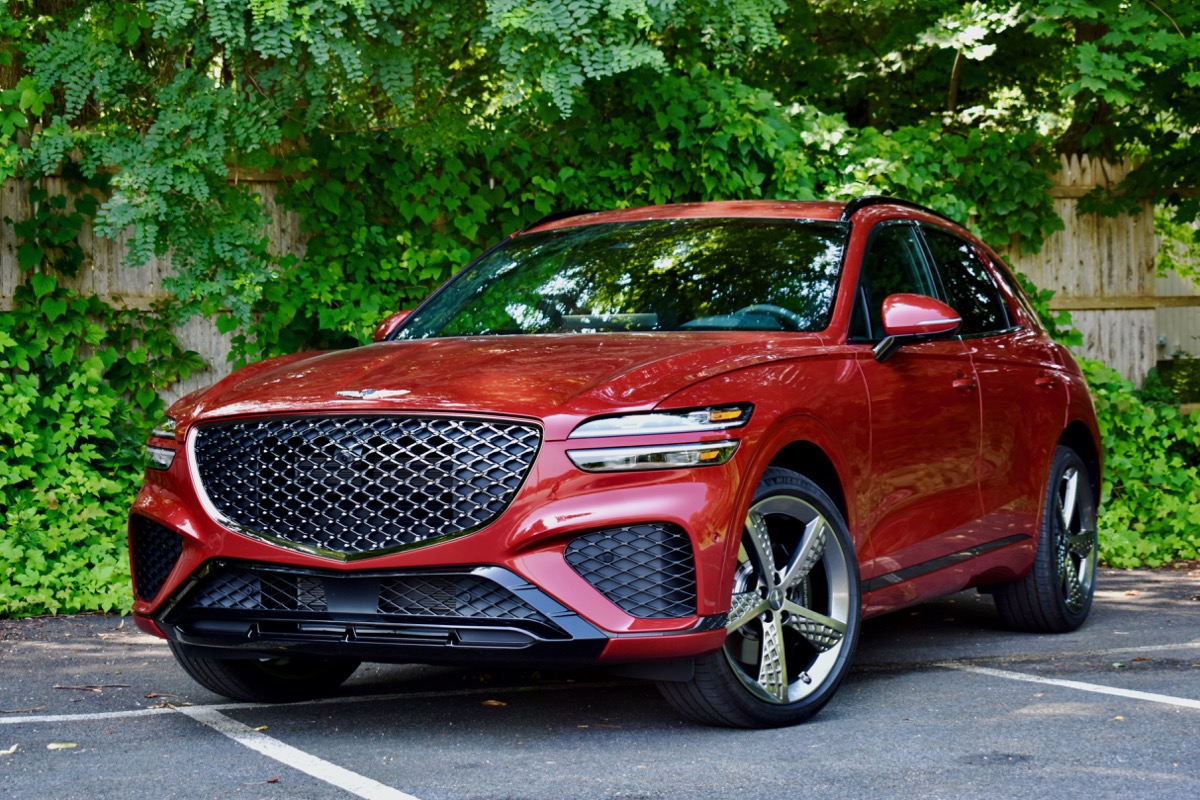
2022 Genesis GV70 Reviews SummaryHyundai’s Genesis luxury brand has only been around for about five years, but it’s progressed so much in that time it seems like much longer than that. Genesis has quickly gone from selling two repurposed Hyundai sedans to fielding a full lineup of luxury cars and creating a distinct identity through bold design. The 2022 Genesis GV70 is the brand’s latest effort. Not to be confused with the Genesis G70 sedan, the GV70 is a crossover SUV positioned below the recently-launched Genesis GV80 in size and price, meaning it competes with the Acura RDX, Audi Q5, BMW X3, Mercedes-Benz GLC-Class, Volvo XC60, and numerous other small luxury SUVs. As with the larger GV80 and the Genesis sedans, the challenge for the GV70 will be convincing new-car buyers to abandon familiar nameplates for something they might not have heard of. The GV70 launches with a 2.5-liter turbocharged four-cylinder engine and optional 3.5-liter twin-turbocharged V6. The four-cylinder is available with Standard, Select, Advanced, and Sport Prestige trim levels, while the V6 engine is available with all trim levels except the Select. Our test car was a GV70 3.5T, a range-topping AWD Sport Prestige model with the 3.5-liter V6. | |
Popular Features & Specs | |
Engine2.0L 235 hp I4 | Engine2.5L 300 hp I4 |
Drive TrainFWD | Drive TrainAWD |
Seating Capacity7 | Seating Capacity5 |
MPG City21 | MPG City22 |
MPG Highway24 | MPG Highway28 |
Engine | |
Engine Name2.0L 235 hp I4 | Engine Name2.5L 300 hp I4 |
DrivetrainFWD | DrivetrainAWD |
Fuel Economy | |
MPG City21 | MPG City22 |
MPG Highway24 | MPG Highway28 |
Interior | |
Seating Capacity7 | Seating Capacity5 |
Key Features | |
Navigation System | Navigation SystemStandard |
Safety | |
Front Crash Overall4 | Front Crash Overall |
Side Crash Overall5 | Side Crash Overall |
Dimensions & Capacity | |
Cargo Space20.6 cu ft | Cargo Space28.9 cu ft |
Curb Weight4248 lbs | Curb Weight4167 lbs |
Height70.1 in | Height64.2 in |
Length200.7 in | Length185.6 in |
Width78.4 in | Width75.0 in |
Wheelbase117.3 in | Wheelbase113.2 in |
Maximum Payload1080 lbs | Maximum Payload1334 lbs |
Number of doors4 | Number of doors4 |
Maximum Towing Capacity2000 lbs | Maximum Towing Capacity3500 lbs |
Standard Towing Capacity | Standard Towing Capacity3500 lbs |
Overview | ||
MSRP | $31,545 | $41,500 |
Listings | ||
Ratings & Reviews | ||
User reviews | ||
Expert reviews | 6.5 out of 10Read full review | 8.0 out of 10Read full review |
Pros & cons | Pros
Cons
| Pros
Cons
|
Summary | Introduced for the 2018 model year, the Atlas is Volkswagen's latest attempt to win over American buyers. Built in Chattanooga, Tennessee, the VW Atlas competes in the three-row crossover SUV segment against well-established nameplates like the Ford Explorer, Honda Pilot, and Toyota Highlander. Changes for 2021 are limited to exterior styling tweaks and a reshuffled option list. VW also offers the two-row Atlas Cross Sport. | Hyundai’s Genesis luxury brand has only been around for about five years, but it’s progressed so much in that time it seems like much longer than that. Genesis has quickly gone from selling two repurposed Hyundai sedans to fielding a full lineup of luxury cars and creating a distinct identity through bold design. The 2022 Genesis GV70 is the brand’s latest effort. Not to be confused with the Genesis G70 sedan, the GV70 is a crossover SUV positioned below the recently-launched Genesis GV80 in size and price, meaning it competes with the Acura RDX, Audi Q5, BMW X3, Mercedes-Benz GLC-Class, Volvo XC60, and numerous other small luxury SUVs. As with the larger GV80 and the Genesis sedans, the challenge for the GV70 will be convincing new-car buyers to abandon familiar nameplates for something they might not have heard of. The GV70 launches with a 2.5-liter turbocharged four-cylinder engine and optional 3.5-liter twin-turbocharged V6. The four-cylinder is available with Standard, Select, Advanced, and Sport Prestige trim levels, while the V6 engine is available with all trim levels except the Select. Our test car was a GV70 3.5T, a range-topping AWD Sport Prestige model with the 3.5-liter V6. |
Video | ||
Popular Features & Specs | ||
Engine | 2.0L 235 hp I4 | 2.5L 300 hp I4 |
Drive Train | FWD | AWD |
Seating Capacity | 7 | 5 |
MPG City | 21 | 22 |
MPG Highway | 24 | 28 |
Engine | ||
Engine Name | 2.0L 235 hp I4 | 2.5L 300 hp I4 |
Drivetrain | FWD | AWD |
Fuel Economy | ||
MPG City | 21 | 22 |
MPG Highway | 24 | 28 |
Interior | ||
Seating Capacity | 7 | 5 |
Key Features | ||
Navigation System | Standard | |
Safety | ||
Front Crash Overall | 4 | |
Side Crash Overall | 5 | |
Dimensions & Capacity | ||
Cargo Space | 20.6 cu ft | 28.9 cu ft |
Curb Weight | 4248 lbs | 4167 lbs |
Height | 70.1 in | 64.2 in |
Length | 200.7 in | 185.6 in |
Width | 78.4 in | 75.0 in |
Wheelbase | 117.3 in | 113.2 in |
Maximum Payload | 1080 lbs | 1334 lbs |
Number of doors | 4 | 4 |
Maximum Towing Capacity | 2000 lbs | 3500 lbs |
Standard Towing Capacity | 3500 lbs | |
The 2021 Volkswagen Atlas underwent a styling refresh that included new front and rear bumpers, standard LED headlights and taillights, and a new grille design. These changes extended the vehicle's length by 2.4 inches, giving it a more extroverted appearance compared to the previous model. The R-Line trim added sportier elements like unique bumpers and side skirts. Despite these updates, the Atlas maintained its boxy, high-riding utility vehicle look, with a drag coefficient of 0.34. The interior followed a minimalist approach, with a focus on functionality over decorative elements. However, the material quality, especially in the mid-level SE with Technology trim, was below average, with cheap-feeling plastics and faux wood and metal trim.
The 2022 Genesis GV70 boasted a unique appearance, borrowing some styling elements from other Genesis models but maintaining its distinctiveness. It featured quad LED strips for headlights and taillights, a large shield-shaped grille, and a sloping roofline that added a fastback-like aesthetic. The Sport Prestige model included unique styling features, such as 21-inch wheels with a web pattern and dark chrome trim. Inside, the GV70 had an elliptical theme inspired by an airplane wing, with a minimalistic design that included a rotary gear selector and infotainment controller. The interior offered a variety of color options and luxurious materials, with Nappa leather upholstery and suede seat inserts in the Sport Prestige trim.


The 2021 Volkswagen Atlas offered two engine options: a 2.0-liter turbocharged inline-four producing 235 horsepower and 258 pound-feet of torque, and a 3.6-liter VR6 engine with 276 horsepower and 266 pound-feet of torque. Both engines were paired with an eight-speed automatic transmission, with front-wheel drive as standard and optional 4Motion all-wheel drive. The driving experience with the base engine and AWD was underwhelming, with adequate acceleration but rough shifts. Handling was truck-like, and the ride quality was poor, with every pavement imperfection felt in the cabin. The Atlas had a towing capacity of 5,000 pounds with the VR6 engine and 2,000 pounds with the four-cylinder engine. Fuel economy was unimpressive, with the four-cylinder engine rated at 22 mpg combined with FWD and 21 mpg with AWD, while the VR6 engine achieved 19 mpg combined with FWD and 18 mpg with AWD.
The 2022 Genesis GV70 came with a base 2.5-liter turbo-four engine producing 300 horsepower and 311 pound-feet of torque, and a 3.5-liter twin-turbo V6 generating 375 horsepower and 391 pound-feet of torque. Both powertrains featured an eight-speed automatic transmission and standard all-wheel drive. The GV70 included a rear electronic limited-slip differential and launch control, emphasizing its sporty character. The Sport+ drive mode enhanced throttle response and transmission behavior for spirited driving. However, the chassis felt big and heavy, lacking the sharpness of some competitors. The GV70 excelled in highway cruising, but the ride was firm, and it lacked the solidity expected from a luxury vehicle.
The 2021 Volkswagen Atlas was designed as a family hauler, offering three rows of seating with a standard configuration of seven seats. It provided 96.8 cubic feet of cargo space behind the front seats and 20.6 cubic feet with all seats up. While the third-row legroom was commendable, the second-row legroom was the worst among its competitors. The second-row bench seat was uncomfortable, with thin cushions. The Atlas featured a driver-focused layout with controls within easy reach, up to five USB ports, and an optional wireless charging pad. It also offered up to 17 cupholders and standard ultrasonic parking sensors.
The 2022 Genesis GV70 offered mid-pack interior space for its segment, with adequate legroom in both rows and good rear-seat visibility. It provided 28.9 cubic feet of cargo space with the rear seats in place and 56.9 cubic feet with them folded. The interior design compromised storage space, with a slim center console and thin door pockets. The front seats in the Sport Prestige trim were heavily bolstered, offering heating, ventilation, massage, and posture-assist functions. Rear-seat passengers had their own climate controls, and the GV70 included a covered storage cubby with USB ports.
The 2021 Volkswagen Atlas featured Bluetooth and Apple CarPlay/Android Auto compatibility across all models. The base S trim had a 6.5-inch infotainment touchscreen, while other models received an 8-inch screen. Higher trim levels offered Volkswagen’s Digital Cockpit, replacing analog gauges with a 10.3-inch digital display. The Atlas was set to receive the MIBIII infotainment system later in the model year, offering multi-phone pairing and improved voice recognition. The SE with Technology trim had an 8-inch screen with plain displays, and a 12-speaker Fender audio system was available on higher trims. A built-in 4G LTE WiFi hotspot was also introduced for 2021.
The 2022 Genesis GV70 boasted a 14.5-inch touchscreen infotainment system with Apple CarPlay and Android Auto connectivity. The tile-based layout and crisp graphics were user-friendly, and the glass rotary controller added functionality. Higher trims offered a 12.3-inch digital instrument cluster with a 3D effect and a 12-inch head-up display. The GV70 included a digital-key feature, allowing smartphone use in place of a key fob, and a fingerprint scanner for starting the car. Genesis Connected Services provided features like remote camera activation and a radar-based rear-seat monitor.
The 2021 Volkswagen Atlas received top "good" ratings in all IIHS crash tests, except for a "marginal" rating for child-seat anchors and mixed headlight ratings. The NHTSA had not published ratings for the 2021 model, but the 2020 model received a five-star overall rating. Standard safety features included automatic emergency braking and blind-spot monitoring, with adaptive cruise control and lane-keep assist available on higher trims. The Atlas was set to receive more advanced driver aids later in the model year, including Travel Assist and Emergency Assist.
The 2022 Genesis GV70, being a new model, did not have crash-test ratings from the IIHS or NHTSA. It came standard with safety features like lane-keep assist, forward-collision warning, and blind-spot monitoring. The GV70 also included eight airbags, including a front-center airbag. Optional features included Highway Driving Assist 2 with lane-change functionality and navigation-based adaptive cruise control. The Highway Driving Assist system provided smooth control inputs but struggled with tight curves.
CarGurus highlights
According to CarGurus experts, the overall rating for the 2021 Volkswagen Atlas is 6.5 out of 10, while the 2022 Genesis GV70 scores 8.0 out of 10. Based on these ratings, the Genesis GV70 is the recommended choice, offering a more luxurious and technologically advanced experience.
Choose the 2021 Volkswagen Atlas if:
- You need a spacious three-row SUV with ample cargo space.
- You prefer a minimalist interior design with straightforward controls.
- You value a vehicle with a strong focus on family-friendly features.


Choose the 2022 Genesis GV70 if:
- You desire a luxury SUV with a unique and stylish design.
- You prioritize advanced technology and infotainment features.
- You seek a vehicle with a sporty character and powerful engine options.


CarGurus highlights
According to CarGurus experts, the overall rating for the 2021 Volkswagen Atlas is 6.5 out of 10, while the 2022 Genesis GV70 scores 8.0 out of 10. Based on these ratings, the Genesis GV70 is the recommended choice, offering a more luxurious and technologically advanced experience.
Choose the 2021 Volkswagen Atlas if:
Shop Now- You need a spacious three-row SUV with ample cargo space.
- You prefer a minimalist interior design with straightforward controls.
- You value a vehicle with a strong focus on family-friendly features.
Choose the 2022 Genesis GV70 if:
Shop Now- You desire a luxury SUV with a unique and stylish design.
- You prioritize advanced technology and infotainment features.
- You seek a vehicle with a sporty character and powerful engine options.

By: CarGurus + AI
At CarGurus, our team of experienced automotive writers remain at the heart of our content operation, conducting hands-on car tests and writing insightful guides that are backed by years of industry experience. To complement this, we are harnessing AI to make our content offering more diverse and more helpful to shoppers than ever. To achieve this, our AI systems are based exclusively on CarGurus content, ratings and data, so that what we produce is both unique to CarGurus, and uniquely helpful to car shoppers.

