2021 Toyota Venza vs 2021 Lexus NX

Overview | |
MSRP$32,670 | MSRP$37,610 |
Listings453 | Listings368 |
Ratings & Reviews | |
User Reviews | User Reviews |
Expert reviews8.3 out of 10 | Expert reviews7.0 out of 10 |
Pros
Cons
| Pros
Cons
|
2021 Toyota Venza Reviews SummaryAt first glance, the 2021 Toyota Venza looks more like a Lexus than a typical Toyota, which is fitting, because the Venza is anything but typical. The new Venza blends a new approach to in-car technology with fresh exterior and interior design. Like the Nissan Murano, Honda Passport, Ford Edge, and Chevrolet Blazer, the Venza is a two-row SUV meant to be more sophisticated than the family-friendly Nissan Rogue, Honda CR-V, Chevrolet Equinox, and Toyota RAV4. There is no three-row Venza option. It also comes only with a hybrid powertrain—for better or worse—something that its competition is lacking. All-wheel drive is also standard. That's also offered by the competition, but only as a costly upgrade. The Venza’s $32,470 starting price is slightly higher than the Murano and Blazer, but it comes with the traditionally-more-expensive hybrid powertrain. Is the hybrid worth shelling out a little more for? | |
2021 Lexus NX Reviews SummaryOne year ahead of its redesign, the aged 2021 Lexus NX luxury compact SUV retains the features that have made it so popular: good looks, a high-quality interior, and agile driving dynamics. But not all that glitters is gold, as the NX has some definite problem areas. | |
No video found | |
Popular Features & Specs | |
Engine2.5L 219 hp I4 Hybrid | Engine2.0L 235 hp I4 |
Drive TrainAWD | Drive TrainFWD |
Seating Capacity5 | Seating Capacity5 |
Horsepower | Horsepower235 hp @ 5600 rpm |
EV Battery Capacity0.93 kWh | EV Battery Capacity |
MPG City40 | MPG City22 |
MPG Highway37 | MPG Highway28 |
Engine | |
Engine Name2.5L 219 hp I4 Hybrid | Engine Name2.0L 235 hp I4 |
Torque | Torque258 lb-ft @ 4000 rpm |
Horsepower | Horsepower235 hp @ 5600 rpm |
DrivetrainAWD | DrivetrainFWD |
Fuel Economy | |
EV Battery Capacity0.93 kWh | EV Battery Capacity |
MPG City40 | MPG City22 |
MPG Highway37 | MPG Highway28 |
Interior | |
Seating Capacity5 | Seating Capacity5 |
Safety | |
Front Crash Overall4 | Front Crash Overall4 |
Side Crash Overall5 | Side Crash Overall5 |
Dimensions & Capacity | |
Cargo Space28.8 cu ft | Cargo Space17.7 cu ft |
Curb Weight3847 lbs | Curb Weight3940 lbs |
Height65.9 in | Height64.8 in |
Length186.6 in | Length182.3 in |
Width73.0 in | Width83.9 in |
Wheelbase105.9 in | Wheelbase104.7 in |
Maximum Payload900 lbs | Maximum Payload895 lbs |
Number of doors4 | Number of doors4 |
Maximum Towing Capacity | Maximum Towing Capacity2000 lbs |
Overview | ||
MSRP | $32,670 | $37,610 |
Listings | ||
Ratings & Reviews | ||
User reviews | ||
Expert reviews | 8.3 out of 10Read full review | 7.0 out of 10Read full review |
Pros & cons | Pros
Cons
| Pros
Cons
|
Summary | At first glance, the 2021 Toyota Venza looks more like a Lexus than a typical Toyota, which is fitting, because the Venza is anything but typical. The new Venza blends a new approach to in-car technology with fresh exterior and interior design. Like the Nissan Murano, Honda Passport, Ford Edge, and Chevrolet Blazer, the Venza is a two-row SUV meant to be more sophisticated than the family-friendly Nissan Rogue, Honda CR-V, Chevrolet Equinox, and Toyota RAV4. There is no three-row Venza option. It also comes only with a hybrid powertrain—for better or worse—something that its competition is lacking. All-wheel drive is also standard. That's also offered by the competition, but only as a costly upgrade. The Venza’s $32,470 starting price is slightly higher than the Murano and Blazer, but it comes with the traditionally-more-expensive hybrid powertrain. Is the hybrid worth shelling out a little more for? | One year ahead of its redesign, the aged 2021 Lexus NX luxury compact SUV retains the features that have made it so popular: good looks, a high-quality interior, and agile driving dynamics. But not all that glitters is gold, as the NX has some definite problem areas. |
Video | No video found | |
Popular Features & Specs | ||
Engine | 2.5L 219 hp I4 Hybrid | 2.0L 235 hp I4 |
Drive Train | AWD | FWD |
Seating Capacity | 5 | 5 |
Horsepower | 235 hp @ 5600 rpm | |
EV Battery Capacity | 0.93 kWh | |
MPG City | 40 | 22 |
MPG Highway | 37 | 28 |
Engine | ||
Engine Name | 2.5L 219 hp I4 Hybrid | 2.0L 235 hp I4 |
Torque | 258 lb-ft @ 4000 rpm | |
Horsepower | 235 hp @ 5600 rpm | |
Drivetrain | AWD | FWD |
Fuel Economy | ||
EV Battery Capacity | 0.93 kWh | |
MPG City | 40 | 22 |
MPG Highway | 37 | 28 |
Interior | ||
Seating Capacity | 5 | 5 |
Safety | ||
Front Crash Overall | 4 | 4 |
Side Crash Overall | 5 | 5 |
Dimensions & Capacity | ||
Cargo Space | 28.8 cu ft | 17.7 cu ft |
Curb Weight | 3847 lbs | 3940 lbs |
Height | 65.9 in | 64.8 in |
Length | 186.6 in | 182.3 in |
Width | 73.0 in | 83.9 in |
Wheelbase | 105.9 in | 104.7 in |
Maximum Payload | 900 lbs | 895 lbs |
Number of doors | 4 | 4 |
Maximum Towing Capacity | 2000 lbs | |
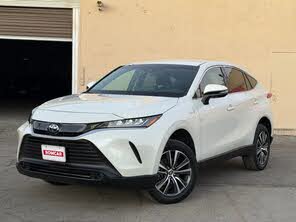
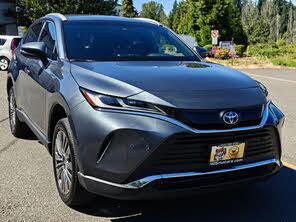
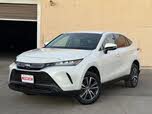
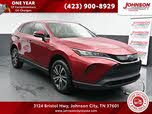
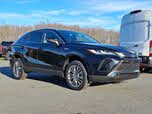
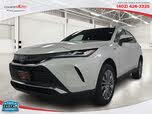
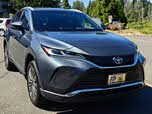
The 2021 Toyota Venza displayed a unique and premium look when it first hit the market. It was about five to six inches shorter than the Toyota RAV4, depending on the trim, and sat an inch closer to the ground. The wheelbase remained identical to that of the RAV4. Critics often remarked that the Venza resembled a Lexus more than a typical Toyota SUV. This was apparent, especially with its elongated profile and sophisticated grille, evoking comparisons to the Lexus LF-1 Limitless concept introduced at the 2018 North American International Auto Show.
The Toyota Venza was available in three trim levels: LE, XLE, and Limited, each offering a selection of seven paint colors, though availability varied by trim. The standard equipment list was extensive, featuring dual chrome-tipped exhausts, LED headlights and taillights, automatic high beams, puddle lights, and 18-inch alloy wheels. The base LE model included a wireless charging pad, 4.2-inch driver’s information display, leather-trimmed steering wheel, Bluetooth, dual-zone automatic climate control, fabric-trimmed seats, eight-way power-adjustable driver’s seat, 60/40 split-folding second-row seat, leather-trimmed shifter, automatic up/down power windows, remote keyless entry, 8-inch infotainment touchscreen, four USB ports, Android Auto, Apple CarPlay, Amazon Alexa, and a Wi-Fi hotspot.
Upgrading to the Venza XLE added black bumper garnishes, silver roof rails, 19-inch alloy wheels, LED projector headlights, gloss black exterior elements, dual LED daytime running lights, a 7-inch driver information display, auto-dimming rearview mirror, a rearview camera with dynamic gridlines, SofTex bolsters, heated front seats, a soft-touch dashboard, and Smart Key. The top-tier Venza Limited included a digital rearview mirror with Homelink, illuminated footwells, a backup camera washer, and a 12.3-inch infotainment screen. Additionally, the Star Gaze panoramic roof could be added to this trim level, offering electrochromic glazing technology.
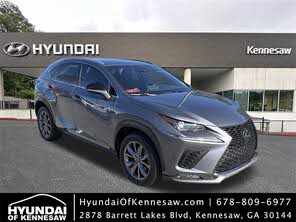
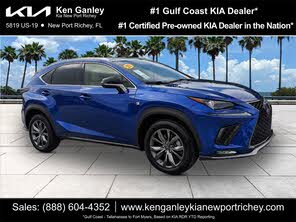
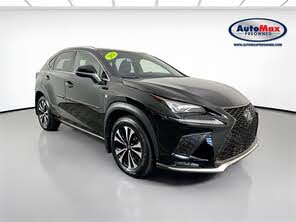
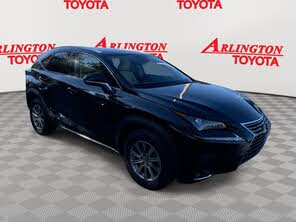
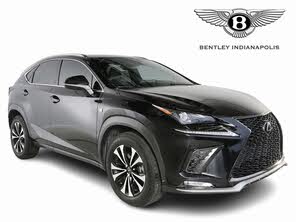
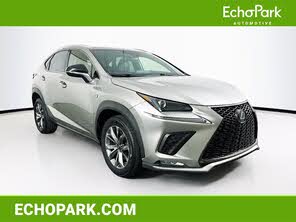
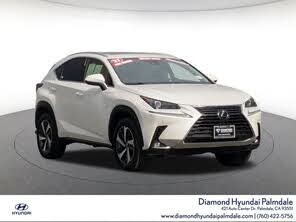
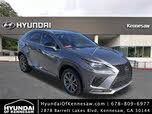
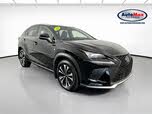
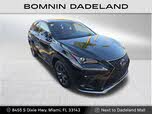
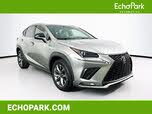
When it came to the 2021 Lexus NX, Lexus presented three versions: the NX 300, NX 300 F Sport, and the NX 300h hybrid. This comparison focused on the gasoline models, particularly the performance-centered NX 300 F Sport, although the NX 300 was also sold in base and Luxury trims. Lexus maintained its familial design and styling traits, with sharp design lines and a sculpted exterior that echoed the smaller Lexus UX and the larger RX. In terms of size, it was quite comparable to the Toyota RAV4, featuring power-folding outside mirrors and 17-inch wheels as standard.
Opting for the NX F Sport brought a sportier look to the five-seat SUV. It included a new honeycomb grille, triple-beam LED headlights, a lower bumper with chrome trim, rear lower bumper and taillights, laser fog light housing, a larger exhaust opening, and 18-inch F Sport wheels with all-season or summer tires. The F Sport models also boasted quilted NuLuxe sport seats, exclusive to the F Sport variant. Owners could choose the Circuit Red interior scheme or more traditional colors like Black and Arctic White/Black. The interior material quality and fit and finish were top-notch, living up to Lexus standards.
However, the gauge cluster design looked somewhat dated compared to more modern all-digital displays found in competitors like the 2022 Hyundai Tucson and 2021 Nissan Rogue. The F Sport included a G-Force meter that displayed the car’s steering angle, throttle opening angle, and brake pressure, although this feature seemed more like a gimmick.
The center stack of the NX, though functional, appeared somewhat outdated, containing an increasingly rare CD player and climate-control buttons on an elevated plinth-like surface. This design limited open small-item storage between the driver and passenger seats.


The 2021 Toyota Venza came standard with a 2.5-liter four-cylinder gasoline engine paired with a lithium-ion battery pack, creating a hybrid system with an electronically-controlled continuously-variable transmission (eCVT). The combined output was 219 horsepower and 163 pound-feet of torque, which, while less powerful than some competitors, was still sufficient for most driving needs. The hybrid system allowed for smooth acceleration, although the experience was notably noisier, particularly during rapid accelerations due to the CVT and the engine noise infiltrating the cabin. Road noise from eco-conscious tires also contributed to the noise level.
Despite the noise, the Venza’s ride was comfortable and handling was reliable, typical of a Toyota. Fuel efficiency was a standout feature, with the Venza achieving an EPA-estimated 40 mpg on the highway, 37 mpg in the city, and 39 mpg combined, outclassing competitors like the Murano, Passport, and Blazer. Toyota backed the Venza’s hybrid powertrain with a 10-year/150,000-mile hybrid battery warranty and an 8-year/100,000-mile Hybrid System warranty.
The 2021 Lexus NX 300 and 300 F Sport models were powered by a turbocharged 2.0-liter four-cylinder engine that delivered 235 horsepower and 258 pound-feet of torque, mated to a six-speed automatic transmission. Although newer models feature more advanced multi-speed transmissions, the six-speed transmission provided by the NX was adequate, despite being less smooth.
The turbo engine propelled the NX from 0 to 60 mph in approximately seven seconds, a competitive figure for the segment. While the engine could be noisy under hard acceleration, the ride was generally quiet. NX F Sport models featured Active Sound Control, which electronically enhanced the engine note through the speakers, although this feature was often seen as unnecessary by driving purists.
Front-wheel drive was standard, with all-wheel drive available on all trims. The AWD system could transfer up to 50 percent of the engine’s torque to the rear axle, but without individual-wheel torque vectoring. Fuel economy for the Lexus NX 300 FWD was estimated at 22 mpg in the city, 28 mpg on the highway, and 25 mpg combined. AWD models had slightly lower efficiency at 24 mpg combined. The NX had a towing capacity of 2,000 pounds and an electronically limited top speed of 124 mph.
The available adaptive suspension system, borrowed from the LC 500 sport coupe, could make up to 650 instantaneous adjustments, enhancing ride comfort. Despite some agility, the NX’s steering lacked feedback, though it remained maneuverable. Drive modes (Eco, Normal, and Sport) altered throttle response, power-steering assist, and even the instrument cluster color scheme.
Both the Toyota Venza and Lexus NX prioritized practicality and comfort, albeit in different ways, given their segment positioning.
The 2021 Toyota Venza’s interior didn’t clinging to typical Toyota or Lexus characteristics, taking a unique approach with premium appointments, particularly on the center stack featuring piano black capacitive buttons for climate and infotainment controls. The cabin also had discreetly placed vents and an infotainment touchscreen atop a sleek button panel.
Up front, the driver and passenger enjoyed plenty of space, with rear passengers also comfortably accommodated. The luxurious feel of the Venza's interior was evident, especially when comparing its refined styling to the more rugged Toyota RAV4. Although the Venza had more headroom, it offered slightly less legroom than the RAV4 but nearly equal shoulder and hip room, making for a spacious feel overall.
Cargo space was where the Venza showed its limitations compared to the RAV4, with around 60 percent of the RAV4’s storage capacity. This translated to a maximum of 55.1 cubic feet, decent enough for a daily driver but possibly restrictive for extended family road trips. Rear seatbacks featured quick-flip releases to easily reconfigure the cargo space, enhancing usability.
The 2021 Lexus NX, with its upscale interior, offered heated and ventilated seats, a 60/40 split-folding rear seat, and the choice of a Circuit Red, Black, or Arctic White/Black interior color scheme. Front seats were notably comfortable, with sufficient legroom for second-row passengers as well. Apart from engine noise, the cabin remained insulated from road and wind noise, consistent with Lexus standards.
The NX suffered from a lack of cargo capacity, mainly due to its body design. It provided only 17.7 cubic feet of space behind the second row, expanding to 54.6 cubic feet with the seats down, making it one of the smallest in its class. The cargo area’s shortcomings could be mitigated by options like a power liftgate with kick sensor technology and power-folding rear seats.
The 2021 Toyota Venza came equipped with an 8-inch infotainment system in LE and XLE trims, with a larger 12.3-inch touchscreen available on the Limited trim. The Entune system had improved but still lagged behind competitors, requiring several menu trips for simple tasks. Nonetheless, the screen’s response time was good and wide enough to display multiple information sections simultaneously.
Standard technology included Apple CarPlay, Android Auto, Amazon Alexa, AM/FM/HD Radio, Bluetooth, and a six-speaker audio system. All trims also had a Wi-Fi hotspot requiring activation beyond a free 2-gigabyte/three-month trial. A nine-speaker JBL premium audio system was available on the XLE and standard on the Limited.
Toyota connected services came standard with a one-year trial of Safety Connect and Remote Connect, plus a 10-year trial of Service Connect for maintenance data tracking. Models with the larger screen benefited from dynamic navigation using cloud-based technology to adapt to changing conditions.
In the 2021 Lexus NX, the infotainment screen was raised high above the center stack, featuring an 8-inch display as standard and an optional 10.3-inch screen as part of the Navigation package. The Navigation package added HomeLink and Lexus Enform Destination Assist for in-car personal concierge services.
Despite standard Apple CarPlay and Android Auto, the Lexus infotainment system was notoriously difficult to use, often requiring the driver to rely on the touchpad for simple functions. Keyless entry, dual-zone automatic climate control, Bluetooth, a USB port, HD Radio, and a WiFi hotspot were standard, while options included a moonroof and heated steering wheel.
The Lexus Premium Audio system had eight speakers standard, elevating to 10 with the Navigation package. A 14-speaker Mark Levinson system was available on the top-tier trims. Lexus Enform Remote allowed owners to control various vehicle functions via a mobile app with a free three-year subscription. Lexus Enform Services Connect provided maintenance alerts, included with a 10-year subscription.
Both the 2021 Toyota Venza and Lexus NX were loaded with advanced safety features typical of their respective brands.
The 2021 Toyota Venza came with Toyota Safety Sense 2.0 standard across all trims. This suite included eight airbags, a rearview camera, hill start assist, parking distance sensors, tire pressure monitoring, and adjustable front seatbelt anchors. Additional features included a pre-collision warning with pedestrian detection, automatic emergency braking, lane-departure alert with steering assist, lane-tracing assist, automatic high beams, adaptive cruise control, and road sign assist.
Blind-spot monitoring with rear cross-traffic alert was also standard, with an optional upgrade to a system with automatic braking on the Venza XLE and Limited trims. The Venza provided two full sets of LATCH connections for the rear outboard seats, and its driver-assist features generally performed well without being obtrusive. However, lane-keeping and lane-tracing assists tended to keep the car further to the right within a lane but maintained lane lines accurately even in construction zones.
The 2021 Lexus NX came with Lexus Safety System+ 2.0 as standard, offering a rearview camera, lane departure warning, lane keep assist, traffic sign recognition, automatic high beams, forward-collision warning, automatic emergency braking, pedestrian detection, and adaptive cruise control. Additionally, blind-spot monitoring and rear cross-traffic alert were made standard for the model year, with optional park assist, a surround-view camera system, and adaptive headlights available.
Lexus Enform Safety Connect provided services like an emergency-assistance button, roadside assistance, automatic collision notification, and stolen vehicle notification. The NX received top "Good" scores from the IIHS for all crash tests, a "Superior" rating for its front crash-prevention technology, and an "Acceptable" ease-of-use rating for its LATCH system. The NHTSA awarded the NX a five-star overall safety rating, further certifying its safety credentials.
CarGurus highlights

According to CarGurus experts, the overall rating for the 2021 Toyota Venza is 8.3 out of 10, while the 2021 Lexus NX scores 7.0 out of 10. Given these scores, the Toyota Venza comes out as the more recommended vehicle. Its fuel efficiency, comprehensive safety features, and overall practicality make it a superior choice for most drivers. Lexus NX excels in luxury and comfort, but the Venza’s higher overall rating speaks to its better value and balanced performance. If efficiency and practicality are your priorities, the 2021 Toyota Venza is the better option.
Choose the 2021 Toyota Venza if:
- You prioritize fuel efficiency and don’t need aggressive power. The Venza’s hybrid system delivers excellent fuel economy.
- You value advanced safety features and want them as standard across all trims.
- You are looking for a practical, comfortable daily driver with elegant interior appointments and user-friendly cargo management options.




Choose the 2021 Lexus NX if:
- You seek a luxurious driving experience with upscale interior materials and excellent fit and finish.
- You want more powerful engine options, particularly if you opt for the F Sport variant.
- You value comprehensive safety features and technology services integrated with a luxury vehicle.



CarGurus highlights
According to CarGurus experts, the overall rating for the 2021 Toyota Venza is 8.3 out of 10, while the 2021 Lexus NX scores 7.0 out of 10. Given these scores, the Toyota Venza comes out as the more recommended vehicle. Its fuel efficiency, comprehensive safety features, and overall practicality make it a superior choice for most drivers. Lexus NX excels in luxury and comfort, but the Venza’s higher overall rating speaks to its better value and balanced performance. If efficiency and practicality are your priorities, the 2021 Toyota Venza is the better option.
Choose the 2021 Toyota Venza if:
Shop Now- You prioritize fuel efficiency and don’t need aggressive power. The Venza’s hybrid system delivers excellent fuel economy.
- You value advanced safety features and want them as standard across all trims.
- You are looking for a practical, comfortable daily driver with elegant interior appointments and user-friendly cargo management options.





Choose the 2021 Lexus NX if:
Shop Now- You seek a luxurious driving experience with upscale interior materials and excellent fit and finish.
- You want more powerful engine options, particularly if you opt for the F Sport variant.
- You value comprehensive safety features and technology services integrated with a luxury vehicle.







By: CarGurus + AI
At CarGurus, our team of experienced automotive writers remain at the heart of our content operation, conducting hands-on car tests and writing insightful guides that are backed by years of industry experience. To complement this, we are harnessing AI to make our content offering more diverse and more helpful to shoppers than ever. To achieve this, our AI systems are based exclusively on CarGurus content, ratings and data, so that what we produce is both unique to CarGurus, and uniquely helpful to car shoppers.