2021 Subaru Forester vs 2021 Honda CR-V
Overview | |
MSRP$24,795 | MSRP$25,350 |
Listings946 | Listings1235 |
Ratings & Reviews | |
User Reviews | User Reviews |
Expert reviews7.5 out of 10 | Expert reviews7.8 out of 10 |
Pros
Cons
| Pros
Cons
|
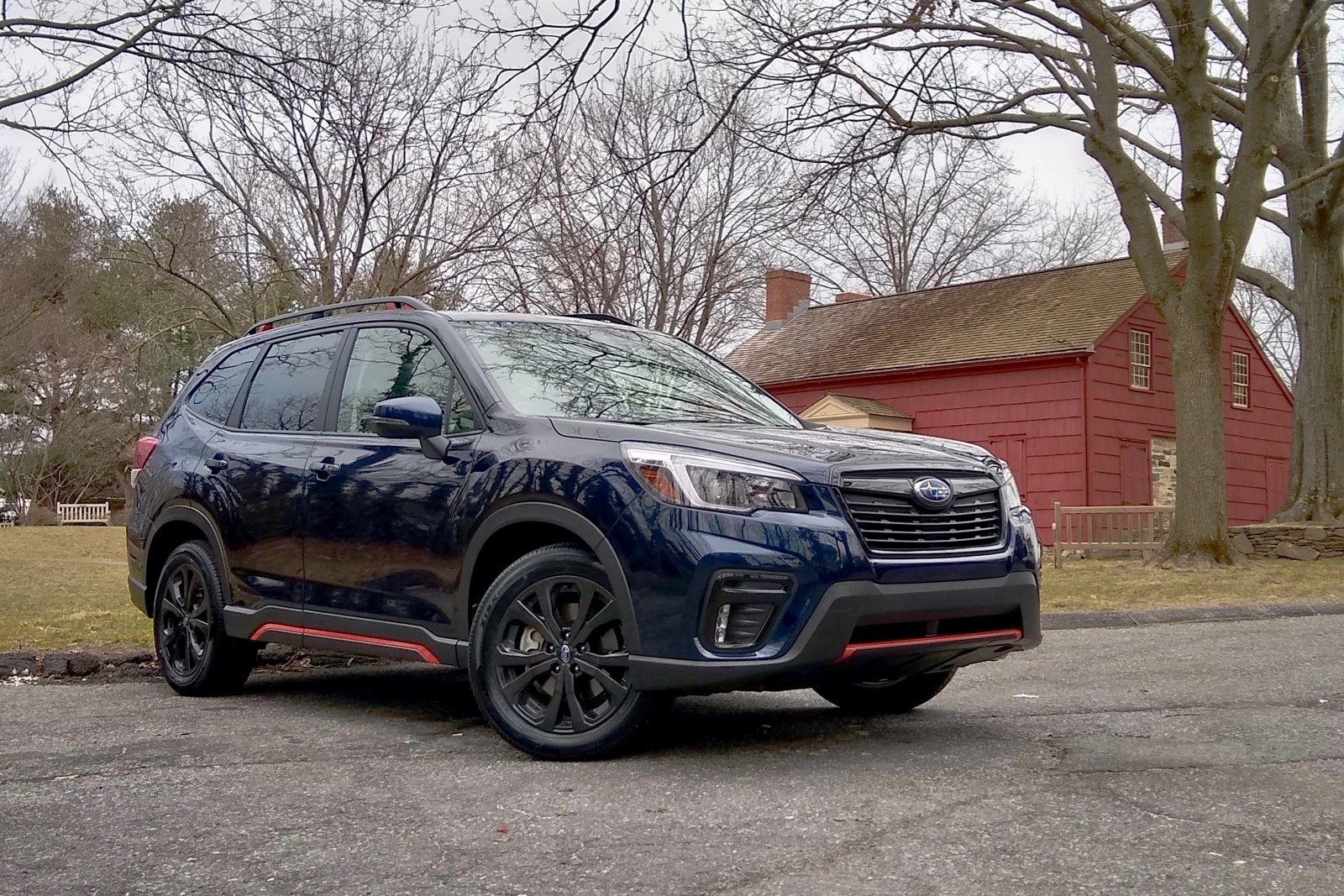
2021 Subaru Forester Reviews SummaryThe Subaru Forester was one of the original compact crossover SUVs. Along with the Ford Escape, Honda CR-V, and Toyota RAV4, it helped introduce a vehicular genre that is now displacing traditional sedans from American driveways. That means the Forester has more competition than ever. What was once a small market segment has swelled with the addition of compact SUVs like the Hyundai Tucson, Kia Sportage, Mazda CX-5, Nissan Rogue, Volkswagen Tiguan, and the modern version of the Jeep Cherokee. To keep pace with the competition, the Forester has packed on technology—and pounds. While the first-generation Forester (affectionately nicknamed “toaster” by fans because of its boxy shape) was genuinely compact, the current version has the footprint of a midsize SUV from two decades ago. This version was introduced for the 2019 model year, so it doesn’t change much for 2021. The only news is the addition of three standard safety features—steering-responsive LED headlights, automatic high beams, and a rear seatbelt reminder—standard fog lights and keyless access with push-button start for the Premium trim level, and additional equipment reshuffling on other trim levels. The 2021 Subaru Forester is available in five trim levels—Base, Premium, Sport, Limited, and Touring—all with standard all-wheel drive (AWD). Our test car was the mid-range Sport model. | |
2021 Honda CR-V Reviews SummaryEven in a grim year, Honda is selling a staggering number of CR-Vs. The CR-V is the best-selling Honda by far. It’s also the second best-selling compact SUV, just behind the Toyota RAV4. And it's the fifth best-selling vehicle in the U.S., and if you take out all the commercial sales of full-size pickups it’s one of the two best-selling vehicles year in and year out. So it’s hard to argue against the CR-V formula. Honda’s been at this almost as long as crossovers have been a thing, launching the CR-V in 1997—a year after the RAV4 debuted. The funny thing is, aside from sales volume, there’s only one thing the CR-V particularly excels at. Aesthetics are subjective, but it would be hard to argue the CR-V is the best looking vehicle in its class. It’s not the cheapest. It’s not the best equipped, especially at the middle to lower trim levels. It’s not the fastest, nor is it the quietest, or the most fuel efficient. It’s not even the most reliable, showing up nowhere in J.D. Power's Most Reliable list. So what makes it so appealing to American consumers? Let’s see if we can figure that out. | |
No video found | |
Popular Features & Specs | |
Engine2.5L 182 hp H4 | Engine1.5L 190 hp I4 |
Drive TrainAWD | Drive TrainFWD |
Seating Capacity5 | Seating Capacity5 |
Horsepower182 hp @ 5800 rpm | Horsepower190 hp @ 5600 rpm |
MPG City26 | MPG City28 |
MPG Highway33 | MPG Highway34 |
Engine | |
Engine Name2.5L 182 hp H4 | Engine Name1.5L 190 hp I4 |
Torque178 lb-ft @ 4400 rpm | Torque179 lb-ft @ 2000 rpm |
Horsepower182 hp @ 5800 rpm | Horsepower190 hp @ 5600 rpm |
DrivetrainAWD | DrivetrainFWD |
Fuel Economy | |
MPG City26 | MPG City28 |
MPG Highway33 | MPG Highway34 |
Interior | |
Seating Capacity5 | Seating Capacity5 |
Safety | |
Front Crash Overall5 | Front Crash Overall5 |
Side Crash Overall5 | Side Crash Overall5 |
Dimensions & Capacity | |
Cargo Space31.1 cu ft | Cargo Space39.2 cu ft |
Curb Weight3453 lbs | Curb Weight3337 lbs |
Height67.5 in | Height66.1 in |
Length182.1 in | Length182.1 in |
Width80.9 in | Width73.0 in |
Wheelbase105.1 in | Wheelbase104.8 in |
Maximum Payload1438 lbs | Maximum Payload1358 lbs |
Number of doors4 | Number of doors4 |
Maximum Towing Capacity1500 lbs | Maximum Towing Capacity1500 lbs |
Overview | ||
MSRP | $24,795 | $25,350 |
Listings | ||
Ratings & Reviews | ||
User reviews | ||
Expert reviews | 7.5 out of 10Read full review | 7.8 out of 10Read full review |
Pros & cons | Pros
Cons
| Pros
Cons
|
Summary | The Subaru Forester was one of the original compact crossover SUVs. Along with the Ford Escape, Honda CR-V, and Toyota RAV4, it helped introduce a vehicular genre that is now displacing traditional sedans from American driveways. That means the Forester has more competition than ever. What was once a small market segment has swelled with the addition of compact SUVs like the Hyundai Tucson, Kia Sportage, Mazda CX-5, Nissan Rogue, Volkswagen Tiguan, and the modern version of the Jeep Cherokee. To keep pace with the competition, the Forester has packed on technology—and pounds. While the first-generation Forester (affectionately nicknamed “toaster” by fans because of its boxy shape) was genuinely compact, the current version has the footprint of a midsize SUV from two decades ago. This version was introduced for the 2019 model year, so it doesn’t change much for 2021. The only news is the addition of three standard safety features—steering-responsive LED headlights, automatic high beams, and a rear seatbelt reminder—standard fog lights and keyless access with push-button start for the Premium trim level, and additional equipment reshuffling on other trim levels. The 2021 Subaru Forester is available in five trim levels—Base, Premium, Sport, Limited, and Touring—all with standard all-wheel drive (AWD). Our test car was the mid-range Sport model. | Even in a grim year, Honda is selling a staggering number of CR-Vs. The CR-V is the best-selling Honda by far. It’s also the second best-selling compact SUV, just behind the Toyota RAV4. And it's the fifth best-selling vehicle in the U.S., and if you take out all the commercial sales of full-size pickups it’s one of the two best-selling vehicles year in and year out. So it’s hard to argue against the CR-V formula. Honda’s been at this almost as long as crossovers have been a thing, launching the CR-V in 1997—a year after the RAV4 debuted. The funny thing is, aside from sales volume, there’s only one thing the CR-V particularly excels at. Aesthetics are subjective, but it would be hard to argue the CR-V is the best looking vehicle in its class. It’s not the cheapest. It’s not the best equipped, especially at the middle to lower trim levels. It’s not the fastest, nor is it the quietest, or the most fuel efficient. It’s not even the most reliable, showing up nowhere in J.D. Power's Most Reliable list. So what makes it so appealing to American consumers? Let’s see if we can figure that out. |
Video | No video found | |
Popular Features & Specs | ||
Engine | 2.5L 182 hp H4 | 1.5L 190 hp I4 |
Drive Train | AWD | FWD |
Seating Capacity | 5 | 5 |
Horsepower | 182 hp @ 5800 rpm | 190 hp @ 5600 rpm |
MPG City | 26 | 28 |
MPG Highway | 33 | 34 |
Engine | ||
Engine Name | 2.5L 182 hp H4 | 1.5L 190 hp I4 |
Torque | 178 lb-ft @ 4400 rpm | 179 lb-ft @ 2000 rpm |
Horsepower | 182 hp @ 5800 rpm | 190 hp @ 5600 rpm |
Drivetrain | AWD | FWD |
Fuel Economy | ||
MPG City | 26 | 28 |
MPG Highway | 33 | 34 |
Interior | ||
Seating Capacity | 5 | 5 |
Safety | ||
Front Crash Overall | 5 | 5 |
Side Crash Overall | 5 | 5 |
Dimensions & Capacity | ||
Cargo Space | 31.1 cu ft | 39.2 cu ft |
Curb Weight | 3453 lbs | 3337 lbs |
Height | 67.5 in | 66.1 in |
Length | 182.1 in | 182.1 in |
Width | 80.9 in | 73.0 in |
Wheelbase | 105.1 in | 104.8 in |
Maximum Payload | 1438 lbs | 1358 lbs |
Number of doors | 4 | 4 |
Maximum Towing Capacity | 1500 lbs | 1500 lbs |
The 2021 Subaru Forester may have undergone a redesign for the 2019 model year, but one might have been forgiven for thinking it looked much older. This was primarily because Subaru chose to carry over much of the preceding generation’s styling. The most conspicuous change was perhaps the taillights, which, in the fifth-generation Forester, had a distinct cross shape.
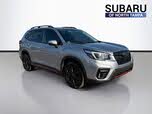
Subaru's decision not to radically overhaul the design made sense. The Forester retained its boxy, upright shape that many SUV shoppers found appealing. The Base trim level, which rolled on 17-inch steel wheels (with 17-inch alloy wheels as an option), had a somewhat plain appearance. However, this contributed to a clean, unpretentious look, setting it apart from the more flamboyant designs of other compact crossovers.
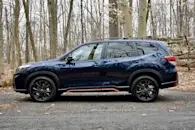
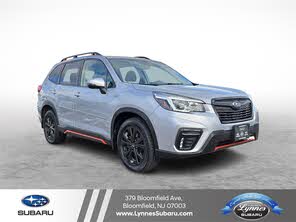
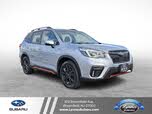
The Sport models introduced a bit more flair, with orange striping along the lower edges of the body and roof rails, a rear spoiler, and black 18-inch alloy wheels. These subtle changes, combined with complementary paint colors like the Dark Blue Pearl test car, made a substantial difference in visual appeal.
Beneath this rugged exterior, the Forester rode on the Subaru Global Platform, shared with many of Subaru’s other models such as the Impreza, Crosstrek, Legacy, and Outback, as well as the larger Ascent crossover. Despite Subaru's marketing of the Forester as a rugged SUV, it had always shared its underpinnings with less rugged sedans, hatchbacks, and wagons.
Inside, the Forester's no-nonsense approach continued. The materials used throughout the cabin prioritized durability over aesthetics—a prudent choice for the practical, adventure-loving drivers Subaru targeted. The Sport trim level added pops of orange in the interior trim and cross-stitching, mirroring its exterior accents.
Cloth upholstery was standard on the Base, Premium, and Sport models. In contrast, the Limited and Touring trims offered leather upholstery. An All-Weather Package, standard on Premium and higher trim levels, ensured added comfort with features like heated front seats, heated exterior mirrors, and a windshield de-icer.
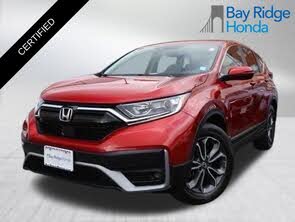
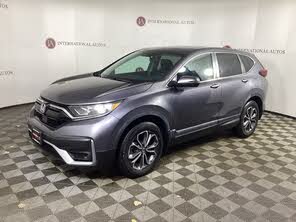
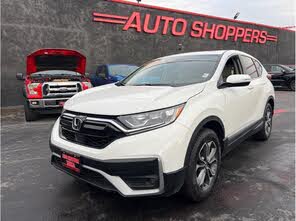
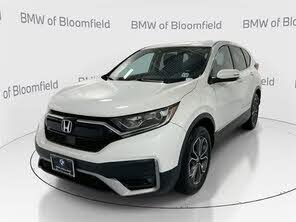
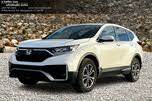
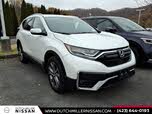
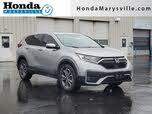
People who cherished car designs from the 1950s might have found the styling of the 2021 Honda CR-V uninspiring. Indeed, the CR-V's design seemed nearly indistinguishable from other crossovers on the market. The side window opening, or “daylight opening,” was shaped similarly across various brands.
Despite its homogeneous appearance, the CR-V possessed a few distinguishing features such as its grille opening and some chromed plastic elements. However, if aesthetics were a high priority, prospective buyers might have looked elsewhere.
Honda offered the CR-V in eight colors. However, this was somewhat misleading as these shades predominantly included various grays, black, white, and two hues of blue (Obsidian Blue Pearl and Aegean Blue Metallic). The Radiant Red Metallic was available but limited to higher trims. In reality, the base LX trim was limited to just black, silver, and white (the latter being a $395 upcharge). Finding a CR-V in vibrant colors could be a challenge, as demonstrated by the limited availability even in large dealerships.
The interior color options mirrored the exterior in terms of simplicity. They included black, gray, and ivory cloth or leather depending on the trim level. The higher trims added aesthetics like wood panels and more chrome for a slightly upscale appearance. The front and rear seats featured sharp edges and angular designs, lending a modern look compared to some competitors.
While not a head-turner, the CR-V’s exterior and interior designs offered decent form and functionality, catering well to its target market. However, rival vehicles like the Kia Sportage and Hyundai Tucson had a clear edge in offering more distinctive styling.




The 2021 Subaru Forester was powered by a single powertrain option: a 2.5-liter four-cylinder engine producing 182 horsepower and 176 pound-feet of torque. This engine was paired with a continuously variable automatic transmission (CVT), which included a manual mode and paddle shifters on certain trims. The engine's boxer configuration provided a lower center of gravity compared to the inline-four engines of many competitors. The Forester came with a 1,500-pound maximum towing capacity and standard Trailer Stability Assist.
Subaru had previously offered a turbocharged engine, but as of 2021, it was no longer available. This 2.5-liter engine provided adequate power in most situations, but lacked the thrust desired for tasks like highway merging or overtaking. At high speeds, wind noise was notably intrusive.
The Forester's suspension tuned for comfort resulted in a very soft ride. While it soaked up bumps effectively, it compromised body control with pronounced body roll in corners and noticeable bounce on uneven pavement. This approach slightly detracted from the overall ride comfort and handling.
All-wheel drive (AWD) was a standard feature in the Forester, setting it apart from most competitors. The drivetrain included a standard X-Mode to optimize vehicle parameters for different terrains, with Sport models offering Dual X-Mode with “Snow/Dirt” and “Snow/Mud” settings.
Forester Premium and higher trims came with standard hill-descent control, and all models boasted a ground clearance of 8.7 inches, enhancing off-road capability. Nonetheless, for serious off-roading, one might have considered alternatives like the Jeep Cherokee Trailhawk or the Ford Bronco Sport.
The 2021 Honda CR-V wasn’t designed for explosive acceleration or corner-carving prowess, but instead prioritized smooth and steady performance. All trims were equipped with a 190-horsepower turbocharged four-cylinder engine. With an acceleration time of around 7.8 seconds to 60 mph, the CR-V wasn’t the quickest but was competitive within its segment.
Every CR-V featured a continuously variable transmission (CVT), which maintained nearly constant engine revs as speed increased. While not particularly engaging, this setup provided efficient and predictable performance. Competitors like the Kia Sportage, Hyundai Tucson, and Toyota RAV4 offered more conventional transmissions with sport modes in higher trims, providing a more engaging driving experience.
Front-wheel drive (FWD) was standard across all CR-V trims, with AWD available as an option. While this was typical for the segment, Subaru's decision to offer standard AWD in the Forester gave it an edge.
The CR-V featured a unitized body structure with a MacPherson strut front suspension and a multi-link rear suspension, common in this class. The handling and ride quality were respectable, delivering a balanced driving experience without any significant surprises.
The Subaru Forester offered a spacious and functional interior, comfortably seating five. Its tall, relatively flat roof contributed to generous headroom and legroom in both rows. This design also allowed for large windows, enhancing the feeling of spaciousness and providing excellent outward visibility. However, the plethora of glass could amplify cabin temperatures on sunny days.
In terms of cargo capacity, the Forester provided 35.4 cubic feet with the rear seats up and 76.1 cubic feet with the 60/40 split-folding rear bench down. While this was more spacious than a Honda CR-V or the redesigned 2022 Hyundai Tucson with the seats folded, it had slightly less room with the rear seats up. Unlike the Ford Escape and Nissan Rogue, the Forester did not offer a sliding second-row bench. However, a power liftgate was optionally available on the Sport trim and standard on the Limited and Touring trims.
Practicality was further enhanced with decently sized cupholders and a reasonably spacious center console, although the phone-storage cubby was too small for average-sized phones. Unlike some competitors, the Forester did not offer wireless charging. A power-adjustable driver’s seat was only available from the Premium trim level and higher. The large, easy-to-use knobs for audio volume, tuning, and climate control contributed to a user-friendly experience, despite the somewhat cluttered steering wheel controls.
With a focus on functionality, the 2021 Honda CR-V excelled in providing a comfortable cabin for five passengers. It offered an impressive 102.9 cubic feet of passenger volume, which was four cubic feet more than the Toyota RAV4. The CR-V also had a slight edge in cargo space behind the second row compared to the Toyota. With the rear seats folded, the CR-V provided a total of 75.8 cubic feet of cargo volume, making it capable of accommodating a substantial amount of luggage.
Accessing the cargo area depended on the trim level. The base LX and EX required manual operation of the tailgate, while the EX-L introduced a power tailgate activated via the remote or a button on the tailgate itself. The top-tier Touring trim featured a hands-free power tailgate, activated by waving a foot under the bumper, which could be particularly useful when carrying heavy items—though this feature’s reliability varied.
For those considering rooftop storage, only the top-of-the-line $35,500 Touring trim came with standard roof rails. In contrast, Subaru offered roof rails with tie-downs on all trims except the base model, giving it an advantage for outdoor enthusiasts.
The Subaru Starlink infotainment system was standard across the Forester range, starting with a 6.5-inch touchscreen and including functionalities like Apple CarPlay, Android Auto, Bluetooth, SiriusXM satellite radio, and front-row USB ports. The system even retained a CD player. Sport trims upgraded to an 8-inch touchscreen paired with a Harman Kardon audio system, while the Limited and Touring trims further added navigation and rear center console USB ports.
User-friendliness was a strong suit for the Forester’s infotainment system. The graphics were well-designed, and the presence of backup analog controls, such as physical shortcut buttons for the home screen, phone, and radio, enhanced usability. However, the system’s boot-up time was notably slow.
Additionally, the Forester included a smaller secondary screen on the dashboard and a display within the instrument cluster, showing secondary information like fuel economy and tire pressure. This setup, although informative, seemed overly complex by duplicating much of the same information across multiple screens.
The base CR-V LX was equipped with a basic 5-inch color screen offering Bluetooth connectivity, but not much more. Higher trims, starting from the Special Edition and EX, upgraded to a 7-inch high-definition touchscreen with Apple CarPlay and Android Auto integration, as well as SMS text messaging functions. The audio system on these trims was a 180-watt setup with six speakers, with the EX-L adding two extra speakers.
The top-tier Touring trim featured a 300-watt audio system that included a subwoofer and also offered satellite navigation with voice recognition. From the EX trim onward, the audio system included Sirius XM and an HD radio.
Charging ports were plentiful in the CR-V, with 1-amp and 1.5-amp USB ports in the front console, a 12-volt outlet in the center console, and a pair of 2.5-amp USB ports in the second row. The Touring trim added a wireless phone charger up front, catering to the tech-savvy driver.
Safety was a standout aspect for the Subaru Forester. The 2021 Forester earned the top “Top Safety Pick+” award from the Insurance Institute for Highway Safety (IIHS), with the highest “Good” ratings in all crash tests, a “Superior” rating for front-crash prevention, and a “Good” rating for headlights. The National Highway Traffic Safety Administration (NHTSA) gave it a five-star overall rating, with five stars in frontal and side-crash tests, and four stars in rollover tests.
Subaru equipped the Forester with its EyeSight system, a suite of driver-assist features enabled by dual cameras placed near the rearview mirror. Standard across the range, EyeSight included adaptive cruise control, automatic emergency braking, lane-departure warning, and lead-vehicle start alert. Additional standard features were steering-responsive headlights, automatic high beams, and a rear seatbelt reminder.
EyeSight’s adaptive cruise control and lane-centering functions performed adequately on highways, though the latter’s steering inputs felt somewhat jerky compared to a human driver. EyeSight also featured DriverFocus, a driver-monitoring system that used a camera to detect signs of distraction.
Optional safety features included blind-spot monitoring, rear-cross traffic alert, lane-keep assist, and reverse automatic braking. The blind-spot monitoring system's mirror-mounted warning lights were large and easily visible, adding an extra layer of safety.
Safety was undoubtedly an area where the 2021 Honda CR-V shone the brightest. The CR-V garnered a five-star overall rating from the NHTSA and an IIHS Top Safety Pick award. However, it missed out on the highest Top Safety Pick+ rating due to lower scores in the headlight evaluation and the new side crash test. It did receive the highest “Good” rating in the original side crash test and an “Acceptable” rating for the LATCH child safety seat anchoring system.
What set the CR-V apart was Honda’s approach to packaging its advanced safety features. Every CR-V, regardless of trim level, came with the Honda Sensing suite of safety features. This included a multi-angle rearview camera, forward collision warning, lane departure warning, automatic emergency braking, road departure mitigation, lane-keeping assist, adaptive cruise control, and auto high-beam headlamps. The only feature excluded from the base LX trim was blind spot monitoring with rear cross-traffic alert, which became standard from the EX trim upwards.
CarGurus highlights

According to CarGurus experts, the overall rating for the 2021 Subaru Forester was 7.5 out of 10, while the 2021 Honda CR-V scored 7.8 out of 10. Based on these ratings and the comprehensive comparison, the 2021 Honda CR-V slightly edges out the Forester as the more well-rounded and practical choice for most consumers. Its blend of advanced safety features, more versatile interior options, and overall functionality makes it the preferred option among the two.
Choose the 2021 Subaru Forester if:
- All-Wheel Drive Standard: You value having all-wheel drive as standard equipment for enhanced traction and off-road capability.
- Spacious and Practical Design: You need generous cargo space and excellent headroom and legroom for both front and rear passengers.
- Comprehensive Safety Suite: You appreciate advanced safety features like the EyeSight system and the extra layer of protection offered by DriverFocus.






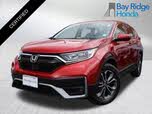
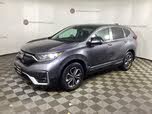
Choose the 2021 Honda CR-V if:
- Safety for All Trims: You want a wide range of advanced safety features standard across all trim levels, making it a safer choice without significant extra cost.
- Smooth Daily Driver: You prioritize a smooth and predictable driving experience with decent acceleration and dependable handling.
- Versatile and Practical Interior: You need abundant passenger and cargo space along with convenient features like a power liftgate on higher trims.


CarGurus highlights
According to CarGurus experts, the overall rating for the 2021 Subaru Forester was 7.5 out of 10, while the 2021 Honda CR-V scored 7.8 out of 10. Based on these ratings and the comprehensive comparison, the 2021 Honda CR-V slightly edges out the Forester as the more well-rounded and practical choice for most consumers. Its blend of advanced safety features, more versatile interior options, and overall functionality makes it the preferred option among the two.
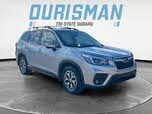
Choose the 2021 Subaru Forester if:
Shop Now- All-Wheel Drive Standard: You value having all-wheel drive as standard equipment for enhanced traction and off-road capability.
- Spacious and Practical Design: You need generous cargo space and excellent headroom and legroom for both front and rear passengers.
- Comprehensive Safety Suite: You appreciate advanced safety features like the EyeSight system and the extra layer of protection offered by DriverFocus.




Choose the 2021 Honda CR-V if:
Shop Now- Safety for All Trims: You want a wide range of advanced safety features standard across all trim levels, making it a safer choice without significant extra cost.
- Smooth Daily Driver: You prioritize a smooth and predictable driving experience with decent acceleration and dependable handling.
- Versatile and Practical Interior: You need abundant passenger and cargo space along with convenient features like a power liftgate on higher trims.






By: CarGurus + AI
At CarGurus, our team of experienced automotive writers remain at the heart of our content operation, conducting hands-on car tests and writing insightful guides that are backed by years of industry experience. To complement this, we are harnessing AI to make our content offering more diverse and more helpful to shoppers than ever. To achieve this, our AI systems are based exclusively on CarGurus content, ratings and data, so that what we produce is both unique to CarGurus, and uniquely helpful to car shoppers.