2021 Hyundai Tucson vs 2022 Kia EV6

Overview | |
MSRP$23,700 | MSRP$40,900 |
Listings658 | Listings186 |
Ratings & Reviews | |
User Reviews | User Reviews |
Expert reviews7.7 out of 10 | Expert reviews7.7 out of 10 |
Pros
Cons
| Pros
Cons
|
2021 Hyundai Tucson Reviews SummaryIt’s no secret that small SUVs are among the most popular new-car segments. You see them everywhere on the road today. Automakers put a lot of pressure on themselves to continually offer the latest and greatest. But that also means even the not-so-new are still terrific vehicles and provide a great value. Case in point: the 2021 Hyundai Tucson. The current generation of this compact SUV was introduced for the 2016 model year, and this 2021 edition represents the final model year before a new generation is ushered in. So why go with the older model? Because Hyundai has loaded it up with plenty of tech and safety features and it is offered at a competitive price. | |
2022 Kia EV6 Reviews SummaryWe didn't expect them to go there. But the designers and engineers behind the 2022 Kia EV6 did—and deleted the template of their company's affordable, cost-conscious brand. This is a $60,000 electric performance car that can genuinely compete with a Tesla Model 3 on everything from tech to style to acceleration to charging time. It's a masterclass of fresh thinking in a market segment dominated by rehashed ideas. And yet, it's hampered by the same major problems that, for decades, remain unresolved. The EV6 would be amazing with battery technology that hasn't yet been invented. For now, we'll tell you what the present life is like with this most unusual and exciting Kia in years. | |
No video found | |
Popular Features & Specs | |
Engine2.0L 161 hp I4 | Engine167 hp Electric |
Drive TrainFWD | Drive TrainRWD |
Seating Capacity5 | Seating Capacity5 |
Horsepower161 hp @ 6200 rpm | Horsepower |
EV Battery Capacity | EV Battery Capacity58 kWh |
MPG City23 | MPG City136 |
MPG Highway28 | MPG Highway100 |
Battery Charge Time (120V) | Battery Charge Time (120V)51 hours |
Engine | |
Engine Name2.0L 161 hp I4 | Engine Name167 hp Electric |
Torque150 lb-ft @ 4700 rpm | Torque |
Horsepower161 hp @ 6200 rpm | Horsepower |
Battery Charge Time (120V) | Battery Charge Time (120V)51 hours |
DrivetrainFWD | DrivetrainRWD |
Fuel Economy | |
EV Battery Capacity | EV Battery Capacity58 kWh |
MPG City23 | MPG City136 |
MPG Highway28 | MPG Highway100 |
Interior | |
Seating Capacity5 | Seating Capacity5 |
Key Features | |
Navigation System | Navigation SystemStandard |
Safety | |
Front Crash Overall5 | Front Crash Overall5 |
Side Crash Overall5 | Side Crash Overall5 |
Dimensions & Capacity | |
Cargo Space31.0 cu ft | Cargo Space24.4 cu ft |
Curb Weight3309 lbs | Curb Weight4017 lbs |
Height64.8 in | Height60.8 in |
Length176.4 in | Length184.3 in |
Width72.8 in | Width74.0 in |
Wheelbase105.1 in | Wheelbase114.2 in |
Maximum Payload1146 lbs | Maximum Payload987 lbs |
Number of doors4 | Number of doors4 |
Maximum Towing Capacity1500 lbs | Maximum Towing Capacity |
Overview | ||
MSRP | $23,700 | $40,900 |
Listings | ||
Ratings & Reviews | ||
User reviews | ||
Expert reviews | 7.7 out of 10Read full review | 7.7 out of 10Read full review |
Pros & cons | Pros
Cons
| Pros
Cons
|
Summary | It’s no secret that small SUVs are among the most popular new-car segments. You see them everywhere on the road today. Automakers put a lot of pressure on themselves to continually offer the latest and greatest. But that also means even the not-so-new are still terrific vehicles and provide a great value. Case in point: the 2021 Hyundai Tucson. The current generation of this compact SUV was introduced for the 2016 model year, and this 2021 edition represents the final model year before a new generation is ushered in. So why go with the older model? Because Hyundai has loaded it up with plenty of tech and safety features and it is offered at a competitive price. | We didn't expect them to go there. But the designers and engineers behind the 2022 Kia EV6 did—and deleted the template of their company's affordable, cost-conscious brand. This is a $60,000 electric performance car that can genuinely compete with a Tesla Model 3 on everything from tech to style to acceleration to charging time. It's a masterclass of fresh thinking in a market segment dominated by rehashed ideas. And yet, it's hampered by the same major problems that, for decades, remain unresolved. The EV6 would be amazing with battery technology that hasn't yet been invented. For now, we'll tell you what the present life is like with this most unusual and exciting Kia in years. |
Video | No video found | |
Popular Features & Specs | ||
Engine | 2.0L 161 hp I4 | 167 hp Electric |
Drive Train | FWD | RWD |
Seating Capacity | 5 | 5 |
Horsepower | 161 hp @ 6200 rpm | |
EV Battery Capacity | 58 kWh | |
MPG City | 23 | 136 |
MPG Highway | 28 | 100 |
Battery Charge Time (120V) | 51 hours | |
Engine | ||
Engine Name | 2.0L 161 hp I4 | 167 hp Electric |
Torque | 150 lb-ft @ 4700 rpm | |
Horsepower | 161 hp @ 6200 rpm | |
Battery Charge Time (120V) | 51 hours | |
Drivetrain | FWD | RWD |
Fuel Economy | ||
EV Battery Capacity | 58 kWh | |
MPG City | 23 | 136 |
MPG Highway | 28 | 100 |
Interior | ||
Seating Capacity | 5 | 5 |
Key Features | ||
Navigation System | Standard | |
Safety | ||
Front Crash Overall | 5 | 5 |
Side Crash Overall | 5 | 5 |
Dimensions & Capacity | ||
Cargo Space | 31.0 cu ft | 24.4 cu ft |
Curb Weight | 3309 lbs | 4017 lbs |
Height | 64.8 in | 60.8 in |
Length | 176.4 in | 184.3 in |
Width | 72.8 in | 74.0 in |
Wheelbase | 105.1 in | 114.2 in |
Maximum Payload | 1146 lbs | 987 lbs |
Number of doors | 4 | 4 |
Maximum Towing Capacity | 1500 lbs | |
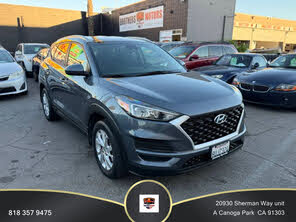
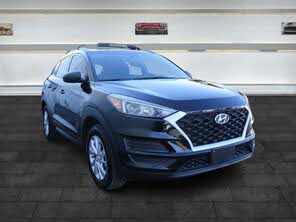
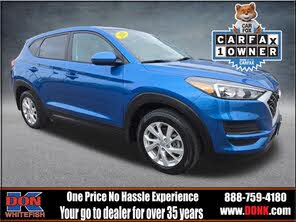
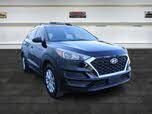
The 2021 Hyundai Tucson featured a more conventional design compared to its futuristic successor. It had an upright layout that provided a commanding view of the road. Inside, the Tucson boasted a modern and attractive dash design, seamlessly integrating tech features into the overall aesthetic. Every button and dial was easy to find, making the interior user-friendly and intuitive.
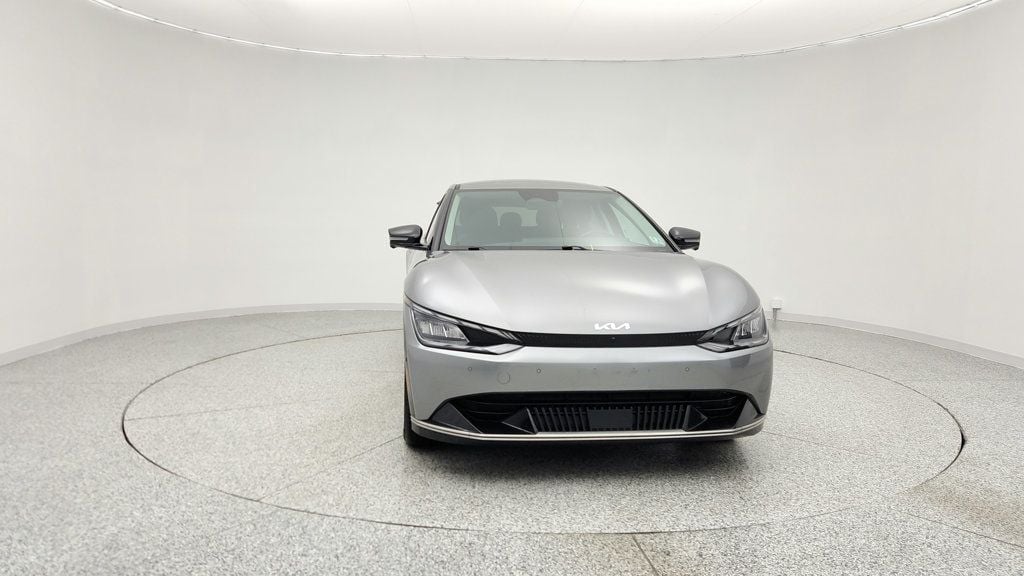
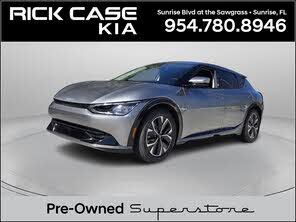
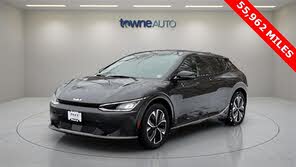
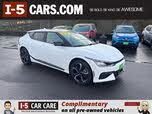
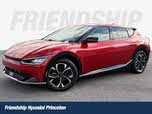
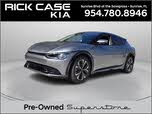
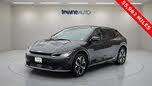
In contrast, the 2022 Kia EV6 had a sportier and more svelte design, reminiscent of a Ford Mustang Mach-E. It was lower and wider, with a highback tail and a lip spoiler that doubled as a lightbar. The wheels were pushed to the furthest corners of the chassis, giving the car a muscular stance. The headlights traced a V-shaped pattern, and the wedgy profile with an angled roofline added to its aggressive look. The interior featured dual 12-inch screens, a floating center console, and seats covered in suede and leather, creating a futuristic and luxurious cabin.


The 2021 Hyundai Tucson came with two engine options. The base engine was a 2.0-liter four-cylinder producing 161 horsepower and 150 pound-feet of torque. The SEL, Sport, Limited, and Ultimate trims were equipped with a 2.4-liter four-cylinder engine that made 181 horsepower and 175 pound-feet of torque. Both engines were paired with a six-speed automatic transmission and offered either front-wheel drive (FWD) or optional all-wheel drive (AWD). The base engine felt underwhelming, especially at highway speeds, while the 2.4-liter engine provided a livelier performance. The Tucson had a comfortable and refined ride, with a towing capacity of up to 2,000 pounds with the 2.4-liter engine.
The 2022 Kia EV6, particularly the GT-Line e-AWD model, featured two electric motors producing a combined 320 horsepower and 446 pound-feet of torque. It had a 77-kilowatt-hour battery and could accelerate from 0 to 60 mph in a claimed 4.6 seconds. The top-power GT trim, expected in fall 2022, promised 576 horsepower and a 0-60 time of less than 3.5 seconds. The base EV6 Light had a smaller 58 kWh battery and a single motor with 167 horsepower. The dual-motor GT-Line offered impressive torque distribution and handling, with multiple regenerative braking settings and a one-pedal driving option. However, the EV6's driving range was disappointing in cold weather, and charging times varied depending on the station's output.
The 2021 Hyundai Tucson provided 31 cubic feet of cargo space behind the rear seats, expanding to 61.9 cubic feet with the seats folded. While this was on the lower side for the compact SUV segment, it was adequate for weekend bags or large boxes. The Tucson offered solid front-seat headroom and legroom, with comfortable and supportive seats. The rear seats were less spacious but still accommodating for adults. The Sport and higher trims included a hands-free power liftgate for added convenience.
The 2022 Kia EV6 reinvented several core functions, such as pop-out door handles and a twisting rotary shifter. The climate controls and stereo shortcuts were combined in a thin touchscreen, which could be frustrating to use while driving. The EV6 offered generous legroom and headroom in all seating positions, with reclining rear seats and optional heated cushions. However, the cargo space was limited to 24 cubic feet behind the seats and 50 cubic feet when folded. The high load floor and low roof height further restricted space. The EV6 had a towing capacity of 2,300 pounds and an onboard power generator for running 120-volt equipment.
The 2021 Hyundai Tucson came standard with a 7-inch touchscreen infotainment system featuring Apple CarPlay and Android Auto. The Ultimate trim offered an upgraded 8-inch touchscreen, which was optional on other trims. The touchscreen was user-friendly with logical menu layouts and helpful hard buttons. Additional available features included navigation, satellite radio, and wireless device charging.
The 2022 Kia EV6's infotainment system was similar to other Hyundai, Kia, and Genesis models, being simple and quick to use. It required a wired connection for Apple CarPlay and Android Auto. The instrument panel displayed vehicles in surrounding lanes and live feeds of blind spots when changing lanes. The 360-degree surround-view cameras were sharp and clear, and the head-up display (HUD) used augmented reality for directional arrows. The EV6 came standard with a host of tech features, including dual 12-inch screens, wireless charging, and navigation. Higher trims offered a 14-speaker Meridian stereo and a remote parking system.
The 2021 Hyundai Tucson provided a solid list of standard driver-assistance features, including automatic emergency braking, forward collision warning, lane departure warning, lane-keeping assist, and driver drowsiness monitoring. Upper-tier trims offered adaptive cruise control, pedestrian detection, automatic high-beams, a 360-degree parking monitor, and blind-spot monitoring. The Tucson earned five stars from the National Highway Traffic Safety Administration (NHTSA) and a "Top Safety Pick" rating from the Insurance Institute for Highway Safety (IIHS).
The 2022 Kia EV6 had no published test results from U.S. agencies but came equipped with impressive safety tech. Standard features included lane-keeping, cyclist and pedestrian detection, front and rear cross-traffic alert, a driver attention monitor, rear parking sensors, safe exit warning, and rear occupant alert. Higher trims added front parking sensors, automatic rear braking, 360 cameras, evasive steering assist, and adaptive cruise control with "machine learning."
CarGurus highlights
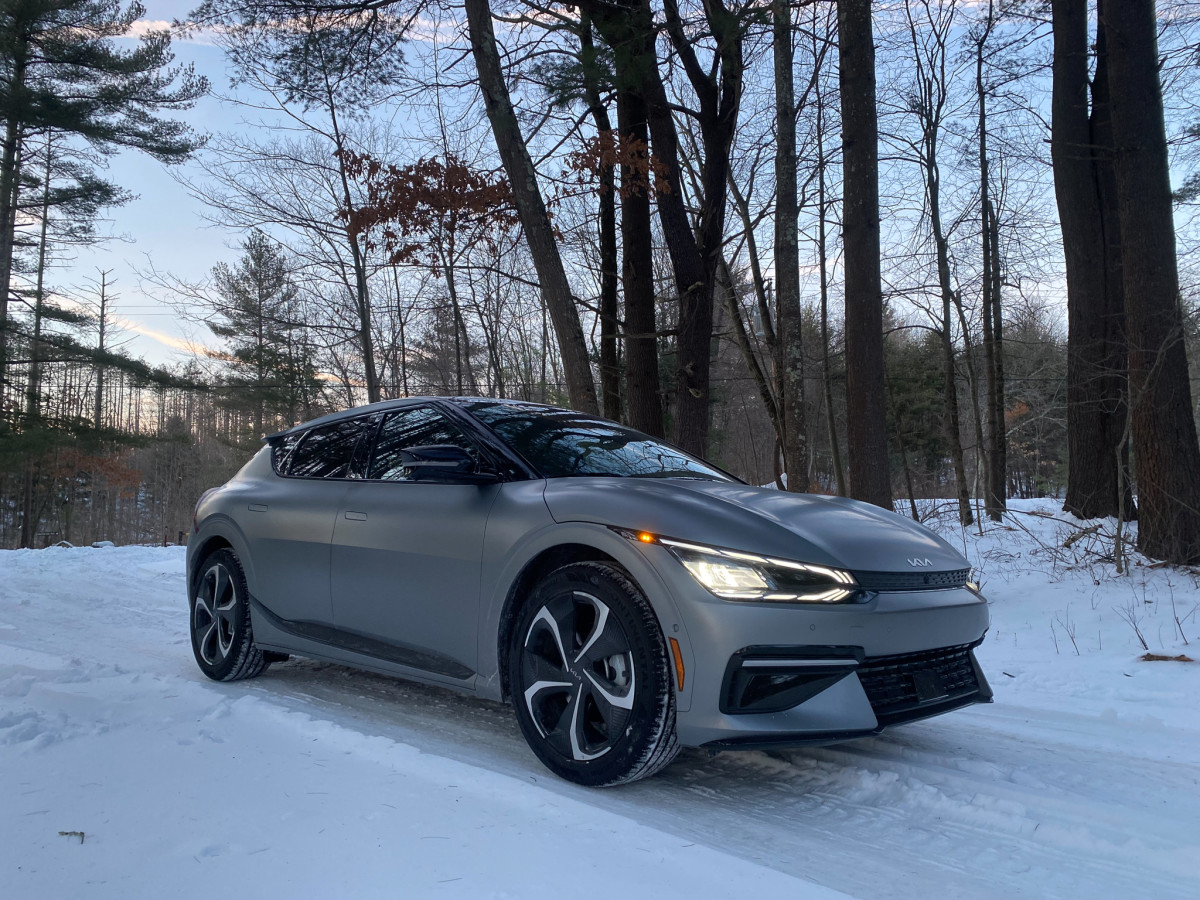
According to CarGurus experts, the overall rating for the 2021 Hyundai Tucson is 7.7 out of 10, while the 2022 Kia EV6 scores 7.7 out of 10. Both vehicles offer unique strengths, but the final recommendation depends on your priorities. If you value a conventional design, high safety ratings, and a comfortable ride, the 2021 Hyundai Tucson is a solid choice. However, if you seek a sportier design, advanced tech features, and impressive performance, the 2022 Kia EV6 is the better option.
Choose the 2021 Hyundai Tucson if:
- You prefer a conventional design with a commanding view of the road.
- You need a comfortable and refined ride with adequate cargo space.
- You value a solid list of standard safety features and high safety ratings.




Choose the 2022 Kia EV6 if:
- You want a sportier, more futuristic design with advanced tech features.
- You seek impressive performance with quick acceleration and multiple driving modes.
- You need generous interior space and innovative functions, despite limited cargo capacity.





CarGurus highlights
According to CarGurus experts, the overall rating for the 2021 Hyundai Tucson is 7.7 out of 10, while the 2022 Kia EV6 scores 7.7 out of 10. Both vehicles offer unique strengths, but the final recommendation depends on your priorities. If you value a conventional design, high safety ratings, and a comfortable ride, the 2021 Hyundai Tucson is a solid choice. However, if you seek a sportier design, advanced tech features, and impressive performance, the 2022 Kia EV6 is the better option.
Choose the 2021 Hyundai Tucson if:
Shop Now- You prefer a conventional design with a commanding view of the road.
- You need a comfortable and refined ride with adequate cargo space.
- You value a solid list of standard safety features and high safety ratings.





Choose the 2022 Kia EV6 if:
Shop Now- You want a sportier, more futuristic design with advanced tech features.
- You seek impressive performance with quick acceleration and multiple driving modes.
- You need generous interior space and innovative functions, despite limited cargo capacity.





By: CarGurus + AI
At CarGurus, our team of experienced automotive writers remain at the heart of our content operation, conducting hands-on car tests and writing insightful guides that are backed by years of industry experience. To complement this, we are harnessing AI to make our content offering more diverse and more helpful to shoppers than ever. To achieve this, our AI systems are based exclusively on CarGurus content, ratings and data, so that what we produce is both unique to CarGurus, and uniquely helpful to car shoppers.