2021 Volvo XC40 vs 2022 Hyundai Tucson
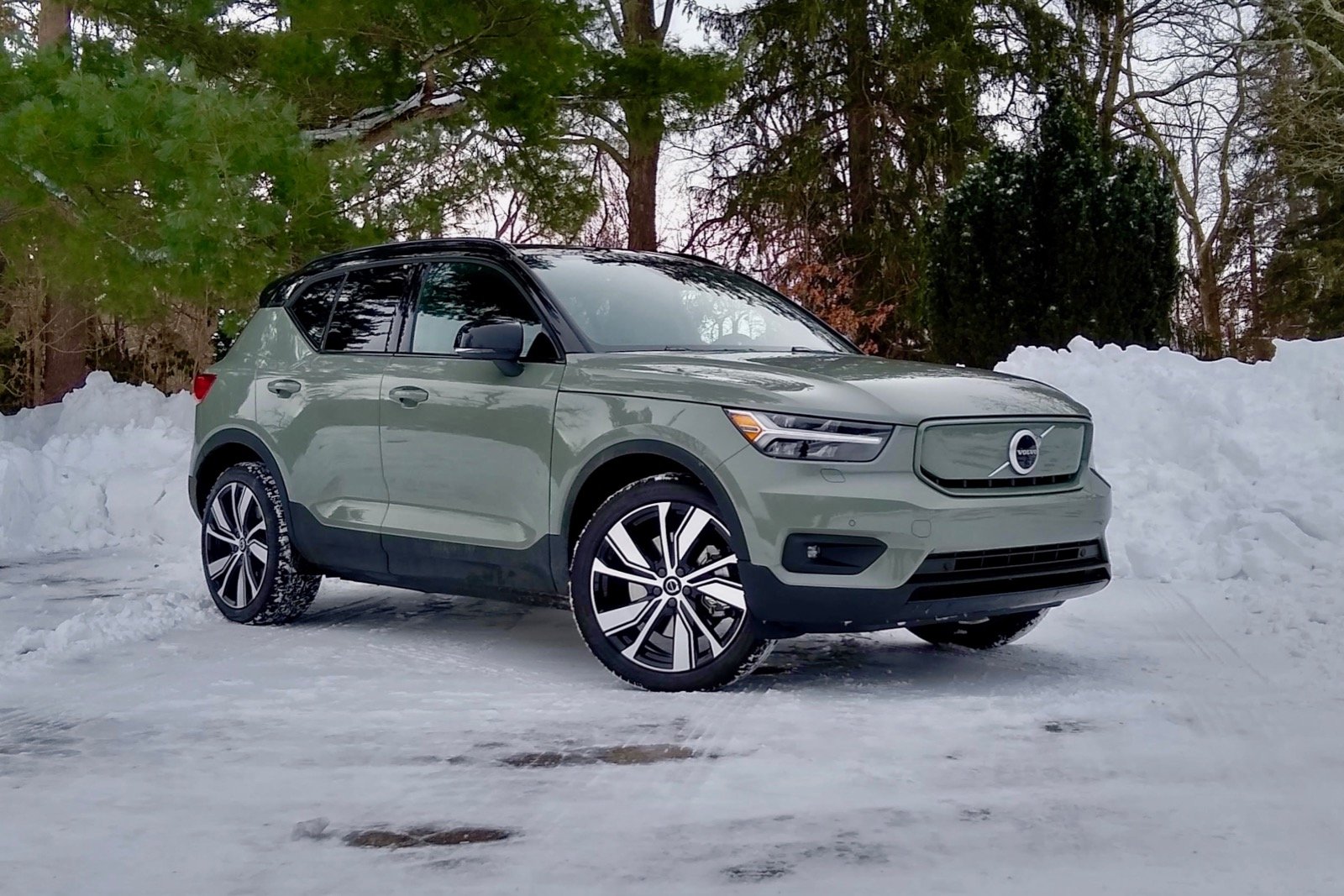
Overview | |
MSRP$33,700 | MSRP$25,800 |
Listings158 | Listings1954 |
Ratings & Reviews | |
User Reviews | User Reviews |
Expert reviews8.0 out of 10 | Expert reviews8.3 out of 10 |
Pros
Cons
| Pros
Cons
|
2021 Volvo XC40 Reviews SummaryIntroduced for the 2019 model year, the Volvo XC40 enters 2021 with one major change—the addition of an all-electric powertrain option. The 2021 Volvo XC40 Recharge is the Swedish automaker’s first mass-market electric vehicle, in fact. The Recharge will be sold alongside gasoline versions of the XC40, which carry over largely unchanged, and compete against small luxury crossovers like the Audi Q3, BMW X1, Mercedes-Benz GLA-Class, and Lexus UX. With its electric powertrain, the Recharge is a de facto Tesla Model Y competitor. It’s also priced similar to high-end versions of the Ford Mustang Mach-E, although the two electric crossovers have somewhat different philosophies. In addition to that zero-emission powertrain, the Recharge gets an Android-based operating system, over-the-air (OTA) software update capability for all vehicle systems, and some updates to driver-assist tech. These changes don’t apply to gasoline 2021 XC40 models, but Volvo does plan to add the Android operating system to more vehicles in the future. Since the Recharge is the main new thing for the 2021 XC40, that’s what we focused on for this review. While the gasoline XC40 is available in three trim levels—Momentum, R-Design, and Inscription—with front-wheel drive (FWD) or all-wheel drive (AWD), the Recharge is only offered in a single trim level, with standard AWD. | |
2022 Hyundai Tucson Reviews SummaryThe redesigned 2022 Hyundai Tucson has to offer a high-tech cabin, comfortable ride, competent engine lineup, and spacious cargo area to keep up with the Joneses in the hot-selling and competitive compact SUV class. It does that, and more, with Hyundai giving plenty of compelling reasons to take the 2022 Tucson for a test drive. | |
No video found | |
Popular Features & Specs | |
Engine2.0L 187 hp I4 | Engine2.5L 187 hp I4 |
Drive TrainFWD | Drive TrainFWD |
Seating Capacity5 | Seating Capacity5 |
Horsepower187 hp @ 4700 rpm | Horsepower187 hp @ 6100 rpm |
MPG City23 | MPG City26 |
MPG Highway32 | MPG Highway33 |
Engine | |
Engine Name2.0L 187 hp I4 | Engine Name2.5L 187 hp I4 |
Torque221 lb-ft @ 1400 rpm | Torque178 lb-ft @ 4000 rpm |
Horsepower187 hp @ 4700 rpm | Horsepower187 hp @ 6100 rpm |
DrivetrainFWD | DrivetrainFWD |
Fuel Economy | |
MPG City23 | MPG City26 |
MPG Highway32 | MPG Highway33 |
Interior | |
Leather SeatsStandard | Leather Seats |
Seating Capacity5 | Seating Capacity5 |
Safety | |
Front Crash Overall5 | Front Crash Overall4 |
Side Crash Overall5 | Side Crash Overall5 |
Dimensions & Capacity | |
Cargo Space20.7 cu ft | Cargo Space38.7 cu ft |
Curb Weight3627 lbs | Curb Weight3329 lbs |
Height65.3 in | Height65.6 in |
Length174.2 in | Length182.3 in |
Width80.1 in | Width73.4 in |
Wheelbase106.4 in | Wheelbase108.5 in |
Maximum Payload1133 lbs | Maximum Payload1301 lbs |
Number of doors4 | Number of doors4 |
Maximum Towing Capacity3500 lbs | Maximum Towing Capacity2000 lbs |
Standard Towing Capacity | Standard Towing Capacity2000 lbs |
Overview | ||
MSRP | $33,700 | $25,800 |
Listings | ||
Ratings & Reviews | ||
User reviews | ||
Expert reviews | 8.0 out of 10Read full review | 8.3 out of 10Read full review |
Pros & cons | Pros
Cons
| Pros
Cons
|
Summary | Introduced for the 2019 model year, the Volvo XC40 enters 2021 with one major change—the addition of an all-electric powertrain option. The 2021 Volvo XC40 Recharge is the Swedish automaker’s first mass-market electric vehicle, in fact. The Recharge will be sold alongside gasoline versions of the XC40, which carry over largely unchanged, and compete against small luxury crossovers like the Audi Q3, BMW X1, Mercedes-Benz GLA-Class, and Lexus UX. With its electric powertrain, the Recharge is a de facto Tesla Model Y competitor. It’s also priced similar to high-end versions of the Ford Mustang Mach-E, although the two electric crossovers have somewhat different philosophies. In addition to that zero-emission powertrain, the Recharge gets an Android-based operating system, over-the-air (OTA) software update capability for all vehicle systems, and some updates to driver-assist tech. These changes don’t apply to gasoline 2021 XC40 models, but Volvo does plan to add the Android operating system to more vehicles in the future. Since the Recharge is the main new thing for the 2021 XC40, that’s what we focused on for this review. While the gasoline XC40 is available in three trim levels—Momentum, R-Design, and Inscription—with front-wheel drive (FWD) or all-wheel drive (AWD), the Recharge is only offered in a single trim level, with standard AWD. | The redesigned 2022 Hyundai Tucson has to offer a high-tech cabin, comfortable ride, competent engine lineup, and spacious cargo area to keep up with the Joneses in the hot-selling and competitive compact SUV class. It does that, and more, with Hyundai giving plenty of compelling reasons to take the 2022 Tucson for a test drive. |
Video | No video found | |
Popular Features & Specs | ||
Engine | 2.0L 187 hp I4 | 2.5L 187 hp I4 |
Drive Train | FWD | FWD |
Seating Capacity | 5 | 5 |
Horsepower | 187 hp @ 4700 rpm | 187 hp @ 6100 rpm |
MPG City | 23 | 26 |
MPG Highway | 32 | 33 |
Engine | ||
Engine Name | 2.0L 187 hp I4 | 2.5L 187 hp I4 |
Torque | 221 lb-ft @ 1400 rpm | 178 lb-ft @ 4000 rpm |
Horsepower | 187 hp @ 4700 rpm | 187 hp @ 6100 rpm |
Drivetrain | FWD | FWD |
Fuel Economy | ||
MPG City | 23 | 26 |
MPG Highway | 32 | 33 |
Interior | ||
Leather Seats | Standard | |
Seating Capacity | 5 | 5 |
Safety | ||
Front Crash Overall | 5 | 4 |
Side Crash Overall | 5 | 5 |
Dimensions & Capacity | ||
Cargo Space | 20.7 cu ft | 38.7 cu ft |
Curb Weight | 3627 lbs | 3329 lbs |
Height | 65.3 in | 65.6 in |
Length | 174.2 in | 182.3 in |
Width | 80.1 in | 73.4 in |
Wheelbase | 106.4 in | 108.5 in |
Maximum Payload | 1133 lbs | 1301 lbs |
Number of doors | 4 | 4 |
Maximum Towing Capacity | 3500 lbs | 2000 lbs |
Standard Towing Capacity | 2000 lbs | |
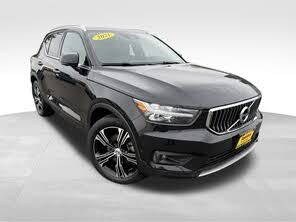
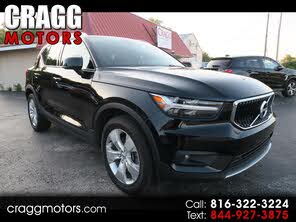
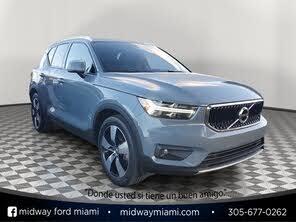
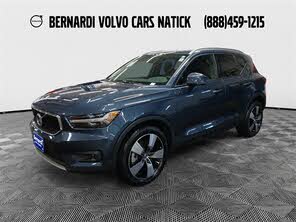
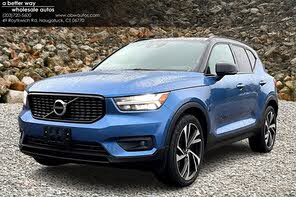
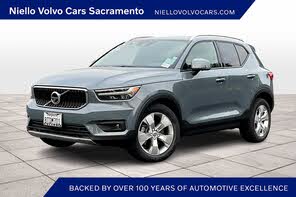
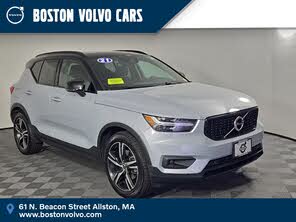
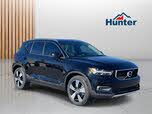
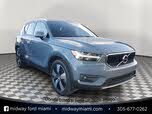
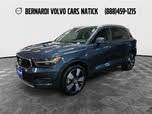
The 2021 Volvo XC40 boasted a more traditional SUV aesthetic compared to other small luxury crossovers. With a tall, flat roof and an upright rear hatch, it exuded a robust and solid look. It also mirrored the contemporary Volvo lineup with recognizable styling cues such as “Thor’s Hammer” LED headlights and an oval grille. Gasoline models sported a contrasting white roof for a hint of retro flair, adding a touch of distinctiveness.
The electric XC40 Recharge took a different path with a blanked-off grille, subtle “Recharge” badging, and unique alloy wheels available in 19 or 20 inches. Its gloss black roof and mirror caps, revised rear bumper to omit exhaust tips, and exclusive Sage Green Metallic color further set it apart. The charging port, cleverly placed where you’d expect the fuel filler, blended seamlessly with the design.
Built on Volvo’s Compact Modular Architecture (CMA) platform, shared with the Polestar 2, the XC40 was designed to integrate both gasoline and electric powertrains effortlessly. Inside, the XC40 offered a minimalist design adorned with high-quality materials, including real metal trim and a combination of Nappa leather and Nubuck textile upholstery. Every element, from the portrait-oriented touchscreen to the air vents, integrated harmoniously, making it a visually coherent and luxurious space.
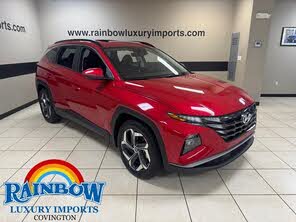
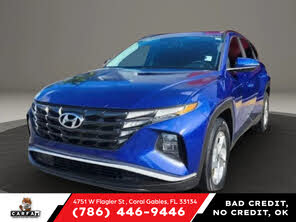
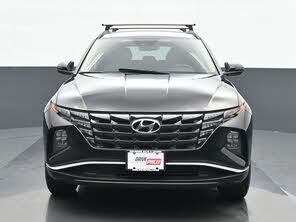
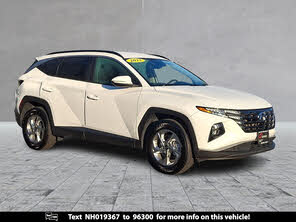
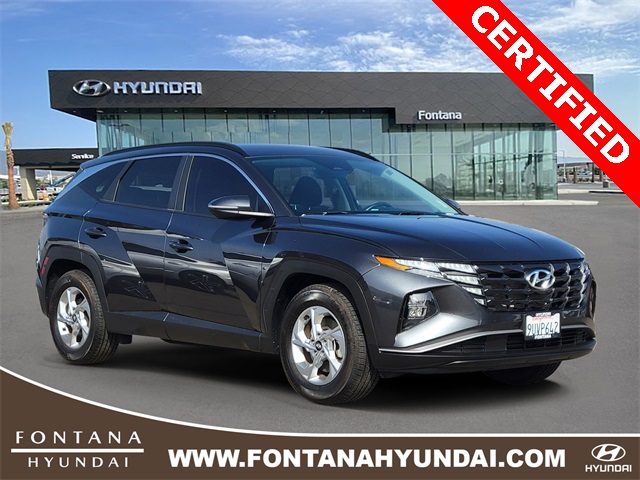
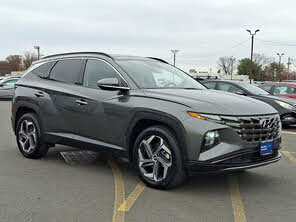
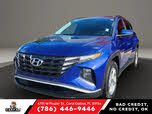
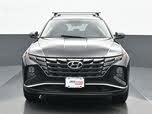
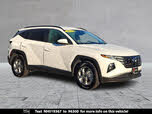
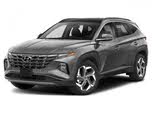
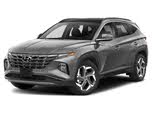
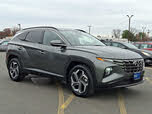
Conversely, the 2022 Hyundai Tucson embraced a fresh platform introduced to the U.S. market in its long-wheelbase version, providing ample space for passengers and cargo. Up front, the Tucson sported Hyundai’s new design language with a parametric grille hiding LED daytime running lights, Bi-LED headlights, and LED front turn signals. When lit, the headlights and daytime running lights formed a unique shape resembling wings.
The side profile drew inspiration from the Hyundai Elantra, with a distinctive silver D-pillar connecting the window surrounds to the rear, creating a floating roof effect. At the rear, the Tucson featured toothy taillights illuminated by LEDs, adding flair and helping it stand out in a crowded segment.
The Tucson’s wheels ranged from 17 to 19 inches, with different designs across the trims. High-end models boasted premium fascias, front and rear skid plates, gloss black pillars, and a panoramic sunroof. Standard features included roof rails, body-color side-mirror housings, and laminate/acoustic glass, with additional amenities such as heated outside mirrors and front aero wipers in higher trims. Inside, the Tucson combined hard- and soft-touch surfaces with stain- and odor-resistant cloth seats, enhancing its appeal without straying from its budget-friendly roots.


In the realm of performance, the 2021 Volvo XC40 provided a varied line-up with three distinct powertrains. The gasoline models featured a 2.0-liter turbocharged four-cylinder engine mated to an eight-speed automatic transmission. The base T4 variant offered front-wheel drive (FWD) with 187 horsepower and 221 pound-feet of torque. The all-wheel-drive (AWD) T5 version delivered a peppier output of 248 hp and 258 lb-ft of torque.
The standout XC40 Recharge, sharing its powertrain with the Polestar 2, boasted dual electric motors providing AWD with a remarkable 402 hp and 486 lb-ft of torque. A 78-kilowatt-hour battery offered 75 kWh of usable capacity. The Recharge could accelerate from zero to 60 mph in 4.7 seconds, whereas the T5 clocked 6.1 seconds, and the T4 trailed at 8.1 seconds. All variants were electronically limited to 112 mph. The Recharge also allowed for one-pedal driving and had commendable ride quality despite larger 20-inch wheels.
The 2022 Hyundai Tucson, meanwhile, came with two main powertrain options: a 2.5-liter direct-injected four-cylinder engine and a turbocharged 1.6-liter four-cylinder hybrid. The ICE model provided 187 hp and 178 lb-ft, paired with an eight-speed automatic transmission. The hybrid variant offered a combined 226 hp and 258 lb-ft from its system, making it more engaging to drive.
The Tucson’s hybrid shone against rivals like the Ford Escape Hybrid and Honda CR-V Hybrid, especially during demanding drives with elevation changes. Front-wheel-drive (FWD) models with the ICE engine garnered an EPA-estimated 26 mpg city, 33 mpg highway, and 29 mpg combined, while AWD models saw slightly lower figures. The hybrid variants excelled with 37 mpg city, 36 mpg highway, and 37 mpg combined, with the most efficient achieving 38 mpg across all categories.
The upcoming plug-in hybrid model promised even more power with 261 hp and 224 lb-ft of torque, courtesy of a 13.8-kilowatt-hour lithium-ion battery, though full testing and range details were pending.
The 2021 Volvo XC40 offered no difference in passenger or cargo space between its Recharge and gasoline variants, yet it wasn’t particularly spacious. It trailed behind competitors like the Tesla Model Y and Ford Mustang Mach-E in both front and rear legroom, and lacked headroom compared to the Tesla. Its cargo area was also smaller, with a tiny frunk due to powertrain components occupying space under the hood.
Despite these limitations, Volvo compensated with innovative storage options. The center console featured a removable trash bin, and a glovebox door included a bag hook. Unique placements for the Harman Kardon audio system freed up door bin space, and a well-shaped storage cubby ahead of the shifter kept phones secure. A wireless charging pad was optional, complemented by a single USB-C port, though rear passengers had no phone-charging provisions.
In contrast, the 2022 Hyundai Tucson upped the ante with its new, more spacious platform. While not cheap on the inside, it went toe-to-toe with top competitors like the Toyota RAV4 and Honda CR-V. Standard features included a six-way power-adjustable driver’s seat and lumbar support, with higher trims offering eight-way adjustments, memory settings, and ventilated front seats. The seating position was easy to adjust, and the steering wheel could be tilted and telescoped, wrapped in leather and heated in higher trims.
The Tucson's spacious cabin accommodated a family of four comfortably, outpacing the CR-V, RAV4, and Escape in passenger volume. It also boasted 74.8 cubic feet of cargo space, comparable to the Forester, RAV4, and CR-V, and significantly more than the Escape. The rear seats featured a 60-40 split-folding bench with a dual-level cargo floor in ICE models, standard remote release from the cargo area, and an optional hands-free liftgate in higher trims.
The 2021 Volvo XC40 Recharge adopted the Android Automotive OS from Polestar 2, integrating Google apps for a seamless experience. The infotainment system included Google Assistant for voice control and Google Maps for navigation, with the ability to sync personal Google accounts for further customization. Compatible with Apple CarPlay, Android Auto, and Bluetooth, its standout features were the built-in Google functionalities and OTA update capabilities.
The standard hardware featured a 9-inch touchscreen and a 12.3-inch digital instrument cluster, with top-notch graphics and intuitive menus. The Recharge also ditched the traditional start button, utilizing a shift-and-go system facilitated by the presence of the key fob.
The 2022 Hyundai Tucson came well-equipped with an 8-inch infotainment screen, six-speaker audio, wireless Apple CarPlay and Android Auto, HD Radio, and two USB ports. A 4.2-inch multi-information display was standard, with satellite radio, Blue Link app connectivity, additional USB outlets, rear air conditioning vents, and dual-zone automatic climate control available from the SEL/Blue trim upwards. Higher trims offered a fully digital instrument cluster and a 10.25-inch infotainment touchscreen, though it required wired connections for Apple and Android devices.
The larger infotainment system, integrated within a black plastic head unit, included all climate and media controls via touch-sensitive points. Though responsive, finding controls while driving proved challenging, relying more on steering wheel interfaces and voice commands.
The gasoline-powered 2021 Volvo XC40 earned top marks with a “Top Safety Pick+” from the IIHS and a five-star overall rating from the NHTSA, including five stars in frontal and side crash tests and four in rollover evaluations. Though the electric XC40 Recharge hadn’t been tested, Volvo’s implementation of a safety cage around the battery and a redeveloped crash structure suggested strong prospects in safety tests.
Standard safety features included lane-keep assist, blind-spot monitoring with rear cross-traffic alert, automatic emergency braking, rear parking sensors, and hill-start and descent control. Optional features encompassed traffic-sign recognition, reverse automatic emergency braking, driver-alertness monitoring, run-off road mitigation, oncoming lane mitigation, and Volvo’s Pilot Assist system for adaptive cruise control and lane-centering. The Recharge further benefitted from Volvo’s latest sensor suite designed for future scalability.
The 2022 Hyundai Tucson had yet to undergo testing by the IIHS or NHTSA. Nevertheless, Hyundai’s SmartSense suite offered robust safety features. Standard inclusions were forward collision-avoidance with pedestrian/cyclist detection, lane-keep assist, automatic high beams, driver attention monitoring, rear occupant alert, speed limit assist, and leading vehicle departure alert.
Additional safety options comprised blind-spot warning, rear cross-traffic alert, adaptive cruise control with stop and go, surround-view cameras, parking sensors with collision avoidance, and remote parking assist. Hyundai’s comprehensive safety features rivaled those in luxury SUVs of similar size.
Hyundai’s warranty coverage was impressive, offering a 10-year/100,000-mile powertrain limited warranty, five-year/60,000-mile new vehicle limited warranty, seven-year anti-perforation warranty, and three years/36,000 miles of complimentary maintenance.
CarGurus highlights

According to CarGurus experts, the overall rating for the 2021 Volvo XC40 was 8.0 out of 10, while the 2022 Hyundai Tucson scored an impressive 8.3 out of 10. If prioritizing a luxurious and well-designed interior, coupled with strong safety and performance in an electric powertrain, the Volvo XC40 Recharge stands out. However, for those seeking a more spacious, versatile, and tech-savvy compact SUV with exceptional safety features and an excellent warranty, the 2022 Hyundai Tucson emerges as the superior choice. Given the higher overall rating, the Tucson is the better pick between the two.
Choose the 2021 Volvo XC40 if:
- You prioritize a luxury feel with premium interior materials.
- You seek innovative storage solutions and clever space usage.
- You value a well-rounded safety feature set with a strong standard equipment list.

Choose the 2022 Hyundai Tucson if:
- You need a spacious cabin with expansive cargo capacity for family trips.
- You appreciate a robust warranty and complimentary maintenance.
- You desire comprehensive safety features, comparable to luxury SUVs, in a budget-friendly package.


CarGurus highlights
According to CarGurus experts, the overall rating for the 2021 Volvo XC40 was 8.0 out of 10, while the 2022 Hyundai Tucson scored an impressive 8.3 out of 10. If prioritizing a luxurious and well-designed interior, coupled with strong safety and performance in an electric powertrain, the Volvo XC40 Recharge stands out. However, for those seeking a more spacious, versatile, and tech-savvy compact SUV with exceptional safety features and an excellent warranty, the 2022 Hyundai Tucson emerges as the superior choice. Given the higher overall rating, the Tucson is the better pick between the two.
Choose the 2021 Volvo XC40 if:
Shop Now- You prioritize a luxury feel with premium interior materials.
- You seek innovative storage solutions and clever space usage.
- You value a well-rounded safety feature set with a strong standard equipment list.





Choose the 2022 Hyundai Tucson if:
Shop Now- You need a spacious cabin with expansive cargo capacity for family trips.
- You appreciate a robust warranty and complimentary maintenance.
- You desire comprehensive safety features, comparable to luxury SUVs, in a budget-friendly package.




By: CarGurus + AI
At CarGurus, our team of experienced automotive writers remain at the heart of our content operation, conducting hands-on car tests and writing insightful guides that are backed by years of industry experience. To complement this, we are harnessing AI to make our content offering more diverse and more helpful to shoppers than ever. To achieve this, our AI systems are based exclusively on CarGurus content, ratings and data, so that what we produce is both unique to CarGurus, and uniquely helpful to car shoppers.