2021 Ford Mustang Mach-E vs 2021 Toyota Sienna

Overview | |
MSRP$42,895 | MSRP$34,460 |
Listings445 | Listings627 |
Ratings & Reviews | |
User Reviews | User Reviews |
Expert reviews7.8 out of 10 | Expert reviews8.3 out of 10 |
Pros
Cons
| Pros
Cons
|
2021 Ford Mustang Mach-E Reviews SummaryEager to prove that it’s serious about electric cars, Ford applied the iconic Mustang name to its new electric SUV. The 2021 Ford Mustang Mach-E is not only the first electric vehicle to wear the Mustang name, it’s also the first production Mustang model with more than two doors. Ford has made electric cars before (the Focus Electric ended production just a few years ago), but the Mach-E is much more ambitious. It’s the first Ford electric car based on a dedicated platform, and aimed at a mass audience. Ford believes style and sportiness will help it sell more EVs, but the emphasis on performance also puts the Mach-E in direct competition with the similarly-sized Tesla Model Y. As a small electric crossover, the Mach-E could also get cross-shopped against the upcoming Volkswagen ID.4 and Nissan Ariya crossovers. Mach-E buyers must choose between rear-wheel drive (RWD) and all-wheel drive (AWD), Standard Range and Extended Range battery packs, and four trim levels— Select, California Route 1, Premium, and GT. Our test car was a sold out First Edition model, which is identical to the Premium trim level aside from cosmetic differences like red brake calipers. It featured the Extended Range battery pack and all-wheel drive. | |
2021 Toyota Sienna Reviews SummaryToyota’s minivan got a major makeover for 2021, now entering its fourth generation of production since debuting as a 1997 model. For the first time, the Sienna gets a hybrid gasoline-electric powertrain, and not only that—it’s standard equipment. The Sienna Hybrid is built on the Toyota New Global Architecture (TNGA-K) platform, shared with the Highlander and other current Toyota models. | |
Popular Features & Specs | |
Engine266 hp Electric | Engine2.5L 245 hp I4 Hybrid |
Drive TrainRWD | Drive TrainFWD |
Seating Capacity5 | Seating Capacity8 |
EV Battery Capacity68 kWh | EV Battery Capacity1.9 kWh |
MPG City105 | MPG City36 |
MPG Highway93 | MPG Highway36 |
Battery Charge Time (240V)14.1 hours | Battery Charge Time (240V) |
Engine | |
Engine Name266 hp Electric | Engine Name2.5L 245 hp I4 Hybrid |
Battery Charge Time (240V)14.1 hours | Battery Charge Time (240V) |
DrivetrainRWD | DrivetrainFWD |
Fuel Economy | |
EV Battery Capacity68 kWh | EV Battery Capacity1.9 kWh |
MPG City105 | MPG City36 |
MPG Highway93 | MPG Highway36 |
Interior | |
Seating Capacity5 | Seating Capacity8 |
Key Features | |
Navigation SystemStandard | Navigation System |
Safety | |
Front Crash Overall | Front Crash Overall4 |
Side Crash Overall5 | Side Crash Overall5 |
Dimensions & Capacity | |
Cargo Space34.4 cu ft | Cargo Space33.5 cu ft |
Curb Weight4318 lbs | Curb Weight4610 lbs |
Height64.0 in | Height68.5 in |
Length185.6 in | Length203.7 in |
Width74.1 in | Width78.5 in |
Wheelbase117.5 in | Wheelbase120.5 in |
Maximum Payload | Maximum Payload1560 lbs |
Number of doors4 | Number of doors4 |
Maximum Towing Capacity | Maximum Towing Capacity3500 lbs |
Overview | ||
MSRP | $42,895 | $34,460 |
Listings | ||
Ratings & Reviews | ||
User reviews | ||
Expert reviews | 7.8 out of 10Read full review | 8.3 out of 10Read full review |
Pros & cons | Pros
Cons
| Pros
Cons
|
Summary | Eager to prove that it’s serious about electric cars, Ford applied the iconic Mustang name to its new electric SUV. The 2021 Ford Mustang Mach-E is not only the first electric vehicle to wear the Mustang name, it’s also the first production Mustang model with more than two doors. Ford has made electric cars before (the Focus Electric ended production just a few years ago), but the Mach-E is much more ambitious. It’s the first Ford electric car based on a dedicated platform, and aimed at a mass audience. Ford believes style and sportiness will help it sell more EVs, but the emphasis on performance also puts the Mach-E in direct competition with the similarly-sized Tesla Model Y. As a small electric crossover, the Mach-E could also get cross-shopped against the upcoming Volkswagen ID.4 and Nissan Ariya crossovers. Mach-E buyers must choose between rear-wheel drive (RWD) and all-wheel drive (AWD), Standard Range and Extended Range battery packs, and four trim levels— Select, California Route 1, Premium, and GT. Our test car was a sold out First Edition model, which is identical to the Premium trim level aside from cosmetic differences like red brake calipers. It featured the Extended Range battery pack and all-wheel drive. | Toyota’s minivan got a major makeover for 2021, now entering its fourth generation of production since debuting as a 1997 model. For the first time, the Sienna gets a hybrid gasoline-electric powertrain, and not only that—it’s standard equipment. The Sienna Hybrid is built on the Toyota New Global Architecture (TNGA-K) platform, shared with the Highlander and other current Toyota models. |
Video | ||
Popular Features & Specs | ||
Engine | 266 hp Electric | 2.5L 245 hp I4 Hybrid |
Drive Train | RWD | FWD |
Seating Capacity | 5 | 8 |
EV Battery Capacity | 68 kWh | 1.9 kWh |
MPG City | 105 | 36 |
MPG Highway | 93 | 36 |
Battery Charge Time (240V) | 14.1 hours | |
Engine | ||
Engine Name | 266 hp Electric | 2.5L 245 hp I4 Hybrid |
Battery Charge Time (240V) | 14.1 hours | |
Drivetrain | RWD | FWD |
Fuel Economy | ||
EV Battery Capacity | 68 kWh | 1.9 kWh |
MPG City | 105 | 36 |
MPG Highway | 93 | 36 |
Interior | ||
Seating Capacity | 5 | 8 |
Key Features | ||
Navigation System | Standard | |
Safety | ||
Front Crash Overall | 4 | |
Side Crash Overall | 5 | 5 |
Dimensions & Capacity | ||
Cargo Space | 34.4 cu ft | 33.5 cu ft |
Curb Weight | 4318 lbs | 4610 lbs |
Height | 64.0 in | 68.5 in |
Length | 185.6 in | 203.7 in |
Width | 74.1 in | 78.5 in |
Wheelbase | 117.5 in | 120.5 in |
Maximum Payload | 1560 lbs | |
Number of doors | 4 | 4 |
Maximum Towing Capacity | 3500 lbs | |
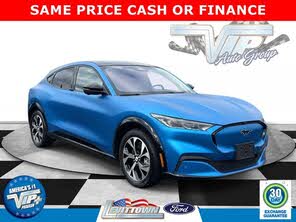
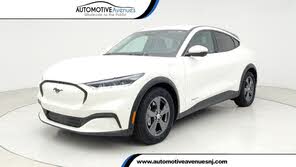
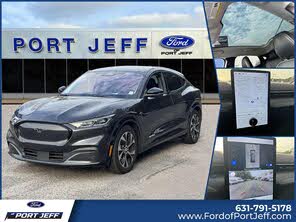
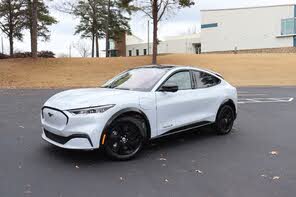
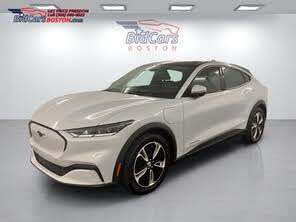
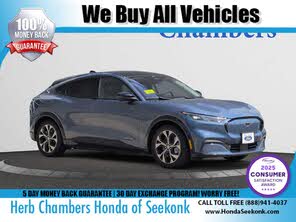
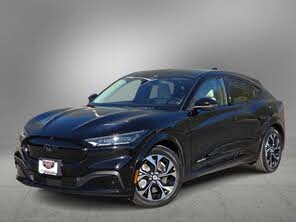
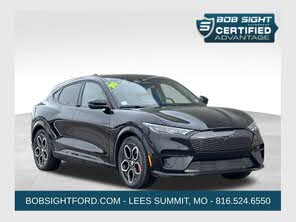
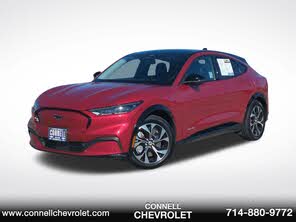
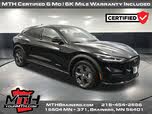
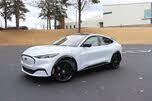
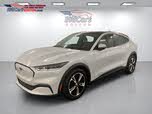
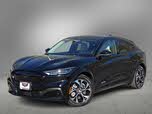
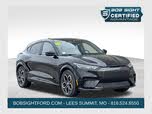
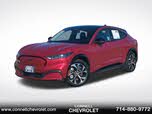
The 2021 Ford Mustang Mach-E had an exterior design attempting to connect to the traditional Mustang coupe and convertible. Despite having four doors and a rear hatch, it still maintained a Mustang-like appearance, characterized by thin headlights, a long hood, and a prominent (though nonfunctional) oval grille. The taillights mimicked the iconic sequential turn signals of the original Mustang. Offering a vibrant exterior color palette, such as the striking Grabber Blue, the Mach-E visually stood out.
Inside, the Mach-E featured a massive infotainment touchscreen, centrally mounted and dominating the minimalist dashboard. A thin rectangular display served as the instrument cluster, showing speed as “ground speed,” mirroring conventional Mustang models. The rotary gear selector, positioned on the center console, contributed to the minimalist feel, which was strikingly similar to Tesla’s interior designs. While the interior boasted decent-quality materials, it lacked a leather-upholstery option, which might have disappointed some buyers. The top trims featured synthetic ActiveX upholstery with contrast stitching and textile inserts. The First Edition models included unique trims like red brake calipers and brushed aluminum pedals.
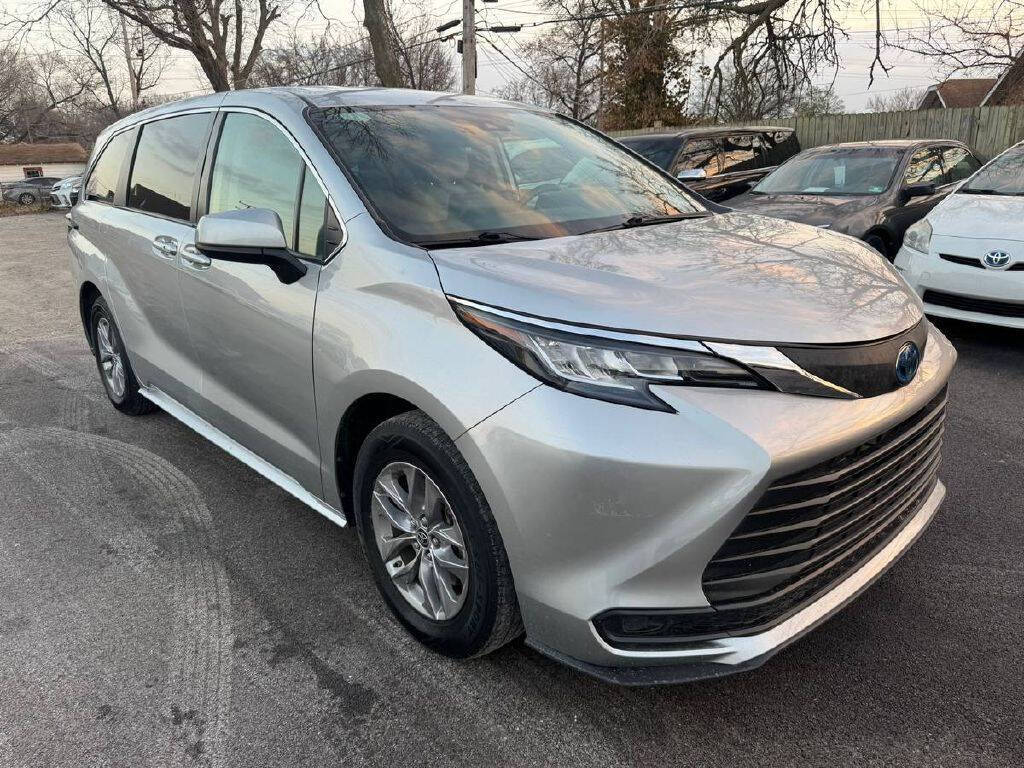
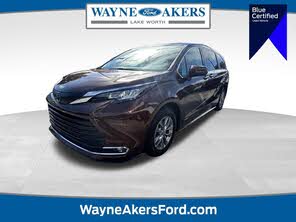
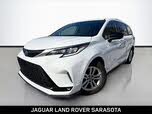
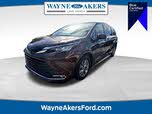
The 2021 Toyota Sienna, on the other hand, aimed to redefine minivan aesthetics within its genre constraints. Thanks to a wide grille and sleek horizontal LED headlamp arrays, it managed a somewhat SUV-like appearance. The side view showcased newly designed sliding side doors with a distinctive body line swooping up over the rear wheels. Alloy wheels varied in size from 17 to 20 inches, depending on the trim. From the rear, despite its large window, the Sienna exuded a wide, low, and refined stance. Fit and finish were superb, as expected from Toyota.
Inside, the Sienna emphasized width with horizontal lines across the dashboard. The seating position was higher than a sedan’s but comfortable, though not quite as high as a full-size SUV. The dashboard was simple and uncluttered, with controls clustered below the infotainment screen. The center console, featuring the gear selector and ample cupholders and storage compartments, was smartly designed with practicality in mind. The leather-wrapped steering wheel added a touch of luxury, and high-quality materials were used throughout. The second and third rows offered ample space and comfort, with numerous configuration options to maximize utility.


The 2021 Ford Mustang Mach-E aimed to uphold the sporty reputation of the Mustang name. By default, it came with rear-wheel drive (RWD) and decent power. The base RWD Select model boasted 266 horsepower and 317 pound-feet of torque, achieving 0 to 60 mph in 6.1 seconds. The top-tier AWD GT Performance Edition delivered an impressive 480 hp and 634 lb-ft, racing from 0 to 60 mph in just 3.5 seconds, rivaling the Tesla Model Y Performance.
The test car fell somewhere in the middle, featuring an AWD powertrain rated at 346 hp and 428 lb-ft of torque, which managed 0 to 60 mph in 4.8 seconds. This performance placed it ahead of the Audi E-Tron and almost on par with the Jaguar I-Pace, while being priced significantly lower. The Mach-E handled corners well with responsive steering and a planted feel, courtesy of the low-mounted battery pack. However, this came at the cost of a stiffer ride, exacerbated by the 19-inch wheels.
Three drive modes—Engage, Whisper, and Unbridled—offered varied driving experiences, though the differences were subtle. Fake “propulsion sounds” could be activated in Unbridled mode for an extra auditory effect. Ford’s one-pedal driving mode proved effective, but the friction brakes also offered a linear pedal feel for those preferring traditional braking.
The 2021 Toyota Sienna Hybrid combined a 2.5-liter four-cylinder engine with two electric motors, producing a total of 243 horsepower. Front-wheel drive was standard, while all-wheel drive was optional on all trims. The AWD system used a separate electric motor for the rear wheels, simplifying the drivetrain and reducing mechanical complexity.
The Sienna’s electronically controlled continuously variable transmission (CVT) aimed for smooth power delivery but somewhat dulled throttle response, favoring seamless acceleration over sporty dynamics. Four drive modes—Normal, EV, Eco, and Sport—offered some flexibility, with Sport providing a livelier feel. The new TNGA front suspension and independent rear suspension significantly improved handling, ensuring minimal body roll and a comfortable ride over long distances.
The big win for the Sienna was its EPA fuel economy ratings. FWD models achieved 36 mpg both in the city and on the highway, while AWD models slightly trailed at 35 mpg combined.
The Mach-E was marketed as an SUV but bore packaging more aligned with a station wagon or hatchback. Its driving position was fairly low, and the low roofline, even with a panoramic glass roof, didn’t enhance the feeling of spaciousness. Compared to the Tesla Model Y, the Mach-E offered less headroom and legroom in both rows and lacked a three-row configuration.
Cargo space was also less than the Model Y, with the Mach-E offering 59.7 cubic feet with the second row folded and 29.7 cubic feet with the second row in place. It did, however, include a 4.7-cubic-foot front trunk (frunk) for additional storage. The space between the front seats housed a decent-sized storage bin and included a large, flat area beneath the touchscreen with a grippy surface and wireless charging pad, complemented by USB ports for both rows.
Conversely, the Toyota Sienna excelled in versatility, essential for a minivan. The standard third-row seats folded easily into the floor, and the second row offered up to 25 inches of slide, simplifying access to the rear and facilitating flexible seating arrangements. The cabin was equipped with numerous storage compartments and cupholders (16 total), making every journey convenient for occupants.
Cargo capacity was expansive, boasting 33.5 cubic feet behind the third row, 75.2 cubic feet behind the second row, and a whopping 101.0 cubic feet behind the first row. The adaptable second row enhanced cargo management further. Despite featuring a large battery, its placement under the front seats did not intrude on the cargo space. The Sienna also offered a 3,500-pound towing capacity. Power-operated sliding side doors and tailgate, responsive to kick motions, added to the user-friendly design.
The Mach-E debuted Ford’s new Sync 4 infotainment system, featuring wireless Apple CarPlay/Android Auto and over-the-air (OTA) software updates. The main 15.5-inch touchscreen and a 10.2-inch instrument cluster provided key information. While the large screen was a notable feature, its text-heavy design made navigation cumbersome. The bottom portion of the screen replaced traditional analog controls, using touchscreen icons and sliders for climate adjustments.
In contrast, the Sienna boasted a nine-inch touchscreen across all trims, supporting Apple CarPlay, Android Auto, Amazon Alexa, and SiriusXM, alongside standard Bluetooth and multiple USB ports. Higher trims enjoyed additional connectivity features like Safety Connect, Remote Connect, and a 1500-watt inverter with a 120-volt AC outlet. The audio system ranged from a six-speaker setup on basic models to a 12-speaker JBL system with dynamic navigation on top trims.
A rear-seat entertainment system with an 11.6-inch display, remote, and wireless headphones was available on higher trims. Additionally, the driver could benefit from a color multi-information display and an optional digital rearview mirror on limited and platinum models. A 10-inch color head-up display (HUD) in Platinum trims further enhanced driving information visibility.
The Mach-E, newly launched, lacked crash-test ratings from both the National Highway Traffic Safety Administration (NHTSA) and the Insurance Institute for Highway Safety (IIHS) at the time. However, it came loaded with standard driver-assist features, including automatic high beams, blind-spot monitoring, lane-keep assist, automatic emergency braking, adaptive cruise control with lane centering, traffic-sign recognition, and evasive steering assist. Higher trims added a 360-degree camera system.
Ford planned to introduce Active Drive Assist, which would allow hands-free driving on certain highways, monitored via a driver-facing camera. This feature was standard on higher trims and an option on Select trims, though software activation was delayed to late 2021.
The Sienna Hybrid came standard with Toyota Safety Sense 2.0, incorporating dynamic radar cruise control, lane-tracing assist, pre-collision system with pedestrian and bicyclist detection, lane-departure alert, automatic high beams, and road sign assist. Its Star Safety System included advanced features like enhanced vehicle stability control and brake assist. With 10 airbags and a robust LATCH system for child seats, the Sienna catered well to family safety.
A rear-seat reminder system and tire pressure monitoring were also standard. While specific crash-test ratings for the 2021 model were pending, the previous year’s model received high ratings from both IIHS and NHTSA.
CarGurus highlights
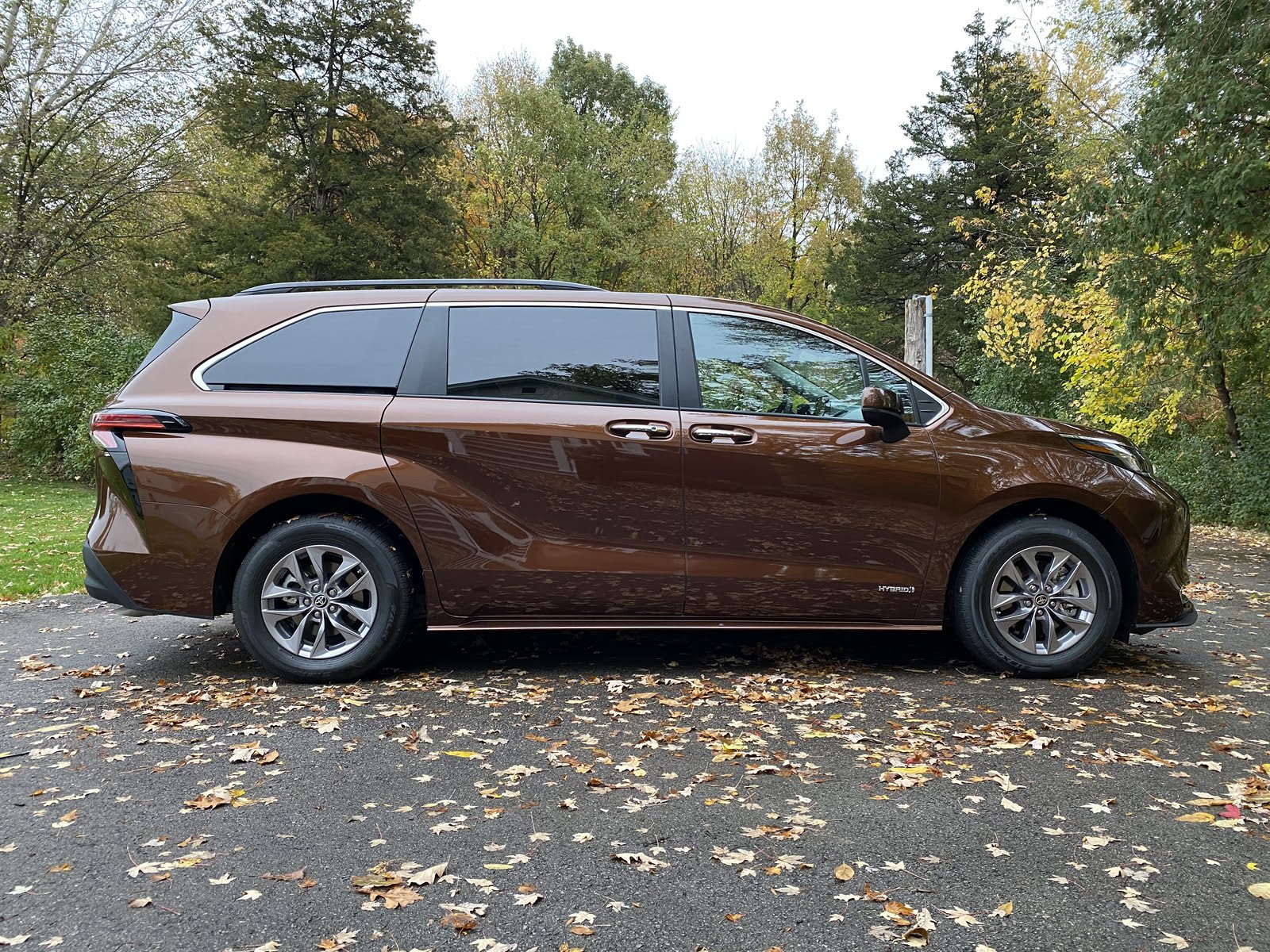
According to CarGurus experts, the overall rating for the 2021 Ford Mustang Mach-E is 7.8 out of 10, while the 2021 Toyota Sienna scores 8.3 out of 10. Given these ratings, the 2021 Toyota Sienna comes out on top as the better choice. Its superior versatility, practicality, and fuel efficiency make it an excellent option for families and those needing a reliable and spacious vehicle. The Mach-E, while impressive in its own right, caters more to those seeking an electric vehicle with a sporty edge. For most consumers, the Sienna’s advantages in interior space, convenience features, and overall value outweigh the sporty allure of the Mach-E.
Choose the 2021 Ford Mustang Mach-E if:
- You want a sporty and powerful electric SUV with Mustang heritage.
- Cutting-edge infotainment with a massive touchscreen is essential for you.
- You prefer a vehicle with multiple drive modes and one-pedal driving functionality.
Choose the 2021 Toyota Sienna if:
- You need a highly versatile vehicle with ample cargo and passenger space.
- Superior fuel economy and a hybrid powertrain are among your top priorities.
- Advanced technology for family convenience, such as a rear-seat entertainment system, is important.





CarGurus highlights
According to CarGurus experts, the overall rating for the 2021 Ford Mustang Mach-E is 7.8 out of 10, while the 2021 Toyota Sienna scores 8.3 out of 10. Given these ratings, the 2021 Toyota Sienna comes out on top as the better choice. Its superior versatility, practicality, and fuel efficiency make it an excellent option for families and those needing a reliable and spacious vehicle. The Mach-E, while impressive in its own right, caters more to those seeking an electric vehicle with a sporty edge. For most consumers, the Sienna’s advantages in interior space, convenience features, and overall value outweigh the sporty allure of the Mach-E.
Choose the 2021 Ford Mustang Mach-E if:
Shop Now- You want a sporty and powerful electric SUV with Mustang heritage.
- Cutting-edge infotainment with a massive touchscreen is essential for you.
- You prefer a vehicle with multiple drive modes and one-pedal driving functionality.




Choose the 2021 Toyota Sienna if:
Shop Now- You need a highly versatile vehicle with ample cargo and passenger space.
- Superior fuel economy and a hybrid powertrain are among your top priorities.
- Advanced technology for family convenience, such as a rear-seat entertainment system, is important.






By: CarGurus + AI
At CarGurus, our team of experienced automotive writers remain at the heart of our content operation, conducting hands-on car tests and writing insightful guides that are backed by years of industry experience. To complement this, we are harnessing AI to make our content offering more diverse and more helpful to shoppers than ever. To achieve this, our AI systems are based exclusively on CarGurus content, ratings and data, so that what we produce is both unique to CarGurus, and uniquely helpful to car shoppers.