2020 Toyota Highlander vs 2021 Toyota RAV4

Overview | |
MSRP$34,600 | MSRP$26,350 |
Listings705 | Listings1831 |
Ratings & Reviews | |
User Reviews | User Reviews |
Expert reviews7.7 out of 10 | Expert reviews7.3 out of 10 |
Pros
Cons
| Pros
Cons
|
2020 Toyota Highlander Reviews SummaryMidsize three-row SUVs are all spacious and powerful, but only the Toyota Highlander reaches the premium threshold for passenger comfort. Redesigned for 2020, the Highlander's revised styling and technology are secondary to its silent operation, soft ride, and cosseting interior. The upper trims feel and drive just like a Lexus, without the upcharge. There is nothing exciting about a Highlander, and yet, there is no other SUV in the $35,000 to $50,000 range that feels so effortless and tranquil. | |
2021 Toyota RAV4 Reviews SummarySince its launch in 1997, the Toyota RAV4 has ridden a wave of crossover SUV popularity to become one of Toyota’s bestselling models. Introduced for the 2019 model year, the current-generation RAV4 tries to offer the rugged style of a traditional SUV, but underneath it’s still a car-based crossover pitched against the likes of the Ford Escape, Honda CR-V, Hyundai Tucson, Kia Sportage, Nissan Rogue, Subaru Forester, and Volkswagen Tiguan. Because it’s only in its third model year, this fifth-generation RAV4 doesn’t get many updates for 2021. The biggest news is the addition of the RAV4 Prime plug-in hybrid to the lineup, but that model actually went on sale last year. The only other changes are a new XLE Premium trim level for the RAV4 Hybrid, and a new front stainless steel front skid plate for the gasoline RAV4 TRD Off-Road model. Toyota offers compact SUV buyers more choices than most competitors. The RAV4 LE, XLE, XLE Premium, and Limited trim levels are available with hybrid and non-hybrid powertrains. Toyota also offers the gasoline-only RAV4 Adventure and TRD Off-Road trim levels, plus the RAV4 Hybrid XSE. The RAV4 Prime is also available in two trim levels—SE and XSE. We’ve covered the RAV4 Hybrid and RAV4 Prime in separate reviews, so this review will focus on the gasoline RAV4. Our test car was a RAV4 TRD Off-Road, which joined the lineup for the 2020 model year and is the first RAV4 model tuned by Toyota Racing Development, the automaker’s North American performance division. | |
No video found | |
Popular Features & Specs | |
Engine3.5L 295 hp V6 | Engine2.5L 203 hp I4 |
Drive TrainFWD | Drive TrainFWD |
Seating Capacity8 | Seating Capacity5 |
Horsepower295 hp @ 6600 rpm | Horsepower |
MPG City20 | MPG City28 |
MPG Highway28 | MPG Highway35 |
Engine | |
Engine Name3.5L 295 hp V6 | Engine Name2.5L 203 hp I4 |
Torque263 lb-ft @ 4700 rpm | Torque |
Horsepower295 hp @ 6600 rpm | Horsepower |
DrivetrainFWD | DrivetrainFWD |
Fuel Economy | |
MPG City20 | MPG City28 |
MPG Highway28 | MPG Highway35 |
Interior | |
Seating Capacity8 | Seating Capacity5 |
Safety | |
Front Crash Overall4 | Front Crash Overall4 |
Side Crash Overall5 | Side Crash Overall5 |
Dimensions & Capacity | |
Cargo Space16.0 cu ft | Cargo Space37.6 cu ft |
Curb Weight4145 lbs | Curb Weight3370 lbs |
Height68.1 in | Height67.0 in |
Length194.9 in | Length180.9 in |
Width76.0 in | Width73.0 in |
Wheelbase112.2 in | Wheelbase105.9 in |
Maximum Payload1685 lbs | Maximum Payload1240 lbs |
Number of doors4 | Number of doors4 |
Maximum Towing Capacity5000 lbs | Maximum Towing Capacity1500 lbs |
Overview | ||
MSRP | $34,600 | $26,350 |
Listings | ||
Ratings & Reviews | ||
User reviews | ||
Expert reviews | 7.7 out of 10Read full review | 7.3 out of 10Read full review |
Pros & cons | Pros
Cons
| Pros
Cons
|
Summary | Midsize three-row SUVs are all spacious and powerful, but only the Toyota Highlander reaches the premium threshold for passenger comfort. Redesigned for 2020, the Highlander's revised styling and technology are secondary to its silent operation, soft ride, and cosseting interior. The upper trims feel and drive just like a Lexus, without the upcharge. There is nothing exciting about a Highlander, and yet, there is no other SUV in the $35,000 to $50,000 range that feels so effortless and tranquil. | Since its launch in 1997, the Toyota RAV4 has ridden a wave of crossover SUV popularity to become one of Toyota’s bestselling models. Introduced for the 2019 model year, the current-generation RAV4 tries to offer the rugged style of a traditional SUV, but underneath it’s still a car-based crossover pitched against the likes of the Ford Escape, Honda CR-V, Hyundai Tucson, Kia Sportage, Nissan Rogue, Subaru Forester, and Volkswagen Tiguan. Because it’s only in its third model year, this fifth-generation RAV4 doesn’t get many updates for 2021. The biggest news is the addition of the RAV4 Prime plug-in hybrid to the lineup, but that model actually went on sale last year. The only other changes are a new XLE Premium trim level for the RAV4 Hybrid, and a new front stainless steel front skid plate for the gasoline RAV4 TRD Off-Road model. Toyota offers compact SUV buyers more choices than most competitors. The RAV4 LE, XLE, XLE Premium, and Limited trim levels are available with hybrid and non-hybrid powertrains. Toyota also offers the gasoline-only RAV4 Adventure and TRD Off-Road trim levels, plus the RAV4 Hybrid XSE. The RAV4 Prime is also available in two trim levels—SE and XSE. We’ve covered the RAV4 Hybrid and RAV4 Prime in separate reviews, so this review will focus on the gasoline RAV4. Our test car was a RAV4 TRD Off-Road, which joined the lineup for the 2020 model year and is the first RAV4 model tuned by Toyota Racing Development, the automaker’s North American performance division. |
Video | No video found | |
Popular Features & Specs | ||
Engine | 3.5L 295 hp V6 | 2.5L 203 hp I4 |
Drive Train | FWD | FWD |
Seating Capacity | 8 | 5 |
Horsepower | 295 hp @ 6600 rpm | |
MPG City | 20 | 28 |
MPG Highway | 28 | 35 |
Engine | ||
Engine Name | 3.5L 295 hp V6 | 2.5L 203 hp I4 |
Torque | 263 lb-ft @ 4700 rpm | |
Horsepower | 295 hp @ 6600 rpm | |
Drivetrain | FWD | FWD |
Fuel Economy | ||
MPG City | 20 | 28 |
MPG Highway | 28 | 35 |
Interior | ||
Seating Capacity | 8 | 5 |
Safety | ||
Front Crash Overall | 4 | 4 |
Side Crash Overall | 5 | 5 |
Dimensions & Capacity | ||
Cargo Space | 16.0 cu ft | 37.6 cu ft |
Curb Weight | 4145 lbs | 3370 lbs |
Height | 68.1 in | 67.0 in |
Length | 194.9 in | 180.9 in |
Width | 76.0 in | 73.0 in |
Wheelbase | 112.2 in | 105.9 in |
Maximum Payload | 1685 lbs | 1240 lbs |
Number of doors | 4 | 4 |
Maximum Towing Capacity | 5000 lbs | 1500 lbs |
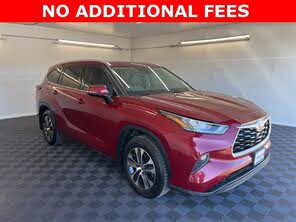
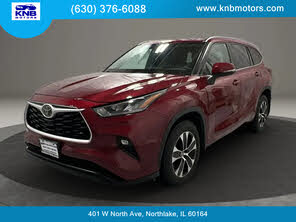
The 2020 Toyota Highlander boasted a design transformation that, while not revolutionary, presented a subtler, more sophisticated look compared to its predecessor. The slightly more slanted tailgate glass and pronounced body panel creases created wider arcs around the front and rear fenders. Toyota’s trapezoidal theme was evident throughout the vehicle, from the tailgate's license plate cutout to the slimmer headlights and lower front bumper. Projector-beam LED headlights and fog lights graced every trim above the base L, while Limited and Platinum trims flaunted more attractive LED running lamps. The addition of 20-inch wheels on the top trims coupled with new paint colors like the vibrant Blueprint on the Limited model, contributed to the fresh visual appeal. Despite the minor tweaks, some argued that while the Highlander wasn’t unattractive, it lacked the excitement factor.
Inside, Toyota focused on quality fit and finish that elevated the Highlander’s cabin ambiance. Silver-painted accents on the armrests, steering wheel, and gear selector highlighted the vehicle’s curves and angles. An 8-inch touchscreen and polished black plastic climate controls appeared to float above a multi-layered dashboard, creating an elegant, airy feeling. The color palette was pleasing across trims, with the Limited trim featuring a luxurious three-tone interior. Padded surfaces abounded, though the middle door panels felt somewhat neglected. Only the Kia Telluride rivaled this attention to detail. Features like perforated leatherette textures below the air vents and diamond quilting on Platinum trim seat backrests enhanced the interior’s upscale feel. However, despite its refined cabin, some felt the Highlander’s exterior styling didn’t fully match its inviting interior.
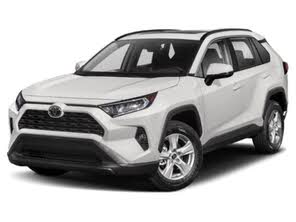
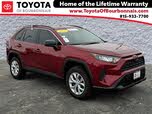
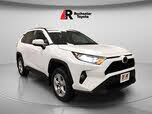
Contrast that with the 2021 Toyota RAV4, which embraced a rugged exterior reminiscent of traditional SUVs. The boxy fender flares and scowling front end gave the RAV4 a character that starkly contrasted its more approachable predecessors and competitors. This aggressive stance helped it stand out in the crowded compact crossover market.
Under its rugged shell, the RAV4 shared the TNGA platform, known for its versatility across Toyota's model range. The RAV4 Adventure model featured a retro look with its Ice Edge roof and orange interior accents, while the TRD Off-Road showcased matte black 18-inch wheels, dark gray exterior trim, and utilitarian touches like rubberized knobs and door handles. However, the material quality on higher trims didn’t elevate commensurate with the price escalation. SofTex upholstery on the TRD Off-Road proved lighter and durable, but genuine leather was absent even on the top trims. This practical, rugged interior approach varied significantly from Highlander’s elegant ambiance.


The 2020 Toyota Highlander derived its power from a 3.5-liter V6 engine, available in FWD or AWD configurations. This robust V6 delivered a peppy 295 horsepower and 263 pound-feet of torque, achieving brisk acceleration effortlessly. The eight-speed automatic transmission ensured smooth and almost silent operation at idle, akin to the Lexus RX. Despite its power, initiating a kickdown required a heavy foot due to the vehicle's slightly lazy nature. Steering in the Highlander felt loose and required frequent adjustments at highway speeds, while the soft suspension led to a bouncy ride, reminiscent of older Buick models.
The Highlander’s large size and weight were always evident, often diminishing driver confidence when ferrying multiple passengers. However, for those aware of its limitations, the Highlander provided an exceptionally refined and isolating ride. On higher trims like the Limited and Platinum, torque vectoring on the rear axle and selectable driving modes contributed to a marginally improved drive. Fuel economy figures were impressive, with the FWD model achieving 21 mpg city, 29 mpg highway, and 24 mpg combined. AWD models were slightly less efficient at 20/27/23 mpg. These fuel economies, coupled with an auto stop-start feature, added to Highlander’s practical appeal.
The 2021 Toyota RAV4, driven by a Dynamic Force 2.5-liter four-cylinder engine, delivered 203 horsepower and 184 pound-feet of torque. This engine achieved remarkable 40% thermal efficiency, a feat typically reserved for high-performance racing engines. However, the vehicle's drive experience didn’t quite match its engine's efficiency and power. The transmission often hesitated to shift gears, affecting the overall driving satisfaction. At lower speeds, the steering was responsive but lacked feedback, resulting in a disconnected driving experience that some compared to a video game.
On highways, the RAV4 demonstrated quieter cabin noise and a suspension apt at absorbing road imperfections. However, its focus on off-road capability, evident in the Adventure and TRD Off-Road models with their torque-vectoring rear axles and 8.6 inches of ground clearance, suggested a divergence from purely on-road driving excellence.
The 2020 Toyota Highlander offered exceptional versatility, seating up to eight or seven passengers with the second-row captain's chairs standard on higher trims. The second row provided generous legroom with adjustable fore/aft and reclining settings, allowing passengers to find their ideal comfort positions. Third-row access was user-friendly, especially for those under six feet, facilitated by wide-opening rear doors. Ergonomically, the Highlander excelled in both front and rear seating, ensuring an easy slide into place without any need to step up or duck down.
Three-zone climate control came standard, enhancing passenger comfort across rows. Higher trims featured additional conveniences like a 120-volt outlet in the rear, side window shades, and a heated second row. Cargo space was abundant, with up to 16 cubic feet behind the third row, 48 cubic feet behind the second, and 84 cubic feet with both rows folded flat. This expansive cargo area included practical features like six tie-down hooks and an additional 120-volt outlet in hybrid models.
The 2021 Toyota RAV4, while offering a tall and upright roof for good headroom, slightly lagged behind in legroom compared to some competitors. The rear seats, unfortunately, had hard bottom cushions that might have made long trips less comfortable. A standard 60/40 split-folding rear seat, although practical, lacked the fore/aft sliding adjustment present in rivals like the Ford Escape.
With 37.6 cubic feet of cargo space behind the rear seats, the RAV4 provided above-average storage, though it fell short of the leading Honda CR-V. The wide aperture facilitated easier loading, albeit with a higher cargo area lip that could be cumbersome. The large rubberized knobs and user-friendly steering-wheel controls reflected the RAV4's rugged design intent, but the overall interior storage felt somewhat compromised due to prioritized driving controls.
Despite the 2020 Toyota Highlander being a new model, its infotainment system felt dated. Both the standard 8-inch and optional 12.3-inch touchscreens had limitations, such as low-resolution displays and minimal onboard apps. Users couldn't utilize the full display area due to constant overlays of climate and fuel economy details. However, standard Apple CarPlay, Android Auto, and Amazon Alexa integration, along with a 10-inch head-up display on upper trims, provided useful features. Other tech highlights included a semi-automated driving system with adaptive cruise control, road sign detection, and automatic high beams. The JBL audio system, SiriusXM, HD radio, WiFi, and a Safety Connect service further enhanced the vehicle's tech suite.
Alternatively, the 2021 Toyota RAV4, equipped with standard Apple CarPlay and Android Auto, and SiriusXM satellite radio, offered a straightforward yet effective infotainment interface. Screen sizes varied from 7 inches on lower trims to an available 9 inches on the RAV4 Prime. The system was user-friendly, perched atop the dashboard for ease of access, but wasn’t particularly innovative. Unlike the Highlander, the RAV4 didn't offer a head-up display on non-Prime models, resulting in a less advanced tech experience for regular versions. Nevertheless, the inclusion of multiple USB ports and an optional JBL premium audio system ensured satisfactory tech utilities for most users.
Safety was a significant highlight for both models. The 2020 Toyota Highlander came with the standard Toyota Safety Sense 2.0, featuring automatic emergency braking, pedestrian and cyclist detection, lane-keeping assist, adaptive cruise control, and automatic high beams. Though yet to be rated by NHTSA, it earned a 2020 Top Safety Pick from IIHS for its top ratings in all crash tests, optional headlights, and emergency braking capabilities.
Similarly, the 2021 Toyota RAV4 achieved notable safety accolades. IIHS granted it a Top Safety Pick rating with top scores in crash tests and front-crash prevention technology, though it fell short in headlight ratings. NHTSA awarded the RAV4 a five-star overall rating. It featured the comprehensive Toyota Safety Sense 2.0 suite, including forward-collision warning, adaptive cruise control, lane-departure warning, automatic high beams, and road-sign recognition. Higher trims included enhancements like blind-spot monitoring and a 360-degree camera system.
CarGurus highlights

According to CarGurus experts, the overall rating for the 2020 Toyota Highlander was 7.7 out of 10, while the 2021 Toyota RAV4 scored 7.3 out of 10. Based on these ratings, the final recommendation leans towards the 2020 Toyota Highlander. It offers superior interior comfort, adaptable seating, and a more refined driving experience, making it the preferred choice for those seeking a higher-quality family vehicle with ample space and advanced features.
Choose the 2020 Toyota Highlander if:
- You need a spacious, versatile interior with plenty of legroom and adaptable seating configurations.
- You prioritize a high-quality, elegant cabin with premium materials and sophisticated design.
- Maximizing cargo space and enjoying advanced driver-assist technologies are key factors in your decision.






Choose the 2021 Toyota RAV4 if:
- You value a rugged, SUV-like exterior design that stands out in the compact crossover market.
- You're seeking a practical, easy-to-use tech interface with standard smartphone integration.
- Adaptability to off-road conditions and additional off-road features like the TRD Off-Road model appeal to your adventurous spirit.




CarGurus highlights
According to CarGurus experts, the overall rating for the 2020 Toyota Highlander was 7.7 out of 10, while the 2021 Toyota RAV4 scored 7.3 out of 10. Based on these ratings, the final recommendation leans towards the 2020 Toyota Highlander. It offers superior interior comfort, adaptable seating, and a more refined driving experience, making it the preferred choice for those seeking a higher-quality family vehicle with ample space and advanced features.
Choose the 2020 Toyota Highlander if:
Shop Now- You need a spacious, versatile interior with plenty of legroom and adaptable seating configurations.
- You prioritize a high-quality, elegant cabin with premium materials and sophisticated design.
- Maximizing cargo space and enjoying advanced driver-assist technologies are key factors in your decision.









Choose the 2021 Toyota RAV4 if:
Shop Now- You value a rugged, SUV-like exterior design that stands out in the compact crossover market.
- You're seeking a practical, easy-to-use tech interface with standard smartphone integration.
- Adaptability to off-road conditions and additional off-road features like the TRD Off-Road model appeal to your adventurous spirit.









By: CarGurus + AI
At CarGurus, our team of experienced automotive writers remain at the heart of our content operation, conducting hands-on car tests and writing insightful guides that are backed by years of industry experience. To complement this, we are harnessing AI to make our content offering more diverse and more helpful to shoppers than ever. To achieve this, our AI systems are based exclusively on CarGurus content, ratings and data, so that what we produce is both unique to CarGurus, and uniquely helpful to car shoppers.