2021 Ford Explorer vs 2020 Toyota Highlander

Overview | |
MSRP$34,600 | MSRP$32,925 |
Listings702 | Listings2230 |
Ratings & Reviews | |
User Reviews | User Reviews |
Expert reviews7.7 out of 10 | Expert reviews7.5 out of 10 |
Pros
Cons
| Pros
Cons
|
2020 Toyota Highlander Reviews SummaryMidsize three-row SUVs are all spacious and powerful, but only the Toyota Highlander reaches the premium threshold for passenger comfort. Redesigned for 2020, the Highlander's revised styling and technology are secondary to its silent operation, soft ride, and cosseting interior. The upper trims feel and drive just like a Lexus, without the upcharge. There is nothing exciting about a Highlander, and yet, there is no other SUV in the $35,000 to $50,000 range that feels so effortless and tranquil. | |
2021 Ford Explorer Reviews SummaryThere was a time when everybody in America seemingly drove an Explorer. That may be an exaggeration, but not by much. In its first four years of production, Ford sold over a million examples. In 1998, Ford was selling its second-generation Explorer at a rate of nearly 440,000 per year. Whether your family purchased an Explorer or not, this was the nameplate that invented the midsize SUV segment. Fast forward to the 2021 model year and the Explorer is in its sixth generation. It's now a three-row SUV that clocks in at a maximum of 4,700 pounds, with a price tag north of $50,000 for the Explorer Platinum trim level. Long gone are the days when it was the only game in town. Almost every automaker has a competitor. So how does the Explorer shake out for 2021? | |
No video found | |
Popular Features & Specs | |
Engine3.5L 295 hp V6 | Engine2.3L 300 hp I4 |
Drive TrainFWD | Drive TrainRWD |
Seating Capacity8 | Seating Capacity7 |
Horsepower295 hp @ 6600 rpm | Horsepower |
MPG City20 | MPG City21 |
MPG Highway28 | MPG Highway28 |
Engine | |
Engine Name3.5L 295 hp V6 | Engine Name2.3L 300 hp I4 |
Torque263 lb-ft @ 4700 rpm | Torque |
Horsepower295 hp @ 6600 rpm | Horsepower |
DrivetrainFWD | DrivetrainRWD |
Fuel Economy | |
MPG City20 | MPG City21 |
MPG Highway28 | MPG Highway28 |
Interior | |
Seating Capacity8 | Seating Capacity7 |
Safety | |
Front Crash Overall4 | Front Crash Overall5 |
Side Crash Overall5 | Side Crash Overall5 |
Dimensions & Capacity | |
Cargo Space16.0 cu ft | Cargo Space18.2 cu ft |
Curb Weight4145 lbs | Curb Weight4345 lbs |
Height68.1 in | Height69.9 in |
Length194.9 in | Length198.8 in |
Width76.0 in | Width89.3 in |
Wheelbase112.2 in | Wheelbase119.1 in |
Maximum Payload1685 lbs | Maximum Payload1425 lbs |
Number of doors4 | Number of doors4 |
Maximum Towing Capacity5000 lbs | Maximum Towing Capacity5300 lbs |
Overview | ||
MSRP | $34,600 | $32,925 |
Listings | ||
Ratings & Reviews | ||
User reviews | ||
Expert reviews | 7.7 out of 10Read full review | 7.5 out of 10Read full review |
Pros & cons | Pros
Cons
| Pros
Cons
|
Summary | Midsize three-row SUVs are all spacious and powerful, but only the Toyota Highlander reaches the premium threshold for passenger comfort. Redesigned for 2020, the Highlander's revised styling and technology are secondary to its silent operation, soft ride, and cosseting interior. The upper trims feel and drive just like a Lexus, without the upcharge. There is nothing exciting about a Highlander, and yet, there is no other SUV in the $35,000 to $50,000 range that feels so effortless and tranquil. | There was a time when everybody in America seemingly drove an Explorer. That may be an exaggeration, but not by much. In its first four years of production, Ford sold over a million examples. In 1998, Ford was selling its second-generation Explorer at a rate of nearly 440,000 per year. Whether your family purchased an Explorer or not, this was the nameplate that invented the midsize SUV segment. Fast forward to the 2021 model year and the Explorer is in its sixth generation. It's now a three-row SUV that clocks in at a maximum of 4,700 pounds, with a price tag north of $50,000 for the Explorer Platinum trim level. Long gone are the days when it was the only game in town. Almost every automaker has a competitor. So how does the Explorer shake out for 2021? |
Video | No video found | |
Popular Features & Specs | ||
Engine | 3.5L 295 hp V6 | 2.3L 300 hp I4 |
Drive Train | FWD | RWD |
Seating Capacity | 8 | 7 |
Horsepower | 295 hp @ 6600 rpm | |
MPG City | 20 | 21 |
MPG Highway | 28 | 28 |
Engine | ||
Engine Name | 3.5L 295 hp V6 | 2.3L 300 hp I4 |
Torque | 263 lb-ft @ 4700 rpm | |
Horsepower | 295 hp @ 6600 rpm | |
Drivetrain | FWD | RWD |
Fuel Economy | ||
MPG City | 20 | 21 |
MPG Highway | 28 | 28 |
Interior | ||
Seating Capacity | 8 | 7 |
Safety | ||
Front Crash Overall | 4 | 5 |
Side Crash Overall | 5 | 5 |
Dimensions & Capacity | ||
Cargo Space | 16.0 cu ft | 18.2 cu ft |
Curb Weight | 4145 lbs | 4345 lbs |
Height | 68.1 in | 69.9 in |
Length | 194.9 in | 198.8 in |
Width | 76.0 in | 89.3 in |
Wheelbase | 112.2 in | 119.1 in |
Maximum Payload | 1685 lbs | 1425 lbs |
Number of doors | 4 | 4 |
Maximum Towing Capacity | 5000 lbs | 5300 lbs |
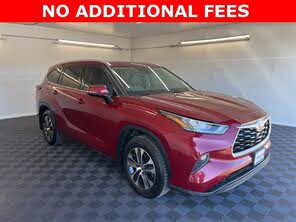
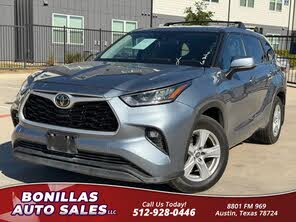
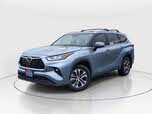
The 2020 Toyota Highlander displayed a refined exterior with subtle but significant updates from its predecessor. Its body featured more pronounced creases and arcs around the fenders, giving it a modern, trapezoidal aesthetics. The tailgate glass was slanted at a sharper angle, adding a sleek look. The rear bumper with optional silver-painted sections, slimmer headlights, and a redesigned grille added to its contemporary style. Projector-beam LED headlights and fog lights were included in all trims except the base L, while higher trims such as Limited and Platinum boasted elegant LED running lamps and new 20-inch wheels. The Highlander featured new paint colors, with the Blueprint on the Limited trim being particularly striking. Though not groundbreaking, the Highlander’s exterior was functional and tastefully designed.
Inside, the Highlander’s cabin showcased high-quality fit and finish. Silver-painted accents highlighted the curves and angles of elements like the armrests, steering wheel, and gear selector. The multi-layered dash featured an 8-inch touchscreen and polished black plastic climate controls, giving a floating impression. The interior palette across trims was pleasing, with the Limited trim sporting a three-tone interior of brown, beige, and black. The padded surfaces and rich textures stood out, providing a luxurious feel rivaled only by the Kia Telluride in the segment. The perforated leatherette and diamond quilting on the Platinum trim seats added a touch of elegance. Despite the exterior's modest appeal, the Highlander’s interior certainly set a high bar.
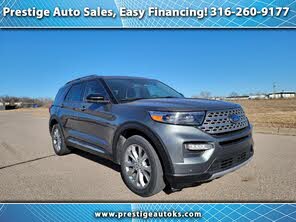
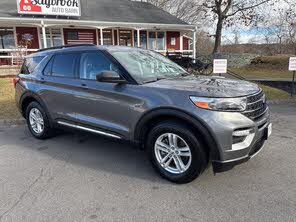
In comparison, the 2021 Ford Explorer embraced a family look shared with its siblings, the Escape, Edge, and Expedition, all starting with “E.” This marketing strategy evoked a sense of brand loyalty harking back to the 1950s. The Explorer's sporty raked beltlines and squinting visages provided a distinctive presence on the road, although it could be challenging to distinguish from the Edge at a glance.
The Explorer offered various grille designs depending on the trim, ranging from simple black to full chrome grilles. With six separate trims—base, XLT, Limited, Limited Hybrid, ST, and Platinum—the Explorer’s pricing spanned from $32,925 to $52,730, with increasing levels of luxury. Three rows of seating were standard, regardless of trim, though the third row's comfort for adults left something to be desired.
The Explorer’s cabin featured a clean dash with familiar gauges and an 8-inch LCD touchscreen dominating the center stack. The rotary gearshift freed up ample storage space, including a covered bin and cupholders within easy reach. The XLT trim, which accounted for 56 percent of sales, offered upgrades like a power front passenger seat and a more refined interior finish. The higher trims provided leather upholstery, raising the bar for cabin comfort and luxury.


The 2020 Toyota Highlander featured a 3.5-liter V6 engine, available in both FWD and AWD configurations. Unlike its turbocharged four-cylinder competitors, the Highlander's V6 engine delivered smooth, brisk acceleration with 295 horsepower and 263 pound-feet of torque. The eight-speed automatic transmission efficiently utilized the engine's power, although it required a heavy foot to engage a kickdown. This powertrain mirrored Toyota's reliability, akin to the Lexus RX's smooth operation.
However, the Highlander’s loose steering and soft suspension detracted from its driving dynamics. Despite its stiffer and stronger new chassis shared with the Toyota RAV4, the Highlander exhibited significant body float and required constant adjustments at highway speeds. While this setup offered a cushy, isolating ride typical of a Lexus, it lacked the steering feel and control expected from Toyota.
Notably, AWD models on Limited and Platinum trims featured torque vectoring, improving the Highlander’s tightness around turns. The selectable driving modes adjusted throttle, transmission, and steering responses, including two off-road modes, although the street tires limited off-road capability. Fuel economy was commendable for a vehicle of its size, with the FWD variant achieving 21 mpg city and 29 mpg highway, while the AWD version delivered 20/27. The hybrid model reached up to 36 mpg combined, a remarkable figure, aided by an efficient stop-start system.
The 2021 Ford Explorer, at 4,345 pounds, might have seemed a heavyweight contender, but its base 2.3-liter EcoBoost turbocharged four-cylinder engine provided a substantial 300 horsepower and 310 pound-feet of torque, outperforming the Kia Telluride's V6. Its 10-speed automatic transmission with SelectShift capability was standard across all trims.
The Explorer Limited Hybrid's V6 hybrid powertrain increased output to 310 hp and 331 lb-ft of torque. Higher trims featured a 3.0-liter EcoBoost twin-turbo V6, delivering 365 hp and 380 lb-ft of torque. The sport-oriented Explorer ST upped the ante with 400 hp and 415 lb-ft of torque, rendering it the most engaging among the Explorer trims. However, achieving true “engaging performance” would require a BMW or Porsche.
The Explorer excelled in towing capacity, capable of hauling between 5,000 and 5,600 pounds, depending on trim and options. This made towing a dual axle Airstream feasible, but it was not exceptional within its class. Rivals such as the Subaru Ascent and larger Chevrolet Tahoe or Ford Expedition offered similar or higher towing capacities.
The 2020 Toyota Highlander was a master of interior space and usability. It seated eight passengers or seven with the second-row captain's chairs available on the Limited and Platinum trims, and as a no-cost option on the XLE. The Platinum trim exclusively featured captain's chairs, while the L and LE trims were bench-only. The second row offered excellent versatility with generous adjustments and easy third-row access. The spacious front and rear seats provided effortless ingress and egress, making it ideal for families with members who might struggle with higher steps or lower seats. Three-zone climate control was standard, with additional comforts like a 120-volt outlet, side window shades, and heated second-row seats in upper trims. The Platinum trim uniquely featured a panoramic moonroof.
Cargo space was plentiful, boasting 16 cubic feet behind the third row, 48 cubic feet with the third row folded, and 84 cubic feet with both the second and third rows down. The presence of six tie-down hooks, a second 120-volt outlet in hybrid models, and ample storage solutions like eight cupholders, four bottle holders, and integrated dash shelves further enhanced its practicality.
In contrast, the 2021 Ford Explorer provided seating for seven in the base trim, while other trims reduced capacity to six with second-row captain's chairs. The second row offered 39 inches of legroom, slightly trailing behind competitors like the Mazda CX-9 and the Kia Telluride, yet ahead of others such as the Nissan Murano and Buick Enclave. Despite the third row’s limited comfort for adults, it still offered 21 cubic feet of cargo space with all seats deployed. However, the Explorer’s overall cargo volume of 81 cubic feet with the rear seats folded was less competitive, aligning it more closely with smaller SUVs.
The 2020 Toyota Highlander's technology package was competent but showed its age compared to competitors. Its infotainment system, though intuitive, lacked modern features like onboard apps and detailed maps. Available 12.3-inch touchscreen displays were underutilized, relegated to showing fuel economy and driving mode information alongside climate control, limiting the usable screen area. Standard on all trims were Apple CarPlay, Android Auto, and Amazon Alexa integration. The vehicle's large 10-inch head-up display and crisp 7-inch instrument cluster display provided additional useful information. Safety technology was comprehensive, including adaptive cruise control, road sign detection, and automatic high beams. The optional JBL audio system with 11 speakers was adequate but not exceptional.
The 2021 Ford Explorer offered a robust tech suite even at the base trim, with an 8-inch touchscreen providing access to AM/FM radio, SiriusXM, Apple CarPlay, Android Auto, a 4G WiFi hotspot, Ford’s Sync 3 infotainment with voice recognition, and a six-speaker audio system. Higher trims improved upon this with a 12-speaker Bang & Olufsen audio system, HD radio, and an upgradeable 10.1-inch touchscreen with up to 14 B&O speakers. Convenient charging options included two USB ports in the center console and five 12-volt power points, with higher trims substituting one with a 110-volt AC outlet and added wireless charging.
The 2020 Toyota Highlander came equipped with Toyota Safety Sense 2.0, a comprehensive suite of safety features. This included automatic emergency braking with pedestrian and cyclist detection, lane-keeping assist, adaptive cruise control, and automatic high beams. Optional features included blind-spot monitoring, parking sensors, and rear emergency braking. The Highlander also featured a driver's knee airbag and a special cushion airbag for the front passenger. The Insurance Institute for Highway Safety (IIHS) awarded the Highlander a 2020 Top Safety Pick for its top ratings in crash tests and effective emergency braking.
The 2021 Ford Explorer earned the highest rating of Top Safety Pick+ from the IIHS, achieving top scores in all crash tests and an acceptable rating for adaptive headlights. Every Explorer trim came with the Ford Co-Pilot360 suite, which included essential safety features like auto high beams, blind-spot monitoring, rear cross-traffic alert, lane-keeping assist, forward-collision warning, pedestrian detection, automatic emergency braking, and dynamic brake support. Higher trims added the Ford Co-Pilot360 Assist+ suite, with features like adaptive cruise control with stop-and-go, lane centering, evasive steering assist, forward sensing, and rain-sensing wipers.
CarGurus highlights

According to CarGurus experts, the overall rating for the 2020 Toyota Highlander is 7.7 out of 10, while the 2021 Ford Explorer scores 7.5 out of 10. Based on these ratings, the 2020 Toyota Highlander emerges as the better choice, offering a high-quality interior, versatile seating and cargo configurations, and a dependable powertrain with excellent fuel efficiency options. The Highlander’s well-rounded attributes make it a superior fit for families looking for a reliable and comfortable midsize SUV.
Choose the 2021 Ford Explorer if:
- You desire stronger performance and power output across a range of engines, including a sporty ST trim.
- You need advanced technology and a modern infotainment system with multiple connectivity options.
- You prioritize comprehensive safety features available even at the base level, with highly rated crash safety scores.




Choose the 2020 Toyota Highlander if:
- You prioritize high-quality interior finishes and a luxurious cabin experience with practical ergonomics.
- You need ample seating configurations and generous cargo space for a family-friendly vehicle.
- You seek a reliable powertrain with smooth driving dynamics and good fuel efficiency, especially with hybrid options.






CarGurus highlights
According to CarGurus experts, the overall rating for the 2020 Toyota Highlander is 7.7 out of 10, while the 2021 Ford Explorer scores 7.5 out of 10. Based on these ratings, the 2020 Toyota Highlander emerges as the better choice, offering a high-quality interior, versatile seating and cargo configurations, and a dependable powertrain with excellent fuel efficiency options. The Highlander’s well-rounded attributes make it a superior fit for families looking for a reliable and comfortable midsize SUV.
Choose the 2021 Ford Explorer if:
Shop Now- You desire stronger performance and power output across a range of engines, including a sporty ST trim.
- You need advanced technology and a modern infotainment system with multiple connectivity options.
- You prioritize comprehensive safety features available even at the base level, with highly rated crash safety scores.



Choose the 2020 Toyota Highlander if:
Shop Now- You prioritize high-quality interior finishes and a luxurious cabin experience with practical ergonomics.
- You need ample seating configurations and generous cargo space for a family-friendly vehicle.
- You seek a reliable powertrain with smooth driving dynamics and good fuel efficiency, especially with hybrid options.









By: CarGurus + AI
At CarGurus, our team of experienced automotive writers remain at the heart of our content operation, conducting hands-on car tests and writing insightful guides that are backed by years of industry experience. To complement this, we are harnessing AI to make our content offering more diverse and more helpful to shoppers than ever. To achieve this, our AI systems are based exclusively on CarGurus content, ratings and data, so that what we produce is both unique to CarGurus, and uniquely helpful to car shoppers.