2021 Toyota Camry vs 2020 Subaru WRX
Overview | |
MSRP$27,495 | MSRP$25,045 |
Listings217 | Listings1133 |
Ratings & Reviews | |
User Reviews | User Reviews |
Expert reviews8.3 out of 10 | Expert reviews7.8 out of 10 |
Pros
Cons
| Pros
Cons
|
2020 Subaru WRX Reviews SummaryFor many, Subaru is synonymous with camping, skiing, and dog lovers. This active, outdoorsy reputation is one that Subaru has carefully cultivated through the years. But there is another side to the brand and one that is just as critical to its success. Its performance and motorsports efforts helped develop the symmetrical all-wheel-drive system found in nearly every modern Subaru. The 2020 Subaru WRX is the road-going manifestation of decades in world rally racing. The WRX is a home-grown celebration of all the technologies that underpin the lineup of reliable, efficient Subaru wagons, sedans, hatchbacks, and SUVs. But in the WRX these chassis and powertrain innovations are distilled to their hard-driving extremes. Can a four-door, four-cylinder car be a halo car for a brand? When that brand is Subaru, the answer is “yes.” | |
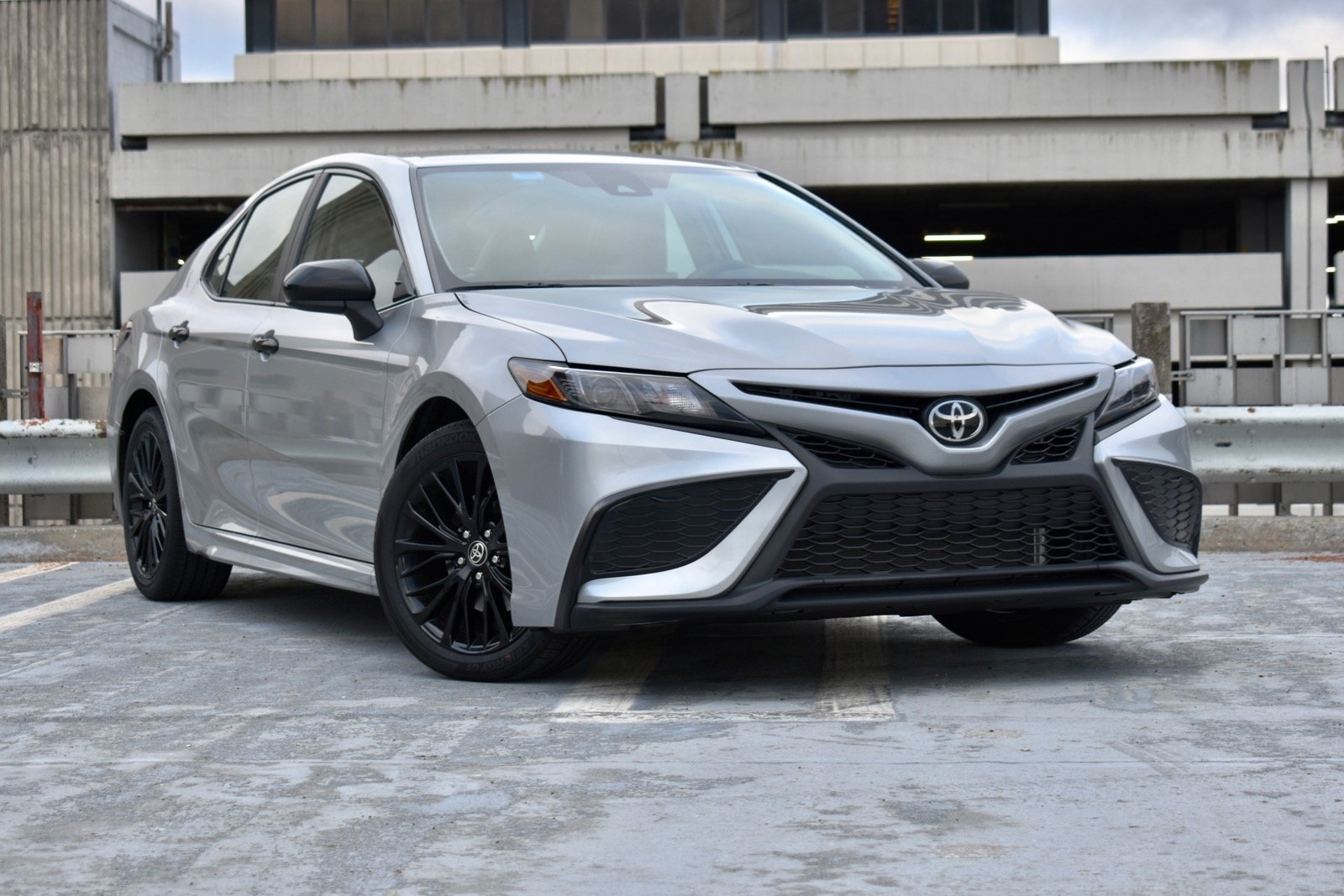
2021 Toyota Camry Reviews SummaryThe Toyota Camry has long been many new-car buyers’ default choice—but not because it’s interesting. Reliability and practicality have traditionally been the Camry’s strengths, not sportiness or style. Toyota tried to change that for the 2018 model year, when the Camry was last redesigned. The current-generation Camry adopted more extroverted styling, and engineers tried to make the driving experience more exciting, too. While Toyota’s approach has changed, the Camry still competes against the same array of midsize sedans, including the Honda Accord, Hyundai Sonata, Mazda 6, Nissan Altima, Subaru Legacy, and Volkswagen Passat. Changes for the 2021 model year include subtle styling tweaks, new infotainment displays, an upgrade to the Toyota Safety Sense 2.5+ (TSS 2.5+) package of driver aids, some changes to the dashboard trim, and the discontinuation of the Camry L trim level. That leaves the Camry LE as the new base trim level. The Camry offers buyers more choices than many rivals, encompassing three powertrains (inline-four, V6, and hybrid), six trim levels (LE, XLE, SE, SE Nightshade Edition, XSE, and TRD), and the choice of front-wheel drive (FWD) or all-wheel drive (AWD). Our test car was an AWD SE Nightshade Edition, positioned close to the middle of the lineup. | |
No video found | |
Popular Features & Specs | |
Engine2.0L 268 hp H4 | Engine2.5L 203 hp I4 |
DrivetrainAWD | DrivetrainFWD |
Seating Capacity5 | Seating Capacity5 |
Horsepower268 hp @ 5600 rpm | Horsepower |
MPG City21 | MPG City28 |
MPG Highway27 | MPG Highway39 |
Engine | |
Engine Name2.0L 268 hp H4 | Engine Name2.5L 203 hp I4 |
Torque258 lb-ft @ 2000 rpm | Torque |
Horsepower268 hp @ 5600 rpm | Horsepower |
DrivetrainAWD | DrivetrainFWD |
Fuel Economy | |
MPG City21 | MPG City28 |
MPG Highway27 | MPG Highway39 |
Interior | |
Seating Capacity5 | Seating Capacity5 |
Safety | |
Front Crash Overall5 | Front Crash Overall5 |
Side Crash Overall5 | Side Crash Overall5 |
Dimensions & Capacity | |
Cargo Space12.0 cu ft | Cargo Space15.1 cu ft |
Curb Weight3294 lbs | Curb Weight3310 lbs |
Height58.1 in | Height56.9 in |
Length180.9 in | Length192.1 in |
Width78.9 in | Width72.4 in |
Wheelbase104.3 in | Wheelbase111.2 in |
Maximum Payload1115 lbs | Maximum Payload925 lbs |
Number of doors4 | Number of doors4 |
Overview | ||
MSRP | $27,495 | $25,045 |
Listings | ||
Ratings & Reviews | ||
User reviews | ||
Expert reviews | 8.3 out of 10Read full review | 7.8 out of 10Read full review |
Pros & cons | Pros
Cons
| Pros
Cons
|
Summary | For many, Subaru is synonymous with camping, skiing, and dog lovers. This active, outdoorsy reputation is one that Subaru has carefully cultivated through the years. But there is another side to the brand and one that is just as critical to its success. Its performance and motorsports efforts helped develop the symmetrical all-wheel-drive system found in nearly every modern Subaru. The 2020 Subaru WRX is the road-going manifestation of decades in world rally racing. The WRX is a home-grown celebration of all the technologies that underpin the lineup of reliable, efficient Subaru wagons, sedans, hatchbacks, and SUVs. But in the WRX these chassis and powertrain innovations are distilled to their hard-driving extremes. Can a four-door, four-cylinder car be a halo car for a brand? When that brand is Subaru, the answer is “yes.” | The Toyota Camry has long been many new-car buyers’ default choice—but not because it’s interesting. Reliability and practicality have traditionally been the Camry’s strengths, not sportiness or style. Toyota tried to change that for the 2018 model year, when the Camry was last redesigned. The current-generation Camry adopted more extroverted styling, and engineers tried to make the driving experience more exciting, too. While Toyota’s approach has changed, the Camry still competes against the same array of midsize sedans, including the Honda Accord, Hyundai Sonata, Mazda 6, Nissan Altima, Subaru Legacy, and Volkswagen Passat. Changes for the 2021 model year include subtle styling tweaks, new infotainment displays, an upgrade to the Toyota Safety Sense 2.5+ (TSS 2.5+) package of driver aids, some changes to the dashboard trim, and the discontinuation of the Camry L trim level. That leaves the Camry LE as the new base trim level. The Camry offers buyers more choices than many rivals, encompassing three powertrains (inline-four, V6, and hybrid), six trim levels (LE, XLE, SE, SE Nightshade Edition, XSE, and TRD), and the choice of front-wheel drive (FWD) or all-wheel drive (AWD). Our test car was an AWD SE Nightshade Edition, positioned close to the middle of the lineup. |
Video | No video found | |
Popular Features & Specs | ||
Engine | 2.0L 268 hp H4 | 2.5L 203 hp I4 |
Drivetrain | AWD | FWD |
Seating Capacity | 5 | 5 |
Horsepower | 268 hp @ 5600 rpm | |
MPG City | 21 | 28 |
MPG Highway | 27 | 39 |
Engine | ||
Engine Name | 2.0L 268 hp H4 | 2.5L 203 hp I4 |
Torque | 258 lb-ft @ 2000 rpm | |
Horsepower | 268 hp @ 5600 rpm | |
Drivetrain | AWD | FWD |
Fuel Economy | ||
MPG City | 21 | 28 |
MPG Highway | 27 | 39 |
Interior | ||
Seating Capacity | 5 | 5 |
Safety | ||
Front Crash Overall | 5 | 5 |
Side Crash Overall | 5 | 5 |
Dimensions & Capacity | ||
Cargo Space | 12.0 cu ft | 15.1 cu ft |
Curb Weight | 3294 lbs | 3310 lbs |
Height | 58.1 in | 56.9 in |
Length | 180.9 in | 192.1 in |
Width | 78.9 in | 72.4 in |
Wheelbase | 104.3 in | 111.2 in |
Maximum Payload | 1115 lbs | 925 lbs |
Number of doors | 4 | 4 |
The 2020 Subaru WRX broke away from its origins as a performance variant of the Subaru Impreza, becoming its own unique model. With updates last seen in 2019, the 2020 WRX carried aggressive styling elements making it a standout in Subaru's lineup. Its wider stance, lower front splitter, rear deck spoiler, and functional air intake defined its aggressive look, while the STI version added a large rear wing and extra aerodynamic components. Despite these bold design choices, the non-STI WRX could act as a sleeper, surprising those unaware of its performance under the hood. The interior, while functional, was rather pedestrian and might not impress those looking for modern cabin flair in a 2021 vehicle. The model offered trims from Base to Limited, each adding more features like 18-inch wheels, a power moonroof, and leather upholstery as you moved up the ladder.
The 2021 Toyota Camry aimed to shed its past image as a generic sedan by incorporating bold styling details. Flared wheel arches, slim headlights, and taillights gave it a wider, more aggressive stance, especially on the SE, XSE, and TRD trims, though faux vents added unnecessary visual clutter. The LE and XLE trims had a slightly more conservative but still massive grille. Built on Toyota’s TNGA-K platform, shared with the Avalon sedan and RAV4 SUV, the Camry's design was refreshed for 2021 with subtle updates, while the TRD model maintained unique elements like a larger rear spoiler. The Nightshade Edition added blacked-out trim and wheels for an extra sporty appearance. However, the interior's mix of diverse materials and chaotic design elements lacked a cohesive theme, potentially detracting from its refined exterior look.


The 2020 Subaru WRX was powered by a turbocharged 2.0-liter boxer-four engine producing 268 horsepower and 258 pound-feet of torque, paired with a six-speed manual or an optional continuously variable transmission (CVT). The CVT, though typically seen as efficiency-focused, offered multiple drive modes and paddle shifters with manual-shift modes that mimicked actual gears. The manual transmission provided a more engaging driving experience, with a 50:50 front-to-rear torque distribution, while the CVT featured a 45:55 split. The WRX’s sharp handling, minimal turbo lag, and precise steering made it a joy for spirited driving, though its stiff suspension and road noise could be challenging on less ideal surfaces.
For those seeking more power, the WRX STI packed a 2.5-liter turbocharged engine delivering 310 horsepower and 290 pound-feet of torque, accompanied by Brembo brakes and a stiffer suspension. The more aggressive setup enhanced cornering but also brought a firmer, often uncomfortable ride quality, particularly on rough roads.
The 2021 Toyota Camry offered a diverse range of powertrains. The base 2.5-liter four-cylinder engine produced 203 horsepower and 184 pound-feet of torque in most trims with front-wheel drive (FWD), slightly less with all-wheel drive (AWD). The XSE trim featured a dual-exhaust system, bumping output to 206 horsepower. The naturally aspirated 3.5-liter V6 provided 301 horsepower and 267 pound-feet, paired exclusively with FWD, ensuring robust acceleration and robust performance in a family sedan. A hybrid option combined a 2.5-liter engine with electric assistance for a total output of 208 horsepower.
The SE Nightshade Edition model we tested came with the base four-cylinder engine and AWD. The Dynamic Force engine offered a lively, eager-to-rev experience, providing a surprising amount of fun for a midsize sedan. The chassis was finely tuned to balance handling and ride quality, delivering an enjoyable drive without compromising comfort. The TRD model took performance further with chassis upgrades like stiffer suspension and bigger brakes, enhancing its driving dynamics further.
The 2020 Subaru WRX featured a practical sedan layout with excellent visibility, benefiting from Subaru's function-first design philosophy. The cabin interior was straightforward, with easy-to-use controls and ample storage. Both front and rear seats provided generous space, accommodating full-size adults quite comfortably for short trips, though longer journeys might expose the tight backseat space. However, with just 12 cubic feet of cargo space, the WRX fell short compared to other compact sedans, but was comparable to performance-oriented sports cars.
The 2021 Toyota Camry, designed as a midsize sedan, offered superior rear headroom and legroom at the expense of slightly cramped front seats. Nevertheless, the front seats were adjustable and comfortable, ensuring a suitable driving position. The spacious trunk provided 15.1 cubic feet of cargo space, placing it in the middle of its segment, but smaller compared to the Honda Accord's 16.7 cubic feet. In-cabin storage was limited, with small cupholders and door bottle holders that trapped items. Larger controls for audio and climate functions were a welcome touch, despite some challenging reaches from the driver's seat.
The 2020 Subaru WRX came standard with a 6.5-inch Starlink infotainment touchscreen, upgradeable to a 7-inch screen. The system included Apple CarPlay and Android Auto, offering seamless integration and user-friendly navigation between applications. The setup, though not the latest, covered all necessary tech features without overwhelming users. An additional digital display in the instrument panel and another atop the dash ensured critical information was accessible from multiple angles.
The 2021 Toyota Camry offered an infotainment system starting with a 7-inch touchscreen, standard Apple CarPlay, Android Auto, Amazon Alexa compatibility, and more. Higher trims featured a 9-inch screen, WiFi capabilities, navigation, and a premium JBL audio system. The addition of a 10-inch head-up display on XSE and XLE trims enhanced driver convenience. Standard USB ports and a 12-volt outlet provided necessary connectivity, but additional plug-in options were unavailable on higher trims. Toyota’s system was functional with easily navigable menus, though arguably not as visually impressive as some competitors.
The 2020 Subaru WRX came equipped with essential safety features, including a full array of airbags, traction control, and a tire-pressure monitoring system. The optional EyeSight suite of driver-assistance features added forward-collision warning, automatic emergency braking, lane-departure warning, automatic high beams, and adaptive cruise control. Other options included blind-spot monitoring and rear cross-traffic alert. The WRX earned a 2020 IIHS Top Safety Pick award and a five-star overall rating from NHTSA, solidifying its strong safety performance.
The 2021 Toyota Camry received a Top Safety Pick+ from the IIHS and a five-star overall rating from the NHTSA with top marks in front, side, and rollover tests. Standard across the range was the TSS 2.5+ suite, which included adaptive cruise control, forward-collision warning with pedestrian detection, and more. New features for 2021 included enhanced adaptive cruise control and forward-collision warning capabilities, and a Rear Seat Reminder to prevent leaving children or pets unattended. Optional features like blind-spot monitoring and rear cross-traffic alert provided additional safety layers, particularly on higher trims.
CarGurus highlights

According to CarGurus experts, the overall rating for the 2020 Subaru WRX is 8.3 out of 10, while the 2021 Toyota Camry scores 7.8 out of 10. Despite the Camry's comprehensive safety features and comfortable ride, the Subaru WRX edges out with its engaging performance and superior driving dynamics. Subaru's blend of functionality, visibility, and raw driving pleasure places it ahead in this comparison. Therefore, if driving excitement and performance are your priorities, the 2020 Subaru WRX is the clear recommendation.
Choose the 2021 Toyota Camry if:
- You want a balance between performance and comfort in a family sedan.
- You prefer a spacious rear seat layout and generous headroom.
- You appreciate a comprehensive suite of standard safety features.


Choose the 2020 Subaru WRX if:
- You prioritize a thrilling driving experience with manual transmission.
- You seek a car with aggressive styling and performance capabilities.
- You value excellent outward visibility and practical interior design.


CarGurus highlights
According to CarGurus experts, the overall rating for the 2020 Subaru WRX is 8.3 out of 10, while the 2021 Toyota Camry scores 7.8 out of 10. Despite the Camry's comprehensive safety features and comfortable ride, the Subaru WRX edges out with its engaging performance and superior driving dynamics. Subaru's blend of functionality, visibility, and raw driving pleasure places it ahead in this comparison. Therefore, if driving excitement and performance are your priorities, the 2020 Subaru WRX is the clear recommendation.
Choose the 2021 Toyota Camry if:
Shop Now- You want a balance between performance and comfort in a family sedan.
- You prefer a spacious rear seat layout and generous headroom.
- You appreciate a comprehensive suite of standard safety features.
Choose the 2020 Subaru WRX if:
Shop Now- You prioritize a thrilling driving experience with manual transmission.
- You seek a car with aggressive styling and performance capabilities.
- You value excellent outward visibility and practical interior design.

By: CarGurus + AI
At CarGurus, our team of experienced automotive writers remain at the heart of our content operation, conducting hands-on car tests and writing insightful guides that are backed by years of industry experience. To complement this, we are harnessing AI to make our content offering more diverse and more helpful to shoppers than ever. To achieve this, our AI systems are based exclusively on CarGurus content, ratings and data, so that what we produce is both unique to CarGurus, and uniquely helpful to car shoppers.

