2020 Honda Pilot vs 2020 Subaru Ascent

Overview | |
MSRP$31,995 | MSRP$31,650 |
Listings112 | Listings178 |
Ratings & Reviews | |
User Reviews | User Reviews |
Expert reviews7.5 out of 10 | Expert reviews8.0 out of 10 |
Pros
Cons
| Pros
Cons
|
2020 Subaru Ascent Reviews SummaryLove might be what makes a Subaru a Subaru, as the automaker’s advertising has long claimed, but it's also what has traditionally made people outgrow Subarus. Subaru tried building a 3-row, 7-passenger SUV once before, but quirky design and a strange name flattened the B9 Tribeca’s tires before they got a decent chance to roll down the road. With the 2020 Ascent, however, Subaru has a family-size SUV for existing and would-be customers who need extra space for people, pets, and cargo. And while the Ascent is loaded with compelling details and thoughtful features, flaws might limit its appeal strictly to the Subaru faithful. | |
2020 Honda Pilot Reviews SummaryThe Honda Pilot was once the leader of the midsize 3-row SUV pack. But several rivals from Hyundai, Kia, and Mazda have caught up to (and in some cases, surpassed) the Pilot. Still, the Pilot offers tons of cargo space, an adult-friendly third row, and an impressive list of standard safety features. But Honda’s choices on driver controls and in-car tech are its biggest shortcomings. Read on to learn how the Pilot stacks up against the competition, and to learn the CarGurus recommended trim. | |
No video found | |
Popular Features & Specs | |
Engine2.4L 260 hp H4 | Engine3.5L 280 hp V6 |
Drive TrainAWD | Drive TrainFWD |
Seating Capacity8 | Seating Capacity8 |
Horsepower260 hp @ 5600 rpm | Horsepower280 hp @ 6000 rpm |
MPG City21 | MPG City19 |
MPG Highway27 | MPG Highway27 |
Engine | |
Engine Name2.4L 260 hp H4 | Engine Name3.5L 280 hp V6 |
Torque277 lb-ft @ 2000 rpm | Torque262 lb-ft @ 4700 rpm |
Horsepower260 hp @ 5600 rpm | Horsepower280 hp @ 6000 rpm |
DrivetrainAWD | DrivetrainFWD |
Fuel Economy | |
MPG City21 | MPG City19 |
MPG Highway27 | MPG Highway27 |
Interior | |
Seating Capacity8 | Seating Capacity8 |
Safety | |
Front Crash Overall5 | Front Crash Overall4 |
Side Crash Overall5 | Side Crash Overall5 |
Dimensions & Capacity | |
Cargo Space17.8 cu ft | Cargo Space16.5 cu ft |
Curb Weight4430 lbs | Curb Weight4036 lbs |
Height71.6 in | Height70.6 in |
Length196.8 in | Length196.5 in |
Width85.7 in | Width78.6 in |
Wheelbase113.8 in | Wheelbase111.0 in |
Maximum Payload1570 lbs | Maximum Payload1509 lbs |
Number of doors4 | Number of doors4 |
Maximum Towing Capacity2000 lbs | Maximum Towing Capacity3500 lbs |
Overview | ||
MSRP | $31,995 | $31,650 |
Listings | ||
Ratings & Reviews | ||
User reviews | ||
Expert reviews | 7.5 out of 10Read full review | 8.0 out of 10Read full review |
Pros & cons | Pros
Cons
| Pros
Cons
|
Summary | Love might be what makes a Subaru a Subaru, as the automaker’s advertising has long claimed, but it's also what has traditionally made people outgrow Subarus. Subaru tried building a 3-row, 7-passenger SUV once before, but quirky design and a strange name flattened the B9 Tribeca’s tires before they got a decent chance to roll down the road. With the 2020 Ascent, however, Subaru has a family-size SUV for existing and would-be customers who need extra space for people, pets, and cargo. And while the Ascent is loaded with compelling details and thoughtful features, flaws might limit its appeal strictly to the Subaru faithful. | The Honda Pilot was once the leader of the midsize 3-row SUV pack. But several rivals from Hyundai, Kia, and Mazda have caught up to (and in some cases, surpassed) the Pilot. Still, the Pilot offers tons of cargo space, an adult-friendly third row, and an impressive list of standard safety features. But Honda’s choices on driver controls and in-car tech are its biggest shortcomings. Read on to learn how the Pilot stacks up against the competition, and to learn the CarGurus recommended trim. |
Video | No video found | |
Popular Features & Specs | ||
Engine | 2.4L 260 hp H4 | 3.5L 280 hp V6 |
Drive Train | AWD | FWD |
Seating Capacity | 8 | 8 |
Horsepower | 260 hp @ 5600 rpm | 280 hp @ 6000 rpm |
MPG City | 21 | 19 |
MPG Highway | 27 | 27 |
Engine | ||
Engine Name | 2.4L 260 hp H4 | 3.5L 280 hp V6 |
Torque | 277 lb-ft @ 2000 rpm | 262 lb-ft @ 4700 rpm |
Horsepower | 260 hp @ 5600 rpm | 280 hp @ 6000 rpm |
Drivetrain | AWD | FWD |
Fuel Economy | ||
MPG City | 21 | 19 |
MPG Highway | 27 | 27 |
Interior | ||
Seating Capacity | 8 | 8 |
Safety | ||
Front Crash Overall | 5 | 4 |
Side Crash Overall | 5 | 5 |
Dimensions & Capacity | ||
Cargo Space | 17.8 cu ft | 16.5 cu ft |
Curb Weight | 4430 lbs | 4036 lbs |
Height | 71.6 in | 70.6 in |
Length | 196.8 in | 196.5 in |
Width | 85.7 in | 78.6 in |
Wheelbase | 113.8 in | 111.0 in |
Maximum Payload | 1570 lbs | 1509 lbs |
Number of doors | 4 | 4 |
Maximum Towing Capacity | 2000 lbs | 3500 lbs |
The 2020 Subaru Ascent, resembling a larger Subaru Forester, was designed with practicality and utility in mind. It featured gray plastic cladding for 360-degree protection, an oversized grille, and exaggerated fender flares for a robust appearance. The Ascent's roof rails and 20-inch aluminum wheels on most trims added to its functional and stylish look. The base model, starting at $31,995, came with 18-inch wheels and lacked privacy glass. Upgrading to the Premium trim at $34,395 offered better detailing and a superior infotainment system. The Limited trim at $39,345 added leather seats, while the top-tier Touring trim at $45,045 included premium leather, a panoramic sunroof, and other luxury features. The test vehicle, a Touring trim, was priced at $46,285 and featured a stylish Abyss Blue Pearl exterior with Java Brown leather interior, showcasing quality materials and thoughtful design.
In contrast, the 2020 Honda Pilot shared the dynamic styling of the Honda lineup, featuring thin LED headlights and a multi-tiered grille. The subtle uptick in the belt-line around the rear side windows masked the Pilot's size, giving it a more svelte appearance. Inside, the Pilot boasted a modern cabin with a semi-digital instrument panel and a spacious, comfortable interior. However, it used hard plastics in many areas, making it less upscale compared to rivals like the Kia Telluride and Hyundai Palisade. The Pilot's trim levels ranged from the base LX to the range-topping Black Edition, with each trim adding more features and luxury. The EX trim, recommended by CarGurus, included remote start, Apple CarPlay, Android Auto, and tri-zone climate control. Higher trims like the Touring and Elite added 20-inch alloy wheels, a panoramic sunroof, and heated and ventilated front seats, with the Black Edition offering unique black-painted wheels and accents.


The 2020 Subaru Ascent was powered by a turbocharged 2.4-liter 4-cylinder engine, producing 260 horsepower and 277 pound-feet of torque. It featured a continuously variable automatic transmission (CVT) and all-wheel drive (AWD). Despite its good acceleration, the Ascent's turbocharged engine was thirsty, averaging 18.9 mpg during testing, below the EPA estimate of 22 mpg. The Ascent's handling was not particularly sporty, with slow and numb steering and a suspension that struggled with undulating road surfaces. The CVT, while decent, had issues with power delivery, producing unexpected surges and fading power during simulated shifts. The shifter felt cheap, and the Ascent rolled significantly when parked on a hill without the parking brake engaged. However, the Ascent excelled off-road, thanks to its Active Torque Split AWD system, X-Mode off-road traction system, Hill Descent Control, and 8.7 inches of ground clearance.
The 2020 Honda Pilot was equipped with a 3.5-liter V6 engine, generating 280 horsepower and 262 pound-feet of torque. It offered front-wheel drive (FWD) or available all-wheel drive (AWD). The LX, EX, and EX-L trims featured a 6-speed automatic transmission, while the Touring, Elite, and Black Edition trims had a 9-speed automatic transmission. The V6 engine provided strong acceleration, making the Pilot capable of handling real-world driving with ease. The Pilot's ride was refined and comfortable, ideal for commutes and road trips, though it lacked athleticism. The Intelligent Traction Management System offered drive modes for various conditions, including Normal, Snow, Mud, and Sand, enhancing the Pilot's capability in different terrains. However, the unique shifter button setup was less intuitive than a conventional shifter, requiring drivers to look at the instrument panel to confirm gear selection.
The 2020 Subaru Ascent offered a comfortable interior, especially in the Touring trim, with soft leather seats, heated and ventilated front seats, and a heated steering wheel. The driver's seat was 10-way power-adjustable with a manual thigh support extension, and the armrests were densely padded. The front seats had significant track travel, making the Ascent appealing to tall people. The dashboard featured a useful shelf and upscale ambient lighting, though the controls appeared dated. Storage options included a center bin, door panel bins, and a glove compartment. The Ascent could be configured with a second-row bench seat or captain's chairs, with the latter available in Premium and Limited trims. The third-row seat was relatively comfortable, with easy access and acceptable space for shorter trips. The Ascent provided 17.8 cubic feet of cargo space behind the third row, 47 cubic feet with the third row folded, and 86 cubic feet with the second row folded.
The 2020 Honda Pilot featured a spacious 8-passenger cabin with second-row bench seating, while the Touring, Elite, and Black Edition trims offered second-row captain's chairs, reducing seating capacity to seven. The Pilot's third row was adult-friendly, with EX trims and higher providing one-touch fold-down rear seats for easier access. With the second and third rows folded, the Pilot offered 83.9 cubic feet of cargo space, comparable to rivals like the Toyota Highlander, Kia Telluride, and Hyundai Palisade. The Pilot had more cargo capacity than the Mazda CX-9 but less than the Volkswagen Atlas. Higher trims included a power liftgate, with the Touring and up featuring a hands-free power tailgate. The Pilot's interior was designed for family hauling, with plenty of storage spaces for toys and gear. The second-row captain's chairs provided a narrow passage for kids to access the third row and a helpful separation between them.
The 2020 Subaru Ascent came with a Starlink infotainment system, featuring Bluetooth connectivity, Apple CarPlay, Android Auto, satellite radio, HD Radio, and a CD player. The Premium trim and above had an 8-inch touchscreen display, text-messaging capability, a 4G LTE WiFi hotspot, and Starlink Safety and Security connected services. The Touring trim added a high-resolution screen and navigation. While the screen size was small, the display was satisfying to use, with stereo knobs for tuning and volume and separate climate controls. However, the voice-control system was outdated and unresponsive. The navigation system occasionally misplaced the vehicle's location, causing frustration. Bluetooth pairing and music streaming were easy, and the Harman Kardon speakers provided rich sound quality. The Ascent Touring offered a 180-degree front camera view and a 180-degree rear camera view, but lacked a top-down 360-degree view camera and front parking sensors. The PIN Code Vehicle Access system allowed owners to lock the key fob inside the vehicle while engaging in outdoor activities.
The 2020 Honda Pilot's LX trim featured a 5-inch color LCD screen, operating a 215-watt, 7-speaker stereo with a subwoofer, Bluetooth connectivity, and a USB port. Higher trims included an 8-inch touchscreen infotainment system with Apple CarPlay and Android Auto. The Display Audio system, however, had a confusing layout and lacked a tuning knob, relying heavily on the touchscreen for radio interaction. All but the LX trim included HD Radio, SiriusXM satellite radio, and Cabin Control Remote Capability, allowing back seat passengers to control the stereo via a smartphone app. Navigation, a rear-seat entertainment system, and a wall-style power outlet were optional on the EX-L and standard on the Touring, Elite, and Black Edition. These higher trims also featured a 590-watt, 10-speaker premium audio system and mobile hotspot capability. The Elite and Black Edition came with a wireless charging pad.
The 2020 Subaru Ascent was built on Subaru's latest global platform, designed for exceptional occupant protection. It received a Top Safety Pick+ rating from the Insurance Institute for Highway Safety (IIHS). The Ascent's EyeSight system included adaptive cruise control, forward-collision warning, automatic emergency braking, lane-departure warning, and lane-keeping assist. Premium trim added blind-spot monitoring with rear cross-traffic alert, while Limited included LED steering-responsive headlights with automatic high-beam operation and reverse automatic braking. The EyeSight Assist Monitor projected lights onto the windshield to indicate the status of the adaptive cruise control and lane departure, enhancing driver awareness. The Ascent also featured a rear-seat reminder system and Starlink Safety Plus connected services, offering automatic collision notification, SOS emergency calling, and roadside assistance. The Security Plus upgrade plan provided curfew, speed, and boundary alerts, as well as remote engine start with climate control operation.
The 2020 Honda Pilot came standard with the HondaSensing suite of driver assistance systems, including forward-collision avoidance, automatic emergency braking, lane-departure warning, adaptive cruise control, and automatic high beams. Standard safety features also included front and side-impact airbags, child-seat anchors, Vehicle Stability Assist, and traction control. Optional safety equipment included front and rear parking sensors and blind-spot monitoring with rear cross-traffic alert. The Pilot earned a five-star overall crash test rating from the National Highway Traffic Safety Administration (NHTSA) and the best crash test score of Good from the Insurance Institute for Highway Safety (IIHS). The HondaSensing suite also earned the best score of Superior in IIHS crash prevention technology evaluation.
CarGurus highlights
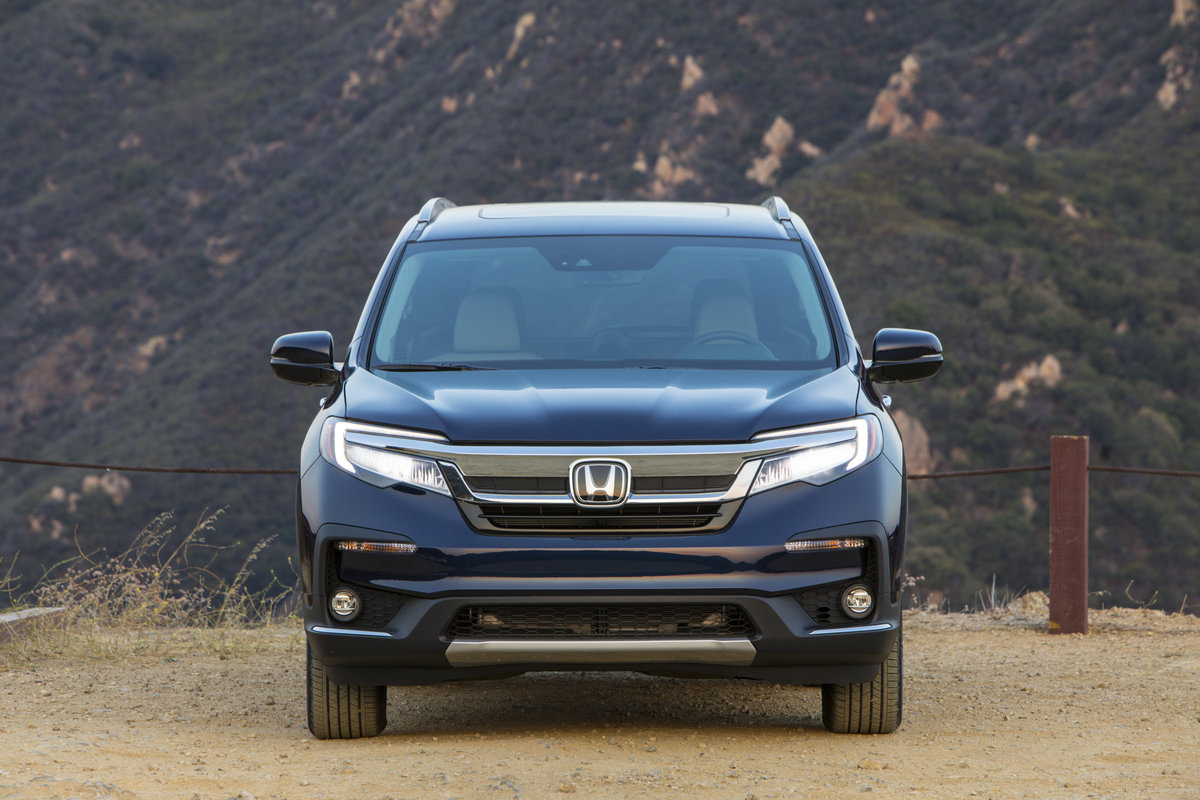
According to CarGurus experts, the overall rating for the 2020 Subaru Ascent is 7.5 out of 10, while the 2020 Honda Pilot scores 8.0 out of 10. Based on these ratings, the 2020 Honda Pilot is the recommended choice, offering a more refined driving experience, a spacious and versatile interior, and a comprehensive suite of safety features.
Choose the 2020 Honda Pilot if:
- You want a refined and comfortable ride for daily commutes and long road trips.
- You need a spacious and versatile interior with adult-friendly third-row seating.
- You prefer a vehicle with a comprehensive suite of standard safety features and high crash test ratings.


Choose the 2020 Subaru Ascent if:
- You need a vehicle with excellent off-road capabilities and advanced AWD systems.
- You prefer a spacious interior with comfortable seating and ample cargo space.
- You value a high safety rating and comprehensive driver assistance features.


CarGurus highlights
According to CarGurus experts, the overall rating for the 2020 Subaru Ascent is 7.5 out of 10, while the 2020 Honda Pilot scores 8.0 out of 10. Based on these ratings, the 2020 Honda Pilot is the recommended choice, offering a more refined driving experience, a spacious and versatile interior, and a comprehensive suite of safety features.
Choose the 2020 Honda Pilot if:
Shop Now- You want a refined and comfortable ride for daily commutes and long road trips.
- You need a spacious and versatile interior with adult-friendly third-row seating.
- You prefer a vehicle with a comprehensive suite of standard safety features and high crash test ratings.
Choose the 2020 Subaru Ascent if:
Shop Now- You need a vehicle with excellent off-road capabilities and advanced AWD systems.
- You prefer a spacious interior with comfortable seating and ample cargo space.
- You value a high safety rating and comprehensive driver assistance features.

By: CarGurus + AI
At CarGurus, our team of experienced automotive writers remain at the heart of our content operation, conducting hands-on car tests and writing insightful guides that are backed by years of industry experience. To complement this, we are harnessing AI to make our content offering more diverse and more helpful to shoppers than ever. To achieve this, our AI systems are based exclusively on CarGurus content, ratings and data, so that what we produce is both unique to CarGurus, and uniquely helpful to car shoppers.

