2021 Toyota Venza vs 2020 Hyundai Santa Fe

Overview | |
MSRP$26,275 | MSRP$32,670 |
Listings1154 | Listings454 |
Ratings & Reviews | |
User Reviews | User Reviews |
Expert reviews8.8 out of 10 | Expert reviews8.3 out of 10 |
Pros
Cons
| Pros
Cons
|
2020 Hyundai Santa Fe Reviews SummaryLast year, Hyundai changed its approach to the Santa Fe. The smaller five-passenger Santa Fe Sport got drop-kicked from the automaker’s lineup, replaced by this completely redesigned version of the SUV. The larger seven-passenger Santa Fe got a new name for one year (Santa Fe XL), and then the all-new 2020 Hyundai Palisade replaced that vehicle. With the Palisade’s arrival, there is just one Santa Fe for 2020, a five-passenger crossover that resides in a sweet spot between traditional compact and midsize models. It gets several updates, too, including a standard rear-seat reminder system, an available camera-based Blind-Spot View Monitor system, and new design accents to better distinguish the top trim level. | |
2021 Toyota Venza Reviews SummaryAt first glance, the 2021 Toyota Venza looks more like a Lexus than a typical Toyota, which is fitting, because the Venza is anything but typical. The new Venza blends a new approach to in-car technology with fresh exterior and interior design. Like the Nissan Murano, Honda Passport, Ford Edge, and Chevrolet Blazer, the Venza is a two-row SUV meant to be more sophisticated than the family-friendly Nissan Rogue, Honda CR-V, Chevrolet Equinox, and Toyota RAV4. There is no three-row Venza option. It also comes only with a hybrid powertrain—for better or worse—something that its competition is lacking. All-wheel drive is also standard. That's also offered by the competition, but only as a costly upgrade. The Venza’s $32,470 starting price is slightly higher than the Murano and Blazer, but it comes with the traditionally-more-expensive hybrid powertrain. Is the hybrid worth shelling out a little more for? | |
Popular Features & Specs | |
Engine2.4L 185 hp I4 | Engine2.5L 219 hp I4 Hybrid |
Drive TrainFWD | Drive TrainAWD |
Seating Capacity5 | Seating Capacity5 |
Horsepower185 hp @ 6000 rpm | Horsepower |
EV Battery Capacity | EV Battery Capacity0.93 kWh |
MPG City22 | MPG City40 |
MPG Highway29 | MPG Highway37 |
Engine | |
Engine Name2.4L 185 hp I4 | Engine Name2.5L 219 hp I4 Hybrid |
Torque178 lb-ft @ 4000 rpm | Torque |
Horsepower185 hp @ 6000 rpm | Horsepower |
DrivetrainFWD | DrivetrainAWD |
Fuel Economy | |
EV Battery Capacity | EV Battery Capacity0.93 kWh |
MPG City22 | MPG City40 |
MPG Highway29 | MPG Highway37 |
Interior | |
Seating Capacity5 | Seating Capacity5 |
Safety | |
Front Crash Overall4 | Front Crash Overall4 |
Side Crash Overall5 | Side Crash Overall5 |
Dimensions & Capacity | |
Cargo Space35.9 cu ft | Cargo Space28.8 cu ft |
Curb Weight3591 lbs | Curb Weight3847 lbs |
Height66.1 in | Height65.9 in |
Length187.8 in | Length186.6 in |
Width74.4 in | Width73.0 in |
Wheelbase108.9 in | Wheelbase105.9 in |
Maximum Payload1138 lbs | Maximum Payload900 lbs |
Number of doors4 | Number of doors4 |
Maximum Towing Capacity2000 lbs | Maximum Towing Capacity |
Overview | ||
MSRP | $26,275 | $32,670 |
Listings | ||
Ratings & Reviews | ||
User reviews | ||
Expert reviews | 8.8 out of 10Read full review | 8.3 out of 10Read full review |
Pros & cons | Pros
Cons
| Pros
Cons
|
Summary | Last year, Hyundai changed its approach to the Santa Fe. The smaller five-passenger Santa Fe Sport got drop-kicked from the automaker’s lineup, replaced by this completely redesigned version of the SUV. The larger seven-passenger Santa Fe got a new name for one year (Santa Fe XL), and then the all-new 2020 Hyundai Palisade replaced that vehicle. With the Palisade’s arrival, there is just one Santa Fe for 2020, a five-passenger crossover that resides in a sweet spot between traditional compact and midsize models. It gets several updates, too, including a standard rear-seat reminder system, an available camera-based Blind-Spot View Monitor system, and new design accents to better distinguish the top trim level. | At first glance, the 2021 Toyota Venza looks more like a Lexus than a typical Toyota, which is fitting, because the Venza is anything but typical. The new Venza blends a new approach to in-car technology with fresh exterior and interior design. Like the Nissan Murano, Honda Passport, Ford Edge, and Chevrolet Blazer, the Venza is a two-row SUV meant to be more sophisticated than the family-friendly Nissan Rogue, Honda CR-V, Chevrolet Equinox, and Toyota RAV4. There is no three-row Venza option. It also comes only with a hybrid powertrain—for better or worse—something that its competition is lacking. All-wheel drive is also standard. That's also offered by the competition, but only as a costly upgrade. The Venza’s $32,470 starting price is slightly higher than the Murano and Blazer, but it comes with the traditionally-more-expensive hybrid powertrain. Is the hybrid worth shelling out a little more for? |
Video | ||
Popular Features & Specs | ||
Engine | 2.4L 185 hp I4 | 2.5L 219 hp I4 Hybrid |
Drive Train | FWD | AWD |
Seating Capacity | 5 | 5 |
Horsepower | 185 hp @ 6000 rpm | |
EV Battery Capacity | 0.93 kWh | |
MPG City | 22 | 40 |
MPG Highway | 29 | 37 |
Engine | ||
Engine Name | 2.4L 185 hp I4 | 2.5L 219 hp I4 Hybrid |
Torque | 178 lb-ft @ 4000 rpm | |
Horsepower | 185 hp @ 6000 rpm | |
Drivetrain | FWD | AWD |
Fuel Economy | ||
EV Battery Capacity | 0.93 kWh | |
MPG City | 22 | 40 |
MPG Highway | 29 | 37 |
Interior | ||
Seating Capacity | 5 | 5 |
Safety | ||
Front Crash Overall | 4 | 4 |
Side Crash Overall | 5 | 5 |
Dimensions & Capacity | ||
Cargo Space | 35.9 cu ft | 28.8 cu ft |
Curb Weight | 3591 lbs | 3847 lbs |
Height | 66.1 in | 65.9 in |
Length | 187.8 in | 186.6 in |
Width | 74.4 in | 73.0 in |
Wheelbase | 108.9 in | 105.9 in |
Maximum Payload | 1138 lbs | 900 lbs |
Number of doors | 4 | 4 |
Maximum Towing Capacity | 2000 lbs | |
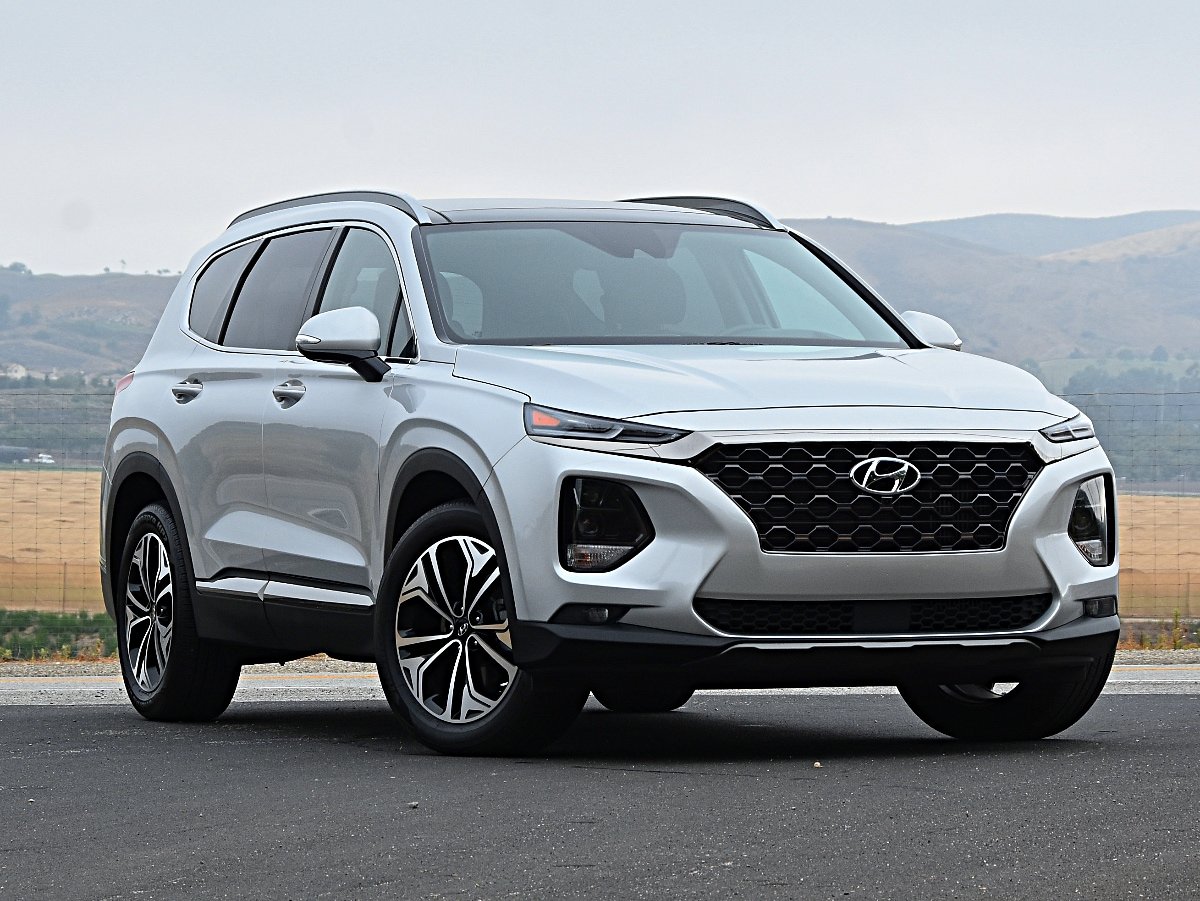
Comparing the look and feel of the 2020 Hyundai Santa Fe and the 2021 Toyota Venza revealed distinct approaches in design and aesthetics.
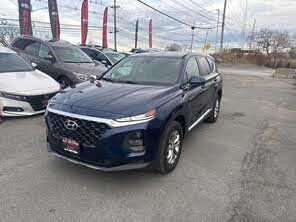
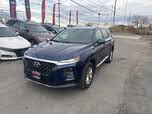
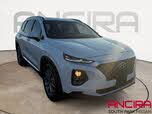
The 2020 Hyundai Santa Fe offered buyers three trim levels: SE, SEL, and Limited. Those opting for the “2.0T” trim got a performance upgrade with a turbocharged engine. An option for AWD was available, allowing the vehicle to transfer power from the front wheels to the rear when necessary. The Santa Fe’s design was a point of divergence among consumers. Hyundai's bold experimental design efforts saw mixed reactions, given the unconventional grille shape, stacked front lighting elements, and asymmetrical fender stampings. These design elements did not align with the conventional tastes of all buyers.
Inside, the Santa Fe's interior provided a dramatic flair. The dual-cowl dashboard design extended into door panels with diamond-textured speaker grilles, presenting a vibrant visual experience. Versions with gray or beige interiors offered high contrast, adding to the visual richness. High-quality build standards were evident with refined controls, although the materials weren't top-tier, marked by the use of stiff leather upholstery and glossy plastics.
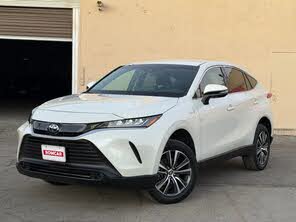
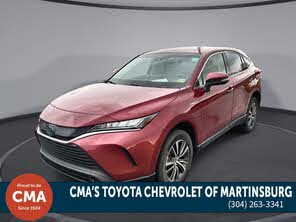
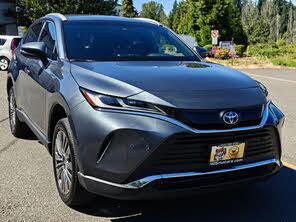
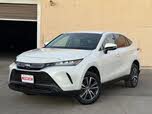
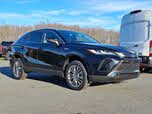
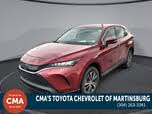
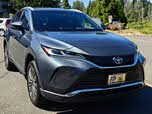
In contrast, the 2021 Toyota Venza, which was a bit shorter and lower to the ground than the RAV4, closely resembled a Lexus in its design. Available in LE, XLE, and Limited trims, the Venza offered paint options not available across all trims and a long list of standard luxurious features, including dual chrome-tipped exhaust, LED lighting, puddle lights, and 18-inch alloy wheels at the base level.
Inside, the Venza took a unique route distinct from typical Toyota models. The center stack featured piano black capacitive buttons framed by shapely, silver-accented vertical elements, giving it a modern touch. The Venza’s infotainment system sat above subtle vents, offering a cohesive and premium look. The deep center console housed various functionalities, from cup holders to drive mode buttons, enhancing the luxe feel.
Overall, while both vehicles had their aesthetic merits, the Santa Fe leaned towards daring, unconventional designs, whereas the Venza emulated a more luxurious, Lexus-like experience.


Performance comparisons between the 2020 Hyundai Santa Fe and the 2021 Toyota Venza highlighted key differences in driving dynamics and power.
The 2020 Hyundai Santa Fe came with a standard 185-hp 2.4-liter four-cylinder engine, which was not the most desirable option due to its lower power. The better choice was the turbocharged 2.0-liter four-cylinder engine in the “2.0T” trims, delivering 235 hp and a notable 260 lb-ft of torque between 1,450 rpm and 3,500 rpm. This engine offered substantial increases in power and torque over the base engine, making it more suitable for various driving conditions, especially at high altitudes. Paired with an eight-speed automatic transmission, the 2.0T offered a towing capacity of 3,500 pounds. Although FWD was standard, AWD was optional, resolving issues like torque steer under hard acceleration.
Fuel economy for the 2.0T front-wheel-drive version was EPA-rated at 23 mpg combined, with our test returning 22.1 mpg. Driving the turbocharged Santa Fe was a pleasant experience with balanced handling, smooth ride quality, and refined braking. However, its driving dynamics were more utilitarian than engaging, making it a practical choice rather than an exciting one.
In contrast, the 2021 Toyota Venza featured a 2.5-liter four-cylinder gasoline engine paired with a lithium-ion battery pack and eCVT, creating a hybrid system that generated a combined 219 hp and 163 lb-ft of torque. Despite being less powerful than some competitors, the Venza’s power was sufficient for typical driving needs. The transmission, while noisy during acceleration, provided a smooth drive once up to speed. The Venza’s handling was confident and smooth, characteristic of a Toyota.
However, the Venza truly excelled in fuel efficiency, achieving an impressive EPA-estimated 40 mpg on the highway, 37 mpg in the city, and 39 mpg combined, outperforming competitors like the Murano, Passport, and Blazer by nearly double.
Interior space and functionality were crucial factors where the 2020 Hyundai Santa Fe and the 2021 Toyota Venza displayed their capabilities.
The 2020 Hyundai Santa Fe was designed with family-friendly features in mind. Our test model included eight-way power-adjustable, heated, and ventilated front seats, and a heated steering wheel, offering significant comfort during long drives. The dual-zone automatic climate control system, equipped with a Clean Air ionizer, maintained effective air conditioning even with the panoramic sunroof open. Rear passengers benefited from air conditioning vents, sunshades, and reclining rear seats.
However, cargo space was one area where the Santa Fe could improve. The SUV provided 35.9 cubic feet of cargo space behind the rear seats and a maximum of 71.3 cubic feet when the rear seats were folded, which was competitive but not expansive. The useful under-floor storage compartments and the intelligent hands-free “smart” liftgate added to its practicality.
For the 2021 Toyota Venza, the focus was on premium comfort and thoughtful interior design. The Venza’s interior had comfortable seating for both front and rear passengers, with amenities like a padded console and high-quality materials in higher trims. Compared to the RAV4, the Venza offered more headroom but slightly less legroom, maintaining a spacious feel overall.
Cargo space was limited in the Venza, providing 55.1 cubic feet with the rear seats folded, less than the Murano, Passport, and Blazer but still significant for a daily driver. Quick-flip releases for the 60/40 split-folding rear seats facilitated easy cargo arrangement.
Comparing the technology offerings, both the 2020 Hyundai Santa Fe and the 2021 Toyota Venza had their strengths.
The Santa Fe’s infotainment system, perched high on the dashboard, was user-friendly. It featured stereo control knobs, main menu shortcut buttons, and programmable buttons for customizable functions. Every Santa Fe included Bluetooth connectivity and Apple CarPlay and Android Auto integration. The SEL trim added SiriusXM satellite radio and Blue Link connected services with three free years of service, including remote engine start and emergency assistance. The Limited trim enhanced tech features with an 8-inch display, navigation, surround-view camera, wireless charging, and a 12-speaker Infinity sound system. The head-up display in the Limited trim showed relevant data, including blind-spot warnings, making it user-friendly and sophisticated.
The 2021 Toyota Venza's technology centered around the Entune infotainment system, available with 8-inch screens in LE and XLE trims and a larger 12.3-inch touchscreen in the Limited. Although the larger screen was responsive and could display multiple sections of information, it wasn’t the most intuitive system, requiring multiple menu trips for certain functions. Standard features included Apple CarPlay, Android Auto, Amazon Alexa, a Wi-Fi hot spot, and a six-speaker audio system. Higher trims offered a nine-speaker JBL premium audio system, dynamic navigation, and connected services like Safety Connect, Remote Connect, and Service Connect, making the Venza's tech offering robust but somewhat challenging to use.
Safety was a significant focus for both vehicles.
The 2020 Hyundai Santa Fe earned a top-notch five-star overall crash-test rating from NHTSA and a Top Safety Pick rating from IIHS. It included adaptive cruise control, forward collision warning, automatic emergency braking, lane-departure warning, and lane-keeping assistance. The SEL trim added blind-spot and rear cross-traffic warnings. The SEL Convenience Package further enhanced safety with an ultrasonic occupant alert system tied to the Blue Link app, ensuring child safety in the back seat. Limited trim featured a Blind-Spot View Monitor, providing a live video feed of blind spots.
The 2021 Toyota Venza was equipped with Toyota Safety Sense 2.0, encompassing pre-collision warning with pedestrian detection, automatic emergency braking, lane-departure alert, lane-tracing assist, automatic high beams, adaptive cruise control, and road sign assist. It also had blind-spot monitoring with rear cross-traffic alert and could upgrade to automatic braking. The Venza offered two full sets of LATCH connections for child seats, and the safety features operated effectively without being intrusive, though lane-keeping assistance kept the SUV slightly to the right within the lane.
CarGurus highlights
According to CarGurus experts, the overall rating for 2020 Hyundai Santa Fe is 8.8 out of 10, while the 2021 Toyota Venza scores 8.3 out of 10. Given these ratings, the 2020 Hyundai Santa Fe emerges as the better choice for those looking for a well-rounded SUV that offers powerful performance, practical interior features, and user-friendly technology.
Choose the 2021 Toyota Venza if:
- You prioritize exceptional fuel efficiency, especially if you drive frequently.
- You seek a more luxurious Lexus-inspired interior design.
- You need a comprehensive suite of safety features as standard.





Choose the 2020 Hyundai Santa Fe if:
- You prefer a more powerful and responsive turbocharged engine.
- You value practical family-friendly interior features and comfort for long drives.
- You appreciate a user-friendly infotainment system with extensive connected services included.




CarGurus highlights
According to CarGurus experts, the overall rating for 2020 Hyundai Santa Fe is 8.8 out of 10, while the 2021 Toyota Venza scores 8.3 out of 10. Given these ratings, the 2020 Hyundai Santa Fe emerges as the better choice for those looking for a well-rounded SUV that offers powerful performance, practical interior features, and user-friendly technology.
Choose the 2021 Toyota Venza if:
Shop Now- You prioritize exceptional fuel efficiency, especially if you drive frequently.
- You seek a more luxurious Lexus-inspired interior design.
- You need a comprehensive suite of safety features as standard.





Choose the 2020 Hyundai Santa Fe if:
Shop Now- You prefer a more powerful and responsive turbocharged engine.
- You value practical family-friendly interior features and comfort for long drives.
- You appreciate a user-friendly infotainment system with extensive connected services included.





By: CarGurus + AI
At CarGurus, our team of experienced automotive writers remain at the heart of our content operation, conducting hands-on car tests and writing insightful guides that are backed by years of industry experience. To complement this, we are harnessing AI to make our content offering more diverse and more helpful to shoppers than ever. To achieve this, our AI systems are based exclusively on CarGurus content, ratings and data, so that what we produce is both unique to CarGurus, and uniquely helpful to car shoppers.