2021 Lincoln Aviator vs 2020 Hyundai Palisade
Overview | |
MSRP$31,975 | MSRP$50,660 |
Listings1175 | Listings298 |
Ratings & Reviews | |
User Reviews | User Reviews |
Expert reviews8.2 out of 10 | Expert reviews7.8 out of 10 |
Pros
Cons
| Pros
Cons
|
2020 Hyundai Palisade Reviews SummaryWhen your job is to test drive cars, you start to see trends happening before your eyes. You mention something once, then again, and before you know it, it's unavoidable. The downside is I end up sounding like a broken record to a lot of shoppers. Car reviewers started seeing huge improvements from Kia and its parent company, Hyundai, years ago. Now, these Korean automakers are so good, they're genuine contenders in nearly every segment. We saw this earlier this year with the 2020 Kia Telluride, which Cliff Atiyeh reviewed. Now we’re seeing it again with the all-new 2020 Hyundai Palisade. This is a spacious, comfortable, and versatile 3-row SUV, and one you should seriously consider against cornerstones of the family SUV market, like the Toyota Highlander and Honda Pilot. The Palisade has been a long time coming for Hyundai, which has been without a true contender in the segment. From 2008 to 2012, Hyundai offered the 3-row Veracruz, but that was more of a glorified 2-row SUV that had extra-small seats in the back for kids. More recently, Hyundai has offered the Santa Fe XL with three rows, but that was a stopgap car. This is a similar situation to Subaru, which offered the Tribeca for a number of years but didn't become a serious contender in the space until it debuted the Ascent. There are no half-measures in the family-hauler market. This little history lesson serves to indicate the lengths to which automakers will go to stand out in the 3-row family SUV segment. The Palisade is already making headlines, but will it move the needle for Hyundai? Read on to find out, and to learn which trim of the Palisade CarGurus recommends. | |
2021 Lincoln Aviator Reviews SummaryOnly a few years ago, Lincoln was in a confusing space. Confusing because many of its cars overlapped with the nicest trims of vehicles from parent company Ford. It was also confusing because of the alphanumeric vehicle names. But Lincoln has ended both of those trends. First, Lincoln has returned to real names for its vehicles, such as the Corsair and Nautilus (Cadillac, are you listening?!). But what’s in a name? This rebranding would be moot without a compelling product. In this respect, the American luxury brand has delivered, highlighted by the 2021 Lincoln Aviator. This three-row midsize SUV boasts modern technology, potent drivetrain options, and creature comforts that you might sooner find in a high-end German luxury sedan. But this newfound quality comes with a steeper price tag. So is it worth consideration against the likes of the Audi Q7 and RX 350L? Read on to find out. | |
No video found | |
Popular Features & Specs | |
Engine3.8L 291 hp V6 | Engine3.0L 400 hp V6 |
Drive TrainFWD | Drive TrainRWD |
Seating Capacity8 | Seating Capacity7 |
Horsepower291 hp @ 6000 rpm | Horsepower |
MPG City19 | MPG City18 |
MPG Highway26 | MPG Highway26 |
Engine | |
Engine Name3.8L 291 hp V6 | Engine Name3.0L 400 hp V6 |
Torque262 lb-ft @ 5000 rpm | Torque |
Horsepower291 hp @ 6000 rpm | Horsepower |
DrivetrainFWD | DrivetrainRWD |
Fuel Economy | |
MPG City19 | MPG City18 |
MPG Highway26 | MPG Highway26 |
Interior | |
Seating Capacity8 | Seating Capacity7 |
Safety | |
Front Crash Overall5 | Front Crash Overall5 |
Side Crash Overall5 | Side Crash Overall5 |
Dimensions & Capacity | |
Cargo Space18.0 cu ft | Cargo Space18.3 cu ft |
Curb Weight4127 lbs | Curb Weight4745 lbs |
Height68.9 in | Height69.6 in |
Length196.1 in | Length199.3 in |
Width77.8 in | Width89.9 in |
Wheelbase114.2 in | Wheelbase119.1 in |
Maximum Payload1605 lbs | Maximum Payload1615 lbs |
Number of doors4 | Number of doors4 |
Maximum Towing Capacity5000 lbs | Maximum Towing Capacity |
Overview | ||
MSRP | $31,975 | $50,660 |
Listings | ||
Ratings & Reviews | ||
User reviews | ||
Expert reviews | 8.2 out of 10Read full review | 7.8 out of 10Read full review |
Pros & cons | Pros
Cons
| Pros
Cons
|
Summary | When your job is to test drive cars, you start to see trends happening before your eyes. You mention something once, then again, and before you know it, it's unavoidable. The downside is I end up sounding like a broken record to a lot of shoppers. Car reviewers started seeing huge improvements from Kia and its parent company, Hyundai, years ago. Now, these Korean automakers are so good, they're genuine contenders in nearly every segment. We saw this earlier this year with the 2020 Kia Telluride, which Cliff Atiyeh reviewed. Now we’re seeing it again with the all-new 2020 Hyundai Palisade. This is a spacious, comfortable, and versatile 3-row SUV, and one you should seriously consider against cornerstones of the family SUV market, like the Toyota Highlander and Honda Pilot. The Palisade has been a long time coming for Hyundai, which has been without a true contender in the segment. From 2008 to 2012, Hyundai offered the 3-row Veracruz, but that was more of a glorified 2-row SUV that had extra-small seats in the back for kids. More recently, Hyundai has offered the Santa Fe XL with three rows, but that was a stopgap car. This is a similar situation to Subaru, which offered the Tribeca for a number of years but didn't become a serious contender in the space until it debuted the Ascent. There are no half-measures in the family-hauler market. This little history lesson serves to indicate the lengths to which automakers will go to stand out in the 3-row family SUV segment. The Palisade is already making headlines, but will it move the needle for Hyundai? Read on to find out, and to learn which trim of the Palisade CarGurus recommends. | Only a few years ago, Lincoln was in a confusing space. Confusing because many of its cars overlapped with the nicest trims of vehicles from parent company Ford. It was also confusing because of the alphanumeric vehicle names. But Lincoln has ended both of those trends. First, Lincoln has returned to real names for its vehicles, such as the Corsair and Nautilus (Cadillac, are you listening?!). But what’s in a name? This rebranding would be moot without a compelling product. In this respect, the American luxury brand has delivered, highlighted by the 2021 Lincoln Aviator. This three-row midsize SUV boasts modern technology, potent drivetrain options, and creature comforts that you might sooner find in a high-end German luxury sedan. But this newfound quality comes with a steeper price tag. So is it worth consideration against the likes of the Audi Q7 and RX 350L? Read on to find out. |
Video | No video found | |
Popular Features & Specs | ||
Engine | 3.8L 291 hp V6 | 3.0L 400 hp V6 |
Drive Train | FWD | RWD |
Seating Capacity | 8 | 7 |
Horsepower | 291 hp @ 6000 rpm | |
MPG City | 19 | 18 |
MPG Highway | 26 | 26 |
Engine | ||
Engine Name | 3.8L 291 hp V6 | 3.0L 400 hp V6 |
Torque | 262 lb-ft @ 5000 rpm | |
Horsepower | 291 hp @ 6000 rpm | |
Drivetrain | FWD | RWD |
Fuel Economy | ||
MPG City | 19 | 18 |
MPG Highway | 26 | 26 |
Interior | ||
Seating Capacity | 8 | 7 |
Safety | ||
Front Crash Overall | 5 | 5 |
Side Crash Overall | 5 | 5 |
Dimensions & Capacity | ||
Cargo Space | 18.0 cu ft | 18.3 cu ft |
Curb Weight | 4127 lbs | 4745 lbs |
Height | 68.9 in | 69.6 in |
Length | 196.1 in | 199.3 in |
Width | 77.8 in | 89.9 in |
Wheelbase | 114.2 in | 119.1 in |
Maximum Payload | 1605 lbs | 1615 lbs |
Number of doors | 4 | 4 |
Maximum Towing Capacity | 5000 lbs | |
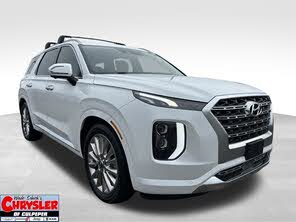
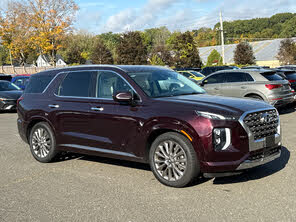
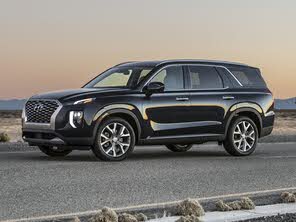
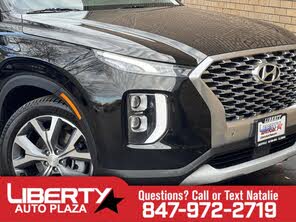
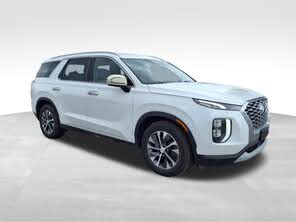
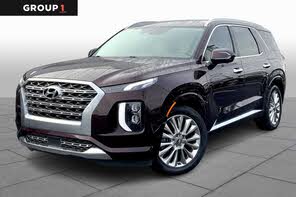
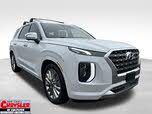
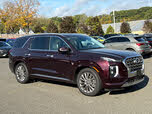
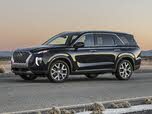
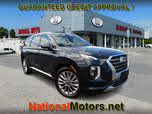
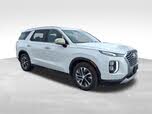
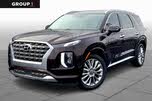
Hyundai had absolutely knocked the Palisade's styling out of the park. This vehicle could have worn a Cadillac logo, and shoppers wouldn't have blinked an eye. The Palisade stood out more than Caddy’s new XT6 3-row luxury SUV. Its bold, in-your-face styling was characterized by a massive grille and rakishly thin headlights. Interestingly enough, the upper headlight assembly was only part of the headlight puzzle. What appeared to be larger fog lights made up the rest of the headlights. With them on, there was a character line of LEDs that extended from the upper headlights down through the mid-level assembly.
Hyundai was known for doing interesting things with chrome and vehicles' character lines, and this trend continued with the Palisade. It had a large chrome strip that ran from the base of the A-pillar up over both side door windows, finishing right after the rear door. This visually broke up what might otherwise have been a very long design, though it did leave the Palisade looking a little busy. The cabin of the Palisade continued that upscale feel, but with more elegance and simplicity. It had a fully digital instrument panel, a large touchscreen that flowed seamlessly across the dash, and a center console bristling with controls that rose up along the centerline. The personalized ambient lighting system added a touch of luxury, especially in the top-of-the-line Limited trim.
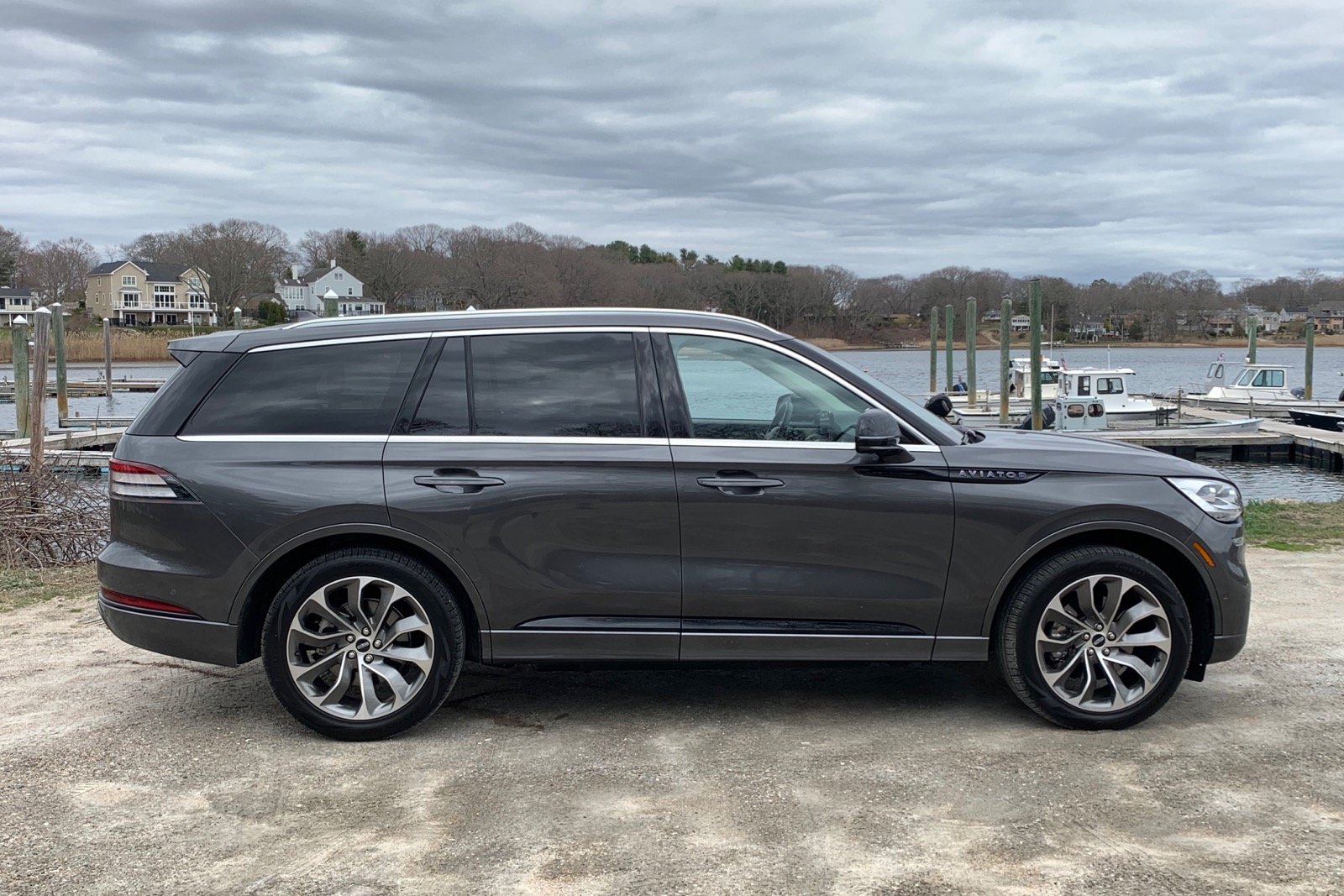
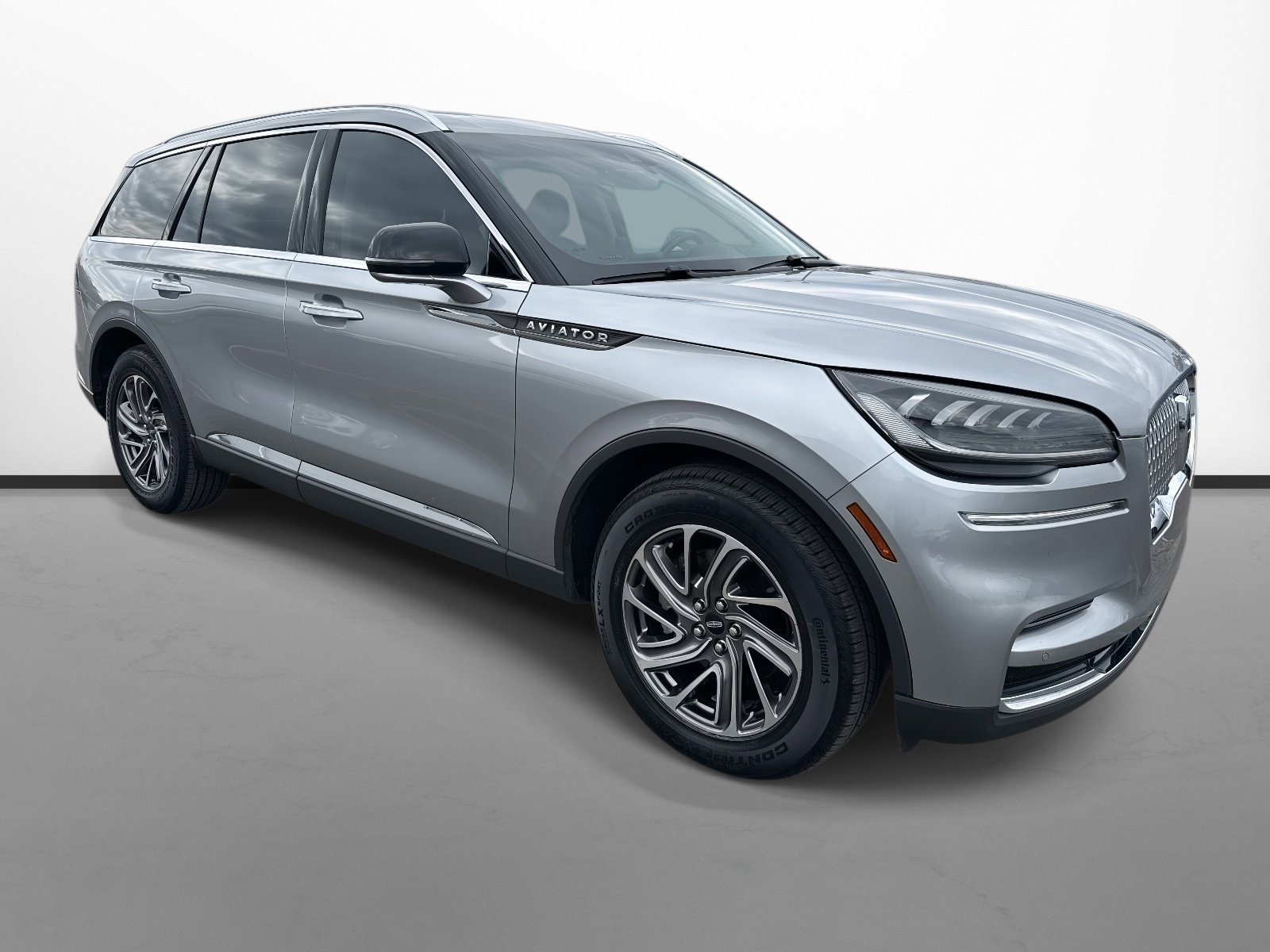
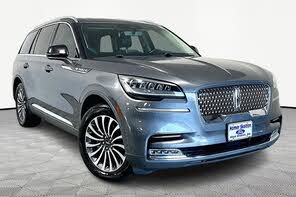
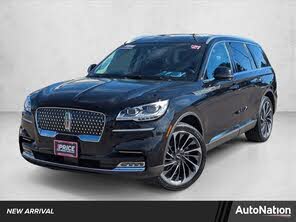
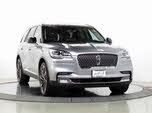
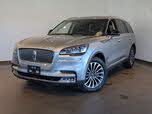
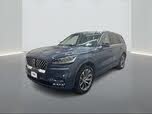
Lincoln had nailed the styling of the big-dog Navigator, and the Aviator, which arrived as a 2020 model and carried over to 2021 mostly unchanged, took on that design language in all the right places. It was an incredibly sharp-looking car, defined by crisp lines, and it was one of the few modern cars that actually benefited from heavy use of chrome. Inside, Lincoln once again differentiated itself from its Ford counterpart. It was hard to believe at times that the Aviator was actually based on the same platform as the Ford Explorer. The cabin was defined by comfort and warmth, with plenty of soft-touch materials and a center console that rose elegantly up to the standard 10.1-inch touchscreen that dominated the dash.
Lincoln also differentiated itself with the piano button shifter in the middle of the dash. Typically, the button shifter was never as intuitive as a traditional shift lever, but the buttons were laid out in a sensible manner. Rather than your typical alerts when parking or turning on the car, the Aviator had various soothing chimes. It was a little thing that helped contribute to the air of class and luxury in the Aviator. Trims for the Aviator included Standard, Reserve, Grand Touring, Black Label, and Black Label Grand Touring, each offering a range of luxurious features and options.


The 2020 Hyundai Palisade came equipped with a 3.8-liter V6 engine, making 291 horsepower and 262 pound-feet of torque. Power was sent to the front wheels or available all-wheel drive (AWD) through an 8-speed automatic transmission, operated via a push-button shifter. The automatic transmission managed power well, and the V6 engine provided solid acceleration. The drive mode dial in the center console offered Sport, Comfort, Eco, Snow, and Smart modes. Smart mode toggled between the other modes based on driving habits, providing a responsive and adaptive driving experience.
In Comfort mode, the V6 and the transmission took a half-second to respond to acceleration, but eventually brought on strong acceleration. Sport mode made the gas pedal twitchier and improved cornering, especially with the self-leveling rear suspension in the Limited trim. Fuel economy for the Palisade FWD was 19 mpg city, 26 highway, 22 combined, while AWD models achieved 19/24/21. In a week of combined city and highway driving, observed fuel economy was 20.3 miles per gallon.
The 2021 Lincoln Aviator's Standard, Reserve, and Black Label trims came equipped with a 3.0-liter twin-turbocharged V6, making 400 horsepower and 415 pound-feet of torque. Power was routed through a 10-speed automatic transmission, with rear-wheel drive (RWD) or available all-wheel drive (AWD). The Grand Touring and Grand Touring Black Label trims featured the same twin-turbo V6, but in a plug-in hybrid configuration, increasing output to 494 hp and 630 lb-ft of torque. The hybrid powertrain provided brisk acceleration and could travel up to 21 miles on pure electric power.
The Aviator's drive mode selector included modes like “Excite” and “Conserve,” appropriate for its performance characteristics. The Aviator was well-suited for highways and cul-de-sacs but struggled to stay composed in city driving. The hybrid powertrain made for smooth-yet-quick acceleration, though the vehicle's heft was noticeable in corners, and the long wheelbase made maneuvering in tight spaces a bit awkward.
The 2020 Hyundai Palisade excelled in versatility and handling everything a family could throw at it. It offered 45.8 cubic feet of cargo space with the third row down and 86.4 cubic feet with all rear seats dropped, more than both the Highlander and the Pilot. The Limited test model had power-folding third-row seats, which could individually drop with the push of a button, though they took their time rising and dropping. Space in the third row was manageable, even for longer trips, and the second-row captain's chairs provided plenty of comfort and convenience.
The 2021 Lincoln Aviator provided 18.3 cubic feet of cargo space behind the third-row seats. With the power-lift-and-lower third-row seats folded, cargo capacity increased to 41.8 cubic feet, and with all rear seats folded, it offered a total of 77.7 cubic feet of cargo space. The second row was the place to be, especially in the Grand Touring test model, which featured second-row captain's chairs, a helpful center console, and a digital control panel for seat, climate, and audio controls. The second-row console even had toggles for the panoramic sunroof visor. One potential issue was the use of power-button door releases, which could be problematic if the battery ever died.
The 2020 Hyundai Palisade came with plenty of standard tech, including an 8-inch touchscreen infotainment system with Apple CarPlay and Android Auto. The SE trim had three front-row USB ports, two second-row USB ports, and Bluetooth connectivity. The infotainment system was easy to use, with a home button and tactile buttons and dials for navigation. The SEL trim could be upgraded with the $1,250 Driver Guidance package, which included a larger 10.25-inch touchscreen with navigation, satellite radio, and the Driver Talk in-car intercom system. The Limited trim featured a Harman Kardon premium audio system with 12 speakers and Clari-Fi music restoration technology.
The 2021 Lincoln Aviator came standard with a 10.1-inch touchscreen running the intuitive Sync 3 infotainment system. The screen extended from the dash in a landscape format, making for a natural layout. The Sync 3 system was easy to use, with a sensible menu layout and redundant controls in the center stack. The Aviator also came standard with Apple CarPlay and Android Auto, presented well on the screen with large icons. The fully digital instrument panel and optional head-up display (HUD) provided clear and easy-to-read information.
The 2020 Hyundai Palisade was named a Top Safety Pick+ by the Insurance Institute for Highway Safety, its highest award. It came with a reversing camera, child-seat anchors, and a full array of front- and side-impact airbags. Standard driver-assistance tech included forward-collision avoidance with pedestrian detection, lane-keeping assist, a driver-attention warning, and parking sensors. The digital instrument panel allowed for unique features like the blind-spot camera system, which activated the corresponding parking camera when the turn signal was used.
The 2021 Lincoln Aviator came well-equipped with standard driver assistance features as part of the Lincoln Co-Pilot 360 package. This included automatic emergency braking, lane departure warning, automatic high beams, blind-spot monitoring, and front-and-rear parking sensors. The Grand Touring test model came with the Co-Pilot 360 Plus package, which added reverse automatic braking, self-parking functionality, and adaptive cruise control. The Aviator earned top marks from the National Highway Traffic Safety Administration (NHTSA) and the Insurance Institute for Highway Safety (IIHS), including a Top Safety Pick accolade from the IIHS.
CarGurus highlights

According to CarGurus experts, the overall rating for the 2020 Hyundai Palisade is 8.2 out of 10, while the 2021 Lincoln Aviator scores 7.8 out of 10. Based on these ratings, the 2020 Hyundai Palisade is the recommended choice for its superior overall value, spacious interior, and advanced safety features.
Choose the 2021 Lincoln Aviator if:
- You prefer a luxury SUV with a powerful engine and smooth acceleration.
- You want a high-tech interior with a large touchscreen and intuitive infotainment system.
- You appreciate a comfortable and well-appointed second-row seating area.





Choose the 2020 Hyundai Palisade if:
- You want a spacious and versatile SUV with excellent cargo capacity.
- You appreciate a user-friendly infotainment system with plenty of standard tech features.
- You value top safety ratings and advanced driver-assistance features.



CarGurus highlights
According to CarGurus experts, the overall rating for the 2020 Hyundai Palisade is 8.2 out of 10, while the 2021 Lincoln Aviator scores 7.8 out of 10. Based on these ratings, the 2020 Hyundai Palisade is the recommended choice for its superior overall value, spacious interior, and advanced safety features.
Choose the 2021 Lincoln Aviator if:
Shop Now- You prefer a luxury SUV with a powerful engine and smooth acceleration.
- You want a high-tech interior with a large touchscreen and intuitive infotainment system.
- You appreciate a comfortable and well-appointed second-row seating area.




Choose the 2020 Hyundai Palisade if:
Shop Now- You want a spacious and versatile SUV with excellent cargo capacity.
- You appreciate a user-friendly infotainment system with plenty of standard tech features.
- You value top safety ratings and advanced driver-assistance features.



By: CarGurus + AI
At CarGurus, our team of experienced automotive writers remain at the heart of our content operation, conducting hands-on car tests and writing insightful guides that are backed by years of industry experience. To complement this, we are harnessing AI to make our content offering more diverse and more helpful to shoppers than ever. To achieve this, our AI systems are based exclusively on CarGurus content, ratings and data, so that what we produce is both unique to CarGurus, and uniquely helpful to car shoppers.