2020 Honda Pilot vs 2020 Mazda CX-5
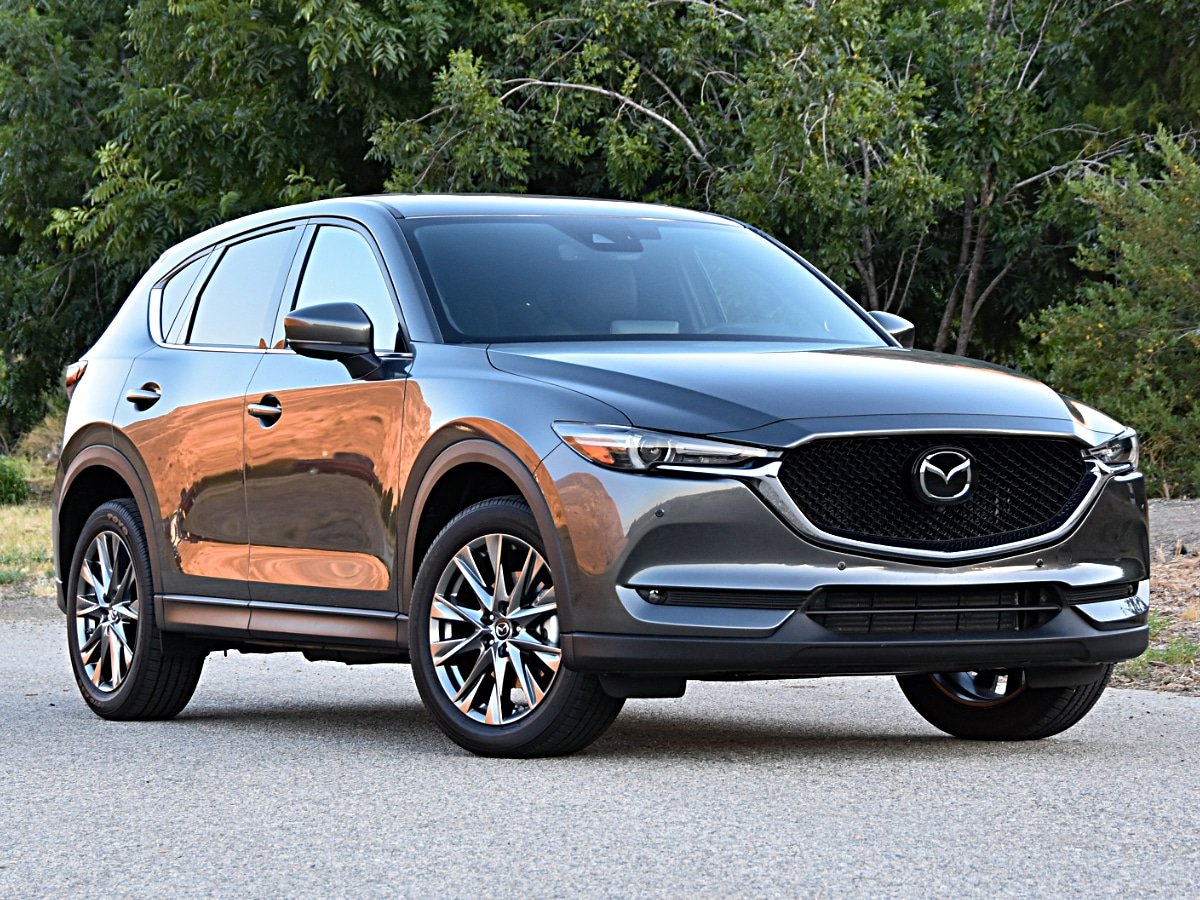
Overview | |
MSRP$31,650 | MSRP$25,190 |
Listings703 | Listings690 |
Ratings & Reviews | |
User Reviews | User Reviews |
Expert reviews8.0 out of 10 | Expert reviews7.7 out of 10 |
Pros
Cons
| Pros
Cons
|
2020 Honda Pilot Reviews SummaryThe Honda Pilot was once the leader of the midsize 3-row SUV pack. But several rivals from Hyundai, Kia, and Mazda have caught up to (and in some cases, surpassed) the Pilot. Still, the Pilot offers tons of cargo space, an adult-friendly third row, and an impressive list of standard safety features. But Honda’s choices on driver controls and in-car tech are its biggest shortcomings. Read on to learn how the Pilot stacks up against the competition, and to learn the CarGurus recommended trim. | |
2020 Mazda CX-5 Reviews SummaryAccording to a Harvard Business Review marketing study, there is such a thing as too much choice. And when the marketplace presents consumers with too much choice, there is a chance they won’t buy anything at all. For the 2020 model year, there are more than 40 small or compact SUVs available, half of them sold by luxury brands. Small and scrappy Mazda offers three of them: the CX-3, the CX-30, and the CX-5. However, in a marketplace awash in Chevys, Fords, Hondas, and Toyotas, Mazda has trouble standing apart from the established crowd. What’s the solution? Move upscale into “premium” territory. Premium is where Buick, Fiat, GMC, Jeep, Mini, and Volkswagen play to varying levels of success. Combining the value inherent in a mainstream brand with the design, materials, and technology common to luxury brands, these premium vehicles attempt to provide more than mainstream for less than luxury. At the same time, less is more. Because the 2020 Mazda CX-5 has but four similarly sized competitors in the premium class, that makes it easier for a consumer to choose, and more likely that a consumer will buy. The trick is convincing people that Mazda is a premium brand, and the automaker is taking a pragmatic approach to this emotionally-charged solution. | |
No video found | No video found |
Popular Features & Specs | |
Engine3.5L 280 hp V6 | Engine2.5L 187 hp I4 |
DrivetrainFWD | DrivetrainFWD |
Seating Capacity8 | Seating Capacity5 |
Horsepower280 hp @ 6000 rpm | Horsepower187 hp @ 6000 rpm |
MPG City19 | MPG City25 |
MPG Highway27 | MPG Highway31 |
Engine | |
Engine Name3.5L 280 hp V6 | Engine Name2.5L 187 hp I4 |
Torque262 lb-ft @ 4700 rpm | Torque186 lb-ft @ 4000 rpm |
Horsepower280 hp @ 6000 rpm | Horsepower187 hp @ 6000 rpm |
DrivetrainFWD | DrivetrainFWD |
Fuel Economy | |
MPG City19 | MPG City25 |
MPG Highway27 | MPG Highway31 |
Interior | |
Seating Capacity8 | Seating Capacity5 |
Safety | |
Front Crash Overall4 | Front Crash Overall5 |
Side Crash Overall5 | Side Crash Overall5 |
Dimensions & Capacity | |
Cargo Space16.5 cu ft | Cargo Space30.9 cu ft |
Curb Weight4036 lbs | Curb Weight3541 lbs |
Height70.6 in | Height66.2 in |
Length196.5 in | Length179.1 in |
Width78.6 in | Width83.3 in |
Wheelbase111.0 in | Wheelbase106.2 in |
Maximum Payload1509 lbs | Maximum Payload1034 lbs |
Number of doors4 | Number of doors4 |
Maximum Towing Capacity3500 lbs | Maximum Towing Capacity2000 lbs |
Overview | ||
MSRP | $31,650 | $25,190 |
Listings | ||
Ratings & Reviews | ||
User reviews | ||
Expert reviews | 8.0 out of 10Read full review | 7.7 out of 10Read full review |
Pros & cons | Pros
Cons
| Pros
Cons
|
Summary | The Honda Pilot was once the leader of the midsize 3-row SUV pack. But several rivals from Hyundai, Kia, and Mazda have caught up to (and in some cases, surpassed) the Pilot. Still, the Pilot offers tons of cargo space, an adult-friendly third row, and an impressive list of standard safety features. But Honda’s choices on driver controls and in-car tech are its biggest shortcomings. Read on to learn how the Pilot stacks up against the competition, and to learn the CarGurus recommended trim. | According to a Harvard Business Review marketing study, there is such a thing as too much choice. And when the marketplace presents consumers with too much choice, there is a chance they won’t buy anything at all. For the 2020 model year, there are more than 40 small or compact SUVs available, half of them sold by luxury brands. Small and scrappy Mazda offers three of them: the CX-3, the CX-30, and the CX-5. However, in a marketplace awash in Chevys, Fords, Hondas, and Toyotas, Mazda has trouble standing apart from the established crowd. What’s the solution? Move upscale into “premium” territory. Premium is where Buick, Fiat, GMC, Jeep, Mini, and Volkswagen play to varying levels of success. Combining the value inherent in a mainstream brand with the design, materials, and technology common to luxury brands, these premium vehicles attempt to provide more than mainstream for less than luxury. At the same time, less is more. Because the 2020 Mazda CX-5 has but four similarly sized competitors in the premium class, that makes it easier for a consumer to choose, and more likely that a consumer will buy. The trick is convincing people that Mazda is a premium brand, and the automaker is taking a pragmatic approach to this emotionally-charged solution. |
Video | No video found | No video found |
Popular Features & Specs | ||
Engine | 3.5L 280 hp V6 | 2.5L 187 hp I4 |
Drivetrain | FWD | FWD |
Seating Capacity | 8 | 5 |
Horsepower | 280 hp @ 6000 rpm | 187 hp @ 6000 rpm |
MPG City | 19 | 25 |
MPG Highway | 27 | 31 |
Engine | ||
Engine Name | 3.5L 280 hp V6 | 2.5L 187 hp I4 |
Torque | 262 lb-ft @ 4700 rpm | 186 lb-ft @ 4000 rpm |
Horsepower | 280 hp @ 6000 rpm | 187 hp @ 6000 rpm |
Drivetrain | FWD | FWD |
Fuel Economy | ||
MPG City | 19 | 25 |
MPG Highway | 27 | 31 |
Interior | ||
Seating Capacity | 8 | 5 |
Safety | ||
Front Crash Overall | 4 | 5 |
Side Crash Overall | 5 | 5 |
Dimensions & Capacity | ||
Cargo Space | 16.5 cu ft | 30.9 cu ft |
Curb Weight | 4036 lbs | 3541 lbs |
Height | 70.6 in | 66.2 in |
Length | 196.5 in | 179.1 in |
Width | 78.6 in | 83.3 in |
Wheelbase | 111.0 in | 106.2 in |
Maximum Payload | 1509 lbs | 1034 lbs |
Number of doors | 4 | 4 |
Maximum Towing Capacity | 3500 lbs | 2000 lbs |
The 2020 Honda Pilot boasted a dynamic styling, consistent with the rest of Honda's lineup at the time. It featured sleek LED headlights and a distinctive multi-tiered grille. A notable design element was the subtle uptick in the beltline around the rear side windows, which cleverly concealed the true size of the Pilot, making it appear more streamlined.
Inside, the Pilot offered a modern cabin that included a semi-digital instrument panel. While the fuel and engine-temperature gauges were analog, all other information was digitally displayed directly in front of the driver. The interior was comfortable and spacious, reflecting a solid level of refinement despite the presence of hard plastics in many areas. In comparison to competitors such as the Kia Telluride, Hyundai Palisade, and Mazda CX-9, the Honda Pilot's cabin lacked a certain upscale feel.
The Pilot offered various trim levels: LX, EX, EX-L, Touring, Elite, and the top-tier Black Edition. The LX trim came standard with 18-inch alloy wheels, remote keyless entry, push-button start, power locks, and power windows with a one-touch driver’s window. The EX trim added remote start, Apple CarPlay, Android Auto, LED fog lights, Smart Entry, tri-zone climate control, a 10-way power-adjustable driver’s seat, and heated front seats. The EX-L incorporated leather upholstery, a power liftgate, a power moonroof, second-row in-door sunshades, and a 4-way power-adjustable front passenger’s seat.
The Touring trim further enhanced the Pilot with 20-inch alloy wheels, integrated roof rails, blue ambient interior lighting, an upgraded stereo, and courtesy approach lights. The Elite trim featured power-folding side mirrors with integrated turn signals, a panoramic sunroof, a heated steering wheel, and heated and ventilated front seats. The Black Edition, new for 2020, offered unique 20-inch black-painted wheels, black exterior paint, black grille, and accents, nearly matching the content of the Elite trim.
The 2020 Mazda CX-5 executed the premium concept more effectively than its competitors. Mazda's commitment to building better vehicles was evident through captivating style, compelling substance, and continual product improvement. For the 2020 model year, the CX-5 included more standard equipment, revised instrumentation and control markings to enhance the cabin's appearance, and modifications to reduce noise, vibration, and harshness. The turbocharged engine also saw an increase in torque output, and AWD versions gained a new off-road traction assistance feature.
Trim levels for the CX-5 included the Sport, Touring, Grand Touring, Grand Touring Reserve, and Signature, with prices ranging from $25,190 to $37,155. The test vehicle had Signature trim, featuring premium Nappa leather upholstery, real wood trim, and a black headliner combined to give the SUV an upscale and luxurious feel. However, the Caturra Brown leather was nearly indistinguishable from the otherwise black cabin, reducing the level of contrast that often contributes to a premium appearance.


The 2020 Honda Pilot was driven by a 3.5-liter V6 engine, producing 280 horsepower and 262 pound-feet of torque. This power was channeled either to the front wheels or through available all-wheel drive. The V6 engine in LX, EX, and EX-L trims was paired with a 6-speed automatic transmission, whereas the Touring, Elite, and Black Edition trims were equipped with a 9-speed automatic variant. The 9-speed transmission provided more refined acceleration and potentially better fuel economy.
Honda replaced the conventional shifter with a proprietary button setup, which was less intuitive and required a learning curve. Despite this quirk, the V6 engine delivered stout acceleration suitable for both standstill and highway passing maneuvers. Though not the segment leader for acceleration, it provided adequate power for real-world driving scenarios.
The Pilot was tuned for a refined, comfortable driving experience, ideal for commutes and road trips, though it lacked athleticism. The Intelligent Traction Management System offered drive modes such as Normal, Snow, Mud, and Sand, adjusting the drivetrain and traction control for various conditions, albeit not turning the Pilot into a rock-crawler.
In contrast, the 2020 Mazda CX-5 started with a 2.5-liter four-cylinder engine in its Sport, Touring, and Grand Touring trims, delivering 187 horsepower and 186 pound-feet of torque through a six-speed automatic transmission with a Sport mode. FWD was standard, with an AWD option available.
The Grand Touring Reserve and Signature trims featured a turbocharged version of the same engine. When fueled with premium gas, it generated 250 hp and 320 lb-ft of torque. On regular gas, these figures dropped to 227 hp and 310 lb-ft. The turbocharged engine, available only with AWD, substantially enhanced acceleration despite a curb weight of 3,825 pounds. However, the turbo engine was less fuel-efficient, achieving 24 mpg in combined driving compared to 26 mpg for the naturally aspirated engine with AWD. The CX-5 Signature averaged 22.1 mpg during testing.
Beyond speed, the CX-5 Signature offered an engaging drive thanks to G-Vectoring Control Plus (GVC Plus) technology, which used the brakes to stabilize the SUV when approaching, rounding, and exiting corners. However, excessive body motions detracted from the overall driving thrill. Despite telepathic steering and reliable brakes, the CX-5 Signature’s handling felt less thrilling than other Mazdas due to its high center of gravity.
The Honda Pilot provided a spacious 8-passenger cabin with second-row bench seating, except in the Touring, Elite, and Black Edition trims, which featured second-row captain’s chairs, reducing seating capacity to seven. Unlike some competitors with cramped third rows suited only for children, the Pilot's third-row seating was adult-friendly. EX trims and higher featured one-touch fold-down rear seats, easing access to the third row.
With both the second and third rows folded, the Pilot offered 83.9 cubic feet of cargo space. This compared closely with rivals like the Toyota Highlander (84.3 cubic feet), Kia Telluride (87 cubic feet), Hyundai Palisade (86.4 cubic feet), and Subaru Ascent (86.5 cubic feet). The Volkswagen Atlas led the segment with 96.8 cubic feet. The Mazda CX-9 trailed with 71.2 cubic feet of cargo space.
The Pilot’s interior was family-oriented, similar to the Honda Odyssey minivan, with numerous spaces for toys, snacks, and gear. The second-row captain’s chairs provided a narrow passage for children to access the third row and mitigated potential sibling squabbles with a helpful No Man’s Land space. Additionally, a conversation mirror popped down from the sunglasses case area for parental surveillance.
The Mazda CX-5, positioned in a more upscale market niche, had a more cramped interior compared to mainstream compact crossovers like the Honda CR-V and Toyota RAV4. This hurt its competitiveness in terms of practicality and utility. Nonetheless, Mazda compensated with an upscale cabin and generous standard equipment.
Every CX-5 version displayed style and good taste, with clear gauges and elegant metallic accents. The Touring trim improved comfort with dual-zone automatic climate control, heated front seats, and rear air conditioning vents. The Grand Touring added a power height-adjustable front passenger’s seat, while the Grand Touring Reserve featured ventilated front seats, heated rear seats, and a heated steering wheel. The Signature trim offered Nappa leather, genuine wood trim, and additional luxury touches.
Despite their small size, the CX-5 Signature’s front seats were quite comfortable. The rear passenger legroom was limited, but the back seat could accommodate two adults. Cargo space measured 30.9 cubic feet behind the rear seat, expanding to 59.6 cubic feet with the rear seats folded. A power liftgate with a programmable height limit was standard on Grand Touring and higher trims.
The 2020 Honda Pilot’s LX trim came with a 5-inch color LCD screen operating a 215-watt, 7-speaker stereo with a subwoofer. It also included Bluetooth connectivity and a USB port. All other trims featured Honda’s Display Audio 8-inch touchscreen infotainment system with Apple CarPlay and Android Auto.
However, Display Audio presented issues. It lacked a tuning knob and had a confusing layout, making menu navigation challenging. All trims except LX included HD Radio, SiriusXM satellite radio, and Cabin Control Remote Capability, allowing rear-seat passengers to control the stereo using a smartphone app. Optional features like navigation, a rear-seat entertainment system, and a wall-style power outlet were standard on the Touring, Elite, and Black Edition. These trims also upgraded to a 590-watt, 10-speaker premium audio system and mobile hotspot capability. The Elite and Black Edition included a wireless charging pad.
The Mazda CX-5’s Mazda Connect infotainment system was designed to feel upscale, akin to systems in luxury brands like Audi, BMW, and Mercedes-Benz. The Sport trim featured a 7-inch touchscreen, responsive to touch only when the vehicle was stationary. It included Bluetooth, HD Radio, text messaging support, integrated internet radio apps, and E911 emergency notification. The Touring trim added Apple CarPlay and Android Auto.
Grand Touring trim added a color 8-inch touchscreen, satellite radio, and a 10-speaker Bose premium sound system. The Signature trim further enhanced technology with a navigation system, a surround-view camera system, and a SiriusXM data subscription covering traffic, weather, news, sports, and more.
Mazda Connect allowed interaction through the touchscreen (when stationary), controls on the center console or steering wheel, or voice-recognition technology. Unfortunately, none of these were ideal. Setting up the system and primarily using steering wheel controls minimized frustration. The voice-recognition technology often failed without explanation, making the push-to-talk button best avoided.
For 2021, Mazda planned to update Mazda Connect with a newer version, eliminating the touchscreen in favor of a wider, modern display. However, earlier experiences with this system in the Mazda3 and Mazda CX-30 indicated that operational issues persisted.
The Honda Pilot came standard with the HondaSensing suite of driver assistance systems, including features like forward-collision avoidance, automatic emergency braking, lane-departure warning, adaptive cruise control, and automatic high beams. Standard safety equipment also included front and side-impact airbags, child-seat anchors, Vehicle Stability Assist, and traction control. Optional features comprised front and rear parking sensors and blind-spot monitoring with rear cross-traffic alert.
Similarly, the Mazda CX-5 excelled in safety, thanks to its standard advanced driving assistance systems (ADAS), combined under the i-Activsense banner. This package included adaptive cruise control with stop-and-go capability, forward collision warning with pedestrian detection, automatic emergency braking, blind-spot monitoring, rear cross-traffic alert, lane departure warning, and lane-keep assist. Additionally, the CX-5 featured standard LED headlights and rain-sensing wipers. Adaptive headlights were standard on Grand Touring trim.
CarGurus highlights
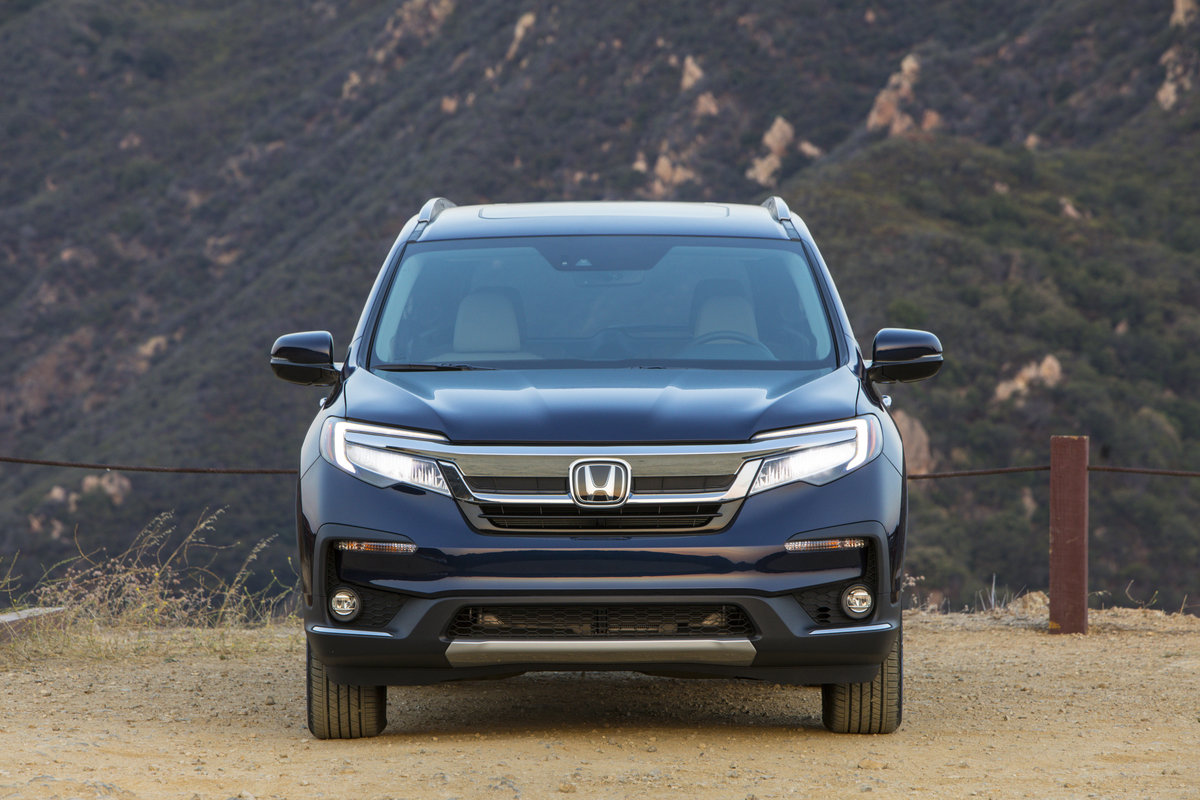
According to CarGurus experts, the overall rating for the 2020 Honda Pilot is 8.0 out of 10, while the 2020 Mazda CX-5 scores 7.7 out of 10. Based on these ratings, the Honda Pilot emerges as the better overall choice, particularly for those seeking a versatile, family-friendly SUV with ample space and robust safety features. The Mazda CX-5, while offering an upscale experience and engaging driving dynamics, falls slightly short in overall utility and cargo space. Therefore, for most consumers, the 2020 Honda Pilot would be the recommended pick.
Choose the 2020 Honda Pilot if:
- You need a spacious and versatile family vehicle with an adult-friendly third row and substantial cargo capacity.
- You value a comprehensive suite of standard safety features and top safety ratings.
- You're looking for a well-rounded vehicle offering various trim levels and features, from basic to luxurious.


Choose the 2020 Mazda CX-5 if:
- You prefer a stylish, upscale compact SUV with an engaging driving experience and high-quality interiors.
- You appreciate advanced safety features and top safety ratings, all standard across most trims.
- You're looking for a balanced combination of performance with both naturally aspirated and turbocharged engine options.


CarGurus highlights
According to CarGurus experts, the overall rating for the 2020 Honda Pilot is 8.0 out of 10, while the 2020 Mazda CX-5 scores 7.7 out of 10. Based on these ratings, the Honda Pilot emerges as the better overall choice, particularly for those seeking a versatile, family-friendly SUV with ample space and robust safety features. The Mazda CX-5, while offering an upscale experience and engaging driving dynamics, falls slightly short in overall utility and cargo space. Therefore, for most consumers, the 2020 Honda Pilot would be the recommended pick.
Choose the 2020 Honda Pilot if:
Shop Now- You need a spacious and versatile family vehicle with an adult-friendly third row and substantial cargo capacity.
- You value a comprehensive suite of standard safety features and top safety ratings.
- You're looking for a well-rounded vehicle offering various trim levels and features, from basic to luxurious.
Choose the 2020 Mazda CX-5 if:
Shop Now- You prefer a stylish, upscale compact SUV with an engaging driving experience and high-quality interiors.
- You appreciate advanced safety features and top safety ratings, all standard across most trims.
- You're looking for a balanced combination of performance with both naturally aspirated and turbocharged engine options.

By: CarGurus + AI
At CarGurus, our team of experienced automotive writers remain at the heart of our content operation, conducting hands-on car tests and writing insightful guides that are backed by years of industry experience. To complement this, we are harnessing AI to make our content offering more diverse and more helpful to shoppers than ever. To achieve this, our AI systems are based exclusively on CarGurus content, ratings and data, so that what we produce is both unique to CarGurus, and uniquely helpful to car shoppers.

