2020 Ford Explorer vs 2020 Toyota 4Runner

Overview | |
MSRP$32,765 | MSRP$36,120 |
Listings538 | Listings201 |
Ratings & Reviews | |
User Reviews | User Reviews |
Expert reviews7.2 out of 10 | Expert reviews6.8 out of 10 |
Pros
Cons
| Pros
Cons
|
2020 Ford Explorer Reviews SummaryFor nearly 30 years, the Ford Explorer has settled into the American lexicon like Cheerios. We've gobbled up millions of them, from the rock-crawling Eddie Bauers of the 1990s to the brand-new ST that can take down sports cars. The 2020 Explorer brings an all-new chassis, cranks up the technology, and introduces hybrid and high-performance powertrains in a space the size of a small living room. The Explorer's also getting very expensive while other automakers catch on to Ford's winning formula—for a lot less money. | |
2020 Toyota 4Runner Reviews SummaryEven in its expensive Limited trim, the Toyota 4Runner remains clearly purpose-built for tackling terrain. Whether on a dusty cow path or snowy mountain road, the 4Runner looks most in its element when its outside the typical car’s comfort zone. For 2020, Toyota keeps enough chrome and leather available to market the 4Runner as a rough-and-tumble luxury alternative, but shoppers considering one had better have a real need for 4-wheel drive. | |
No video found | |
Popular Features & Specs | |
Engine2.3L 300 hp I4 | Engine4.0L 270 hp V6 |
Drive TrainRWD | Drive Train4X2 |
Seating Capacity7 | Seating Capacity7 |
Horsepower | Horsepower270 hp @ 5600 rpm |
MPG City21 | MPG City16 |
MPG Highway28 | MPG Highway19 |
Engine | |
Engine Name2.3L 300 hp I4 | Engine Name4.0L 270 hp V6 |
Torque | Torque278 lb-ft @ 4400 rpm |
Horsepower | Horsepower270 hp @ 5600 rpm |
DrivetrainRWD | Drivetrain4X2 |
Fuel Economy | |
MPG City21 | MPG City16 |
MPG Highway28 | MPG Highway19 |
Interior | |
Seating Capacity7 | Seating Capacity7 |
Safety | |
Front Crash Overall5 | Front Crash Overall4 |
Side Crash Overall5 | Side Crash Overall5 |
Dimensions & Capacity | |
Cargo Space18.2 cu ft | Cargo Space47.2 cu ft |
Curb Weight4345 lbs | Curb Weight4400 lbs |
Height69.9 in | Height71.5 in |
Length198.8 in | Length190.2 in |
Width89.3 in | Width75.8 in |
Wheelbase119.1 in | Wheelbase109.8 in |
Maximum Payload1425 lbs | Maximum Payload1700 lbs |
Number of doors4 | Number of doors4 |
Maximum Towing Capacity5300 lbs | Maximum Towing Capacity5000 lbs |
Standard Towing Capacity | Standard Towing Capacity5000 lbs |
Overview | ||
MSRP | $32,765 | $36,120 |
Listings | ||
Ratings & Reviews | ||
User reviews | ||
Expert reviews | 7.2 out of 10Read full review | 6.8 out of 10Read full review |
Pros & cons | Pros
Cons
| Pros
Cons
|
Summary | For nearly 30 years, the Ford Explorer has settled into the American lexicon like Cheerios. We've gobbled up millions of them, from the rock-crawling Eddie Bauers of the 1990s to the brand-new ST that can take down sports cars. The 2020 Explorer brings an all-new chassis, cranks up the technology, and introduces hybrid and high-performance powertrains in a space the size of a small living room. The Explorer's also getting very expensive while other automakers catch on to Ford's winning formula—for a lot less money. | Even in its expensive Limited trim, the Toyota 4Runner remains clearly purpose-built for tackling terrain. Whether on a dusty cow path or snowy mountain road, the 4Runner looks most in its element when its outside the typical car’s comfort zone. For 2020, Toyota keeps enough chrome and leather available to market the 4Runner as a rough-and-tumble luxury alternative, but shoppers considering one had better have a real need for 4-wheel drive. |
Video | No video found | |
Popular Features & Specs | ||
Engine | 2.3L 300 hp I4 | 4.0L 270 hp V6 |
Drive Train | RWD | 4X2 |
Seating Capacity | 7 | 7 |
Horsepower | 270 hp @ 5600 rpm | |
MPG City | 21 | 16 |
MPG Highway | 28 | 19 |
Engine | ||
Engine Name | 2.3L 300 hp I4 | 4.0L 270 hp V6 |
Torque | 278 lb-ft @ 4400 rpm | |
Horsepower | 270 hp @ 5600 rpm | |
Drivetrain | RWD | 4X2 |
Fuel Economy | ||
MPG City | 21 | 16 |
MPG Highway | 28 | 19 |
Interior | ||
Seating Capacity | 7 | 7 |
Safety | ||
Front Crash Overall | 5 | 4 |
Side Crash Overall | 5 | 5 |
Dimensions & Capacity | ||
Cargo Space | 18.2 cu ft | 47.2 cu ft |
Curb Weight | 4345 lbs | 4400 lbs |
Height | 69.9 in | 71.5 in |
Length | 198.8 in | 190.2 in |
Width | 89.3 in | 75.8 in |
Wheelbase | 119.1 in | 109.8 in |
Maximum Payload | 1425 lbs | 1700 lbs |
Number of doors | 4 | 4 |
Maximum Towing Capacity | 5300 lbs | 5000 lbs |
Standard Towing Capacity | 5000 lbs | |
The 2020 Ford Explorer stood out with its refined and athletic design. The widened headlights, prominent grille, and italic "Explorer" lettering on the hood gave it a recognizable, confident face. The ST version with black 21-inch rims, blacked-out trim, red brake calipers, and quad exhaust pipes added a sleek, aggressive look that was undeniably attractive. However, the Explorer’s interior didn’t match its handsome exterior. Despite the $60,000 price tag, the interior materials felt subpar, with much of the cabin covered in rough-grained plastic, harsh trim, and low-quality leather. The aluminum speaker covers and some white stitching tried to elevate the aesthetics, but it was not enough to deliver a real touch of luxury.
In contrast, the 2020 Toyota 4Runner maintained a utilitarian and robust exterior design, reminiscent of a timeless off-roader. Its visual simplicity, marked by tall slab sides, a high beltline, and flared wheel wells, spoke to its rugged, go-anywhere attitude. The design included practical elements like short overhangs for better off-road capability, though there were non-functional details like the hood scoop. The 4Runner offered various trim options catering to different tastes, from the stealthy Nightshade and Venture Special Editions to the more comfort-focused Limited trim. Inside, the 4Runner followed its rugged exterior with large, easy-to-use knobs and controls. While offering leather seating in higher trims, it still couldn’t escape its plastic-heavy, utilitarian roots, especially noticeable in the basic, uncomfortable third-row seats meant for occasional use.


The 2020 Ford Explorer gained significant performance points with its rear-wheel-drive chassis and a choice of robust engines. The Explorer ST shined with its 3.0-liter twin-turbo V6 engine delivering 400 horsepower and 415 pound-feet of torque, paired with a 10-speed automatic transmission. This setup, along with the tuned suspension and crisp steering, made the Explorer ST a dynamic and nimble SUV. Ford also offered a 2.3-liter turbo inline-four engine producing 300 hp and 310 lb-ft, and a hybrid variant combining a 3.3-liter V6 with an electric motor for a net 318 hp. However, the fuel efficiency on the V6 models was mediocre, averaging 18 mpg over 960 mostly highway miles.
The 2020 Toyota 4Runner, meanwhile, operated with a straightforward 4.0-liter V6 engine across all trims, producing 270 horsepower and 278 pound-feet of torque, managed by a 5-speed automatic transmission. This engine was not about smooth performance but about reliability and durability, allowing for up to 5,000 pounds of towing capacity. The 4Runner's strength was off-road capability, thanks to its body-on-frame construction, part-time 4WD system in TRD models, and advanced off-road features like CRAWL control and Multi-Terrain Select. However, its fuel efficiency was poor, with EPA estimates of 16 mpg city, 19 highway, and a combined 17 mpg.
The Ford Explorer excelled in terms of interior space and functionality. On a road trip, the Explorer comfortably accommodated three adults with ample space for camera gear and other belongings. The second row featured air vents, USB ports, a center console, and a panoramic moonroof, enhancing passenger comfort. The third row was more spacious than in previous models, suitable for six-foot-tall adults on short journeys. Cargo space was 18 cubic feet behind the third row, 48 cubic feet with the second row folded, and expanded to 88 cubic feet with all seats down—one of the largest in its class.
Conversely, the Toyota 4Runner, while designed more for off-road enthusiasts, did not compromise on interior visibility and practicality. It offered a tidy turning radius of 18 feet, 7 inches, making it easier to maneuver than many competitors. The dashboard featured large knobs and buttons for easy use, but the high seating position and power-retractable running boards could be challenging for shorter passengers to navigate. The optional third-row seats in the 4Runner were narrow, thin, and lacked sufficient legroom, making them suitable only for short, occasional use. When it came to cargo, the 4Runner did not extend its practicality deep into cargo space compared to the Explorer.
Ford equipped the 2020 Explorer with an impressive suite of technological features. An 8-inch touchscreen with Sync 3 infotainment, Apple CarPlay, Android Auto, and 4G WiFi were standard. The Premium Technology Package in the ST and Platinum models added a 10-inch vertical touchscreen and a 12-inch digital instrument cluster. While innovative in appearance, these screens lacked substantial customization options. Despite some user-friendliness, the semi-automated Co-Pilot360 Assist+ system required improvements to match competitors' effectiveness fully.
For the 2020 Toyota 4Runner, Toyota updated the infotainment system to include an 8-inch touchscreen with Apple CarPlay and Android Auto compatibility. Yet, Toyota’s navigation system wasn't always intuitive compared to smartphone navigation options, which were easier and provided more accurate directions. The 4Runner’s technological features were functional, but they lagged behind more modern competitors in the market. The focus remained on off-road capabilities with features like the part-time 4WD system and advanced traction control systems.
The 2020 Ford Explorer benefited from Ford Co-Pilot 360, which included forward emergency braking, blind-spot monitoring, auto high beams, and lane-keep assist as standard. The Assist+ option added adaptive cruise control and reverse braking, although the latter occasionally misfired, causing driver frustration. The Explorer received an Acceptable rating in the IIHS small overlap test on the driver’s side.
Safety on the 2020 Toyota 4Runner was enhanced with Toyota Safety Sense P (TSS-P), featuring adaptive cruise control, lane-departure alert, a pre-collision system with pedestrian detection, and automatic high beams. It came with eight standard airbags, improving occupant protection. NHTSA awarded the 4Runner four out of five stars overall but only three out of five in rollover tests. Similarly, IIHS rated the SUV Good in all crash tests except for Marginal in the small overlap front: driver-side test.
CarGurus highlights
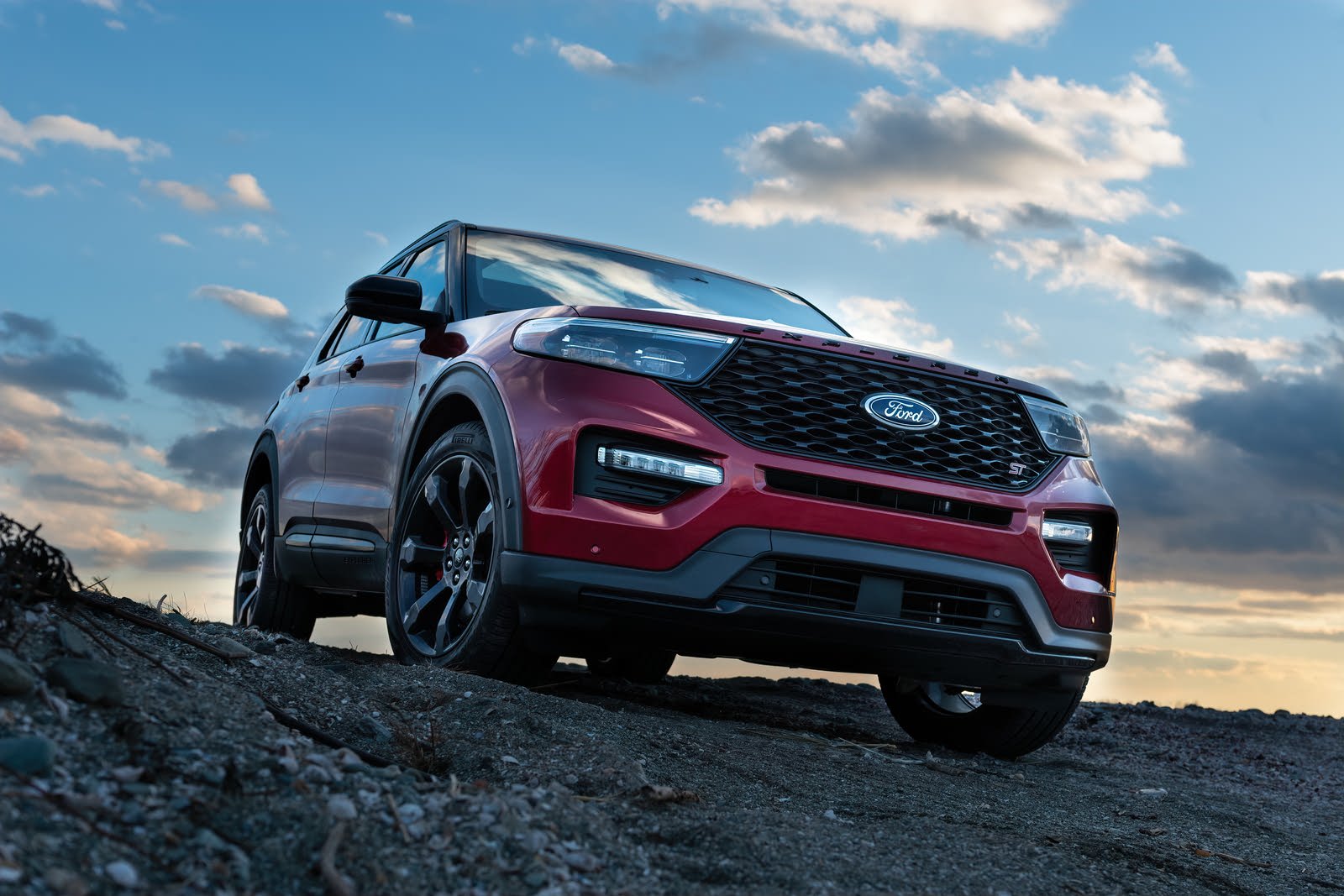
According to CarGurus experts, the overall rating for 2020 Ford Explorer is 7.2 out of 10, while the 2020 Toyota 4Runner scores 6.8 out of 10. Based on these ratings, the 2020 Ford Explorer is the recommended choice. It offers a better balance of performance, space, technology, and comfort making it a more versatile option for a broader range of consumers.
Choose the 2020 Ford Explorer if:
- You prioritize a spacious, comfortable interior with advanced infotainment and plenty of tech features.
- You desire a nimble yet powerful SUV with an array of engine options and excellent handling.
- You value a balanced combination of family-friendly features and performance capabilities.


Choose the 2020 Toyota 4Runner if:
- Off-roading capability and rugged durability are your top priorities.
- You need a vehicle that’s simple to operate, with straightforward controls and reliable performance.
- You value safety features and a high seating position for better road visibility.


CarGurus highlights
According to CarGurus experts, the overall rating for 2020 Ford Explorer is 7.2 out of 10, while the 2020 Toyota 4Runner scores 6.8 out of 10. Based on these ratings, the 2020 Ford Explorer is the recommended choice. It offers a better balance of performance, space, technology, and comfort making it a more versatile option for a broader range of consumers.
Choose the 2020 Ford Explorer if:
Shop Now- You prioritize a spacious, comfortable interior with advanced infotainment and plenty of tech features.
- You desire a nimble yet powerful SUV with an array of engine options and excellent handling.
- You value a balanced combination of family-friendly features and performance capabilities.
Choose the 2020 Toyota 4Runner if:
Shop Now- Off-roading capability and rugged durability are your top priorities.
- You need a vehicle that’s simple to operate, with straightforward controls and reliable performance.
- You value safety features and a high seating position for better road visibility.

By: CarGurus + AI
At CarGurus, our team of experienced automotive writers remain at the heart of our content operation, conducting hands-on car tests and writing insightful guides that are backed by years of industry experience. To complement this, we are harnessing AI to make our content offering more diverse and more helpful to shoppers than ever. To achieve this, our AI systems are based exclusively on CarGurus content, ratings and data, so that what we produce is both unique to CarGurus, and uniquely helpful to car shoppers.

