2020 Ford Explorer vs 2020 Honda Pilot
Overview | |
MSRP$32,765 | MSRP$31,650 |
Listings497 | Listings171 |
Ratings & Reviews | |
User Reviews | User Reviews |
Expert reviews7.2 out of 10 | Expert reviews8.0 out of 10 |
Pros
Cons
| Pros
Cons
|
2020 Ford Explorer Reviews SummaryFor nearly 30 years, the Ford Explorer has settled into the American lexicon like Cheerios. We've gobbled up millions of them, from the rock-crawling Eddie Bauers of the 1990s to the brand-new ST that can take down sports cars. The 2020 Explorer brings an all-new chassis, cranks up the technology, and introduces hybrid and high-performance powertrains in a space the size of a small living room. The Explorer's also getting very expensive while other automakers catch on to Ford's winning formula—for a lot less money. | |
2020 Honda Pilot Reviews SummaryThe Honda Pilot was once the leader of the midsize 3-row SUV pack. But several rivals from Hyundai, Kia, and Mazda have caught up to (and in some cases, surpassed) the Pilot. Still, the Pilot offers tons of cargo space, an adult-friendly third row, and an impressive list of standard safety features. But Honda’s choices on driver controls and in-car tech are its biggest shortcomings. Read on to learn how the Pilot stacks up against the competition, and to learn the CarGurus recommended trim. | |
No video found | |
Popular Features & Specs | |
Engine2.3L 300 hp I4 | Engine3.5L 280 hp V6 |
Drive TrainRWD | Drive TrainFWD |
Seating Capacity7 | Seating Capacity8 |
Horsepower | Horsepower280 hp @ 6000 rpm |
MPG City21 | MPG City19 |
MPG Highway28 | MPG Highway27 |
Engine | |
Engine Name2.3L 300 hp I4 | Engine Name3.5L 280 hp V6 |
Torque | Torque262 lb-ft @ 4700 rpm |
Horsepower | Horsepower280 hp @ 6000 rpm |
DrivetrainRWD | DrivetrainFWD |
Fuel Economy | |
MPG City21 | MPG City19 |
MPG Highway28 | MPG Highway27 |
Interior | |
Seating Capacity7 | Seating Capacity8 |
Safety | |
Front Crash Overall5 | Front Crash Overall4 |
Side Crash Overall5 | Side Crash Overall5 |
Dimensions & Capacity | |
Cargo Space18.2 cu ft | Cargo Space16.5 cu ft |
Curb Weight4345 lbs | Curb Weight4036 lbs |
Height69.9 in | Height70.6 in |
Length198.8 in | Length196.5 in |
Width89.3 in | Width78.6 in |
Wheelbase119.1 in | Wheelbase111.0 in |
Maximum Payload1425 lbs | Maximum Payload1509 lbs |
Number of doors4 | Number of doors4 |
Maximum Towing Capacity5300 lbs | Maximum Towing Capacity3500 lbs |
Overview | ||
MSRP | $32,765 | $31,650 |
Listings | ||
Ratings & Reviews | ||
User reviews | ||
Expert reviews | 7.2 out of 10Read full review | 8.0 out of 10Read full review |
Pros & cons | Pros
Cons
| Pros
Cons
|
Summary | For nearly 30 years, the Ford Explorer has settled into the American lexicon like Cheerios. We've gobbled up millions of them, from the rock-crawling Eddie Bauers of the 1990s to the brand-new ST that can take down sports cars. The 2020 Explorer brings an all-new chassis, cranks up the technology, and introduces hybrid and high-performance powertrains in a space the size of a small living room. The Explorer's also getting very expensive while other automakers catch on to Ford's winning formula—for a lot less money. | The Honda Pilot was once the leader of the midsize 3-row SUV pack. But several rivals from Hyundai, Kia, and Mazda have caught up to (and in some cases, surpassed) the Pilot. Still, the Pilot offers tons of cargo space, an adult-friendly third row, and an impressive list of standard safety features. But Honda’s choices on driver controls and in-car tech are its biggest shortcomings. Read on to learn how the Pilot stacks up against the competition, and to learn the CarGurus recommended trim. |
Video | No video found | |
Popular Features & Specs | ||
Engine | 2.3L 300 hp I4 | 3.5L 280 hp V6 |
Drive Train | RWD | FWD |
Seating Capacity | 7 | 8 |
Horsepower | 280 hp @ 6000 rpm | |
MPG City | 21 | 19 |
MPG Highway | 28 | 27 |
Engine | ||
Engine Name | 2.3L 300 hp I4 | 3.5L 280 hp V6 |
Torque | 262 lb-ft @ 4700 rpm | |
Horsepower | 280 hp @ 6000 rpm | |
Drivetrain | RWD | FWD |
Fuel Economy | ||
MPG City | 21 | 19 |
MPG Highway | 28 | 27 |
Interior | ||
Seating Capacity | 7 | 8 |
Safety | ||
Front Crash Overall | 5 | 4 |
Side Crash Overall | 5 | 5 |
Dimensions & Capacity | ||
Cargo Space | 18.2 cu ft | 16.5 cu ft |
Curb Weight | 4345 lbs | 4036 lbs |
Height | 69.9 in | 70.6 in |
Length | 198.8 in | 196.5 in |
Width | 89.3 in | 78.6 in |
Wheelbase | 119.1 in | 111.0 in |
Maximum Payload | 1425 lbs | 1509 lbs |
Number of doors | 4 | 4 |
Maximum Towing Capacity | 5300 lbs | 3500 lbs |
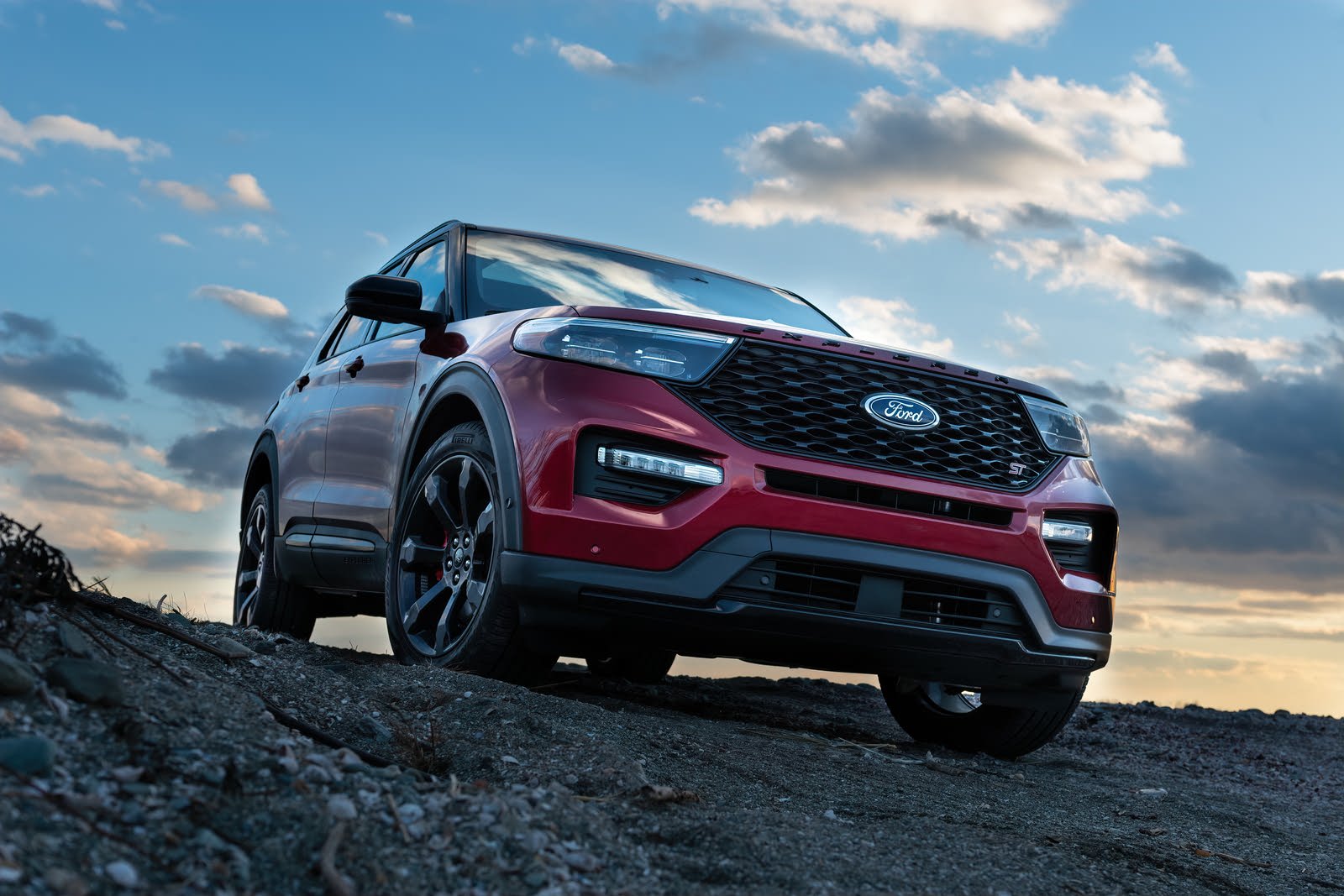
From the outside, the 2020 Ford Explorer exuded a contemporary, upscale aesthetic that was more refined compared to its predecessors. Styling drew comparisons to high-end brands like Land Rover, thanks to its widened headlights, extra-large grille, and prominent italic "Explorer" lettering on its hood. The model's lower, leaner appearance conveyed a sporty, athletic vibe, making it a striking presence on the road.
However, the interior of the Explorer retracted some of that exterior appeal. Despite the vehicle's purchase price often hitting the $60,000 mark, materials felt subpar—comparable to low-grade vinyl rather than genuine leather. There was an abundance of hard, roughly grained plastics that detracted from any attempt at providing a luxurious cabin feel. Elements like the aluminum speaker covers and select white stitching attempted to break up the monotony but largely failed to elevate the interior's overall appearance.
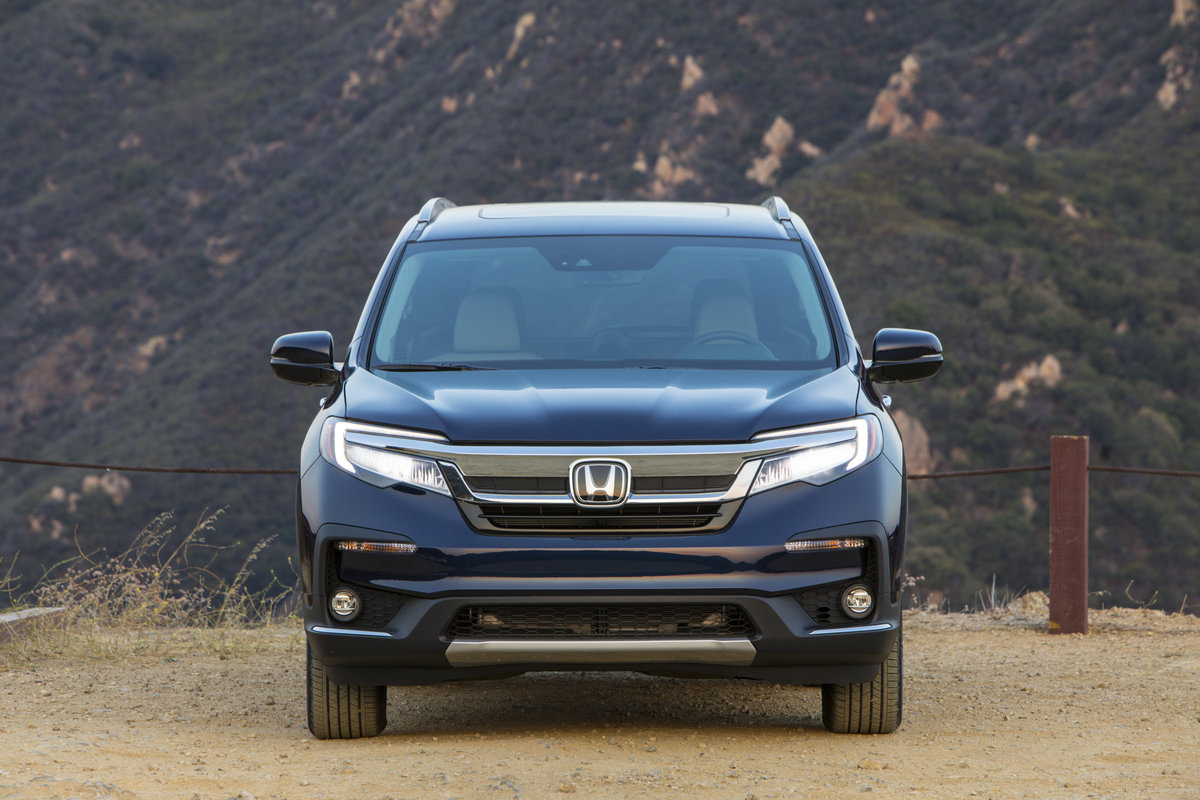
In contrast, the 2020 Honda Pilot was designed to be both stylish and functional, aligning with Honda's latest design ethos. It featured sleek LED headlights and a multi-tiered grille, with an uptick in the belt-line around the rear windows that masked its substantial size well.
Inside, the Pilot was both modern and somewhat upscale, especially when considering its spaciousness and finishes. The cabin felt comfortable and open, albeit with the occasional intrusion of hard plastics that didn’t quite match up to rivals like the Kia Telluride or Mazda CX-9 in terms of luxury. Despite these minor quibbles, it still boasted user-friendly features designed for family convenience, maintaining a pleasant and durable environment for daily use.


The 2020 Ford Explorer made significant strides in performance with its available RWD chassis, optimizing weight distribution and offering a more engaging driving dynamic. Ford Performance had worked their magic on the ST trim, providing a nimble, responsive ride with a 3.0-liter twin-turbo V6 engine, pushing out an impressive 400 horsepower and 415 lb-ft of torque. This engine was paired with a 10-speed automatic transmission, resulting in smooth power delivery and quick acceleration.
For those who didn't require the power of the ST, the standard 2.3-liter turbo inline-four still offered solid performance with 300 hp and 310 lb-ft of torque. Additionally, a gas-electric hybrid option was available for those seeking better fuel economy, although its real-world benefits were debatable.
The Honda Pilot came standard with a robust 3.5-liter V6 engine, delivering 280 horsepower and 262 lb-ft of torque, and offered either FWD or AWD configurations. Lower trims utilized a 6-speed automatic transmission, while higher trims, including Touring, Elite, and Black Edition, benefited from a more refined 9-speed automatic transmission.
The Pilot's performance might not have matched the athleticism of the Explorer, but it was well-suited for everyday driving scenarios. It provided comfortable and composed rides, making long commutes or family trips less stressful. The refined drivetrain also ensured solid acceleration, making highway passing maneuvers a breeze.
On our trip to Maine, the 2020 Ford Explorer impressed with its spacious interior and practical features. The second row felt particularly first-class, with air vents, USB ports, and an expansive panoramic moonroof enhancing passenger comfort. Adults could even fit in the third row without feeling too cramped, though it was best for short trips due to the flat bench design.
Cargo space, however, saw mixed results. With the third row in use, you had 18 cubic feet of cargo space, which was slightly below the previous model. However, folding the third row expanded the space to 48 cubic feet, and with all seats down, it maxed out at 88 cubic feet—making it one of the largest cargo spaces in its class.
The Honda Pilot accommodated up to eight passengers with ease, transforming to a 7-seater configuration on higher trims with captain's chairs in the second row. This made the third row more accessible and comfortable for adults, a noteworthy advantage over many competitors.
In terms of cargo capacity, the Pilot offered 83.9 cubic feet with the second and third rows folded. Compared to key rivals, it slightly trailed behind the likes of the Kia Telluride and Hyundai Palisade, but still fared better than the Mazda CX-9. Features such as the EX-L's power liftgate and the Touring trim’s hands-free liftgate also added convenience for loading and unloading cargo.
Tech features in the 2020 Ford Explorer included a standard 8-inch touchscreen with Sync 3 infotainment, Apple CarPlay, Android Auto, and 4G WiFi. Higher trims like the ST and Platinum models boasted a 10-inch vertical touchscreen and a 12-inch digital instrument cluster, enhancing the visual and functional appeal of the system.
Keyless entry, remote start, 3-zone climate control, and SiriusXM satellite radio also came as standard. However, despite the modern tech packages, some aspects like the driver’s digital instrument panel felt unfinished and less customizable compared to rivals, making it a mixed experience.
The 2020 Honda Pilot's base LX trim featured a 5-inch color LCD and a 215-watt, 7-speaker stereo system, with Bluetooth and a USB port. Most trims upgraded to an 8-inch Display Audio touchscreen infotainment system with Apple CarPlay and Android Auto compatibility.
However, this setup had its challenges, such as a confusing interface and the lack of a tuning knob, making interactions cumbersome. Higher trims offered additional perks like a rear-seat entertainment system, navigation, and premium audio systems.
The 2020 Ford Explorer came with the Co-Pilot 360 suite, which included forward emergency braking, blind-spot monitoring, auto high beams, and lane-keep assist. The Assist+ package enhanced safety with adaptive cruise control and reverse braking, although it sometimes engaged unexpectedly.
The Explorer had yet to complete NHTSA testing, but it received an Acceptable rating from the IIHS for the small overlap test on the driver's side, which, although not perfect, was reassuring.
Safety in the Honda Pilot was robust, thanks to the standard HondaSensing suite. This included forward-collision avoidance, automatic emergency braking, lane-departure warning, adaptive cruise control, and automatic high beams. The Pilot earned the highest ratings from both the NHTSA and IIHS, boasting a five-star overall crash test rating and top marks for crash prevention.
CarGurus highlights
According to CarGurus experts, the overall rating for the 2020 Ford Explorer is 7.2 out of 10, while the 2020 Honda Pilot scores 8.0 out of 10. Based on these ratings, the Honda Pilot emerges as the stronger choice. Its excellent safety features, comfortable and spacious interior, and overall better family-friendly design give it the edge over the Explorer. Therefore, if you're looking for a well-rounded and reliable 3-row SUV, the 2020 Honda Pilot is the recommended option.
Choose the 2020 Ford Explorer if:
- You prioritize strong performance and agile handling, especially with the ST's powerful V6 engine.
- You need ample cargo space, offering one of the largest capacities in its class.
- You prefer a rear-wheel-drive platform for better driving dynamics and weight distribution.


Choose the 2020 Honda Pilot if:
- You seek a comfortable and versatile family vehicle with a spacious, well-equipped interior.
- You value top safety ratings and a comprehensive suite of safety technologies.
- You want a user-friendly configuration with practical features like one-touch fold-down rear seats and ample cargo space.


CarGurus highlights
According to CarGurus experts, the overall rating for the 2020 Ford Explorer is 7.2 out of 10, while the 2020 Honda Pilot scores 8.0 out of 10. Based on these ratings, the Honda Pilot emerges as the stronger choice. Its excellent safety features, comfortable and spacious interior, and overall better family-friendly design give it the edge over the Explorer. Therefore, if you're looking for a well-rounded and reliable 3-row SUV, the 2020 Honda Pilot is the recommended option.
Choose the 2020 Ford Explorer if:
Shop Now- You prioritize strong performance and agile handling, especially with the ST's powerful V6 engine.
- You need ample cargo space, offering one of the largest capacities in its class.
- You prefer a rear-wheel-drive platform for better driving dynamics and weight distribution.
Choose the 2020 Honda Pilot if:
Shop Now- You seek a comfortable and versatile family vehicle with a spacious, well-equipped interior.
- You value top safety ratings and a comprehensive suite of safety technologies.
- You want a user-friendly configuration with practical features like one-touch fold-down rear seats and ample cargo space.

By: CarGurus + AI
At CarGurus, our team of experienced automotive writers remain at the heart of our content operation, conducting hands-on car tests and writing insightful guides that are backed by years of industry experience. To complement this, we are harnessing AI to make our content offering more diverse and more helpful to shoppers than ever. To achieve this, our AI systems are based exclusively on CarGurus content, ratings and data, so that what we produce is both unique to CarGurus, and uniquely helpful to car shoppers.

