2020 Audi Q7 vs 2021 Toyota RAV4

Overview | |
MSRP$54,800 | MSRP$26,350 |
Listings157 | Listings245 |
Ratings & Reviews | |
User Reviews | User Reviews |
Expert reviews7.7 out of 10 | Expert reviews7.3 out of 10 |
Pros
Cons
| Pros
Cons
|
2020 Audi Q7 Reviews SummaryFrom its styling and interior to its powertrain and technology, the 2020 Audi Q7 gets a thorough update that brings it in line with other high-end cars and SUVs wearing four chrome rings on their grilles. Simultaneously, the changes for the 2020 model year keep this Audi competitive against the BMW X5 and Mercedes-Benz GLE-Class, its primary rivals in the midsize luxury SUV class. We packed a Q7 Prestige full of family and luggage and set off for Lake Tahoe to assess this Audi’s improvements on the open road. | |
2021 Toyota RAV4 Reviews SummarySince its launch in 1997, the Toyota RAV4 has ridden a wave of crossover SUV popularity to become one of Toyota’s bestselling models. Introduced for the 2019 model year, the current-generation RAV4 tries to offer the rugged style of a traditional SUV, but underneath it’s still a car-based crossover pitched against the likes of the Ford Escape, Honda CR-V, Hyundai Tucson, Kia Sportage, Nissan Rogue, Subaru Forester, and Volkswagen Tiguan. Because it’s only in its third model year, this fifth-generation RAV4 doesn’t get many updates for 2021. The biggest news is the addition of the RAV4 Prime plug-in hybrid to the lineup, but that model actually went on sale last year. The only other changes are a new XLE Premium trim level for the RAV4 Hybrid, and a new front stainless steel front skid plate for the gasoline RAV4 TRD Off-Road model. Toyota offers compact SUV buyers more choices than most competitors. The RAV4 LE, XLE, XLE Premium, and Limited trim levels are available with hybrid and non-hybrid powertrains. Toyota also offers the gasoline-only RAV4 Adventure and TRD Off-Road trim levels, plus the RAV4 Hybrid XSE. The RAV4 Prime is also available in two trim levels—SE and XSE. We’ve covered the RAV4 Hybrid and RAV4 Prime in separate reviews, so this review will focus on the gasoline RAV4. Our test car was a RAV4 TRD Off-Road, which joined the lineup for the 2020 model year and is the first RAV4 model tuned by Toyota Racing Development, the automaker’s North American performance division. | |
No video found | No video found |
Popular Features & Specs | |
Engine2.0L 248 hp I4 | Engine2.5L 203 hp I4 |
Drive TrainAWD | Drive TrainFWD |
Seating Capacity7 | Seating Capacity5 |
Horsepower248 hp @ 5000 rpm | Horsepower |
MPG City19 | MPG City28 |
MPG Highway23 | MPG Highway35 |
Engine | |
Engine Name2.0L 248 hp I4 | Engine Name2.5L 203 hp I4 |
Torque273 lb-ft @ 1600 rpm | Torque |
Horsepower248 hp @ 5000 rpm | Horsepower |
DrivetrainAWD | DrivetrainFWD |
Fuel Economy | |
MPG City19 | MPG City28 |
MPG Highway23 | MPG Highway35 |
Interior | |
Leather SeatsStandard | Leather Seats |
Seating Capacity7 | Seating Capacity5 |
Key Features | |
Navigation SystemStandard | Navigation System |
Sunroof/MoonroofStandard | Sunroof/Moonroof |
Safety | |
Front Crash Overall | Front Crash Overall4 |
Side Crash Overall5 | Side Crash Overall5 |
Dimensions & Capacity | |
Cargo Space14.2 cu ft | Cargo Space37.5 cu ft |
Curb Weight4784 lbs | Curb Weight3370 lbs |
Height68.5 in | Height67.0 in |
Length199.6 in | Length180.9 in |
Width87.1 in | Width73.0 in |
Wheelbase117.9 in | Wheelbase105.9 in |
Maximum Payload1367 lbs | Maximum Payload1240 lbs |
Number of doors4 | Number of doors4 |
Maximum Towing Capacity4400 lbs | Maximum Towing Capacity1500 lbs |
Overview | ||
MSRP | $54,800 | $26,350 |
Listings | ||
Ratings & Reviews | ||
User reviews | ||
Expert reviews | 7.7 out of 10Read full review | 7.3 out of 10Read full review |
Pros & cons | Pros
Cons
| Pros
Cons
|
Summary | From its styling and interior to its powertrain and technology, the 2020 Audi Q7 gets a thorough update that brings it in line with other high-end cars and SUVs wearing four chrome rings on their grilles. Simultaneously, the changes for the 2020 model year keep this Audi competitive against the BMW X5 and Mercedes-Benz GLE-Class, its primary rivals in the midsize luxury SUV class. We packed a Q7 Prestige full of family and luggage and set off for Lake Tahoe to assess this Audi’s improvements on the open road. | Since its launch in 1997, the Toyota RAV4 has ridden a wave of crossover SUV popularity to become one of Toyota’s bestselling models. Introduced for the 2019 model year, the current-generation RAV4 tries to offer the rugged style of a traditional SUV, but underneath it’s still a car-based crossover pitched against the likes of the Ford Escape, Honda CR-V, Hyundai Tucson, Kia Sportage, Nissan Rogue, Subaru Forester, and Volkswagen Tiguan. Because it’s only in its third model year, this fifth-generation RAV4 doesn’t get many updates for 2021. The biggest news is the addition of the RAV4 Prime plug-in hybrid to the lineup, but that model actually went on sale last year. The only other changes are a new XLE Premium trim level for the RAV4 Hybrid, and a new front stainless steel front skid plate for the gasoline RAV4 TRD Off-Road model. Toyota offers compact SUV buyers more choices than most competitors. The RAV4 LE, XLE, XLE Premium, and Limited trim levels are available with hybrid and non-hybrid powertrains. Toyota also offers the gasoline-only RAV4 Adventure and TRD Off-Road trim levels, plus the RAV4 Hybrid XSE. The RAV4 Prime is also available in two trim levels—SE and XSE. We’ve covered the RAV4 Hybrid and RAV4 Prime in separate reviews, so this review will focus on the gasoline RAV4. Our test car was a RAV4 TRD Off-Road, which joined the lineup for the 2020 model year and is the first RAV4 model tuned by Toyota Racing Development, the automaker’s North American performance division. |
Video | No video found | No video found |
Popular Features & Specs | ||
Engine | 2.0L 248 hp I4 | 2.5L 203 hp I4 |
Drive Train | AWD | FWD |
Seating Capacity | 7 | 5 |
Horsepower | 248 hp @ 5000 rpm | |
MPG City | 19 | 28 |
MPG Highway | 23 | 35 |
Engine | ||
Engine Name | 2.0L 248 hp I4 | 2.5L 203 hp I4 |
Torque | 273 lb-ft @ 1600 rpm | |
Horsepower | 248 hp @ 5000 rpm | |
Drivetrain | AWD | FWD |
Fuel Economy | ||
MPG City | 19 | 28 |
MPG Highway | 23 | 35 |
Interior | ||
Leather Seats | Standard | |
Seating Capacity | 7 | 5 |
Key Features | ||
Navigation System | Standard | |
Sunroof/Moonroof | Standard | |
Safety | ||
Front Crash Overall | 4 | |
Side Crash Overall | 5 | 5 |
Dimensions & Capacity | ||
Cargo Space | 14.2 cu ft | 37.5 cu ft |
Curb Weight | 4784 lbs | 3370 lbs |
Height | 68.5 in | 67.0 in |
Length | 199.6 in | 180.9 in |
Width | 87.1 in | 73.0 in |
Wheelbase | 117.9 in | 105.9 in |
Maximum Payload | 1367 lbs | 1240 lbs |
Number of doors | 4 | 4 |
Maximum Towing Capacity | 4400 lbs | 1500 lbs |
In 2020, the Audi Q7 offered multiple variations. The 45 TFSI designation was for versions equipped with a turbocharged 2.0-liter four-cylinder engine, while Q7s with a mild-hybrid turbocharged 3.0-liter V6 carried the 55 TFSI nomenclature. New for this model year, a performance-tuned Audi SQ7 was also available, fitted with a twin-turbo 4.0-liter V8. For this evaluation, attention was given to the Q7 55 TFSI, starting at $60,800. The Q7 was available in Premium, Premium Plus, and Prestige trim levels, with the test vehicle showcasing the Prestige upgrade. With additional features like Navarra Blue metallic paint, a Cold Weather Package, and a Towing Package, the total price rose to $74,290, including the $995 destination charge.
The 2020 Q7 saw design changes that refreshed its front and rear styling, resulting in improved aesthetics that aligned with the themes introduced on the flagship Q8 model. The test vehicle sported standard 20-inch turbine-style wheels with 285/45 Pirelli Scorpion Verde run-flat all-season tires. Inside, the Q7 borrowed its dashboard and instrumentation from the high-tech Q8, replacing most physical controls with three digital displays. Audi's Virtual Cockpit panel provided instrumentation with three themes, two viewing styles, and a range of configurations. The center console housed two touch-sensing screens responsible for infotainment functions but also attracted dust and fingerprints.
The test Q7's cabin, decked out in Okapi Brown leather with Gray/Brown Fine Grain Ash natural wood inlays and a black cloth headliner, appeared upscale and high-tech. The standard multi-color ambient lighting in the Prestige trim added a calming atmosphere at night.
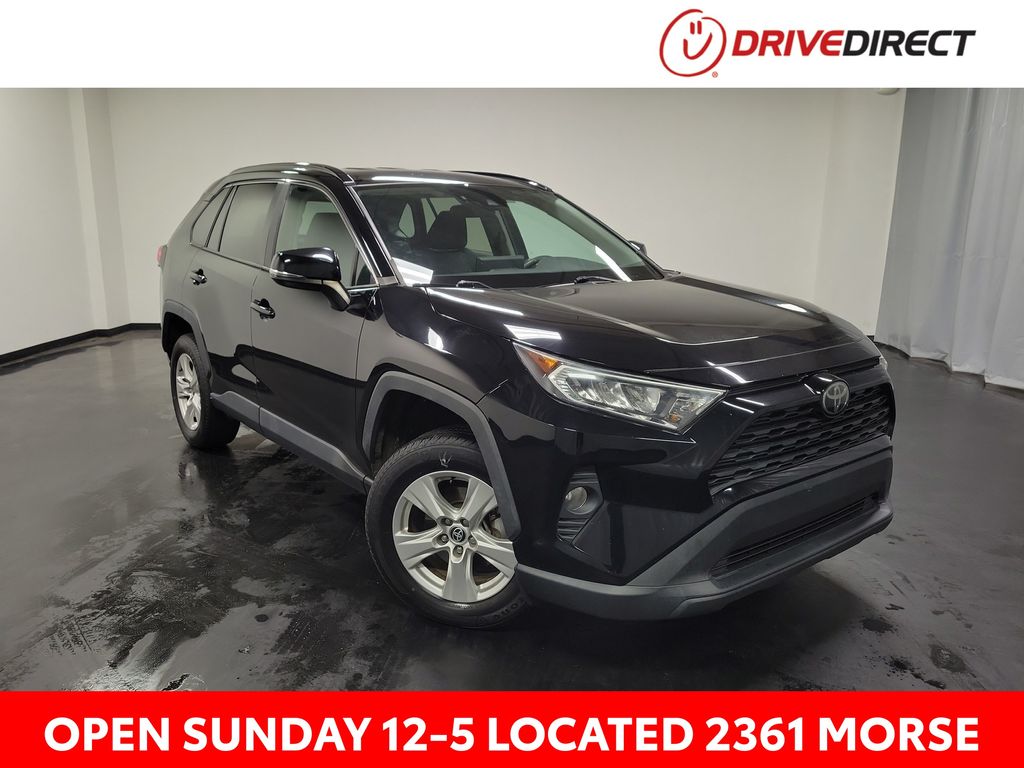
Toyota, knowing that styling was a significant factor for crossover buyers, gave the 2021 RAV4 a rugged, traditional SUV look with boxy fender flares, chiseled taillights, and a scowling front end, distinguishing it from its more approachable predecessors and other compact crossovers. Despite its aggressive exterior, under the hood, the RAV4 was based on the Toyota New Global Architecture (TNGA) platform, also used by other Toyota models. The TNGA platform, while solid, meant that the mechanical bits felt more akin to a Camry than an adventurous off-roader.
Toyota provided options to enhance the gasoline RAV4 further. The RAV4 Adventure model featured an Ice Edge roof for a retro look, plus orange interior accent stitching and trim. The TRD Off-Road variant had matte black 18-inch wheels, standard LED fog lights, dark gray exterior trim, red interior accents, and a front skid plate. Inside, the RAV4 had rugged styling touches like large rubberized knobs and door handles. Material quality was good on lower trims but remained modestly upgraded even on higher trims. The TRD Off-Road model tested had SofTex upholstery, which Toyota claimed was lighter and more durable than leather, suitable for the outdoorsy vibe of the TRD Off-Road, but no real leather option was available, even on the range-topping RAV4 Limited trim.


The 2020 Q7 debuted a new 3.0-liter turbocharged V6 engine in the 55 TFSI, generating 335 horsepower and 369 pound-feet of torque. It also featured a 48-volt mild-hybrid electrical system powered by a lithium-ion battery to conserve fuel. Audi paired this engine with an eight-speed automatic transmission and Quattro all-wheel-drive system, with Audi Drive Select offering various driving modes like Comfort, Auto, Dynamic, Individual, and Allroad.
According to Audi, the 55 TFSI drivetrain propelled the 5,082-pound SUV from zero to 60 mph in 5.7 seconds, with a substantial tow rating of 7,700 pounds. The EPA rated the Q7 at 18 mpg combined, while during testing, it averaged 21 mpg on a road trip and 18.1 mpg on a local fuel-economy loop.
The Prestige trim's adaptive air suspension, Audi Drive Select for suspension settings, and Allroad drive mode demonstrated the Q7's impressive capability on different terrains, including off-roading trails. On paved roads, the Q7 provided swift acceleration, with Dynamic mode eliminating lazy throttle responses. The Q7’s turbocharged V6 maintained performance even at high altitudes, and the 48-volt electrical system operated transparently in city traffic, keeping the climate control consistently functional.
While all-wheel steering was available, the tested Q7 lacked this feature but still impressed with its agility, athleticism, and stable freeway performance. Notably, the dual-pane acoustic side window glass in the Prestige trim ensured a remarkably quiet cabin experience, even at high speeds.
The 2021 Toyota RAV4, conversely, came with only one engine option – the “Dynamic Force” 2.5-liter four-cylinder engine, producing 203 horsepower and 184 pound-feet of torque, paired with an eight-speed automatic transmission and an optional all-wheel drive. With a power peak at 6,600 rpm and a redline at 6,750 rpm, the engine’s impressive output, typically seen in racing engines, was remarkable for a compact crossover.
However, the transmission lagged, hesitating to shift and delaying gear changes. The steering was responsive but lacked feel, contributing to a somewhat disconnected driving experience. Despite the "Sport" mode, which mainly added steering weight, the engine's buzziness clashed with the otherwise ordinary crossover’s character.
On highways, the RAV4 was quieter, with a cabin that excelled at filtering out road noise, and a suspension that absorbed road imperfections effectively. However, the RAV4’s greater potential for on-road driving dynamics remained untapped as Toyota prioritized off-road capabilities instead.
The RAV4 Adventure and TRD Off-Road models offered a torque-vectoring rear axle, 8.6 inches of ground clearance, and all-terrain tires, allowing better handling on rough terrains than average crossovers. The TRD Off-Road’s suspension tuning and Falken Wildpeak A/T Trail tires enhanced its capability. These models boasted a 3,500-pound towing capacity, compared to 1,500 pounds for other RAV4 models, though the lack of suspension articulation and limited off-road angles constrained their true off-roading potential.
In terms of form and function, the Audi Q7, despite its three-row seating for seven passengers, was best suited for five. Experiences in the third-row seat confirmed that it was barely fit for young children and lacked comfort and features. Using the third row required sliding the second-row seats forward, drastically reducing the already limited cargo space. With the third row down, cargo capacity expanded from 14.2 cubic feet to a more practical 35.7 cubic feet, and with both rear rows down, it provided a maximum of 69.6 cubic feet.
With a family of four, the Q7 proved comfortable for long trips. Though the test model lacked the Luxury Package, the heated, ventilated, eight-way power-adjustable front seats in the Prestige trim were agreeable for extended journeys. Second-row passengers benefited from ample legroom, thigh support, four-zone climate control, heated cushions, and rear window shades. The panoramic sunroof enhanced sightseeing experiences.
However, the Q7 lacked practical interior storage. The center console's limited space was occupied by the Audi Phone Box wireless charger. Cupholders were minimal, and most personal items had to be stored in the glove compartment and door-panel bins. Second-row occupants had netted seatback storage and a deployable center armrest with cupholders.
The RAV4, with its tall, upright roof, offered competitive headroom in both rows and good outward visibility. However, legroom lagged behind competitors, and the rear seats had flat, hard cushions, making long journeys uncomfortable. The 60/40 split-folding rear bench seat didn’t slide, unlike competitors such as the Ford Escape or Nissan Rogue. With the rear seats in place, the RAV4 provided 37.6 cubic feet of cargo space, which was above average but still short of the Honda CR-V.
The RAV4 featured oversized knobs and steering-wheel controls designed for easy use, even with gloves on. Although the center-console storage bin and the space ahead of the shifter were generous, they compromised the console space, lacking large cupholders or places for small items. The styling, emulating old-school SUVs, resulted in practical but minimalistic interior functionality.
A significant update for the 2020 Audi Q7 was its Multi-Media Interface (MMI) Touch Response technology, integrating an upper 10.1-inch touchscreen and a lower 8.6-inch touchscreen. This system included natural voice and handwriting recognition, wireless Apple CarPlay and Android Auto, navigation with Google Earth imagery, and Audi Connect subscription services with a 4G LTE WiFi hotspot. Despite some issues with touchscreen responsiveness due to dry fingertips, the user interface was generally intuitive, supported by a knob for volume and tuning, and an excellent voice-recognition system.
The luxury of the Q7 was enhanced further in the Prestige trim with features like a full-color head-up display (invisible with polarized sunglasses) and a commendable Bose premium sound system, which Audi replaced with a 19-speaker Bang & Olufsen system for 2021.
In contrast, the 2021 Toyota RAV4 included standard Apple CarPlay and Android Auto, Amazon Alexa compatibility, and SiriusXM satellite radio. Most trims featured a 7-inch touchscreen, while Limited models received an 8-inch screen, and the RAV4 Prime was available with a 9-inch screen. Up to five USB ports were accessible, along with an optional JBL premium audio system.
Toyota’s infotainment was straightforward and functional, with a well-positioned touchscreen, easy-to-read graphics, and shortcut buttons for essential functions. However, it lacked the sophistication of more advanced systems and didn't offer a head-up display in the gasoline RAV4 models.
The 2020 Audi Q7 offered outstanding safety features, though its HD Matrix LED headlights, while extremely effective in providing reassurance on dark, winding roads, received a "poor" rating from the IIHS due to glare issues. The Q7’s standard and upgraded ADAS in the Prestige trim included Emergency Assist, Turn Assist, and Adaptive Cruise Assist, with lane-centering capabilities. While these systems were generally beneficial, the traffic-sign recognition and Active Lane Assist technologies had flaws that sometimes led to abrupt and unnecessary braking or confusing lane corrections.
In terms of collision protection, the IIHS gave the Q7 top ratings, with the "poor" headlight assessment being the only drawback preventing it from earning the "Top Safety Pick+" designation.
The 2021 Toyota RAV4 received a "Top Safety Pick" rating from the IIHS, with the highest "Good" scores in all crash tests and a "Superior" rating for front-crash prevention. It missed out on the "Top Safety Pick+" due to mixed headlight scores. NHTSA awarded the RAV4 a five-star overall rating, with four stars in frontal and rollover tests and five stars in side crash tests.
Standard Toyota Safety Sense 2.0 included forward-collision warning, adaptive cruise control, lane-departure warning with steering assist, automatic high beams, road-sign recognition, and lane centering. Higher trims added blind-spot monitoring, rear cross-traffic alert, reverse automatic emergency braking, park assist, and a 360-degree camera system.
CarGurus highlights
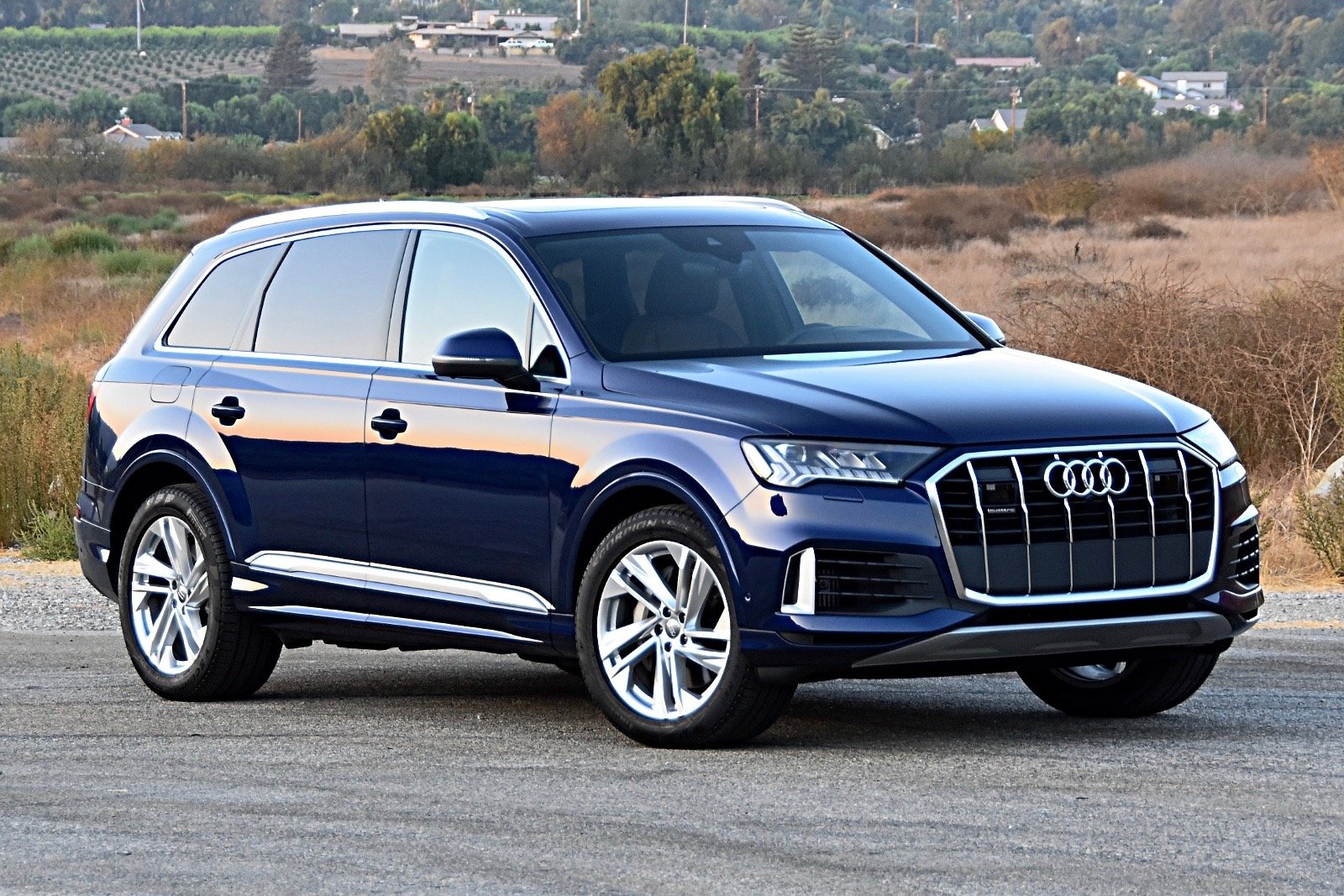
According to CarGurus experts, the overall rating for the 2020 Audi Q7 is 7.7 out of 10, while the 2021 Toyota RAV4 scores 7.3 out of 10. Based on these ratings, the recommendation for a higher overall vehicle choice goes to the 2020 Audi Q7. It offers a more luxurious experience, advanced technology, and superior overall performance compared to the 2021 Toyota RAV4, making it the preferred option for those seeking a premium SUV.
Choose the 2020 Audi Q7 if:
- You want a luxury SUV with high-end materials and advanced technology.
- You need substantial towing capacity and decent off-road capability.
- You desire a quiet, comfortable ride for long journeys.


Choose the 2021 Toyota RAV4 if:
- You prefer a rugged, traditional SUV look with modern tech.
- Off-road capability and competitive pricing are high priorities.
- You value a high safety rating with a comprehensive suite of standard safety features.


CarGurus highlights
According to CarGurus experts, the overall rating for the 2020 Audi Q7 is 7.7 out of 10, while the 2021 Toyota RAV4 scores 7.3 out of 10. Based on these ratings, the recommendation for a higher overall vehicle choice goes to the 2020 Audi Q7. It offers a more luxurious experience, advanced technology, and superior overall performance compared to the 2021 Toyota RAV4, making it the preferred option for those seeking a premium SUV.
Choose the 2020 Audi Q7 if:
Shop Now- You want a luxury SUV with high-end materials and advanced technology.
- You need substantial towing capacity and decent off-road capability.
- You desire a quiet, comfortable ride for long journeys.
Choose the 2021 Toyota RAV4 if:
Shop Now- You prefer a rugged, traditional SUV look with modern tech.
- Off-road capability and competitive pricing are high priorities.
- You value a high safety rating with a comprehensive suite of standard safety features.

By: CarGurus + AI
At CarGurus, our team of experienced automotive writers remain at the heart of our content operation, conducting hands-on car tests and writing insightful guides that are backed by years of industry experience. To complement this, we are harnessing AI to make our content offering more diverse and more helpful to shoppers than ever. To achieve this, our AI systems are based exclusively on CarGurus content, ratings and data, so that what we produce is both unique to CarGurus, and uniquely helpful to car shoppers.

