2020 Hyundai Elantra vs 2019 BMW 3 Series
Overview | |
MSRP$40,250 | MSRP$19,300 |
Listings362 | Listings992 |
Ratings & Reviews | |
User Reviews | User Reviews |
Expert reviews8.2 out of 10 | Expert reviews8.3 out of 10 |
Pros
Cons
| |
2019 BMW 3 Series Reviews SummarySince 1975, the BMW 3 Series has defined what a small, sporty sedan should be. In its seventh generation, the 3 is very much in the zone it created. It’s trim and athletic, handsome yet stoic, and above all, unashamed to raise its premium name on a pedestal. Unfortunately for BMW, lots of other car companies have copied its sport sedan recipe—sometimes for the better, and often for less money. But for 2019, BMW ups its software game like none other. And it helps that the new car surrounding that software is still pretty good. | |
2020 Hyundai Elantra Reviews SummaryHyundai isn’t pulling any punches when it comes to the compact car segment, where value is of utmost importance. And though a completely redesigned 2021 Elantra is coming soon, the automaker bestows several value-enhancing improvements upon the outgoing 2020 Hyundai Elantra compact sedan. They include free scheduled maintenance, improved fuel economy ratings, and new standard safety features. | |
No video found | |
Popular Features & Specs | |
Engine2.0L 255 hp I4 | Engine2.0L 147 hp I4 |
Drive TrainRWD | Drive TrainFWD |
Seating Capacity5 | Seating Capacity5 |
Horsepower255 hp @ 5000 rpm | Horsepower147 hp @ 6200 rpm |
MPG City26 | MPG City31 |
MPG Highway36 | MPG Highway41 |
Engine | |
Engine Name2.0L 255 hp I4 | Engine Name2.0L 147 hp I4 |
Torque295 lb-ft @ 1450 rpm | Torque132 lb-ft @ 4500 rpm |
Horsepower255 hp @ 5000 rpm | Horsepower147 hp @ 6200 rpm |
DrivetrainRWD | DrivetrainFWD |
Fuel Economy | |
MPG City26 | MPG City31 |
MPG Highway36 | MPG Highway41 |
Interior | |
Seating Capacity5 | Seating Capacity5 |
Key Features | |
Sunroof/MoonroofStandard | Sunroof/Moonroof |
Safety | |
Front Crash Overall | Front Crash Overall4 |
Side Crash Overall | Side Crash Overall4 |
Dimensions & Capacity | |
Cargo Space13.0 cu ft | Cargo Space14.4 cu ft |
Curb Weight3589 lbs | Curb Weight2844 lbs |
Height56.8 in | Height56.5 in |
Length185.7 in | Length181.9 in |
Width81.4 in | Width70.9 in |
Wheelbase112.2 in | Wheelbase106.3 in |
Maximum Payload | Maximum Payload1080 lbs |
Number of doors4 | Number of doors4 |
Overview | ||
MSRP | $40,250 | $19,300 |
Listings | ||
Ratings & Reviews | ||
User reviews | ||
Expert reviews | 8.2 out of 10Read full review | 8.3 out of 10Read full review |
Pros & cons | Pros
Cons
| |
Summary | Since 1975, the BMW 3 Series has defined what a small, sporty sedan should be. In its seventh generation, the 3 is very much in the zone it created. It’s trim and athletic, handsome yet stoic, and above all, unashamed to raise its premium name on a pedestal. Unfortunately for BMW, lots of other car companies have copied its sport sedan recipe—sometimes for the better, and often for less money. But for 2019, BMW ups its software game like none other. And it helps that the new car surrounding that software is still pretty good. | Hyundai isn’t pulling any punches when it comes to the compact car segment, where value is of utmost importance. And though a completely redesigned 2021 Elantra is coming soon, the automaker bestows several value-enhancing improvements upon the outgoing 2020 Hyundai Elantra compact sedan. They include free scheduled maintenance, improved fuel economy ratings, and new standard safety features. |
Video | No video found | |
Popular Features & Specs | ||
Engine | 2.0L 255 hp I4 | 2.0L 147 hp I4 |
Drive Train | RWD | FWD |
Seating Capacity | 5 | 5 |
Horsepower | 255 hp @ 5000 rpm | 147 hp @ 6200 rpm |
MPG City | 26 | 31 |
MPG Highway | 36 | 41 |
Engine | ||
Engine Name | 2.0L 255 hp I4 | 2.0L 147 hp I4 |
Torque | 295 lb-ft @ 1450 rpm | 132 lb-ft @ 4500 rpm |
Horsepower | 255 hp @ 5000 rpm | 147 hp @ 6200 rpm |
Drivetrain | RWD | FWD |
Fuel Economy | ||
MPG City | 26 | 31 |
MPG Highway | 36 | 41 |
Interior | ||
Seating Capacity | 5 | 5 |
Key Features | ||
Sunroof/Moonroof | Standard | |
Safety | ||
Front Crash Overall | 4 | |
Side Crash Overall | 4 | |
Dimensions & Capacity | ||
Cargo Space | 13.0 cu ft | 14.4 cu ft |
Curb Weight | 3589 lbs | 2844 lbs |
Height | 56.8 in | 56.5 in |
Length | 185.7 in | 181.9 in |
Width | 81.4 in | 70.9 in |
Wheelbase | 112.2 in | 106.3 in |
Maximum Payload | 1080 lbs | |
Number of doors | 4 | 4 |
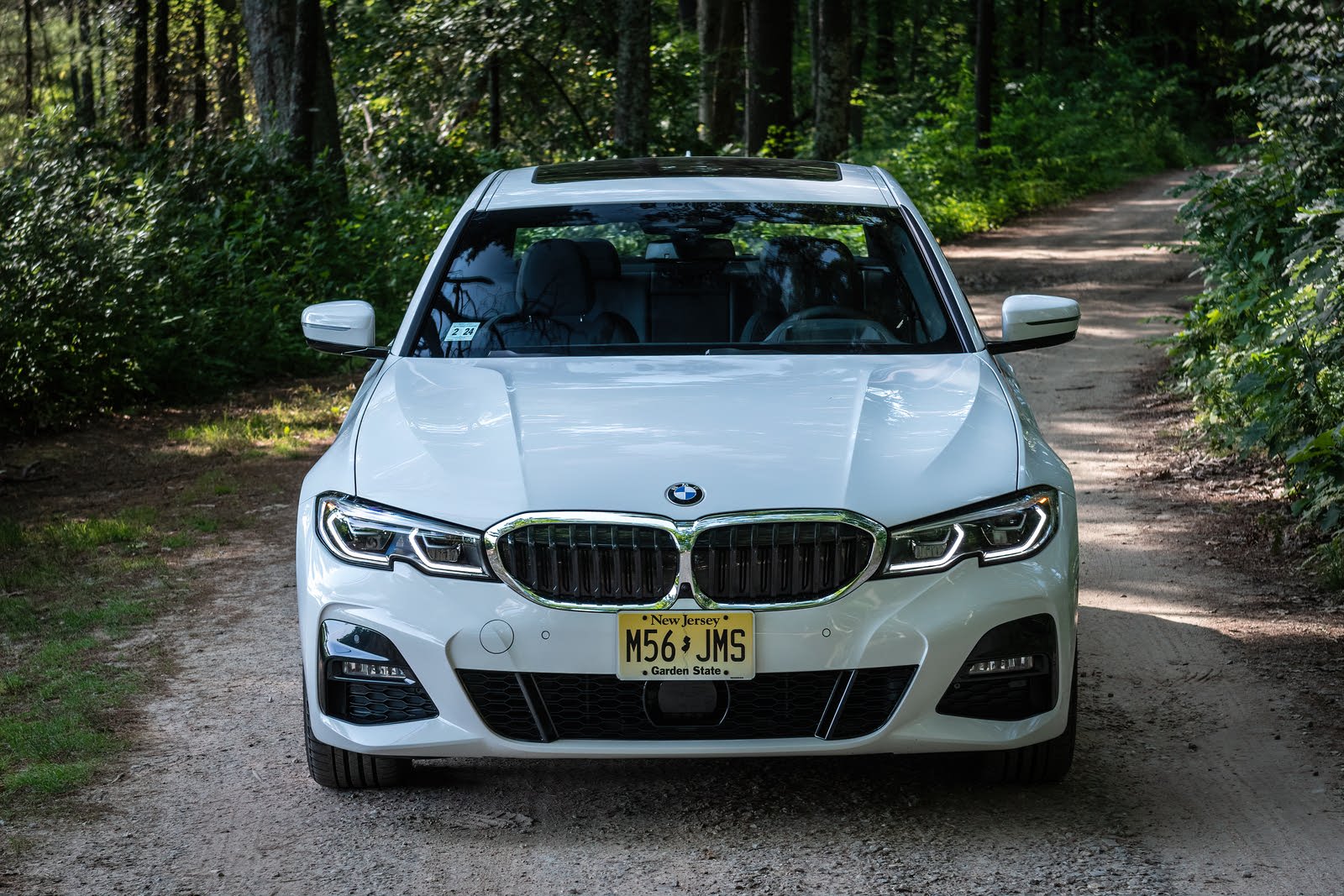
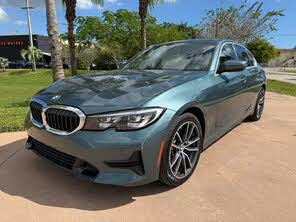
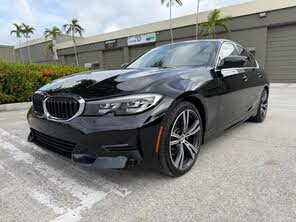
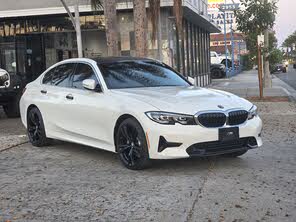
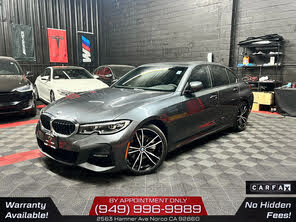
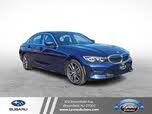
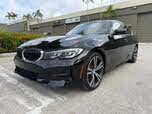
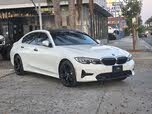
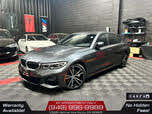
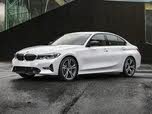
The 2019 BMW 3 Series maintained BMW's evolutionary design approach, avoiding major transformations seen in competitors like Mercedes-Benz and Lexus. This model, slightly longer and wider than its predecessor, retained its compact footprint, making it easy to park and maneuver. The most noticeable design change was the rear doors' Hoffmeister kink, now a piece of black trim. The front featured recognizable BMW elements, including hard-edged half-circle LED running lamps and widened kidney grilles. The tail showcased simplified LED lights, though some felt it resembled the Kia Forte. Inside, the 3 Series kept its familiar dash structure, with a new digital instrument panel and optional wireless charging pad. Despite some coarse materials, the fit and finish remained top class.
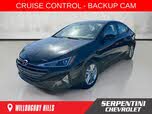
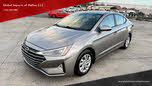
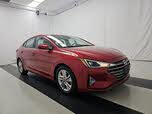
The 2020 Hyundai Elantra, last redesigned in 2017 and restyled in 2019, carried over its geometric-influenced appearance. Available in six trims, the Elantra ranged from $19,300 to $24,150, with our Limited test vehicle priced at $27,630. The black paint job highlighted the car's angular design elements, creating a stylish, if not universally appealing, look. The interior received an upscale update with silver trim and a more refined appearance, though some hard plastics remained. The Elantra offered comfortable accommodations for four adults, with a fifth person squeezed in for short trips. The trunk provided 14.4 cubic feet of space, nearly matching some midsize sedans.


The 2019 BMW 3 Series, particularly the 330i xDrive, featured a 2.0-liter turbocharged inline-4 engine producing 255 horsepower and 295 lb-ft of torque. This engine, known for its smoothness and torque, was quieter and more powerful than its predecessor. The M340i model, with a twin-turbo 6-cylinder engine, delivered near-M3 performance with 382 hp and 369 lb-ft of torque. The 330i's 8-speed automatic transmission offered perfect shifts and intuitive programming. The M Sport package included a lower, firmer suspension, staggered summer tires, and variable-ratio steering. Fuel economy for the 330i xDrive was EPA-rated at 25 mpg city, 34 highway, and 28 combined.
The 2020 Hyundai Elantra's base engine was a 147-horsepower, 2.0-liter four-cylinder paired with a new continuously variable transmission (CVT). The Elantra Eco model featured a turbocharged 1.4-liter engine with 128 horsepower and 156 lb-ft of torque, achieving 36 mpg in combined driving. The Elantra Sport trim offered a 1.6-liter turbo four-cylinder with 201 horsepower and 195 lb-ft of torque, along with an independent rear suspension. The new CVT, called the "Intelligent Variable Transmission," improved fuel efficiency by 2 mpg in combined driving, though real-world testing showed an average of 29.3 mpg. The Elantra's torsion beam axle rear suspension detracted from ride and handling, while the Sport's independent suspension provided a superior ride.
The 2019 BMW 3 Series offered a spacious backseat and 17 cubic feet of trunk space. Visibility was good in all directions, and the seats, though firm, were supportive on long trips. The infotainment system, head-up display, and instrument clusters were intuitive and easy to operate. The main screen was now a touchscreen, supporting various gestures, and the climate controls included a third zone for rear passengers. USB-C ports were also available.
The 2020 Hyundai Elantra provided comfortable accommodations for four adults, with a fifth person squeezed in for short trips. The Limited trim included power driver's seat adjustment, leather upholstery, and a sliding center console armrest. All Elantras featured a dual-zone automatic climate control system with a Clean Air ionizer and automatic defogging. Interior storage was well-proportioned, and the trunk offered 14.4 cubic feet of space. A thoughtful touch was the interior grab handle inside the trunk lid.
The 2019 BMW 3 Series featured extensive technology, though many options required subscription fees. The iDrive system was customizable and updated over the air. The navigation system could learn driving patterns and compensate for traffic. Gesture control allowed for various functions, though it was sometimes unreliable. The BMW Connected App enabled remote start, and the Driving Assistance Professional Package offered advanced features like automatic steering around curves and semi-autonomous Traffic Jam Assist.
The 2020 Hyundai Elantra came standard with a touchscreen infotainment system, Bluetooth, and a USB port. The base SE trim had a 5-inch screen, while the SEL and higher trims featured a 7-inch display with Apple CarPlay, Android Auto, and SiriusXM satellite radio. The Limited trim added wireless smartphone charging and a premium Infinity sound system. The Ultimate Package increased the touchscreen size to 8 inches and included navigation and Blue Link services. The infotainment system was user-friendly, with shortcut buttons and volume/tuning knobs. The Infinity sound system impressed for a compact car.
The 2019 BMW 3 Series earned a Top Safety Pick+ rating from the Insurance Institute for Highway Safety (IIHS), with top ratings in all six crash tests and high marks for its optional laser headlights and standard forward emergency braking. Pedestrian detection was standard, and optional features included blind-spot monitoring, 360-degree cameras, adaptive cruise control, lane-keeping assist, and semi-autonomous Traffic Jam Assist.
The 2020 Hyundai Elantra featured Hyundai Smart Sense as standard on all trims, including forward-collision warning, automatic emergency braking, lane departure warning, lane-keeping assist, and a driver attention monitor. Starting with the SEL trim, the Elantra added blind-spot warning and rear cross-traffic alert. The Limited and Sport trims included full LED headlights with automatic high-beam operation. The Ultimate Package added adaptive cruise control, pedestrian detection, and Safe Exit Assist. The Elantra earned a Top Safety Pick rating from the IIHS and a four-star overall rating from the National Highway Traffic Safety Administration (NHTSA).
CarGurus highlights

According to CarGurus experts, the overall rating for the 2019 BMW 3 Series is 8.2 out of 10, while the 2020 Hyundai Elantra scores 8.3 out of 10. Based on these ratings, the 2020 Hyundai Elantra is the recommended choice, offering a better overall value with its combination of affordability, fuel efficiency, and advanced safety features.
Choose the 2020 Hyundai Elantra if:
- You seek a more budget-friendly option with a lower starting price.
- Fuel efficiency and a variety of trim options are key considerations.
- You want a compact car with a spacious interior and ample trunk space.




Choose the 2019 BMW 3 Series if:
- You prioritize a luxurious and high-performance driving experience.
- Advanced technology and intuitive infotainment systems are important to you.
- You value top-tier safety ratings and features.






CarGurus highlights
According to CarGurus experts, the overall rating for the 2019 BMW 3 Series is 8.2 out of 10, while the 2020 Hyundai Elantra scores 8.3 out of 10. Based on these ratings, the 2020 Hyundai Elantra is the recommended choice, offering a better overall value with its combination of affordability, fuel efficiency, and advanced safety features.
Choose the 2020 Hyundai Elantra if:
Shop Now- You seek a more budget-friendly option with a lower starting price.
- Fuel efficiency and a variety of trim options are key considerations.
- You want a compact car with a spacious interior and ample trunk space.



Choose the 2019 BMW 3 Series if:
Shop Now- You prioritize a luxurious and high-performance driving experience.
- Advanced technology and intuitive infotainment systems are important to you.
- You value top-tier safety ratings and features.






By: CarGurus + AI
At CarGurus, our team of experienced automotive writers remain at the heart of our content operation, conducting hands-on car tests and writing insightful guides that are backed by years of industry experience. To complement this, we are harnessing AI to make our content offering more diverse and more helpful to shoppers than ever. To achieve this, our AI systems are based exclusively on CarGurus content, ratings and data, so that what we produce is both unique to CarGurus, and uniquely helpful to car shoppers.