Hyundai Tucson vs Toyota RAV4
Overview | |
MSRP$27,500 | MSRP$28,675 |
Listings212 | Listings215 |
Ratings & Reviews | |
User Reviews | User Reviews |
Expert reviews8.5 out of 10 | Expert reviews7.0 out of 10 |
Pros
Cons
| Pros
Cons
|
Reviews SummaryWith the growth and evolution of the compact SUV market, shoppers have seemingly endless options. And the growth of this segment has allowed for different models to grow in their own unique ways. The Mazda CX-5 is upscale and athletic, while the Ford Bronco Sport is a surprisingly capable off-roader. So what if you aren’t seeking a well-honed niche vehicle? What if you are looking for a small SUV that’s and overall great vehicle? The 2024 Hyundai Tucson answers that question as a well-rounded compact SUV that doesn’t excel in any one particular area, but instead covers a lot of what modern consumers demand out of their vehicle. This format is one that has been embraced by perennial segment standouts like the Toyota RAV4 and Honda CR-V. Verdict: The Tucson is a well-rounded small SUV and a good value. It does not shine in any particular area, instead blending good performance with a comfortable and spacious cabin, impressive tech and safety features, and an attractive price tag. | |
Reviews SummaryThat’s not surprising, considering how people have adopted SUVs of every size as their favorite kind of vehicle. Back in the mid-1990s, the original RAV4 (Recreational Activity Vehicle with 4WD) ushered in the era of the crossover. Almost 30 years later, the 2024 Toyota RAV4 helps to set standards in its segment, available with gas, hybrid, and plug-in hybrid drivetrains in trim levels ranging from basic or sporty to rugged or upscale. Verdict: Last redesigned in 2019, the current-generation RAV4 is nearing the end of its run. But if you’re looking for a dependable, roomy, and practical compact SUV, a 2024 RAV4 will serve you well for a long time to come. | |
No video found | |
Popular Features & Specs | |
Engine2.5L 187 hp I4 | Engine2.5L 203 hp I4 |
Drive TrainFWD | Drive TrainFWD |
Seating Capacity5 | Seating Capacity5 |
Horsepower187 hp @ 6100 rpm | Horsepower |
MPG City25 | MPG City27 |
MPG Highway32 | MPG Highway35 |
Engine | |
Engine Name2.5L 187 hp I4 | Engine Name2.5L 203 hp I4 |
Torque178 lb-ft @ 4000 rpm | Torque |
Horsepower187 hp @ 6100 rpm | Horsepower |
DrivetrainFWD | DrivetrainFWD |
Fuel Economy | |
MPG City25 | MPG City27 |
MPG Highway32 | MPG Highway35 |
Interior | |
Seating Capacity5 | Seating Capacity5 |
Safety | |
Front Crash Overall5 | Front Crash Overall4 |
Side Crash Overall5 | Side Crash Overall5 |
Dimensions & Capacity | |
Cargo Space38.7 cu ft | Cargo Space37.5 cu ft |
Curb Weight3346 lbs | Curb Weight3370 lbs |
Height65.6 in | Height67.0 in |
Length182.3 in | Length180.9 in |
Width73.4 in | Width73.0 in |
Wheelbase108.5 in | Wheelbase105.9 in |
Maximum Payload1283 lbs | Maximum Payload1230 lbs |
Number of doors4 | Number of doors4 |
Maximum Towing Capacity2000 lbs | Maximum Towing Capacity1500 lbs |
Standard Towing Capacity2000 lbs | Standard Towing Capacity |
Overview | ||
MSRP | $27,500 | $28,675 |
Listings | ||
Ratings & Reviews | ||
User reviews | ||
Expert reviews | 8.5 out of 10Read full review | 7.0 out of 10Read full review |
Pros & cons | Pros
Cons
| Pros
Cons
|
Summary | With the growth and evolution of the compact SUV market, shoppers have seemingly endless options. And the growth of this segment has allowed for different models to grow in their own unique ways. The Mazda CX-5 is upscale and athletic, while the Ford Bronco Sport is a surprisingly capable off-roader. So what if you aren’t seeking a well-honed niche vehicle? What if you are looking for a small SUV that’s and overall great vehicle? The 2024 Hyundai Tucson answers that question as a well-rounded compact SUV that doesn’t excel in any one particular area, but instead covers a lot of what modern consumers demand out of their vehicle. This format is one that has been embraced by perennial segment standouts like the Toyota RAV4 and Honda CR-V. Verdict: The Tucson is a well-rounded small SUV and a good value. It does not shine in any particular area, instead blending good performance with a comfortable and spacious cabin, impressive tech and safety features, and an attractive price tag. | That’s not surprising, considering how people have adopted SUVs of every size as their favorite kind of vehicle. Back in the mid-1990s, the original RAV4 (Recreational Activity Vehicle with 4WD) ushered in the era of the crossover. Almost 30 years later, the 2024 Toyota RAV4 helps to set standards in its segment, available with gas, hybrid, and plug-in hybrid drivetrains in trim levels ranging from basic or sporty to rugged or upscale. Verdict: Last redesigned in 2019, the current-generation RAV4 is nearing the end of its run. But if you’re looking for a dependable, roomy, and practical compact SUV, a 2024 RAV4 will serve you well for a long time to come. |
Video | No video found | |
Popular Features & Specs | ||
Engine | 2.5L 187 hp I4 | 2.5L 203 hp I4 |
Drive Train | FWD | FWD |
Seating Capacity | 5 | 5 |
Horsepower | 187 hp @ 6100 rpm | |
MPG City | 25 | 27 |
MPG Highway | 32 | 35 |
Engine | ||
Engine Name | 2.5L 187 hp I4 | 2.5L 203 hp I4 |
Torque | 178 lb-ft @ 4000 rpm | |
Horsepower | 187 hp @ 6100 rpm | |
Drivetrain | FWD | FWD |
Fuel Economy | ||
MPG City | 25 | 27 |
MPG Highway | 32 | 35 |
Interior | ||
Seating Capacity | 5 | 5 |
Safety | ||
Front Crash Overall | 5 | 4 |
Side Crash Overall | 5 | 5 |
Dimensions & Capacity | ||
Cargo Space | 38.7 cu ft | 37.5 cu ft |
Curb Weight | 3346 lbs | 3370 lbs |
Height | 65.6 in | 67.0 in |
Length | 182.3 in | 180.9 in |
Width | 73.4 in | 73.0 in |
Wheelbase | 108.5 in | 105.9 in |
Maximum Payload | 1283 lbs | 1230 lbs |
Number of doors | 4 | 4 |
Maximum Towing Capacity | 2000 lbs | 1500 lbs |
Standard Towing Capacity | 2000 lbs | |
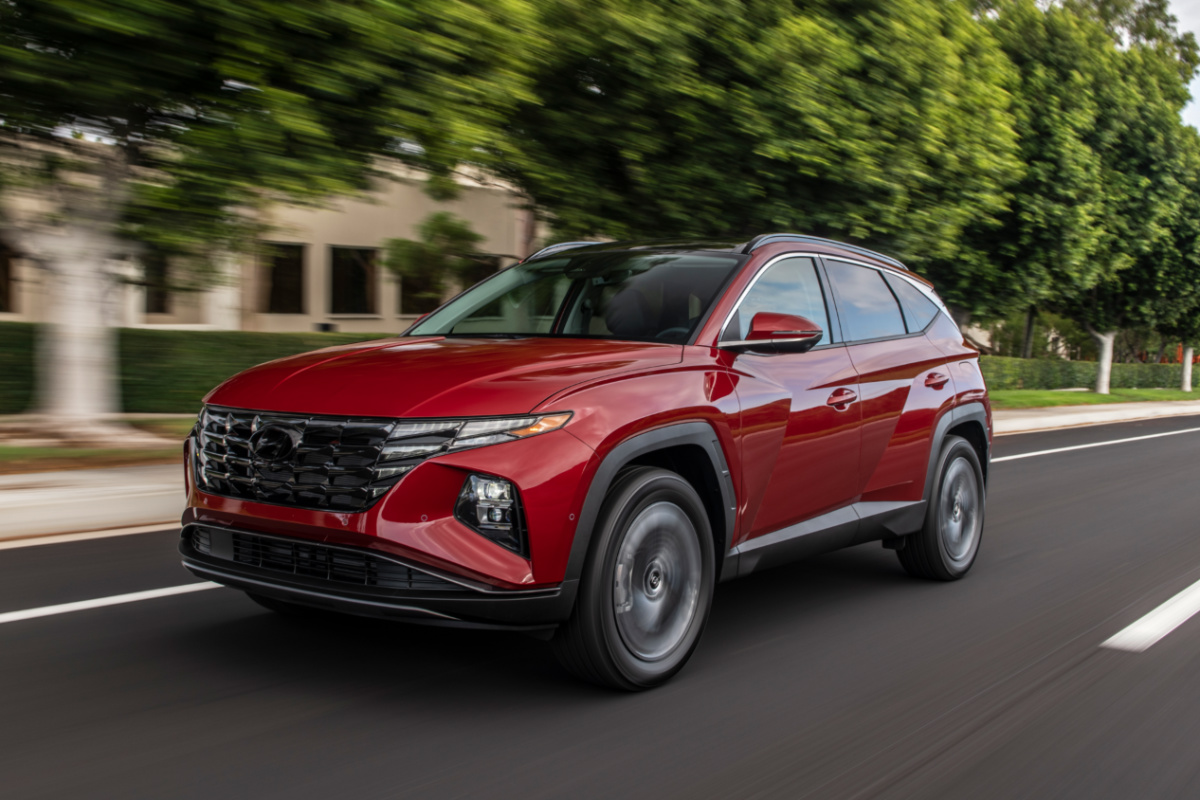
The 2024 Hyundai Tucson’s design was a testament to contemporary styling and thoughtful details. Its fourth generation largely built upon its already successful 2022 redesign. Characterized by taut angles and a unique headlight integration that blended seamlessly into the grille, the Tucson offered an aggressive yet harmonious look. Even in a mundane hue like white, the crossover exuded sharpness, highlighting its well-executed design. Hyundai's strategy for individualizing each model shone brightly here, avoiding the "cookie-cutter" approach often seen in luxury brands.
Trim levels for the Tucson included SE, SEL, XRT, and Limited. The entry-level SE featured 17-inch alloy wheels and roof rails, while the SEL Convenience Package added 19-inch alloy wheels. The XRT emphasized a rugged aesthetic with black alloy wheels, side steps, dark exterior trim, and functional roof racks. At the top of the range, the Limited trim boasted a dark chrome grille and upgraded headlights, further enhancing its premium appeal.
Inside, the Tucson continued its tradition of blending technology with refinement. The cabin had a modern feel, with a clear emphasis on user-friendly tech, albeit with a few ergonomic quirks like touch-capacitive volume controls that divided opinion. Standard features included two USB ports, an 8-inch touchscreen with wireless Apple CarPlay and Android Auto, remote keyless entry, and power windows. Higher trims added luxuries such as ventilated front seats, heated rear seats, a heated steering wheel, leather upholstery, and a panoramic sunroof.
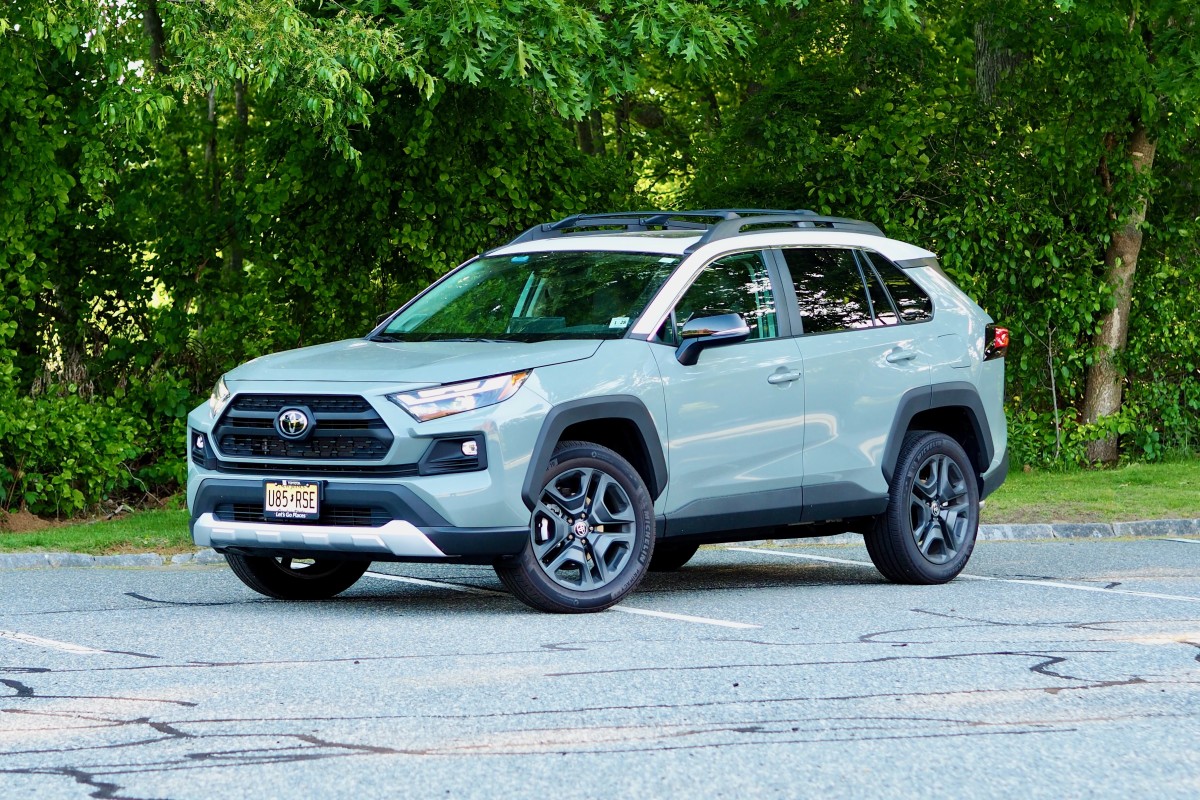
The 2024 Toyota RAV4 aimed to appear tougher than its true nature, presenting an aggressive façade with angular body cladding and dual exhaust outlets hinting at non-existent performance. The TRD Off-Road model, in particular, highlighted this rugged look with off-road suspension tuning, underbody skid plates, and all-terrain tires.
The styling of the RAV4 was functional and purpose-driven. The Army Green exterior of the test vehicle paired with a base price of $38,295, supplemented by the Advanced Technology and Weather option packages, brought the total to $41,925. Lower trims started at $28,675, offering a broad price range. The TRD Off-Road trim prioritized practicality over luxury, targeting adventure enthusiasts with robust utility roof racks, but the approach and departure angles were not up to par with genuine off-road standards.


The 2024 Hyundai Tucson was powered by a 2.5-liter four-cylinder engine producing 187 horsepower and 178 pound-feet of torque, mated to an eight-speed automatic transmission with an option for all-wheel drive. This setup was adequate for city driving but lacked vigor on highways and during passing maneuvers, often requiring a heavy foot and producing notable engine noise. Hyundai complemented this with a more powerful 226-hp hybrid and a 261-hp plug-in hybrid for those seeking better performance.
The Tucson excelled in ride quality and handling, striking a balance between comfort and cornering capability. Its suspension adeptly absorbed road imperfections, making it suitable for both long trips and daily commutes. The steering provided precise feedback, though it wasn’t as athletic as competitors like the Mazda CX-5. The unique button-style shifter on higher trims required a learning curve but integrated neatly into the center console design.
The 2024 Toyota RAV4 sported a 2.5-liter four-cylinder engine generating 203 horsepower at 6,300 rpm and 184 pound-feet of torque at 5,000 rpm. The power delivery required high engine revs to maximize performance, paired with an eight-speed automatic transmission that powered the front wheels, or all-wheel drive on higher trims. The TRD Off-Road model featured exclusive off-road suspension tuning, an underbody skid plate, and all-terrain tires.
The Multi-Terrain Select system in the RAV4 offered Normal, Snow, Mud & Sand, and Rock & Dirt driving modes, but with an unchanged 8.6 inches of ground clearance across the lineup. The TRD Off-Road performed slightly better off the pavement but wasn’t up to 4Runner standards. On regular roads, the off-road suspension provided a smooth ride, effectively absorbing bumps and rough surfaces. However, the engine was loud and unrefined, though paired with a reliable and efficient eight-speed automatic transmission.
The RAV4’s TRD Off-Road achieved an EPA fuel economy rating of 28 mpg in combined driving, with the test vehicle averaging 26.6 mpg during mixed use. For better fuel efficiency, the RAV4 Hybrid Woodland Edition offered 37 mpg, making it a sensible choice for those cautious about fuel costs.
The 2024 Hyundai Tucson provided up to 74.8 cubic feet of cargo space with the rear seats folded and 38.7 cubic feet with them in use, positioning it among the leaders in its class. Only the Honda CR-V surpassed these figures. The Tucson offered a manual liftgate in the SE trim, while higher trims featured a hands-free power liftgate, operated simply by standing near the rear bumper with the key fob. This intuitive system eliminated the need for awkward foot-waving motions.
The Tucson’s spacious interior comfortably accommodated five passengers, with ample headroom and legroom in both rows. The rear seats were sufficiently roomy for adults, making it a viable option for longer journeys. The vehicle also offered thoughtful storage solutions, including deep cup holders and a center tray with a wireless charging pad.
In contrast, the 2024 Toyota RAV4 emphasized practicality and utility in its interior design. The TRD Off-Road trim featured SofTex artificial leather upholstery, an eight-way power-adjustable driver’s seat, and an optional Weather package for heated and ventilated front seats, a heated steering wheel, and rain-sensing wipers. The RAV4’s cabin was replete with storage shelves, trays, bins, and oversized rubberized control knobs, reinforcing its utilitarian focus.
The RAV4’s rear seat, though comfortable, had a lower seating position with less leg support, but the soft front seatbacks and adequate legroom compensated for this. The rear area included air conditioning vents, USB charging ports, and a fold-down center armrest with cupholders. Cargo capacity in the RAV4 was slightly less than the Tucson, offering 37.6 cubic feet with the seats up and 69.8 cubic feet with them folded.
The 2024 Hyundai Tucson’s base SE trim came with an 8-inch touchscreen featuring wireless Apple CarPlay and Android Auto. Higher trims included a fully digital instrument panel and a larger 10.25-inch touchscreen. However, this upgrade meant losing wireless connectivity for Apple CarPlay and Android Auto, a surprising trade-off. The touch interface worked well, even with gloves on, providing an advantage in colder climates. Hyundai’s advanced remote start system further enhanced convenience by allowing drivers to enter the vehicle and simply drive off once detected by the key fob.
The 2024 Toyota RAV4, though aging, boasted Toyota’s latest Audio Multimedia system with either a standard 8-inch or an available 10.5-inch touchscreen. It included wireless Apple CarPlay and Android Auto, SiriusXM radio, and various connected services. Service Connect and Safety Connect were free for ten years, while Remote Connect and Drive Connect were complimentary for one year. Wi-Fi Connect offered three months of free data. Despite the advanced features, the system lacked a multi-panel Home screen and had a light, hard-to-read font.
The RAV4’s digital voice assistant worked well but had inconsistencies, such as being inaudible except when adjusting climate controls. The standard audio system was adequate, but the optional JBL premium audio system was unavailable in the test vehicle. A digital rear-view mirror and an optional panoramic surround-view camera added practicality and safety.
The 2024 Hyundai Tucson came equipped with a robust suite of standard driver-assistance features, including automatic emergency braking, forward collision warning, pedestrian and cyclist detection, adaptive cruise control, lane-departure warning, lane-keeping assist, automatic high beams, driver attention monitoring, blind-spot monitoring, and rear cross-traffic alert. The Limited trim added front and rear parking sensors, a 360-degree parking camera system, and Hyundai’s Smart Park feature for remote parking. The integrated blind-spot camera system displayed real-time video feeds when signaling a lane change, adding another layer of safety.
The Tucson received top ratings from the IIHS, earning a "Good" overall score and a "Superior" rating for crash-prevention technology. The headlight performance was rated "Acceptable," and it retained its IIHS Top Safety Pick+ status. The NHTSA awarded it five stars in frontal crash tests and four stars in rollover tests.
The 2024 Toyota RAV4 featured Toyota Safety Sense 2.5 (TSS 2.5) as standard across the lineup, excluding blind-spot monitoring on the base LE trim. In practice, the adaptive cruise control and lane-centering assist performed adequately on straight highways but were less effective on curvy roads. The system managed following distances well in moderate traffic but often braked excessively when slower vehicles cut in.
The RAV4 lost its Top Safety Pick award from the IIHS due to revised testing criteria. It received a Marginal rating in the small overlap frontal-impact test and an Acceptable rating in the side-impact test, reflecting the need for a design update.
CarGurus highlights
According to CarGurus experts, the overall rating for the 2024 Hyundai Tucson is 8.5 out of 10, while the 2024 Toyota RAV4 scores 7.0 out of 10. Given these ratings, we recommend the 2024 Hyundai Tucson for its superior design, technology, safety features, and overall value. The Tucson’s excellent ride quality, advanced driver-assistance systems, and spacious interior set it apart as the better choice for most consumers.
Choose the 2024 Hyundai Tucson if:
- You prioritize contemporary styling with unique design elements both inside and out.
- You value advanced safety features and high safety ratings from the IIHS and NHTSA.
- You need ample cargo space and thoughtful storage solutions for practical usability.


Choose the 2024 Toyota RAV4 if:
- You seek a rugged, off-road-inspired vehicle with robust utility features.
- You want a practical, purpose-driven interior with plenty of storage options.
- You prefer a reliable engine and a well-integrated advanced infotainment system.


CarGurus highlights
According to CarGurus experts, the overall rating for the 2024 Hyundai Tucson is 8.5 out of 10, while the 2024 Toyota RAV4 scores 7.0 out of 10. Given these ratings, we recommend the 2024 Hyundai Tucson for its superior design, technology, safety features, and overall value. The Tucson’s excellent ride quality, advanced driver-assistance systems, and spacious interior set it apart as the better choice for most consumers.
Choose the 2024 Hyundai Tucson if:
Shop Now- You prioritize contemporary styling with unique design elements both inside and out.
- You value advanced safety features and high safety ratings from the IIHS and NHTSA.
- You need ample cargo space and thoughtful storage solutions for practical usability.
Choose the 2024 Toyota RAV4 if:
Shop Now- You seek a rugged, off-road-inspired vehicle with robust utility features.
- You want a practical, purpose-driven interior with plenty of storage options.
- You prefer a reliable engine and a well-integrated advanced infotainment system.

By: CarGurus + AI
At CarGurus, our team of experienced automotive writers remain at the heart of our content operation, conducting hands-on car tests and writing insightful guides that are backed by years of industry experience. To complement this, we are harnessing AI to make our content offering more diverse and more helpful to shoppers than ever. To achieve this, our AI systems are based exclusively on CarGurus content, ratings and data, so that what we produce is both unique to CarGurus, and uniquely helpful to car shoppers.

