Toyota RAV4 vs Hyundai Ioniq 5
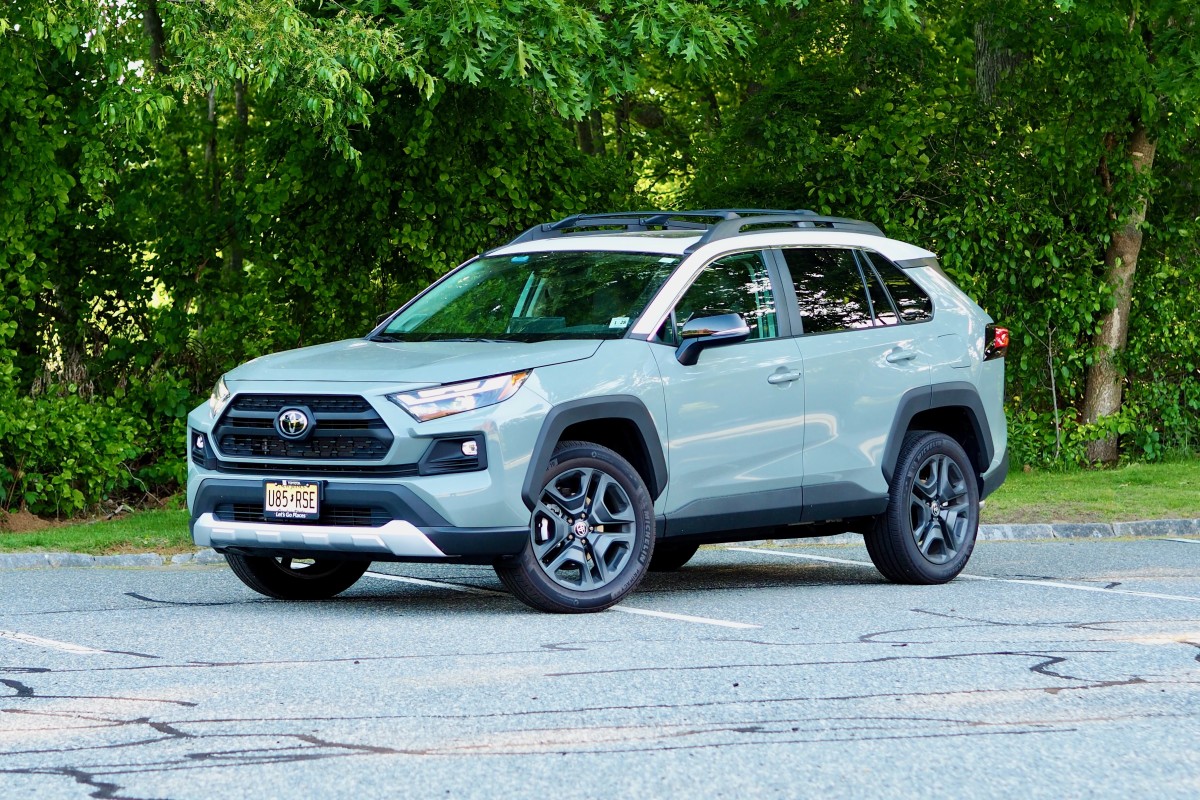

Overview | |
MSRP$31,900 | MSRP$35,000 |
Listings207 | Listings191 |
Ratings & Reviews | |
User Reviews | User Reviews |
Expert reviews6.8 out of 10 | Expert reviews8.0 out of 10 |
Pros
Cons
| Pros
Cons
|
Reviews SummaryThe sixth-generation Toyota RAV4 now comes with more choice, including three distinct design themes, three powertrain and drivetrain options, and seven trim levels. It has a hybrid drivetrain as standard, offering a claimed 44 mpg combined, along with more standard features, a quicker operating system, and improvements across the board to bolster its bestselling position. Verdict: The good gets better, but the RAV4's lineup is confusing enough to need a Venn diagram. | |
Reviews SummaryMany automakers have had a tough time launching electric vehicles, as teething problems have resulted in build-quality issues, gremlins, and production delays. Hyundai, however, got it right from the start with the Ioniq 5. Not only did this compact crossover nail the basics, it has also struck a chord for its stylish looks, fast charging capability, good range, and practicality. Verdict: Five years into its run, the Ioniq 5 is still the electric vehicle we would recommend to most EV buyers. A drive around Hyundai’s factory in Savannah, Georgia, only reinforced our position. | |
No video found | |
Popular Features & Specs | |
Engine2.5L 226 hp I4 Hybrid | Engine168 hp Electric |
Drive TrainFWD | Drive TrainRWD |
Seating Capacity5 | Seating Capacity5 |
EV Battery Capacity1.01 kWh | EV Battery Capacity63 kWh |
MPG City47 | MPG City131 |
MPG Highway40 | MPG Highway100 |
Battery Charge Time (120V) | Battery Charge Time (120V)54 hours |
Battery Charge Time (240V) | Battery Charge Time (240V)5.7 hours |
Engine | |
Engine Name2.5L 226 hp I4 Hybrid | Engine Name168 hp Electric |
Battery Charge Time (120V) | Battery Charge Time (120V)54 hours |
Battery Charge Time (240V) | Battery Charge Time (240V)5.7 hours |
DrivetrainFWD | DrivetrainRWD |
Fuel Economy | |
EV Battery Capacity1.01 kWh | EV Battery Capacity63 kWh |
MPG City47 | MPG City131 |
MPG Highway40 | MPG Highway100 |
Interior | |
Seating Capacity5 | Seating Capacity5 |
Key Features | |
Navigation System | Navigation SystemStandard |
Dimensions & Capacity | |
Cargo Space37.8 cu ft | Cargo Space26.3 cu ft |
Curb Weight3594 lbs | Curb Weight4145 lbs |
Height66.7 in | Height63.0 in |
Length181.0 in | Length183.3 in |
Width73.0 in | Width74.4 in |
Wheelbase105.9 in | Wheelbase118.1 in |
Maximum Payload900 lbs | Maximum Payload1080 lbs |
Number of doors4 | Number of doors4 |
Maximum Towing Capacity1750 lbs | Maximum Towing Capacity |
Overview | ||
MSRP | $31,900 | $35,000 |
Listings | ||
Ratings & Reviews | ||
User reviews | ||
Expert reviews | 6.8 out of 10Read full review | 8.0 out of 10Read full review |
Pros & cons | Pros
Cons
| Pros
Cons
|
Summary | The sixth-generation Toyota RAV4 now comes with more choice, including three distinct design themes, three powertrain and drivetrain options, and seven trim levels. It has a hybrid drivetrain as standard, offering a claimed 44 mpg combined, along with more standard features, a quicker operating system, and improvements across the board to bolster its bestselling position. Verdict: The good gets better, but the RAV4's lineup is confusing enough to need a Venn diagram. | Many automakers have had a tough time launching electric vehicles, as teething problems have resulted in build-quality issues, gremlins, and production delays. Hyundai, however, got it right from the start with the Ioniq 5. Not only did this compact crossover nail the basics, it has also struck a chord for its stylish looks, fast charging capability, good range, and practicality. Verdict: Five years into its run, the Ioniq 5 is still the electric vehicle we would recommend to most EV buyers. A drive around Hyundai’s factory in Savannah, Georgia, only reinforced our position. |
Video | No video found | |
Popular Features & Specs | ||
Engine | 2.5L 226 hp I4 Hybrid | 168 hp Electric |
Drive Train | FWD | RWD |
Seating Capacity | 5 | 5 |
EV Battery Capacity | 1.01 kWh | 63 kWh |
MPG City | 47 | 131 |
MPG Highway | 40 | 100 |
Battery Charge Time (120V) | 54 hours | |
Battery Charge Time (240V) | 5.7 hours | |
Engine | ||
Engine Name | 2.5L 226 hp I4 Hybrid | 168 hp Electric |
Battery Charge Time (120V) | 54 hours | |
Battery Charge Time (240V) | 5.7 hours | |
Drivetrain | FWD | RWD |
Fuel Economy | ||
EV Battery Capacity | 1.01 kWh | 63 kWh |
MPG City | 47 | 131 |
MPG Highway | 40 | 100 |
Interior | ||
Seating Capacity | 5 | 5 |
Key Features | ||
Navigation System | Standard | |
Dimensions & Capacity | ||
Cargo Space | 37.8 cu ft | 26.3 cu ft |
Curb Weight | 3594 lbs | 4145 lbs |
Height | 66.7 in | 63.0 in |
Length | 181.0 in | 183.3 in |
Width | 73.0 in | 74.4 in |
Wheelbase | 105.9 in | 118.1 in |
Maximum Payload | 900 lbs | 1080 lbs |
Number of doors | 4 | 4 |
Maximum Towing Capacity | 1750 lbs | |


By: CarGurus + AI
At CarGurus, our team of experienced automotive writers remain at the heart of our content operation, conducting hands-on car tests and writing insightful guides that are backed by years of industry experience. To complement this, we are harnessing AI to make our content offering more diverse and more helpful to shoppers than ever. To achieve this, our AI systems are based exclusively on CarGurus content, ratings and data, so that what we produce is both unique to CarGurus, and uniquely helpful to car shoppers.

