2026 Toyota RAV4 Reviews, Pricing & Specs
Write a review$31,900 to $43,300
Original MSRP
6.8
of 10
expert review
avg user rating
(0 reviews)
Pros
Multiple trims and styles
Standard hybrid
Updated tech
Cons
Confusing trim levels
Size hasn't kept up with rivals
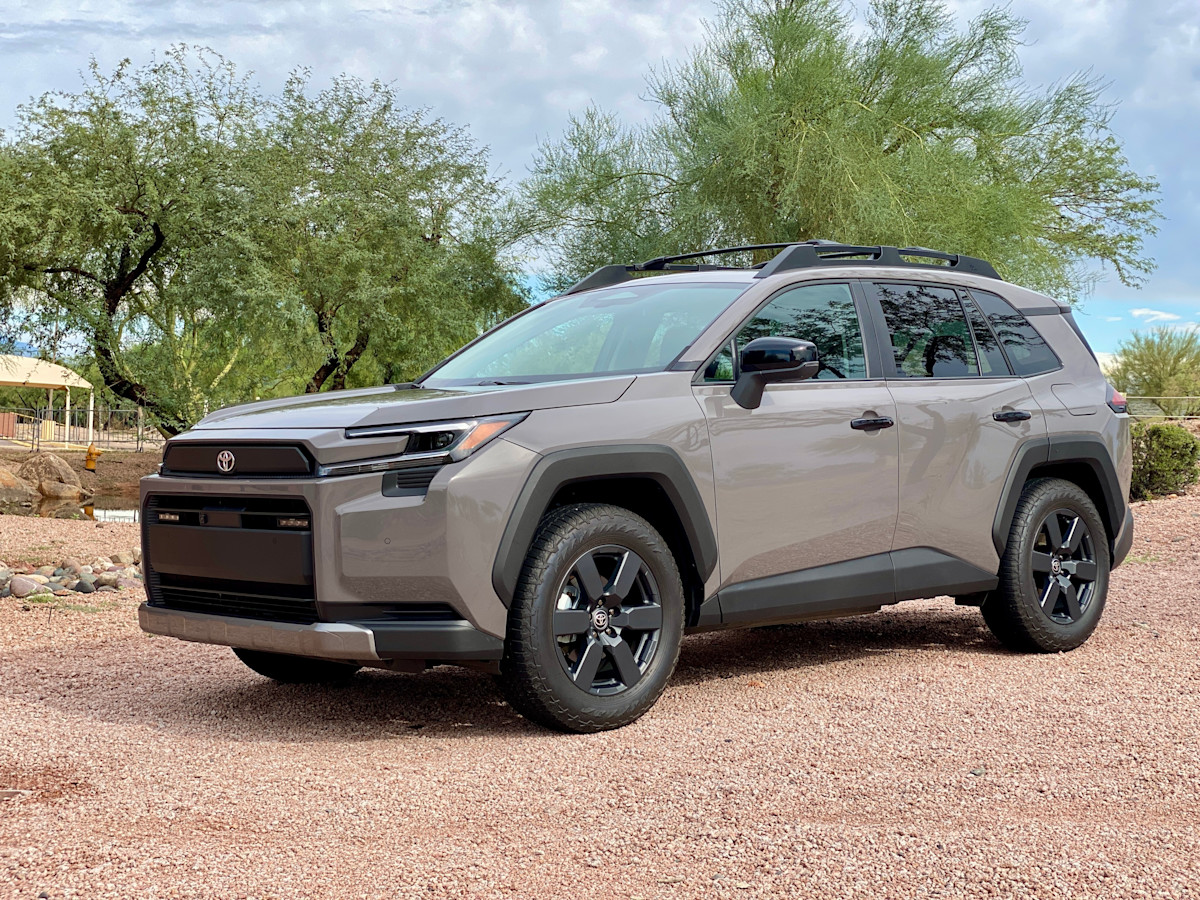
The redesigned 2026 Toyota RAV4 arrives with more power and greater efficiency.
The sixth-generation Toyota RAV4 now comes with more choice, including three distinct design themes, three powertrain and drivetrain options, and seven trim levels. It has a hybrid drivetrain as standard, offering a claimed 44 mpg combined, along with more standard features, a quicker operating system, and improvements across the board to bolster its bestselling position.
Verdict: The good gets better, but the RAV4's lineup is confusing enough to need a Venn diagram.

The sixth-generation RAV4 has three distinct designs—Core, Rugged, and Sport—spread among seven trim levels. Across all designs and trims, the new RAV4 ditches the angular cuts of its predecessor for a blockier appearance in line with Toyota’s other SUVs and trucks. The boxy wheel arches remain, and a bulge bows out over the rear fenders similarly to the Highlander models and, to a lesser degree, the 4Runner.
Everywhere else, boxiness reigns from the fascias to the hood and roof lines. Daytime running lights clip the corners and an integrated rear roof spoiler brackets a vertical tailgate. The taillights look like vertical slash marks that narrow as they home in on the RAV4 badge. Then things differ.
Aside from different wheel sizes and designs, the three distinct styles play out in the front fascia. The Core models are the most sedate and clearly evolve from past RAV4s. The upper grille could be a cheese grater flanked by recessed fog lights, and the lower grille wears the familiar RAV4 robot pout.
The Rugged grade is paired with the Woodland trim, and the styling is boxy all-around. The lower grille looks like a skid plate, but above it, solid panels close in on a partially solid grille with two rectangular fog lights. Amber lights accent the running lights, and all-terrain tires, AWD, a roof rack with cross bars, and a tow hitch are standard.
The Sport style is paired with the first-ever RAV4 GR Sport, inspired by Toyota’s Gazoo Racing division. The mechanical differences are the most notable aspect, but across the other Sport models—which include the XSE and SE trims—the large rear spoiler is the standout visual feature. The DRL clips hold a black bar that emphasizes width. Instead of a split upper and lower grille, there’s one large mesh grille, flanked by slim vertical running lights.
Inside, the most notable upgrade across all lines is a standard 12.3-inch digital instrument cluster. A 10.5-inch touchscreen or available 12.9-inch touchscreen sticks out like a tablet instead of being integrated into the dash. Despite that, the overall cockpit feels more streamlined and less stacked than its predecessor. Unfortunately, Toyota migrated the climate controls from a dedicated panel of dials and buttons into the lower portion of the touchscreen. Fortunately, temperature buttons sit below it, so it shouldn’t frustrate gloved fingers. More on the improved functionality in the tech section.
A wide center console houses a mechanical gear shifter except on XSE and Limited trims, where it’s a slimmer electric shifter. The cupholder separator can be removed for more flexibility. On top trims, the USB-C ports are rated at 45 watts, instead of the standard 15-watt chargers on the base LE (curiously, the top GR Sport’s chargers are 15 watts). All but the base LE has one or two wireless device chargers where the stack meets the console.
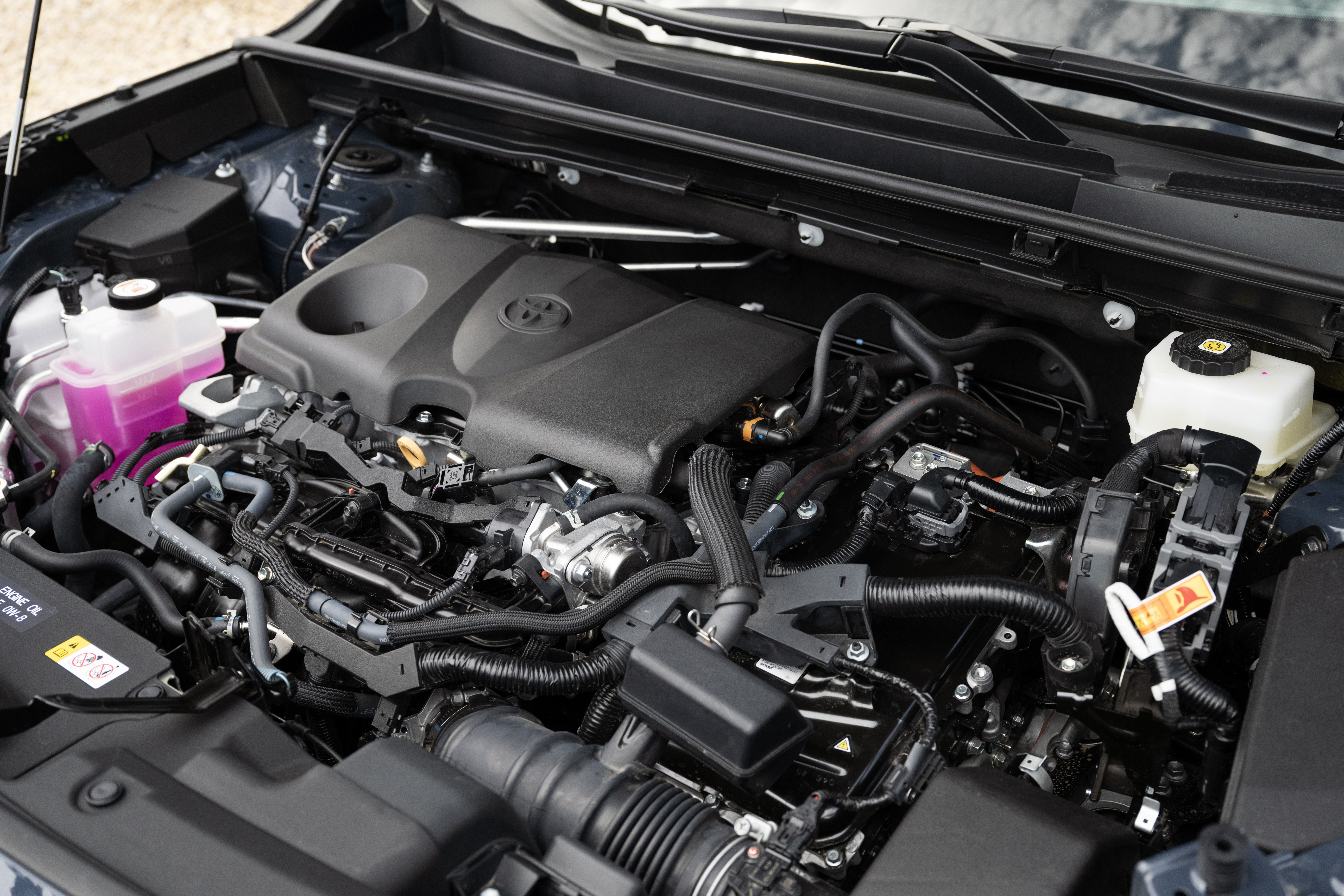
The RAV4 has a beefier and a slightly more efficient hybrid system than its predecessor. For the first time, the RAV4 Hybrid comes with front-wheel drive, with a 2.5-liter four-cylinder engine and two electric motors generating 226 horsepower. That’s 23 hp more than the outgoing gas-only RAV4 with FWD. All-wheel-drive models add a third motor to power the rear axle, and output increases from 219 to 236 hp.
The electric motor (134 hp and 153 lb-ft of torque) makes power off the line quicker than a small, turbocharged engine. Under heavier acceleration, it supplements the carryover four-cylinder engine (rated at 183 hp and 163 lb-ft) that still calls out its presence in the cabin, even with greater noise deadening. Since the sixth-gen RAV4 was designed with a multi-pathway approach to accommodate different powertrains and larger capacity batteries for the PHEV, structural rigidity has improved, mostly at the chassis mounting points. The corners of the SUV—specifically where the front and rear pillars holding the roof and windshields meet the body—are also more rigid. There’s only a small amount of wind noise, when you're not hammering the throttle and just cruising along.
The electronic continuously variable automatic transmission is smoother than ever, and the handoff from motor to engine is hardly noticeable in most instances. Sport models have paddle shifters that mimic eight gear shifts, but it’s quicker to toggle from Normal through Eco, Sport, and Custom modes. There are no regenerative braking settings.
MacPherson front struts and a multi-link rear suspension support the RAV4, and it’s tuned for comfort. There’s body roll in corners that’s typical for the class, but the suspension evenly soaks up road rash such as the dirt chunked up from a wash out in the desert. Steering feel is light and, overall, the RAV4 AWD excels as a mostly quiet, pleasant driver. The RAV4 PHEV (formerly known as Prime) marks the most significant difference for this generation and includes the new GR Sport model. We review it separately.
The Woodland trim returns as its own distinct model, exclusively representing the Rugged part of the RAV4 style triumvirate. Like the XLE and XSE grades, the Woodland is available as a hybrid or as a PHEV but has standard AWD. In addition to the style differences, the Woodland has all-terrain tires strapped on 18-inch wheels that raise the ground clearance from 8.1 to 8.5 inches. That, and standard AWD, account for the mechanical differences. A roof rack with cross bars and a tow hitch with a rating of 3,500 pounds are also standard, as are small rectangular fog lights from Rigid Industries.
On a loose but brief off-road course, where desert storms cracked open the surfaces, the Woodland tiptoed around obstacles. A surround-view camera system with projections from beneath the front and rear axles helped to illustrate the depth of the terrain, and hill-descent control added braking but never really took over completely. It was like a reverse cruise control but with no set speed.
Is the Woodland that much more capable off-road than fitting your own set of all-terrain tires to any other RAV4? Not really. We probably could have done the same loop in any other RAV4 with AWD, but the Woodland looks cool.
Toyota expects the EPA to rate the 2026 RAV4 at 44 mpg combined with FWD and AWD. Top AWD trims such as XSE and Limited net 42 mpg combined, and the taller ride height, the extra weight, and the all-terrain tires ding the Woodland trim to 39 mpg combined.

Even though the 2026 RAV4 looks bigger and has more physical presence than the outgoing fifth-generation model, the length, width, and height are the same—as are the 105.9-inch wheelbase and the interior passenger space. The cargo volume increases by less than a cubic foot with the 60/40-split rear seats folded down. It’s rated at 37.8 cubic feet with the seats up and 70.4 cubic feet with the seats down. The hatch opening is big and square, but it’ll still be a leap for small dogs.
The footprint may be more or less identical, but Toyota has optimized the interior space with clever storage features. The shelf over the dashboard remains, and it’s perfect for smartphones, earbuds, and other small devices. Another storage shelf rests between the stack and the console, and above it is yet another shelf for the wireless device charger that comes on all but the base LE and SE models. The center console storage can be flipped up from either the driver or passenger side, and on Woodland trims, the cover can be removed and turned over into a tray.
Deep door pockets hold big water bottles, and the door handle recesses could double as phone holders. Every RAV4 seats four passengers in relative comfort, although five passengers are more of a squeeze and the available panoramic sunroof eats into some headroom. Even though the 37.8 inches of rear legroom is ample (it's the same in PHEV models), the RAV4 trails larger competitors such as the Honda CR-V and Volkswagen Tiguan.
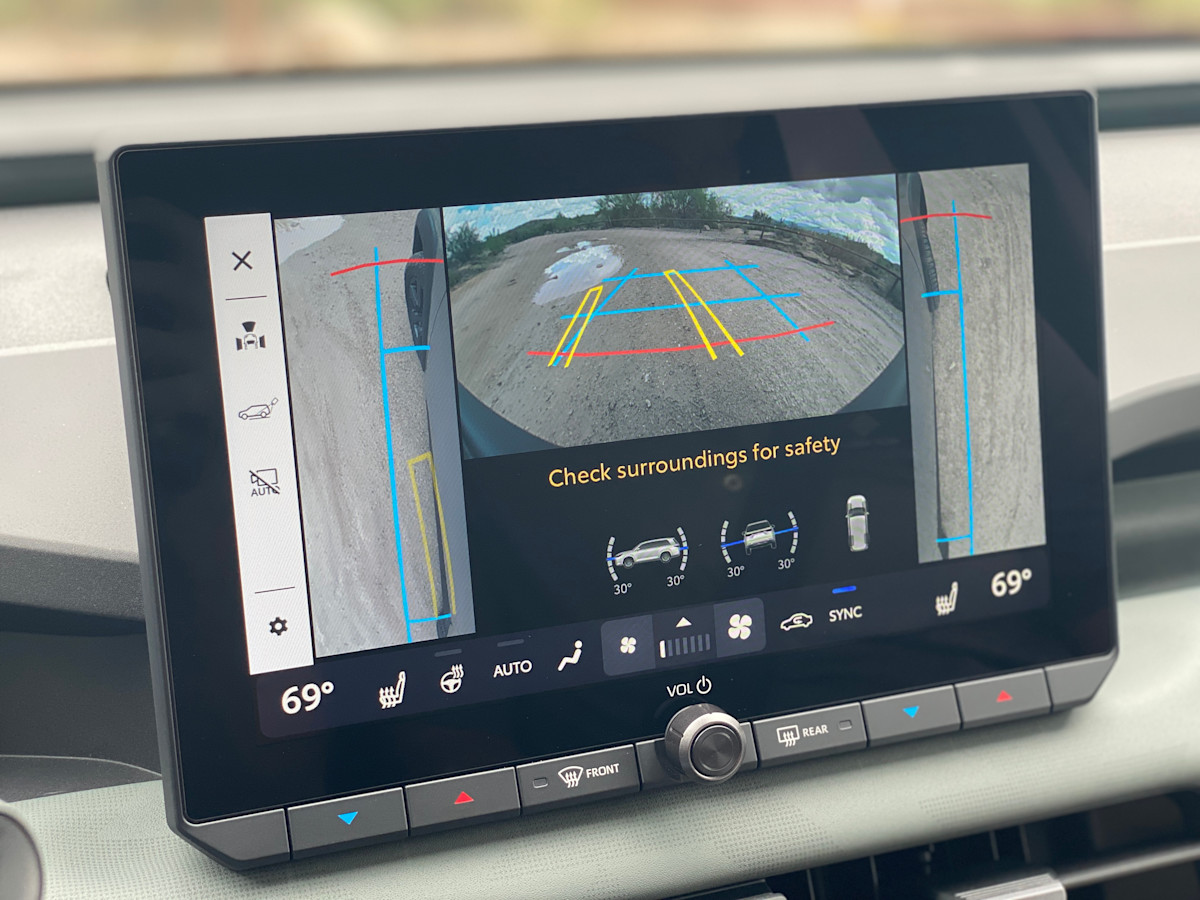
A new 12.3-inch digital instrument cluster and an enhanced 10.5-inch touchscreen highlight the fresh tech loaded into the RAV4. The digital displays are standard, as are wireless Apple CarPlay and Android Auto, while a larger 12.9-inch touchscreen graces the top trim levels.
Toyota introduced a new operating system called Arene that’s more responsive, quicker to load, and has crisper graphics. The graphics, in particular, represent a leap for Toyota, with a half-dozen different configurations in the cluster, and the ability to customize the vehicle info settings. Customizable tiles on the touchscreen act like big hot buttons for the info you use the most and the Voice Assistant responds to a broader range of “Hey Toyota” prompts.
A noteworthy new feature is a built-in dash cam that records and saves clips from the exterior cameras (they're triggered by aggressive driving). Drivers can set it to record, change the threshold for triggering events to instigate automatic recording, or it can record automatically on a loop.

Every 2026 RAV4 comes with a comprehensive suite of driver-assistance features as standard. Now dubbed Toyota Safety Sense 4.0, it runs on a new operating system and pulls from a wider view for cameras and a broader detection range for radar.
The enhancements should improve the system’s responsiveness and its detection at night. It includes automatic emergency braking with pedestrian detection that detects both moving vehicles and people at intersections; an updated lane-departure alert and lane-keep assist that centers the RAV4 in its lane; adaptive cruise control with limited hands-free driving on certain highways; blind-spot monitors with rear cross-traffic alerts; an emergency stop system; a safe-exit alert that warns occupants about to get out of the car if a vehicle or a cyclist is coming up on their blind side; an enhanced rearview camera with guidelines meant to ease backing up in crowded places.
A first for the RAV4, the limited hands-free driving system allows the car to pilot itself for about 15 seconds on limited-access highways. A driver monitor makes sure the driver is paying attention in that brief window, and if not, it flashes a warning, then sounds an alert, disengages the system, and starts to slow down. That’s where our testing ended, but Toyota says the car can bring itself safely to a halt.
The enhancements should contribute to the Toyota RAV4’s historically strong safety record, and we’ll update this space once crash-testing of the 2026 RAV4 is completed by the Insurance Institute for Highway Safety (IIHS) and the National Highway Traffic Safety Administration (NHTSA). The redesign should address shortcomings the IIHS found in the outgoing RAV4’s front crash protection, although the NHTSA rated the 2025 RAV4 at five out of five stars.
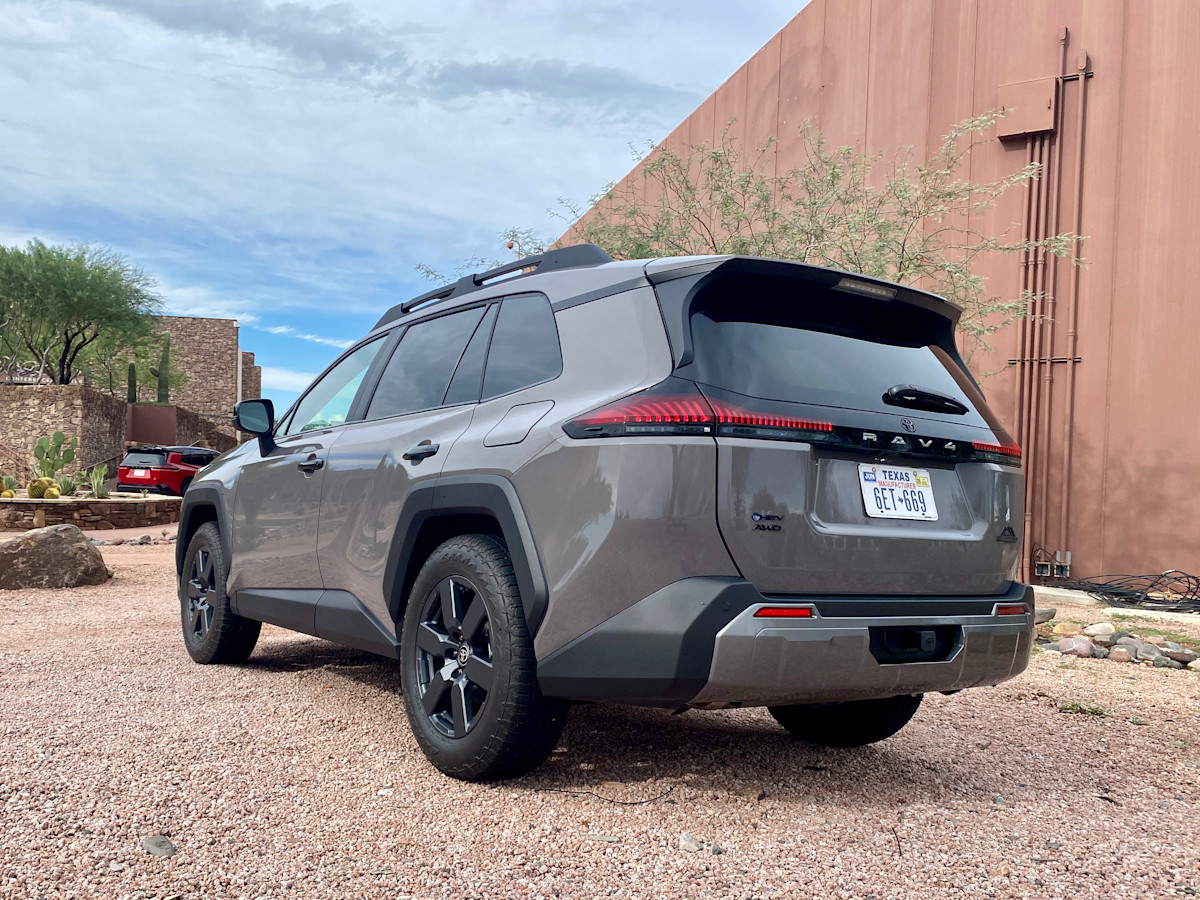
Toyota says pricing will start in the low $30,000s when the RAV4 goes on sale this fall, but that will be for the entry-level LE model with FWD. The 2025 RAV4 Hybrid LE with standard AWD costs $34,300, including destination. We expect the 2026 RAV4 Hybrid AWD to cost about $36,000. That’s still relatively good value, which is getting increasingly hard to find.
Even at that estimated price, the 2026 RAV4 appears to undercut the competition, but only because of the FWD standard setup. The 2025 Hyundai Tucson Hybrid with standard AWD costs about $35,000, while the 2026 Honda CR-V Hybrid costs about $37,000 and adding AWD brings it to nearly $38,500. In reality, the 2026 RAV4 AWD will likely split the difference between its hybrid AWD rivals.
The 2026 RAV4 LE rolls on 17-inch wheels and comes with the standard screens listed above. Toyota equips it with the expected modern features, including push-button start, three USB ports, cloth upholstery, and manually adjustable seats. We’d recommend at least the XLE in the Core line or the SE, which is the base trim in the Sport line. They roll on 18-inch wheels, have a power driver’s seat, heated front seats, and five USB ports.
The standard hybrid powertrain promises owners will pay less in fuel over time than with a gas-only model. The EPA estimated that the 2025 RAV4 Hybrid would save you $1,750 in fuel costs over five years compared to the 2025 RAV4 AWD.

User reviews for 2026 Toyota RAV4
Write a review2026 Toyota RAV4 Pricing
Trims & specs
Air Conditioning
Automatic climate control front air conditioning · Dual front air conditioning zones
Airbags
Passenger seat cushion front airbags · Driver knee airbags · Passenger airbag deactivation: occupant sensing deactivation · Front side airbags · Front side curtain airbags
Audio System
Antenna Type: mast · Voice recognition audio system · Bluetooth auxiliary audio input · Gracenote internet radio · HD radio · Satellite Radio: SiriusXM · Total Number of Speakers: 6
Brakes
ABS: 4-wheel · Braking assist: hill start assist · Electronic parking brake: auto off · Front brake diameter: 12.0 · Front brakes: ventilated disc · Rear brake diameter: 11.1 · Rear brakes: disc
Comfort Features
Armrests: rear center with cupholders · Floor Material: carpet · Shift knob trim: urethane · Steering wheel trim: urethane
Convenience Features
Adaptive stop and go cruise control: semi-automatic · Assist handle: rear · Autonomous lane guidance: lane centering · Cargo area power outlet: 12V · Cargo cover: retractable · Center console: front console with armrest and storage · Console Insert: organizer tray · Cruise control: adaptive · Cupholders: rear · Multi-function remote: proximity entry system · One-touch windows: 4 · Power outlet(s): USB-C front · Power steering: electric · Power windows: lockout button · Reading lights: front · Steering wheel: tilt and telescopic · Steering wheel mounted controls: multi-function screen controls · Storage: accessory hook · Vanity mirrors: dual illuminating
Driver Seat
Manual adjustments: 6
Engine
EV battery capacity: 1.01 kWh · Electric Motor Battery Type: lithium ion · Electric Motor HP: 134 · Electric Motor Power Output (Kilowatts): 100 · Electric Motor Torque: 153 · Hybrid Gas Engine HP: 183 · Hybrid Gas Engine HP@RPM: 6000 · Hybrid Gas Engine Torque: 163 · Hybrid gas Engine Torque@RPM: 3600 · Oil cooler: auxiliary
Exterior Features
Door handle color: body-color · Exhaust: dual exhaust tips · Fender lip moldings: black · Front bumper color: body-color · Grille color: body-color · Headlamp bezel color: chrome · Mirror color: black · Rear bumper color: black · Rear spoiler: roofline spoiler · Rear spoiler color: body-color · Rear trunk/liftgate: liftgate · Rocker panel color: black · Window trim: black
Headrests
Front headrests: adjustable · Number of front headrests: 2 · Number of rear headrests: 3
Hybrid
Starter Type: motor/generator
In Car Entertainment
Connected in-car apps: Google POIs · Infotainment: Toyota Audio Multimedia · Infotainment screen size: 10.5 in. · Smartphone integration: wireless Android Auto
Instrumentation
Fuel economy display: MPG · Instrument cluster screen size: 12.3 in. · Warnings and reminders: lamp failure
Lights
Daytime running lights: LED · Exterior entry lights: security approach lamps · Headlights: automatic high beam dimmer · Tail and brake lights: LED
Mirrors
Exterior mirrors: manual folding · Inside rearview mirror: manual day/night
Passenger Seat
Manual Adjustments: 6
Rear Seats
Type: 60-40 split bench
Roof
Roof rails: black
Safety
Automatic emergency braking: front pedestrian · Camera system: rearview · Child seat anchors: LATCH system · Cross Traffic Alert: rear · Crumple zones: front · Dash camera: front recording · Impact absorbing seats: dual front · Impact sensor: battery disconnect · Pre-Collision Warning System: visual warning · Pre-collision warning system: pedestrian detection · Rearview monitor: in dash
Seatbelts
Emergency locking retractors: front and rear · Front seatbelts: 3-point · Seatbelt force limiters: front · Seatbelt pretensioners: front and rear · Seatbelt warning sensor: driver and passenger · Second row seatbelts: 3-point
Seats
Driver seat manual adjustments: reclining · Front seat type: bucket · Passenger seat manual adjustments: reclining · Rear headrests: adjustable · Rear seat folding: flat · Rear seat manual adjustments: reclining · Upholstery: cloth
Security
Power door locks: anti-lockout
Spare Tire
Mount Location: inside · Size: temporary
Spare Wheel
Rim Type: steel
Stability and Traction
Traction control: with trailer stability control
Steering
Steering ratio: 14.4 · Turns lock-to-lock: 2.6
Suspension
Front Arm Type: lower control arms · Front Shock Type: gas shock absorbers · Front Spring Type: coil springs · Front Stabilizer Bar: diameter 25 mm · Front Suspension Classification: independent · Front Suspension Type: MacPherson struts · Rear Shock Type: gas shock absorbers · Rear Spring Type: coil springs · Rear Stabilizer Bar: diameter 23 mm · Rear Suspension Classification: independent · Rear Suspension Type: multi-link
Telematics
Driver assistance app: roadside assistance · Electronic messaging assistance: with voice recognition · Phone: voice activated · Phone wireless data link: Bluetooth · Smart device app compatibility: Toyota Connected Services · Smart device app function: window operation · Wifi: hotspot
Tires
Type: all season
Tires and Rims
Wheels: painted aluminum
Wheels
Wheel spokes: 5
Windows
Front wipers: intermittent · Liftgate window: fixed · Power windows: with safety reverse · Rear wiper: auto-on in reverse
Air Conditioning
Automatic climate control front air conditioning · Dual front air conditioning zones
Airbags
Dual front airbags · Driver knee airbags · Passenger airbag deactivation: occupant sensing deactivation · Front side airbags · Front side curtain airbags
Audio System
Antenna Type: mast · Voice recognition audio system · Bluetooth auxiliary audio input · Gracenote internet radio · AM/FM radio · Satellite Radio: SiriusXM · Total Number of Speakers: 6
Brakes
ABS: 4-wheel · Braking assist: hill start assist · Electronic parking brake: auto off · Front brake diameter: 12.0 · Front brakes: ventilated disc · Rear brake diameter: 11.1 · Rear brakes: disc
Comfort Features
Armrests: rear center with cupholders · Floor Material: carpet · Shift knob trim: urethane · Steering wheel trim: urethane
Convenience Features
Adaptive stop and go cruise control: semi-automatic · Assist handle: rear · Autonomous lane guidance: lane centering · Cargo area power outlet: 12V · Cargo cover: retractable · Center console: front console with armrest and storage · Console Insert: organizer tray · Cruise control: adaptive · Cupholders: front · Multi-function remote: proximity entry system · One-touch windows: 4 · Power outlet(s): USB-C front · Power steering: electric · Power windows: lockout button · Reading lights: front · Steering wheel: tilt and telescopic · Steering wheel mounted controls: phone · Storage: accessory hook · Vanity mirrors: dual illuminating
Driver Seat
Manual adjustments: 6
Drivetrain
4WD Type: on demand
Engine
EV battery capacity: 1.01 kWh · Electric Motor Battery Type: lithium ion · Electric Motor HP: 134 · Electric Motor Power Output (Kilowatts): 100 · Electric Motor Torque: 153 · Hybrid Gas Engine HP: 183 · Hybrid Gas Engine HP@RPM: 6000 · Hybrid Gas Engine Torque: 163 · Hybrid gas Engine Torque@RPM: 3600 · Oil cooler: auxiliary
Exterior Features
Door handle color: body-color · Exhaust: dual exhaust tips · Fender lip moldings: black · Front bumper color: body-color · Grille color: body-color · Headlamp bezel color: chrome · Mirror color: black · Rear bumper color: black · Rear spoiler: roofline spoiler · Rear spoiler color: body-color · Rear trunk/liftgate: liftgate · Rocker panel color: black · Window trim: black
Headrests
Front headrests: adjustable · Number of front headrests: 2 · Number of rear headrests: 3
Hybrid
Starter Type: motor/generator
In Car Entertainment
Connected in-car apps: Google POIs · Infotainment: Toyota Audio Multimedia · Infotainment screen size: 10.5 in. · Smartphone integration: wireless Apple CarPlay
Instrumentation
Fuel economy display: MPG · Instrument cluster screen size: 12.3 in. · Warnings and reminders: low oil pressure
Lights
Daytime running lights: LED · Exterior entry lights: security approach lamps · Headlights: auto delay off · Tail and brake lights: LED
Mirrors
Exterior mirrors: manual folding · Inside rearview mirror: manual day/night
Passenger Seat
Manual Adjustments: 6
Rear Seats
Type: 60-40 split bench
Roof
Roof rails: black
Safety
Automatic emergency braking: front pedestrian · Camera system: rearview · Child seat anchors: LATCH system · Cross Traffic Alert: rear · Crumple zones: front · Dash camera: front recording · Impact absorbing seats: dual front · Impact sensor: post-collision safety system · Pre-Collision Warning System: visual warning · Pre-collision warning system: pedestrian detection · Rearview monitor: in dash
Seatbelts
Emergency locking retractors: front · Front seatbelts: 3-point · Seatbelt force limiters: front · Seatbelt pretensioners: front and rear · Seatbelt warning sensor: driver and passenger · Second row seatbelts: 3-point
Seats
Driver seat manual adjustments: height · Front seat type: bucket · Passenger seat manual adjustments: height · Rear headrests: adjustable · Rear seat folding: flat · Rear seat manual adjustments: reclining · Upholstery: cloth
Security
Power door locks: anti-lockout
Spare Tire
Mount Location: inside · Size: temporary
Spare Wheel
Rim Type: steel
Stability and Traction
Traction control: with trailer stability control
Steering
Steering ratio: 14.4 · Turns lock-to-lock: 2.6
Suspension
Front Arm Type: lower control arms · Front Shock Type: gas shock absorbers · Front Spring Type: coil springs · Front Stabilizer Bar: diameter 25 mm · Front Suspension Classification: independent · Front Suspension Type: MacPherson struts · Rear Shock Type: gas shock absorbers · Rear Spring Type: coil springs · Rear Stabilizer Bar: diameter 23 mm · Rear Suspension Classification: independent · Rear Suspension Type: multi-link
Telematics
Driver assistance app: roadside assistance · Electronic messaging assistance: with voice recognition · Phone: voice activated · Phone wireless data link: Bluetooth · Smart device app compatibility: Toyota Connected Services · Smart device app function: horn/light operation · Wifi: hotspot
Tires
Type: all season
Tires and Rims
Wheels: painted aluminum
Wheels
Wheel spokes: 5
Windows
Front wipers: intermittent · Liftgate window: fixed · Power windows: with safety reverse · Rear wiper: auto-on in reverse
Air Conditioning
Automatic climate control front air conditioning · Dual front air conditioning zones
Airbags
Passenger seat cushion front airbags · Driver knee airbags · Passenger airbag deactivation: occupant sensing deactivation · Front side airbags · Rear side curtain airbags
Audio System
Antenna Type: mast · Voice recognition audio system · Bluetooth auxiliary audio input · Gracenote internet radio · Touch screen display radio · Satellite Radio: SiriusXM · Total Number of Speakers: 6
Brakes
ABS: 4-wheel · Braking assist: hill start assist · Electronic parking brake: auto off · Front brake diameter: 12.0 · Front brakes: ventilated disc · Rear brake diameter: 11.1 · Rear brakes: disc
Comfort Features
Armrests: rear center with cupholders · Floor Material: carpet · Shift knob trim: leather · Steering wheel trim: leather
Convenience Features
Adaptive stop and go cruise control: semi-automatic · Assist handle: front · Autonomous lane guidance: lane centering · Cargo area power outlet: 12V · Cargo cover: retractable · Center console: front console with armrest and storage · Console Insert: organizer tray · Cruise control: adaptive · Cupholders: front · Multi-function remote: trunk release · One-touch windows: 4 · Power outlet(s): 12V front · Power steering: electric · Power windows: lockout button · Reading lights: rear · Steering wheel: tilt and telescopic · Steering wheel mounted controls: audio · Storage: in dash · Vanity mirrors: dual illuminating
Driver Seat
Adjustable lumbar support: power · Power adjustments: 8
Engine
EV battery capacity: 1.01 kWh · Electric Motor Battery Type: lithium ion · Electric Motor HP: 134 · Electric Motor Power Output (Kilowatts): 100 · Electric Motor Torque: 153 · Hybrid Gas Engine HP: 183 · Hybrid Gas Engine HP@RPM: 6000 · Hybrid Gas Engine Torque: 163 · Hybrid gas Engine Torque@RPM: 3600 · Oil cooler: auxiliary
Exterior Features
Door handle color: body-color · Exhaust: dual exhaust tips · Fender lip moldings: black · Front bumper color: body-color · Grille color: body-color · Headlamp bezel color: chrome · Mirror color: black · Rear bumper color: chrome accents · Rear spoiler: roofline spoiler · Rear spoiler color: body-color · Rear trunk/liftgate: liftgate · Rocker panel color: black · Window trim: black
Headrests
Front headrests: adjustable · Number of front headrests: 2 · Number of rear headrests: 3
Hybrid
Starter Type: motor/generator
In Car Entertainment
Connected in-car apps: Google POIs · Infotainment: Toyota Audio Multimedia · Infotainment screen size: 10.5 in. · Smartphone integration: wireless Apple CarPlay
Instrumentation
Fuel economy display: range · Instrument cluster screen size: 12.3 in. · Warnings and reminders: maintenance reminder
Lights
Daytime running lights: LED · Exterior entry lights: security approach lamps · Headlights: wiper activated · Tail and brake lights: LED
Mirrors
Exterior mirrors: power · Inside rearview mirror: manual day/night
Passenger Seat
Manual Adjustments: 6
Rear Seats
Type: 60-40 split bench
Roof
Roof rails: black
Safety
Automatic emergency braking: intersection/junction cross · Camera system: rearview · Child seat anchors: LATCH system · Cross Traffic Alert: rear · Crumple zones: front · Dash camera: front recording · Impact absorbing seats: dual front · Impact sensor: post-collision safety system · Parking sensors: front · Pre-Collision Warning System: audible warning · Pre-collision warning system: intersection/junction cross · Rear pre-collision warning system: pedestrian detection · Rearview monitor: in dash
Seatbelts
Emergency locking retractors: front and rear · Front seatbelts: 3-point · Seatbelt force limiters: front and rear · Seatbelt pretensioners: front · Seatbelt warning sensor: driver and passenger · Second row seatbelts: 3-point
Seats
Driver seat power adjustments: height · Front seat type: bucket · Passenger seat manual adjustments: height · Rear headrests: adjustable · Rear seat folding: split · Rear seat manual adjustments: reclining · Upholstery: contrast stitching
Security
Power door locks: anti-lockout
Spare Tire
Mount Location: inside · Size: temporary
Spare Wheel
Rim Type: steel
Stability and Traction
Traction control: with trailer stability control
Steering
Steering ratio: 14.4 · Turns lock-to-lock: 2.6
Suspension
Front Arm Type: lower control arms · Front Shock Type: gas shock absorbers · Front Spring Type: coil springs · Front Stabilizer Bar: diameter 25 mm · Front Suspension Classification: independent · Front Suspension Type: MacPherson struts · Rear Shock Type: gas shock absorbers · Rear Spring Type: coil springs · Rear Stabilizer Bar: diameter 23 mm · Rear Suspension Classification: independent · Rear Suspension Type: multi-link
Telematics
Driver assistance app: roadside assistance · Electronic messaging assistance: with voice recognition · Phone: voice activated · Phone wireless data link: Bluetooth · Smart device app compatibility: Toyota Connected Services · Smart device app function: vehicle location · Wifi: hotspot
Tires
Type: all season
Tires and Rims
Wheels: painted aluminum
Wheels
Wheel spokes: multi-spoke
Windows
Front wipers: variable intermittent · Liftgate window: fixed · Power windows: with safety reverse · Rear wiper: with washer
Air Conditioning
Automatic climate control front air conditioning · Dual front air conditioning zones
Airbags
Dual front airbags · Driver knee airbags · Passenger airbag deactivation: occupant sensing deactivation · Front side airbags · Rear side curtain airbags
Audio System
Antenna Type: diversity · Voice recognition audio system · Bluetooth auxiliary audio input · Gracenote internet radio · HD radio · Satellite Radio: SiriusXM · Total Number of Speakers: 6
Brakes
ABS: 4-wheel · Braking assist: hill start assist · Electronic parking brake: auto off · Front brake diameter: 12.0 · Front brakes: ventilated disc · Rear brake diameter: 11.1 · Rear brakes: disc
Comfort Features
Armrests: rear center with cupholders · Floor Material: carpet · Shift knob trim: leather · Steering wheel trim: leather
Convenience Features
Adaptive stop and go cruise control: semi-automatic · Assist handle: front · Autonomous lane guidance: lane centering · Cargo area power outlet: 12V · Cargo cover: retractable · Center console: front console with armrest and storage · Console Insert: organizer tray · Cruise control: adaptive · Cupholders: rear · Memorized settings: liftgate · Multi-function remote: trunk release · One-touch windows: 4 · Power outlet(s): USB-C front · Power steering: speed-proportional · Power windows: lockout button · Reading lights: rear · Steering wheel: tilt and telescopic · Steering wheel mounted controls: audio · Storage: door pockets · Vanity mirrors: dual illuminating
Driver Seat
Adjustable lumbar support: power · Power adjustments: 8
Engine
EV battery capacity: 1.01 kWh · Electric Motor Battery Type: lithium ion · Electric Motor HP: 134 · Electric Motor Power Output (Kilowatts): 100 · Electric Motor Torque: 153 · Hybrid Gas Engine HP: 183 · Hybrid Gas Engine HP@RPM: 6000 · Hybrid Gas Engine Torque: 163 · Hybrid gas Engine Torque@RPM: 3600 · Oil cooler: auxiliary
Exterior Features
Door handle color: body-color · Exhaust: dual exhaust tips · Fender lip moldings: black · Front bumper color: body-color · Grille color: body-color · Headlamp bezel color: chrome · Mirror color: black · Rear bumper color: black · Rear spoiler: roofline spoiler · Rear spoiler color: body-color · Rear trunk/liftgate: liftgate · Rocker panel color: black · Window trim: black
Headrests
Front headrests: adjustable · Number of front headrests: 2 · Number of rear headrests: 3
Hybrid
Starter Type: motor/generator
In Car Entertainment
Connected in-car apps: Google search · Infotainment: Toyota Audio Multimedia · Infotainment screen size: 10.5 in. · Smartphone integration: wireless Apple CarPlay
Instrumentation
Fuel economy display: MPG · Instrument cluster screen size: 12.3 in. · Warnings and reminders: maintenance reminder
Lights
Daytime running lights: LED · Exterior entry lights: security approach lamps · Headlights: wiper activated · Tail and brake lights: LED
Mirrors
Exterior mirrors: heated · Inside rearview mirror: manual day/night
Passenger Seat
Manual Adjustments: 6
Rear Seats
Type: 60-40 split bench
Roof
Roof rails: black
Safety
Automatic emergency braking: front · Camera system: rearview · Child seat anchors: LATCH system · Cross Traffic Alert: rear · Crumple zones: front · Dash camera: rear recording · Impact absorbing seats: dual front · Impact sensor: post-collision safety system · Parking sensors: front · Pre-Collision Warning System: visual warning · Pre-collision warning system: pedestrian detection · Rear pre-collision warning system: pedestrian detection · Rearview monitor: in dash
Seatbelts
Emergency locking retractors: front and rear · Front seatbelts: 3-point · Seatbelt force limiters: front and rear · Seatbelt pretensioners: front and rear · Seatbelt warning sensor: driver and passenger · Second row seatbelts: 3-point
Seats
Driver seat power adjustments: height · Front seat type: bucket · Passenger seat manual adjustments: height · Rear headrests: adjustable · Rear seat folding: flat · Rear seat manual adjustments: reclining · Upholstery: leatherette
Security
Power door locks: anti-lockout
Spare Tire
Mount Location: inside · Size: temporary
Spare Wheel
Rim Type: steel
Stability and Traction
Traction control: with trailer stability control
Steering
Steering ratio: 14.4 · Turns lock-to-lock: 2.6
Suspension
Front Arm Type: lower control arms · Front Shock Type: gas shock absorbers · Front Spring Type: coil springs · Front Stabilizer Bar: diameter 25 mm · Front Suspension Classification: independent · Front Suspension Type: MacPherson struts · Rear Shock Type: gas shock absorbers · Rear Spring Type: coil springs · Rear Stabilizer Bar: diameter 23 mm · Rear Suspension Classification: independent · Rear Suspension Type: multi-link
Telematics
Driver assistance app: roadside assistance · Electronic messaging assistance: with read function · Phone: voice activated · Phone wireless data link: Bluetooth · Smart device app compatibility: Toyota Connected Services · Smart device app function: engine start · Wifi: hotspot
Tires
Type: all season
Tires and Rims
Wheels: painted aluminum
Wheels
Wheel spokes: multi-spoke
Windows
Front wipers: variable intermittent · Liftgate window: fixed · Power windows: with safety reverse · Rear wiper: auto-on in reverse
Air Conditioning
Automatic climate control front air conditioning · Dual front air conditioning zones
Airbags
Dual front airbags · Driver knee airbags · Passenger airbag deactivation: occupant sensing deactivation · Front side airbags · Rear side curtain airbags
Audio System
Antenna Type: diversity · Voice recognition audio system · Bluetooth auxiliary audio input · Gracenote internet radio · Touch screen display radio · Satellite Radio: SiriusXM · Total Number of Speakers: 6
Brakes
ABS: 4-wheel · Braking assist: hill start assist · Electronic parking brake: auto off · Front brake diameter: 12.0 · Front brakes: ventilated disc · Rear brake diameter: 11.1 · Rear brakes: disc
Comfort Features
Armrests: rear center with cupholders · Floor Material: carpet · Shift knob trim: leather · Steering wheel trim: leather
Convenience Features
Adaptive stop and go cruise control: semi-automatic · Assist handle: rear · Autonomous lane guidance: lane centering · Cargo area power outlet: 12V · Cargo cover: retractable · Center console: front console with armrest and storage · Console Insert: organizer tray · Cruise control: adaptive · Cupholders: rear · Multi-function remote: proximity entry system · One-touch windows: 4 · Power outlet(s): USB-C front · Power steering: electric · Power windows: lockout button · Reading lights: front · Steering wheel: tilt and telescopic · Steering wheel mounted controls: multi-function screen controls · Storage: accessory hook · Vanity mirrors: dual illuminating
Driver Seat
Adjustable lumbar support: power · Power adjustments: 8
Drivetrain
4WD Type: on demand
Engine
EV battery capacity: 1.01 kWh · Electric Motor Battery Type: lithium ion · Electric Motor HP: 134 · Electric Motor Power Output (Kilowatts): 100 · Electric Motor Torque: 153 · Hybrid Gas Engine HP: 183 · Hybrid Gas Engine HP@RPM: 6000 · Hybrid Gas Engine Torque: 163 · Hybrid gas Engine Torque@RPM: 3600 · Oil cooler: auxiliary
Exterior Features
Door handle color: body-color · Exhaust: dual exhaust tips · Fender lip moldings: black · Front bumper color: body-color · Grille color: chrome accents · Headlamp bezel color: chrome · Mirror color: black · Rear bumper color: black · Rear spoiler: roofline spoiler · Rear spoiler color: body-color · Rear trunk/liftgate: liftgate · Rocker panel color: black · Window trim: black
Headrests
Front headrests: adjustable · Number of front headrests: 2 · Number of rear headrests: 3
Hybrid
Starter Type: motor/generator
In Car Entertainment
Connected in-car apps: Google search · Infotainment: Toyota Audio Multimedia · Infotainment screen size: 10.5 in. · Smartphone integration: wireless Android Auto
Instrumentation
Fuel economy display: MPG · Instrument cluster screen size: 12.3 in. · Warnings and reminders: low oil pressure
Lights
Daytime running lights: LED · Exterior entry lights: security approach lamps · Headlights: wiper activated · Tail and brake lights: LED
Mirrors
Exterior mirrors: integrated turn signals · Inside rearview mirror: manual day/night
Passenger Seat
Manual Adjustments: 6
Rear Seats
Type: 60-40 split bench
Roof
Roof rails: black
Safety
Automatic emergency braking: intersection/junction turn · Camera system: rearview · Child seat anchors: LATCH system · Cross Traffic Alert: rear · Crumple zones: front · Dash camera: rear recording · Impact absorbing seats: dual front · Impact sensor: post-collision safety system · Parking sensors: rear · Pre-Collision Warning System: visual warning · Pre-collision warning system: intersection/junction turn · Rear pre-collision warning system: pedestrian detection · Rearview monitor: in dash
Seatbelts
Emergency locking retractors: front · Front seatbelts: 3-point · Seatbelt force limiters: front · Seatbelt pretensioners: front · Seatbelt warning sensor: driver and passenger · Second row seatbelts: 3-point
Seats
Driver seat power adjustments: reclining · Front seat type: bucket · Passenger seat manual adjustments: reclining · Rear headrests: adjustable · Rear seat folding: split · Rear seat manual adjustments: reclining · Upholstery: cloth
Security
Power door locks: anti-lockout
Spare Tire
Mount Location: inside · Size: temporary
Spare Wheel
Rim Type: steel
Stability and Traction
Traction control: with trailer stability control
Steering
Steering ratio: 14.4 · Turns lock-to-lock: 2.6
Suspension
Front Arm Type: lower control arms · Front Shock Type: gas shock absorbers · Front Spring Type: coil springs · Front Stabilizer Bar: diameter 25 mm · Front Suspension Classification: independent · Front Suspension Type: MacPherson struts · Rear Shock Type: gas shock absorbers · Rear Spring Type: coil springs · Rear Stabilizer Bar: diameter 23 mm · Rear Suspension Classification: independent · Rear Suspension Type: multi-link
Telematics
Driver assistance app: roadside assistance · Electronic messaging assistance: with voice recognition · Phone: voice activated · Phone wireless data link: Bluetooth · Smart device app compatibility: Toyota Connected Services · Smart device app function: maintenance status · Wifi: hotspot
Tires
Type: all season
Tires and Rims
Wheels: painted aluminum
Wheels
Wheel spokes: multi-spoke
Windows
Front wipers: variable intermittent · Liftgate window: fixed · Power windows: with safety reverse · Rear wiper: auto-on in reverse
Air Conditioning
Automatic climate control front air conditioning · Dual front air conditioning zones
Airbags
Passenger seat cushion front airbags · Driver knee airbags · Passenger airbag deactivation: occupant sensing deactivation · Front side airbags · Front side curtain airbags
Audio System
Antenna Type: diversity · Voice recognition audio system · USB auxiliary audio input · Gracenote internet radio · AM/FM radio · Satellite Radio: SiriusXM · Total Number of Speakers: 6
Brakes
ABS: 4-wheel · Braking assist: hill start assist · Electronic parking brake: auto off · Front brake diameter: 12.0 · Front brakes: ventilated disc · Rear brake diameter: 11.1 · Rear brakes: disc
Comfort Features
Armrests: rear center with cupholders · Floor Material: carpet · Shift knob trim: leather · Steering wheel trim: leather
Convenience Features
Adaptive stop and go cruise control: semi-automatic · Assist handle: rear · Autonomous lane guidance: lane centering · Cargo area power outlet: 12V · Cargo cover: retractable · Center console: front console with armrest and storage · Console Insert: organizer tray · Cruise control: adaptive · Cupholders: front · Memorized settings: liftgate · Multi-function remote: keyless entry with panic alarm · One-touch windows: 4 · Power outlet(s): USB-C front · Power steering: electric · Power windows: lockout button · Reading lights: rear · Steering wheel: tilt and telescopic · Steering wheel mounted controls: voice recognition controls · Storage: front seatback · Vanity mirrors: dual illuminating
Driver Seat
Adjustable lumbar support: power · Power adjustments: 8
Drivetrain
4WD Type: on demand
Engine
EV battery capacity: 1.01 kWh · Electric Motor Battery Type: lithium ion · Electric Motor HP: 134 · Electric Motor Power Output (Kilowatts): 100 · Electric Motor Torque: 153 · Hybrid Gas Engine HP: 183 · Hybrid Gas Engine HP@RPM: 6000 · Hybrid Gas Engine Torque: 163 · Hybrid gas Engine Torque@RPM: 3600 · Oil cooler: auxiliary
Exterior Features
Door handle color: body-color · Exhaust: dual exhaust tips · Fender lip moldings: black · Front bumper color: body-color · Grille color: body-color · Headlamp bezel color: chrome · Mirror color: black · Rear bumper color: black · Rear spoiler: roofline spoiler · Rear spoiler color: body-color · Rear trunk/liftgate: power operated · Rocker panel color: black · Window trim: black
Headrests
Front headrests: adjustable · Number of front headrests: 2 · Number of rear headrests: 3
Hybrid
Starter Type: motor/generator
In Car Entertainment
Connected in-car apps: Google search · Infotainment: Toyota Audio Multimedia · Infotainment screen size: 10.5 in. · Smartphone integration: wireless Android Auto
Instrumentation
Fuel economy display: range · Instrument cluster screen size: 12.3 in. · Warnings and reminders: coolant temperature warning
Lights
Daytime running lights: LED · Exterior entry lights: security approach lamps · Headlights: auto delay off · Tail and brake lights: LED
Mirrors
Exterior mirrors: heated · Inside rearview mirror: manual day/night
Passenger Seat
Manual Adjustments: 6
Rear Seats
Type: 60-40 split bench
Roof
Roof rails: black
Safety
Automatic emergency braking: rear pedestrian · Camera system: rearview · Child seat anchors: LATCH system · Cross Traffic Alert: rear · Crumple zones: front · Dash camera: front recording · Impact absorbing seats: dual front · Impact sensor: battery disconnect · Parking sensors: front · Pre-Collision Warning System: visual warning · Pre-collision warning system: pedestrian detection · Rear pre-collision warning system: pedestrian detection · Rearview monitor: in dash
Seatbelts
Emergency locking retractors: front · Front seatbelts: 3-point · Seatbelt force limiters: front and rear · Seatbelt pretensioners: front and rear · Seatbelt warning sensor: driver and passenger · Second row seatbelts: 3-point
Seats
Driver seat power adjustments: height · Front seat type: bucket · Passenger seat manual adjustments: height · Rear headrests: adjustable · Rear seat folding: flat · Rear seat manual adjustments: reclining · Upholstery: leatherette
Security
Power door locks: anti-lockout
Spare Tire
Mount Location: inside · Size: temporary
Spare Wheel
Rim Type: steel
Stability and Traction
Traction control: with trailer stability control
Steering
Steering ratio: 14.4 · Turns lock-to-lock: 2.6
Suspension
Front Arm Type: lower control arms · Front Shock Type: gas shock absorbers · Front Spring Type: coil springs · Front Stabilizer Bar: diameter 25 mm · Front Suspension Classification: independent · Front Suspension Type: MacPherson struts · Rear Shock Type: gas shock absorbers · Rear Spring Type: coil springs · Rear Stabilizer Bar: diameter 23 mm · Rear Suspension Classification: independent · Rear Suspension Type: multi-link
Telematics
Driver assistance app: roadside assistance · Electronic messaging assistance: with voice recognition · Phone: voice activated · Phone wireless data link: Bluetooth · Smart device app compatibility: Toyota Connected Services · Smart device app function: window operation · Wifi: hotspot
Tires
Type: all season
Tires and Rims
Wheels: painted aluminum
Wheels
Wheel spokes: multi-spoke
Windows
Front wipers: variable intermittent · Liftgate window: fixed · Power windows: with safety reverse · Rear wiper: auto-on in reverse
Air Conditioning
Automatic climate control front air conditioning · Dual front air conditioning zones
Airbags
Dual front airbags · Driver knee airbags · Passenger airbag deactivation: occupant sensing deactivation · Front side airbags · Front side curtain airbags
Audio System
Antenna Type: mast · Voice recognition audio system · Bluetooth auxiliary audio input · Gracenote internet radio · HD radio · Satellite Radio: SiriusXM · Total Number of Speakers: 6
Brakes
ABS: 4-wheel · Braking assist: hill start assist · Electronic parking brake: auto off · Front brake diameter: 12.0 · Front brakes: ventilated disc · Rear brake diameter: 11.1 · Rear brakes: disc
Comfort Features
Armrests: rear center with cupholders · Cargo area floor mat: rubber/vinyl · Floor Mat Material: vinyl/rubber · Floor Material: carpet · Floor Mats: front · Shift knob trim: leather · Steering wheel trim: leather
Convenience Features
Adaptive stop and go cruise control: semi-automatic · Assist handle: front · Autonomous lane guidance: lane centering · Cargo area power outlet: 115V · Cargo cover: retractable · Center console: front console with armrest and storage · Console Insert: organizer tray · Cruise control: adaptive · Cupholders: rear · Memorized settings: liftgate · Multi-function remote: proximity entry system · One-touch windows: 4 · Power outlet(s): 12V front · Power steering: speed-proportional · Power windows: lockout button · Reading lights: front · Steering wheel: tilt and telescopic · Steering wheel mounted controls: cruise controls · Storage: in dash · Vanity mirrors: dual illuminating
Driver Seat
Adjustable lumbar support: power · Power adjustments: 8
Drivetrain
4WD Type: on demand
Engine
EV battery capacity: 1.01 kWh · Electric Motor Battery Type: lithium ion · Electric Motor HP: 134 · Electric Motor Power Output (Kilowatts): 100 · Electric Motor Torque: 153 · Hybrid Gas Engine HP: 183 · Hybrid Gas Engine HP@RPM: 6000 · Hybrid Gas Engine Torque: 163 · Hybrid gas Engine Torque@RPM: 3600 · Oil cooler: auxiliary
Exterior Features
Door handle color: black · Exhaust: dual exhaust tips · Fender lip moldings: black · Front bumper color: body-color · Grille color: black · Headlamp bezel color: chrome · Mirror color: black · Rear bumper color: black · Rear spoiler: roofline spoiler · Rear spoiler color: body-color · Rear trunk/liftgate: power operated · Rocker panel color: black · Window trim: black
Headrests
Front headrests: adjustable · Number of front headrests: 2 · Number of rear headrests: 3
Hybrid
Starter Type: motor/generator
In Car Entertainment
Connected in-car apps: Google POIs · Infotainment: Toyota Audio Multimedia · Infotainment screen size: 10.5 in. · Smartphone integration: wireless Android Auto
Instrumentation
Fuel economy display: MPG · Instrument cluster screen size: 12.3 in. · Warnings and reminders: lamp failure
Lights
Daytime running lights: LED · Exterior entry lights: security approach lamps · Front fog lights: LED · Headlights: Auto on/off · Tail and brake lights: LED
Mirrors
Exterior mirrors: integrated turn signals · Inside rearview mirror: manual day/night
Passenger Seat
Manual Adjustments: 6
Rear Seats
Type: 60-40 split bench
Roof
Roof rack color: black · Roof rails: black
Safety
Automatic emergency braking: front · Camera system: surround view · Child seat anchors: LATCH system · Cross Traffic Alert: rear · Crumple zones: front · Dash camera: side recording · Impact absorbing seats: dual front · Impact sensor: battery disconnect · Parking sensors: front · Pre-Collision Warning System: audible warning · Pre-collision warning system: pedestrian detection · Rear pre-collision warning system: pedestrian detection · Rearview monitor: in dash
Seatbelts
Emergency locking retractors: front · Front seatbelts: 3-point · Seatbelt force limiters: front and rear · Seatbelt pretensioners: front · Seatbelt warning sensor: driver and passenger · Second row seatbelts: 3-point
Seats
Driver seat power adjustments: height · Front seat type: bucket · Passenger seat manual adjustments: height · Rear headrests: adjustable · Rear seat folding: flat · Rear seat manual adjustments: reclining · Upholstery: leatherette
Security
Power door locks: anti-lockout
Spare Tire
Mount Location: inside · Size: temporary
Spare Wheel
Rim Type: steel
Stability and Traction
Traction control: with trailer stability control
Steering
Steering ratio: 14.4 · Turns lock-to-lock: 2.6
Suspension
Front Arm Type: lower control arms · Front Shock Type: gas shock absorbers · Front Spring Type: coil springs · Front Stabilizer Bar: diameter 25 mm · Front Suspension Classification: independent · Front Suspension Type: MacPherson struts · Rear Shock Type: gas shock absorbers · Rear Spring Type: coil springs · Rear Stabilizer Bar: diameter 23 mm · Rear Suspension Classification: independent · Rear Suspension Type: multi-link
Telematics
Driver assistance app: roadside assistance · Electronic messaging assistance: with voice recognition · Phone: voice activated · Phone wireless data link: Bluetooth · Smart device app compatibility: Toyota Connected Services · Smart device app function: maintenance status · Wifi: hotspot
Tires
Type: all terrain
Tires and Rims
Wheels: painted aluminum
Wheels
Wheel spokes: 6
Windows
Front wipers: rain sensing · Liftgate window: fixed · Power windows: with safety reverse · Rear wiper: auto-on in reverse
Air Conditioning
Automatic climate control front air conditioning · Dual front air conditioning zones
Airbags
Passenger seat cushion front airbags · Driver knee airbags · Passenger airbag deactivation: occupant sensing deactivation · Front side airbags · Front side curtain airbags
Audio System
Antenna Type: mast · Voice recognition audio system · Bluetooth auxiliary audio input · Gracenote internet radio · HD radio · Satellite Radio: SiriusXM · Total Number of Speakers: 6
Brakes
ABS: 4-wheel · Braking assist: hill start assist · Electronic parking brake: auto off · Front brake diameter: 12.0 · Front brakes: ventilated disc · Rear brake diameter: 11.1 · Rear brakes: disc
Comfort Features
Armrests: rear center with cupholders · Floor Material: carpet · Shift knob trim: leather · Steering wheel trim: leather
Convenience Features
Adaptive stop and go cruise control: semi-automatic · Assist handle: front · Autonomous lane guidance: lane centering · Cargo area power outlet: 12V · Cargo cover: retractable · Center console: front console with armrest and storage · Console Insert: organizer tray · Cruise control: adaptive · Cupholders: illuminated · Dimming rearview mirror: auto-dimming · Easy entry: power driver seat · Memorized settings: liftgate · Multi-function remote: keyless entry with panic alarm · One-touch windows: 4 · Power outlet(s): USB-C front · Power steering: electric · Power windows: lockout button · Reading lights: rear · Steering wheel: tilt and telescopic · Steering wheel mounted controls: voice recognition controls · Storage: front seatback · Universal garage door opener: Homelink · Vanity mirrors: dual illuminating
Driver Seat
Adjustable lumbar support: power · Power adjustments: 8
Drivetrain
4WD Type: on demand
Engine
EV battery capacity: 1.01 kWh · Electric Motor Battery Type: lithium ion · Electric Motor HP: 134 · Electric Motor Power Output (Kilowatts): 100 · Electric Motor Torque: 153 · Hybrid Gas Engine HP: 183 · Hybrid Gas Engine HP@RPM: 6000 · Hybrid Gas Engine Torque: 163 · Hybrid gas Engine Torque@RPM: 3600 · Oil cooler: auxiliary
Exterior Features
Door handle color: body-color · Exhaust: dual exhaust tips · Fender lip moldings: black · Front bumper color: body-color · Grille color: body-color · Headlamp bezel color: chrome · Mirror color: black · Rear bumper color: black · Rear spoiler: roofline spoiler · Rear spoiler color: black · Rear trunk/liftgate: sensor-activated · Rocker panel color: black · Window trim: black
Headrests
Front headrests: adjustable · Number of front headrests: 2 · Number of rear headrests: 3
Hybrid
Starter Type: motor/generator
In Car Entertainment
Connected in-car apps: Google search · Infotainment: Toyota Audio Multimedia · Infotainment screen size: 12.9 in. · Smartphone integration: wireless Apple CarPlay
Instrumentation
Fuel economy display: MPG · Instrument cluster screen size: 12.3 in. · Warnings and reminders: coolant temperature warning
Lights
Daytime running lights: LED · Exterior entry lights: puddle lamps · Headlights: LED · Tail and brake lights: LED
Mirrors
Exterior mirrors: power
Passenger Seat
Power adjustments: 8
Rear Seats
Type: 60-40 split bench
Roof
Moonroof: one-touch open/close · Roof rails: black
Safety
Automatic emergency braking: front · Camera system: surround view · Child seat anchors: LATCH system · Cross Traffic Alert: rear · Crumple zones: front · Dash camera: rear recording · Impact absorbing seats: dual front · Impact sensor: door unlock · Parking sensors: front · Pre-Collision Warning System: visual warning · Pre-collision warning system: intersection/junction turn · Rear pre-collision warning system: pedestrian detection · Rearview monitor: in dash
Seatbelts
Emergency locking retractors: front · Front seatbelts: 3-point · Seatbelt force limiters: front and rear · Seatbelt pretensioners: front and rear · Seatbelt warning sensor: driver and passenger · Second row seatbelts: 3-point
Seats
Driver seat power adjustments: reclining · Front seat type: bucket · Passenger seat power adjustments: reclining · Rear headrests: adjustable · Rear seat folding: flat · Rear seat manual adjustments: reclining · Upholstery: leatherette · Upholstery accents: faux suede
Security
Power door locks: anti-lockout
Spare Tire
Mount Location: inside · Size: temporary
Spare Wheel
Rim Type: steel
Stability and Traction
Traction control: with trailer stability control
Steering
Steering ratio: 14.4 · Turns lock-to-lock: 2.6
Suspension
Front Arm Type: lower control arms · Front Shock Type: gas shock absorbers · Front Spring Type: coil springs · Front Stabilizer Bar: diameter 25 mm · Front Suspension Classification: independent · Front Suspension Type: MacPherson struts · Rear Shock Type: gas shock absorbers · Rear Spring Type: coil springs · Rear Stabilizer Bar: diameter 23 mm · Rear Suspension Classification: independent · Rear Suspension Type: multi-link
Telematics
Driver assistance app: roadside assistance · Electronic messaging assistance: with voice recognition · Navigation system: touch screen display · Phone: voice activated · Phone wireless data link: Bluetooth · Smart device app compatibility: Toyota Connected Services · Smart device app function: horn/light operation · Wifi: hotspot
Tires
Type: all season
Tires and Rims
Wheels: painted aluminum
Wheels
Wheel spokes: multi-spoke
Windows
Front wipers: variable intermittent · Liftgate window: fixed · Power windows: with safety reverse · Rear wiper: intermittent
Air Conditioning
Automatic climate control front air conditioning · Dual front air conditioning zones
Airbags
Passenger seat cushion front airbags · Driver knee airbags · Passenger airbag deactivation: occupant sensing deactivation · Front side airbags · Rear side curtain airbags
Audio System
Antenna Type: diversity · Voice recognition audio system · USB auxiliary audio input · Gracenote internet radio · Premium Brand: JBL · HD radio · Satellite Radio: SiriusXM · 1 subwoofer · Total Number of Speakers: 8 · Watts: 800
Brakes
ABS: 4-wheel · Braking assist: hill start assist · Electronic parking brake: auto off · Front brake diameter: 12.0 · Front brakes: ventilated disc · Rear brake diameter: 11.1 · Rear brakes: disc
Comfort Features
Armrests: rear center with cupholders · Floor Material: carpet · Shift knob trim: simulated alloy · Steering wheel trim: leather
Convenience Features
Adaptive stop and go cruise control: semi-automatic · Assist handle: front · Autonomous lane guidance: lane centering · Cargo area power outlet: 12V · Cargo cover: retractable · Center console: front console with armrest and storage · Console Insert: organizer tray · Cruise control: adaptive · Cupholders: rear · Easy entry: power driver seat · Memorized settings: liftgate · Multi-function remote: keyless entry with panic alarm · One-touch windows: 4 · Power outlet(s): USB-C front · Power steering: speed-proportional · Power windows: lockout button · Reading lights: front · Rearview mirror: camera-based · Steering wheel: tilt and telescopic · Steering wheel mounted controls: audio · Storage: door pockets · Universal garage door opener: Homelink · Vanity mirrors: dual illuminating
Driver Seat
Adjustable lumbar support: power · Power adjustments: 8
Drivetrain
4WD Type: on demand
Engine
EV battery capacity: 1.01 kWh · Electric Motor Battery Type: lithium ion · Electric Motor HP: 134 · Electric Motor Power Output (Kilowatts): 100 · Electric Motor Torque: 153 · Hybrid Gas Engine HP: 183 · Hybrid Gas Engine HP@RPM: 6000 · Hybrid Gas Engine Torque: 163 · Hybrid gas Engine Torque@RPM: 3600 · Oil cooler: auxiliary
Exterior Features
Door handle color: body-color · Exhaust: dual exhaust tips · Fender lip moldings: black · Front bumper color: body-color · Grille color: body-color · Headlamp bezel color: chrome · Mirror color: black · Rear bumper color: chrome accents · Rear spoiler: roofline spoiler · Rear spoiler color: body-color · Rear trunk/liftgate: power operated · Rocker panel color: black · Window trim: black
Headrests
Front headrests: adjustable · Number of front headrests: 2 · Number of rear headrests: 3
Hybrid
Starter Type: motor/generator
In Car Entertainment
Connected in-car apps: Google POIs · Infotainment: Toyota Audio Multimedia · Infotainment screen size: 12.9 in. · Smartphone integration: wireless Android Auto
Instrumentation
Fuel economy display: MPG · Instrument cluster screen size: 12.3 in. · Warnings and reminders: maintenance reminder
Lights
Daytime running lights: LED · Exterior entry lights: security approach lamps · Front fog lights: LED · Headlights: automatic high beam dimmer · Tail and brake lights: LED
Mirrors
Exterior mirrors: integrated turn signals
Passenger Seat
Power adjustments: 8
Rear Seats
Type: 60-40 split bench
Roof
Moonroof: power panoramic · Moonroof / Sunroof: power sunshade · Roof rails: black
Safety
Automatic emergency braking: intersection/junction cross · Camera system: surround view · Child seat anchors: LATCH system · Cross Traffic Alert: rear · Crumple zones: front · Dash camera: rear recording · Impact absorbing seats: dual front · Impact sensor: door unlock · Parking sensors: front · Pre-Collision Warning System: audible warning · Pre-collision warning system: intersection/junction cross · Rear pre-collision warning system: pedestrian detection · Rearview monitor: in dash
Seatbelts
Emergency locking retractors: front and rear · Front seatbelts: 3-point · Seatbelt force limiters: front and rear · Seatbelt pretensioners: front and rear · Seatbelt warning sensor: driver and passenger · Second row seatbelts: 3-point
Seats
Driver seat power adjustments: reclining · Front seat type: bucket · Passenger seat power adjustments: reclining · Rear headrests: adjustable · Rear seat folding: flat · Rear seat manual adjustments: reclining · Upholstery: leatherette
Security
Power door locks: anti-lockout
Spare Tire
Mount Location: inside · Size: temporary
Spare Wheel
Rim Type: steel
Stability and Traction
Traction control: with trailer stability control
Steering
Steering ratio: 14.4 · Turns lock-to-lock: 2.6
Suspension
Front Arm Type: lower control arms · Front Shock Type: gas shock absorbers · Front Spring Type: coil springs · Front Stabilizer Bar: diameter 25 mm · Front Suspension Classification: independent · Front Suspension Type: MacPherson struts · Rear Shock Type: gas shock absorbers · Rear Spring Type: coil springs · Rear Stabilizer Bar: diameter 23 mm · Rear Suspension Classification: independent · Rear Suspension Type: multi-link
Telematics
Driver assistance app: roadside assistance · Electronic messaging assistance: with read function · Navigation system: touch screen display · Phone: voice activated · Phone wireless data link: Bluetooth · Smart device app compatibility: Toyota Connected Services · Smart device app function: maintenance scheduling · Wifi: hotspot
Tires
Type: all season
Tires and Rims
Wheels: aluminum with painted accents
Wheels
Wheel spokes: 5
Windows
Front wipers: speed sensitive · Liftgate window: fixed · Power windows: with safety reverse · Rear wiper: intermittent

