Toyota has built a reputation for producing reliable, practical, and long-lasting vehicles, and its lineup of SUVs is no exception. For many shoppers, the Toyota badge is synonymous with peace of mind, low ownership costs, and strong resale value. Whether you're a growing family needing three rows of seats, an adventurer looking for a capable off-roader, or a daily commuter prioritizing fuel economy, there's likely a Toyota SUV designed to fit your needs. The brand's commitment to safety is also a major draw, with most new models including the comprehensive Toyota Safety Sense suite of driver-assistance features as standard equipment.
The modern Toyota SUV lineup is more diverse than ever, spanning a wide range of sizes, powertrains, and purposes. For those who need maximum space and utility, the three-row Grand Highlander offers a genuinely adult-friendly third row, while the brawny Sequoia is built for serious towing. If your adventures take you off the beaten path, the legendary and newly redesigned 4Runner and Land Cruiser provide rugged, body-on-frame capability. Meanwhile, models like the wildly popular RAV4 and the stylish Crown Signia lean into efficiency with standard hybrid powertrains, and Toyota is also expanding into the electric space with options like the sporty C-HR and the practical bZ Woodland. This guide will walk you through the best Toyota SUVs available, helping you find the right fit for your lifestyle and budget.
The Best Toyota SUVs
FAQs
What Makes CarGurus Best Cars Guides Different
Shopping Tools
Related Topics

1. Toyota 4Runner
CarGurus expert rating: 7.7 out of 10
CarGurus user rating: 4.6 out of 5
Percentage of Good and Great Deals available on CarGurus: 31.8%
Overall CarGurus rating: 4.6 out of 5
| Pros |
Cons |
| Stylish design |
Limited rear-seat space |
| Excellent off-road abilities |
|
| Relatively fuel efficient |
|
After a long wait, the Toyota 4Runner got a redesign for the 2025 model year. The latest version keeps its rugged, adventure-first personality while adding the day-to-day refinement SUV shoppers want. The cabin borrows heavily from the Tacoma, with a purposeful, durable layout, chunky climate knobs that are easy to use with gloves, and thoughtful off-road switchgear. Practicality is a mixed bag: front-seat space is generous, but second-row legroom is only adequate, and the optional third row (non-hybrid models only) is best reserved for short trips. Behind the second row, cargo space measures 44.8 cubic feet (or 42.6 cubic feet with the Hybrid's raised cargo floor), and properly equipped models can tow between 5,800 lb and 6,000 lb.
Power comes from a turbo 2.4-liter four-cylinder rated at 317 hp and 278 lb-ft of torque, or an i-Force Max Hybrid that pairs the same engine with an electric motor for 326 hp and a stout 465 lb-ft of torque—especially useful at low speeds on trails. Toyota also improved on-road composure, with more confident cornering and better highway tracking than the old truck-like setup, without giving up capability across the nine-trim lineup. Tech takes a big step forward with an available 14-inch touchscreen (an 8-inch unit is standard on certain trims), wireless Apple CarPlay and Android Auto, and available off-road camera views that can automatically pop on at low speeds. Every 4Runner gets Toyota Safety Sense 3.0, while crash-test scores aren't available yet; pricing starts at $42,220 including destination, and EPA estimates run to 22 mpg combined for the standard engine or 23 mpg combined for the Hybrid.
The CarGurus Verdict: "Toyota doesn't throw out the fomula with its newly redesigned 4Runner. Instead, the latest model keeps many of the features shoppers have loved for over a decade, while also adding a more contemporary selection of four-cylinder powertrains." - Mark Takahashi
Read our most recent Toyota 4Runner review
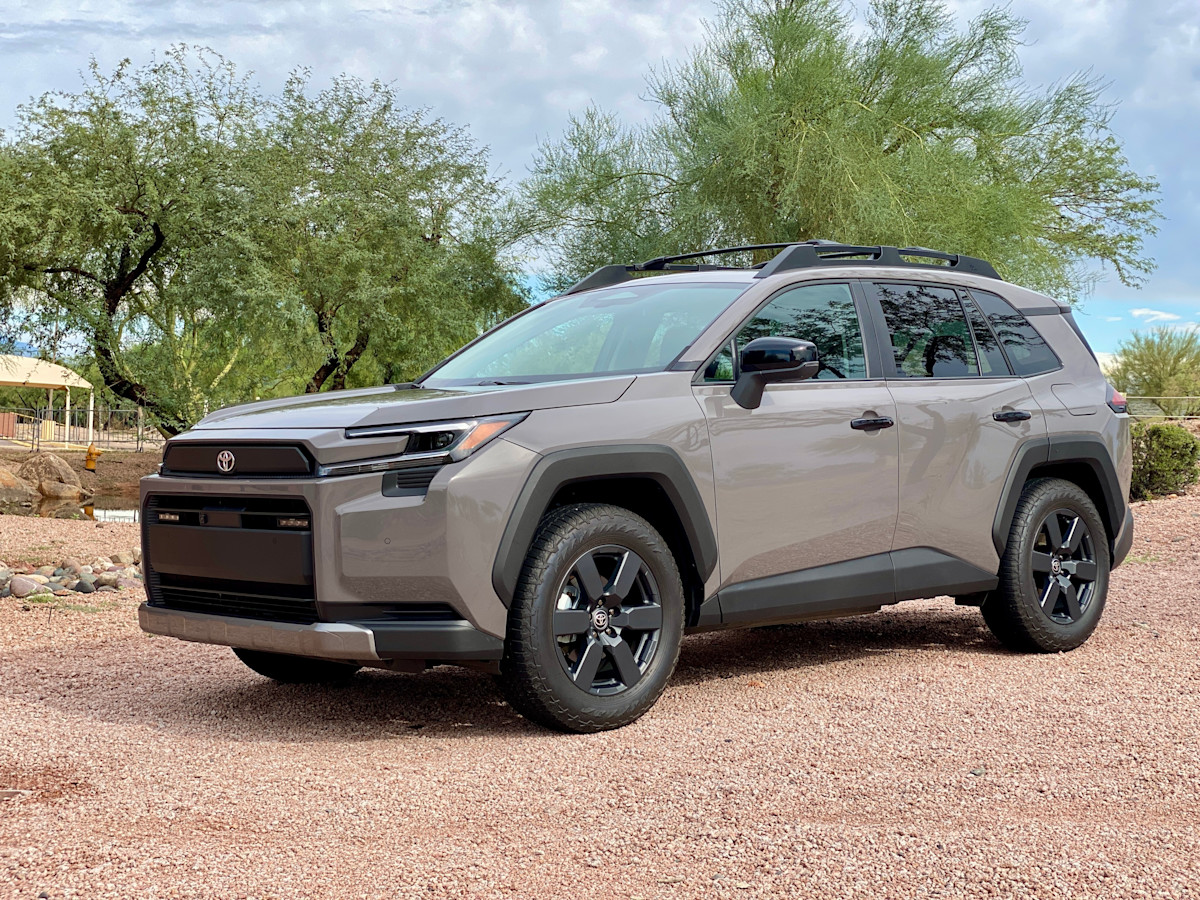
2. Toyota RAV4
CarGurus expert rating: 6.8 out of 10
CarGurus user rating: 4.5 out of 5
Percentage of Good and Great Deals available on CarGurus: 33.2%
Overall CarGurus rating: 4.5 out of 5
| Pros |
Cons |
| Multiple trims and styles |
Confusing trim levels |
| Standard hybrid |
Size hasn't kept up with rivals |
| Updated tech |
|
The redesigned 2026 Toyota RAV4 leans into what SUV shoppers want most: efficiency without giving up everyday punch. A hybrid powertrain is now standard across the lineup, with the front-wheel-drive hybrid rated at 226 hp, while AWD models bump output to 236 hp thanks to an additional rear motor. Toyota says to expect up to 44 mpg combined (and 42 mpg combined on some higher AWD trims), so commutes and road trips should come with fewer fuel stops—one of the biggest reasons the RAV4 remains a go-to Toyota SUV for families and frequent drivers, even if the new trim and style structure (Core, Rugged, and Sport) takes some homework.
Inside, Toyota modernizes the experience with a standard 12.3-inch digital instrument cluster and an updated touchscreen (10.5 inches standard, with an available 12.9-inch screen) running a quicker Arene operating system, plus wireless Apple CarPlay and Android Auto. Practicality stays familiar with 37.8 cubic feet of cargo space behind the rear seats and 70.4 cubic feet with the rear seats folded, along with smart storage touches like shelves for small items and deep door pockets for larger bottles. Safety tech is also a core part of the appeal: Toyota Safety Sense 4.0 is standard, adding features like updated lane centering, intersection-aware automatic emergency braking, and a limited hands-free driving function on certain highways for brief stretches, while expected pricing in the low $30,000s (starting with an LE FWD) keeps the RAV4 in the heart of the mainstream SUV market.
The CarGurus Verdict: "The good gets better, but the RAV4's lineup is confusing enough to need a Venn diagram." -Robert Duffer
Read our most recent Toyota RAV4 review

3. Toyota Grand Highlander
CarGurus expert rating: 7.7 out of 10
CarGurus user rating: 5 out of 5
Percentage of Good and Great Deals available on CarGurus: 34.7%
Overall CarGurus rating: 4.4 out of 5
| Pros |
Cons |
| Spacious third row |
Uninspired styling |
| Standard advanced safety features |
Some technology only available with a subscription |
| Multiple powertrain options |
|
For families shopping Toyota SUVs with real three-row usefulness, the Grand Highlander is the one built for carpools, road trips, and big-kid legroom. It's notably roomier than the regular Highlander in the third row, and it backs that up with everyday-friendly features like three-zone climate controls with physical knobs, easy third-row access thanks to a highly adjustable second row, and family-first details like simple-to-find third-row child-seat anchors. Cargo capacity is also a big win: 21 cubic feet behind the third row expands to 58 cubic feet with the rear seats folded and nearly 98 cubic feet with the second row stowed, and every trim includes a power liftgate.
Toyota also offers multiple powertrain choices including two hybrid setups, letting you prioritize either fuel economy or extra muscle for highway merging and towing. If efficiency is the goal, the standard hybrid is rated up to 36 mpg combined (front-wheel drive (FWD)) and can go as far as 619 miles between fill-ups, while the Hybrid Max trades some of that range for stronger response and standard full-time AWD (Toyota's estimate: 464 miles total range). Safety is a strong selling point for a family SUV, too: Toyota Safety Sense 3.0 is standard, National Highway Traffic Safety Administration (NHTSA) gives it an overall five-star rating, and most Insurance Institute for Highway Safety (IIHS) scores are "Good," though the headlights rate "Acceptable." Tech is modern and quick with a standard 12.3-inch screen plus wireless Apple CarPlay and Android Auto, but it's worth noting that features like navigation, voice assistant, and phone-as-a-key functionality can require a subscription.
The CarGurus Verdict: "Despite a few small foibles, the 2026 Toyota Grand Highlander is perfect for active families who need a bit of extra space and comfort." -Emme Hall
Read our most recent Toyota Grand Highlander review
Search for Toyota Grand Highlander
See all
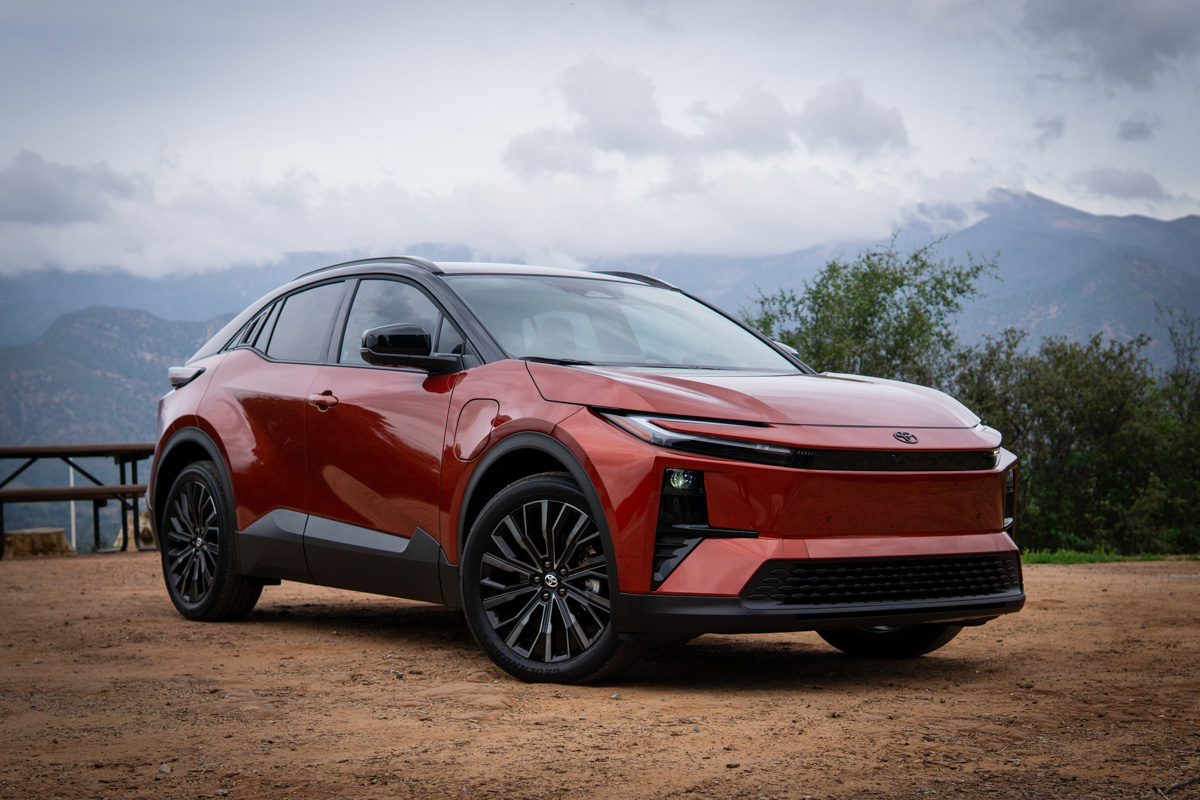
4. Toyota C-HR
CarGurus expert rating: 7 out of 10
CarGurus user rating: 4.9 out of 5
Percentage of Good and Great Deals available on CarGurus: 34.5%
Overall CarGurus rating: 4.3 out of 5
| Pros |
Cons |
| Fun to drive |
Cramped back seat |
| Good value |
Not much cargo space |
| Standard all-wheel drive (AWD) |
Mid-pack charging tech |
The 2026 Toyota C-HR brings Toyota's smallest, quirkiest SUV-shaped option back as a fully electric compact crossover, and it leans hard into sporty character. Every C-HR comes with dual-motor AWD and 338 hp, with a front motor rated at 198 lb-ft of torque and a rear motor at 125 lb-ft, plus quick EV response that Toyota estimates at 4.9 seconds from 0-60 mph. If you like a crossover that feels more eager in corners than most small EVs, the C-HR's suspension tuning and steering deliver that, though the payoff is a firmer ride—especially on the XSE's 20-inch wheels.
For day-to-day SUV usability, the C-HR's coupe-like shape is the main compromise: cargo space is 25.3 cubic feet behind the rear seats (59.5 with them folded), and the back seat is tighter than many shoppers will expect, even with decent 32.2 inches of rear legroom. Up front, it's a nicer story, with a standard 14-inch touchscreen, wireless Apple CarPlay and Android Auto, dual wireless charging pads, and four USB-C ports, while Toyota Safety Sense 3.0 is standard across the lineup. It also uses a Tesla-style NACS charge port and can DC fast charge at up to 150 kW, but features like battery preconditioning are tied to Toyota connected services, and Toyota's post-trial subscription approach is worth keeping in mind if you road-trip often. Pricing starts at $38,450 including destination, and range is estimated at 287 miles for the SE or 273 miles for the XSE.
The CarGurus Verdict: "The 2026 Toyota C-HR won't be the right fit for buyers who need lots of space, but it's a genuinely fun electric crossover that doesn't cost a fortune. If you're an EV shopper who values driving enjoyment more than cargo capacity, the C-HR belongs on your shortlist." - Matt Smith
Read our most recent Toyota C-HR review
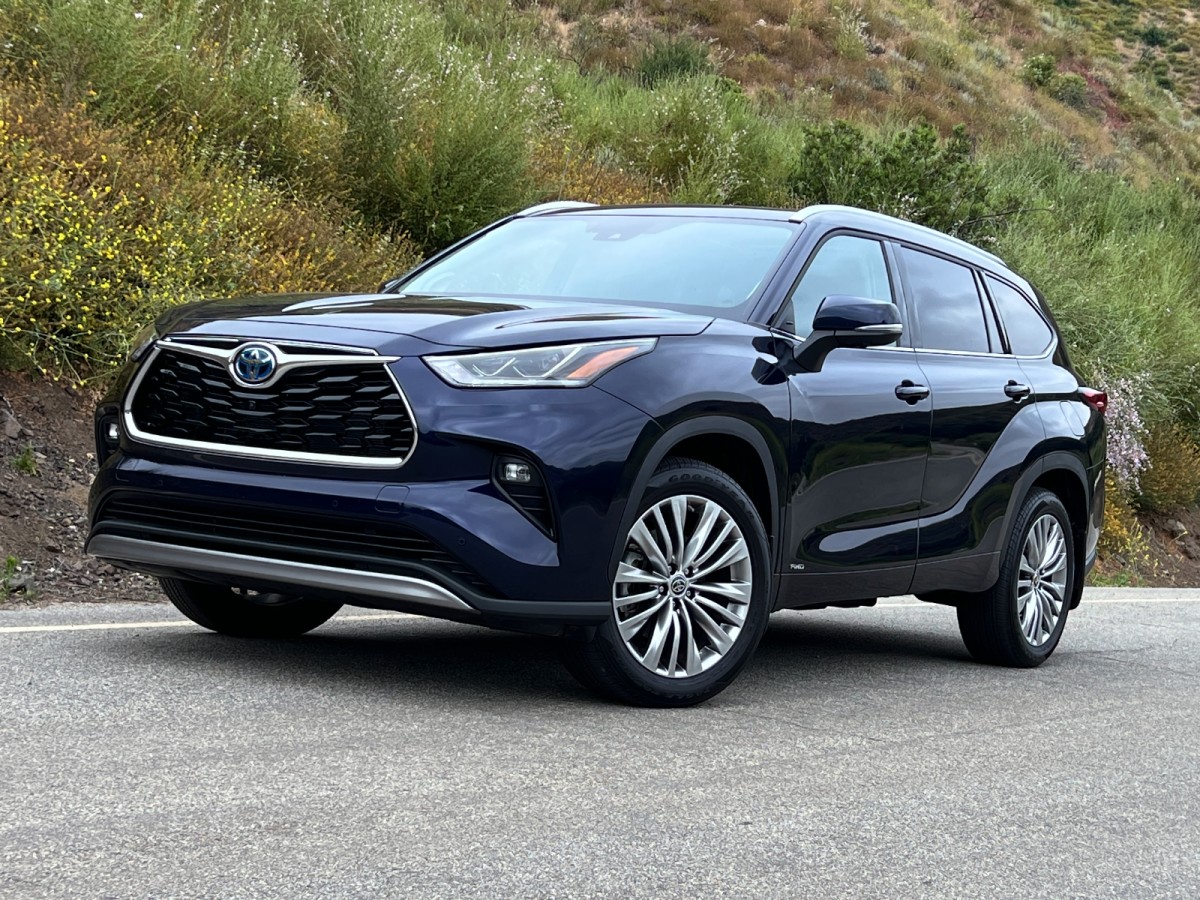
5. Toyota Highlander Hybrid
CarGurus expert rating: 5.7 out of 10
CarGurus user rating: 4.8 out of 5
Percentage of Good and Great Deals available on CarGurus: 32.4%
Overall CarGurus rating: 4.3 out of 5
| Pros |
Cons |
| Quiet cabin |
Fairly pedestrian performance |
| Standard advanced safety features |
Interior materials feel cheap |
| Great safety ratings |
Cramped third row |
If you want a Toyota SUV that's geared toward family duty without constantly visiting the gas station, the Highlander Hybrid is a big reason hybrid Highlanders account for about 25% of Highlander sales in the US. It's a midsize, three-row crossover that majors in calm, quiet commuting, with standard Toyota Safety Sense 2.5+ driver-assistance tech (adaptive cruise control, automatic emergency braking, lane-centering, and more) and excellent crash-test scores from IIHS and NHTSA. Just keep expectations realistic: the third row is best treated as occasional-use seating, and the cabin's design and materials can feel less premium than the price suggests in upper trims.
Under the hood, a 2.5-liter four-cylinder hybrid system makes 243 hp, and while the electric assist helps around town, the gas engine's 175 lb-ft of torque limits passing punch at higher speeds. The payoff is efficiency, but our tested Platinum AWD example fell well short of its EPA estimate in real-world driving, and that droning CVT-style behavior won't be everyone's favorite on long grades. On the practical side, cargo space measures 16 cubic feet behind the third row, 48.4 cu ft with the third row folded, and 84.3 cu ft with the second row down; tech also gets a meaningful upgrade with Toyota Audio Multimedia, available 12.3-inch screens, wireless Apple CarPlay/Android Auto, and available connected services if you want built-in navigation and voice control.
The CarGurus Verdict: "The Highlander Hybrid's popularity is understandable, given the midsize, three-row crossover's impressive EPA fuel economy rating and accessible base price." - Christian Wardlaw
Read our most recent Toyota Highlander Hybrid review
Search for Toyota Highlander Hybrid
See all
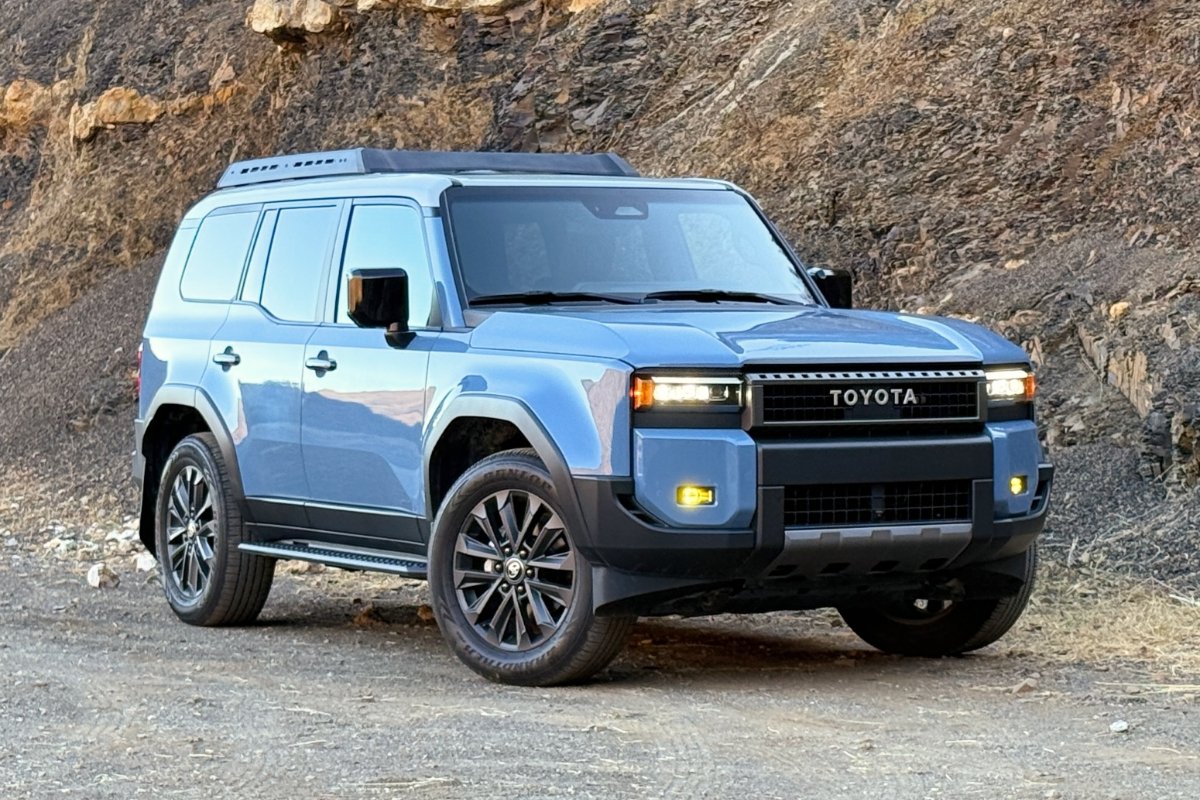
6. Toyota Land Cruiser
CarGurus expert rating: 6.8 out of 10
CarGurus user rating: 4.6 out of 5
Percentage of Good and Great Deals available on CarGurus: 29.7%
Overall CarGurus rating: 4.3 out of 5
| Pros |
Cons |
| Stylish design |
Poor fuel economy |
| Impressive off-roading capability |
Poor handling |
| Easy-to-use technology |
Uncomfortable back seat |
The Toyota Land Cruiser is a two-row midsize SUV built around the idea that travel plans don't always end where the pavement does. Every Land Cruiser uses Toyota's i-Force Max turbocharged hybrid setup, sending 326 hp and 465 lb-ft of torque through an eight-speed automatic to a full-time four-wheel drive (4WD) system with locking center and rear differentials, plus standard Crawl Control and Downhill Assist Control. It's a confident daily driver with a tall seating position and excellent outward visibility, and it's tuned to take rough city streets (and the occasional trail) in stride—though it's not the SUV you buy to hustle through tight mountain corners.
For everyday usability, the squared-off shape pays off in cargo room: 46.2 cubic feet behind the second row and 82.1 cubic feet with the rear seat folded. The more upscale Land Cruiser trim (not the 1958) is the sweet spot for most shoppers, adding larger 12.3-inch screens and extra off-road hardware like Multi-Terrain Select, Multi-Terrain Monitor camera views, and a front stabilizer bar disconnect; it also opens the door to a Premium Package with upgrades like a head-up display, digital rearview mirror, and JBL audio. Toyota Safety Sense 3.0 is standard, and while it brings a robust suite of driver-assistance tech, our experience found some systems can be inconsistent in challenging light; the NHTSA gives the Land Cruiser an overall four-star rating.
The CarGurus Verdict: "There is a lot to like about the Land Cruiser, especially if you don't care about fuel economy. Our test vehicle averaged 15.7 mpg, falling well short of expectations. That thirst for fuel easily ranks as the worst thing about this SUV. Also, we recommend upgrading from the base 1958 trim level." - Christian Wardlaw
Read our most recent Toyota Land Cruiser review
Search for Toyota Land Cruiser
See all
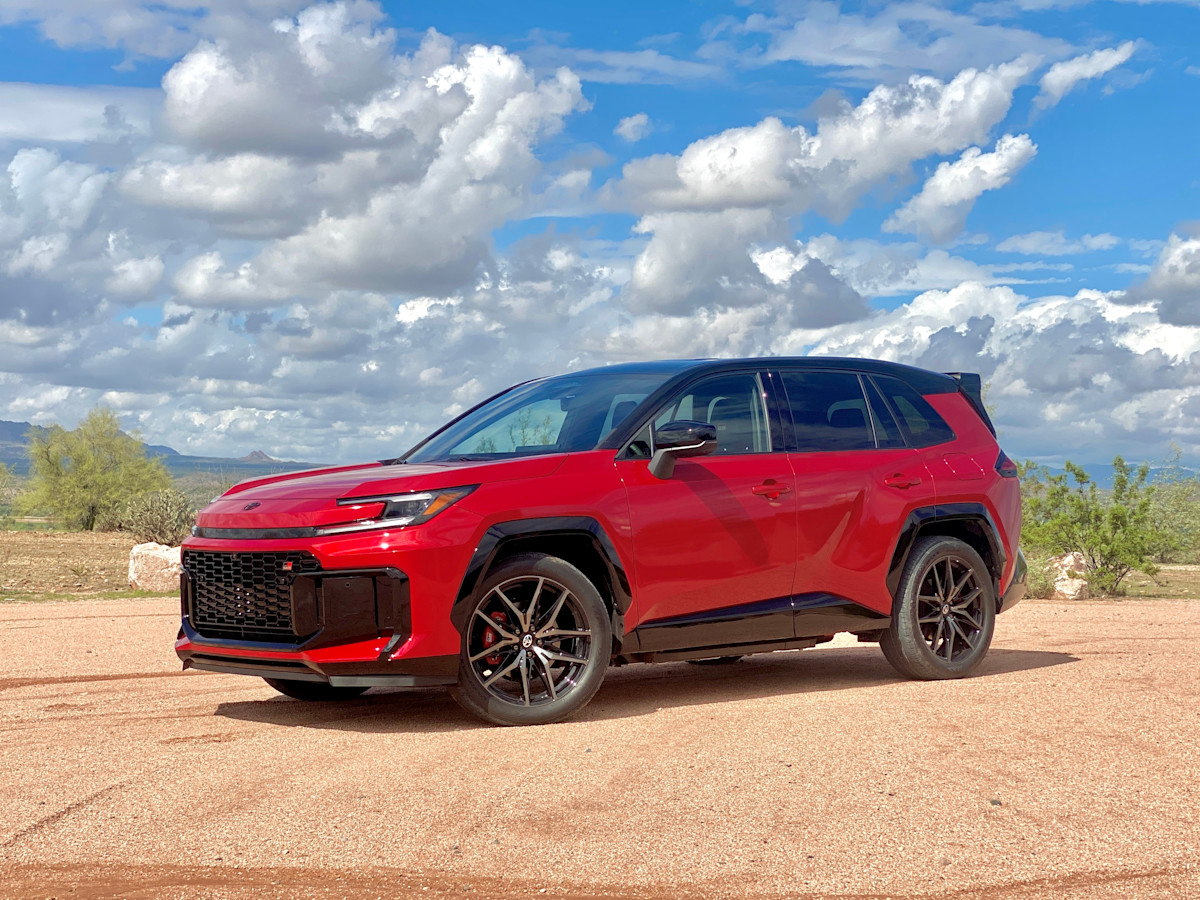
7. Toyota RAV4 Plug-In Hybrid
CarGurus expert rating: 7 out of 10
CarGurus user rating: 5 out of 5
Percentage of Good and Great Deals available on CarGurus: 41.2%
Overall CarGurus rating: 4.3 out of 5
| Pros |
Cons |
| New sporty GR Sport grade |
PHEV charge port inconsistencies |
| More electric range |
Over-the-top GR Sport accents |
| Powerful |
Price |
For shoppers who want a Toyota SUV that can handle most daily driving without burning gas, the 2026 RAV4 Plug-In Hybrid pushes the formula forward with more power and more EV range. The updated plug-in system makes 324 hp with standard AWD, and Toyota estimates up to 52 miles of electric driving in SE and XSE trims (49 miles in Woodland and 48 miles in GR Sport). It's quick when you lean on it in Auto mode, yet it still keeps the familiar RAV4 mission of easygoing comfort and a quiet, solid feel thanks to chassis strengthening to support the larger battery.
Inside, Toyota leans into everyday usability with smart storage (dash shelf, deep door pockets, and flexible console bins) plus a standard 12.3-inch digital gauge cluster and wireless Apple CarPlay/Android Auto. Cargo space takes the expected hit versus a non-plug-in RAV4—33.6 cubic feet behind the rear seats and 63.5 cubic feet with them folded—but it's still practical for weekly errands and road trips, helped by a 14.5-gallon gas tank and strong hybrid efficiency when the battery is depleted (Toyota expects 41 mpg combined in SE/XSE). Charging is where shoppers should pay attention: some trims add DC fast charging via a CCS1 connector (10% to 80% in about 35 minutes), while others are AC-only, and Toyota even places the charge port on different sides depending on trim—details that matter if you have a tight garage or a preferred charger setup.
The CarGurus Verdict: "This is the best version of the RAV4, though we can't recommend the slightly sportier GR Sport until we know exactly how much it will cost. With improved tech and a greater focus on electrification, as well as available DC charging (despite the charge ports changing sides between trims), the RAV4 PHEV leans forward." -Robert Duffer
Read our most recent Toyota RAV4 Plug-In Hybrid review
Search for Toyota RAV4 Plug-In Hybrid
See all
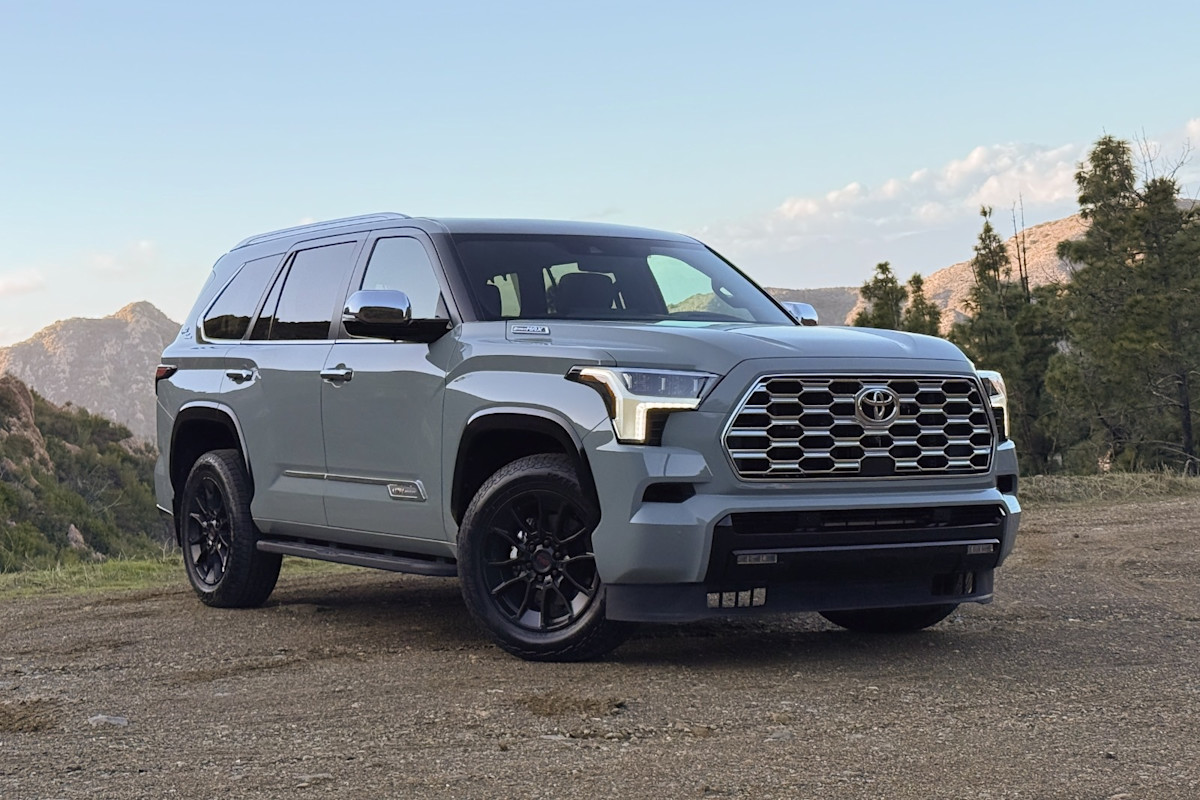
8. Toyota Sequoia
CarGurus expert rating: 5.5 out of 10
CarGurus user rating: 4.6 out of 5
Percentage of Good and Great Deals available on CarGurus: 31.3%
Overall CarGurus rating: 4.3 out of 5
| Pros |
Cons |
| Stylish design |
Poor fuel economy |
| Powerful engine |
Cramped third row |
| Easy-to-use technology |
Not much cargo space |
The Sequoia is Toyota's biggest, body-on-frame three-row SUV, sharing its underpinnings with the Tundra pickup and leaning hard into towing strength. Every Sequoia gets the i-Force Max hybrid powertrain—a twin-turbo 3.4-liter V6 paired with an electric motor—for a combined 437 hp and 583 lb-ft of torque, and it can tow up to 9,520 pounds when properly equipped. For 2025, the new 1794 Edition brings a Texas-themed luxury look with Saddle Tan leather and walnut trim, while still offering family-friendly seating for up to eight.
In day-to-day use, the Sequoia's tradeoffs matter for SUV shoppers: the third row is tight for adults, and cargo room is limited behind it (11.5 cubic feet), improving to 49 cubic feet with the third row folded and up to 86.9 cubic feet with both rear rows down—still less than many full-size rivals and even some smaller Toyota SUVs. Tech is a strong point, with an available 14-inch touchscreen and wireless Apple CarPlay/Android Auto, plus helpful extras like a surround-view camera system, though some features are tied to subscriptions. Toyota Safety Sense 2.5 is standard, but lane-keeping behavior can be intrusive, and crash-test ratings from IIHS and NHTSA weren't available at publication time; overall, it's best approached as Toyota's tow-first SUV rather than the roomiest three-row option in the lineup.
The CarGurus Verdict: "People buy full-size SUVs to carry lots of people, haul lots of cargo, and tow lots of weight. However, due to its packaging requirements, the Sequoia is a rock star only if you're attaching a trailer to it, and even then, it's not class-leading in capability." - Christian Wardlaw
Read our most recent Toyota Sequoia review
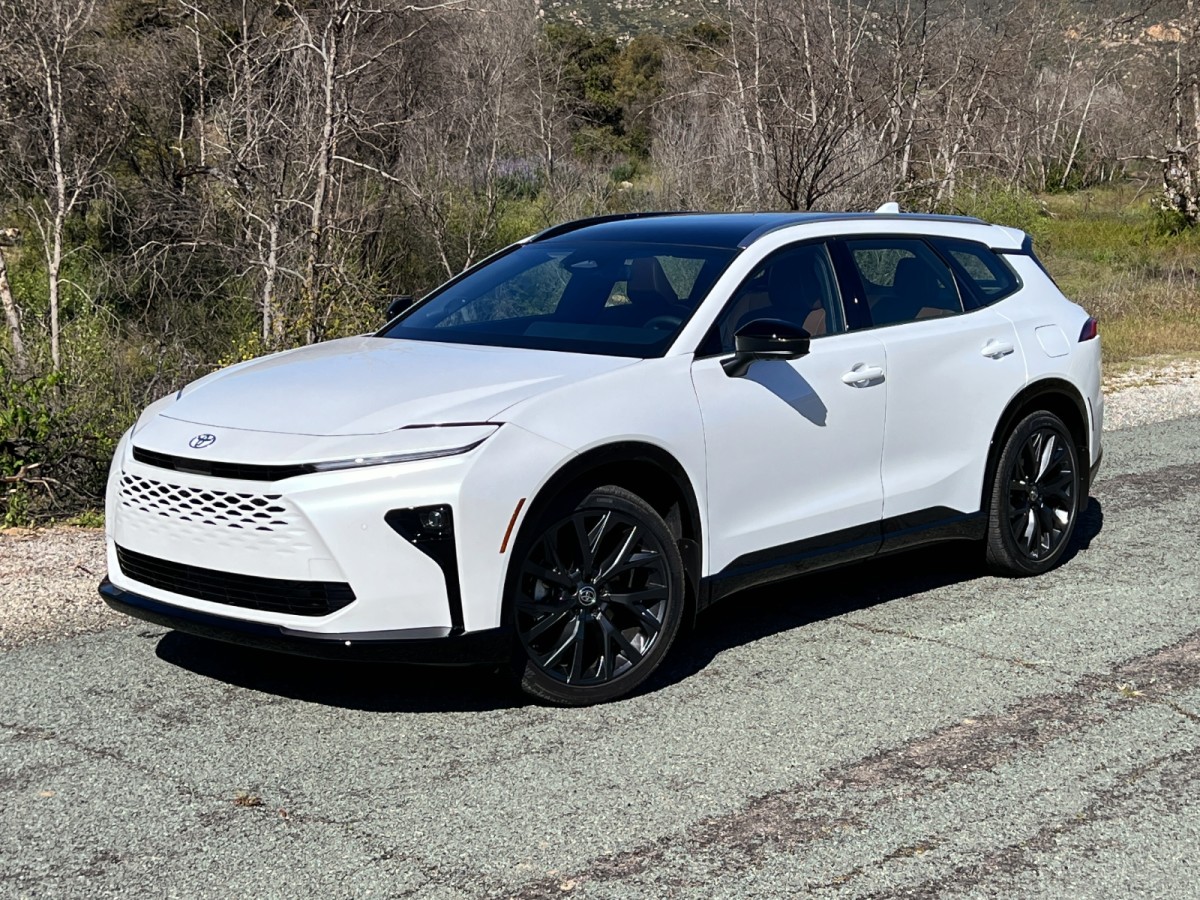
9. Toyota Crown Signia
CarGurus expert rating: 8 out of 10
CarGurus user rating: N/A out of 5
Percentage of Good and Great Deals available on CarGurus: 31.7%
Overall CarGurus rating: 3.8 out of 5
| Pros |
Cons |
| Stylish design |
Powertrain drones when accelerating |
| Fuel-efficient |
Lacks privacy glass, rear-window shades |
| Comfortable |
Unimpressive stereo systems |
Toyota's Crown Signia is a "what-is-it?" Toyota SUV in the best way: it mixes wagon-like proportions with SUV ride height (6.7 inches of ground clearance) and leans hard into comfort and style over off-road ambition. Every version comes standard with a hybrid powertrain and all-wheel drive (AWD), blending a 2.5-liter four-cylinder with electric motor/generators for 240 hp and an EPA-estimated 38 mpg combined. It's quiet and composed on the road with secure handling and impressively natural-feeling regenerative braking, though the continuously variable transmission (CVT) can bring some engine drone when you ask for quick acceleration.
For everyday family use, the cabin feels more premium than you might expect from a Toyota badge, with dual 12.3-inch displays, quilted leather, and a clean, upscale design—especially in two-tone interior trims. The trade-off is a few practicality misses for an SUV audience, most notably the lack of privacy glass and rear-window shades, which can make the back seat less comfortable in direct sun. Cargo space is solid for the segment, with 25.8 cubic feet behind the rear seats (or 24.8 cubic feet with the Limited trim's panoramic sunroof) and up to 68.8 cubic feet with the rear seats folded (66.1 in Limited). Safety tech is a strong point thanks to Toyota Safety Sense 3.0, while available features like Traffic Jam Assist add capability but can require an active subscription to keep working.
The CarGurus Verdict: "Stylish, comfortable, and equipped with a standard hybrid powertrain and all-wheel drive, the five-passenger Crown Signia is one of the most appealing Toyota SUVs money can buy." -Christian Wardlaw
Read our most recent Toyota Crown Signia review
Search for Toyota Crown Signia
See all

10. Toyota bZ Woodland
CarGurus expert rating: 7.2 out of 10
CarGurus user rating: N/A out of 5
Percentage of Good and Great Deals available on CarGurus: 0.0%
Overall CarGurus rating: 3.6 out of 5
| Pros |
Cons |
| Great ride quality |
Polarizing design |
| Standard all-wheel drive |
EV range is less than 300 miles |
| Easy-to-use technology |
Tall drivers may have visibility issues |
For shoppers who want a Toyota SUV with an outdoorsy vibe but the quiet, smooth feel of an EV, the bZ Woodland adds the right kind of practical upgrades over the standard bZ. It's about 6 inches longer, rides higher with 8.4 inches of ground clearance, and comes standard with AWD plus Subaru-derived X-Mode with Grip Control for low-speed traction in slippery conditions. Power comes from dual motors making 375 hp and 198 lb-ft of torque, and Toyota estimates a 0–60 mph time of 4.4 seconds, so it's quick for commuting and confident for passing.
The tradeoff for the extra capability and space is range: expect up to 281 miles on standard all-season tires, or about 260 miles if you choose all-terrain tires. On the usability front, the Woodland leans into SUV practicality with standard roof rails, a power liftgate, and a big 74.9 cubic feet of max cargo space, along with easy-clean all-weather mats that suit muddy gear. It's also loaded with everyday tech (a 14-inch infotainment screen, wireless Apple CarPlay/Android Auto, dual wireless phone charging, and multiple USB-C ports) and an extensive list of standard driver-assist features, though taller drivers should pay attention to the small gauge cluster placement during a test drive.
The CarGurus Verdict: "The 2026 Toyota bZ Woodland comes in a well-equipped base model as well as an up-level Premium trim. It is ideal for someone who has an active lifestyle and needs to get to a trailhead or campsite with all their gear in the back. However, it also makes a nice commuter car with a quiet cabin, smooth ride, and plenty of tech. " -Jill Ciminillo
Read our most recent Toyota bZ Woodland review
Search for Toyota bZ Woodland
See all
The Best Toyota SUVs FAQs
Which Toyota SUV is best for families?
For families needing a truly spacious third row, the Toyota Grand Highlander is the top choice. It's significantly roomier than the standard Highlander, making it suitable for carpools and road trips with older children or adults in the back. If you don't need quite as much space, the redesigned 2026 Toyota RAV4 is an excellent and efficient five-seater, while the Highlander Hybrid offers three rows with a focus on fuel economy, though its third row is best for occasional use.
What is the most fuel-efficient Toyota SUV?
Toyota offers several highly efficient SUVs, primarily through its hybrid technology. The 2026 RAV4 Plug-In Hybrid leads the pack, offering up to 52 miles of all-electric range for gas-free commuting. The standard 2026 RAV4 Hybrid is also a standout, with an expected combined rating of up to 44 mpg. For those seeking a more premium and stylish option, the 2025 Toyota Crown Signia comes standard as a hybrid with an impressive 38 mpg combined.
Are there any fully electric Toyota SUVs?
Yes, Toyota is expanding its electric vehicle (EV) lineup. The 2026 Toyota C-HR has been reintroduced as a sporty, fully electric compact crossover with standard all-wheel drive. For those needing more utility and an outdoorsy feel, the 2026 Toyota bZ Woodland offers more space, a higher ride height, and up to 281 miles of range.
Which Toyota SUVs are best for off-roading?
For serious off-road enthusiasts, the 2025 Toyota 4Runner and 2025 Toyota Land Cruiser are the premier choices. Both are built on rugged, truck-based platforms and feature advanced 4WD systems, locking differentials, and other hardware designed for tackling tough trails. The 4Runner offers a newly refined on-road ride without sacrificing its adventure-first personality, while the Land Cruiser is purpose-built for overland travel.
What Makes CarGurus Best Cars Guides Different?
Most car-shopping websites publish lists of the best cars across a variety of categories, with recommendations generally driven by editorial expertise. Here's what makes ours different: In addition to the insights and verdicts of our team of car-testing experts, our best cars guides take into account other factors that we know matter to buyers-real owner experiences and current market value.
Our expert reviewers are among this country's most trusted automotive journalists, also writing for publications including US News and World Report, Edmunds, Digital Trends, J.D. Power, and Car & Driver. They put each car through real-world testing and create detailed reviews of performance in a range of categories, from practicality and driving manners to cost-effectiveness and safety.
We also analyze hundreds of thousands of used car listings on CarGurus.com to track which models consistently offer the highest percentage of best deals relative to how many are listed for sale. Then we factor in reviews from owners-people who actually live with these cars every day. Our proprietary Best Cars algorithm then creates a final Overall CarGurus rating combining expert scores, user reviews, and the percentage of listings that have earned the Good or Great Deal rating. This multi-pronged approach reveals not just which cars excel on paper, but which ones deliver satisfaction and value when you're ready to buy.
The CarGurus market data used in this guide was last updated in June 2026. Values were accurate at time of publication and should be used as a guide only.
Shopping Tools
Related Topics