Subaru Ascent vs Genesis GV70
Overview | |
MSRP$34,395 | MSRP$45,150 |
Listings326 | Listings107 |
Ratings & Reviews | |
User Reviews | User Reviews |
Expert reviews6.8 out of 10 | Expert reviews8.3 out of 10 |
Pros
Cons
| Pros
Cons
|
Reviews SummaryThe Subaru faithful wanted a replacement for the discontinued three-row Tribeca midsize SUV, and the Ascent answered the call when it went on sale in 2019. In 2023, for its fifth model year, the Ascent got a light refresh with revised styling, updated technology, and a new trim level with plenty of equipment and a trendy blacked-out look. Now, the 2024 Subaru Ascent continues with almost no changes, while several competitors in the segment receive significant updates. Verdict: Can the 2024 Subaru Ascent fend off refreshed rivals in the midsize three-row SUV segment? The Ascent has plenty going for it, from standard all-wheel drive and substantial ground clearance to affordable prices and impressive safety ratings. But it comes across as a little quirky among mainstream choices, which could work in or against its favor. | |
Reviews SummaryVerdict: The GV70 offers style, impressive tech, and a well-executed electric variant. Launched as a 2022 model and thus still very fresh, the Genesis GV70 is the Korean luxury brand’s answer to the BMW X3, Mercedes-Benz GLC-Class, Lexus NX, Volvo XC60, and other small luxury crossover SUVs. The GV70 checks most of the boxes needed to compete in this segment while offering something the competition doesn’t: an all-electric powertrain option. | |
No video found | |
Popular Features & Specs | |
Engine2.4L 260 hp H4 | Engine2.5L 300 hp I4 |
Drive TrainAWD | Drive TrainAWD |
Seating Capacity8 | Seating Capacity5 |
Horsepower260 hp @ 5600 rpm | Horsepower |
MPG City20 | MPG City22 |
MPG Highway26 | MPG Highway28 |
Engine | |
Engine Name2.4L 260 hp H4 | Engine Name2.5L 300 hp I4 |
Torque277 lb-ft @ 2000 rpm | Torque |
Horsepower260 hp @ 5600 rpm | Horsepower |
DrivetrainAWD | DrivetrainAWD |
Fuel Economy | |
MPG City20 | MPG City22 |
MPG Highway26 | MPG Highway28 |
Interior | |
Seating Capacity8 | Seating Capacity5 |
Key Features | |
Navigation System | Navigation SystemStandard |
Safety | |
Front Crash Overall5 | Front Crash Overall4 |
Side Crash Overall5 | Side Crash Overall5 |
Dimensions & Capacity | |
Cargo Space17.8 cu ft | Cargo Space28.9 cu ft |
Curb Weight4421 lbs | Curb Weight4167 lbs |
Height71.6 in | Height64.2 in |
Length196.8 in | Length185.6 in |
Width85.7 in | Width75.2 in |
Wheelbase113.8 in | Wheelbase113.2 in |
Maximum Payload1579 lbs | Maximum Payload1334 lbs |
Number of doors4 | Number of doors4 |
Maximum Towing Capacity5000 lbs | Maximum Towing Capacity3500 lbs |
Overview | ||
MSRP | $34,395 | $45,150 |
Listings | ||
Ratings & Reviews | ||
User reviews | ||
Expert reviews | 6.8 out of 10Read full review | 8.3 out of 10Read full review |
Pros & cons | Pros
Cons
| Pros
Cons
|
Summary | The Subaru faithful wanted a replacement for the discontinued three-row Tribeca midsize SUV, and the Ascent answered the call when it went on sale in 2019. In 2023, for its fifth model year, the Ascent got a light refresh with revised styling, updated technology, and a new trim level with plenty of equipment and a trendy blacked-out look. Now, the 2024 Subaru Ascent continues with almost no changes, while several competitors in the segment receive significant updates. Verdict: Can the 2024 Subaru Ascent fend off refreshed rivals in the midsize three-row SUV segment? The Ascent has plenty going for it, from standard all-wheel drive and substantial ground clearance to affordable prices and impressive safety ratings. But it comes across as a little quirky among mainstream choices, which could work in or against its favor. | Verdict: The GV70 offers style, impressive tech, and a well-executed electric variant. Launched as a 2022 model and thus still very fresh, the Genesis GV70 is the Korean luxury brand’s answer to the BMW X3, Mercedes-Benz GLC-Class, Lexus NX, Volvo XC60, and other small luxury crossover SUVs. The GV70 checks most of the boxes needed to compete in this segment while offering something the competition doesn’t: an all-electric powertrain option. |
Video | No video found | |
Popular Features & Specs | ||
Engine | 2.4L 260 hp H4 | 2.5L 300 hp I4 |
Drive Train | AWD | AWD |
Seating Capacity | 8 | 5 |
Horsepower | 260 hp @ 5600 rpm | |
MPG City | 20 | 22 |
MPG Highway | 26 | 28 |
Engine | ||
Engine Name | 2.4L 260 hp H4 | 2.5L 300 hp I4 |
Torque | 277 lb-ft @ 2000 rpm | |
Horsepower | 260 hp @ 5600 rpm | |
Drivetrain | AWD | AWD |
Fuel Economy | ||
MPG City | 20 | 22 |
MPG Highway | 26 | 28 |
Interior | ||
Seating Capacity | 8 | 5 |
Key Features | ||
Navigation System | Standard | |
Safety | ||
Front Crash Overall | 5 | 4 |
Side Crash Overall | 5 | 5 |
Dimensions & Capacity | ||
Cargo Space | 17.8 cu ft | 28.9 cu ft |
Curb Weight | 4421 lbs | 4167 lbs |
Height | 71.6 in | 64.2 in |
Length | 196.8 in | 185.6 in |
Width | 85.7 in | 75.2 in |
Wheelbase | 113.8 in | 113.2 in |
Maximum Payload | 1579 lbs | 1334 lbs |
Number of doors | 4 | 4 |
Maximum Towing Capacity | 5000 lbs | 3500 lbs |
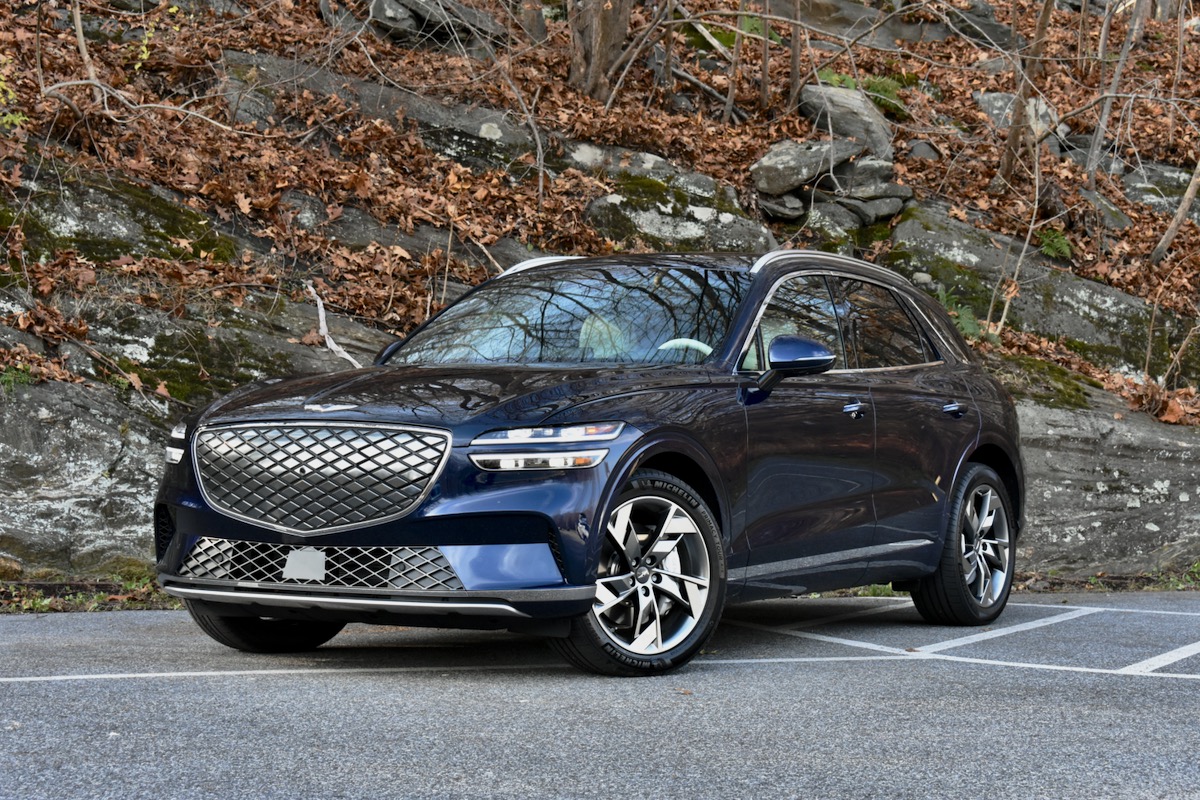
The 2024 Genesis GV70 was a standout within the Genesis lineup and its competitive set. Recognizable Genesis styling features like the split headlights and large shield-like grille were carried over, ensuring brand consistency. However, the GV70 was sleeker than its larger sibling, the GV80, and avoided the excessive quirkiness of the smaller GV60. It boasted unique details such as an almost hatchback-like rear window profile, large round exhaust outlets on the gasoline-powered Sport Prestige trim, and distinctive designs for its available 21-inch wheels, with 19-inch wheels being standard.
The GV70 hit the sweet spot between SUV size and luxury-car style. While competitors like the Audi Q5 and BMW X3 looked rugged but lacked finesse, and the Porsche Macan struggled to stretch its car-like styling over SUV proportions, the GV70 managed to convincingly blend an SUV presence with luxury aesthetics. The Mercedes-Benz GLC-Class relied heavily on its three-pointed star for prestige, but the GV70's styling communicated luxury effortlessly.
For those opting for the Electrified GV70, the vehicle retained most of the gasoline model’s styling, with the addition of a shiny grille housing the charge port, which offered convenience at charging stations. The electric version was almost indistinguishable from its gasoline counterparts, making it an appealing choice for EV shoppers who preferred a low-key aesthetic.
Inside, the GV70 was distinctively upscale, offering traditional luxury touches like quilted Nappa leather upholstery and a panoramic sunroof. It stood out with unique design elements, such as an elliptical pod housing the climate controls, a rotary controller for the infotainment system with a futuristic design, and a dashboard with an airplane wing-like cross-section. These creative touches were subjective but added a memorable flair to the interior.
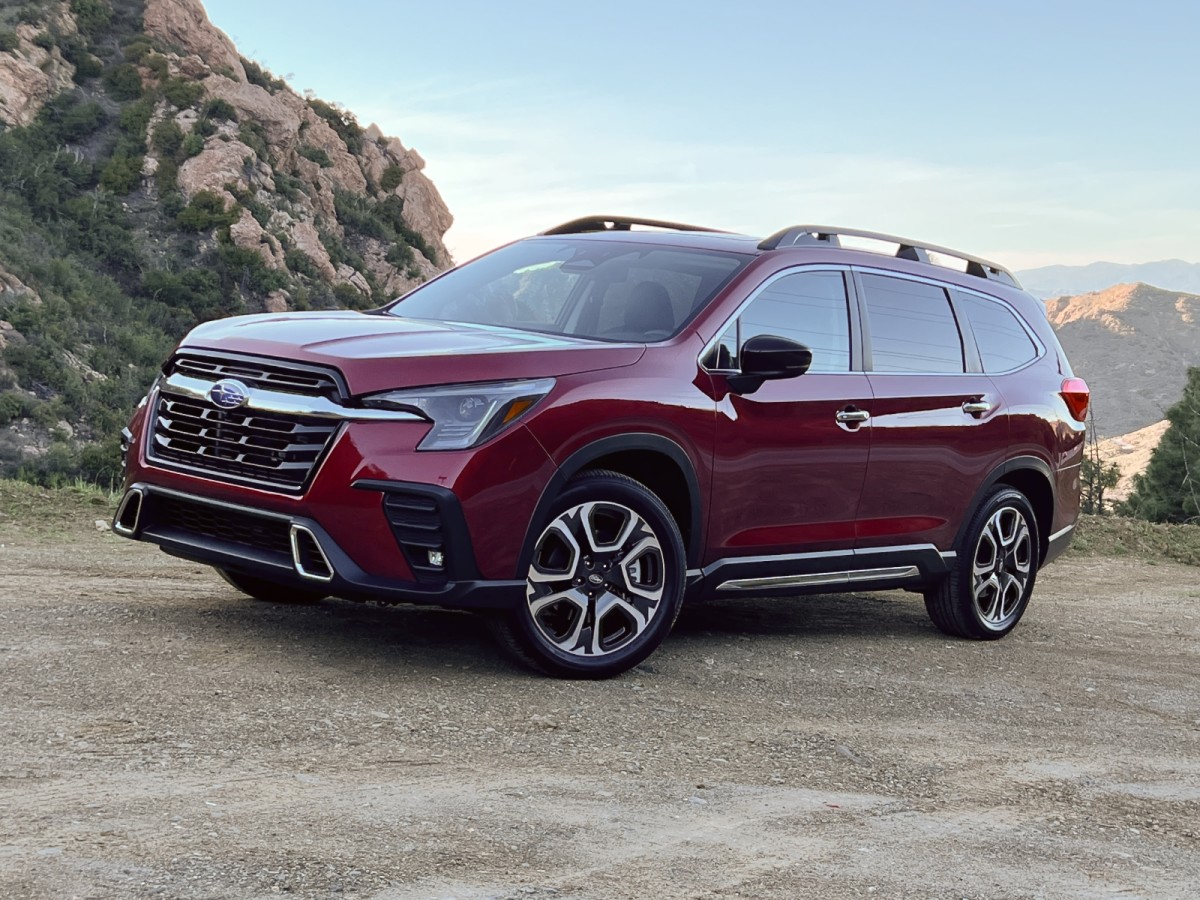
In contrast, Subaru struggled with styling for the 2024 Ascent. After a refresh, the updated Ascent featured awkward design elements, including visually offensive tusks and a bold spear running across the grille into the headlights. The lineup continued unchanged from the previous year, with a trim level range from Base to Touring, with prices from $34,395 to $48,695, excluding the $1,345 destination charge. Our test model, a Touring trim, came with an MSRP of $50,181, including the destination fee.
Choosing the Ascent Touring trim over the Limited trim added features such as a panoramic sunroof, premium Nappa leather upholstery, ventilated front seats, a navigation system, a 14-speaker Harman Kardon premium sound system, a camera-based rearview mirror, and a surround-view camera system. However, despite the materials looking good, the interior design felt modular and somewhat unsophisticated—more practical than luxurious.


The 2024 Genesis GV70 maintained its powertrain options from the previous year. Standard gasoline models came with a 2.0-liter turbocharged four-cylinder engine producing 300 horsepower and 311 pound-feet of torque on premium fuel. An optional 3.5-liter twin-turbo V6 offered 375 hp and 391 lb-ft. Both engines were paired with an eight-speed automatic transmission and standard all-wheel drive (AWD).
The Electrified GV70 featured standard AWD as well, powered by front and rear electric motors delivering a combined output of 429 hp and 516 lb-ft of torque, fed by a 77.4-kilowatt-hour battery pack. A “Boost Mode” temporarily increased output to 483 hp for 10 seconds.
While the GV70 offered impressive straight-line acceleration, particularly in Boost Mode or Sports+ Mode for the twin-turbo V6 models, its chassis tuning didn’t match its power. The GV70 felt bigger, heavier, and less agile through corners compared to its sportier rivals like the Acura RDX, BMW X3, or Porsche Macan.
In terms of ride comfort, the GV70 was reasonably comfortable but had a tendency to crash over bumps rather than smoothing out the imperfections. This quality was consistent across both gasoline and electrified models.
The Electrified GV70’s steering-wheel paddles allowed drivers to adjust regenerative braking, enabling a seamless switch between minimal and maximum regenerative braking. Despite its additional weight, the Electrified GV70 did not feel more cumbersome than its gasoline counterpart and offered an EPA-estimated range of 236 miles.
The 2024 Subaru Ascent featured a turbocharged 2.4-liter four-cylinder engine producing 260 horsepower at 5,600 rpm and 277 pound-feet of torque between 2,000 and 4,800 rpm. It used a continuously variable automatic transmission (CVT) paired with standard all-wheel-drive (AWD) and active torque vectoring. Subaru advertised a towing capacity of up to 5,000 pounds (or 2,000 pounds in the Base trim).
The Ascent excelled in varied driving conditions, whether on city streets, suburban roads, gravel paths, remote dirt trails, or highways. It managed neighborhood speed humps and rutted off-road terrain with ease, tackled washboard gravel roads like a rally car, and handled school drop-offs and market parking lots competently.
Although it delivered good power and the CVT mimicked a traditional automatic transmission effectively, the Ascent faltered on twisty mountain roads. Its heavy curb weight, soft suspension, and all-season tires revealed limitations that prevented it from mirroring a WRX or an Impreza’s performance.
Fuel efficiency was another drawback, particularly with 20-inch wheels, resulting in EPA ratings of 19 mpg city, 25 mpg highway, and 21 mpg combined. Actual test drives resulted in 16.7 mpg city and 18.6 mpg overall, though its 19.3-gallon fuel tank allowed for a range of about 325 miles.
For the 2024 Genesis GV70, interior space was competitive, though it offered slightly less headroom than the Audi Q5, BMW X3, and Mercedes-Benz GLC-Class. The legroom was marginally more or less than its competitors, but differences were minor. For example, with rear seats up, the GV70 provided 28.9 cubic feet of cargo space—more than the Mercedes’ 21.9 cubic feet but slightly less than the BMW’s 28.7 and the Audi’s 29.5 cubic feet. With the rear seats folded, the GV70 offered 56.9 cubic feet—less than all three German rivals.
The Electrified GV70 had minimal interior space reductions, losing only 0.6 inches of second-row legroom and an inch of headroom in both rows. Cargo space was almost unaffected, maintaining usability despite the added battery pack.
The Genesis’ stylish interior design featured a sophisticated infotainment setup, though it compromised small-item storage. Innovations like automatic side bolsters for front seats in Sport mode showed Genesis' commitment to blending comfort and performance at a reasonable price point.
Conversely, the 2024 Subaru Ascent was focused on function over form. From dashboard shelving and large rear door cupholders to backpack pegs and cargo hooks, the design emphasized practicality. Touring trim elevated the experience with premium Nappa leather seats, wide-opening rear doors for easy loading, and high roof rails capable of supporting a rooftop tent.
The Ascent’s seating configuration was practical but felt somewhat cramped in comparison to rivals. The third-row seat was acceptable for short trips but offered limited access space. Behind the third row, the Ascent provided up to 17.8 cubic feet of cargo space, expanding to 43.5 cubic feet with the third row folded, and a maximum of 75.6 cubic feet with both the second and third rows down.
The 2024 Genesis GV70 leveraged the Hyundai parts bin for its infotainment system, maintaining a balance between simplicity and functionality. Standard across all models was a 14.5-inch touchscreen with wired Apple CarPlay and Android Auto. Higher trims featured a 12.3-inch digital instrument cluster and an available 12-inch head-up display. An optional 16-speaker Lexicon audio system complemented the high-end tech features.
The infotainment system was user-friendly, with intuitive large tiles and a rotary controller that had a premium feel. Genesis included a fingerprint scanner for driver profiles and digital key functionality, enabling the driver to use a smartphone in place of a key fob.
The 2024 Subaru Ascent employed its updated Starlink infotainment system, featuring an 11.6-inch portrait-oriented touchscreen. It included wireless Apple CarPlay, Android Auto, Bluetooth, SiriusXM, text messaging, and other connected services across different trims. Higher trims added features like a navigation system, a Harman Kardon sound system, and a Wi-Fi hotspot.
Despite its comprehensive tech package, the Ascent’s display struggled in direct sunlight and had a subpar voice-recognition system, making alternatives like Apple CarPlay or Android Auto preferable. Physical buttons and knobs offered easy access to frequently used functions, and the Cabin Connect feature allowed for clear communication within the car. Top trims provided a surround-view camera and a camera-based rearview mirror.
The gasoline-powered 2024 Genesis GV70 earned the IIHS’s Top Safety Pick+ award while the Electrified variant received the same accolade for the 2023 model. NHTSA published four-star frontal and rollover crash-test ratings, with the overall safety rating for the 2023 model at five stars.
Standard safety features included lane-keep assist, forward-collision warning, automatic emergency braking, rear cross-traffic alert, driver-attention monitoring, parking assist sensors, and Highway Driving Assist. Higher trims offered Highway Driving Assist 2 with automated lane-change capability and advanced blind-spot monitoring.
The Ascent’s safety credentials were robust, earning five-star NHTSA ratings in almost all categories and an IIHS Top Safety Pick+ recognition. Subaru’s standard EyeSight suite included forward-collision warning, automatic emergency braking, lane-keeping assist, lane-centering assist, adaptive cruise control, and evasive steering assist. Higher trims added blind-spot monitoring, rear cross-traffic alert, and a Driver Focus system with facial recognition.
Despite its reputation for advanced driver assistance systems, we found EyeSight’s latest iteration lacking. Issues with lane-centering assist and resistance to driver inputs caused instability, particularly on winding roads, detracting from an otherwise strong safety offering.
CarGurus highlights
According to CarGurus experts, the overall rating for the 2024 Genesis GV70 is 8.3 out of 10, while the 2024 Subaru Ascent scores 6.8 out of 10. While the Subaru Ascent offers practicality and safety features that cater to family needs, the Genesis GV70 stands out with its well-rounded performance, luxury appeal, and innovative technology. Taking these ratings into account, the Genesis GV70 is the recommended choice for consumers seeking a premium SUV that blends style, power, and sophistication.
Choose the 2024 Genesis GV70 if:
- You value a luxurious design with innovative interior touches and are willing to trade some practicality for style.
- You want a well-rounded luxury SUV with a choice of powerful engines, including a top-performing electric variant.
- Safety is a priority, and you appreciate advanced driver assistance features standard across all trims.





Choose the 2024 Subaru Ascent if:
- You prioritize practical features and a family-friendly design that makes daily activities easier.
- You need a robust vehicle that performs well in varied driving conditions, from city streets to off-road trails.
- Safety and reliability are central to your decision, and you prefer a vehicle with a strong reputation for crash safety.


CarGurus highlights
According to CarGurus experts, the overall rating for the 2024 Genesis GV70 is 8.3 out of 10, while the 2024 Subaru Ascent scores 6.8 out of 10. While the Subaru Ascent offers practicality and safety features that cater to family needs, the Genesis GV70 stands out with its well-rounded performance, luxury appeal, and innovative technology. Taking these ratings into account, the Genesis GV70 is the recommended choice for consumers seeking a premium SUV that blends style, power, and sophistication.
Choose the 2024 Genesis GV70 if:
Shop Now- You value a luxurious design with innovative interior touches and are willing to trade some practicality for style.
- You want a well-rounded luxury SUV with a choice of powerful engines, including a top-performing electric variant.
- Safety is a priority, and you appreciate advanced driver assistance features standard across all trims.
Choose the 2024 Subaru Ascent if:
Shop Now- You prioritize practical features and a family-friendly design that makes daily activities easier.
- You need a robust vehicle that performs well in varied driving conditions, from city streets to off-road trails.
- Safety and reliability are central to your decision, and you prefer a vehicle with a strong reputation for crash safety.

By: CarGurus + AI
At CarGurus, our team of experienced automotive writers remain at the heart of our content operation, conducting hands-on car tests and writing insightful guides that are backed by years of industry experience. To complement this, we are harnessing AI to make our content offering more diverse and more helpful to shoppers than ever. To achieve this, our AI systems are based exclusively on CarGurus content, ratings and data, so that what we produce is both unique to CarGurus, and uniquely helpful to car shoppers.

