Lincoln Aviator vs Chevrolet Bolt
Overview | |
MSRP$56,910 | MSRP$27,600 |
Listings8991 | Listings4330 |
Ratings & Reviews | |
User Reviews | User Reviews |
Expert reviews7.7 out of 10 | Expert reviews6.3 out of 10 |
Pros
Cons
| Pros
Cons
|
Reviews SummaryThe Ford Explorer appeals for its ability to haul the family while also towing a trailer. Its rear-wheel-drive (RWD) platform gives it a sporty character for a three-row SUV, and the top models are powerful. A gilded version of the Explorer, the Lincoln Aviator keeps the Ford’s more potent optional engine, while introducing far more interior quality and luxury. However, like other Lincolns, it sacrifices sportiness for a comfortable ride. Verdict: The Ford Explorer’s towing capability and interior space are appealing, but for buyers who want a more comfortable and relaxing cabin, as well as more tech and style, the Lincoln Aviator is the step-up choice. Buyers who opt for the Dynamic Handling package can recapture some of the Ford’s body control, too. | |
Reviews SummaryWith more range, more power, and improved technology, the Chevrolet Bolt EV returns after a three-year hiatus. It also claims the title of the most affordable EV in the U.S., but is due to remain in production only until mid-2027. Verdict: The 2027 Chevrolet Bolt EV is an excellent choice for shoppers seeking an electric vehicle that won't break the bank. It may not be all that fancy or refined, but it gets the basics right when it comes to range and capabilities. | |
No video found | No video found |
Popular Features & Specs | |
Engine3.0L 400 hp V6 | Engine |
DrivetrainRWD | Drivetrain |
Seating Capacity6 | Seating Capacity5 |
EV Battery Capacity | EV Battery Capacity65 kWh |
MPG City18 | MPG City |
MPG Highway25 | MPG Highway |
Battery Charge Time (120V) | Battery Charge Time (120V)64 hours |
Battery Charge Time (240V) | Battery Charge Time (240V)9.8 hours |
Engine | |
Engine Name3.0L 400 hp V6 | Engine Name210 hp Electric |
Battery Charge Time (120V) | Battery Charge Time (120V)64 hours |
Battery Charge Time (240V) | Battery Charge Time (240V)9.8 hours |
DrivetrainRWD | DrivetrainFWD |
Fuel Economy | |
EV Battery Capacity | EV Battery Capacity65 kWh |
MPG City18 | MPG City |
MPG Highway25 | MPG Highway |
Interior | |
Seating Capacity6 | Seating Capacity5 |
Key Features | |
Navigation SystemStandard | Navigation SystemStandard |
Sunroof/MoonroofStandard | Sunroof/Moonroof |
Safety | |
Front Crash Overall5 | Front Crash Overall |
Side Crash Overall5 | Side Crash Overall |
Dimensions & Capacity | |
Cargo Space16.5 cu ft | Cargo Space16.2 cu ft |
Curb Weight4745 lbs | Curb Weight3776 lbs |
Height69.2 in | Height63.9 in |
Length199.7 in | Length169.6 in |
Width89.9 in | Width80.1 in |
Wheelbase119.1 in | Wheelbase105.3 in |
Maximum Payload1615 lbs | Maximum Payload873 lbs |
Number of doors4 | Number of doors4 |
Maximum Towing Capacity5000 lbs | Maximum Towing Capacity |
Overview | ||
MSRP | $56,910 | $27,600 |
Listings | ||
Ratings & Reviews | ||
User reviews | ||
Expert reviews | 7.7 out of 10Read full review | 6.3 out of 10Read full review |
Pros & cons | Pros
Cons
| Pros
Cons
|
Summary | The Ford Explorer appeals for its ability to haul the family while also towing a trailer. Its rear-wheel-drive (RWD) platform gives it a sporty character for a three-row SUV, and the top models are powerful. A gilded version of the Explorer, the Lincoln Aviator keeps the Ford’s more potent optional engine, while introducing far more interior quality and luxury. However, like other Lincolns, it sacrifices sportiness for a comfortable ride. Verdict: The Ford Explorer’s towing capability and interior space are appealing, but for buyers who want a more comfortable and relaxing cabin, as well as more tech and style, the Lincoln Aviator is the step-up choice. Buyers who opt for the Dynamic Handling package can recapture some of the Ford’s body control, too. | With more range, more power, and improved technology, the Chevrolet Bolt EV returns after a three-year hiatus. It also claims the title of the most affordable EV in the U.S., but is due to remain in production only until mid-2027. Verdict: The 2027 Chevrolet Bolt EV is an excellent choice for shoppers seeking an electric vehicle that won't break the bank. It may not be all that fancy or refined, but it gets the basics right when it comes to range and capabilities. |
Video | No video found | No video found |
Popular Features & Specs | ||
Engine | 3.0L 400 hp V6 | |
Drivetrain | RWD | |
Seating Capacity | 6 | 5 |
EV Battery Capacity | 65 kWh | |
MPG City | 18 | |
MPG Highway | 25 | |
Battery Charge Time (120V) | 64 hours | |
Battery Charge Time (240V) | 9.8 hours | |
Engine | ||
Engine Name | 3.0L 400 hp V6 | 210 hp Electric |
Battery Charge Time (120V) | 64 hours | |
Battery Charge Time (240V) | 9.8 hours | |
Drivetrain | RWD | FWD |
Fuel Economy | ||
EV Battery Capacity | 65 kWh | |
MPG City | 18 | |
MPG Highway | 25 | |
Interior | ||
Seating Capacity | 6 | 5 |
Key Features | ||
Navigation System | Standard | Standard |
Sunroof/Moonroof | Standard | |
Safety | ||
Front Crash Overall | 5 | |
Side Crash Overall | 5 | |
Dimensions & Capacity | ||
Cargo Space | 16.5 cu ft | 16.2 cu ft |
Curb Weight | 4745 lbs | 3776 lbs |
Height | 69.2 in | 63.9 in |
Length | 199.7 in | 169.6 in |
Width | 89.9 in | 80.1 in |
Wheelbase | 119.1 in | 105.3 in |
Maximum Payload | 1615 lbs | 873 lbs |
Number of doors | 4 | 4 |
Maximum Towing Capacity | 5000 lbs | |
The 2026 Lincoln Aviator was a luxurious take on the Ford Explorer, offering a premium feel with its rear-wheel-drive unibody platform. Its exterior design was elegant, featuring a long dash-to-axle ratio, a slightly raked profile, and large 20–22-inch wheels. The reverse-horseshoe grille, adorned with chrome jewelry in the shape of the Lincoln logo, was flanked by LED headlights. The Aviator badge added a touch of class, while the full-width LED taillight and roof spoiler completed the sophisticated look. Inside, the Aviator's interior was its main attraction, especially in the Black Label trim. The base Premiere trim offered synthetic leather upholstery, while the Reserve trim upgraded to leather in various colors. The Black Label trim featured curated designs with upgraded leather and unique themes like Flight, Moonbeam, and Invitation, each offering a distinct appeal with high-quality materials and finishes.
The 2027 Chevrolet Bolt retained a familiar look with slight styling changes, resembling a conventional gas-powered car more than an EV. The front end featured a thin slot behind the Chevy Bowtie logo, and the previous grille insert was integrated into the bumper. The Bolt straddled the line between a large hatchback and a subcompact SUV, offering a single body style for 2027. Its tall and narrow stance prioritized utility and interior space over a sporty appearance. The RS model added gloss black exterior trim for a touch of flair. Inside, the Bolt's cabin underwent a more dramatic makeover, featuring a larger digital instrument panel and infotainment touchscreen. The push-button gear selector was moved to the steering column, freeing up storage space. While the cabin was dominated by hard plastic surfaces, the RS trim upgraded to Evotex synthetic leather with red stitching, adding a sporty touch.

The 2026 Lincoln Aviator focused on passenger comfort, offering a smooth and powerful ride with its twin-turbocharged 3.0-liter V6 engine producing 383 horsepower and 415 pound-feet of torque. The power was delivered through a 10-speed automatic transmission to either the rear or all four wheels, with AWD standard on the Black Label trim. The Aviator could accelerate from 0 to 60 mph in under six seconds, providing ample power for passing. Its suspension system, featuring adaptive dampers, ensured a smooth ride, though it leaned towards a mushy feel with considerable body lean through corners. The optional Air Glide suspension added control and versatility, allowing for adjustments in ride height. The Aviator also came with a Class III trailer tow package, capable of towing up to 5,000 pounds.
The 2027 Chevrolet Bolt featured a new 65-kilowatt-hour lithium-iron phosphate battery pack, reducing costs and reliance on rare earth minerals. Its motor, borrowed from the Chevy Equinox EV, delivered 210 horsepower and 169 pound-feet of torque to the front wheels, achieving 0-60 mph in the low seven-second range. While not the fastest by EV standards, the Bolt offered quick acceleration compared to gas-powered subcompact SUVs. One-pedal driving was available, with adjustable brake regeneration levels. The ride was firm but not overly stiff, and the Bolt's low center of gravity contributed to its agility on curvy roads. The 2027 Bolt offered an EPA-estimated range of 262 miles on a full charge, with a Tesla-derived NACS charge port and increased charging speed, allowing for a quick recharge from 10% to 80% in 25 minutes.
The 2026 Lincoln Aviator offered a range of comfort features, including a 10-way power-adjustable driver's seat, heated and ventilated front seats, and tri-zone automatic climate control in the base Premiere trim. The Reserve trim added a power tilt/telescoping steering column and quad-zone climate control. The Black Label trim provided a 30-way power-adjustable driver's seat with massagers and heated and ventilated second-row seats. The Aviator could seat up to seven, with most versions featuring second-row captain's chairs. The third row was less comfortable for adults, suitable for short trips. Cargo space was generous, with 16.9 cubic feet behind the third row, expanding to 75.9 cubic feet with the second row folded down.
The 2027 Chevrolet Bolt offered an upright driving position with ample space for larger occupants. Taller drivers might have wished for more telescoping extension from the steering wheel. The rear seats provided plenty of headroom and thigh support, with a flat floor reducing the penalty for center-seat passengers. The Bolt offered 16.2 cubic feet of cargo space behind the rear seats, with a large bin underneath the floor for additional storage. The rear seatbacks folded flat with the cargo floor, providing more luggage space. While there was no frunk, the Bolt offered ample storage for personal items, including a large bin with movable dividers, a big floor tray, and a deep center armrest bin.
The 2026 Lincoln Aviator featured a 12.4-inch digital instrument cluster and a 13.2-inch infotainment touchscreen, along with a 5.8-inch second-row touchscreen. The Lincoln Digital Experience provided access to apps like Google Assistant and the Google Play store. Standard tech features included a 5G Wi-Fi hotspot, remote start, digital key functionality, and a 10-speaker audio system. The Reserve trim added a head-up display and a Revel 14-speaker audio system, while the Black Label trim offered a high-end Revel 28-speaker audio system.
The 2027 Chevrolet Bolt came with an 11-inch digital instrument panel and an 11.3-inch center touchscreen, running on a Google-based operating system. Apple CarPlay and standalone Android Auto were not supported, but some features were integrated into the infotainment system. The optional Technology package added a surround-view camera system, a digital rear-view mirror, and a wireless charging pad. The infotainment system was user-friendly, with logical menus and quick responses. The Bolt's navigation system could help drivers find charging stations and precondition the battery for optimal charging rates. The Bolt also offered vehicle-to-load charging, allowing it to serve as a backup power source for a home.
The 2026 Lincoln Aviator came standard with a comprehensive suite of safety features as part of the Lincoln Co-Pilot360 Drive 2.0 system. This included forward-collision warning, automatic emergency braking, lane-keep assist, adaptive cruise control, and a surround-view camera system. The Aviator earned high safety ratings, with five stars from the NHTSA and top scores from the IIHS, though it lacked a rating for its headlights.
The 2027 Chevrolet Bolt's crash test results were not yet available, but it was expected to achieve high scores based on its platform. Standard safety features included forward collision warning, adaptive cruise control, lane-keep assist, and blind-spot monitors. The optional Technology package added a surround-view camera system and traffic-sign recognition. GM's Super Cruise hands-free driving system was available for an additional cost, offering advanced highway driving capabilities.
CarGurus highlights
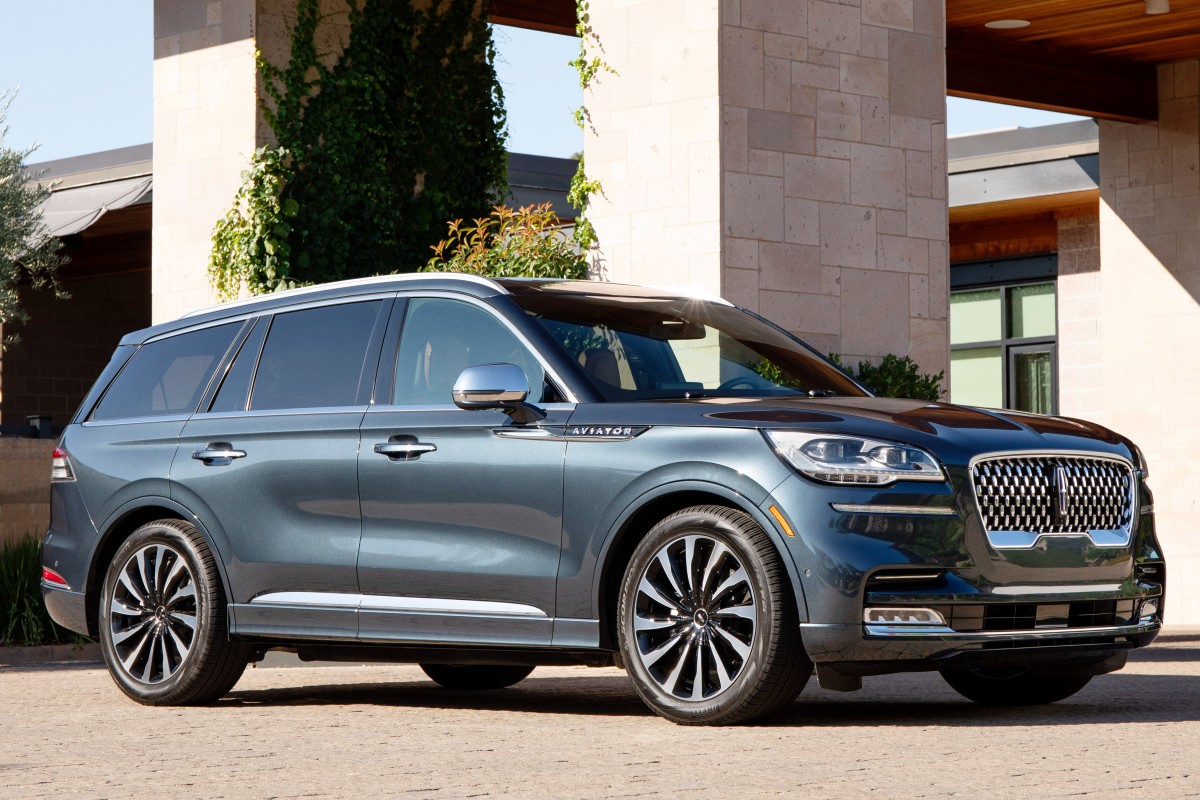
According to CarGurus experts, the overall rating for the 2026 Lincoln Aviator is 7.7 out of 10, while the 2027 Chevrolet Bolt scores 6.3 out of 10. Based on these ratings, the Lincoln Aviator is the recommended choice for those seeking a luxurious and comfortable ride with strong performance and safety features.
Choose the 2026 Lincoln Aviator if:
- You prioritize a luxurious and comfortable interior with high-quality materials and finishes.
- You need a vehicle with strong towing capabilities and versatile suspension options.
- You value a comprehensive suite of standard safety features and high safety ratings.


Choose the 2027 Chevrolet Bolt if:
- You are looking for an affordable EV with a good range and quick charging capabilities.
- You prefer a vehicle with a user-friendly infotainment system and advanced tech features.
- You want a compact vehicle with ample interior space and practical storage solutions.


CarGurus highlights
According to CarGurus experts, the overall rating for the 2026 Lincoln Aviator is 7.7 out of 10, while the 2027 Chevrolet Bolt scores 6.3 out of 10. Based on these ratings, the Lincoln Aviator is the recommended choice for those seeking a luxurious and comfortable ride with strong performance and safety features.
Choose the 2026 Lincoln Aviator if:
Shop Now- You prioritize a luxurious and comfortable interior with high-quality materials and finishes.
- You need a vehicle with strong towing capabilities and versatile suspension options.
- You value a comprehensive suite of standard safety features and high safety ratings.
Choose the 2027 Chevrolet Bolt if:
Shop Now- You are looking for an affordable EV with a good range and quick charging capabilities.
- You prefer a vehicle with a user-friendly infotainment system and advanced tech features.
- You want a compact vehicle with ample interior space and practical storage solutions.

By: CarGurus + AI
At CarGurus, our team of experienced automotive writers remain at the heart of our content operation, conducting hands-on car tests and writing insightful guides that are backed by years of industry experience. To complement this, we are harnessing AI to make our content offering more diverse and more helpful to shoppers than ever. To achieve this, our AI systems are based exclusively on CarGurus content, ratings and data, so that what we produce is both unique to CarGurus, and uniquely helpful to car shoppers.

