Land Rover Range Rover Velar vs Volkswagen Atlas Cross Sport
Overview | |
MSRP$61,500 | MSRP$36,985 |
Listings265 | Listings242 |
Ratings & Reviews | |
User Reviews | User Reviews |
Expert reviews6.3 out of 10 | Expert reviews7.0 out of 10 |
Pros
Cons
| Pros
Cons
|
Reviews SummaryA luxury SUV with seating for five people, the 2024 Velar is one of four SUVs to wear Range Rover lettering across the leading edge of its hood. It slots into the lineup between the smaller Evoque and more capable Sport. This model year, the Velar receives several updates. They include design and comfort enhancements and several improvements to the standard infotainment system. Verdict: The changes to the 2024 Range Rover Velar result in an appealing, if flawed, alternative to the best-sellers in the segment, such as the BMW X5 and Mercedes-Benz GLE-Class. If the Velar had more natural and less frustrating technology, it could raise its profile in the midsize luxury SUV segment considerably. | |
Reviews SummaryVolkswagen's efforts to grow its appeal in the United States have developed over a long process of trial and error, but VW showed it finally understood American tastes when it launched the Atlas three-row crossover SUV. And because not everyone needs three rows, VW followed up the standard Atlas with the two-row Cross Sport for the 2020 model year. Both versions get a significant refresh for 2024. The 2024 Volkswagen Atlas Cross Sport gets most of the same updates as its three-row sibling, including different styling, more standard features, and the discontinuation of its six-cylinder engine option in favor of a more powerful turbocharged four-cylinder engine. These changes are aimed at making the Cross Sport more competitive against other midsize crossovers like the Chevrolet Blazer and Honda Pilot, the aged Ford Edge and Nissan Murano, and the more truck-like Jeep Grand Cherokee. The 2024 Atlas Cross Sport lineup includes SE, SE with Technology, SEL, SEL R-Line, and SEL Premium R-Line trim levels. We drove the range-topping SEL Premium R-Line for this review. | |
No video found | No video found |
Popular Features & Specs | |
Engine2.0L 247 hp I4 | Engine2.0L 269 hp I4 |
Drive TrainAWD | Drive TrainFWD |
Seating Capacity5 | Seating Capacity5 |
Horsepower247 hp @ 5000 rpm | Horsepower |
MPG City22 | MPG City20 |
MPG Highway26 | MPG Highway27 |
Engine | |
Engine Name2.0L 247 hp I4 | Engine Name2.0L 269 hp I4 |
Torque269 lb-ft @ 1300 rpm | Torque |
Horsepower247 hp @ 5000 rpm | Horsepower |
DrivetrainAWD | DrivetrainFWD |
Fuel Economy | |
MPG City22 | MPG City20 |
MPG Highway26 | MPG Highway27 |
Interior | |
Leather SeatsStandard | Leather Seats |
Seating Capacity5 | Seating Capacity5 |
Key Features | |
Navigation SystemStandard | Navigation System |
Sunroof/MoonroofStandard | Sunroof/Moonroof |
Safety | |
Front Crash Overall | Front Crash Overall4 |
Side Crash Overall | Side Crash Overall5 |
Dimensions & Capacity | |
Cargo Space30.9 cu ft | Cargo Space40.3 cu ft |
Curb Weight4130 lbs | Curb Weight4173 lbs |
Height66.3 in | Height68.1 in |
Length188.9 in | Length195.6 in |
Width84.5 in | Width88.5 in |
Wheelbase113.0 in | Wheelbase117.3 in |
Maximum Payload1490 lbs | Maximum Payload1091 lbs |
Number of doors4 | Number of doors4 |
Maximum Towing Capacity5291 lbs | Maximum Towing Capacity2000 lbs |
Overview | ||
MSRP | $61,500 | $36,985 |
Listings | ||
Ratings & Reviews | ||
User reviews | ||
Expert reviews | 6.3 out of 10Read full review | 7.0 out of 10Read full review |
Pros & cons | Pros
Cons
| Pros
Cons
|
Summary | A luxury SUV with seating for five people, the 2024 Velar is one of four SUVs to wear Range Rover lettering across the leading edge of its hood. It slots into the lineup between the smaller Evoque and more capable Sport. This model year, the Velar receives several updates. They include design and comfort enhancements and several improvements to the standard infotainment system. Verdict: The changes to the 2024 Range Rover Velar result in an appealing, if flawed, alternative to the best-sellers in the segment, such as the BMW X5 and Mercedes-Benz GLE-Class. If the Velar had more natural and less frustrating technology, it could raise its profile in the midsize luxury SUV segment considerably. | Volkswagen's efforts to grow its appeal in the United States have developed over a long process of trial and error, but VW showed it finally understood American tastes when it launched the Atlas three-row crossover SUV. And because not everyone needs three rows, VW followed up the standard Atlas with the two-row Cross Sport for the 2020 model year. Both versions get a significant refresh for 2024. The 2024 Volkswagen Atlas Cross Sport gets most of the same updates as its three-row sibling, including different styling, more standard features, and the discontinuation of its six-cylinder engine option in favor of a more powerful turbocharged four-cylinder engine. These changes are aimed at making the Cross Sport more competitive against other midsize crossovers like the Chevrolet Blazer and Honda Pilot, the aged Ford Edge and Nissan Murano, and the more truck-like Jeep Grand Cherokee. The 2024 Atlas Cross Sport lineup includes SE, SE with Technology, SEL, SEL R-Line, and SEL Premium R-Line trim levels. We drove the range-topping SEL Premium R-Line for this review. |
Video | No video found | No video found |
Popular Features & Specs | ||
Engine | 2.0L 247 hp I4 | 2.0L 269 hp I4 |
Drive Train | AWD | FWD |
Seating Capacity | 5 | 5 |
Horsepower | 247 hp @ 5000 rpm | |
MPG City | 22 | 20 |
MPG Highway | 26 | 27 |
Engine | ||
Engine Name | 2.0L 247 hp I4 | 2.0L 269 hp I4 |
Torque | 269 lb-ft @ 1300 rpm | |
Horsepower | 247 hp @ 5000 rpm | |
Drivetrain | AWD | FWD |
Fuel Economy | ||
MPG City | 22 | 20 |
MPG Highway | 26 | 27 |
Interior | ||
Leather Seats | Standard | |
Seating Capacity | 5 | 5 |
Key Features | ||
Navigation System | Standard | |
Sunroof/Moonroof | Standard | |
Safety | ||
Front Crash Overall | 4 | |
Side Crash Overall | 5 | |
Dimensions & Capacity | ||
Cargo Space | 30.9 cu ft | 40.3 cu ft |
Curb Weight | 4130 lbs | 4173 lbs |
Height | 66.3 in | 68.1 in |
Length | 188.9 in | 195.6 in |
Width | 84.5 in | 88.5 in |
Wheelbase | 113.0 in | 117.3 in |
Maximum Payload | 1490 lbs | 1091 lbs |
Number of doors | 4 | 4 |
Maximum Towing Capacity | 5291 lbs | 2000 lbs |
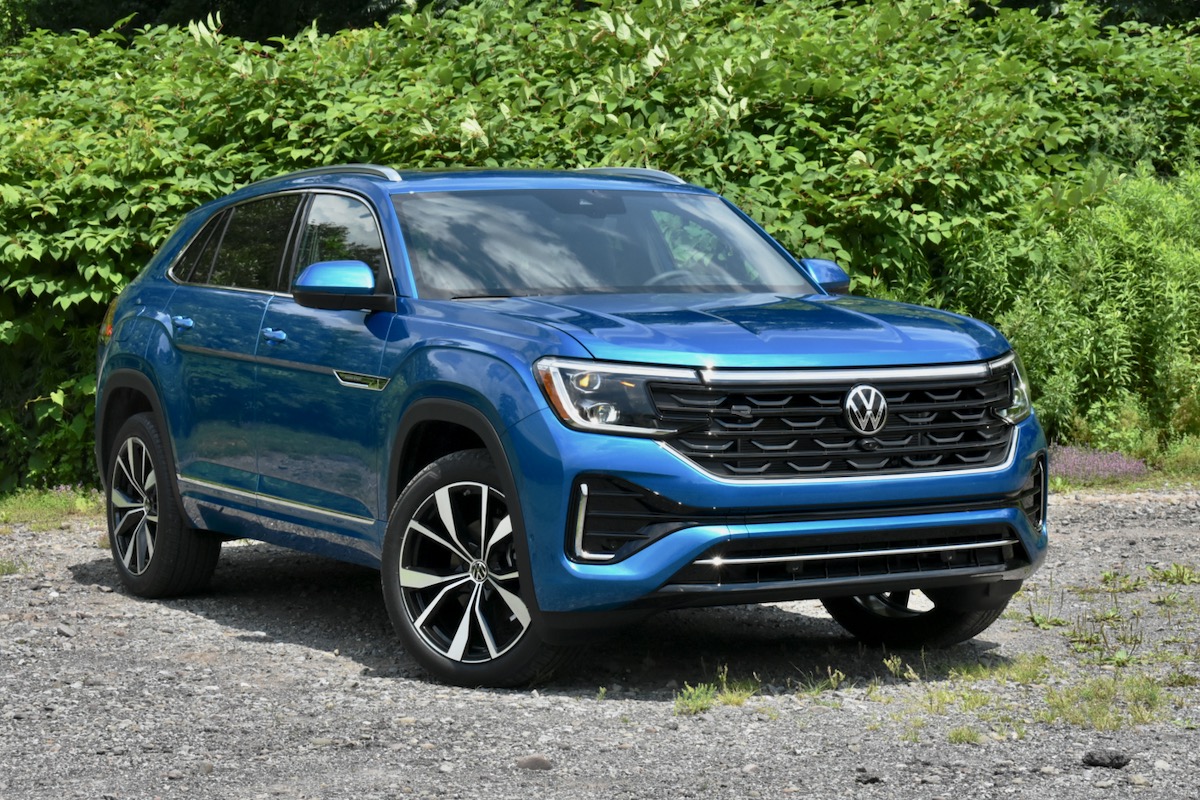
The 2024 Volkswagen Atlas Cross Sport got a fresh look with styling updates featuring new lighting elements at both the front and rear. The Volkswagen logos on the grille and tailgate now illuminate in white and red, respectively. This change, which first appeared on the all-electric Volkswagen ID.4, gave the Cross Sport a modern twist.
New elaborate lighting elements adorned the front and rear of the vehicle. A light bar connected the daytime running lights to the new standard LED headlights, creating a more Americanized look. Both the Atlas and Cross Sport were manufactured in Chattanooga, Tennessee, and were designed with the U.S. market in mind.
The rear end of the Cross Sport had a reshaped taillight setup blending into a rear light bar, which also included the light-up VW logo. This area was distinctive because, unlike the front end, which closely resembled the standard Atlas, the rear featured a lower roofline. This design choice aimed to give the Cross Sport a silhouette akin to the "crossover coupes" of German luxury brands, while being 5.2 inches shorter and sitting lower than the standard Atlas.
The 2024 Cross Sport models also came with new wheel designs. The base Atlas Cross Sport SE included 18-inch alloy wheels, while the SE with Technology and SEL models sported 20-inch wheels. The SEL R-Line had a unique 20-inch wheel design and additional sporty styling elements such as extended side skirts. The SEL Premium R-Line version had all these features plus 21-inch wheels. Unlike the Atlas, the Cross Sport did not get the rugged Peak Edition package for 2024.
Inside, the Cross Sport adopted the same interior revisions as the standard Atlas. The central touchscreen now stood up from the dashboard, and the center console was raised, creating space for a small storage nook beneath it. This was possible due to the new electronic shifter, which was compact and unobstructed by any mechanical connections to the transmission.
The interior trim used materials carried over from the three-row Atlas models, which included standard leatherette upholstery. Leather seats were available on SEL models and higher, while the top-tier SEL Premium R-Line trim featured quilted leather upholstery with a diamond pattern. However, despite the efforts to enhance the look, the trim still felt like different types of plastic.
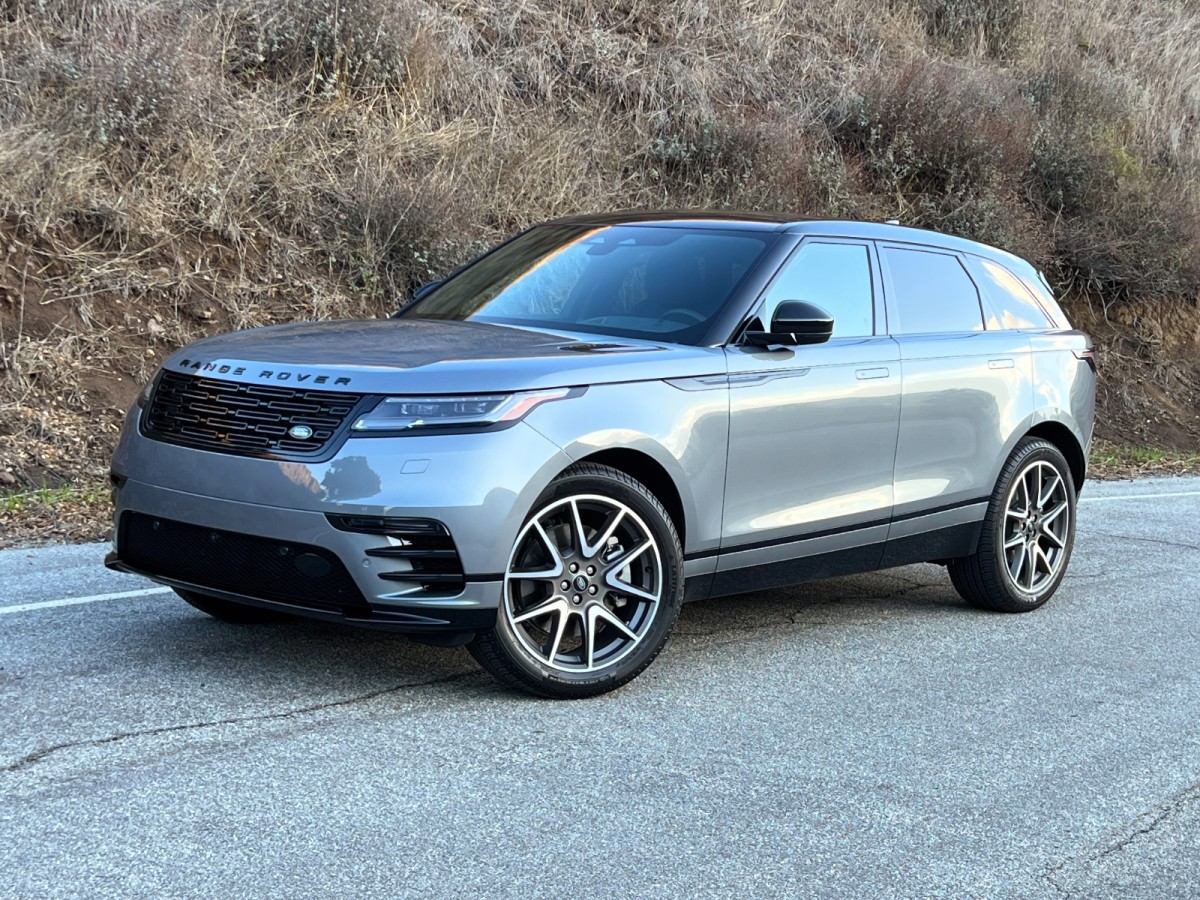
Conversely, the 2024 Land Rover Range Rover Velar embodied a "reductive" design philosophy aimed at simplifying and modernizing both exterior and interior looks. Introduced with this ethos in 2018, the Velar received further tweaks in 2024 to refine its design.
The updates included a new grille, revised headlights and taillights, fresh wheel choices, and updated exterior detailing. A new rear bumper emphasized the Velar’s width rather than its height, working with a full-length upper stop lamp to give the SUV a lower and wider appearance.
Inside, the Velar added a larger 11.4-inch touchscreen infotainment system, which appeared to float in front of the dashboard. The new center console eliminated previous physical controls for climate and multimedia functions, instead consolidating these into the touchscreen.
Despite some instances of substandard quality within the cabin, the 2024 Velar looked impressive overall. However, the elimination of physical controls for critical functions such as temperature and radio tuning was a significant misstep. Land Rover provided a new option for animal-free seat upholstery with a Kvadrat wool blend. The Cabin Air Purification Plus system with PM 2.5 filtration now included carbon dioxide monitoring.
Our test vehicle, a Dynamic SE trim, featured a turbocharged six-cylinder engine with mild-hybrid technology, along with various expensive paint and wheel upgrades, a Black Exterior Pack, and a Cold Climate Pack, rounding up to an MSRP of $80,533, including the destination charge.


For the 2024 Volkswagen Atlas Cross Sport, the sole powertrain option was a 2.0-liter turbocharged four-cylinder engine paired with an eight-speed automatic transmission. Buyers had the choice of standard front-wheel drive (FWD) or optional 4Motion all-wheel drive (AWD). This marked the end of an era for Volkswagen, as the Atlas models were previously available with a 3.6-liter VR6 engine.
Volkswagen claimed improved performance with the new turbo-four, which was rated at 269 horsepower and 273 pound-feet of torque using regular fuel. This new engine provided more torque despite slightly less horsepower compared to the VR6's 276 hp and 266 lb-ft. The peak torque was available at a lower 1,550 rpm compared to the VR6’s 3,600 rpm. While Volkswagen did not provide specific performance numbers, the automaker expected the 2024 Cross Sport to accelerate quicker from zero to 60 mph compared to its 2023 VR6 counterpart.
The VR6 had always been optional, with the previous standard engine being a less-powerful 2.0-liter turbo-four that made 235 hp and 258 lb-ft of torque. Thus, the new engine was an upgrade for many buyers. Despite the power, the new four-cylinder engine had a less pleasing engine note and a poor noise-to-power ratio, making its effort conspicuous.
The Cross Sport, despite its "Sport" moniker, was one of the least engaging vehicles to drive. It couldn’t be justified as a relaxed cruiser either because the ride quality was not particularly superior, potentially worsened by the test car's 21-inch wheels. The towing capacity remained at 5,000 pounds except for the base SE model, which was capped at 2,000 pounds. This was average for a midsize crossover, but those looking for better towing capacity could consider the two-row Jeep Grand Cherokee, which could tow up to 6,200 pounds.
In contrast, our test model of the 2024 Land Rover Range Rover Velar featured a turbocharged 3.0-liter inline six-cylinder engine with a 48-volt mild-hybrid system, producing 394 horsepower between 5,500 rpm and 6,500 rpm and 406 lb-ft of torque between 2,000 rpm and 5,000 rpm. Velar models with this engine were marked as P400, whereas those with a less powerful 247-horsepower, 2.0-liter turbo four-cylinder received a P250 label.
We recommended upgrading to the six-cylinder engine, as it offered better performance, achieving 0-60 mph nearly two seconds faster than the four-cylinder engine. In terms of fuel efficiency, it delivered 21 mpg in combined driving, a slight drop from the P250’s 23 mpg. However, during our test drive, we averaged around 19.5 mpg.
The Velar’s eight-speed automatic transmission worked with an all-wheel-drive system that dynamically distributed power between the front and rear axles. This vehicle had a ground clearance of 8.4 inches, which could be increased to a maximum of 9.9 inches with the optional air suspension. Water fording capability varied between 20.9 inches and 22.8 inches, depending on the suspension type.
The Velar came standard with Terrain Response driving modes, offering various modes for different terrains, along with a Dynamic mode for on-road driving. In Dynamic mode, the Velar P400 performed impressively on mountain roads, lacking the heft of larger Range Rover models and feeling more nimble. The adaptive damping suspension firmed up and the powertrain responded quickly, proving it could deliver on the sport part of its SUV designation.
On highways in Comfort mode, the Velar was quiet and comfortable, with ample power for accelerating and passing. In urban settings, the soft suspension in Comfort mode caused some body movement, but switching to Dynamic mode mitigated this issue, albeit with an occasional surge of power.
Unfortunately, we could not take the Velar off-road due to restrictions, but on paper, its off-road capability appeared competitive, though possibly not as robust as the Range Rover Sport or the full-size Range Rover.
Volkswagen added more standard equipment to the 2024 Atlas Cross Sport. The base SE model now included heated side mirrors, two-zone automatic climate control, and a heated steering wheel, along with heated and ventilated front seats. The SE with Technology trim got a standard power liftgate and tow hitch, while the SEL trim boasted standard heated second-row seats and leather upholstery, lowering the trim hierarchy for these features.
In terms of space, the Cross Sport provided competitive front headroom, but its sloping roofline reduced rear-seat headroom, making the back seats feel more cramped. However, rear legroom was on par with rivals, and the first-row legroom was decent.
The exterior styling didn’t drastically affect cargo space. With a 60/40 split-folding rear bench seat in place, the Cross Sport offered 40.3 cubic feet of cargo space—about 10 cubic feet more than a Chevy Blazer, but slightly less than a Honda Passport. Folding the rear seats opened up 77.6 cubic feet of storage, comparable to the Passport and substantially more than most rivals.
The Cross Sport’s cabin was functional, with ample storage spaces. The new center console featured generous storage, including large cupholders, and a usable area underneath. Door pockets were designed to accommodate multiple drink bottles without causing rattling noises.
In comparison, the 2024 Land Rover Range Rover Velar had flush-mounted handles that powered out when the doors were unlocked. However, they sometimes posed a risk of hitting one's face.
Entering the front seats could be challenging for taller individuals due to the angled windshield pillars and restricted opening. Nevertheless, the new seat cushions introduced in 2024 offered added support, ensuring a comfortable seating position. Our test vehicle had 14-way power-adjustable front seats that were heated and leather-wrapped, with the optional Cold Climate Pack adding ventilated front seats, heated rear seats, a heated windshield, and a power-wash system for the headlights.
Decorated in the new-for-2024 Cloud over Ebony theme with genuine wood veneers, the test vehicle’s cabin generally exuded quality, except for the low-quality plastic on the lower door panels and an undersized driver's floor mat that failed to stay in place. The metal grommets meant to secure the mat had detached within less than 4,000 miles.
The Velar’s rear seats comfortably accommodated two adults with commendable backrest angles, lumbar and leg support, decent legroom, and air conditioning vents. The panoramic glass sunroof extended over the rear seating area, but the absence of side window sunshades on the rear doors was surprising.
In terms of storage, the Velar provided adequate in-cabin space, with generous door panel bins. However, items stored there tended to slide, making retrieval challenging. The hidden wireless smartphone charger featured a tray for small items, yet it lacked a liner, potentially causing unwanted noise.
Opening the standard power liftgate revealed 30.9 cubic feet of cargo space with netted storage and hooks for plastic grocery bags. Folding the 40/20/40-split back seat expanded the cargo capacity to 62.7 cubic feet.
For 2024, the Volkswagen Atlas Cross Sport included additional standard tech features. It came with a 12-inch touchscreen, a 10.25-inch digital instrument cluster, wireless Apple CarPlay and Android Auto, and wireless phone charging.
Although the screens had intuitive layouts and well-designed graphics, the overall user experience was diminished by haptic touchpads, which replaced conventional buttons. These touchpads lacked physical feedback, making functions like adjusting audio volume more challenging and requiring the driver to look at the screen for confirmation.
The Atlas Cross Sport had four standard USB-C ports but could be equipped with up to six. VW also added a USB-C dash cam port on SE with Technology and higher trims, making dash cam installation easier. The SEL trim now came with a head-up display as standard, and the optional premium audio system was upgraded to a Harman Kardon system. The SEL Premium R-Line model included the Harman Kardon 12-speaker system as standard, replacing the unbranded six-speaker system.
Meanwhile, the 2024 Land Rover Range Rover Velar received an upgraded Pivi Pro infotainment system, featuring an 11.4-inch touchscreen display, over-the-air software updates, Amazon Alexa compatibility, and an improved user interface.
Despite these upgrades, Pivi Pro became more complex, consolidating climate control, stereo volume, and window defrost/defog functions into the single screen. The new sidebars framing the display contained shortcuts to common functions, but these icons were small and hard to read at a glance. Additionally, the lack of a place to rest one’s hand while interacting with the screen complicated accurate navigation.
Land Rover tried to counter these issues with Amazon Alexa integration and a cloud-based digital assistant. However, the test vehicle's Online Pack wasn't set up for guest drivers, and attempts to use Alexa required entering Amazon account information.
Though wireless Apple CarPlay and Android Auto were available, adjusting cabin temperature or stereo volume via voice commands remained cumbersome. The Velar also featured a standard 12.3-inch digital instrumentation panel, standard and high-fidelity Meridian sound systems, and options like a head-up display (HUD) and a surround-view camera.
Our test car included the HUD, providing useful safety system status updates, but it lacked the surround-view camera, leaving us reliant on the reversing camera, parking sensors, and crossed fingers to avoid scraping the 21-inch wheels on curbs.
The 2024 Volkswagen Atlas Cross Sport earned a five-star overall safety rating from the NHTSA, with five stars in side-impact crash testing and four stars in frontal and rollover tests. While the IIHS had not yet released ratings for the 2024 Cross Sport at the time, the 2023 model’s structurally similar design had earned "Good" scores in most crash tests. However, it wasn’t subjected to the updated moderate overlap front test, where the three-row sibling received a "Marginal" rating.
The IQ.Drive package became standard on all 2024 Atlas Cross Sport models, offering forward collision warning, automatic emergency braking, blind-spot monitoring, rear cross-traffic alert, lane-keep assist, adaptive cruise control, and Travel Assist. Higher trims added features like predictive adaptive cruise control, park assist, and a surround-view camera system. All models included post-collision braking, VW's crash response system, and an emergency assist feature.
For the 2024 Land Rover Range Rover Velar, a comprehensive collection of ADAS was standard. The Velar's adaptive cruise control featured a speed-limited function that clearly indicated to the driver when it was active through illuminated LIM lettering.
The Velar also offered Adaptive Cruise Control with Steer Assist, pairing adaptive cruise with a lane-centering assist system for Level 2, hands-on, semi-autonomous driving. However, Steer Assist struggled with accuracy, especially through bends, turn lanes, freeway ramps, and other complex scenarios, often leading to unwanted steering inputs.
During testing, the Steer Assist darted under a freeway overpass, attempted to steer into a turn lane on a boulevard, and continued steering through a curve after the lane straightened out. Consequently, Steer Assist added stress rather than alleviating it, making the Velar more enjoyable to drive without it.
CarGurus highlights
According to CarGurus experts, the overall rating for the 2024 Volkswagen Atlas Cross Sport is 7.0 out of 10, while the 2024 Land Rover Range Rover Velar scores 6.3 out of 10. Considering these ratings, the 2024 Volkswagen Atlas Cross Sport stands as the better choice, offering a balanced mix of design, performance, utility, and technology at a more competitive rate. While the Velar exhibits luxurious features and off-road credentials, the Atlas Cross Sport delivers a more comprehensive package for most drivers.
Choose the 2024 Land Rover Range Rover Velar if:
- You value superior performance with a powerful 394-horsepower six-cylinder engine.
- Interior luxury and modern design with updated technology matter more to you.
- Off-road capability and a robust AWD system are high on your priority list.


Choose the 2024 Volkswagen Atlas Cross Sport if:
- You prioritize a more user-friendly interface for driver assistance and infotainment features.
- You seek excellent cargo capacity, especially with the seats down (77.6 cubic feet).
- An Americanized design suits your style requirements better.


CarGurus highlights
According to CarGurus experts, the overall rating for the 2024 Volkswagen Atlas Cross Sport is 7.0 out of 10, while the 2024 Land Rover Range Rover Velar scores 6.3 out of 10. Considering these ratings, the 2024 Volkswagen Atlas Cross Sport stands as the better choice, offering a balanced mix of design, performance, utility, and technology at a more competitive rate. While the Velar exhibits luxurious features and off-road credentials, the Atlas Cross Sport delivers a more comprehensive package for most drivers.
Choose the 2024 Land Rover Range Rover Velar if:
Shop Now- You value superior performance with a powerful 394-horsepower six-cylinder engine.
- Interior luxury and modern design with updated technology matter more to you.
- Off-road capability and a robust AWD system are high on your priority list.
Choose the 2024 Volkswagen Atlas Cross Sport if:
Shop Now- You prioritize a more user-friendly interface for driver assistance and infotainment features.
- You seek excellent cargo capacity, especially with the seats down (77.6 cubic feet).
- An Americanized design suits your style requirements better.

By: CarGurus + AI
At CarGurus, our team of experienced automotive writers remain at the heart of our content operation, conducting hands-on car tests and writing insightful guides that are backed by years of industry experience. To complement this, we are harnessing AI to make our content offering more diverse and more helpful to shoppers than ever. To achieve this, our AI systems are based exclusively on CarGurus content, ratings and data, so that what we produce is both unique to CarGurus, and uniquely helpful to car shoppers.

