Jeep Compass vs Land Rover Range Rover Velar
Overview | |
MSRP$25,900 | MSRP$61,500 |
Listings197 | Listings276 |
Ratings & Reviews | |
User Reviews | User Reviews |
Expert reviews6.8 out of 10 | Expert reviews6.3 out of 10 |
Pros
Cons
| Pros
Cons
|
Reviews SummaryThe 2024 Compass Sport carries over last year's major powertrain upgrade without any increase to the base price: $28,400. That's less than the littlest Jeep, the Renegade, and nearly $10,000 below the similarly-sized Cherokee. It's also cheaper than a Ford Escape and many other compact SUVs but without the bargain-bin interior of older Compass models. While upper trims get too pricey for their britches, the base-model Compass we tested provides real value in an era where new-car prices increase every few months. Verdict: The 2024 Jeep Compass offers good tech and impressive safety features, and it arrives with a sub-$30,000 base MSRP. The Compass still lags behind some of the competition in terms of materials quality and performance. Now in its second year past a 2023 facelift, however, it’s many strides better than older iterations. | |
Reviews SummaryA luxury SUV with seating for five people, the 2024 Velar is one of four SUVs to wear Range Rover lettering across the leading edge of its hood. It slots into the lineup between the smaller Evoque and more capable Sport. This model year, the Velar receives several updates. They include design and comfort enhancements and several improvements to the standard infotainment system. Verdict: The changes to the 2024 Range Rover Velar result in an appealing, if flawed, alternative to the best-sellers in the segment, such as the BMW X5 and Mercedes-Benz GLE-Class. If the Velar had more natural and less frustrating technology, it could raise its profile in the midsize luxury SUV segment considerably. | |
No video found | No video found |
Popular Features & Specs | |
Engine2.0L 200 hp I4 | Engine2.0L 247 hp I4 |
Drive Train4X4 | Drive TrainAWD |
Seating Capacity5 | Seating Capacity5 |
Horsepower200 hp @ 5000 rpm | Horsepower247 hp @ 5000 rpm |
MPG City24 | MPG City22 |
MPG Highway32 | MPG Highway26 |
Engine | |
Engine Name2.0L 200 hp I4 | Engine Name2.0L 247 hp I4 |
Torque221 lb-ft @ 1750 rpm | Torque269 lb-ft @ 1300 rpm |
Horsepower200 hp @ 5000 rpm | Horsepower247 hp @ 5000 rpm |
Drivetrain4X4 | DrivetrainAWD |
Fuel Economy | |
MPG City24 | MPG City22 |
MPG Highway32 | MPG Highway26 |
Interior | |
Leather Seats | Leather SeatsStandard |
Seating Capacity5 | Seating Capacity5 |
Key Features | |
Navigation System | Navigation SystemStandard |
Sunroof/Moonroof | Sunroof/MoonroofStandard |
Safety | |
Front Crash Overall4 | Front Crash Overall |
Side Crash Overall5 | Side Crash Overall |
Dimensions & Capacity | |
Cargo Space27.2 cu ft | Cargo Space30.9 cu ft |
Curb Weight3620 lbs | Curb Weight4130 lbs |
Height64.6 in | Height66.3 in |
Length173.4 in | Length188.9 in |
Width80.0 in | Width84.5 in |
Wheelbase103.8 in | Wheelbase113.0 in |
Maximum Payload1030 lbs | Maximum Payload1490 lbs |
Number of doors4 | Number of doors4 |
Maximum Towing Capacity | Maximum Towing Capacity5291 lbs |
Overview | ||
MSRP | $25,900 | $61,500 |
Listings | ||
Ratings & Reviews | ||
User reviews | ||
Expert reviews | 6.8 out of 10Read full review | 6.3 out of 10Read full review |
Pros & cons | Pros
Cons
| Pros
Cons
|
Summary | The 2024 Compass Sport carries over last year's major powertrain upgrade without any increase to the base price: $28,400. That's less than the littlest Jeep, the Renegade, and nearly $10,000 below the similarly-sized Cherokee. It's also cheaper than a Ford Escape and many other compact SUVs but without the bargain-bin interior of older Compass models. While upper trims get too pricey for their britches, the base-model Compass we tested provides real value in an era where new-car prices increase every few months. Verdict: The 2024 Jeep Compass offers good tech and impressive safety features, and it arrives with a sub-$30,000 base MSRP. The Compass still lags behind some of the competition in terms of materials quality and performance. Now in its second year past a 2023 facelift, however, it’s many strides better than older iterations. | A luxury SUV with seating for five people, the 2024 Velar is one of four SUVs to wear Range Rover lettering across the leading edge of its hood. It slots into the lineup between the smaller Evoque and more capable Sport. This model year, the Velar receives several updates. They include design and comfort enhancements and several improvements to the standard infotainment system. Verdict: The changes to the 2024 Range Rover Velar result in an appealing, if flawed, alternative to the best-sellers in the segment, such as the BMW X5 and Mercedes-Benz GLE-Class. If the Velar had more natural and less frustrating technology, it could raise its profile in the midsize luxury SUV segment considerably. |
Video | No video found | No video found |
Popular Features & Specs | ||
Engine | 2.0L 200 hp I4 | 2.0L 247 hp I4 |
Drive Train | 4X4 | AWD |
Seating Capacity | 5 | 5 |
Horsepower | 200 hp @ 5000 rpm | 247 hp @ 5000 rpm |
MPG City | 24 | 22 |
MPG Highway | 32 | 26 |
Engine | ||
Engine Name | 2.0L 200 hp I4 | 2.0L 247 hp I4 |
Torque | 221 lb-ft @ 1750 rpm | 269 lb-ft @ 1300 rpm |
Horsepower | 200 hp @ 5000 rpm | 247 hp @ 5000 rpm |
Drivetrain | 4X4 | AWD |
Fuel Economy | ||
MPG City | 24 | 22 |
MPG Highway | 32 | 26 |
Interior | ||
Leather Seats | Standard | |
Seating Capacity | 5 | 5 |
Key Features | ||
Navigation System | Standard | |
Sunroof/Moonroof | Standard | |
Safety | ||
Front Crash Overall | 4 | |
Side Crash Overall | 5 | |
Dimensions & Capacity | ||
Cargo Space | 27.2 cu ft | 30.9 cu ft |
Curb Weight | 3620 lbs | 4130 lbs |
Height | 64.6 in | 66.3 in |
Length | 173.4 in | 188.9 in |
Width | 80.0 in | 84.5 in |
Wheelbase | 103.8 in | 113.0 in |
Maximum Payload | 1030 lbs | 1490 lbs |
Number of doors | 4 | 4 |
Maximum Towing Capacity | 5291 lbs | |
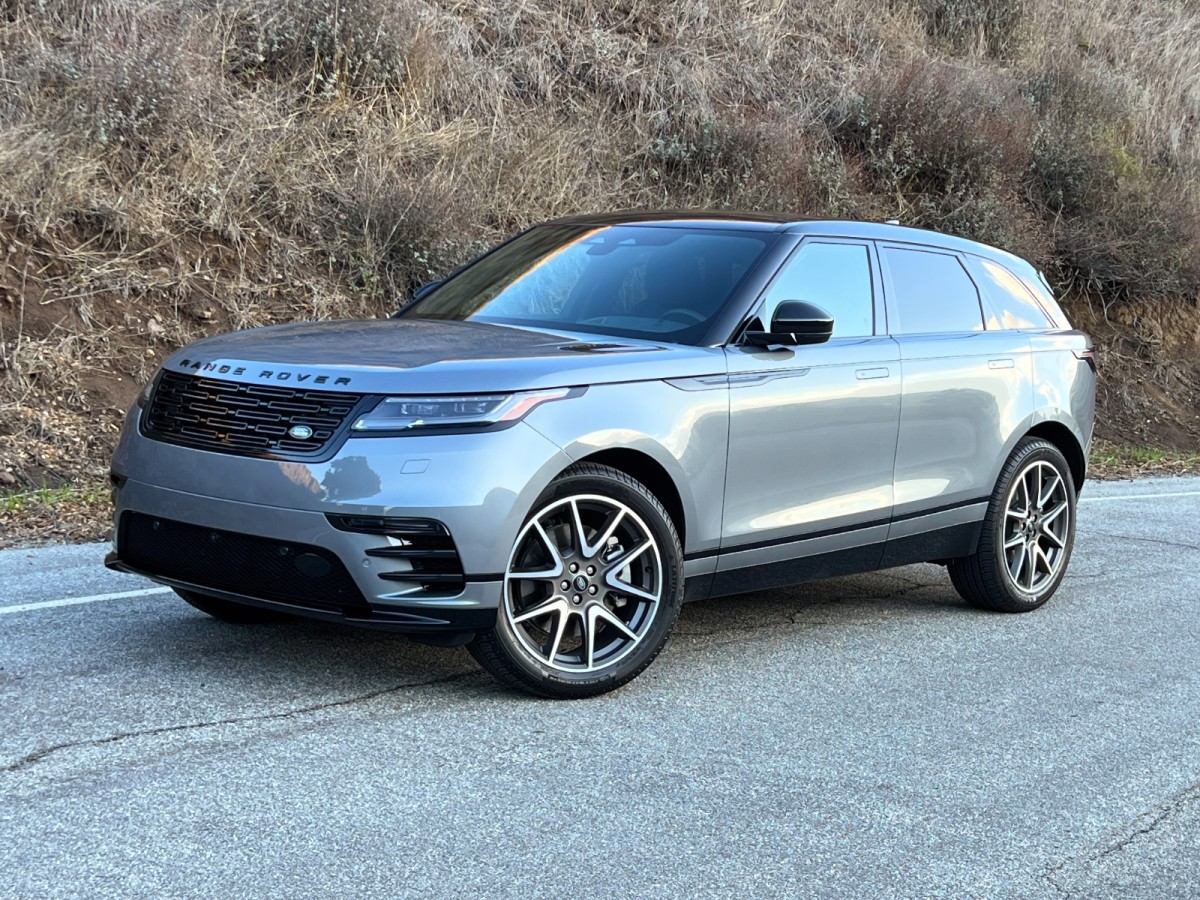
The Velar’s design philosophy for 2024 adhered strictly to a “reductive” approach, aimed at minimizing unnecessary details while enhancing modern aesthetics. This ethos, first introduced in 2018, saw further refinement this year with a new grille, updated headlights and taillights, fresh wheel options, and revised exterior detailing. The redesigned rear bumper accentuated the vehicle's width, creating a visually broader, lower stance.
Inside the Velar, a larger 11.4-inch touchscreen appeared to float above the dashboard, becoming the focal point for controls previously managed by physical dials. This change underscores the minimalist, modern theme but had its drawbacks, particularly with the omission of essential physical controls like temperature and volume, which now require navigating the touchscreen.
The test vehicle, a Dynamic SE trim, opted for luxurious touches such as a powerful turbocharged six-cylinder engine, upgraded paint and wheels, a Black Exterior Pack, and a Cold Climate Pack. However, some subpar quality elements within the cabin, like a flimsy driver’s floor mat, detracted from the otherwise premium feel. Priced at $80,533, including destination charges, this setup showcased a blend of high-end features and certain functional mishaps.
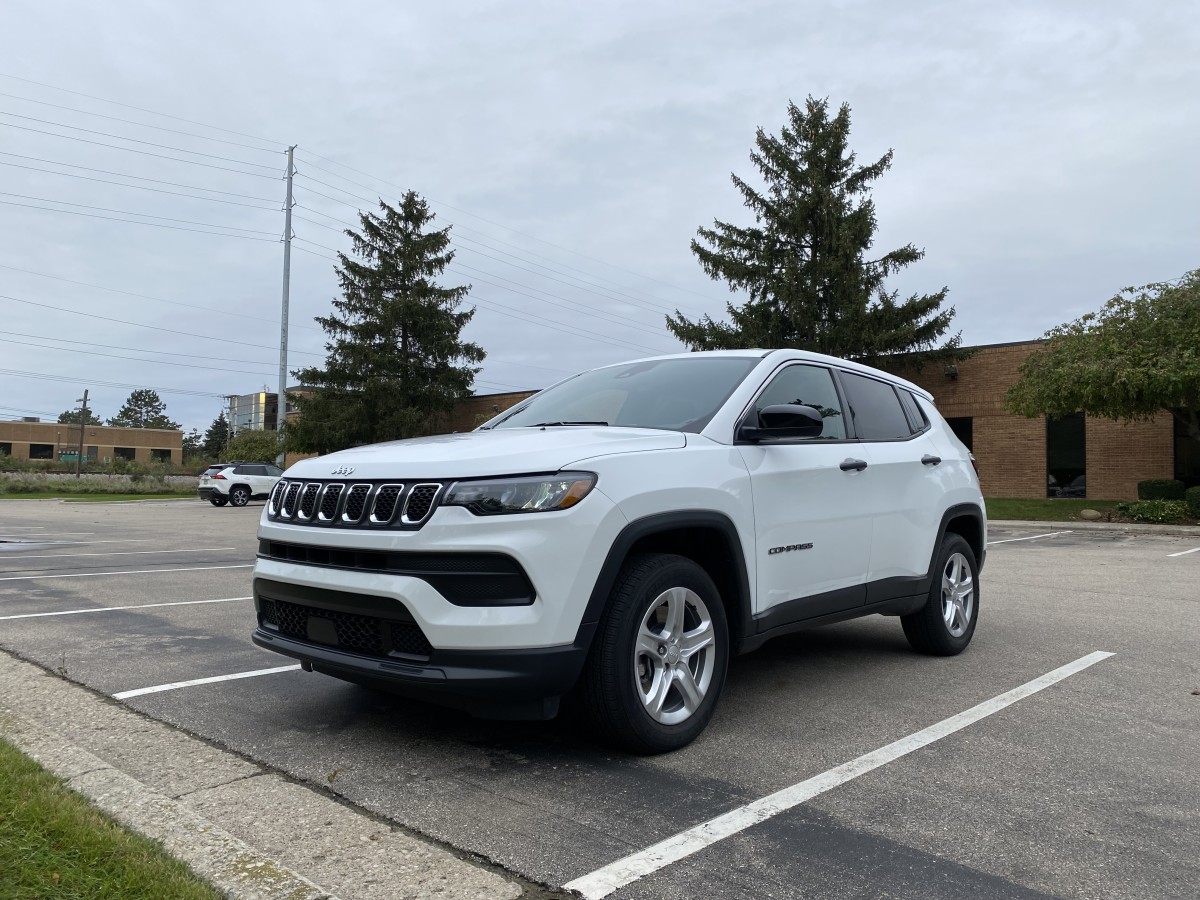
In Michigan, a Compass Altitude with a striking red two-tone paint job and blacked-out trim initially showcased Jeep’s bold styling. However, upon realizing our actual test car was the basic Compass Sport, all semblance of flair evaporated. The basic Sport trim, with its plastic handles and generic wheels, was the quintessential utilitarian vehicle.
While the higher trims like the fully loaded 2023 Compass Limited offered a more refined interior, including caramel leatherette accents, the base model managed well with black and gray interiors, blue stitching, and textured inserts adding some character. The supportive cloth seats, adequate dash and door panel designs, and essential features like push-button start aligned well within its price range. Nevertheless, the exterior failed to stand out, often appearing indistinguishable from other generic crossovers.


The Velar’s turbocharged 3.0-liter inline six-cylinder engine, paired with a 48-volt mild-hybrid system, delivered 394 horsepower and 406 lb-ft of torque. This robust engine propelled the P400 variant from 0-60 mph significantly faster than its P250 counterpart, which housed a less powerful 247-horsepower, 2.0-liter turbo four-cylinder engine. The six-cylinder engine offered a more dynamic driving experience despite its marginally lower fuel efficiency, averaging 19.5 mpg during tests.
Equipped with an eight-speed automatic transmission and an all-wheel-drive system, the Velar boasted a ground clearance of 8.4 inches, extendable to 9.9 inches with the optional air suspension. Various Terrain Response modes catered to a range of driving conditions, from Comfort to Dynamic mode for on-road agility, which enhanced its performance on twisting mountain roads near Malibu.
However, the Velar’s urban driving left something to be desired. In Comfort mode, the suspension felt too soft, exhibiting noticeable pitch and dive under acceleration and braking. Dynamic mode improved this but introduced abrupt power surges. While off-roading wasn’t an option during the test, the Velar’s on-paper off-road capabilities looked promising, though perhaps not on par with other Range Rover models.
Transitioning from the previously anemic 2.4-liter engine, the 2024 Compass embraced the Cherokee's turbocharged 2.0-liter inline four-cylinder, albeit in a detuned form. Producing 200 horsepower and 221 lb-ft of torque, this engine, paired with an eight-speed automatic transmission and standard all-wheel drive, significantly improved the Compass's driving dynamics. It now offered a much smoother and quieter driving experience, eliminating the need for heavy-footed acceleration.
The Compass provided three driving modes—auto, snow, sand/mud—enhanced by a 50-50 torque lock for better traction. The Trailhawk trim added a low-range transfer case and an extra rock driving mode, bolstering off-road capabilities, though this made for a much pricier variant. Maximum towing capacity for the Compass stood at 2,000 pounds, competitive within its class.
Steering and handling were less than stellar, especially when compared to rivals like the Chevrolet Equinox and Toyota RAV4. The steering felt imprecise with too much play, the handling was mushy, and the grip was limited. Despite these drawbacks, the ride quality was overall comfortable and well-damped.
Unlocking the Velar, the flush-mounted door handles elegantly powered out, though their protruding corners presented a slight hazard. Entering the front seats proved challenging for taller individuals due to the angled windshield pillars but once inside, the new seat cushions provided added support and comfort. The test model featured 14-way power-adjustable, heated, leather-wrapped front seats, with the Cold Climate Pack adding ventilated front seats and heated rear seats.
The Cloud over Ebony interior theme, combined with genuine wood veneers, exuded luxury, marred only by lower quality plastic on the door panels and an unruly driver’s floor mat. Rear passengers enjoyed ample comfort with excellent lumbar support, air conditioning vents, and a panoramic sunroof extending overhead, though rear door sunshades were noticeably absent.
Storage options included spacious door panel bins, which unfortunately allowed items to slide and get lost, and a hidden compartment under the wireless smartphone charging pad. Cargo space measured 30.9 cubic feet, expanding to 62.7 cubic feet with the rear seats folded, offering considerable room for luggage and other items.
The Compass offered clear analog gauges alongside a large color display, enhancing the driver’s interface with easy-to-use volume and input controls behind the steering wheel. An intuitive PRNDL gear selector, handy row of buttons beneath the touchscreen, and physical climate controls provided straightforward utility. The downside was the absence of any precise temperature readouts.
Visibility was good, and headroom was generous, especially without a sunroof. Both front and rear seats provided ample space with helpful rear vents, USB ports, and a fold-down center armrest. Storage in the central cubby and door pockets was limited. Cargo space was slightly less than the Velar’s, with 27.2 cubic feet expanding to 59.8 cubic feet with the rear seats folded, which still offered respectable room for most needs.
The 2024 Velar's Pivi Pro infotainment system featured an upgrade to an 11.4-inch touchscreen, introducing over-the-air updates, Amazon Alexa compatibility, and a refined interface. However, consolidating climate, volume, and defrost controls onto this screen added unnecessary complexity.
Despite some user-friendly sidebars with shortcuts, the small icons and lack of a resting place for the hand impeded easy use. The frustration was compounded if the driver forgot where specific settings were located. Land Rover’s introduction of voice control via Amazon Alexa tried to mitigate these issues, though it required account sign-ins and did not completely eliminate the need for physical controls.
Standard technological amenities included a 12.3-inch digital instrument panel, configurable driver themes, Meridian sound systems, a head-up display (HUD), and a surround-view camera system. Unfortunately, the test model lacked the surround-view camera, making precise maneuvering a challenge.
In contrast, the Compass came standard with a 10.1-inch touchscreen featuring Uconnect 5 software, known for its crisp and quick interface. The screen offered impeccable legibility and easy menu navigation, though direct app switching required extra taps. Standard features included wireless Apple CarPlay and Android Auto, SiriusXM, 4G Wi-Fi, and USB-C ports.
Optional technological upgrades comprised factory navigation, a wireless charging pad, advanced digital instrumentation, a panoramic moonroof, a nine-speaker Alpine stereo, and semi-automated Active Driving Assist on higher trims. These comprehensive options elevated the Compass’s tech appeal significantly.
Every Velar came equipped with an extensive array of Advanced Driving Assistance Systems (ADAS). The adaptive cruise control with speed-limited function was intuitive, indicating its active status with a green glow, preventing accidental speeding.
Adaptive Cruise Control with Steer Assist offered a semi-autonomous driving experience, though its performance was inconsistent, struggling on bends and reacting unpredictably to road conditions. This often added stress rather than relieving it, leading to a preference for manual driving.
While specific ratings for the 2024 Jeep Compass were pending, previous models had solid safety credentials. The 2022 version scored well in NHTSA’s crash tests, achieving four out of five stars overall. The 2023 model received a Top Safety Pick from IIHS, highlighting its crashworthiness.
Standard safety features included forward emergency braking, lane-keep assist, blind-spot monitoring, and a driver attention monitor. Adaptive cruise control, parking sensors, and a 360-degree camera system were available on higher trims, ensuring comprehensive safety coverage across the lineup.
CarGurus highlights
According to CarGurus experts, the overall rating for the 2024 Land Rover Range Rover Velar is 6.3 out of 10, while the 2024 Jeep Compass scores 6.8 out of 10. Given these evaluations, the 2024 Jeep Compass emerges as the more favorable option. Its practical design, robust technological offerings, and balanced performance make it a versatile choice suitable for a wide range of drivers. While the Velar shines in luxury and performance, the Compass provides greater value and user-friendly features, making it the recommended vehicle in this comparison.
Choose the 2024 Land Rover Range Rover Velar if:
- You value a luxurious interior with premium leather seating and sophisticated design elements.
- Off-road capability is a must, with advanced terrain response modes and adjustable air suspension.
- You prioritize a high-performing engine, with the six-cylinder turbo offering powerful acceleration and smooth highway driving.


Choose the 2024 Jeep Compass if:
- Budget-consciousness is key, and you prefer a more affordable SUV with solid baseline features.
- Interior flexibility and comfort with functional rear seating and comprehensive in-cabin utility are important.
- Advanced technology and safety features like Uconnect 5 and a range of driver assistance systems are a priority.


CarGurus highlights
According to CarGurus experts, the overall rating for the 2024 Land Rover Range Rover Velar is 6.3 out of 10, while the 2024 Jeep Compass scores 6.8 out of 10. Given these evaluations, the 2024 Jeep Compass emerges as the more favorable option. Its practical design, robust technological offerings, and balanced performance make it a versatile choice suitable for a wide range of drivers. While the Velar shines in luxury and performance, the Compass provides greater value and user-friendly features, making it the recommended vehicle in this comparison.
Choose the 2024 Land Rover Range Rover Velar if:
Shop Now- You value a luxurious interior with premium leather seating and sophisticated design elements.
- Off-road capability is a must, with advanced terrain response modes and adjustable air suspension.
- You prioritize a high-performing engine, with the six-cylinder turbo offering powerful acceleration and smooth highway driving.
Choose the 2024 Jeep Compass if:
Shop Now- Budget-consciousness is key, and you prefer a more affordable SUV with solid baseline features.
- Interior flexibility and comfort with functional rear seating and comprehensive in-cabin utility are important.
- Advanced technology and safety features like Uconnect 5 and a range of driver assistance systems are a priority.

By: CarGurus + AI
At CarGurus, our team of experienced automotive writers remain at the heart of our content operation, conducting hands-on car tests and writing insightful guides that are backed by years of industry experience. To complement this, we are harnessing AI to make our content offering more diverse and more helpful to shoppers than ever. To achieve this, our AI systems are based exclusively on CarGurus content, ratings and data, so that what we produce is both unique to CarGurus, and uniquely helpful to car shoppers.

