Kia Carnival vs Toyota Grand Highlander
Overview | |
MSRP$33,600 | MSRP$43,320 |
Listings181 | Listings117 |
Ratings & Reviews | |
User Reviews | User Reviews |
Expert reviews8.2 out of 10 | Expert reviews8.0 out of 10 |
Pros
Cons
| Pros
Cons
|
Reviews SummaryAhead of a 2025-model-year refresh, the 2024 Kia Carnival carries over unchanged as Kia’s entry into a small, but competitive, minivan segment that also includes the Chrysler Pacifica, Honda Odyssey, and Toyota Sienna. Verdict: The Carnival offers a great driving experience and excellent warranty, but these upsides are tainted by a lack of all-wheel drive and mixed safety ratings. | |
Reviews SummaryIf you have more than a couple of kids, chances are good that a regular Toyota Highlander won’t be big enough for all your needs. For many shoppers like you, the Kia Telluride and its corporate cousin, the Hyundai Palisade, have become the obvious choices. Those three-row crossovers are newer, bigger, and incredibly nice to drive. But now there’s a new Highlander. A bigger Highlander. A Grand Highlander. This all-new model takes a popular nameplate (which, don't worry, isn’t going anywhere) and adds a little extra space. But what separates the Grand Highlander from the field is the availability of not one, but two different hybrid powertrains. This all-new model offers plenty of space, good fuel efficiency, and Toyota’s sterling reputation for reliability. So, is the 2024 Grand Highlander an immediate threat to the hot-selling Kia Telluride? | |
No video found | |
Popular Features & Specs | |
Engine3.5L 290 hp V6 | Engine2.4L 265 hp I4 |
Drive TrainFWD | Drive TrainFWD |
Seating Capacity7 | Seating Capacity8 |
Horsepower290 hp @ 6400 rpm | Horsepower265 hp @ 6000 rpm |
MPG City19 | MPG City21 |
MPG Highway26 | MPG Highway28 |
Engine | |
Engine Name3.5L 290 hp V6 | Engine Name2.4L 265 hp I4 |
Torque262 lb-ft @ 5000 rpm | Torque310 lb-ft @ 1700 rpm |
Horsepower290 hp @ 6400 rpm | Horsepower265 hp @ 6000 rpm |
DrivetrainFWD | DrivetrainFWD |
Fuel Economy | |
MPG City19 | MPG City21 |
MPG Highway26 | MPG Highway28 |
Interior | |
Seating Capacity7 | Seating Capacity8 |
Key Features | |
Navigation System | Navigation SystemStandard |
Safety | |
Side Crash Overall5 | Side Crash Overall |
Dimensions & Capacity | |
Cargo Space40.2 cu ft | Cargo Space20.6 cu ft |
Curb Weight4431 lbs | Curb Weight4300 lbs |
Height68.5 in | Height72.1 in |
Length203.0 in | Length201.4 in |
Width89.2 in | Width78.3 in |
Wheelbase121.7 in | Wheelbase116.1 in |
Maximum Payload1279 lbs | Maximum Payload1245 lbs |
Number of doors4 | Number of doors4 |
Maximum Towing Capacity3500 lbs | Maximum Towing Capacity5000 lbs |
Overview | ||
MSRP | $33,600 | $43,320 |
Listings | ||
Ratings & Reviews | ||
User reviews | ||
Expert reviews | 8.2 out of 10Read full review | 8.0 out of 10Read full review |
Pros & cons | Pros
Cons
| Pros
Cons
|
Summary | Ahead of a 2025-model-year refresh, the 2024 Kia Carnival carries over unchanged as Kia’s entry into a small, but competitive, minivan segment that also includes the Chrysler Pacifica, Honda Odyssey, and Toyota Sienna. Verdict: The Carnival offers a great driving experience and excellent warranty, but these upsides are tainted by a lack of all-wheel drive and mixed safety ratings. | If you have more than a couple of kids, chances are good that a regular Toyota Highlander won’t be big enough for all your needs. For many shoppers like you, the Kia Telluride and its corporate cousin, the Hyundai Palisade, have become the obvious choices. Those three-row crossovers are newer, bigger, and incredibly nice to drive. But now there’s a new Highlander. A bigger Highlander. A Grand Highlander. This all-new model takes a popular nameplate (which, don't worry, isn’t going anywhere) and adds a little extra space. But what separates the Grand Highlander from the field is the availability of not one, but two different hybrid powertrains. This all-new model offers plenty of space, good fuel efficiency, and Toyota’s sterling reputation for reliability. So, is the 2024 Grand Highlander an immediate threat to the hot-selling Kia Telluride? |
Video | No video found | |
Popular Features & Specs | ||
Engine | 3.5L 290 hp V6 | 2.4L 265 hp I4 |
Drive Train | FWD | FWD |
Seating Capacity | 7 | 8 |
Horsepower | 290 hp @ 6400 rpm | 265 hp @ 6000 rpm |
MPG City | 19 | 21 |
MPG Highway | 26 | 28 |
Engine | ||
Engine Name | 3.5L 290 hp V6 | 2.4L 265 hp I4 |
Torque | 262 lb-ft @ 5000 rpm | 310 lb-ft @ 1700 rpm |
Horsepower | 290 hp @ 6400 rpm | 265 hp @ 6000 rpm |
Drivetrain | FWD | FWD |
Fuel Economy | ||
MPG City | 19 | 21 |
MPG Highway | 26 | 28 |
Interior | ||
Seating Capacity | 7 | 8 |
Key Features | ||
Navigation System | Standard | |
Safety | ||
Side Crash Overall | 5 | |
Dimensions & Capacity | ||
Cargo Space | 40.2 cu ft | 20.6 cu ft |
Curb Weight | 4431 lbs | 4300 lbs |
Height | 68.5 in | 72.1 in |
Length | 203.0 in | 201.4 in |
Width | 89.2 in | 78.3 in |
Wheelbase | 121.7 in | 116.1 in |
Maximum Payload | 1279 lbs | 1245 lbs |
Number of doors | 4 | 4 |
Maximum Towing Capacity | 3500 lbs | 5000 lbs |
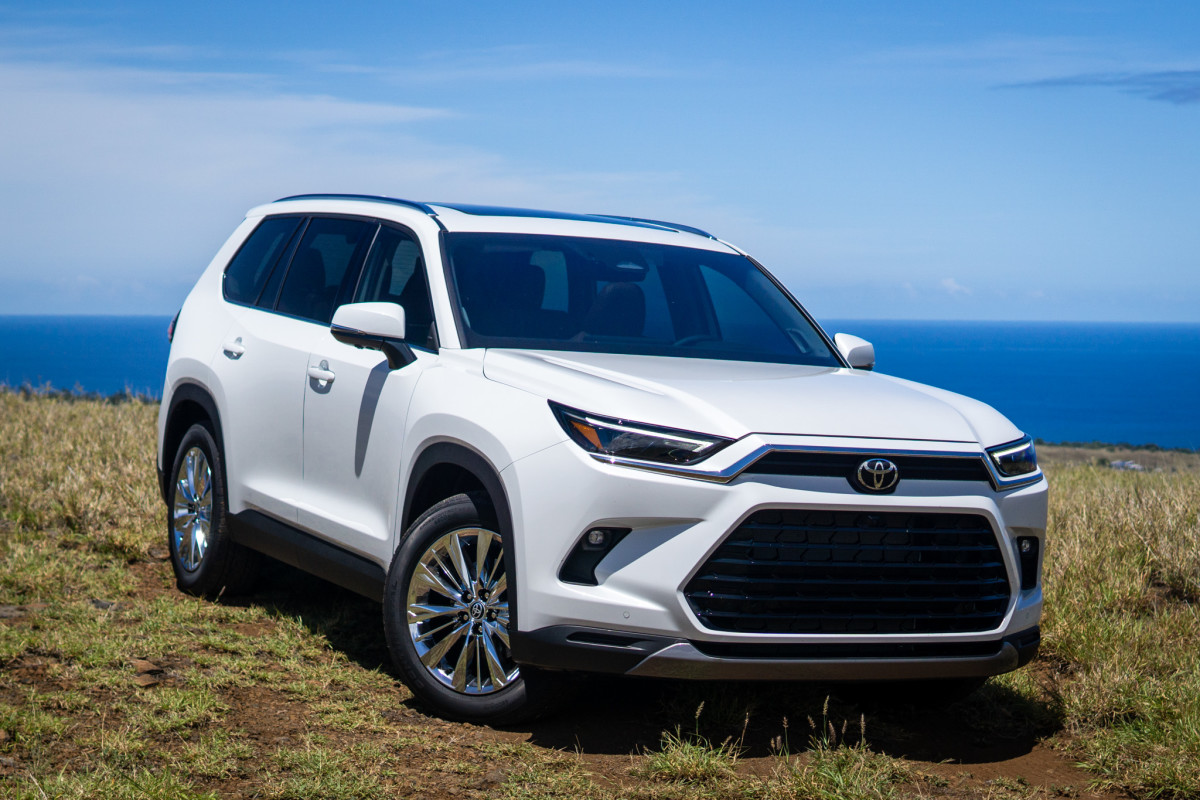
The 2024 Toyota Grand Highlander joined Toyota’s robust lineup of SUVs and crossovers, situated between the regular Highlander and the sizable Sequoia. This new entrant was built on the TNGA-K platform, differing from the Sequoia’s TNGA-F truck platform. It stretched 201.4 inches in length, with a 116.1-inch wheelbase, making it larger than a considerable amount of its rivals, including the Kia Telluride. This expansive size translated effectively into interior space, a highlight for road trips and family adventures.
Despite its substantial build, the Grand Highlander wasn't built for extreme off-roading. Boasting 8 inches of ground clearance, it handled dirt roads comfortably but wasn't intended for rugged terrain. Its design leaned towards a more conservative style but drew inspiration from rugged vehicles, notably the off-roading Toyota 4Runner. The model featured a blocky design, a trapezoidal grille, and narrow headlights, giving it a profile akin to the Ford Explorer and Honda Pilot.
The Grand Highlander was offered in three trims: XLE, Limited, and Platinum. It featured light gray or black Softex synthetic leather on the XLE, while the higher trims upgraded to genuine leather, with the Platinum trim providing luxurious Portobello-colored upholstery. Standard comforts included a 10-way power-adjustable driver’s seat, heated front seats, and a wealth of storage solutions including a large center console.
Toyota marketed the Grand Highlander as a spacious and dependable road-trip companion, catering to families and long-distance travelers. It leveraged Toyota's reputation for long-term durability, with materials and build quality designed to endure continuous use without compromising comfort or aesthetics.
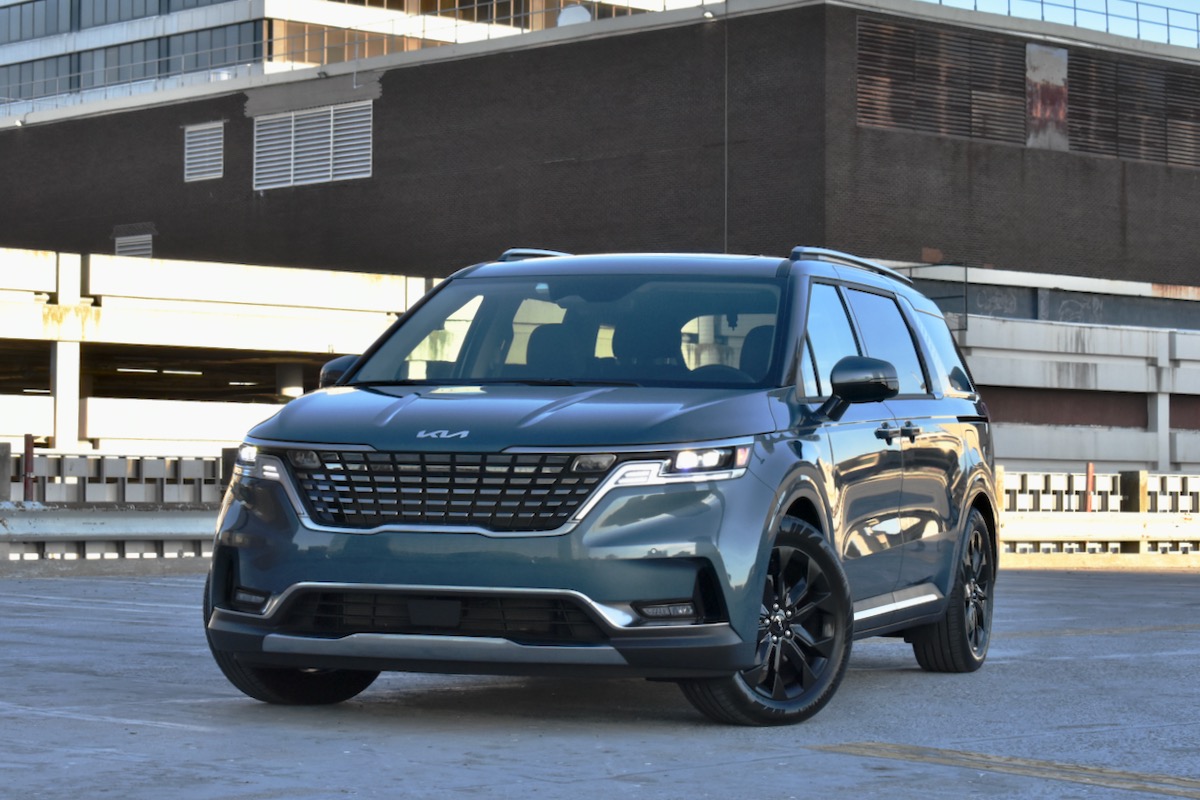
Kia redefined its minivan entry with the 2024 Carnival by adopting several SUV-inspired design elements. Its prominent grille, bold hood lines, and slab sides helped it stand out among other minivans while retaining functional features like sliding doors and lower ground clearance.
Close inspection revealed unique styling cues: a concave grille embellished with disco-ball-like trim, and distinctive taillights with filament-like details. The optional 19-inch wheels on the SX Prestige trim perfectly balanced the vehicle’s look, neither under nor over-exaggerating its design.
The Carnival’s interior embraced the SUV theme with a large, chunky shifter and rugged knobs, making the vehicle appealing to image-conscious buyers. The SX Prestige showcased high-quality materials, including real leather upholstery, heated and ventilated seats, and dual sunroofs. However, the expanses of plastic throughout the interior could feel less upscale, though practical for a heavily utilized family vehicle.
The Carnival’s myriad of storage spaces, thoughtful design elements, and robust build made it a practical family hauler. Its choice of seven-passenger seating on the LX trim and available eight-passenger configuration on other trims, complete with luxurious VIP Lounge seats on the SX Prestige, brought comfort and flexibility to the forefront.
Toyota offered the Grand Highlander with three distinct engine choices. The base 2.4-liter turbocharged four-cylinder engine delivered 265 horsepower and 310 lb-ft of torque, promising balanced performance for most users. An option for a more fuel-efficient 2.5-liter hybrid engine generated a combined 245 horsepower and 177 lb-ft of torque. At the top end, the Hybrid Max powertrain combined a 2.4-liter turbocharged engine with a hybrid system to produce an impressive 362 horsepower and 400 lb-ft of torque, ensuring strong acceleration with a 0-60 mph time of 6.3 seconds.
The majority of buyers, around 85%, opted for the standard turbo engine, which performed respectably, though it could feel cumbersome in tighter spaces due to the vehicle’s size. The Grand Highlander’s handling, while stable, lacked the tightness found in some competitors; steering feedback felt disconnected, likened to steering a well-sorted boat. The brakes, however, were solid, with a linear pedal feel.
Three drive modes—Sport, Eco, and Normal—were standard, with additional off-road settings like Mud & Sand, Rock & Dirt, and Snow available on AWD models. Sport mode sharpened the steering and throttle response slightly, while Eco mode prioritized efficiency, ultimately making Normal mode the preferred choice for everyday driving.
The Kia Carnival streamlined its powertrain options, focusing on a single, robust 3.5-liter V6 engine paired with an eight-speed automatic transmission. This combination offered 290 horsepower and 262 lb-ft of torque, delivering a driving experience that was smooth and responsive. The absence of an all-wheel-drive or hybrid option mirrored the strategy used by Honda with its Odyssey, differentiating the Carnival from minivan competitors that offered more powertrain variety.
Driving the Carnival was an enjoyable experience thanks to its well-weighted steering, which balanced effort and precision. Maneuvering in tight spots was straightforward, and the vehicle responded smoothly to higher-speed inputs. Its comfortable, softly-sprung chassis provided a cushioned ride, ideal for long journeys and daily drives alike.
The V6 engine was refined and performed efficiently, shifting seamlessly through the automatic transmission. It emitted a satisfying growl under full throttle, adding to its driving appeal. The conventional V6 and automatic transmission setup provided a reminder of the traditional, reliable powertrains that many drivers appreciated before the broader adoption of turbocharging and electrification.
The Grand Highlander excelled in interior space and comfort. With its substantial size, measuring 201.4 inches in length and a 116.1-inch wheelbase, it outdid many competitors in cargo and passenger space. The cargo capacity was a generous 97.5 cubic feet with the seats down, 57.9 cubic feet behind the second row, and a decent 20.6 cubic feet with all rows up. This size made it a viable alternative to minivans for storage needs.
Passenger comfort was a focus, with ample headroom, legroom, and shoulder room in all rows. Even the third row accommodated six-foot adults comfortably. The Toyota Grand Highlander offered functional family-oriented features, such as numerous cupholders and USB ports spread throughout the vehicle, enhancing convenience for all passengers.
Kia’s Carnival was designed with flexibility and spaciousness in mind. Seven-passenger seating came standard on the base LX trim, while other trims offered eight-passenger configurations. The SX Prestige’s VIP Lounge seats in the second row added a touch of luxury, featuring footrests and one-touch adjustments. Power-sliding doors and a tri-zone automatic climate control system added to the convenience and comfort.
While the Carnival excelled in cargo space with 40.2 cubic feet available behind the third row, its deep cargo well sometimes made unloading less convenient. With the second and third rows folded, it offered a substantial 145.1 cubic feet of cargo space, positioning it ahead of competitors like the Honda Odyssey.
Both front and rear passenger spaces were well-organized, featuring ample USB ports and thoughtful storage solutions. However, the Carnival lacked some of the transformative interior features found in other minivans, such as fold-flat seating systems.
The Grand Highlander came equipped with a 12.3-inch touchscreen infotainment system as standard. This system included advanced features like dual-device Bluetooth connectivity and wireless Apple CarPlay and Android Auto. Buyers could enhance their tech experience with a subscription-based service that added voice-activated commands, cloud-based navigation, and live agent assistance.
Higher trims came with an 11-speaker JBL stereo, providing a well-balanced audio experience. Toyota’s technology package significantly improved over past iterations, though potential buyers were advised to examine subscription details to fully utilize the vehicle’s capabilities.
The base LX trim of the Kia Carnival featured an 8-inch touchscreen with wireless Apple CarPlay and Android Auto. Higher trims upgraded to a 12.3-inch touchscreen and an equally sized digital instrument cluster, although these came with wired Apple CarPlay and Android Auto. A 12-speaker Bose audio system was available, enhancing the sound quality considerably.
Kia’s infotainment system was user-friendly, visually appealing, and included thoughtful features like a dedicated button for the surround-view camera system. The Carnival also featured an internal camera system to monitor rear-seat passengers and a voice recognition system to aid communication between the front and back rows.
At the time of writing, the 2024 Grand Highlander had not been rated by the NHTSA or IIHS. However, it came with a comprehensive suite of advanced safety features under the Toyota Safety Sense 3.0 banner. This included automatic emergency braking, lane-departure alert, lane-tracing assist, road-sign recognition, and adaptive cruise control with four distance settings.
The updated lane-departure alert system was designed to reduce false warnings by recognizing three-dimensional objects, enhancing situational awareness and safety.
The Carnival had undergone partial safety testing by the IIHS, where it received mixed results. It excelled in some crash tests but fell short in others, particularly in updated side and moderate-overlap tests. Headlight ratings varied greatly, with only the SX Prestige receiving a “Good” rating, while others were rated “Poor.”
Standard safety features included blind-spot monitoring, rear cross-traffic alert, lane-keep assist, and automatic emergency braking. Higher trims offered additional features like adaptive cruise control with stop-and-go, Highway Driving Assist, and a surround-view camera system.
CarGurus highlights
According to CarGurus experts, the overall rating for the 2024 Toyota Grand Highlander was 8.0 out of 10, while the 2024 Kia Carnival scored slightly higher at 8.2 out of 10. Utilizing these ratings, the final recommendation leans towards the 2024 Kia Carnival. Its combination of practical family-friendly features, innovative technology, superior cargo capacity, and marginally better overall rating makes it the preferred choice for those seeking a balanced, versatile vehicle for family needs.
Choose the 2024 Kia Carnival if:
- You prefer the convenience and family-friendly features of a minivan with SUV-like styling to blend practicality with modern aesthetics.
- You require substantial cargo space with the ability to carry up to eight passengers comfortably.
- You appreciate robust in-car technology, including an intuitive infotainment system with multiple USB ports and rear-seat monitoring.


Choose the 2024 Toyota Grand Highlander if:
- You prioritize spaciousness and need a versatile, three-row SUV that offers ample cargo and passenger space.
- You value a comprehensive suite of safety features as standard equipment for enhanced peace of mind.
- You seek a vehicle with multiple engine options, including a powerful Hybrid Max option for better acceleration and performance.


CarGurus highlights
According to CarGurus experts, the overall rating for the 2024 Toyota Grand Highlander was 8.0 out of 10, while the 2024 Kia Carnival scored slightly higher at 8.2 out of 10. Utilizing these ratings, the final recommendation leans towards the 2024 Kia Carnival. Its combination of practical family-friendly features, innovative technology, superior cargo capacity, and marginally better overall rating makes it the preferred choice for those seeking a balanced, versatile vehicle for family needs.
Choose the 2024 Kia Carnival if:
Shop Now- You prefer the convenience and family-friendly features of a minivan with SUV-like styling to blend practicality with modern aesthetics.
- You require substantial cargo space with the ability to carry up to eight passengers comfortably.
- You appreciate robust in-car technology, including an intuitive infotainment system with multiple USB ports and rear-seat monitoring.
Choose the 2024 Toyota Grand Highlander if:
Shop Now- You prioritize spaciousness and need a versatile, three-row SUV that offers ample cargo and passenger space.
- You value a comprehensive suite of safety features as standard equipment for enhanced peace of mind.
- You seek a vehicle with multiple engine options, including a powerful Hybrid Max option for better acceleration and performance.

By: CarGurus + AI
At CarGurus, our team of experienced automotive writers remain at the heart of our content operation, conducting hands-on car tests and writing insightful guides that are backed by years of industry experience. To complement this, we are harnessing AI to make our content offering more diverse and more helpful to shoppers than ever. To achieve this, our AI systems are based exclusively on CarGurus content, ratings and data, so that what we produce is both unique to CarGurus, and uniquely helpful to car shoppers.

